Florida Torreya (Torreya taxifolia)
Torreya taxifolia, the Florida Torreya (also called Florida nutmeg, gopherwood, or stinking cedar), is a rare evergreen conifer found naturally in only a sliver of the Apalachicola River bluffs on the Florida–Georgia line. It is one of the rarest conifers on Earth: the IUCN lists it as Critically Endangered, and the U.S. Fish and Wildlife Service has carried it on the federal endangered species list since 1984. This is not a plant you will find at a typical garden center, and it should never be dug or collected from the wild — but understanding it, and supporting the nurseries and gardens that propagate it responsibly, is part of what may keep the species from disappearing.
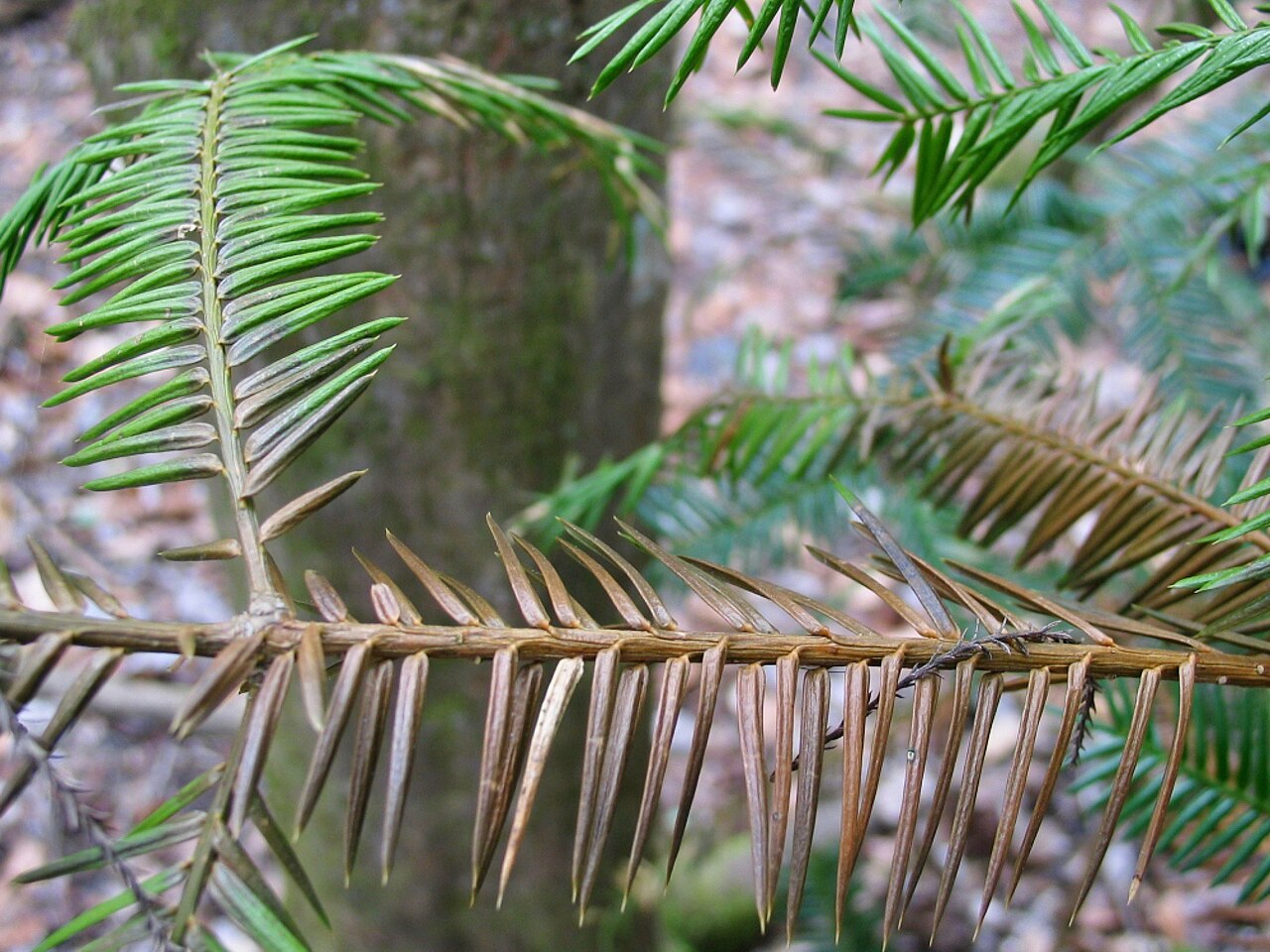
Florida torreya belongs to the yew family (Taxaceae) and is the type species of the genus Torreya, a small group of conifers otherwise found mainly in eastern Asia and California. Its narrow, flattened, needle-like leaves end in a stiff, needle-sharp point — sharp enough to puncture skin — and when crushed, the foliage gives off a strong, resinous, somewhat unpleasant odor, the source of the “stinking cedar” name. Historic accounts describe trees 40 to 60 feet tall with trunks over a foot thick, but almost no tree of that size survives today.
Since the 1950s, a canker and needle blight caused by the fungus Fusarium torreyae (only formally identified and named in 2011) has repeatedly killed back the above-ground stems of nearly every wild Florida torreya before they reach reproductive maturity. Today the wild population survives mainly as root-sprouting shrubs a few feet tall, re-growing and dying back in a continuous cycle, with well under a thousand stems remaining along a 20-some-mile stretch of river bluff. This page describes the species honestly, including that grim outlook, because a plant this rare deserves accuracy rather than hype.
Identification
Florida torreya is an understory conifer with a pyramidal to irregular crown when undamaged, though most surviving wild plants are low, multi-stemmed clumps re-sprouting from older root crowns rather than single-trunked trees.
Bark & Stems
Young stems are green, ridged, and sharply four-angled in cross-section, turning gray-brown and somewhat scaly with age. Where blight has killed the main stem, the base of the plant continues to send up new shoots, so an individual “tree” often reads as a cluster of stems of different ages and heights rather than one trunk.
Leaves
The needle-like leaves are arranged in two flat ranks along the stem (giving the foliage a feathery, almost yew-like appearance), are glossy dark green above with two pale stomatal bands beneath, and run 1 to 1.5 inches long. Each leaf narrows to a stiff, rigid point that is noticeably sharper and harder than the related and much rarer Florida yew (Taxus floridana), which shares the same river bluffs but has a soft leaf tip. Crushed foliage smells strongly resinous, almost skunky — a useful field mark.
Cones & Seeds
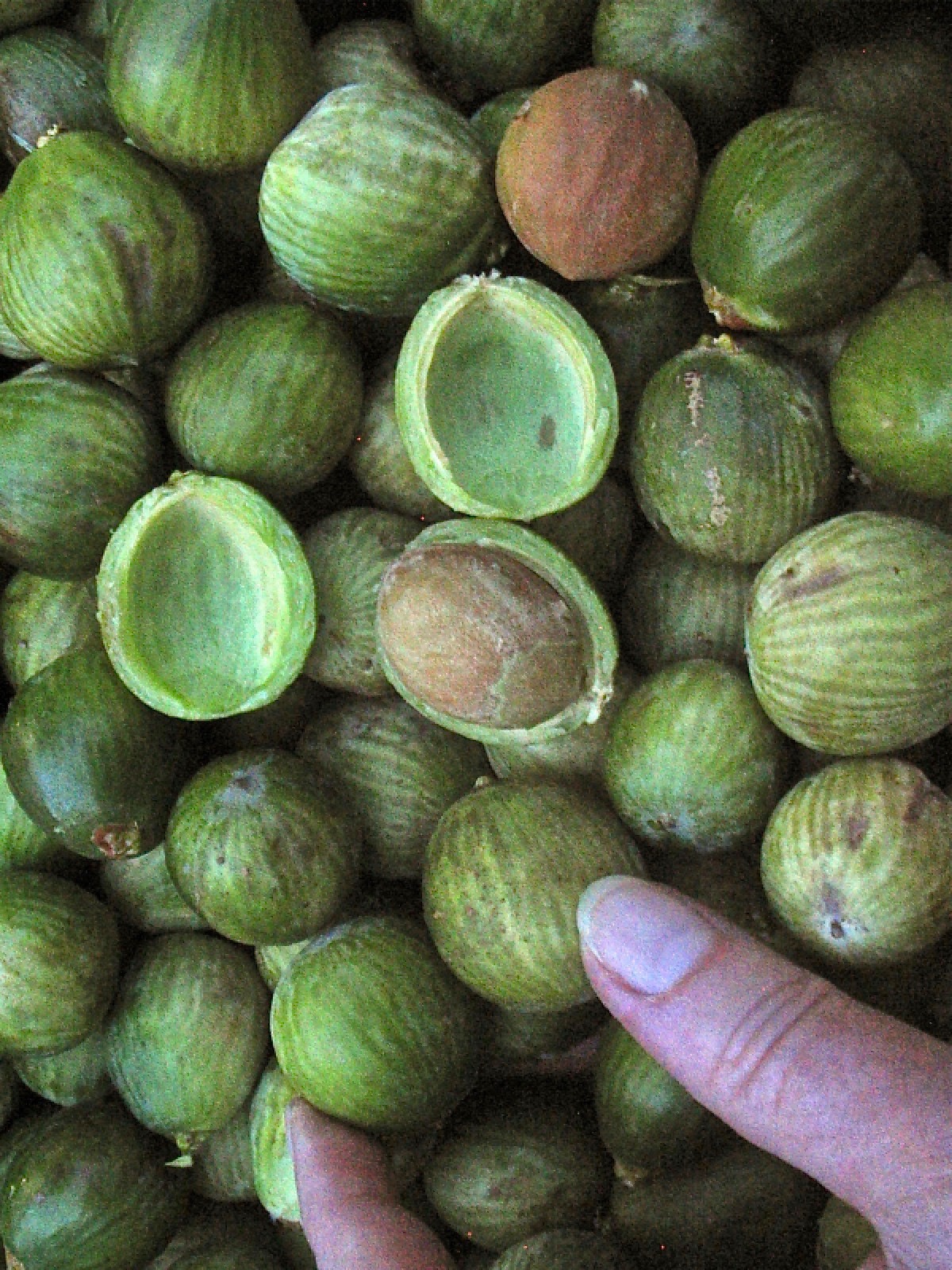
Florida torreya is subdioecious: most individual plants produce mostly pollen cones or mostly seed-producing structures, though occasional plants bear both. Small yellowish pollen cones appear in the leaf axils in late winter to spring. The seed is not a true cone but a single large, oval, fleshy-coated structure about an inch long, green ripening to purplish-brown — historically likened to a nutmeg, hence “Florida nutmeg.” Seeds are recalcitrant, meaning they cannot be dried or frozen for storage and must be sown relatively fresh, which is one more obstacle for conservation seed banking.
Quick Facts
| Scientific Name | Torreya taxifolia |
| Family | Taxaceae (Yew) |
| Plant Type | Evergreen conifer, tree or re-sprouting shrub |
| Mature Height | Historically 40–60 ft; wild plants today rarely exceed 10 ft before dieback |
| Mature Spread | 10–20 ft as a mature tree; narrower as a young or resprouting plant |
| Growth Rate | Slow |
| Sun Exposure | Part Shade to Shade |
| Water Needs | Average to moist; not drought tolerant |
| Soil Type | Moist, well-drained loam; often limestone-influenced bluff soils |
| Soil pH | Neutral to slightly alkaline |
| Bloom Time | Late winter–spring (pollen cones) |
| Flower Color | Pollen cones pale yellow; inconspicuous |
| Fall Color | None (evergreen) |
| Fruit | Single-seeded fleshy fruit, ~1 in, green ripening purplish-brown |
| Deer Resistant | Yes (sharp-tipped, resinous foliage) |
| USDA Hardiness Zones | 7–9 in its native range; cultivated successfully into zone 6b |
Native Range
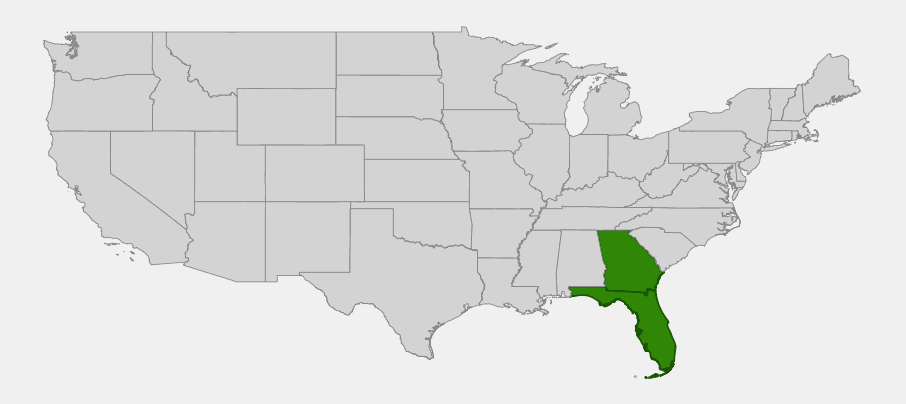
Florida torreya’s entire natural range is a narrow strip of bluffs and ravines along roughly 20 to 35 miles of the east bank of the Apalachicola River, in Liberty, Gadsden, and formerly Jackson counties, Florida, extending about one mile across the state line into southern Decatur County, Georgia. Nowhere else on Earth does the species occur in the wild. This makes it one of the most geographically restricted tree species in North America — the entire wild population could be walked through in an afternoon.
Within that narrow range, Florida torreya grows as an understory tree on steep, shaded, north-facing slopes and ravine bottoms above the river, often on soils influenced by limestone outcrops that keep them near neutral pH and consistently cool and moist. It grows alongside American beech, southern magnolia, Florida maple, and the even rarer Florida yew, under a canopy of spruce pine and other hardwoods — a distinctive community sometimes called the Apalachicola bluff forest, a kind of refuge for plants left over from a cooler, wetter climate thousands of years ago.
Because of its extreme rarity, Florida torreya is not included in any PlantNative regional native-plant list for Florida — no list currently covers the state. It is included in our Georgia, Alabama & Mississippi list only because its historic range brushes the southernmost edge of Decatur County, Georgia.
📋 Regional plant lists featuring Florida Torreya: Georgia, Alabama & Mississippi
Growing & Care Guide
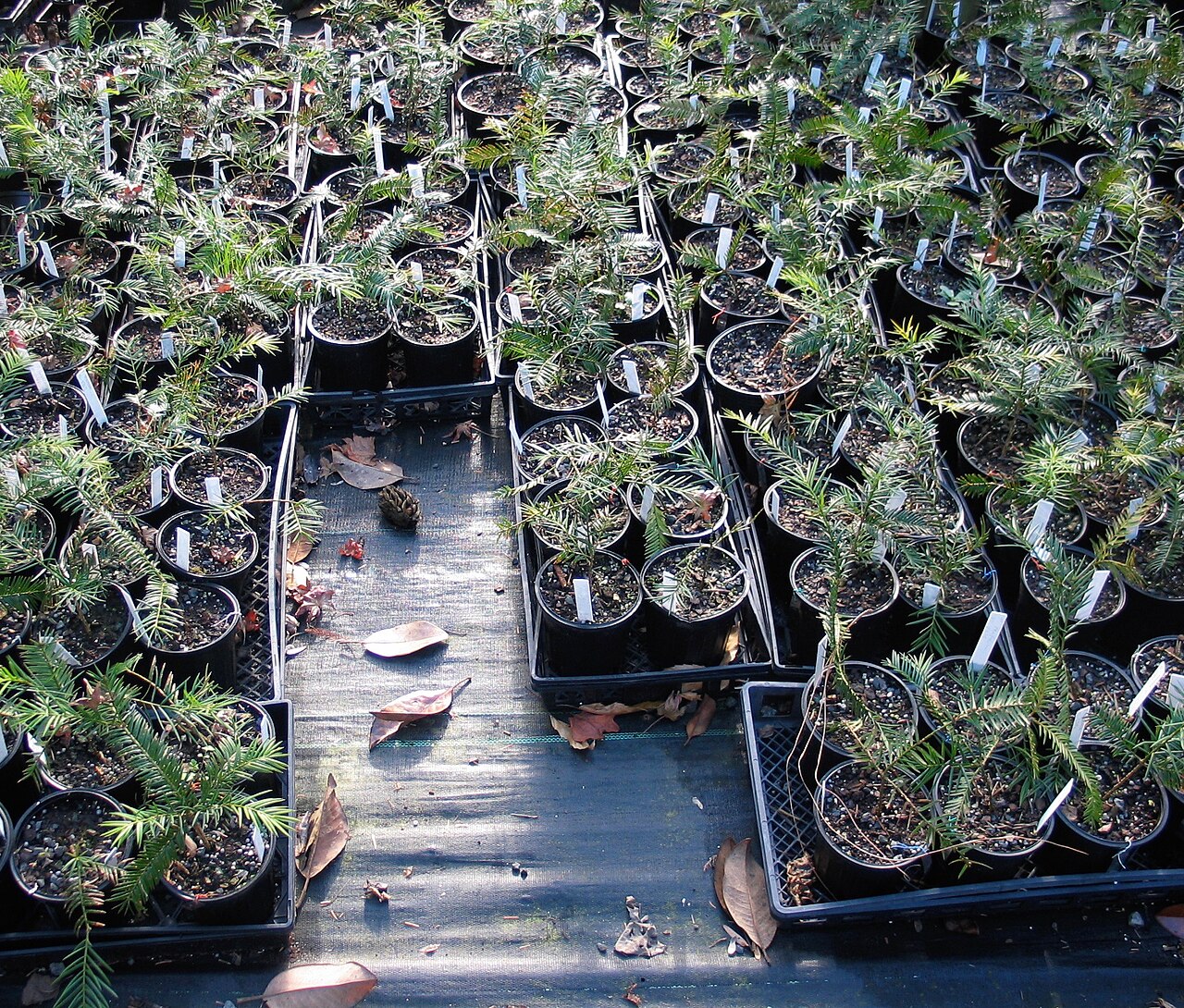
Florida torreya is not a plant to casually plant — wild collection of any part of this federally endangered species is illegal, and reputable nurseries and gardens only offer seed-grown, ex-situ propagated stock, usually traceable to specific conservation collections. If you do have the chance to grow one, from a botanical garden plant sale or a conservation program, it rewards patient, shade-garden care.
Light
Give Florida torreya the dappled to full shade of an understory position, similar to where it grows wild beneath taller hardwoods. It can tolerate part shade but struggles and scorches in open, sunny sites, especially outside the humid Southeast.
Soil & Water
Plant in moist, humus-rich, well-drained soil; a neutral to slightly alkaline pH mimics its native limestone-influenced bluff soils, though it also grows in ordinary acidic garden loam. Keep soil evenly moist, especially while young — this is a ravine-bottom species, not a drought-tolerant one, and prolonged dry spells stress it badly. A thick mulch layer of leaf litter helps hold moisture and moderates soil temperature.
Planting Tips
Set out container-grown plants in fall or early spring. Choose a cool, shaded site with good air movement; some growers in the assisted-migration movement (see below) specifically favor cooler, higher-elevation sites outside the historic range to reduce exposure to the fungal pathogen that devastates wild populations. Space plants generously, since mature specimens can eventually spread 10 to 20 feet.
Pruning & Maintenance
Prune only to remove dead or diseased wood, cutting well back into healthy tissue and disposing of (not composting) infected material. Watch for the dark cankers and needle browning characteristic of the canker disease that afflicts nearly all wild plants; isolated garden specimens, away from the concentrated wild population, sometimes fare better, but there is no reliable fungicide cure once a stem is infected.
Landscape Uses
- Conservation and botanical gardens maintaining ex-situ populations of a critically endangered conifer
- Deep shade gardens where few other conifers will grow
- Specimen planting for collectors of rare native conifers, sourced only from reputable propagators
- Assisted-migration research plantings, where volunteers and scientists are testing cooler sites as a hedge against disease and climate change
Wildlife & Ecological Value
Florida torreya’s wildlife role is now mostly a matter of historical record, since so few wild plants survive long enough to flower and fruit.
For Pollinators
As a wind-pollinated conifer, Florida torreya does not rely on insect pollinators, though its pollen cones may be visited incidentally by small insects.
For Birds
Historical accounts describe wild turkeys feeding on the fleshy seeds; the common name “gopherwood” and some older folklore also link the tree to other wildlife of the bluff forests, though documentation is thin given how rarely wild trees now produce seed.
For Mammals
Squirrels and other rodents have historically been reported caching and eating the large, oily seeds. With wild seed production now extremely rare, this role has shrunk along with the population.
Ecosystem Role
As a long-lived subcanopy conifer, Florida torreya once added structural diversity to the Apalachicola bluff forest, a globally rare plant community that also shelters Florida yew, Ashe magnolia, and other relict species. Its decline is as much a loss to that forest community’s complexity as it is to the species itself.
Cultural & Historical Uses
Florida torreya was first collected for science in 1833 by Hardy Bryan Croom along the Apalachicola River and described in 1838. In the 19th and early 20th centuries, the dense, fragrant, rot-resistant wood was prized locally for fence posts and, reportedly, for lining the hulls of riverboats and for Christmas trees sold in Florida and Georgia towns — a use that likely accelerated early population declines even before the fungal disease appeared. The old common name “gopherwood” ties into folk associations with the biblical wood of Noah’s ark, a claim with no botanical basis but with lasting local color.
The species’ modern cultural story is its conservation fight. After the canker disease was first noticed reducing the population in the 1950s, Florida torreya became one of the first U.S. plants to draw national conservation attention, listed as federally endangered in 1984. Beginning in the 1990s, a volunteer group called Torreya Guardians began the controversial practice of “assisted migration” or “rewilding” — collecting seed from surviving wild and historic cultivated trees and planting it well north of the species’ historic range, in the cooler mountains of North Carolina and elsewhere, reasoning that the species’ only realistic refuge from both the fungal pathogen and a warming climate lies outside its ice-age relict range. Many conservation biologists have pushed back, citing the ecological risk of introducing a species outside its historic range and the uncertainty about whether it would become invasive or disrupt the new ecosystem; the debate over whether deliberately relocating a critically endangered species is responsible stewardship or reckless intervention remains unresolved, and both the official federal recovery program and the volunteer-led migration effort continue in parallel today.
Frequently Asked Questions
Can I buy or plant a Florida torreya?
Only from a reputable source propagating seed-grown stock, such as a botanical garden plant sale or a recognized conservation nursery — never a wild-collected plant. Wild Florida torreya is federally protected, and digging or removing any part of a wild plant is illegal.
Why is Florida torreya dying out?
A canker and needle blight caused by the fungus Fusarium torreyae has killed back nearly every wild stem since the 1950s, preventing most plants from reaching reproductive age. Historic over-cutting for wood and Christmas trees likely weakened the population even earlier.
What is “assisted migration” and why is it controversial?
It refers to volunteers planting Florida torreya seed and seedlings outside its historic range, mainly in the cooler North Carolina mountains, to try to establish disease-free, climate-resilient populations. Supporters see it as a last resort for a species that may otherwise go extinct; critics worry about unintended ecological effects of introducing a species to a new region. Both views come from a place of wanting to save the species.
Is Florida torreya the same as Florida yew?
No, though they are close relatives sharing the same tiny range along the Apalachicola River. Florida yew (Taxus floridana) has softer, less sharply pointed leaves and is itself a separate, also highly imperiled species.
Does Florida torreya have any food or medicinal uses?
No reliable historical record supports eating the seeds or foliage, and given the species’ critical rarity, no part of a wild plant should ever be collected or consumed. Its documented historical uses were for wood and ornament, not food or medicine.

Looking for a nursery that carries conservation-grown Florida Torreya?
Browse our native plant nursery directory: Florida & Georgia