Rabbiteye Blueberry (Vaccinium virgatum)
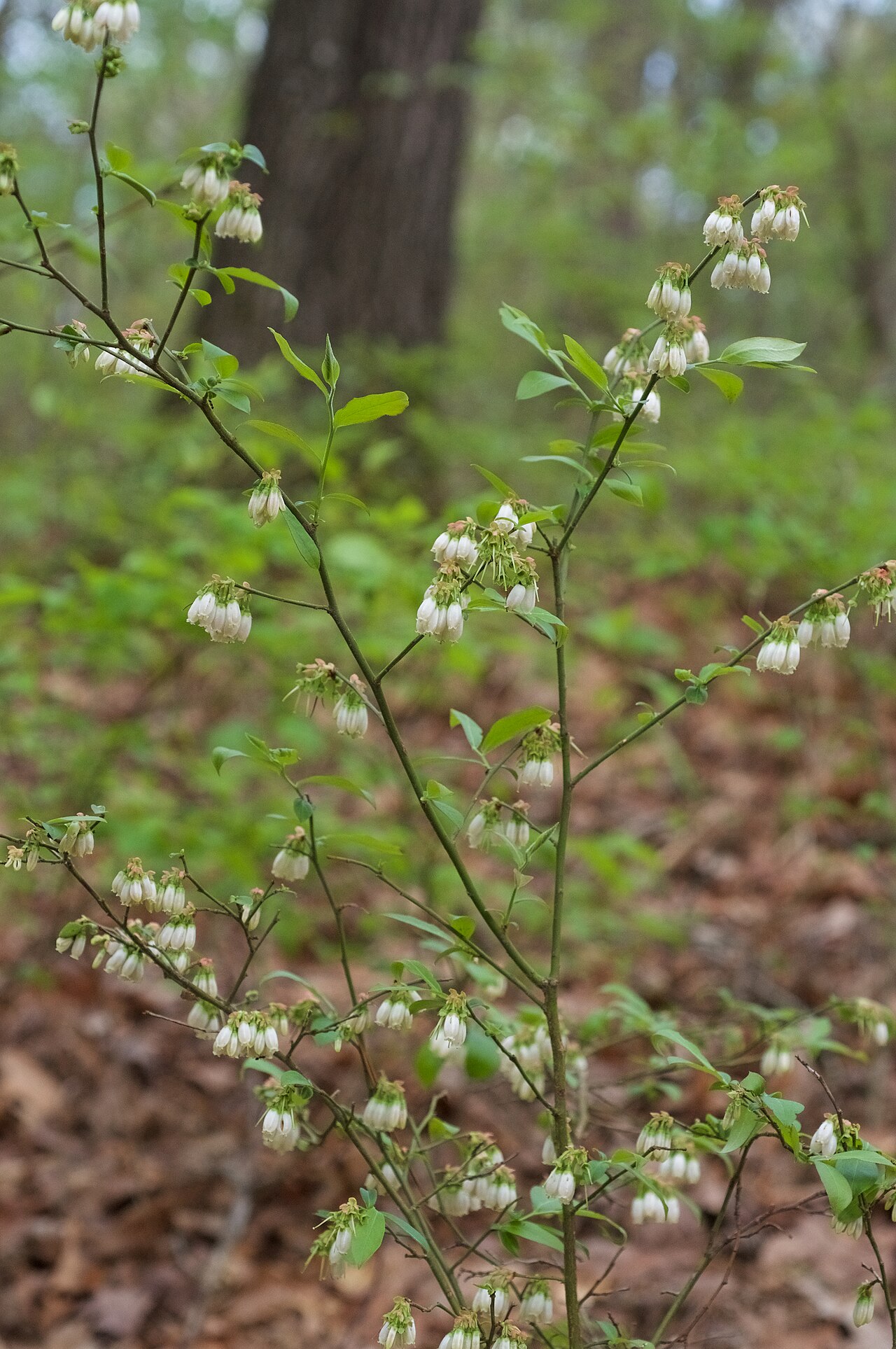
Vaccinium virgatum (long known by the synonym Vaccinium ashei), commonly called Rabbiteye Blueberry or smallflower blueberry, is a tough, upright deciduous shrub native to the sandy woodlands and low savannas of the southeastern coastal plain. It belongs to the Ericaceae, the heath family, and is the wild parent of the “rabbiteye” group of blueberry cultivars grown commercially from the Carolinas to East Texas. The odd common name comes from the unripe green berry’s pinkish blush, which was said to resemble the eye of a rabbit.
In the wild, Rabbiteye Blueberry forms dense colonies by root suckering, spreading slowly into thickets along the edges of pine flatwoods, sandhills, and the margins of floodplains and wet savannas. It is considerably more heat- and drought-tolerant than the northern Highbush Blueberry (Vaccinium corymbosum), which makes it one of the best fruiting shrubs for native gardens in the Deep South where humid summers and poorly buffered sandy soil discourage many other berry plants.
For home gardeners, Rabbiteye Blueberry earns its keep twice over: clusters of small white, urn-shaped flowers open in early spring ahead of the leaves, drawing native bees, and the sweet-tart blue berries that follow in summer feed songbirds, foxes, and raccoons as readily as people. Left unpruned it grows into a tall, airy hedge; pruned, it stays a manageable multi-stemmed shrub for sunny borders and wildlife plantings throughout its native range.
Identification
Rabbiteye Blueberry is an upright, multi-stemmed deciduous shrub that typically reaches 6 to 15 feet tall in the wild, with a spread of 3 to 10 feet, though old, undisturbed colonies in open sun can grow taller still. Stems sucker from the base, so a single plant slowly becomes a loose patch rather than staying a single clump.
Bark & Stems
Young twigs are slender, yellowish-green to reddish-brown, and finely warty with small raised lenticels. Older stems develop thin, gray-brown bark that peels in narrow, papery strips. The wood is wiry and somewhat brittle at the base, which is worth remembering when staking young nursery plants in windy sites.
Leaves
Leaves are simple, alternate, and elliptic to oblong, 1 to 3 inches long, with a smooth or very finely toothed margin and a short petiole. New spring growth often emerges bronze-red before maturing to a glossy, leathery dark green. In fall the foliage turns shades of orange, red, and maroon before dropping, one of the better native fall-color displays among southeastern shrubs.
Flowers & Fruit
Flowers open from March into April, before or just as the leaves emerge. Each flower is small, white to pale pink, and urn- or bell-shaped, about a quarter inch long, hanging in short drooping clusters along the previous year’s wood. Rabbiteye Blueberry is largely self-incompatible, so planting two or more individuals (or two different wild patches) greatly improves fruit set; native bees, especially the southeastern blueberry bee (Habropoda laboriosa), are the most effective pollinators.
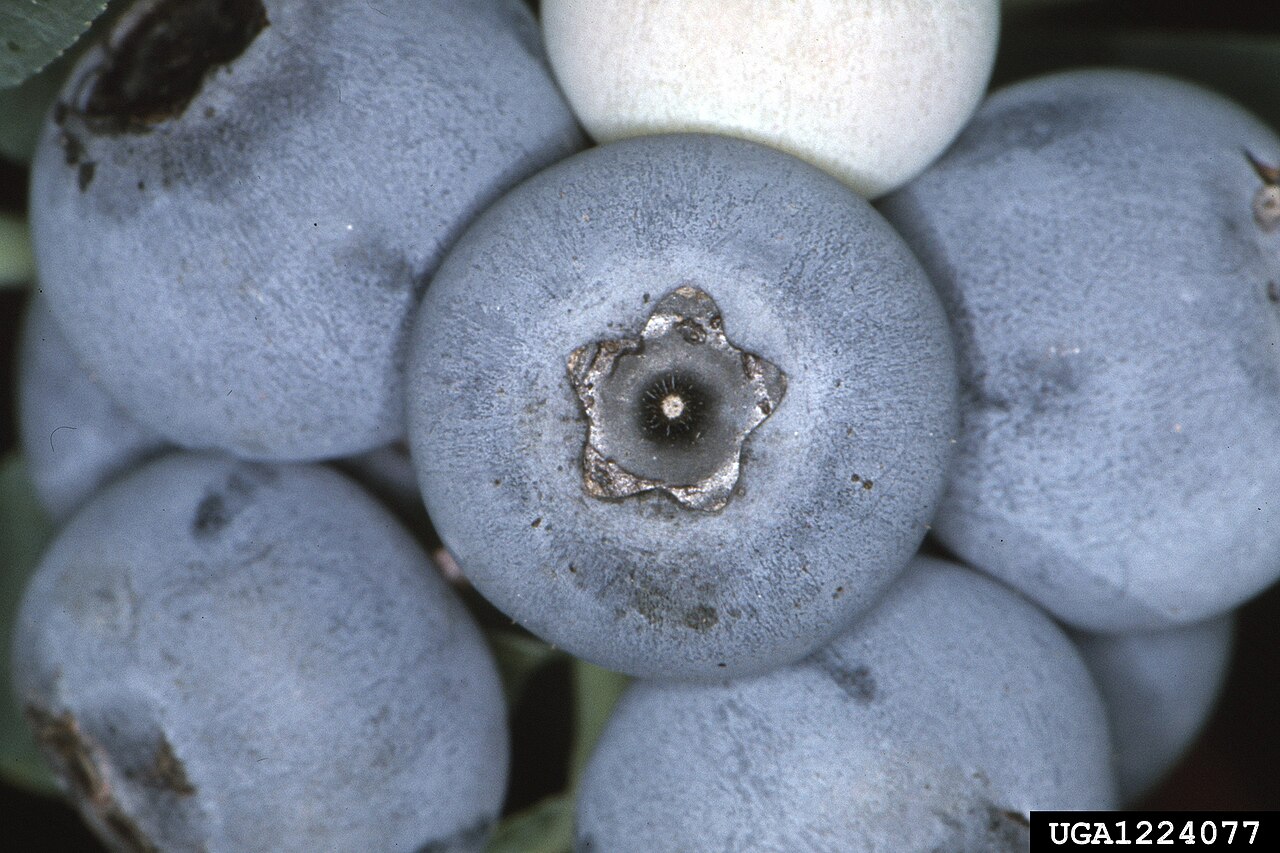
The fruit is a round berry about a third of an inch across, dark blue to nearly black with a pale waxy bloom, ripening from late May through July depending on latitude. The berries are edible and sweet-tart, eaten fresh or cooked into preserves, pies, and syrups; they also feed an enormous range of birds and mammals, which is usually how the shrub spreads into new ground.
Quick Facts
| Scientific Name | Vaccinium virgatum (syn. Vaccinium ashei) |
| Family | Ericaceae (Heath) |
| Plant Type | Deciduous Shrub |
| Mature Height | 6–15 ft |
| Mature Spread | 3–10 ft |
| Growth Rate | Moderate |
| Sun Exposure | Full Sun to Part Shade |
| Water Needs | Low to Moderate |
| Soil Type | Acidic, sandy or sandy loam, well-drained |
| Soil pH | 4.5–5.5 (acidic) |
| Bloom Time | March – April |
| Flower Color | White to pale pink |
| Fall Color | Orange, red, and maroon |
| Fruit | Dark blue-black berries with a waxy bloom, edible |
| Deer Resistant | No (deer browse foliage and stems) |
| USDA Hardiness Zones | 7–9 |
Native Range
Rabbiteye Blueberry is native to the coastal plain of the southeastern United States, from North Carolina and South Carolina south through Georgia and Florida, and west across Alabama, Mississippi, and Louisiana into eastern Texas. It is largely a plant of the lower coastal plain and sandhills; it becomes scarce or absent in the Piedmont and mountains, and the commercial “rabbiteye” cultivars planted well outside this range (the Pacific Northwest, California, the lower Midwest) are garden plantings, not wild populations.
Across its native range it grows in open pine flatwoods, sandy oak-pine woodlands, the edges of pocosins and bay forests, and the drier margins of low wet savannas and floodplains, usually where fire or periodic disturbance keeps the canopy open. It tolerates nutrient-poor, acidic sand that would stress most other fruiting shrubs, but it is not a wetland plant and needs soil that drains between rains.
Because of its value to the blueberry breeding industry, Rabbiteye Blueberry and its cultivars have been planted as a crop well beyond this wild range; gardeners outside the Southeast can usually grow the cultivated forms successfully, but should not assume the species is native to their area.
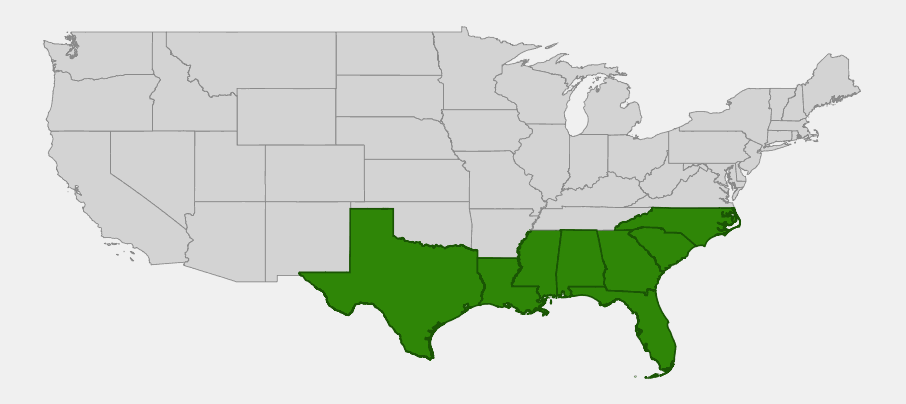
📋 Regional plant lists featuring Rabbiteye Blueberry: North Carolina & South Carolina · Georgia, Alabama & Mississippi · Arkansas, Louisiana, Eastern Oklahoma & Eastern Texas
Growing & Care Guide
Rabbiteye Blueberry is one of the most forgiving native shrubs for Deep South gardens, tolerating heat, humidity, and poor sandy soil that frustrate many northern berry plants. A little attention to soil acidity and pollination partners rewards the gardener with reliable fruit for decades.
Light
Plant in full sun for the heaviest flowering and fruit crop; it will tolerate light or part shade but flowers and fruits more sparsely, and open-grown plants hold a tidier, more compact form than shaded ones.
Soil & Water
Give it acidic, well-drained sandy or sandy-loam soil with a pH of 4.5 to 5.5; in neutral or alkaline soil the leaves yellow from iron deficiency. Established plants are notably drought tolerant for a fruiting shrub, but even moisture during flowering and fruit swell in spring improves the berry crop. Avoid heavy clay or sites that stay wet, which encourage root rot.
Planting Tips
Set out container-grown plants in fall or late winter. Because most individuals need a genetically different partner to set fruit well, plant at least two different plants (two cultivars, or a cultivar alongside a wild-collected or nursery-propagated straight species plant) within pollinator range of each other. Mulch with 2 to 3 inches of pine bark or pine straw to conserve moisture and keep the acidic soil the roots prefer.
Pruning & Maintenance
Established plants need little pruning beyond removing dead, damaged, or overly thin twiggy growth in late winter while dormant. Because the shrub suckers from the base, cut back or dig out unwanted sprouts if you want to keep it as a single clump rather than a spreading patch. Older, overgrown plants respond well to renewal pruning, removing up to a third of the oldest canes at ground level over a few winters.
Landscape Uses
Rabbiteye Blueberry fits a wide range of garden roles:
- Edible hedgerow along property lines or garden borders
- Wildlife garden anchor — flowers for native bees, fruit for birds and people alike
- Naturalized colonies on sandy, infertile ground where little else thrives
- Mixed shrub border paired with other acid-loving natives
- Fall-color accent among evergreen plantings
- Erosion-holding groundcover on dry sandy slopes once established
Wildlife & Ecological Value
Rabbiteye Blueberry pulls its weight for wildlife across the whole growing season, from the first spring flowers to winter cover.
For Pollinators
The early spring flowers are an important nectar source while few other plants are blooming. Native bumblebees and the specialist southeastern blueberry bee (Habropoda laboriosa) use “buzz pollination,” vibrating the flowers to release pollen, and are far more effective than honeybees at setting fruit.
For Birds
Berries are eaten by a long list of songbirds, including Eastern Towhees, Northern Mockingbirds, Brown Thrashers, Gray Catbirds, and Cedar Waxwings, as well as Wild Turkey. The dense twiggy growth also offers nesting cover close to the ground.
For Mammals
White-tailed deer browse the foliage and twigs, so young plants may need protection where deer are abundant. Raccoons, opossums, foxes, and black bears all feed on the ripe berries, helping disperse seed into new openings.
Ecosystem Role
In fire-maintained pine flatwoods and sandhills, Rabbiteye Blueberry resprouts readily from its root crown after low-intensity fire, and its suckering habit lets it recolonize burned or disturbed ground quickly. The thickets it forms add structural diversity and a pulse of spring nectar and summer fruit to otherwise open, grassy pine woodland.
Cultural & Historical Uses
Southeastern Indigenous peoples gathered the berries of wild Vaccinium shrubs, including Rabbiteye Blueberry, for fresh eating and for drying into a stored winter food, often mixed into cornmeal dishes. The plant’s abundance on sandy, fire-maintained ground made it a dependable seasonal harvest long before it attracted commercial interest.
In the twentieth century, breeders in Georgia and Florida selected especially vigorous, heat-tolerant wild plants to create the first named rabbiteye cultivars, beginning with varieties like ‘Ethel’ and ‘Myers’ in the 1920s–1940s. These selections, and the many cultivars descended from them such as ‘Tifblue’, ‘Climax’, and ‘Brightwell’, built much of the modern blueberry industry across the warmer parts of the Southeast, where the cold-requiring northern highbush types struggle.
Today Rabbiteye Blueberry remains both a commercial fruit crop and a valued native landscape shrub, prized by home gardeners for combining low maintenance, reliable fruit, spring flowers, and fall color in a single native plant.
Frequently Asked Questions
Can you eat Rabbiteye Blueberry fruit?
Yes. The ripe, dark blue-black berries are sweet-tart and fully edible fresh, cooked, or preserved — they are the wild ancestor of the rabbiteye blueberries sold commercially across the Southeast.
Do I need more than one plant to get berries?
Almost always. Rabbiteye Blueberry is largely self-incompatible, so plant at least two genetically different individuals near each other for good fruit set.
Is Rabbiteye Blueberry native to my state if I live outside the Southeast?
No. It is native only to the coastal plain from North Carolina to Florida and west to eastern Texas. Rabbiteye cultivars are grown as a crop well outside this range, but the species itself is not native there.
How much sun does it need to fruit well?
Full sun gives the best flowering and the heaviest berry crop. It will survive in part shade but blooms and fruits more sparingly.
Why are my plant’s leaves turning yellow?
This is usually iron chlorosis from soil that is not acidic enough. Rabbiteye Blueberry needs a soil pH around 4.5 to 5.5; test and amend the soil with sulfur or an acidifying mulch such as pine bark.

Looking for a nursery that carries Rabbiteye Blueberry?
Browse our native plant nursery directory: North Carolina · South Carolina & Texas · Georgia & Florida · Alabama · Louisiana & Mississippi