Tidy Tips (Layia platyglossa)
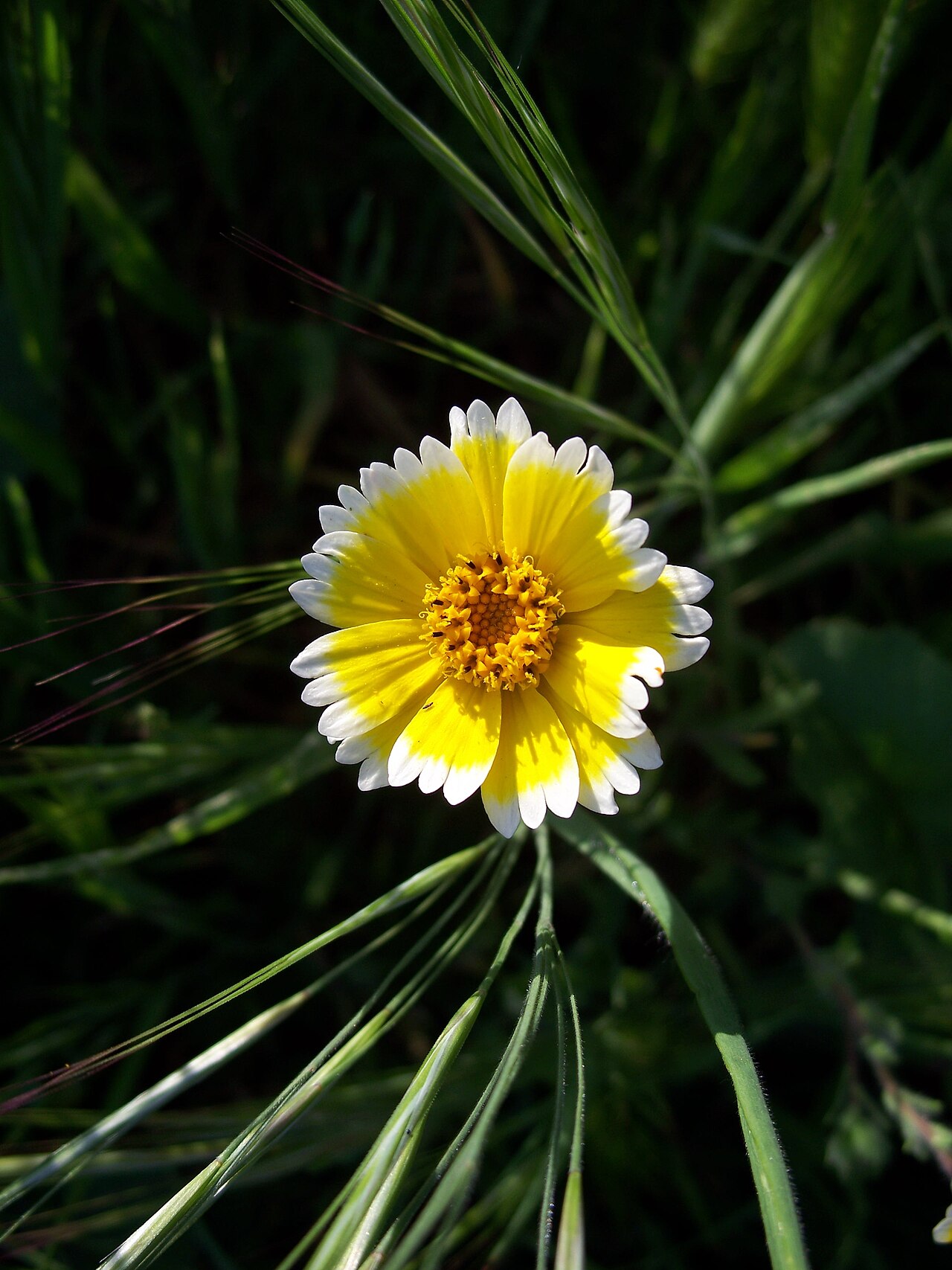
Layia platyglossa, commonly called tidy tips or coastal tidytips, is one of the most recognizable spring annuals of California’s grasslands and open slopes. It belongs to the sunflower family (Asteraceae) and gets its common name from the crisp, hand-painted look of its flowers: each bright yellow ray petal ends in a clean band of white, as though someone had dipped the tips in paint. The effect is tidy and geometric even up close, which is exactly what early botanists and gardeners noticed when they named it.
Tidy tips is a low, branching annual that rarely exceeds a foot and a half in height, built for a fast life cycle: germinate with fall or winter rain, grow through the cool months, flower heavily in spring, set seed, and die back before the summer drought sets in. In good years it carpets hillsides and valley floors by the thousands, often mixing with California poppy, goldfields, and lupine to create the classic multicolored wildflower meadows that draw visitors to places like the Carrizo Plain and the foothills ringing the Central Valley.
Because it germinates readily from seed, tolerates poor soils, and asks for very little once established, tidy tips has become a staple of California native wildflower seed mixes. It is equally at home scattered through a meadow garden, tucked into a rock garden border, or used as a quick, colorful filler in a newly planted native bed while slower perennials and shrubs mature around it.
Identification
Tidy tips is an annual forb with a low, often sprawling to ascending habit, typically 6 to 16 inches tall and somewhat wider, branching from the base into several flowering stems. The whole plant has a soft, slightly rough texture from short hairs covering the stems and leaves, which helps it hold on to moisture during dry spring days.
Leaves
Leaves are narrow and gray-green, arranged alternately along the stem. Lower leaves are often lobed or toothed and may form a loose basal rosette early in the season, while upper leaves are usually simple, linear, and smaller. The foliage has a slightly sticky or hairy feel and a mild, resinous scent typical of many California composites.
Flowers
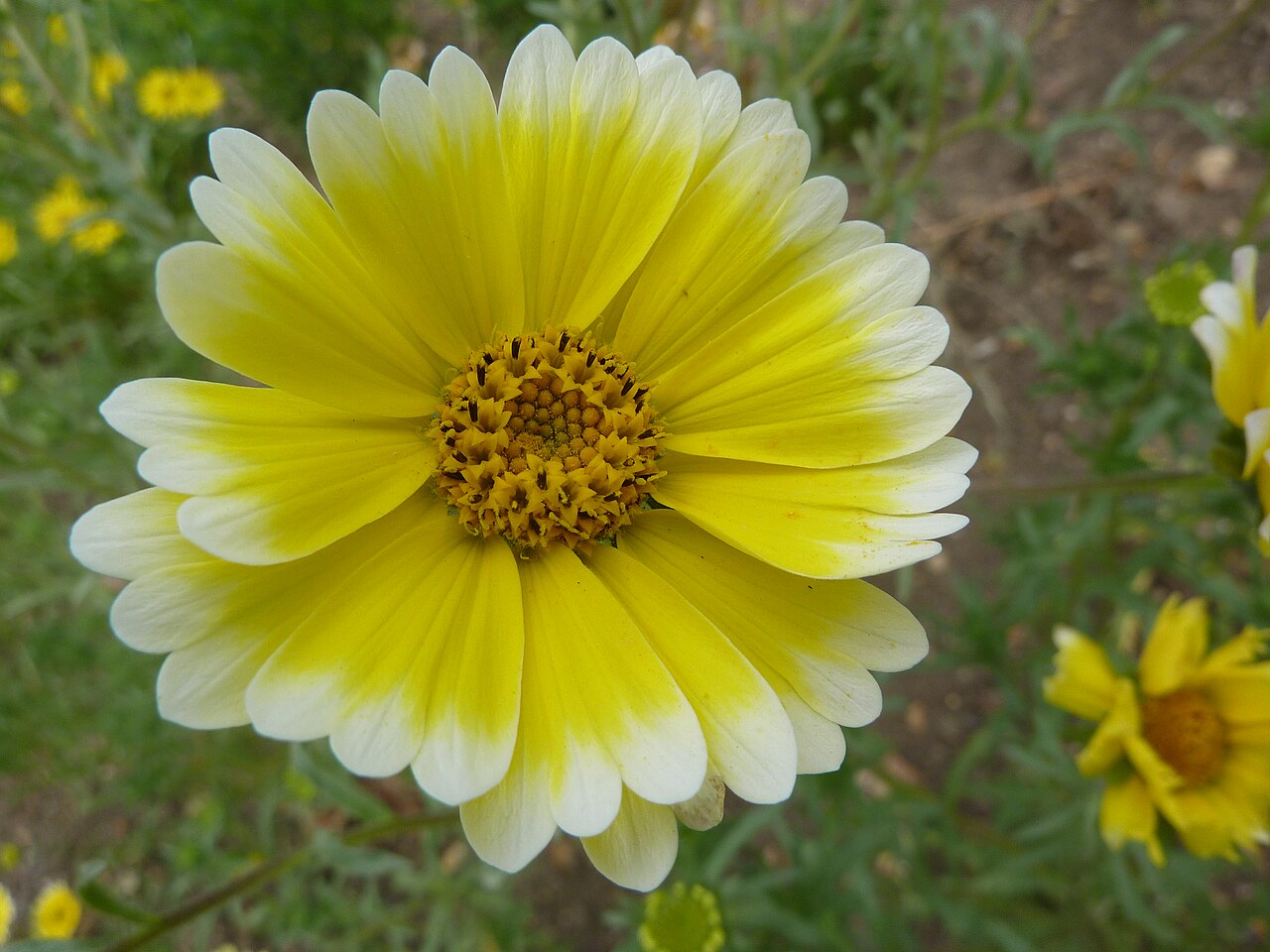
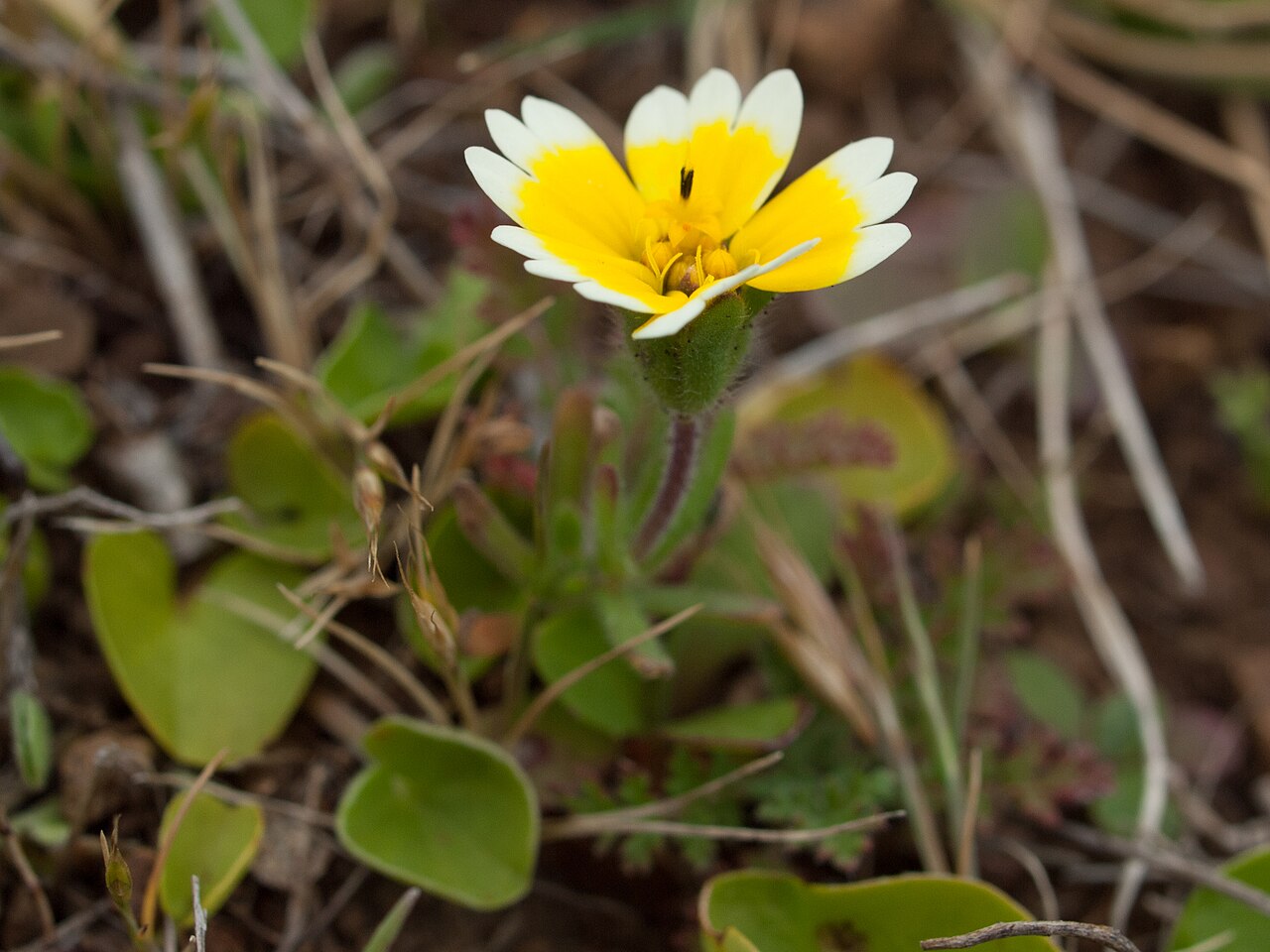
The flower heads are the plant’s signature feature: daisy-like composite heads about 1 to 2 inches across, with 6 to 16 broad ray flowers that are bright yellow at the base and sharply tipped in white. The central disc is a deeper golden yellow, packed with small tubular disc flowers that open in sequence from the outer ring inward. Each stem typically carries several flower heads, opening over a period of weeks so that a single plant stays in bloom for an extended spring display.
Fruit & Seeds
After pollination, each disc flower produces a small, slender achene tipped with a tuft of bristly pappus that aids in wind dispersal, though most seed simply drops near the parent plant and lies dormant until the next germinating rain. Seed set is prolific in a good bloom year, which is part of why tidy tips reseeds so reliably once established in a garden bed.
Quick Facts
| Scientific Name | Layia platyglossa |
| Family | Asteraceae (Sunflower) |
| Plant Type | Annual Wildflower |
| Mature Height | 6–16 in (15–40 cm) |
| Mature Spread | 6–12 in (15–30 cm) |
| Growth Rate | Fast (completes life cycle in one season) |
| Sun Exposure | Full Sun |
| Water Needs | Low once established; benefits from winter-spring rain |
| Soil Type | Sandy loam to clay; tolerates poor, rocky soils |
| Soil pH | 6.0–7.5 (adaptable) |
| Bloom Time | March – June |
| Flower Color | Yellow with white-tipped ray petals |
| Fall Color | Not applicable (annual, dies back by early summer) |
| Fruit | Small bristle-tipped achenes |
| Deer Resistant | Generally yes; not a preferred browse plant |
| USDA Hardiness Zones | 7–10 (grown as a reseeding annual) |
Native Range
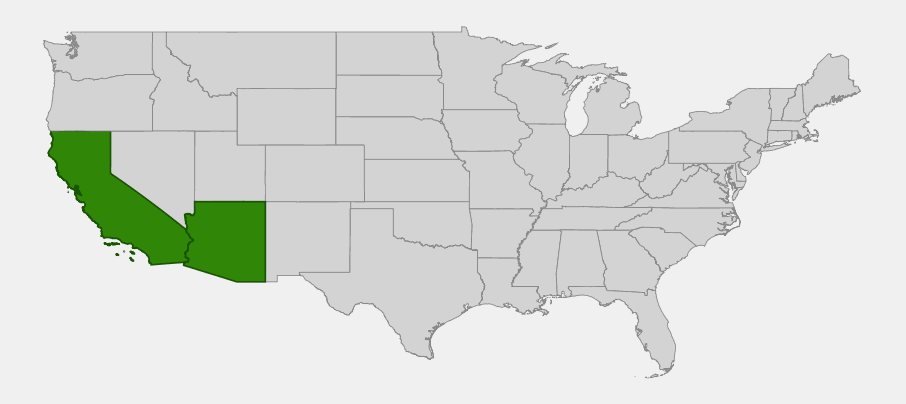
Tidy tips is native to California, where it occurs from the coast to the inland valleys and foothills, and it extends into southern Arizona. It is most abundant and widespread in California, where it is a familiar sight across the Coast Ranges, the Central Valley and surrounding foothills, the Transverse and Peninsular Ranges, and parts of the Mojave and Colorado deserts.
Outside California, tidy tips reaches a smaller, more localized distribution in the drier parts of southern Arizona, where it occupies similar open, sunny ground at low to moderate elevation. Gardeners in Arizona should know that tidy tips is far less common there than in California and tends to be restricted to specific desert grassland and wash habitats rather than occurring broadly across the landscape.
Within its range, tidy tips favors open, sunny ground with little competing vegetation: grassy flats, sandy or gravelly washes, coastal bluffs, vernal pool margins, and disturbed areas along roadsides and trails. It is an annual specialist of these open-ground niches, appearing reliably wherever winter rains are followed by a sunny, well-drained spot.
📋 Regional plant lists featuring Tidy Tips: California & Nevada · Arizona & New Mexico
Growing & Care Guide
Tidy tips is one of the easiest California wildflowers to grow from seed, and it rewards very little effort with weeks of cheerful bloom. The main trick is timing: like most California annuals, it wants to germinate with cool-season rain and finish its life cycle before summer heat arrives.
Light
Give tidy tips full sun. It flowers best and stays compact in open, unshaded ground; in partial shade it stretches, flops, and blooms more sparsely.
Soil & Water
This species is not fussy about soil texture and grows in sandy loam, clay loam, and rocky or gravelly ground alike, as long as drainage is reasonable. Rich, heavily amended garden soil is not necessary and can even encourage floppy, overly lush growth at the expense of flowers. Water needs are low: rely on winter and early spring rainfall where possible, and supplement only during dry spells while plants are actively growing. Once the plant begins to set seed and dry down in late spring, withhold water entirely and let it complete its natural cycle.
Planting Tips
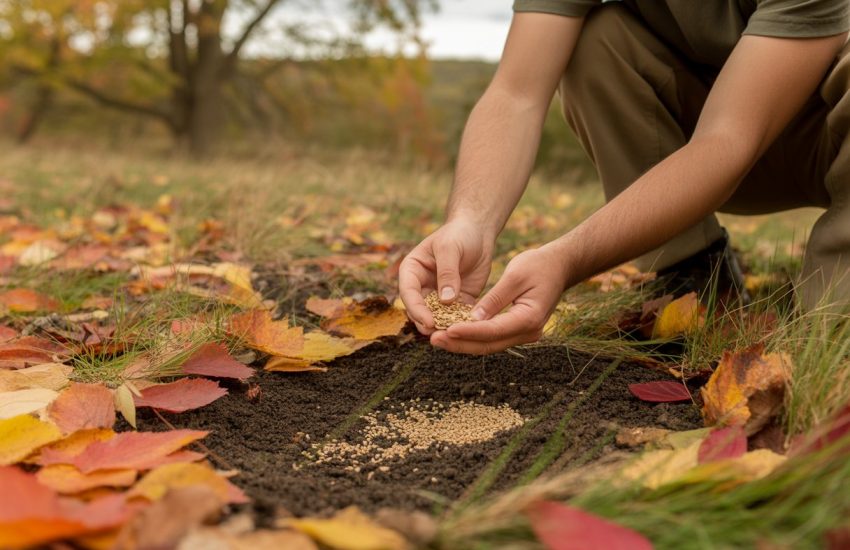
Sow seed directly in fall, after the first autumn rains have softened the soil, for the most natural germination timing and strongest spring display. Scatter seed over bare, cleared ground and rake lightly to ensure good seed-to-soil contact; tidy tips germinates readily without special pretreatment. In mild coastal gardens, a late-winter sowing can still produce a reasonable bloom, though fall sowing generally gives larger, earlier-flowering plants. Thin seedlings if they come up too densely, since crowded plants produce fewer, smaller flowers.
Pruning & Maintenance
Tidy tips needs no pruning. Deadheading spent flower heads can extend bloom slightly and tidy the plant’s appearance, but it also reduces the self-sown seed crop that keeps a planting going from year to year. Most gardeners let plants set seed and dry naturally, then clear the dead foliage once it has browned and crisped, scattering any loose seed back over the planting area first.
Propagation
Propagation is by seed only. Collect dry seed heads once the pappus has turned fluffy and tan, store seed in a cool, dry place, and sow the following fall. No stratification or special treatment is needed for reliable germination.
Landscape Uses
- Wildflower meadows mixed with California poppy, lupine, and goldfields
- Pollinator gardens as a reliable, long-blooming nectar source
- Erosion control on open slopes during the rainy season
- Seasonal color filling gaps between young native shrubs and perennials
- Cut flowers for informal spring bouquets
- Rock gardens and gravel plantings with sharp drainage
Wildlife & Ecological Value
As one of the most abundant spring annuals across much of its range, tidy tips plays a meaningful supporting role in California’s grassland and scrub ecosystems during the short but critical spring bloom window.
For Pollinators
The open, flat flower heads are easy landing platforms for a wide range of small native bees, syrphid flies, and other beneficial insects, and the long bloom period provides a dependable nectar and pollen source through the heart of spring, when many other food sources are just coming into flower.
For Birds
Small seed-eating birds forage through tidy tips stands for the ripening achenes as plants dry down in late spring, adding to the broader mix of annual wildflower seed that sustains sparrows, finches, and other grassland birds through the lean transition into summer.
For Mammals
Small mammals browse young tidy tips foliage and gather fallen seed, though the plant is not a primary food source for any species and is generally left alone by deer and larger browsers, which tend to prefer more substantial forage.
Ecosystem Role
Tidy tips is part of the dense carpet of spring annuals that stabilizes open ground through the rainy season, its fibrous roots helping to hold loose or disturbed soil until perennial grasses and shrubs reestablish cover. Its reliable, prolific seed production also helps maintain the soil seed bank that lets California’s wildflower displays rebound after fire, grazing, or other disturbance.
Cultural & Historical Uses
Tidy tips does not carry the deep documented history of medicinal or utilitarian use that some California natives do; its primary significance, historically and today, is as one of the signature wildflowers of the California spring bloom. Early American and European visitors to California in the 19th century frequently remarked on the vast, multicolored wildflower fields of the Central Valley and coastal foothills, and tidy tips, with its sharply contrasting yellow-and-white blooms, was among the species that made those displays so memorable.
The plant’s tidy, geometric flower pattern made it a popular subject for botanical illustration and, later, for California wildflower photography and tourism imagery, helping to cement its place as an emblem of the state’s native spring flora alongside California poppy and lupine.
In more recent decades, tidy tips has become a cornerstone species in commercial California native wildflower seed mixes, used widely in habitat restoration, pollinator garden plantings, and roadside beautification projects. Its ease of establishment and reliable, showy bloom have made it one of the most commonly recommended annuals for gardeners taking their first steps into California native landscaping.
Frequently Asked Questions
Is tidy tips easy to grow from seed?
Yes. Tidy tips is one of the easiest California native annuals to start from seed. Simply scatter seed over bare, sunny ground in fall and let winter rain handle germination; no stratification or special treatment is required.
Will tidy tips come back every year?
As an annual, each individual plant completes its life cycle and dies within one growing season, but established plantings reseed themselves reliably if allowed to set and drop seed before cleanup, so a patch can return year after year with minimal replanting.
Does tidy tips need regular watering?
No. Once established from fall-sown seed, tidy tips relies mainly on winter and spring rainfall and needs little to no supplemental water. Overwatering, especially in summer, can rot the roots or prevent the plant from completing its natural dry-down.
Can tidy tips grow outside California?
Yes, in parts of southern Arizona where it occurs naturally in desert grassland and wash habitats, though it is far less common there than in California. Gardeners outside its native range who want to grow it should check that their local conditions mimic open, sunny, well-drained ground with a cool, wet winter followed by a dry spring and summer.
What does tidy tips attract in a garden?
Its flat, accessible flower heads are popular with small native bees and other pollinating insects throughout its long spring bloom period, making it a useful, low-maintenance addition to a pollinator-focused native garden.

Looking for a nursery that carries Tidy Tips?
Browse our native plant nursery directory: California · Arizona