Mojave Yucca (Yucca schidigera)
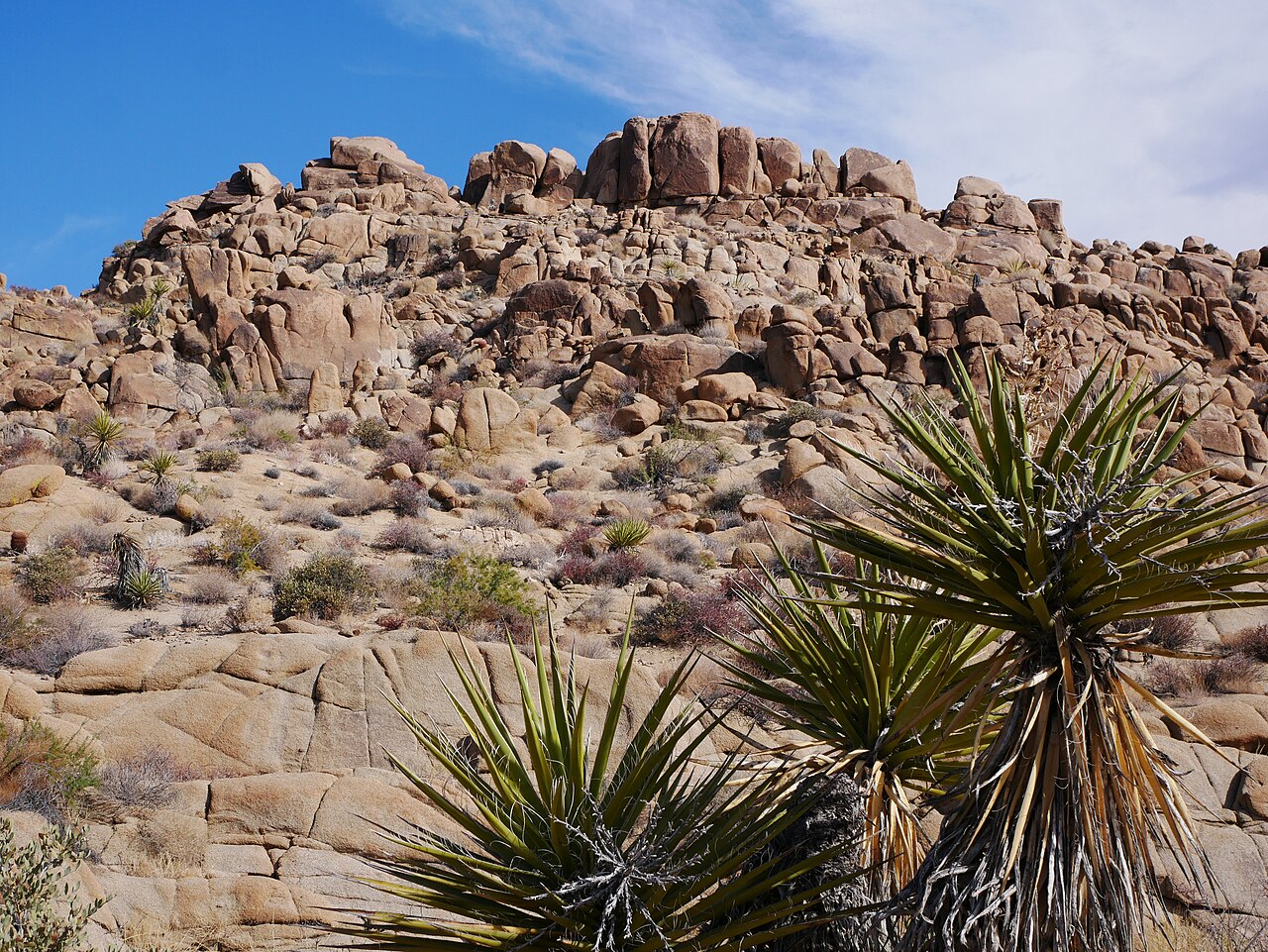
Yucca schidigera, known as Mojave yucca, is a bold, architectural evergreen succulent of the Mojave and Sonoran deserts. A member of the agave family (Asparagaceae), it forms dense rosettes of stiff, dagger-like leaves atop trunks that slowly thicken and branch with age, eventually becoming small, picturesque trees up to 15 feet tall in old specimens. Its tough, fibrous leaves and imposing form make it one of the signature plants of the California and Nevada desert landscape.
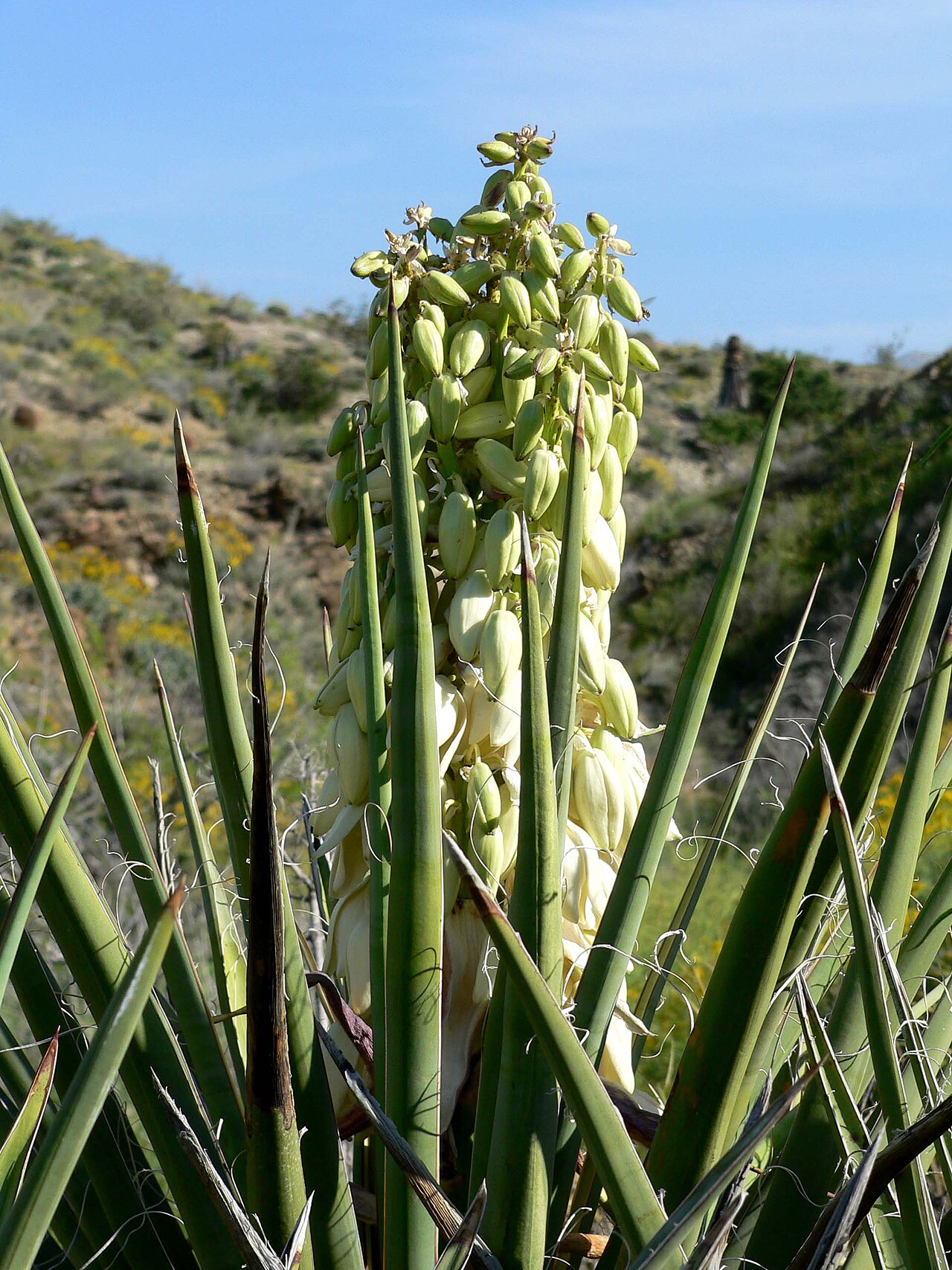
Each spring, mature Mojave yuccas send up a dramatic flower stalk densely packed with creamy white to pale lavender, bell-shaped blooms, pollinated almost exclusively by a single species of yucca moth in one of the most specialized plant-pollinator relationships in North America. The thick, straplike leaves are edged with curling white threads (filaments) that peel from the margins, a useful identification feature distinguishing it from similar desert yuccas.
Extremely drought tolerant and essentially indestructible once established, Mojave yucca is a favorite architectural accent for xeriscapes and desert gardens throughout its native range, prized for its sculptural form, low water needs, and striking spring bloom.
Identification
Mojave yucca grows as a single or multi-headed rosette of leaves, often developing a stout, branching trunk 3 to 15 feet tall over many decades, with old leaves persisting as a dry, thatched skirt below the live rosette.
Trunk & Stems
Young plants are stemless or nearly so, with the rosette sitting close to the ground. Over years to decades, a thick, woody trunk develops, often branching into several heads, each capped with its own rosette of leaves. Old, dead leaves typically remain attached below the active growth, forming a dense, straw-colored thatch that insulates the trunk and provides shelter for wildlife.
Leaves
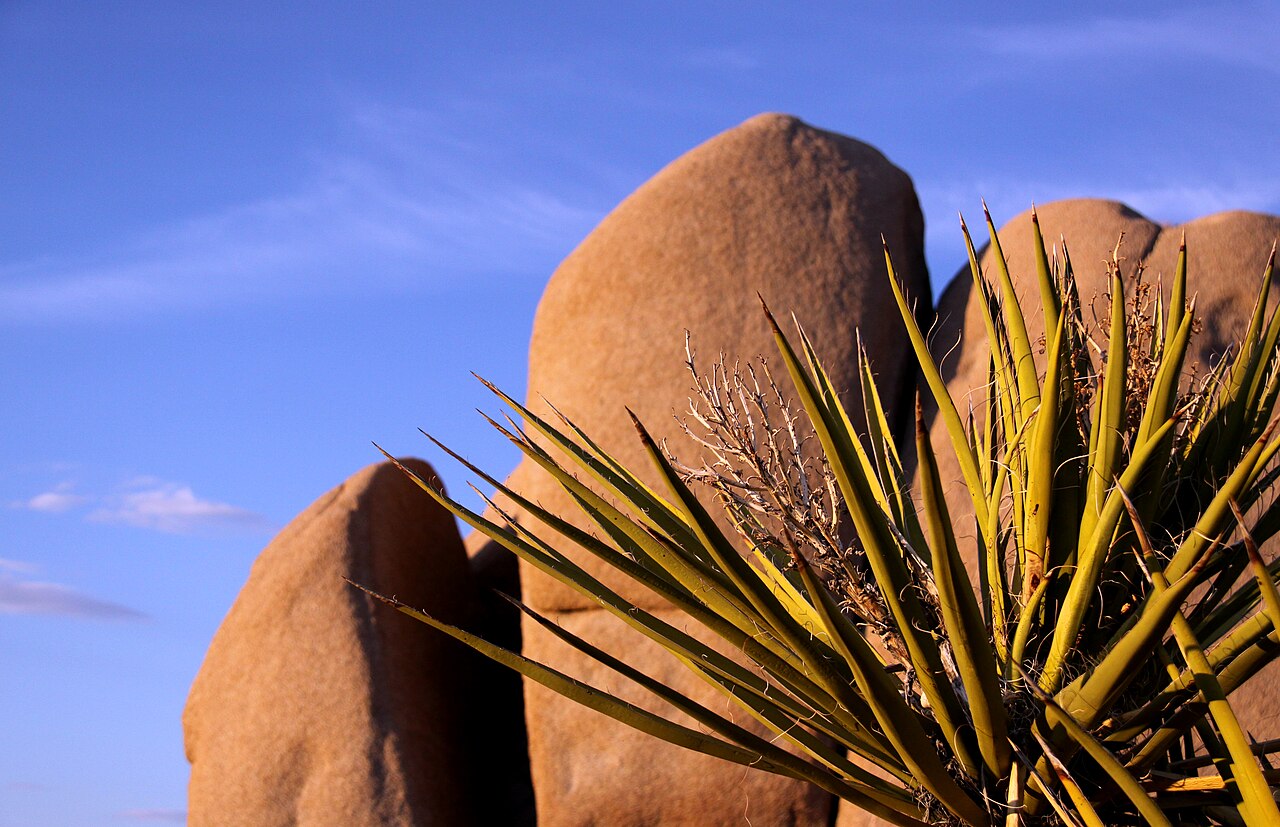
Leaves are stiff, straight, and dagger-shaped, 1 to 4 feet long and 1 to 2 inches wide, tapering to a needle-sharp point capable of puncturing skin or clothing. Leaf color ranges from blue-green to yellow-green. The margins are lined with curling, pale fibrous threads that peel away in strands — a key feature separating Mojave yucca from similar species such as banana yucca, whose leaf margins are smoother.
Flowers
In spring, mature rosettes send up a dense, cylindrical flower spike 1 to 4 feet tall, often partly hidden within the leaves, packed with dozens of nodding, bell-shaped flowers in cream, white, or pale purple-tinged tones. Pollination depends almost entirely on the yucca moth (Tegeticula species), which actively packs pollen onto the stigma while laying eggs in the ovary — a textbook example of obligate mutualism in which neither species can reproduce without the other.
Fruit & Seeds
Pollinated flowers develop into fleshy, elongated, blackish-brown capsules 2 to 4 inches long that hang from the spike as they ripen in summer. Each fruit contains numerous flat, black seeds. Unlike the dry, splitting capsules of some yucca relatives, Mojave yucca fruit stays somewhat fleshy and was historically an important food source.
Quick Facts
| Scientific Name | Yucca schidigera |
| Family | Asparagaceae (Agave subfamily) |
| Plant Type | Evergreen Succulent / Small Tree |
| Mature Height | 3–15 ft |
| Mature Spread | 3–8 ft |
| Growth Rate | Slow |
| Sun Exposure | Full Sun |
| Water Needs | Very Low |
| Soil Type | Sandy, rocky, or gravelly; excellent drainage required |
| Soil pH | 6.5–8.0 (neutral to alkaline) |
| Bloom Time | March – May |
| Flower Color | Cream to pale lavender-white |
| Fall Color | None (evergreen) |
| Fruit | Fleshy blackish-brown capsule |
| Deer Resistant | Yes |
| USDA Hardiness Zones | 7–11 |
Native Range
Mojave yucca is native to the Mojave Desert and adjacent portions of the Sonoran and Colorado deserts, ranging across southeastern California, southern Nevada and western Arizona. It is one of the most characteristic large succulents of this region, often visible for miles across open desert flats and rocky bajadas.
It typically grows in creosote bush scrub and Joshua tree woodland on well-drained, rocky, gravelly, or sandy soils from low desert basins up into higher desert foothills, generally below 6,000 feet elevation. Common associates include creosote bush, Joshua tree, and various cacti and desert shrubs adapted to the same hot, dry conditions.
Mojave yucca is extremely tolerant of heat and drought but, like most desert succulents, is intolerant of poorly drained or consistently moist soils, which quickly cause root and crown rot outside its native arid range.
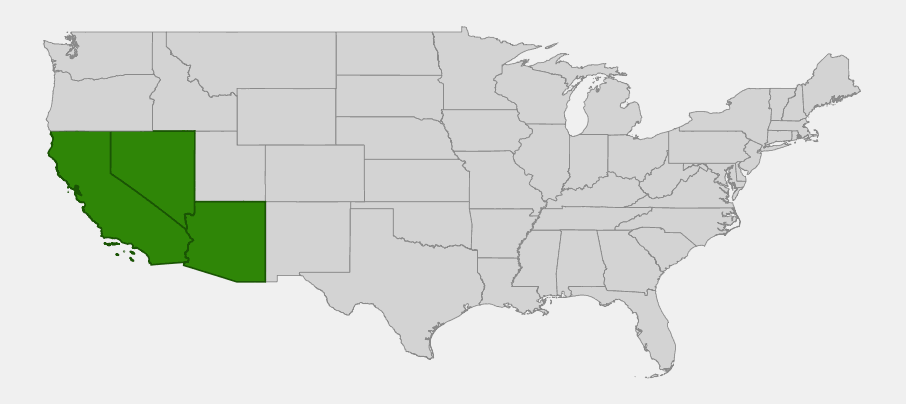
📋 Regional plant lists featuring Mojave Yucca: California & Nevada · Arizona & New Mexico
Growing & Care Guide
Mojave yucca is a nearly maintenance-free plant once established, thriving on neglect in hot, dry gardens where it provides bold architectural structure year-round.
Light
Full sun is essential for healthy, compact growth and reliable flowering. In shade, rosettes become stretched and sparse, and plants rarely bloom well. Mojave yucca tolerates the most intense, reflected desert heat without any protection.
Soil & Water
Sharp drainage is critical — Mojave yucca is adapted to coarse, rocky or sandy desert soils and will develop root and crown rot in heavy or poorly drained ground, especially if kept consistently moist. Once established, it needs little to no supplemental water in most climates within its native range; occasional deep watering during extended summer drought is usually all that is needed. Avoid overhead watering that keeps the crown wet.
Planting Tips
Plant in spring or fall, siting the crown slightly above grade to shed water away from the base. Amend heavy soils with coarse sand or gravel, or plant on a raised mound or berm. Handle young plants carefully — the leaf tips are needle-sharp and can cause serious puncture wounds — and keep plantings away from walkways and areas with foot traffic.
Pruning & Maintenance
Little pruning is required. Dead lower leaves can be left in place as natural mulch and wildlife habitat, or trimmed off for a tidier look; use thick gloves and long sleeves when working near the plant. Remove spent flower stalks after bloom if desired, though they can also be left to mature fruit for wildlife and seed collection.
Propagation
Mojave yucca is most commonly propagated from seed, which germinates readily when fresh, or from offsets (basal pups) that some plants produce at the base of the trunk. Offsets can be separated with a sharp, clean tool and allowed to callus before replanting. Growth from either method is slow, consistent with the species’ long-lived, deliberate growth habit.
Landscape Uses
- Architectural focal point in desert and xeriscape gardens
- Rock gardens and gravel beds with other desert natives
- Security or barrier plantings thanks to its sharp leaf tips
- Low-water landscaping requiring no supplemental irrigation once established
- Wildlife gardens supporting the specialized yucca moth relationship
- Container specimens for patios in suitable climates
Wildlife & Ecological Value
Mojave yucca is a keystone species in the deserts where it grows, supporting a web of specialized relationships and providing year-round structure, food, and shelter.
For Pollinators
Mojave yucca depends entirely on the yucca moth for pollination, a relationship so specific that neither species can complete its life cycle without the other: the moth actively pollinates the flowers while laying eggs that will become larvae feeding on a portion of the developing seeds. This obligate mutualism makes Mojave yucca a critical host plant for its moth pollinators within its native range.
For Birds
Desert birds, including cactus wrens and various sparrows, use the dense, spiny rosettes and dry leaf thatch for nesting sites protected from predators by the sharp leaves. Some birds also forage for insects drawn to the flowers and fruit.
For Mammals
Desert woodrats (packrats) frequently build their dens at the base of Mojave yucca, using the sharp, fibrous leaves as a defensive barrier against predators. Various rodents and larger mammals, including desert bighorn sheep in some areas, browse the flowers and fruit when available.
Ecosystem Role
As one of the larger, longer-lived plants in its desert communities, Mojave yucca provides critical vertical structure, shade, and shelter in an otherwise low, open landscape. Its persistence over many decades makes it an anchor species around which smaller desert plants and animals build their own niches, and its obligate relationship with yucca moths makes it ecologically irreplaceable within its native range.
Cultural & Historical Uses
Mojave yucca held major cultural and practical importance for Indigenous peoples of the Mojave and Sonoran deserts, including the Mojave, Chemehuevi, and other desert tribes. The tough, fibrous leaves were processed into cordage, sandals, baskets, mats, and nets, and the plant’s roots contain saponins that produce a natural lather, leading to historical use as a soap and shampoo.
The fleshy fruit was an important traditional food, eaten fresh, roasted, or dried and stored for later use, while the flower stalks and buds were also prepared and eaten in some communities. This history of food, fiber, and utility use is well documented in ethnobotanical records of the region.
Mojave yucca remains culturally significant today, and its saponin-rich roots continue to be used commercially as a natural foaming and flavoring agent in some products. In the garden, it is valued primarily as a bold, sculptural native accent that connects desert landscaping to the region’s deep human history with the plant.
Frequently Asked Questions
How do I tell Mojave yucca apart from banana yucca?
Mojave yucca has leaf margins lined with curling, peeling white fibers and typically develops a visible branching trunk with age, while banana yucca usually stays low and trunkless with smoother, less fibrous leaf margins and a thicker, banana-shaped fruit.
Is Mojave yucca dangerous to touch?
The leaf tips are extremely sharp and can cause painful puncture wounds, so it should be planted away from walkways and handled with care, especially around children and pets. It is not toxic to touch, but the physical injury risk from the spines is real.
How long does it take Mojave yucca to flower?
Plants typically need several years of growth before they reach blooming size, and even mature plants may not flower every year, often depending on winter and spring rainfall. Once large enough, healthy plants usually flower in most years.
Can Mojave yucca be grown outside the desert Southwest?
It can be grown in other hot, dry, well-drained climates, but it needs excellent drainage and minimal winter moisture to thrive; gardeners in humid or wet-winter regions will likely struggle to keep it alive long-term.
Does Mojave yucca need the yucca moth to survive?
Established plants can live for decades without setting seed, but without yucca moth pollination they will not reproduce sexually. Within its native range, the moth is typically present and pollination occurs naturally.

Looking for a nursery that carries Mojave Yucca?
Browse our native plant nursery directory: California · Nevada · Arizona