Lacey Oak (Quercus laceyi)
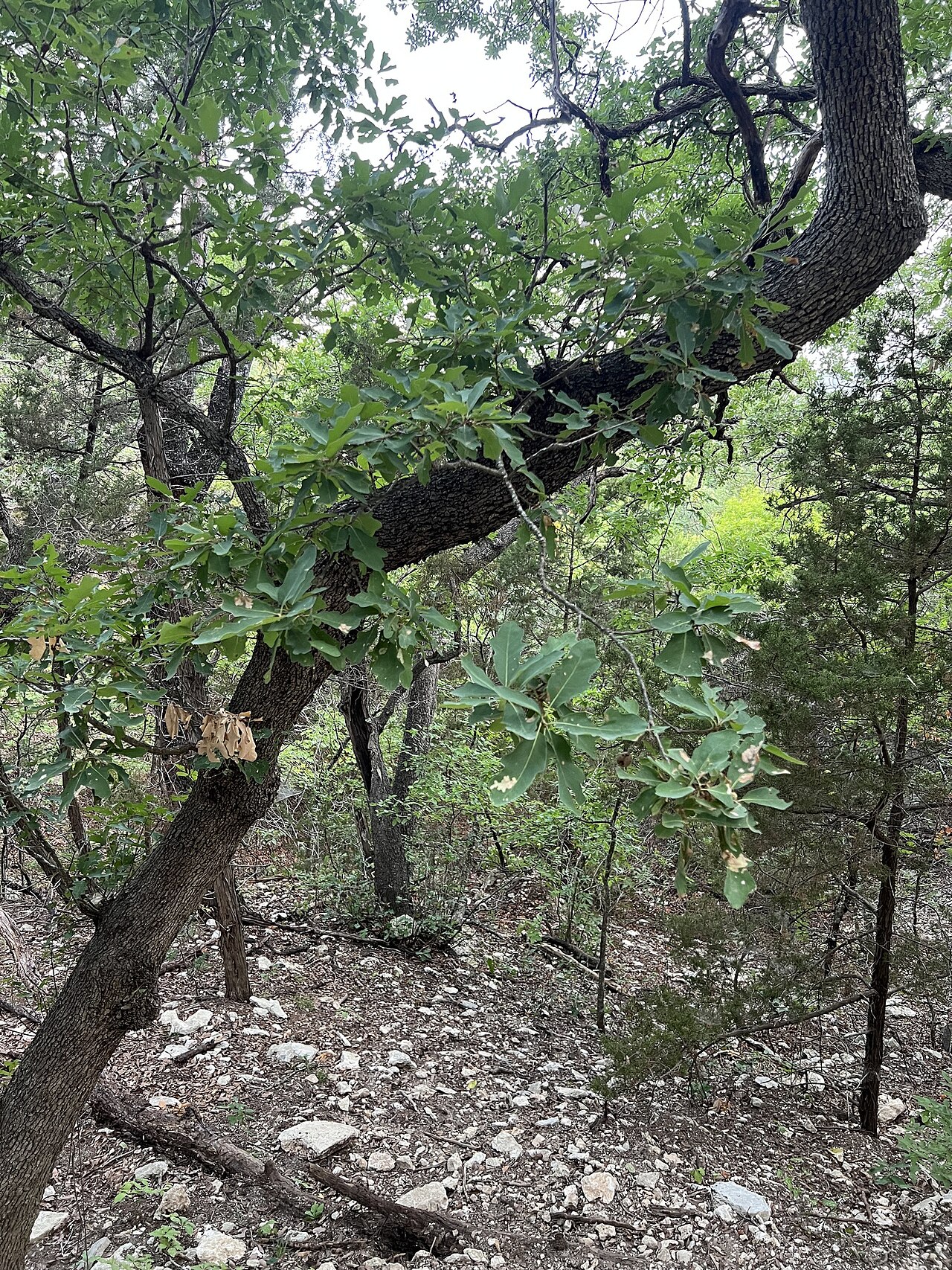
Quercus laceyi, commonly known as Lacey Oak, is a small to medium deciduous tree found almost nowhere outside the Texas Hill Country and a narrow band of northeastern Mexico. Named for the Texas botanist Howard Lacey, this white-oak-group species has earned a devoted following among Central Texas gardeners for a trait few other native trees offer: distinctly blue-gray, smoky-looking summer foliage that shifts to soft peach or pink as it emerges in spring and again as it colors in fall. In 2002 it was named a Texas Superstar by Texas A&M AgriLife Extension, recognition reserved for plants proven to perform exceptionally well across Texas growing conditions.
Lacey Oak is a tree of limestone — it grows on rocky bluffs, canyon rims, and thin, well-drained Hill Country soils where many other oaks struggle, sending a deep taproot down through cracks in the bedrock in search of moisture. This same root structure makes it slow-growing but exceptionally drought tolerant once established, and less prone to the surface-root damage to foundations and pavement that larger, faster-growing oaks can cause.
For Texas gardeners looking for a native, climate-adapted shade tree with striking foliage color and a manageable mature size, Lacey Oak is one of the best choices available — though its limited native range means it is a plant for Central and West Texas specifically, not a species to plant as “native” outside that region.
Identification
Lacey Oak grows as a small to medium tree on good sites, 20 to 40 feet tall with a spread of 15 to 30 feet, but is often shrubby and multi-trunked on poor, shallow, rocky ground. Branches are erect and spreading, and the overall form tends to be rounded and somewhat open rather than densely crowned.
Bark
Mature bark is light gray, broken into shallow furrows and flat, scaly ridges — a texture intermediate between the blocky bark of post oak and the smoother bark of live oak.
Leaves
Leaves are deciduous, thick and somewhat leathery, oblong to obovate, with a few shallow, rounded lobes rather than the deep, pointed lobes typical of red oaks. The real identifying feature is color: new leaves emerge a soft peach or pink in spring, mature to a distinctive dark blue-green or grayish-green through summer that gives the whole canopy a smoky, hazy appearance from a distance, and often shift back toward peach, yellow, or soft orange in fall before dropping.
Acorns
Like all oaks, Lacey Oak produces acorns — small, oval, and borne singly or in pairs, maturing in a single season. As with other oak species, the acorns and young leaves contain tannins and are not intended for human consumption without extensive processing; they are, however, an important food source for wildlife.
Quick Facts
| Scientific Name | Quercus laceyi |
| Family | Fagaceae (Beech/Oak) |
| Plant Type | Deciduous Tree (white oak group) |
| Mature Height | 20–40 ft (shrubby on poor sites) |
| Mature Spread | 15–30 ft |
| Growth Rate | Slow |
| Sun Exposure | Full Sun to Part Shade |
| Water Needs | Low; excellent drought tolerance once established |
| Soil Type | Rocky, shallow, well-drained limestone soils |
| Soil pH | Neutral to alkaline (7.0–8.5) |
| Foliage Color | Peach (spring) → blue-gray/smoky green (summer) → peach-orange (fall) |
| Fruit | Small acorns, singly or in pairs |
| Deer Resistant | Moderate (young trees may be browsed) |
| USDA Hardiness Zones | 7–9 |
Native Range
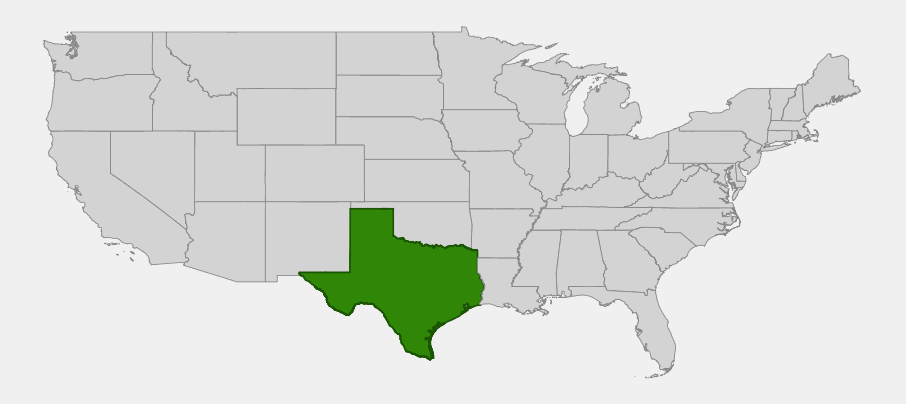
Lacey Oak has one of the most geographically limited native ranges of any widely grown Texas oak. In the United States it occurs almost entirely within the Edwards Plateau and adjacent western Hill Country counties of Central Texas, with its range extending south and west into the rockier parts of the Rio Grande Plains and southwestern Texas. Outside Texas, it is native to the mountains of Coahuila and Nuevo León in northeastern Mexico.
Within its native range, Lacey Oak is consistently a plant of limestone: canyon bluffs, caliche-capped ridgelines, and rocky, shallow-soiled hillsides in oak-juniper woodland, often growing alongside Plateau Live Oak, Texas Persimmon, and Ashe Juniper. It is rarely encountered on deep, rich, or poorly drained soils, and does not occur natively in the eastern or coastal portions of Texas.
Because its native distribution is so narrow, Lacey Oak is not a native species for gardeners in most of the rest of Texas, let alone the rest of the country — it is best understood as a regional specialty of the Hill Country and adjacent limestone country, where it is both native and exceptionally well adapted.
📋 Regional plant lists featuring Lacey Oak: South and West Texas
Growing & Care Guide
Lacey Oak rewards patience: it is a slow grower, but one that asks for very little once its roots are established, and its unusual foliage color makes it a standout even as a young tree.
Light
Plant in full sun to part shade. Full sun produces the fullest canopy and best foliage color contrast through the seasons; light shade is tolerated, especially for young trees establishing beneath existing canopy.
Soil & Water
Lacey Oak is built for thin, rocky, well-drained, alkaline limestone soils and performs best where drainage is sharp. It tolerates both deep caliche and shallow soil over solid rock, sending a deep taproot into cracks and fissures rather than spreading aggressively at the surface. Water young trees regularly through their first two to three growing seasons; established trees need little to no supplemental irrigation even through Texas summer droughts. Good drainage is more important than soil fertility — avoid heavy clay or sites that hold standing water.
Planting Tips
Plant container-grown trees in fall or winter to allow root establishment before summer heat. Because of its deep taproot and lack of aggressive surface roots, Lacey Oak is a safer choice than many larger oaks for planting near patios, driveways, and foundations. Expect slow growth in the first several years — this is normal and reflects energy going into root establishment rather than top growth.
Pruning & Maintenance
Prune in winter dormancy to establish a strong central leader and remove crossing or damaged branches; mature trees need little routine pruning. As with all Texas oaks, avoid pruning during the warm months in areas with oak wilt pressure, to reduce the risk of attracting the beetles that spread the disease. Lacey Oak, as a member of the white oak group, is generally considered less susceptible to oak wilt than red oak group species such as Shumard or Texas Red Oak, but it is not immune, and the same precautions apply.
Landscape Uses
Lacey Oak’s combination of manageable size, unusual color, and toughness suits several landscape roles:
- Shade tree for smaller residential lots where larger oaks would outgrow the space
- Specimen or accent tree for its distinctive blue-gray summer foliage and peach spring/fall color
- Xeriscaping and low-water Hill Country gardens
- Planting near hardscape — deep taproot reduces risk to patios and foundations
- Restoration plantings on rocky, degraded limestone sites within its native range
Wildlife & Ecological Value
As with oaks generally, Lacey Oak supports a wide web of wildlife despite its modest stature and slow growth.
For Wildlife
Acorns provide food for squirrels, deer, and numerous bird species, while the canopy offers nesting and foraging habitat for songbirds. Oaks as a genus are keystone species for native insect diversity, hosting far more caterpillar and moth species than most other tree genera — these insects, in turn, are a critical protein source for nesting songbirds.
For Pollinators
Like other oaks, Lacey Oak is wind-pollinated rather than insect-pollinated, so its flowers offer little direct nectar value, but the tree’s broader ecological role as a larval host plant for native moths and butterflies makes it valuable to pollinator populations indirectly, by supporting the insect food web that pollinators and their predators depend on.
Ecosystem Role
On the thin, rocky soils of the Edwards Plateau, Lacey Oak’s deep taproot helps stabilize slopes and access moisture unavailable to shallow-rooted plants, allowing it to persist in habitats too harsh for many other trees. Its presence in oak-juniper woodland adds structural and genetic diversity to a plant community often dominated by Ashe Juniper and live oak.
Cultural & Historical Uses
Lacey Oak is named for Howard Lacey, a Texas rancher and naturalist of the late 19th and early 20th centuries who collected plant specimens across the Hill Country and corresponded with leading botanists of his era, including those who first formally described the species. The tree itself has no major documented history of use by Indigenous peoples or early settlers distinct from the general use of oak wood and acorns common across the region — like other oaks, its wood is dense and durable, historically useful for fence posts and small construction, and its acorns, after leaching to remove bitter tannins, were among the foods processed by Indigenous peoples throughout oak-dominated regions of Texas.
In more recent decades, Lacey Oak’s horticultural reputation has grown substantially. Texas A&M AgriLife Extension named it a Texas Superstar in 2002, a designation given only to plants that have been trialed and proven to perform reliably across Texas growing conditions — recognition that has driven increased availability in Hill Country and Central Texas native-plant nurseries after decades of being a relatively obscure, rarely cultivated species.
Frequently Asked Questions
Why does Lacey Oak have blue-green leaves?
The blue-gray, smoky appearance of the summer foliage is a natural characteristic of the species, likely related to a waxy leaf coating that helps reduce water loss — an adaptation well suited to its hot, rocky, drought-prone native habitat.
How fast does Lacey Oak grow?
It is a slow-growing tree, typically adding well under a foot of height per year, especially in its first several seasons. Growth picks up somewhat once the root system is well established, but Lacey Oak will never be a fast shade tree — patience is part of growing it.
Is Lacey Oak susceptible to oak wilt?
As a white oak group species, Lacey Oak is generally more resistant to oak wilt than red oak group species like Shumard or Texas Red Oak, but no oak is immune. Avoid pruning during warm months when sap-feeding beetles that spread the fungus are active, and treat fresh wounds promptly.
Can Lacey Oak be planted outside Texas?
It can be grown horticulturally in similar hot, dry, alkaline-soil climates, but it is native only to the Texas Hill Country and adjacent Mexico — gardeners elsewhere should consider it a regional specialty rather than a native plant for their own area.
Are Lacey Oak acorns edible?
Like all oak acorns, they contain bitter tannins and are not safely eaten raw. They are valuable wildlife food, and historically, acorns of various oak species were processed by leaching before human consumption, but this is a traditional food-preparation practice, not a casual backyard activity.

Looking for a nursery that carries Lacey Oak?
Browse our native plant nursery directory: Texas