Evergreen Sumac (Rhus virens)
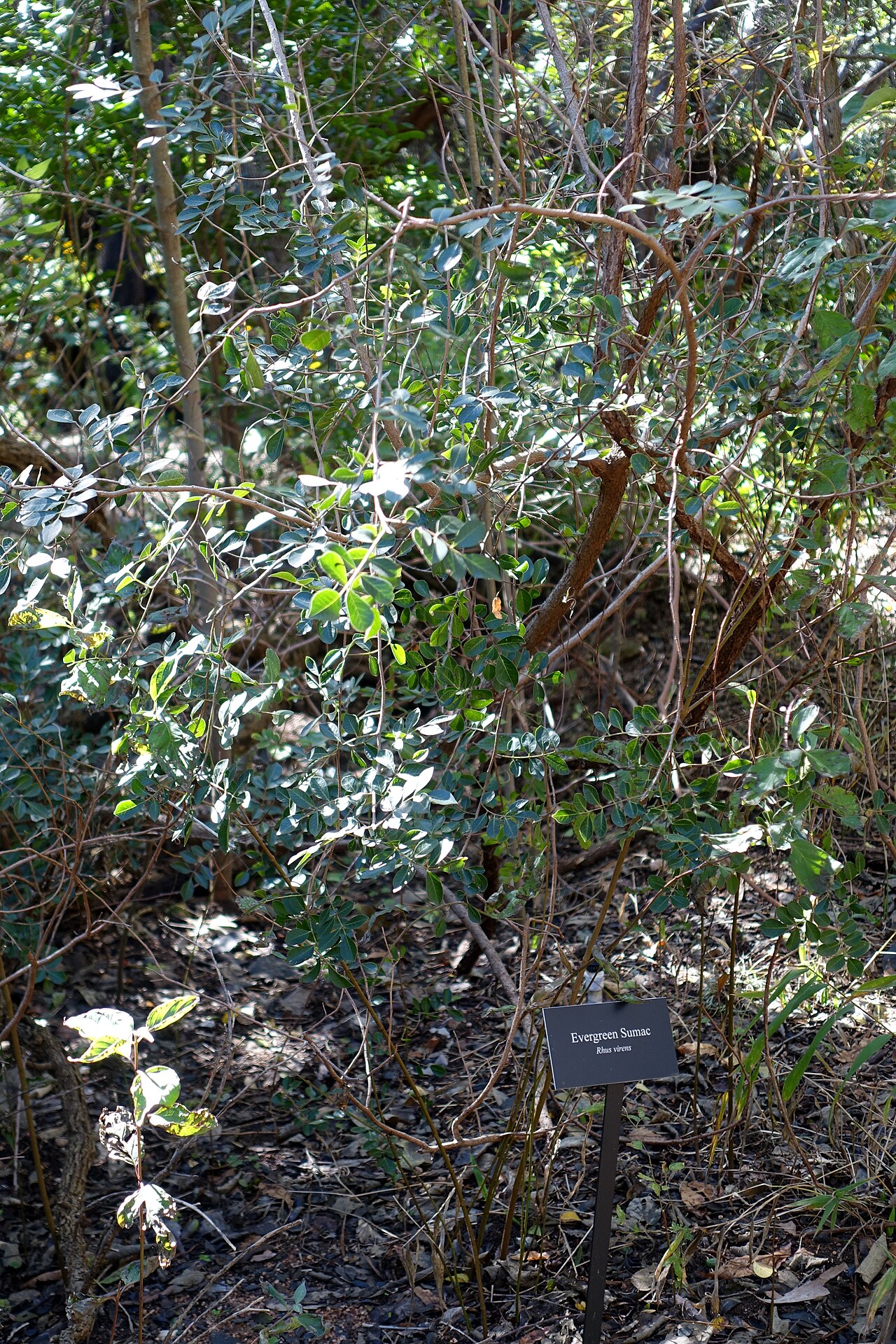
Rhus virens, commonly known as Evergreen Sumac, is a tough, broadleaf evergreen shrub of the Texas Hill Country, Trans-Pecos, and the borderlands of New Mexico and Arizona. Unlike most sumacs, which drop their leaves in fall and put on a blaze of red color, Evergreen Sumac keeps its glossy, leathery foliage through the winter, making it one of the few native shrubs in its range that provides year-round screening and structure. It belongs to the Anacardiaceae, or cashew family, alongside pistachios, mangoes, and other sumacs — and despite sharing a genus name with poison sumac‘s old classification, it carries none of that plant’s irritating oils. It is simply a tough, garden-friendly native.
In the wild, Evergreen Sumac grows on limestone bluffs, rocky slopes, and dry caliche hillsides where little else thrives, forming dense thickets 6 to 15 feet tall with an equal spread. Its pinnately compound leaves, divided into 5 to 9 thick, fleshy leaflets, emerge pink-bronze in spring, mature to a deep glossy green, and often take on a maroon or burgundy cast after the first hard frost. From midsummer into late fall it produces small, fuzzy clusters of fragrant white flowers at the branch tips — an unusually late bloom period that makes it one of the best fall nectar sources in Central and West Texas, often erupting into bloom just after a rain shower breaks a late-season dry spell.
For gardeners in Texas, New Mexico, and Arizona, Evergreen Sumac offers a rare combination: a genuinely drought-tough, low-maintenance native shrub that also functions as a wildlife magnet and a handsome, year-round evergreen hedge or screen. It asks for almost nothing once established and rewards with fall flowers when most other natives have finished blooming for the year.
Identification
Evergreen Sumac is a multi-stemmed, broadleaf evergreen shrub or small tree, typically reaching 6 to 15 feet tall and about as wide, though plants grown in full sun tend to stay denser and more rounded (often 8 to 10 feet), while those in part shade grow taller and more open as they reach for light. The branching is spreading and somewhat stiff, with young twigs often showing a reddish-brown, slightly fuzzy bark that matures to gray.
Leaves
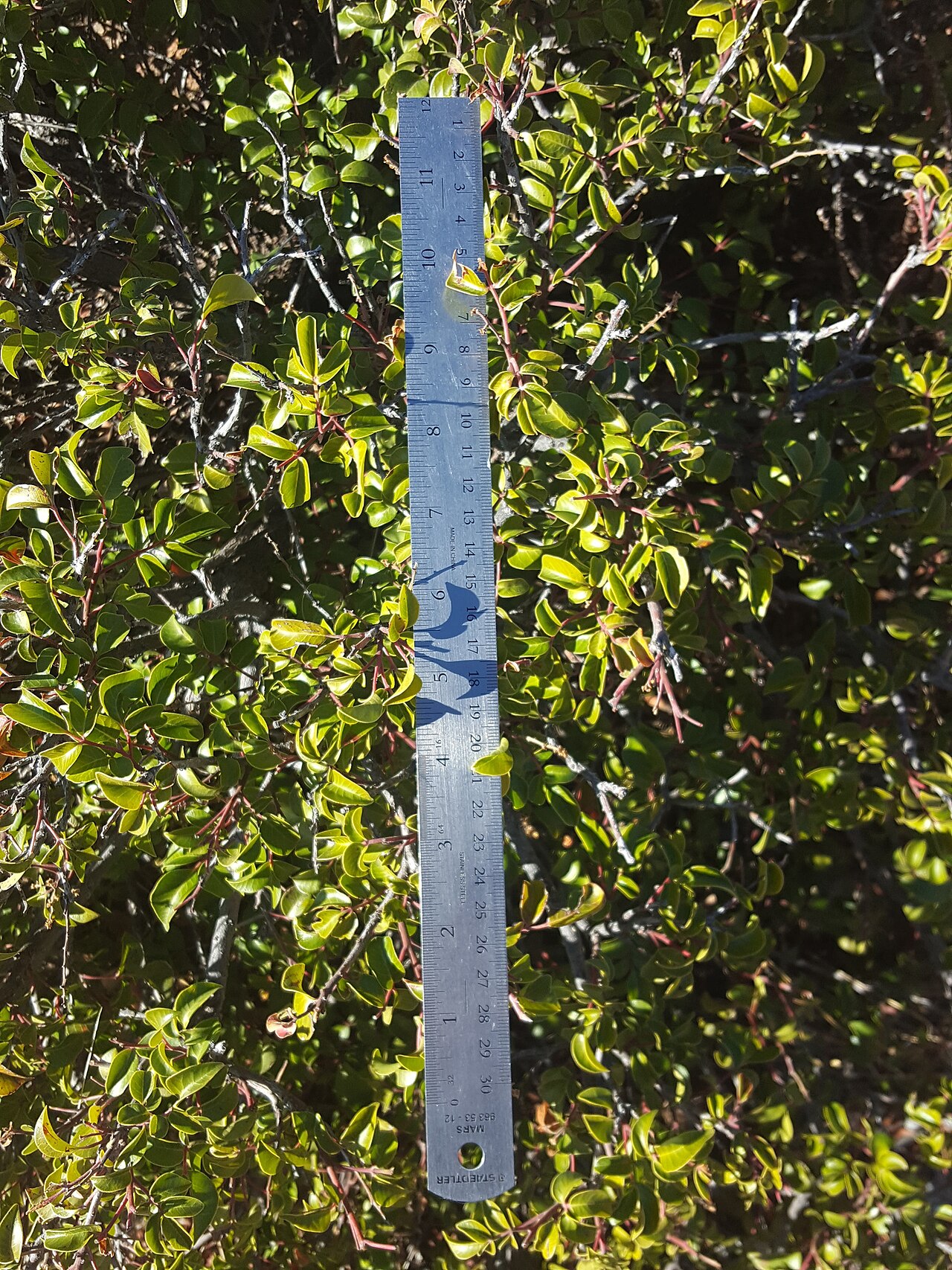
Leaves are alternate and pinnately compound, 2 to 5½ inches long, divided into 5 to 9 leaflets that are thick, leathery, and without teeth (entire margins) — a texture closer to a small-leaved holly than to the thin, serrated leaflets of deciduous sumacs like Flameleaf or Smooth Sumac. New growth in spring is often tinged pink or bronze, settling into a shiny dark green by summer. After the first freezes of the cool season, older leaves frequently pick up a maroon or wine-red blush before eventually being shed and replaced — the plant is evergreen in the sense of never going fully bare, not in the sense that any single leaf is permanent.
Flowers & Fruit
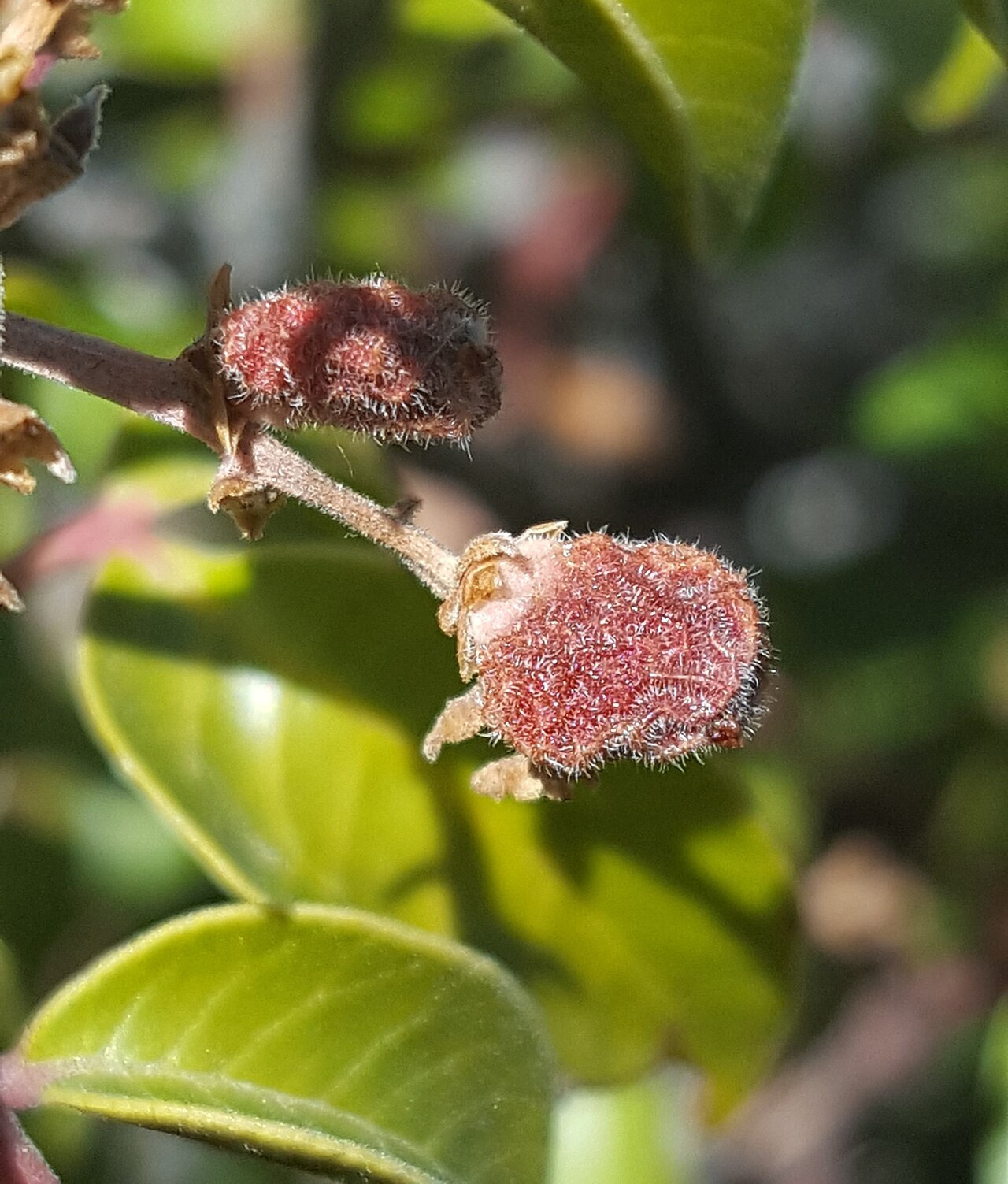
Tiny five-petaled white flowers are packed into dense, upright clusters (panicles) at the ends of the branches. The flowers are mildly fragrant and, unusually for a Texas native shrub, appear from June through November, with the heaviest bloom typically following late-summer and fall rains. Flowers are followed by small, round, reddish drupes covered in fine, sticky hairs, clustered tightly at the branch tips. The fuzzy red fruit is a reliable identification feature from late summer through winter, when few other native shrubs in the same habitat are fruiting.
Quick Facts
| Scientific Name | Rhus virens |
| Family | Anacardiaceae (Sumac/Cashew) |
| Plant Type | Broadleaf Evergreen Shrub / Small Tree |
| Mature Height | 6–15 ft (commonly 8–12 ft) |
| Mature Spread | 6–12 ft |
| Growth Rate | Moderate |
| Sun Exposure | Full Sun to Part Shade |
| Water Needs | Low; excellent drought tolerance once established |
| Soil Type | Rocky, well-drained; thrives on limestone and caliche |
| Soil pH | Neutral to alkaline (7.0–8.5) |
| Bloom Time | June – November, heaviest late summer/fall |
| Flower Color | White |
| Foliage | Evergreen; new growth pink-bronze, winter leaves often maroon-tinged |
| Fruit | Small, fuzzy red drupes in dense clusters |
| Deer Resistant | Moderate (young plants may be browsed) |
| USDA Hardiness Zones | 7–10 |
Native Range
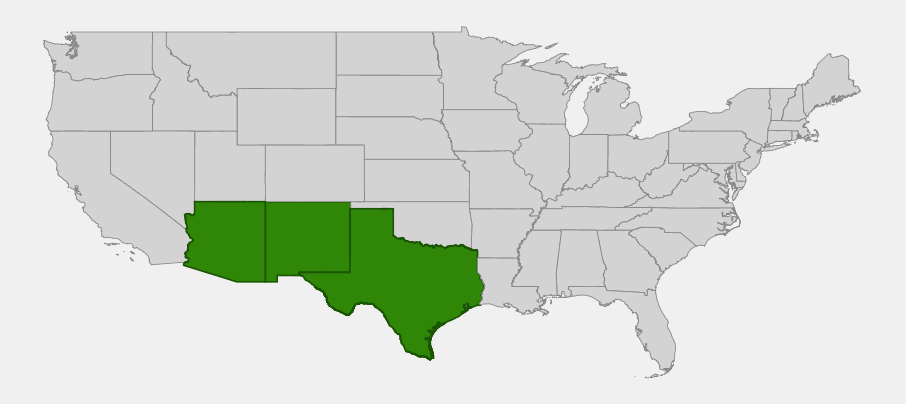
Evergreen Sumac is native to central and western Texas, the Trans-Pecos, southern New Mexico, southeastern Arizona, and northern Mexico. Within Texas it is most common across the Edwards Plateau (Texas Hill Country), the southern and western Rio Grande Plains, and west into the Trans-Pecos, with county-level records thinning out toward the eastern Blackland Prairie. In Arizona and New Mexico it occupies the mountain foothills and canyonlands of the southeastern and south-central portions of those states, often alongside the related variety Rhus virens var. choriophylla.
Across its range, Evergreen Sumac is a plant of rocky, well-drained ground: limestone bluffs, canyon walls, caliche hillsides, and dry rocky slopes in oak-juniper woodland and desert grassland transition zones. It is rarely found on heavy clay or in low, poorly drained sites, reflecting its strong preference for sharp drainage over rich soil.
This is a species that is widely planted outside its native range in warmer regions of the Southwest, where it performs well horticulturally but is not native — gardeners outside Texas, New Mexico, and Arizona should treat it as a regionally adapted ornamental rather than a native plant for their own area’s wildlife gardens.
📋 Regional plant lists featuring Evergreen Sumac: South and West Texas · Arizona & New Mexico
Growing & Care Guide
Evergreen Sumac is one of the easiest native shrubs to grow in hot, rocky, alkaline soils, and its care requirements reflect its origins on sun-baked limestone slopes.
Light
Plant Evergreen Sumac in full sun for the densest, most compact, floriferous form, or in part shade for a taller, more open, graceful shrub. It tolerates a surprising amount of shade for a sun-loving Hill Country native, though flowering and fruiting are reduced in heavier shade.
Soil & Water
This shrub is built for rocky, shallow, fast-draining, alkaline soils — the kind of thin caliche that frustrates most garden plants. It has excellent drought tolerance once established, typically needing supplemental water only during the first one to two growing seasons. In richer garden soil with regular irrigation, it grows faster and lusher but is also more prone to root rot if drainage is poor; a raised bed, berm, or naturally rocky site suits it best.
Planting Tips
Set out container-grown plants in fall or early spring to allow roots to establish before summer heat. Space plants 6 to 10 feet apart for an informal screen or hedge, or plant singly as a specimen. Evergreen Sumac transplants readily from containers and is increasingly available at Texas and Southwest native-plant nurseries.
Pruning & Maintenance
Prune in late winter to shape the plant, remove dead wood, or control size; it tolerates fairly hard pruning and can be trained as a small single-trunk tree by removing lower limbs. Established plants sucker modestly from the base, which can be left to form a wider thicket or removed to maintain a tighter form. Evergreen Sumac is largely untroubled by pests or disease in well-drained soil.
Landscape Uses
Few native Southwest shrubs are as versatile in the landscape:
- Evergreen screen or privacy hedge — one of few broadleaf evergreens for dry alkaline sites
- Wildlife and pollinator gardens — fall bloom feeds bees and butterflies when little else is flowering
- Xeriscaping — minimal water once established
- Erosion control on rocky slopes and caliche banks
- Specimen plant trained as a small multi-trunk tree
- Foundation plantings in hot, reflective sites near walls or pavement
Wildlife & Ecological Value
Evergreen Sumac punches well above its weight as a wildlife plant, largely because of its unusual late-season bloom period.
For Pollinators
The fragrant white flowers open from June through November, with the heaviest flush typically in late summer and fall — a time when most Hill Country and desert natives have already finished blooming. This makes Evergreen Sumac an important late-season nectar source for honeybees, native bees, and butterflies building up reserves before winter or fueling fall migration.
For Birds
The small, fuzzy red drupes persist into winter and are eaten by a variety of songbirds, including mockingbirds and other fruit-eating species, especially as other food sources become scarce. The dense evergreen branching also provides valuable winter cover and nesting structure in a landscape where few other shrubs hold their leaves year-round.
For Mammals
White-tailed deer will browse young growth, particularly on new transplants, though established plants are rarely damaged significantly. Small mammals use the dense thickets for cover.
Ecosystem Role
As one of the few broadleaf evergreens adapted to thin, rocky, alkaline soils in its range, Evergreen Sumac fills a structural niche in Hill Country and Trans-Pecos shrublands, stabilizing rocky slopes with its root system and providing year-round habitat structure in plant communities otherwise dominated by seasonal deciduous shrubs and evergreen junipers.
Cultural & Historical Uses
Evergreen Sumac has long been a component of traditional Hill Country and borderlands landscapes, valued historically more for its utility as browse and cover than for direct human use. Ranchers and naturalists in Texas have noted its value as emergency forage for livestock and wildlife during drought, when its evergreen leaves remain available when deciduous browse has disappeared.
Like many sumacs, the tart, mildly acidic fruit has occasionally been used by foragers to make a tart beverage similar to “sumac-ade,” though the fruit of Rhus virens is smaller and less commonly used for this purpose than that of its relatives Smooth Sumac (Rhus glabra) and Flameleaf Sumac (Rhus lanceolata). As with other edible sumacs, only the red, non-toxic sumacs — never white-fruited sumacs, which belong to the unrelated and toxic genus Toxicodendron — should ever be considered for this kind of use, and any forager should be certain of identification first.
In modern horticulture, Evergreen Sumac has become a mainstay of xeriscape and native-plant landscaping across Central and West Texas, prized by landscape designers for providing reliable year-round green structure in gardens that otherwise rely heavily on deciduous or dormant-season-brown plantings.
Frequently Asked Questions
Is Evergreen Sumac related to poison sumac?
No. Poison sumac is Toxicodendron vernix, a different genus entirely, and it does not even occur in Texas, New Mexico, or Arizona. Evergreen Sumac (Rhus virens) is a true, non-toxic sumac with no irritating sap; it is safe to handle.
How fast does Evergreen Sumac grow?
Growth is moderate — expect roughly 1 to 2 feet of new growth per year once established, faster with regular water and richer soil, slower on thin rocky caliche.
Will Evergreen Sumac survive a hard freeze?
Established plants are reliably hardy to USDA zone 7 and tolerate the occasional hard freezes of the Hill Country and Trans-Pecos. Severe, prolonged cold can cause leaf burn or dieback, but plants typically resprout from the base.
Does Evergreen Sumac need full sun?
It performs best in full sun, where it stays compact and blooms most heavily, but it tolerates part shade well, growing taller and more open in those conditions.
Can Evergreen Sumac be used as a hedge?
Yes — its dense, evergreen branching and tolerance of pruning make it one of the best native options for an informal or clipped hedge in hot, dry, alkaline Texas and Southwest gardens.

Looking for a nursery that carries Evergreen Sumac?
Browse our native plant nursery directory: Texas · Arizona · New Mexico