Lindheimer’s Muhly (Muhlenbergia lindheimeri)
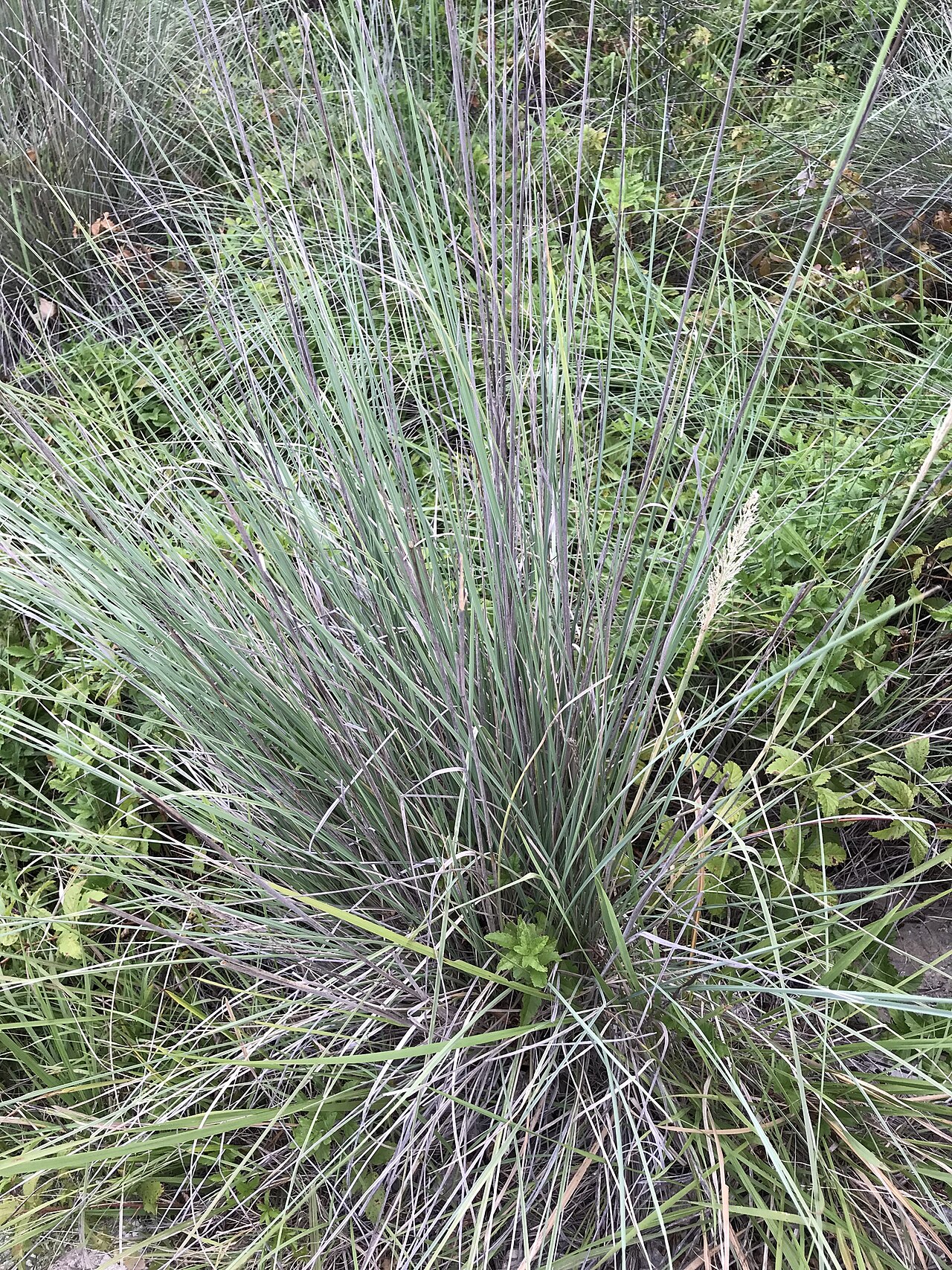
Muhlenbergia lindheimeri, known as Lindheimer’s Muhly or Big Muhly, is a large, clump-forming native bunchgrass of the Texas Hill Country, named for the German-born botanist Ferdinand Lindheimer, often called the “father of Texas botany,” who collected extensively in the region in the 1800s. It is the largest of the Texas muhly grasses, forming dense, rounded clumps of fine, blue-green leaf blades that can reach 3 to 4 feet tall and wide even before the flower stalks appear.
In late summer and fall, Lindheimer’s Muhly sends up narrow, silvery-white to pale tan flowering plumes that rise well above the foliage, catching low afternoon light in a way that has made this grass a landscape favorite far beyond its native range. The combination of fine-textured, drought-tolerant foliage and a dramatic late-season bloom display has made it one of the most widely planted ornamental grasses in Texas gardens, though its true native habitat is more limited than its popularity in cultivation would suggest.
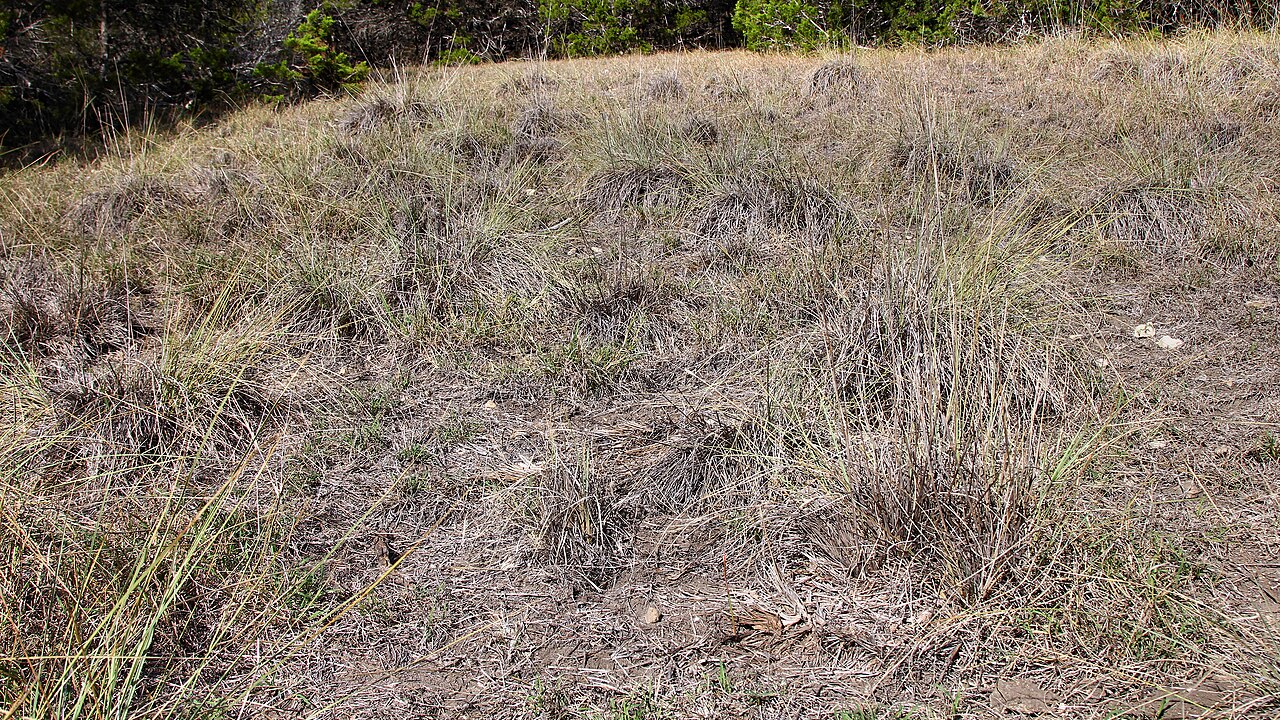
In the wild, this muhly grass grows on the rocky limestone slopes, canyon walls, and stream terraces of the Edwards Plateau, often rooted directly into thin soil pockets in exposed limestone bedrock, where its deep, fibrous root system anchors it against erosion and lets it outlast periods of extreme drought that few other grasses in the region can survive.
Identification
Lindheimer’s Muhly is identified by its large size relative to other native muhly grasses, its fine blue-green foliage forming a tight basal clump, and its tall, narrow, silvery flowering plumes produced in late summer and fall.
Leaves & Form
The plant grows as a dense, rounded, fountain-shaped clump of narrow, flat to slightly inrolled leaf blades, typically ⅛ to ¼ inch wide and up to 2 feet long, colored blue-green to gray-green through the growing season. Leaves arch outward and downward from the base, giving mature clumps a soft, cascading appearance that holds its form through winter before being cut back in late winter or early spring.
Flowers
Flowering stems rise well above the foliage, typically reaching 3 to 5 feet tall overall, topped with narrow, plume-like panicles 8 to 14 inches long. The panicles open silvery-white to pale tan and later fade to a warm straw color, persisting through much of the winter and providing months of textural interest in the landscape. Bloom occurs primarily from September through November, later than most other native Texas grasses.
Seed & Base
Tiny grass seeds (caryopses) form within the feathery panicles and are dispersed by wind through winter. At the base, the plant forms a tough, fibrous root crown anchored into rock crevices and thin soil, which allows established clumps to survive extended drought and persist for many years without division.
Quick Facts
| Scientific Name | Muhlenbergia lindheimeri |
| Family | Poaceae (Grass) |
| Plant Type | Warm-Season Perennial Bunchgrass |
| Mature Height | 3–4 ft foliage; 4–5 ft in bloom |
| Mature Spread | 3–4 ft |
| Growth Rate | Moderate |
| Sun Exposure | Full Sun to Part Sun |
| Water Needs | Low to Moderate |
| Soil Type | Rocky, well-drained; limestone-based |
| Soil pH | 7.0–8.0 (neutral to alkaline) |
| Bloom Time | September – November |
| Flower Color | Silvery-white fading to tan |
| Fall Color | Tan seedheads persist into winter |
| Fruit | Tiny wind-dispersed grass seed |
| Deer Resistant | Yes |
| USDA Hardiness Zones | 7–10 |
Native Range
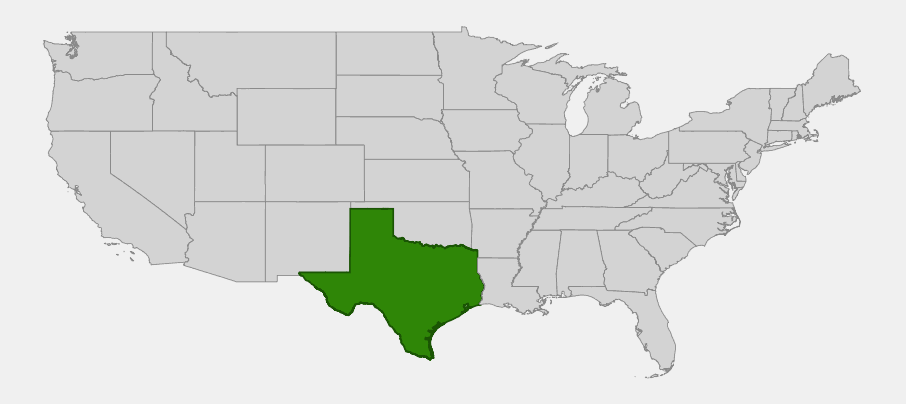
Lindheimer’s Muhly is native to central Texas, with its range centered almost entirely on the Edwards Plateau — the Texas Hill Country stretching roughly from Austin and San Antonio west toward the Trans-Pecos — and extending south into adjacent northeastern Mexico. Despite its popularity as a landscape plant throughout the southern and southwestern United States, its wild native range is confined to this one region of central Texas.
Within its native range, Lindheimer’s Muhly is a defining grass of limestone canyon country, typically found rooted in rocky crevices on canyon walls, along spring-fed stream terraces, and on thin-soiled limestone slopes in oak-juniper woodland and savanna. It often grows in dense bands along exposed rock faces where competing vegetation is minimal.
Although it is now planted extensively as an ornamental grass across Texas and beyond — including areas where it is not native, such as the Gulf Coast, the Panhandle, and states outside Texas entirely — gardeners in those areas should recognize it as an introduced, non-native ornamental there rather than a native planting choice.
📋 Regional plant lists featuring Lindheimer’s Muhly: South and West Texas
Growing & Care Guide
Lindheimer’s Muhly is an easy, forgiving grass for Texas gardens, rewarding minimal care with years of reliable structure and a dramatic late-season bloom.
Light
Full sun produces the densest clumps and the showiest flower plumes. The grass tolerates part sun or light afternoon shade, but flowering is reduced and the clump tends to grow looser and less upright with less light.
Soil & Water
This muhly is adapted to thin, rocky, alkaline soils and performs best with excellent drainage; it does not tolerate standing water or heavy, poorly drained clay for extended periods. Once established — typically after the first full growing season — it needs little to no supplemental irrigation across most of central Texas, though occasional deep watering during extreme summer drought keeps clumps looking their best.
Planting Tips
Plant from containers in spring or fall, spacing clumps 3 to 4 feet apart to allow for their mature fountain-like spread. It establishes readily on slopes and in rock gardens, and works well massed along driveways or walkways where its late-season plumes can catch backlighting.
Pruning & Maintenance
Cut clumps back to 4 to 6 inches in late winter, just before new growth resumes, to remove the previous season’s foliage and seedheads and keep the plant tidy. Avoid cutting back in fall or early winter, since the dried plumes provide valuable cold-season structure and wildlife value.
Propagation
Lindheimer’s Muhly is propagated from seed or by division of established clumps in late winter or early spring. Division is the faster route to a flowering-size plant, while seed-grown plants take a season or two longer to reach full size.
Landscape Uses
- Mass plantings along slopes, driveways, or foundation beds for a soft, textured screen
- Specimen accent where backlighting highlights the fall flower plumes
- Xeriscape and rock gardens paired with other Hill Country natives
- Erosion control on rocky or sloped sites thanks to its deep, fibrous roots
- Winter interest — dried plumes and foliage persist through the cold season
Wildlife & Ecological Value
Lindheimer’s Muhly supports wildlife across multiple seasons, especially in fall and winter when many other native plants have gone dormant.
For Birds
Seed-eating songbirds, including sparrows and finches, forage on the tiny grass seed released from the fall and winter panicles. The dense basal clumps also offer nesting material and ground-level cover for birds moving through open, rocky terrain.
For Mammals
Small mammals use the dense clumps for shelter and travel cover, while the grass’s extensive root system has minimal direct browse value but contributes to overall habitat structure in canyon and slope ecosystems.
For Pollinators
As a wind-pollinated grass, Lindheimer’s Muhly does not provide nectar, but its structure supports the broader insect community that shelters among bunchgrasses, which in turn feeds insect-eating birds and other wildlife.
Ecosystem Role
The deep, fibrous root system is highly effective at stabilizing thin soils on limestone slopes and canyon walls, reducing erosion in a landscape prone to flash flooding and runoff after heavy Hill Country rains. Its dense growth also helps outcompete some invasive grasses on disturbed rocky sites.
Cultural & Historical Uses
Lindheimer’s Muhly commemorates Ferdinand Lindheimer, a German immigrant and self-taught botanist who settled in New Braunfels, Texas, in the 1840s and is widely regarded as the first major botanical collector of Texas flora. Lindheimer sent thousands of plant specimens to botanists George Engelmann and Asa Gray, who described many new species from his collections — this grass among them — cementing his legacy across dozens of Texas plants that still bear his name today.
Unlike many native grasses, Lindheimer’s Muhly has no well-documented history of use as a food, fiber, or medicinal plant among Indigenous peoples of the region; its primary historical significance lies in its role in the scientific documentation of Texas Hill Country flora during the 19th century.
In recent decades, the species has found a second life as one of the most widely planted ornamental grasses in Texas and the broader Southwest, valued by landscape designers for its reliable form, drought tolerance, and dramatic autumn bloom — a modern chapter in a plant whose name already ties it to the history of Texas botany.
Frequently Asked Questions
How is Lindheimer’s Muhly different from other muhly grasses like Gulf Muhly?
Lindheimer’s Muhly is notably larger than most other muhly species, with blue-green rather than pink foliage, and its silvery-white plumes bloom later in the season than the vivid pink plumes of Gulf Muhly (Muhlenbergia capillaris). It is also adapted to drier, rockier limestone sites than Gulf Muhly’s typical sandy or coastal habitats.
Is Lindheimer’s Muhly native to my area if I live outside the Texas Hill Country?
Its documented native range is limited to the Edwards Plateau region of central Texas. Although it is widely sold and planted throughout Texas and the Southwest, it is only a native plant choice within or very near this Hill Country range; elsewhere it should be considered a non-native ornamental.
When should I cut back Lindheimer’s Muhly?
Wait until late winter, just before new spring growth begins, to cut the clump back to a few inches tall. Cutting earlier removes the attractive winter seedheads and reduces the cold-season shelter the grass provides for wildlife.
Does Lindheimer’s Muhly spread aggressively?
No. It is a well-behaved bunchgrass that grows outward slowly from a central clump rather than spreading by rhizomes or seeding aggressively into surrounding beds, making it a good choice for defined garden spaces.
How drought tolerant is this grass once established?
Very. Rooted in thin limestone soils that receive no irrigation in the wild, established plants can go through extended Texas summer droughts with little to no supplemental water, though occasional deep watering during the most severe dry spells helps maintain appearance.

Looking for a nursery that carries Lindheimer’s Muhly?
Browse our native plant nursery directory: Texas