California Maidenhair Fern (Adiantum jordanii)
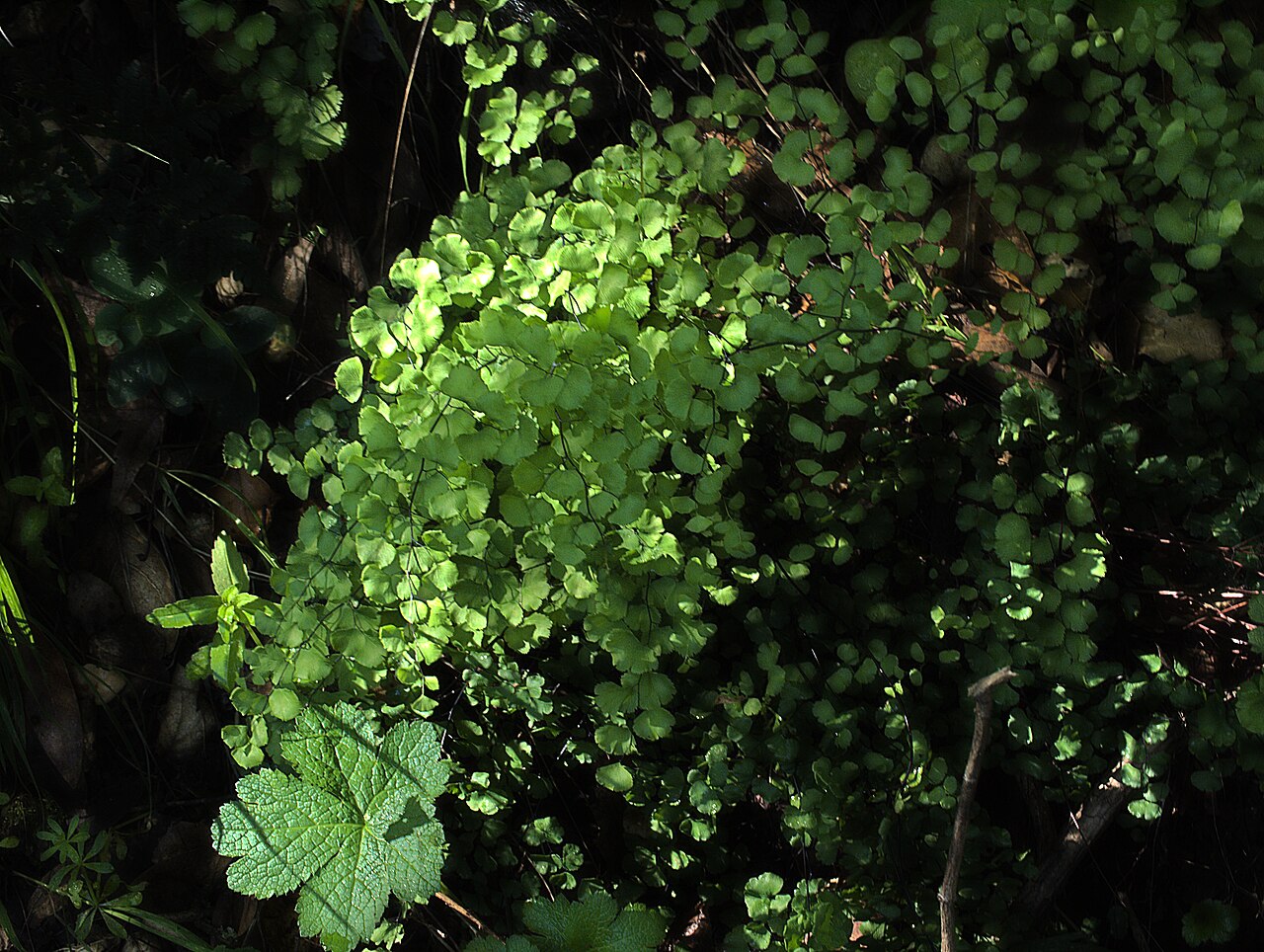
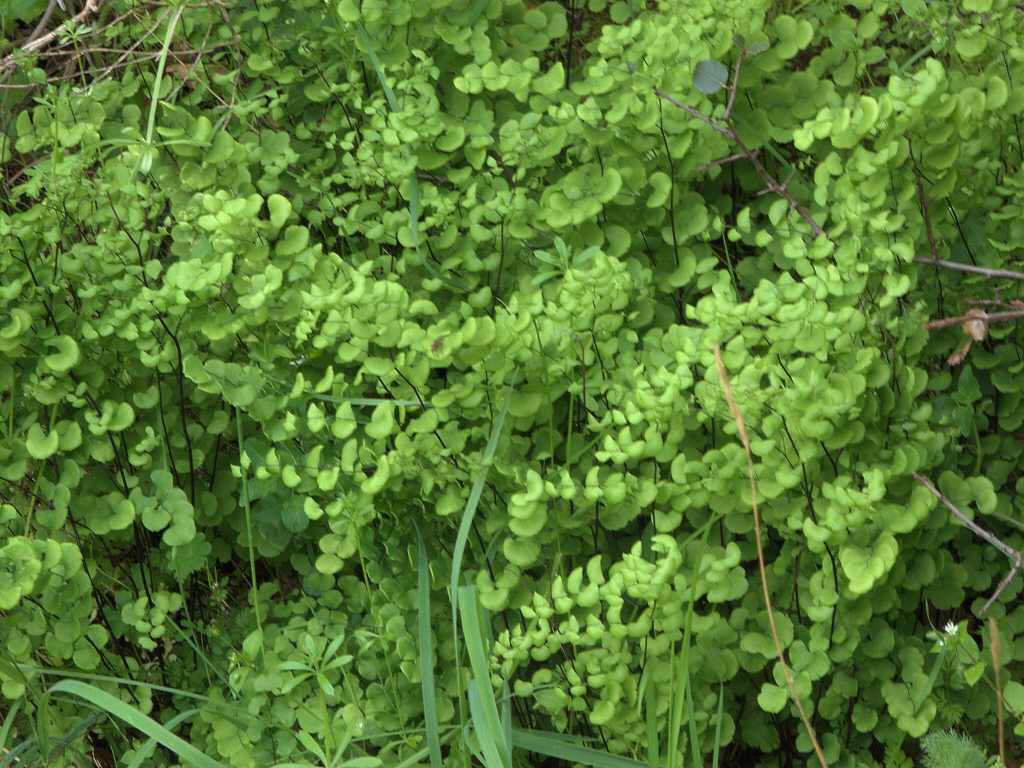
Adiantum jordanii, commonly known as California maidenhair fern, is a delicate, finely textured native fern found in shaded woodlands across California and the southwestern corner of Oregon. It is one of the most graceful small ferns in the West, with wiry, glossy black stems holding out fan-shaped, light green leaflets that flutter in even a light breeze.
Like several other California native ferns, California maidenhair goes dormant during the dry summer months, dying back to its rhizome and resprouting a fresh crop of delicate fronds once the rains return in fall. This seasonal rhythm, combined with its airy texture and shiny black stems, makes it instantly recognizable once established plants are in full leaf during the cooler, wetter months.
For a California or southwestern Oregon native garden, California maidenhair fern is an excellent choice for a shaded, moist spot where a soft, lacy texture is wanted among bolder-leaved companions. It is smaller and more delicate than many other native ferns, so it works especially well near a path or seating area where its fine detail can be appreciated up close.
Identification
California maidenhair fern grows from a slender, creeping rhizome, forming loose colonies of fronds that typically reach 8 to 20 inches tall. Individual fronds arch gracefully on thin, wiry stalks, giving the whole plant a light, airy presence quite different from the leathery, upright look of many other ferns.
Stems
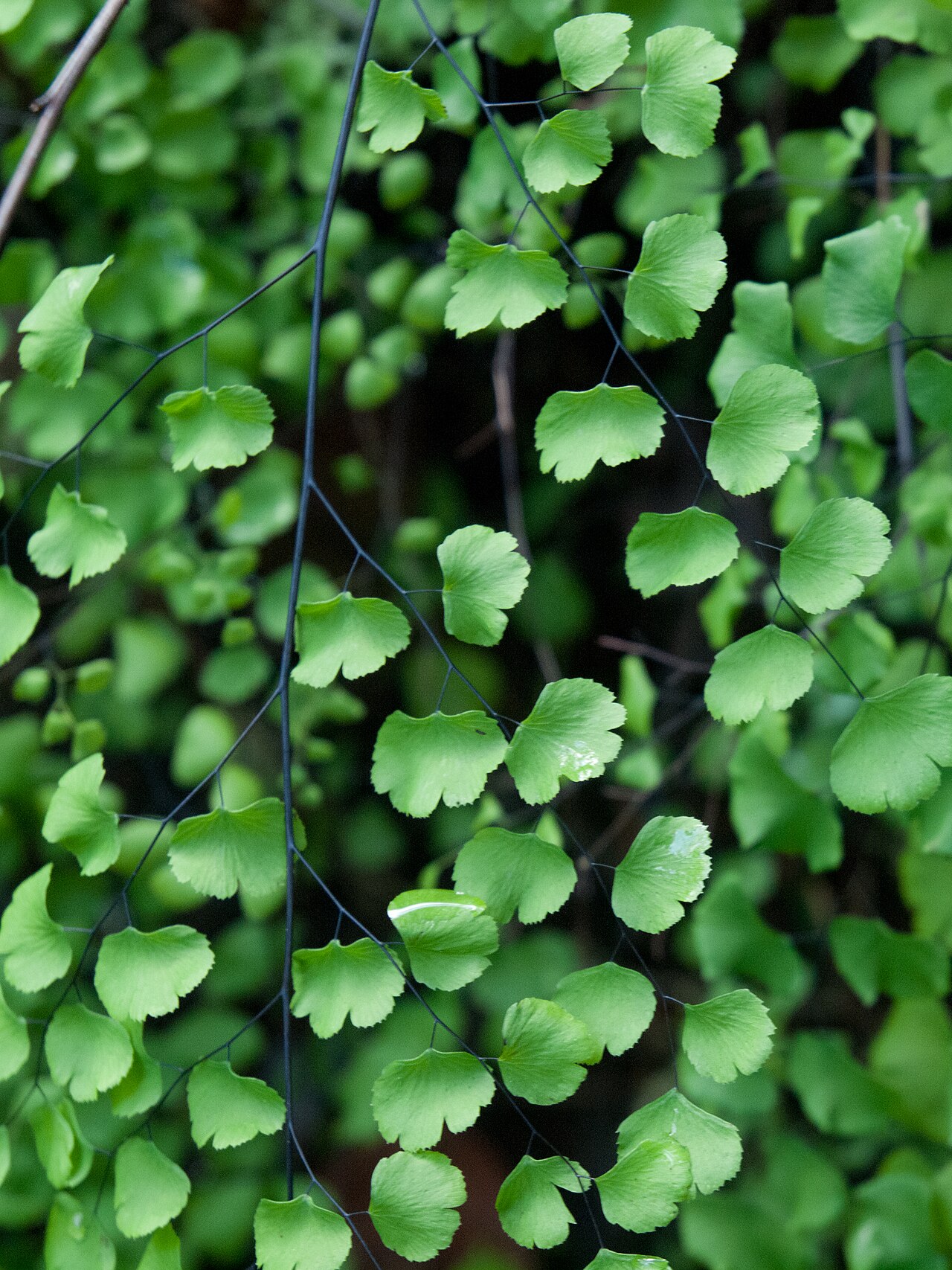
The stalks (stipes and rachises) are glossy, wiry, and blackish-brown to purplish-black — a hallmark of the genus Adiantum — and contrast strikingly with the pale green leaflets they support. The stems are thin enough to bend readily in a breeze, which is part of what gives the plant its characteristic fluttering movement.
Fronds
Fronds are two to three times divided, with small, fan- or wedge-shaped leaflets (pinnules) attached only at their narrow base, a shape sometimes described as resembling tiny maidenhair-style ginkgo leaves. The leaflets are thin-textured, pale to medium green, and have gently scalloped or lobed outer edges. New growth often emerges with a pinkish or bronze tinge before maturing to green.
Quick Facts
| Scientific Name | Adiantum jordanii |
| Family | Pteridaceae (Maidenhair Fern) |
| Plant Type | Winter-green, summer-dormant rhizomatous fern |
| Mature Height | 8–20 in |
| Mature Spread | Spreads slowly into loose colonies by rhizome |
| Growth Rate | Slow to moderate |
| Sun Exposure | Part Shade to Full Shade |
| Water Needs | Moist during active growth; dry/dormant in summer |
| Soil Type | Moist, well-drained soil with rock or outcrop influence |
| Soil pH | Neutral to slightly alkaline (often on calcareous or basic rock) |
| Bloom Time | None (ferns do not flower) |
| Flower Color | None |
| Fall Color | New fronds emerge with autumn rain, often pinkish when young |
| Fruit | None; reproduces by spores along folded leaflet margins |
| Deer Resistant | Yes |
| USDA Hardiness Zones | 7–10 |
Native Range
California maidenhair fern is native to California, where it occurs widely from the northern Coast Ranges south through the Central Coast and into the Transverse and Peninsular Ranges, and it also reaches into southwestern Oregon’s Klamath-Siskiyou region. Its range continues south into Baja California, Mexico.
Typical habitat is shaded woodland slopes, canyon walls, and rocky banks, often where seasonal seeps or moisture-holding rock provide extra humidity during the fern’s active winter and spring growth. It favors sites with some mineral richness, frequently appearing on or near rock outcrops with a neutral to slightly basic chemistry, and grows from near sea level up to roughly 4,500 feet.
California maidenhair fern is not listed as threatened or endangered and remains a familiar, widespread component of shaded woodland understory across its range, though like many woodland ferns it depends on intact shade and moisture conditions that can be disrupted by development or severe wildfire.
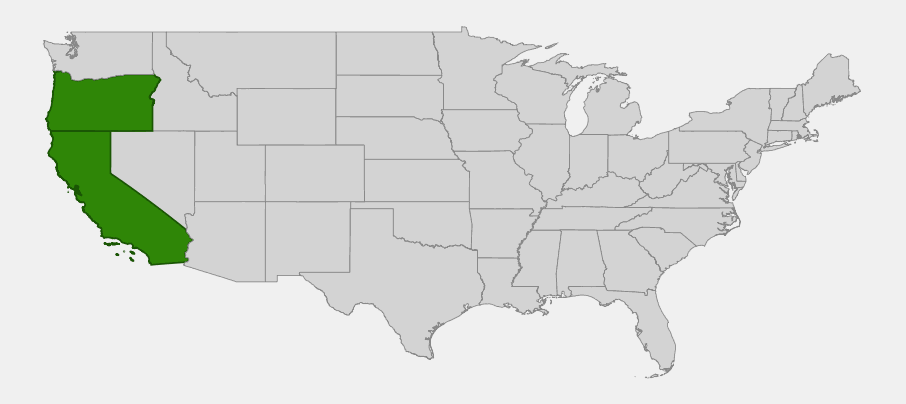
📋 Regional plant lists featuring California Maidenhair Fern: California & Nevada · Western Oregon & Western Washington
Growing & Care Guide
California maidenhair fern is easy to grow once sited correctly: deep shade, consistent moisture during the growing season, and patience with its natural summer dormancy are the keys to success.
Light
Give it part to full shade — this is a true understory fern that scorches quickly in direct sun, especially inland. A north-facing slope, shaded canyon wall, or the dappled light beneath oaks or bay laurel closely matches its natural habitat.
Soil & Water
Plant in moist, humus-rich soil with good drainage, ideally with some rock or mineral influence nearby, mimicking the outcrops and canyon walls where it grows wild. Keep soil consistently moist during the fall-through-spring growing season; once summer drought sets in, the fronds will naturally die back, and watering through this dormant period is unnecessary and can promote rot.
Planting Tips
Set out new plants in fall at the start of the rainy season, in a shaded spot protected from wind, which can shred the delicate fronds. Because California maidenhair fern is relatively small and fine-textured, place it where it can be appreciated up close — along a shaded path, at the base of a rock wall, or near a seating area.
Pruning & Maintenance
Little maintenance is needed beyond removing old, dried fronds once the plant has gone fully dormant for the season. Avoid disturbing the rhizome, and resist the urge to water through summer dormancy, which goes against the plant’s natural cycle and can cause rot rather than new growth.
Propagation
Division of an established rhizome clump during the active winter or spring growing season is the most reliable method for home gardeners. California maidenhair fern can also be grown from spores collected from the folded, spore-bearing margins of mature fronds and sown on a moist, sterile medium, though this method takes considerably longer to produce a plantable fern.
Landscape Uses
- Shaded woodland gardens where a fine, airy texture is wanted among bolder foliage
- Rock garden crevices and the base of shaded boulders or walls
- Path-side or seating-area plantings where its delicate detail can be appreciated up close
- Native fern collections paired with California polypody or coffee fern
- Shaded canyon and seep restoration within its native range
Wildlife & Ecological Value
As a small, non-flowering, seasonally dormant fern, California maidenhair fern’s wildlife contributions are modest but steady within the shaded woodland habitats it occupies.
For Pollinators
Ferns reproduce by spores rather than flowers, so California maidenhair fern offers no direct nectar or pollen resource for pollinators. Its presence does, however, contribute to the cool, humid woodland floor conditions that support a broader community of shade-adapted plants, including many that do support pollinators.
For Birds
The loose, low colonies provide minor ground-level cover for small woodland birds foraging in shaded understory, particularly valuable during the fern’s active winter and spring growth period.
For Mammals
Small mammals and amphibians use the moist, shaded ground beneath and among maidenhair fern colonies as cover, benefiting from the humidity the dense fronds help retain near the soil surface during the growing season.
Ecosystem Role
California maidenhair fern is part of the understory layer that helps maintain cool, moist microclimates on shaded slopes and canyon walls, conditions that benefit mosses, other ferns, and soil organisms. Its clear seasonal cycle of winter growth and summer dormancy reflects, and helps indicate, a healthy, naturally functioning California or southwestern Oregon woodland.
Cultural & Historical Uses
Indigenous peoples of northwestern California, including groups in the Klamath-Siskiyou region, traditionally used the glossy black stems (rachises) of California maidenhair fern as a material in basket weaving, where the dark, wiry stems provided a striking contrast woven into patterns alongside lighter plant fibers. This use is documented in regional ethnobotanical and basketry accounts and remains one of the best-known traditional uses of any California native fern.
Beyond basketry, the species has long been appreciated by botanists and naturalists for its delicate form, and it has appeared in California wildflower and fern guides for well over a century as one of the signature small ferns of the state’s shaded woodlands.
Today California maidenhair fern’s primary uses are horticultural and craft-related: valued by native plant gardeners for its fine texture and seasonal interest, and still occasionally gathered by traditional basket weavers maintaining historical techniques, generally from sustainably managed sources rather than wild populations.
Frequently Asked Questions
Why does my California maidenhair fern disappear every summer?
This is normal. The species goes dormant during California’s dry summer months, dying back to its rhizome and resprouting fresh fronds once the fall rains return. There is no need to water it through this dormant period.
What makes the stems black?
The glossy, wiry, blackish stems (stipes and rachises) are a defining feature of the genus Adiantum, which includes all maidenhair ferns. The dark color contrasts sharply with the pale green leaflets and is one of the easiest ways to identify the plant.
How was California maidenhair fern used traditionally?
Indigenous basket weavers in northwestern California traditionally used the dark stems in woven designs, valued for their glossy black color and flexibility. This remains one of the best-documented traditional uses of any California native fern.
Does California maidenhair fern need full shade?
Yes, generally. It is a true understory species and scorches in direct sun, especially inland. Give it part to full shade for the best growth and appearance.
Is California maidenhair fern the same as the houseplant maidenhair fern?
No. Common houseplant maidenhair ferns are usually different Adiantum species, most often from tropical regions. California maidenhair fern is adapted to California’s winter-wet, summer-dry climate and goes fully dormant each summer, unlike most houseplant maidenhairs.

Looking for a nursery that carries California Maidenhair Fern?
Browse our native plant nursery directory: California · Oregon