Giant Chain Fern (Woodwardia fimbriata)
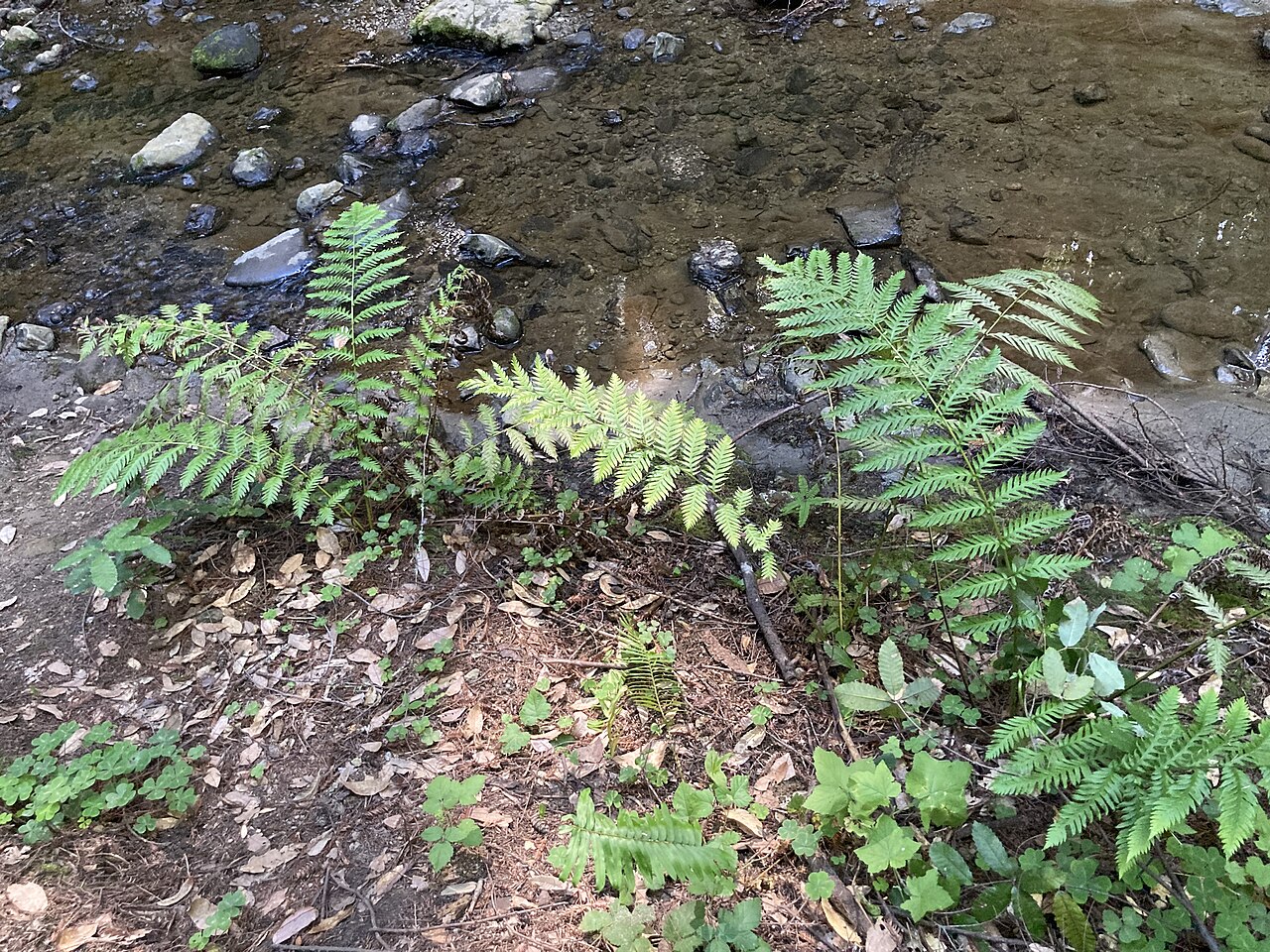
Woodwardia fimbriata, the giant chain fern, is the largest fern native to North America and one of the most dramatic plants you can add to a shaded, moist West Coast garden. Mature plants form a fountain-like clump of long, arching, leathery fronds that can reach 4 to 9 feet, giving an almost tropical presence to native plantings along streams, seeps, and shaded canyon walls.
The common name comes from the chain-like rows of spore cases (sori) that run along the underside of the fertile fronds, linked end to end like links of a chain — a feature that, once you know to look for it, makes the species easy to confirm. Giant chain fern is evergreen in mild climates and dies back only in colder or drier sites, re-sprouting each spring from a thick, woody rhizome.
In the garden, giant chain fern rewards a shaded, reliably moist spot with one of the boldest textures available among western native ferns. It pairs naturally with redwoods, bigleaf maple, and other streamside natives, and its sheer size makes it an effective anchor plant for a woodland or riparian-style bed.
Identification
Giant chain fern grows from a stout, woody, often partly above-ground rhizome that slowly builds into a large clump. Established plants commonly reach 4 to 6 feet tall and wide, with exceptional specimens in ideal streamside conditions reaching 8 to 9 feet. The fronds arch outward and downward from the crown, giving the whole plant a fountain-like form.
Fronds
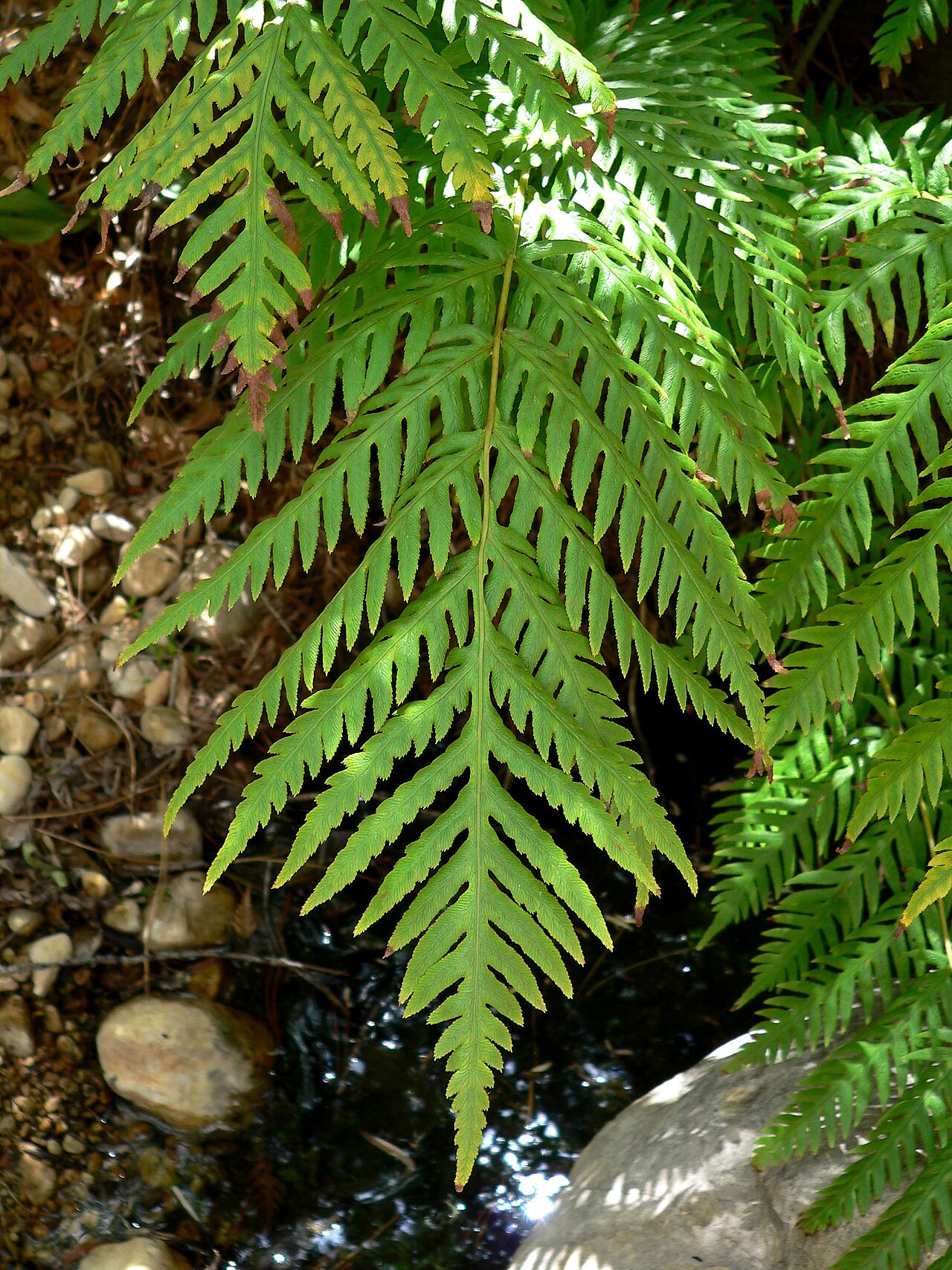
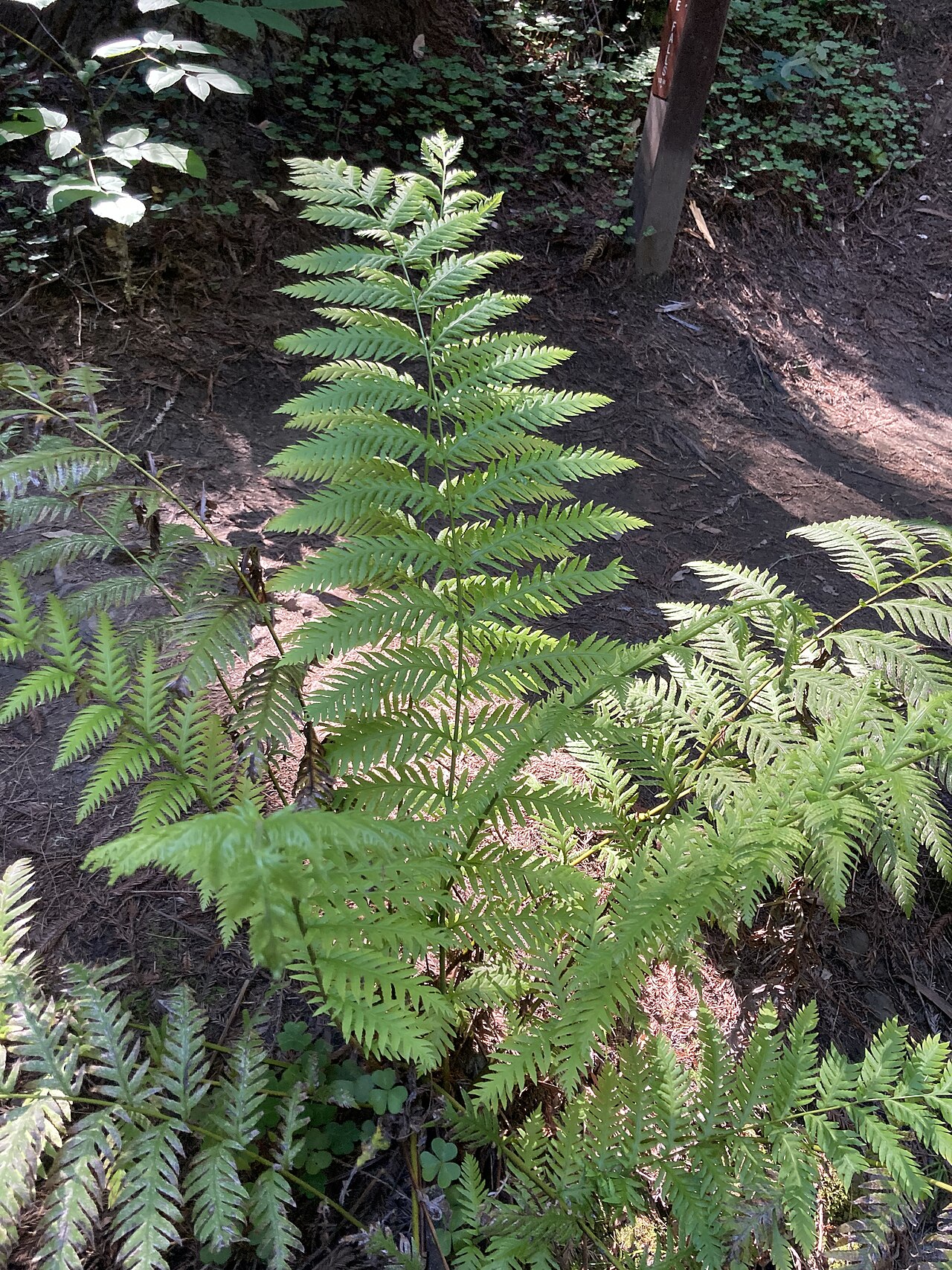
Fronds are once-pinnate-pinnatifid (the main leaflets are themselves deeply lobed), leathery in texture, and dark glossy green on top with a paler underside. They taper gradually at both ends, growing from stout, scaly stalks that are often conspicuously scaly near the base. New fiddleheads emerge in spring, often with a reddish or bronze cast before unfurling to full size.
Sori (Spore Clusters)
On the underside of fertile fronds, the spore-bearing sori are elongated and arranged end to end in rows parallel to the midrib, forming a chain-like pattern — the feature that gives the species, and the whole genus Woodwardia, the common name “chain fern.” This pattern is the most reliable way to separate giant chain fern from other large western ferns such as sword fern or wood fern.
Quick Facts
| Scientific Name | Woodwardia fimbriata |
| Family | Blechnaceae (Chain Fern) |
| Plant Type | Evergreen to semi-evergreen perennial fern |
| Mature Height | 4–6 ft (to 9 ft in ideal streamside sites) |
| Mature Spread | 4–6 ft |
| Growth Rate | Moderate |
| Sun Exposure | Part Shade to Full Shade (more sun tolerated with steady moisture) |
| Water Needs | Moist to wet; poor in dry soil |
| Soil Type | Rich, moist loam; tolerates seasonally saturated soil near seeps and streams |
| Soil pH | Slightly acidic to neutral |
| Bloom Time | None (ferns do not flower) |
| Flower Color | None |
| Fall Color | Evergreen to semi-evergreen; fronds may brown in hard frost or drought |
| Fruit | None; reproduces by spores borne in chain-like sori |
| Deer Resistant | Yes |
| USDA Hardiness Zones | 7–10 |
Native Range
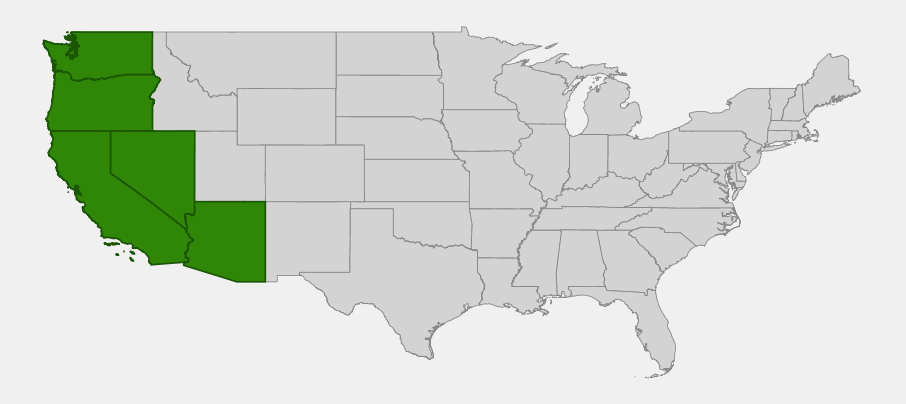
Giant chain fern is native to the West Coast and interior Southwest of the United States, from western Washington and western Oregon south through California to northwestern Mexico, with inland outlying populations in Nevada and Arizona wherever shaded, spring-fed canyons provide enough moisture. In California it is common and widespread in the Coast Ranges and Sierra Nevada foothills; the disjunct Nevada and Arizona populations occur in isolated canyons, such as Pine Creek Canyon in Red Rock Canyon National Conservation Area near Las Vegas, where seeps keep the rock walls perpetually damp.
Typical habitat is shaded streambanks, seeps, springs, and moist canyon bottoms within redwood forest, mixed evergreen forest, and riparian woodland. The species needs consistent moisture at the root zone and shade or only filtered sun, which is why its interior populations are confined to isolated, spring-fed canyon walls rather than the surrounding dry desert and chaparral.
Giant chain fern is not listed as threatened or endangered anywhere in its range, but its isolated desert canyon populations in Nevada and Arizona depend entirely on the springs that sustain them and can be vulnerable to groundwater changes or prolonged drought.
📋 Regional plant lists featuring Giant Chain Fern: California & Nevada · Western Oregon & Western Washington · Arizona & New Mexico
Growing & Care Guide
Giant chain fern is forgiving once you match it to the right spot: steady shade and steady moisture. Get those two things right and it needs very little else from the gardener.
Light
Part shade to full shade suits it best, especially inland or in hot-summer gardens. Near the cool, foggy coast it tolerates considerably more sun, even nearly full sun, as long as the soil never dries out. In hotter interior gardens, deep shade with only brief dappled sun keeps the fronds from scorching.
Soil & Water
Plant in rich, organic soil that stays consistently moist; this species does not tolerate drought well and will brown and die back if it dries out repeatedly. It is well suited to the edges of ponds, streams, and seeps, and tolerates soil that is seasonally saturated. In garden settings without a natural water source, regular irrigation through the dry season is necessary to keep the fronds full and green.
Planting Tips
Set out container plants in fall or early spring so roots can establish before summer heat. Give each plant 4 to 6 feet of room to reach full size, and mulch generously with leaf litter or bark to hold moisture and keep roots cool. A spot near a downspout, pond edge, or low area that collects runoff suits this fern particularly well.
Pruning & Maintenance
Remove old, tattered, or frost-damaged fronds at the base in late winter to make room for the new spring growth. In mild coastal gardens the plant stays essentially evergreen and needs little cleanup. Giant chain fern has few serious pests and does not need regular fertilizing in reasonably rich soil.
Propagation
The easiest method is division of an established clump’s rhizome in fall or winter, replanting divisions immediately in moist soil. It can also be grown from spores collected from mature, chain-marked sori and sown on moist, sterile medium, though spore propagation is slower and better suited to patient growers or specialty nurseries.
Landscape Uses
- Streamside and pond-edge plantings where its scale and moisture needs fit naturally
- Shaded woodland gardens as a bold, architectural anchor plant
- Riparian restoration within its native range
- Understory planting beneath redwoods, bigleaf maple, or other tall shade trees
- Rain garden or bioswale margins that stay consistently moist
Wildlife & Ecological Value
As a non-flowering fern, giant chain fern’s wildlife value lies mainly in structure and shelter rather than food, but that structural role is significant in the shaded habitats where it grows.
For Pollinators
Ferns reproduce by spores rather than flowers, so giant chain fern offers no direct nectar or pollen resources. Its dense fronds do, however, add humid, sheltered microhabitat at ground level that benefits many invertebrates living in the leaf litter below.
For Birds
The dense, arching fronds provide excellent ground-level cover for forest birds, particularly species that forage and nest low in riparian understory. The fern’s year-round presence in mild climates makes it reliable shelter even outside the growing season.
For Mammals
Large clumps of giant chain fern provide hiding cover for small mammals along streambanks and canyon bottoms, and the moist microhabitat they help maintain supports amphibians such as native salamanders, which rely on consistently damp ground-level conditions.
Ecosystem Role
By anchoring streambanks and shaded seeps, giant chain fern helps stabilize soil in exactly the erosion-prone settings where it grows, while its deep shade and moisture retention contribute to the cool, humid microclimate that riparian understory species depend on. In its isolated desert canyon outposts, it is one of several relict species that mark where permanent water persists in an otherwise arid landscape.
Cultural & Historical Uses
Giant chain fern has long been admired by California gardeners and botanists for its sheer size among native ferns, and 19th and early 20th century botanical accounts frequently singled it out as the largest fern found in North America north of the tropics. It has been part of West Coast native plant horticulture since at least the early 1900s, prized for the same bold, architectural presence gardeners value today.
Indigenous peoples across its range were familiar with the plant as a conspicuous feature of streamside and canyon habitats, though it was not a major food or material source compared to other regional plants; most historical accounts describe it primarily in botanical and ecological terms rather than as a plant with significant traditional material use.
Today the species’ main cultural role is horticultural: it remains one of the signature large ferns of California and Pacific Northwest native gardens, streamside restoration projects, and shaded public landscaping wherever a bold, water-loving native fern is wanted.
Frequently Asked Questions
How big does giant chain fern get?
Most garden and wild plants reach 4 to 6 feet tall and wide, though exceptional specimens in ideal streamside conditions can reach 8 to 9 feet, making it the largest fern native to North America.
Why is it called “chain fern”?
The spore-producing sori on the underside of fertile fronds are arranged end to end in rows, resembling the links of a chain. This pattern, visible on close inspection, is the defining feature of the genus Woodwardia.
Does giant chain fern need full shade?
Not necessarily. It grows best in part to full shade, especially inland, but tolerates considerably more sun in cool, foggy coastal gardens as long as the soil stays consistently moist. The key requirement is moisture, not darkness.
Is giant chain fern deer resistant?
Yes, deer generally leave it alone, which makes it a reliable choice for shaded gardens in areas with deer pressure.
Can giant chain fern tolerate drought?
No, not well. It is adapted to streambanks, seeps, and other consistently moist sites, and will brown and decline if the soil dries out repeatedly. Regular irrigation is necessary in garden settings without a natural water source.

Looking for a nursery that carries Giant Chain Fern?
Browse our native plant nursery directory: California · Nevada · Oregon · Washington · Arizona