Yerba Buena (Satureja douglasii)
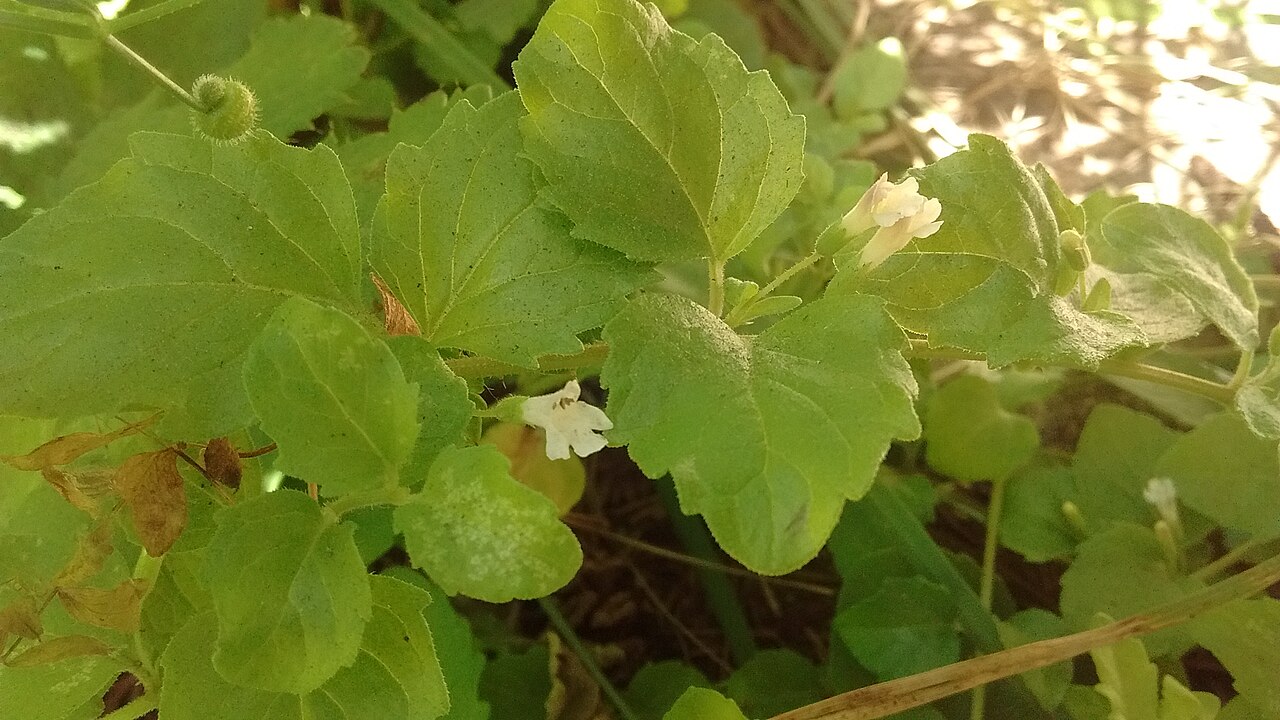
Satureja douglasii (also classified as Clinopodium douglasii), commonly called yerba buena, is a low, trailing perennial groundcover native to the shaded forests of the Pacific Coast. Its thin, wiry stems creep along the ground or drape over logs and rocks, carrying small, rounded, deep-green leaves that release a strong, pleasant mint-like fragrance when crushed, the trait that gave the plant its Spanish name, meaning “good herb.”
Yerba buena grows naturally in the cool, moist understory of coastal forests from California north through Oregon and Washington into the Idaho panhandle, almost always in the dappled shade beneath conifers and hardwoods. It stays low, usually just an inch or two off the ground, and spreads slowly by trailing stems that root where they touch moist soil or leaf litter, making it one of the best true groundcovers among Pacific Coast native plants.
For gardeners with a shaded, woodland-style bed, yerba buena offers something few native groundcovers do: a lovely, year-round fragrance along with its evergreen foliage. It asks for little beyond shade and occasional moisture, tolerates being walked on lightly, and has a long history as a mild household herb among the Indigenous peoples and early settlers of California.
Identification
Yerba buena is best recognized by its creeping, vine-like habit combined with small, rounded, fragrant leaves, a growth form unlike almost any other common native plant of the shaded Pacific forest floor.
Growth Habit
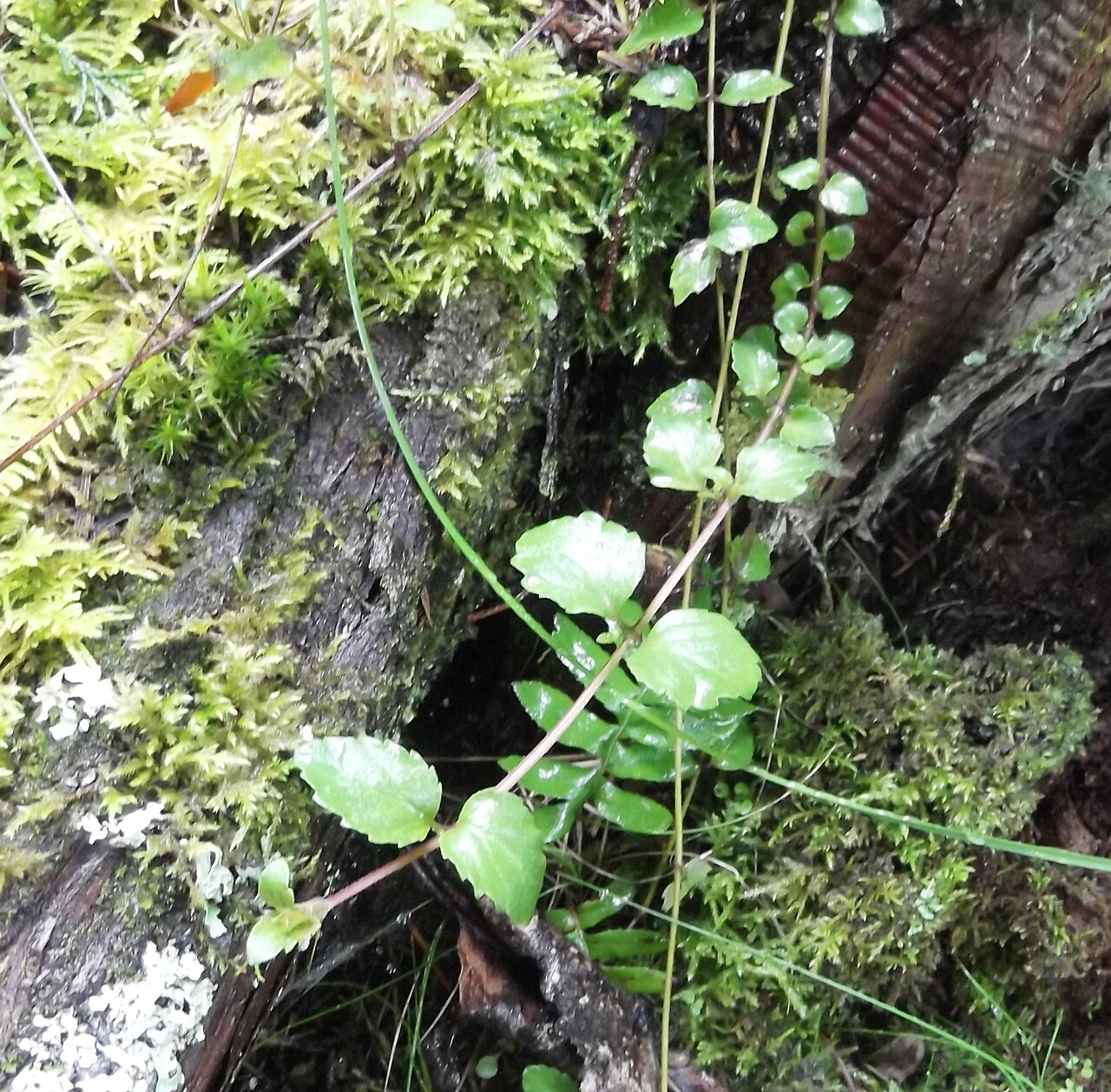
Plants form long, slender, wiry stems that trail along the ground, climb low over logs, stumps and rocks, or hang from banks, usually staying under 2 inches tall while spreading several feet. Stems root at the nodes where they touch moist ground, allowing a single plant to form a slowly expanding mat over time.
Leaves
Leaves are opposite, rounded to broadly oval, about half an inch to an inch long, with slightly scalloped edges and a glossy, somewhat leathery texture. They are evergreen in mild climates and release a strong, pleasant minty-herbal scent when bruised or crushed, by far the most reliable way to confirm an identification in the field.
Flowers
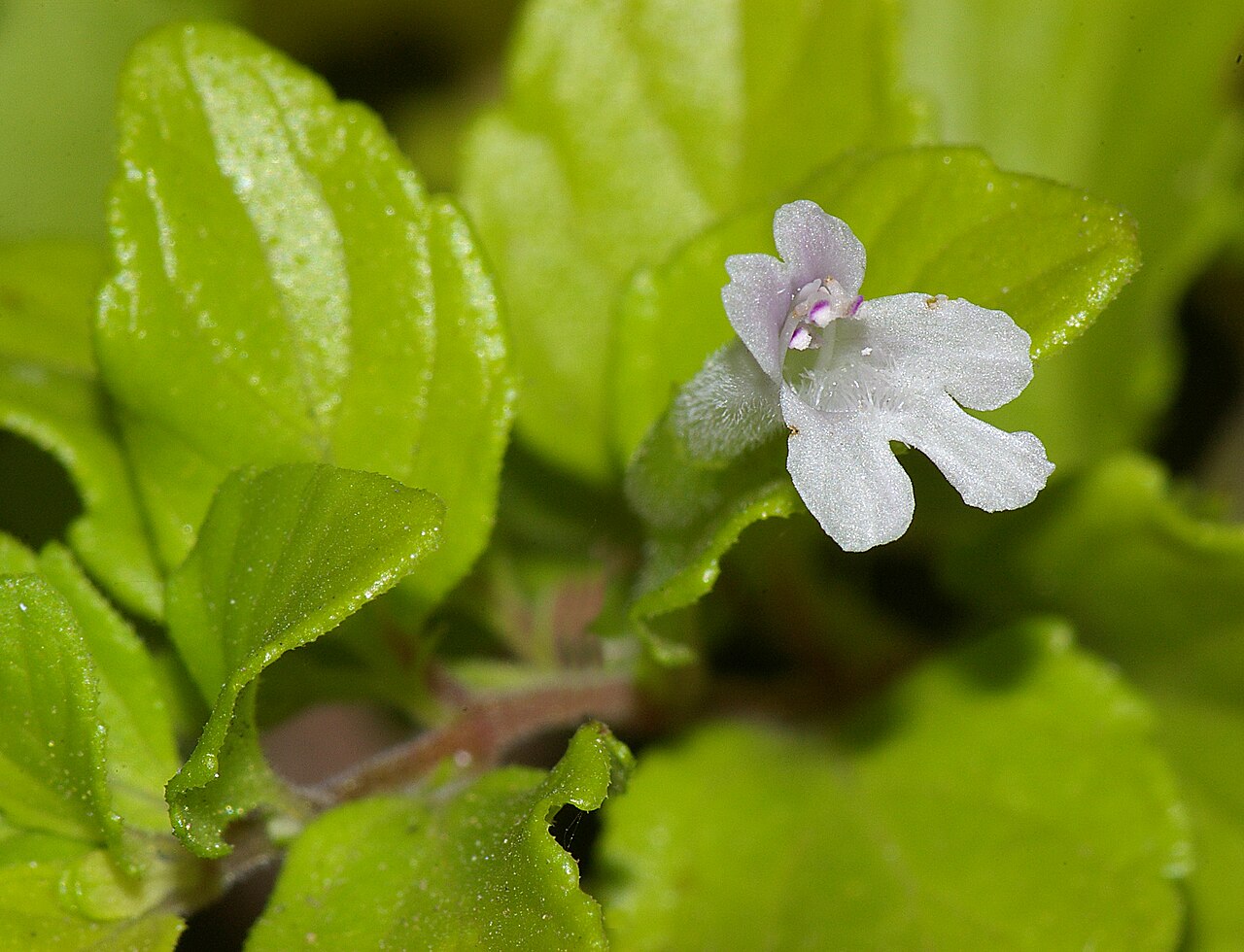
Flowers are small, tubular and two-lipped, typical of the mint family, about a third of an inch long, white to very pale lavender, and borne singly or in small clusters in the leaf axils. They are easy to overlook against the foliage but appear over a long season, from spring into summer or even fall in favorable conditions.
Fruit & Seed
Each flower matures into four tiny, smooth nutlets held in the persistent calyx, in keeping with the mint family pattern. Seed production is modest; in the wild and in gardens, yerba buena spreads mainly by rooting stems rather than by seed.
Quick Facts
| Scientific Name | Satureja douglasii (syn. Clinopodium douglasii) |
| Family | Lamiaceae (Mint) |
| Plant Type | Evergreen trailing perennial groundcover |
| Mature Height | 1–2 in |
| Mature Spread | 2–4 ft or more, slowly spreading |
| Growth Rate | Slow to moderate |
| Sun Exposure | Part Shade to Full Shade |
| Water Needs | Average; appreciates summer moisture in dry climates |
| Soil Type | Rich, well-drained forest loam with leaf litter |
| Soil pH | Slightly acidic (about 5.5–6.5) |
| Bloom Time | Spring – summer |
| Flower Color | White to pale lavender |
| Fall Color | None (evergreen in mild climates) |
| Fruit | Tiny dry nutlets, not ornamental |
| Deer Resistant | Yes (aromatic foliage) |
| USDA Hardiness Zones | 6–9 |
Native Range
Yerba buena is native along the Pacific Coast from California north through Oregon and Washington and into the forested panhandle of Idaho, generally staying within the cool, moist, forested parts of this range rather than the drier interior. It is most common at low to middle elevations in coastal and near-coastal forests, though populations extend into the Cascades and into interior forests with the right conditions.
Typical habitat is shaded forest floor: the understory of redwood, Douglas-fir, mixed evergreen and oak woodlands, where the plant trails over logs, duff and rocky banks in consistently moist, humus-rich soil. It is almost never found in open, sunny ground, reflecting its strong preference for forest shade and steady moisture.
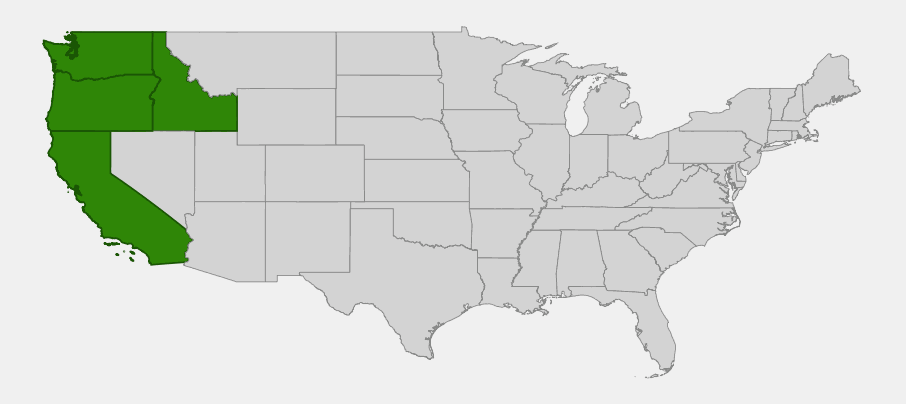
📋 Regional plant lists featuring Yerba Buena: California & Nevada · Western Oregon & Western Washington · Idaho, Eastern Oregon & Eastern Washington
Growing & Care Guide
Yerba buena is an easy, low-maintenance groundcover for a shaded native garden, as long as its basic needs for shade and consistent moisture in the root zone are met.
Light
Give yerba buena part to full shade; it is naturally a forest-floor plant and does not tolerate hot, direct sun, which scorches the foliage and dries the thin trailing stems. Dappled shade under trees or shrubs, or the north side of a building, suits it well.
Soil & Water
Plant in rich, humus-laden soil similar to a forest floor, amended with compost or leaf mold. Keep the soil consistently moist, especially during the first year and through dry summers; yerba buena does not handle prolonged drought as well as many California natives, reflecting its origin in the shaded, moisture-retentive forest understory. A layer of leaf litter or fine bark mulch helps keep roots cool and moist.
Planting Tips
Plant small starts 12 to 18 inches apart and be patient; yerba buena spreads slowly at first as trailing stems extend and root into the soil. It is well suited to planting at the base of logs, rocks or raised beds where its trailing stems can drape attractively. Avoid planting in compacted or poorly drained soil.
Pruning & Maintenance
Little pruning is needed; trim back stems occasionally to keep the planting within bounds or to encourage denser growth. Established plantings need only occasional supplemental water during dry spells and have few pest or disease problems in appropriate shaded conditions.
Propagation
The easiest method is by division or by rooted stem cuttings, since trailing stems often root naturally where they touch moist soil; these rooted sections can be cut away from the parent plant and transplanted. Seed propagation is possible but slower and less reliable than working with rooted stems.
Landscape Uses
- Woodland groundcover beneath native shrubs and trees, paired with sword fern and redwood sorrel
- Shaded banks and slopes, where trailing stems help stabilize soil in low-traffic areas
- Fragrance gardens, planted along shaded paths where leaves can be brushed in passing
- Container and hanging basket plantings, where its trailing habit can spill attractively over an edge
- Rock and log features in a woodland garden, where it drapes naturally over surfaces
Wildlife & Ecological Value
Yerba buena’s role in Pacific Coast forests is modest but steady, providing ground-level cover and a minor nectar source within the shaded understory community.
For Pollinators
The small tubular flowers are visited by native bees and other small pollinating insects adapted to the dim light of the forest floor, though the plant is not a major nectar source compared with sun-loving wildflowers.
For Birds
The dense, evergreen mat of trailing foliage offers ground-level cover for small birds and other wildlife moving through the forest understory, particularly in areas where the groundcover forms large, continuous patches.
For Mammals
The strongly aromatic foliage is generally avoided by deer, making yerba buena useful in shaded gardens where browsing pressure on other plants is high.
Ecosystem Role
As a trailing evergreen groundcover, yerba buena helps stabilize soil and retain moisture on the forest floor, and its persistent, low mats contribute to the layered structure of healthy Pacific Coast forest understories alongside ferns and other shade-loving natives.
Cultural & Historical Uses
Yerba buena has a long history of use among California’s Indigenous peoples and early Spanish-speaking settlers, who brewed the fragrant leaves into a mild, mint-like herbal tea, the use that gave the plant its common Spanish name, meaning “good herb.” The plant was so closely associated with this use and with the area where it grew abundantly that the original Spanish-era settlement that became San Francisco was itself named Yerba Buena.
These are historical and traditional uses rather than medical guidance, and the plant’s main significance for most gardeners today is as a fragrant, easy-care native groundcover for shaded sites rather than as a household herb. Anyone interested in preparing yerba buena as a historical tea should do so with care and proper identification, since it closely resembles other low trailing plants of the forest floor.
Frequently Asked Questions
Is yerba buena the same plant that gave San Francisco its original name?
Yes. The settlement that grew into San Francisco was originally named Yerba Buena, after the fragrant native groundcover that grew abundantly in the area.
Can yerba buena handle full sun?
No. It is a true forest-floor plant adapted to shade and consistent moisture, and it struggles or scorches in hot, direct sun. Give it part to full shade for the best results.
How fast does yerba buena spread?
Slowly at first, as trailing stems extend and root where they touch moist soil. A well-sited planting fills in steadily over a few years rather than spreading aggressively.
Does yerba buena need a lot of water?
It prefers consistent moisture, more than many California natives, since it evolved in the humid shade of coastal forests rather than open, dry ground. In hot, dry climates it benefits from regular watering through summer.
Is yerba buena the same as the “yerba buena” used in Mexican cooking?
No. The name “yerba buena” is applied informally to several different aromatic mint-family herbs in Spanish-speaking regions; the plant used in Mexican cooking is usually a different species, most often a type of spearmint. Satureja douglasii is the Pacific Coast native species discussed here.

Looking for a nursery that carries Yerba Buena?
Browse our native plant nursery directory: California · Oregon · Washington · Idaho