Giant Trillium (Trillium chloropetalum)
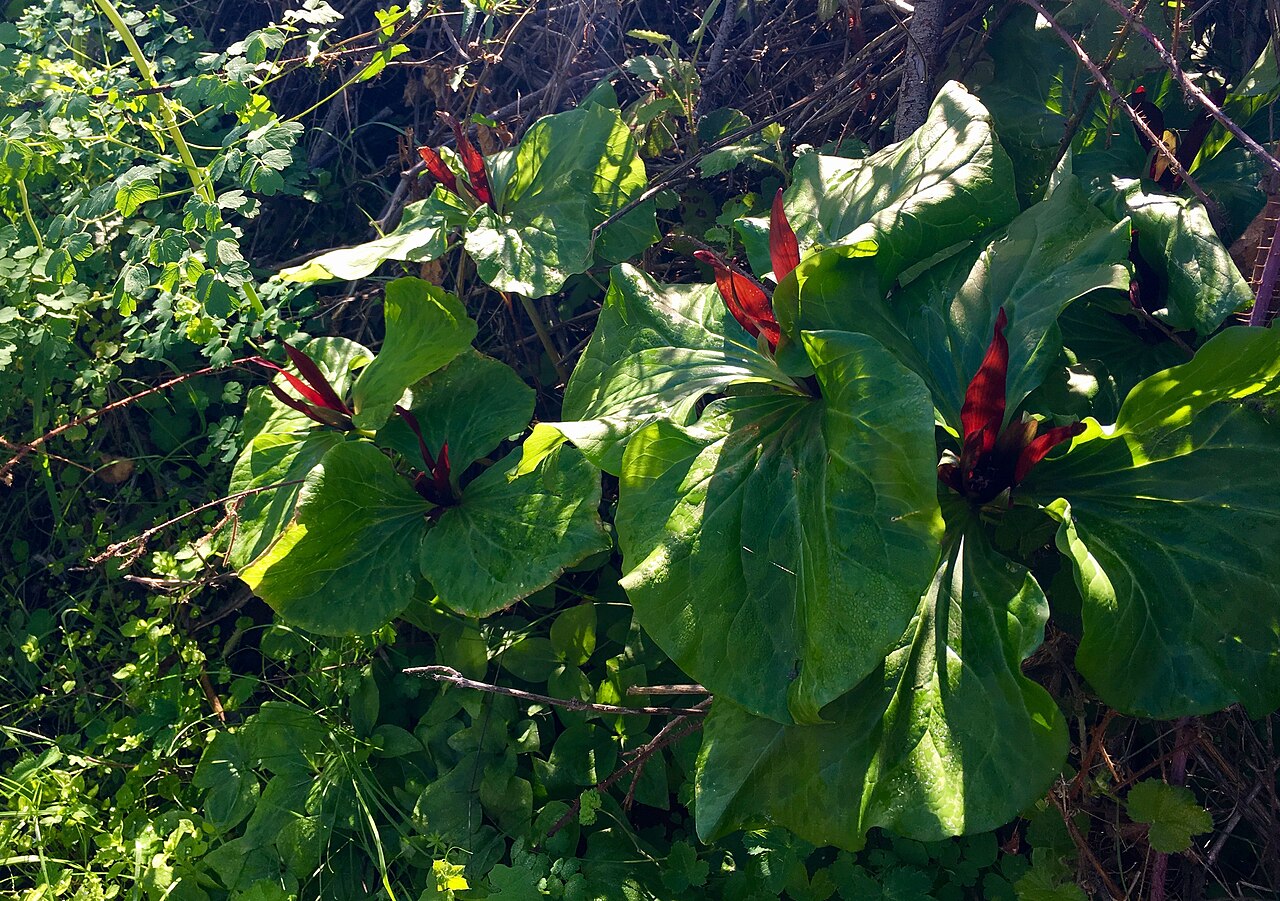
Trillium chloropetalum, the Giant Trillium or giant wakerobin, is the largest and showiest of California’s native trilliums, and one of the earliest wildflowers to bloom in the state’s shaded woodlands each year. Unlike most trilliums, which have slender petals that open wide, Giant Trillium holds its narrow, upright petals close together above a whorl of three broad, often mottled leaves — giving the whole plant a sculptural, almost architectural look that stands out on the forest floor in late winter.
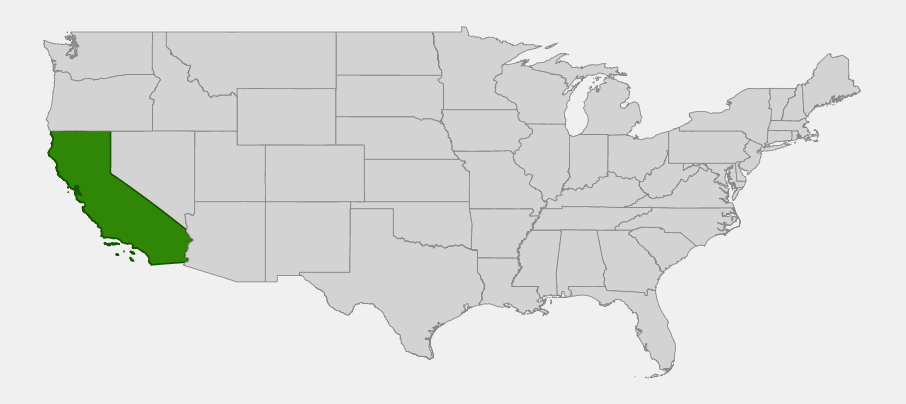
Giant Trillium is endemic to California, found nowhere else in the wild, from the coastal ranges and inner Coast Range north of the Transverse Ranges up into the Klamath and Sierra Nevada foothills. It grows as a slow, long-lived perennial from an underground rhizome, emerging in winter, flowering from February through April, and then going dormant for most of the rest of the year — a classic strategy for plants that make their living in the brief window of light reaching the forest floor before the overstory leafs out.
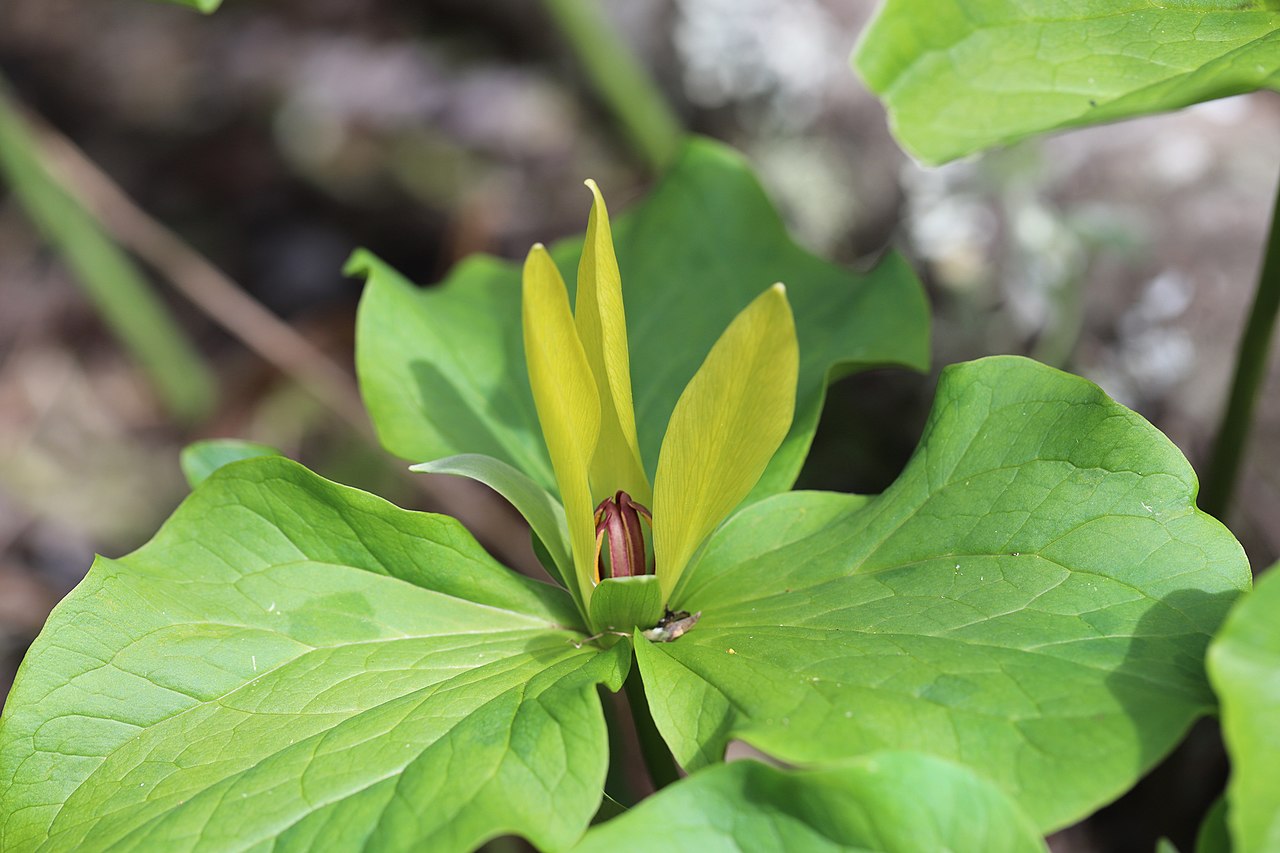
Flower color is unusually variable for a single species: individual plants can bloom in deep maroon, dusky purple, pale pink, greenish-yellow, or nearly white, sometimes all within the same population. This variability, combined with its imposing size — the largest trilliums in California — makes Giant Trillium a favorite of native plant gardeners and woodland wildflower enthusiasts, though its slow growth and particular needs mean it rewards patience more than quick results.
Identification
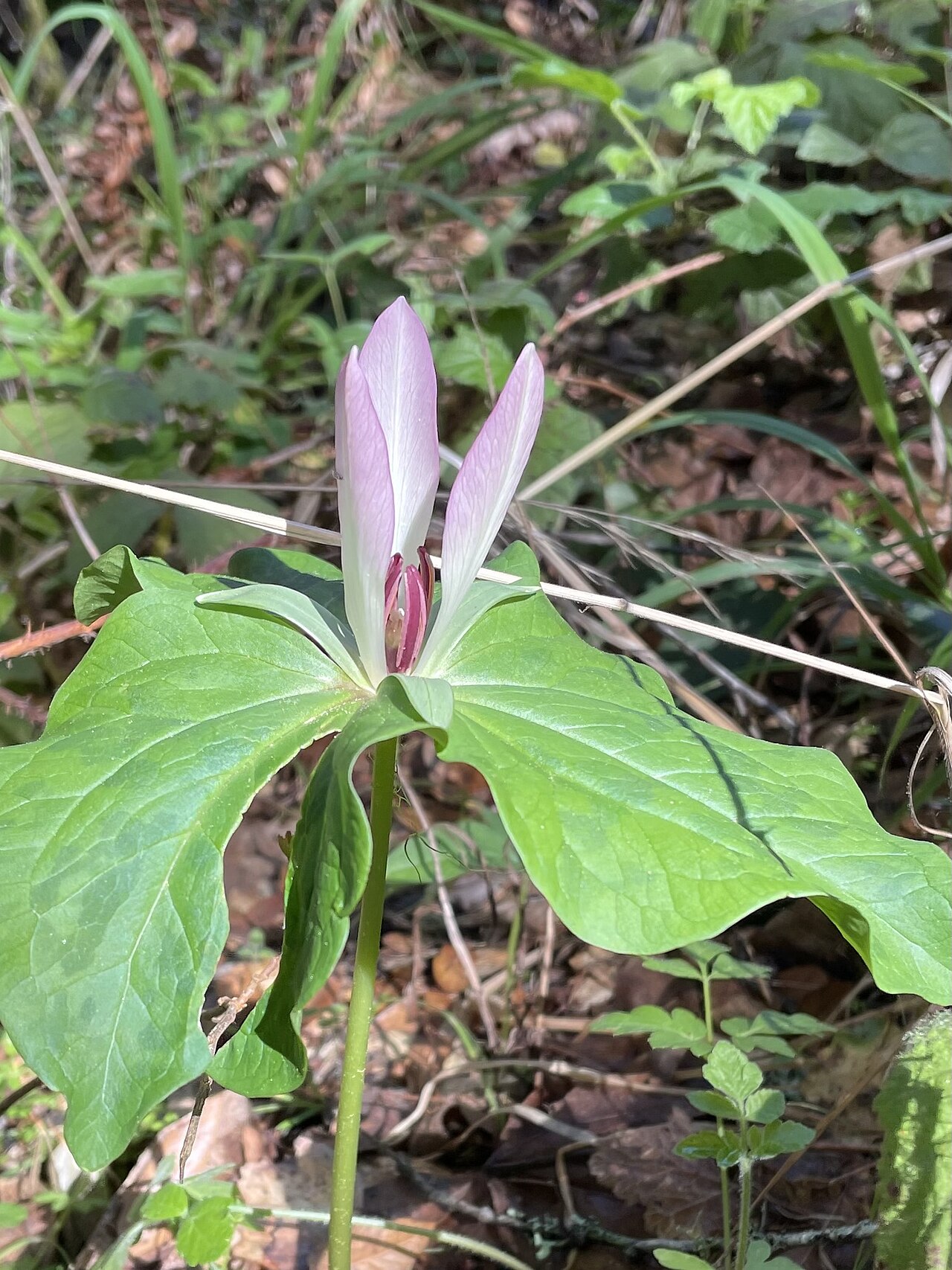
Giant Trillium grows from a thick, woody rhizome and produces a single, unbranched stem each year topped by a whorl of three large, sessile (stalkless) leaves, with the flower rising directly from the center of the leaf whorl on a short or essentially absent stalk — a key difference from trilliums whose flowers dangle on a distinct pedicel.
Leaves
The three leaves are broadly ovate to rhombic, 3 to 7 inches long and nearly as wide, often strikingly mottled with darker green, gray-green, or silvery blotches, though some plants have plain green leaves. The leaves emerge tightly folded and expand as the plant matures, eventually forming a flat platform beneath the flower. Leaf mottling is a useful but not universal identification clue, since plain-leaved individuals occur throughout the range.
Flowers
Each stem bears a single flower with three narrow, erect to slightly spreading petals, 1½ to 3 inches long, that remain more upright and closer together than the wide-open flowers of most other trilliums. Petal color ranges from deep maroon-purple through dusky rose, pink, greenish-yellow, to nearly white, often with a faint fragrance. Three narrow green sepals alternate with the petals at the base. Bloom occurs from February to April, among the earliest native wildflowers in California’s oak woodlands and mixed-evergreen forests.
Fruit & Seeds
After flowering, the plant produces a fleshy, winged, greenish to purplish berry-like capsule that ripens by early summer before the plant goes dormant. Seeds are dispersed in part by ants, which are attracted to a fatty, nutrient-rich appendage (elaiosome) attached to each seed — a dispersal strategy shared with many other spring woodland wildflowers.
Quick Facts
| Scientific Name | Trillium chloropetalum |
| Family | Melanthiaceae (formerly Trilliaceae) |
| Plant Type | Herbaceous Perennial (rhizomatous), deciduous/dormant in summer |
| Mature Height | 8–18 in |
| Mature Spread | 10–14 in per clump |
| Growth Rate | Very slow |
| Sun Exposure | Part Shade to Full Shade |
| Water Needs | Moist in winter-spring, dry summer dormancy |
| Soil Type | Rich, humusy, well-drained loam |
| Soil pH | 5.5–7.0 (slightly acidic to neutral) |
| Bloom Time | February – April |
| Flower Color | Maroon, purple, pink, greenish-yellow, or white (variable) |
| Fall Color | None; plant is dormant below ground by mid-summer |
| Fruit | Fleshy winged capsule, not cultivated for food |
| Deer Resistant | Mostly (occasionally browsed, but not preferred) |
| USDA Hardiness Zones | 7–9 |
Native Range
Giant Trillium is a California endemic, found only within the state, with its core range running through the central and northern Coast Ranges, the San Francisco Bay Area, and the inner North Coast into the Klamath Mountains, plus scattered populations in the central Sierra Nevada foothills and the Transverse and Peninsular Ranges of Southern California. Populations are strongest along the coast and in the Coast Ranges, where fog and winter rain keep the humus-rich forest floor consistently moist through the bloom season.
The species grows in shaded to partly shaded understories of mixed-evergreen forest, redwood forest margins, oak woodland, and riparian woodland, typically on north-facing slopes or in canyon bottoms where soil moisture lingers longest into spring. It is often found alongside other early-blooming woodland natives, forming loose colonies on slopes with deep leaf litter and little direct summer sun.
Because Giant Trillium is slow to mature — plants can take seven years or more from seed to first flower — undisturbed, long-established populations are especially valuable and slow to recover from disturbance such as grading, logging, or heavy foot traffic. Gardeners and land managers within its native range should treat existing wild colonies as essentially irreplaceable on a human timescale.
📋 Regional plant lists featuring Giant Trillium: California & Nevada
Growing & Care Guide
Giant Trillium is not a plant for impatient gardeners — it is slow to establish and slower still to bloom from seed — but a well-sited specimen can live for decades and slowly form an impressive clump. Success depends almost entirely on recreating the cool, shaded, humus-rich forest floor conditions it evolved in.
Light
Plant in part to full shade, ideally beneath deciduous or open-canopy trees that allow some winter and early-spring light to reach the ground before leafing out fully. Deep, year-round shade from dense evergreens can reduce flowering, while too much direct sun, especially in warmer inland gardens, scorches the leaves and shortens the bloom.
Soil & Water
Give Giant Trillium rich, well-drained soil amended with leaf mold or compost to mimic the deep humus layer of a native forest floor. Keep soil consistently moist from fall through spring during active growth and flowering; once the plant goes dormant in early summer, reduce watering substantially, as rhizomes are prone to rot if kept wet through their dry-season rest. A thick mulch of leaf litter protects the dormant rhizome and slowly builds the organic soil layer the plant prefers.
Planting Tips
Plant dormant rhizomes or container-grown plants in fall, setting rhizomes 2 to 3 inches deep with the growing point up. Never dig rhizomes from wild populations — nursery-propagated stock is widely available and wild colonies recover extremely slowly, if at all, from collection. Choose a permanent spot, since the plant resents transplanting once established and may take a year or more to resume normal flowering after being moved.
Pruning & Maintenance
No pruning is needed. Allow foliage to die back naturally after flowering rather than cutting it early, since the leaves are still feeding the rhizome for the next year’s growth. Topdress annually in fall with leaf mold or compost rather than disturbing the soil around the rhizome.
Propagation
Division of established clumps in fall is the fastest method, though clumps form slowly and shouldn’t be divided more often than every 6 to 8 years. Seed propagation is very slow — seed requires a warm-then-cold stratification cycle and seedlings commonly take five to seven years to reach flowering size — but is the only ethical way to acquire large numbers of plants without impacting wild populations.
Landscape Uses
- Woodland and shade gardens beneath native oaks or deciduous trees
- Understory restoration in redwood-margin or mixed-evergreen forest plantings
- Specimen plantings where its bold mottled leaves and early bloom can be appreciated up close
- Native plant collections focused on California coast range flora
- Shaded slopes and canyon gardens with consistent winter moisture
Wildlife & Ecological Value
Giant Trillium’s value lies less in feeding wildlife directly and more in its role as an indicator and structural element of healthy, undisturbed woodland understories.
For Pollinators
Flowers are pollinated primarily by small native bees and flies, and in some populations by beetles, attracted to the faint, sometimes musty floral scent. Because Giant Trillium blooms so early in the season, it provides one of the first nectar and pollen sources available to emerging native pollinators in shaded woodland habitats.
Birds & Mammals
The seeds are dispersed by ants that carry them to their nests to consume the fatty elaiosome attached to each seed, incidentally planting the trillium in a new, often favorable location — a mutualism called myrmecochory shared with many other forest-floor spring wildflowers. Deer occasionally browse the leaves and flowers, though Giant Trillium is not a preferred browse species compared to more palatable woodland plants.
Ecosystem Role
As a long-lived, slow-growing understory perennial, Giant Trillium is often used by ecologists as an indicator of old, undisturbed forest soils, since it takes many years to recolonize a site after disturbance. Healthy populations suggest a forest floor that has not been recently graded, heavily grazed, or repeatedly burned, making the species a useful signal of woodland habitat quality.
Cultural & Historical Uses
Trilliums, including Giant Trillium, were known to various California Indigenous groups within its range, who recognized the plant but generally avoided disturbing it, consistent with the broader ethnobotanical pattern across North America in which trillium species were valued more as reliable seasonal indicators — their bloom signaling the arrival of spring — than as a food or medicine source.
Some historical accounts from other regions describe limited external, topical use of various Trillium species’ roots in folk remedies, but these uses are not well documented specifically for Giant Trillium in California, and the plant has no established tradition as an edible or internally used medicinal species.
In more recent decades, Giant Trillium has become a prized subject for California wildflower photographers and a signature early-spring bloomer in native plant gardens, valued today primarily for its ornamental and ecological significance rather than for any historical practical use.
Frequently Asked Questions
Why do Giant Trillium flowers come in so many different colors?
The species shows unusually high color variation even within a single population, ranging from deep maroon to pink, greenish-yellow, and white. The exact cause isn’t fully understood, but it may relate to pollinator preferences, pigment genetics, and possibly age of the flower, since some color forms deepen as the bloom matures.
Can I dig up Giant Trillium from the wild to plant in my garden?
No — wild collection is strongly discouraged and often illegal on public lands. Giant Trillium takes many years to reach flowering size, and removing rhizomes can eliminate decades of growth from a wild population with little chance of natural recovery. Buy nursery-propagated plants instead.
Is Giant Trillium the same as Western Trillium?
No. Trillium ovatum, commonly called Western Trillium, is a related but distinct species with a pedicled (stalked) white flower that ages to pink, found more broadly across the Pacific Northwest and northern California. Giant Trillium’s flower sits directly atop the leaves without a stalk. See our page on Western Trillium for comparison.
How long does it take for a Giant Trillium to bloom from seed?
Typically five to seven years, sometimes longer. This slow maturation is one reason established wild colonies are so valuable and why nursery-propagated plants, while more expensive than many perennials, represent years of growing time already invested.
Will Giant Trillium spread in my garden?
Very slowly. Clumps gradually widen as the rhizome branches, but Giant Trillium is not an aggressive spreader and won’t become weedy. Most gardeners wait years to see a single plant become a modest multi-stem clump.

Looking for a nursery that carries Giant Trillium?
Browse our native plant nursery directory: California