Desert Holly (Atriplex hymenelytra)
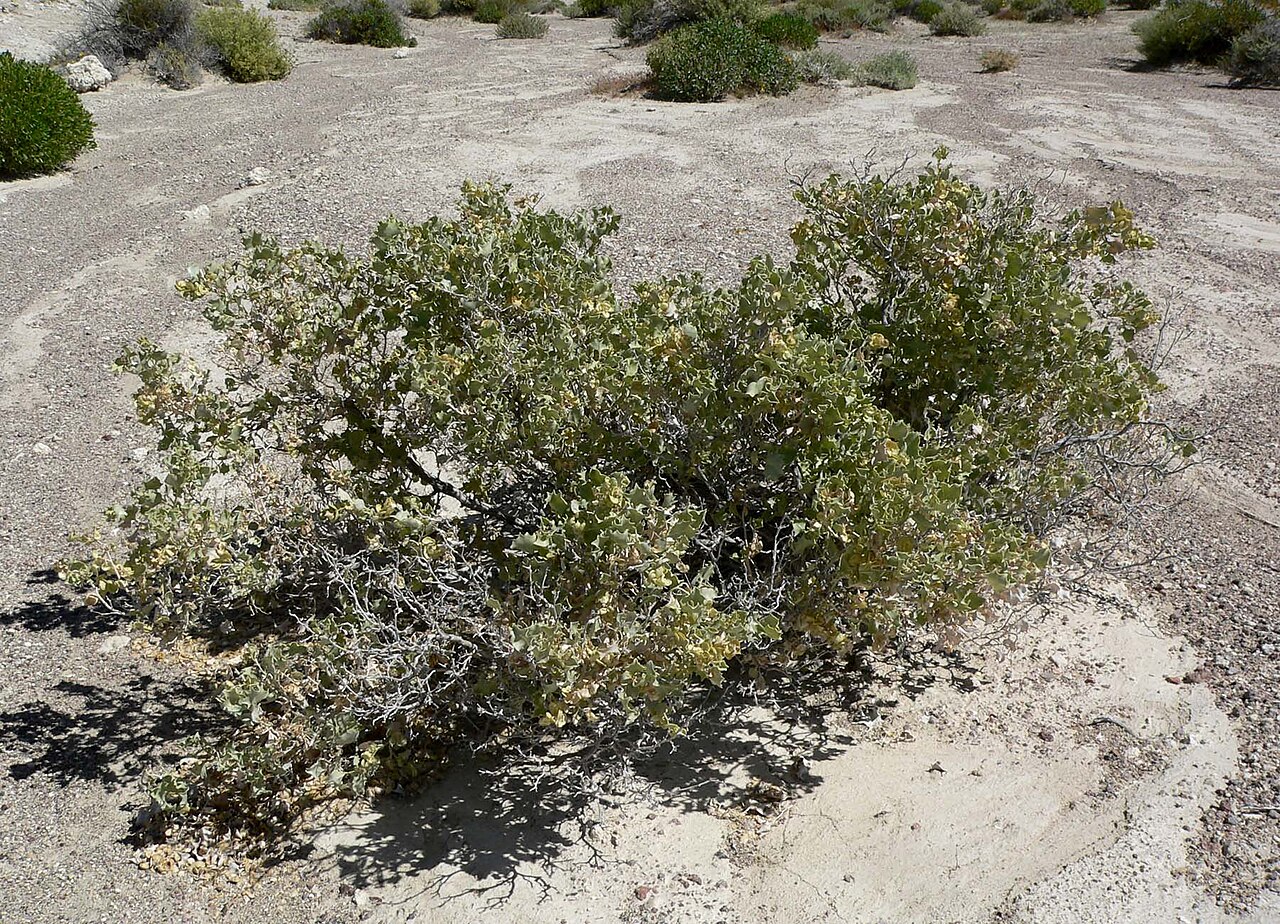
Atriplex hymenelytra, commonly called Desert Holly, is one of the most strikingly colored shrubs of the Mojave and Colorado Deserts — a low, rounded saltbush whose stiff, holly-shaped leaves are covered in a silvery-white, reflective coating that keeps the plant cool under some of the most brutal sun and heat in North America. The resemblance of its spiny-toothed, gray-white leaves to true holly (an unrelated plant from entirely different climates) gives this desert survivor its common name.
Desert Holly is a true desert specialist, often found in the driest, saltiest, most exposed parts of its range, including the floor of Death Valley, where few other shrubs survive at all. It belongs to the saltbush genus Atriplex, a group adapted to tolerate soils too alkaline or saline for most plants, and it copes with extreme heat using a dense covering of reflective, silvery scales (trichomes) on its leaf surfaces rather than through shade-seeking or deep taproots alone.
For gardeners in the hottest, driest parts of California, Nevada, and Arizona, Desert Holly offers a dependable, low-water accent shrub with year-round silvery foliage that provides strong textural and color contrast against greener desert plantings. It asks for almost nothing once established and is remarkably resistant to both drought and salinity, making it valuable for the most challenging sites in a xeriscape garden.
Identification
Desert Holly grows as a low, rounded to irregularly spreading shrub, rarely taller than it is wide, with stiff branches and a dense covering of pale, scaly leaves that give the entire plant a silvery-white to grayish-green cast visible from a distance.
Bark & Stems
Stems are slender, pale gray, and somewhat brittle, branching densely from the base to form a rounded, bushy shape. Older stems develop a grayish, slightly fissured bark, while young growth is covered in the same reflective scales found on the leaves.
Leaves
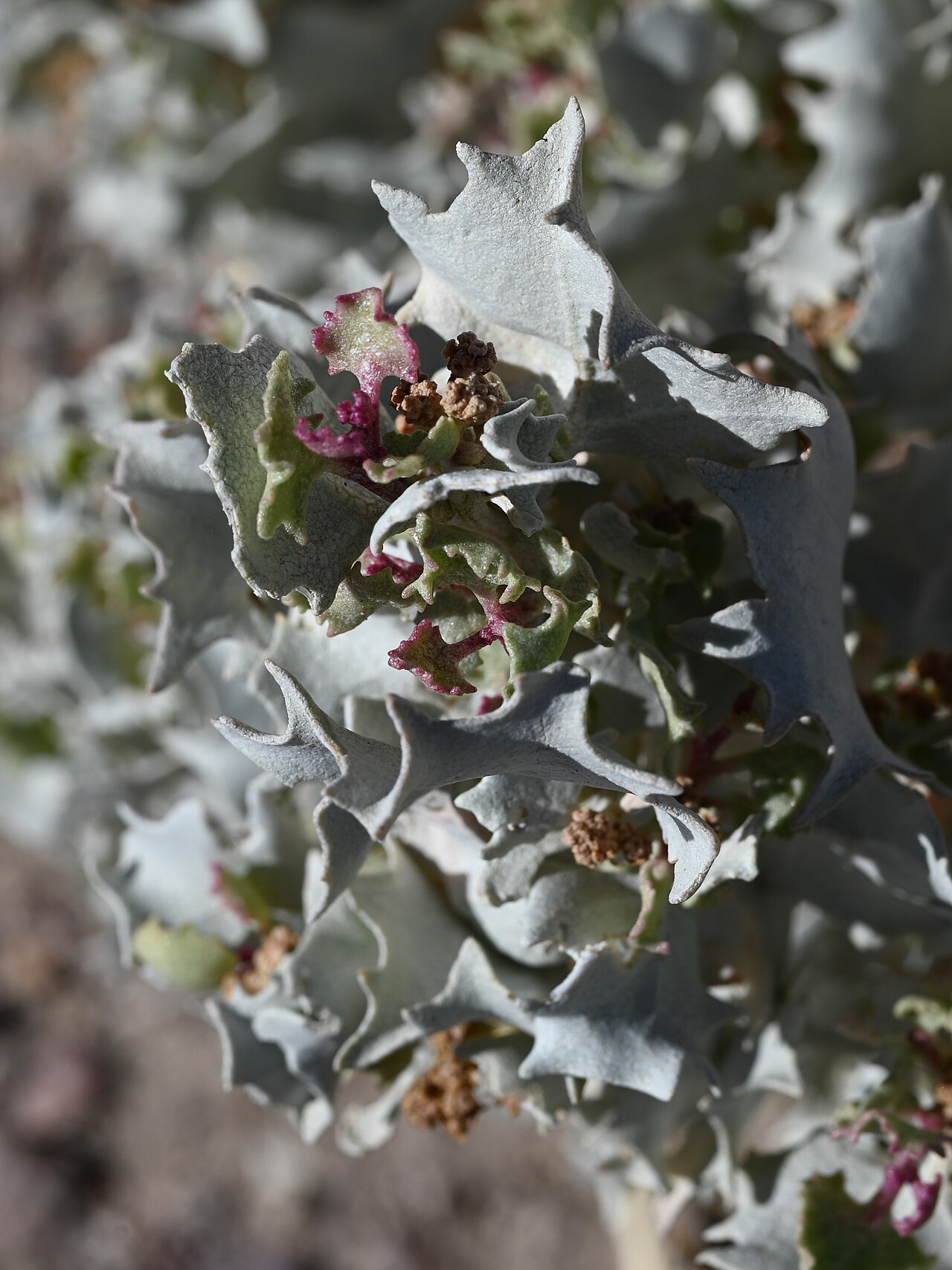
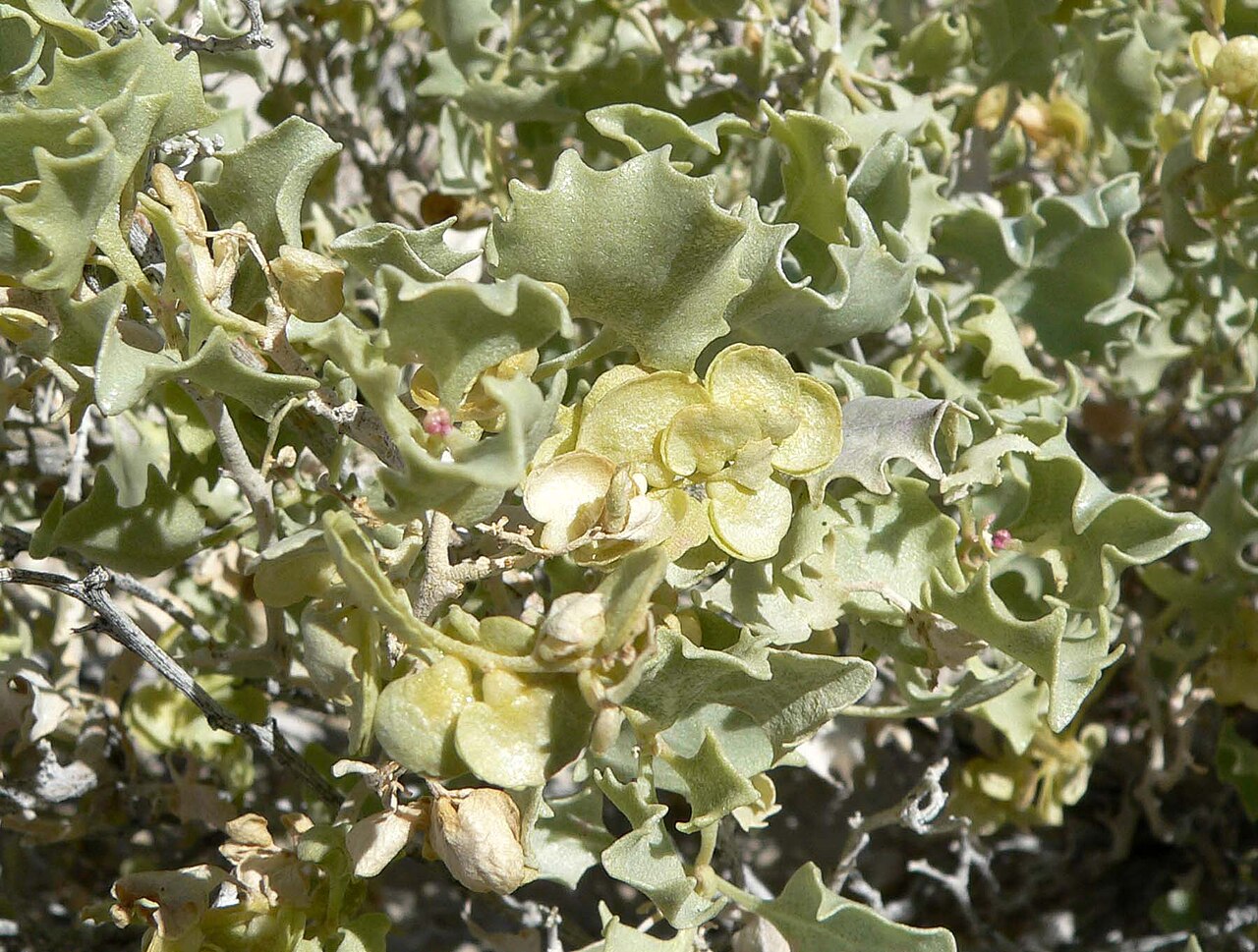
Leaves are the plant’s most distinctive feature: rounded to triangular, ½ to 1½ inches long, with wavy, spine-tipped, holly-like toothed margins. Both surfaces are densely covered in tiny silvery-white scales that reflect sunlight and reduce water loss, giving the foliage a frosted, almost metallic look. Leaf color shifts somewhat with moisture and season — more silvery-white in the driest months, taking on a slightly greener or pinkish-maroon cast after rare rains or in cooler weather.
Flowers
Like other saltbushes, Desert Holly is wind-pollinated with small, inconspicuous flowers lacking showy petals. Separate male and female flowers occur on the same or different plants, clustered in small groups along the upper stems; male flowers are tiny yellowish clusters, while female flowers are reduced and nearly unnoticeable until they develop into fruiting bracts.
Fruit & Seeds
The fruit is enclosed by a pair of flattened, fan-shaped to rounded bracts, ¼ to ½ inch across, that are often tinged pink, maroon, or tan and give fruiting plants a subtly colorful, papery look distinct from the silvery foliage. Each bract pair encloses a single small seed. The bracts persist on the plant for weeks, offering one of the easiest ways to confirm identification when flowers are not present.
Quick Facts
| Scientific Name | Atriplex hymenelytra |
| Family | Amaranthaceae (Saltbush/Chenopod subfamily) |
| Plant Type | Evergreen Shrub |
| Mature Height | 1–3 ft |
| Mature Spread | 2–4 ft |
| Growth Rate | Slow |
| Sun Exposure | Full Sun |
| Water Needs | Very low; extremely drought tolerant |
| Soil Type | Sandy, gravelly, or saline desert soils |
| Soil pH | 7.5–9.0 (tolerates strongly alkaline/saline soils) |
| Bloom Time | Winter to early spring (flowers inconspicuous) |
| Flower Color | Yellowish, inconspicuous |
| Fall Color | None; evergreen silvery foliage year-round |
| Fruit | Small winged bracts, not a food crop |
| Deer Resistant | Yes |
| USDA Hardiness Zones | 8–11 |
Native Range
Desert Holly is native to the hottest, driest low-elevation deserts of the American Southwest, centered on the Mojave Desert of southeastern California and southern Nevada, extending into the Colorado Desert of southern California and the arid lowlands of western and southern Arizona. It is one of the characteristic shrubs of Death Valley, where it grows on the valley floor and surrounding alluvial fans in conditions too hot, dry, and saline for most other plants.
Within this range, Desert Holly favors desert flats, alluvial fans, washes, and areas with alkaline or saline soils, often growing in open, sparsely vegetated ground alongside creosote bush and other extreme desert specialists. It is typically found at low elevations, frequently below sea level in basins such as Death Valley and well below 3,000 feet elsewhere, reflecting its exceptional heat tolerance.
Because Desert Holly thrives in conditions that exclude most competing vegetation, it often grows in nearly pure, widely spaced stands on desert pavement and saline flats, an adaptation to extremely limited water availability rather than a preference for isolation — its root system efficiently captures whatever sparse rainfall reaches these basins.
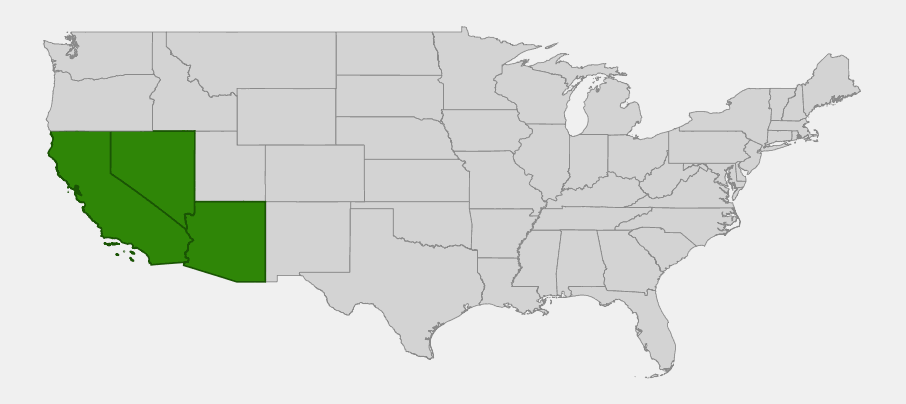
📋 Regional plant lists featuring Desert Holly: California & Nevada · Arizona & New Mexico
Growing & Care Guide
Desert Holly is built for extremes, which makes it an outstanding choice for the hottest, driest, and most neglected corners of a low-desert garden — but a poor fit for anywhere with regular irrigation or rich soil.
Light
Plant in full sun. Desert Holly’s reflective, scaly leaves are specifically adapted to intense, direct desert sunlight, and the plant will not perform well in shade.
Soil & Water
Desert Holly needs sharply drained, sandy or gravelly soil and tolerates alkaline and even saline conditions that would stress most other garden plants. It is extremely drought tolerant once established, surviving on rainfall alone in much of its native range; in cultivation it needs only occasional deep watering during establishment and essentially none afterward. Overwatering, especially in heavier soils, is the most common cause of failure.
Planting Tips
Plant container specimens in fall or early spring. Choose the hottest, sunniest, most exposed and driest part of the garden — a spot where most other plants struggle is often ideal for Desert Holly. Avoid low spots where water collects after rain. Space plants 3 to 4 feet apart to allow for their mature spread.
Pruning & Maintenance
Little to no pruning is needed. Remove dead branches as needed; the plant’s naturally rounded form rarely requires shaping. Desert Holly is slow-growing and long-lived under appropriate desert conditions, requiring minimal ongoing maintenance once established.
Propagation
Desert Holly can be grown from seed collected from the dry fruiting bracts, though germination can be slow and uneven; a period of cold-moist stratification may improve results. Nursery-grown container plants are the most reliable way to establish the species in a garden setting.
Landscape Uses
- Extreme xeriscape and low-desert gardens where few other shrubs survive
- Silvery foliage accents for color and texture contrast against greener desert plants
- Saline or alkaline soil sites unsuitable for most ornamental shrubs
- Desert habitat restoration on disturbed alluvial fans and desert flats
- Low, informal borders in hot, reflected-sun locations such as near walls or pavement
Wildlife & Ecological Value
In the sparse plant communities of the hottest desert basins, Desert Holly plays an outsized ecological role simply by providing cover and forage where little else survives.
For Pollinators
As a wind-pollinated species, Desert Holly does not rely on insect pollinators and its flowers offer little floral reward; however, the plant’s foliage still supports some specialist desert insects adapted to feeding on saltbush-family plants.
Birds & Mammals
Desert bighorn sheep, jackrabbits, and other desert herbivores browse Desert Holly foliage, particularly in drought years when more palatable forage is scarce, and the dense branching provides shelter for small desert reptiles and rodents escaping the heat of open ground. The dried leaves and fruiting bracts contribute to the thin layer of organic material that sustains desert soil life in otherwise barren basins.
Ecosystem Role
As one of the few shrubs able to establish on saline desert flats and alkaline alluvial fans, Desert Holly helps stabilize soil in these harsh environments and creates small islands of shade and shelter that other, less tolerant desert plants and animals can use. Its presence is often an indicator of the most extreme, specialized desert flat habitats in the Mojave and Colorado Desert ecosystems.
Cultural & Historical Uses
Indigenous peoples of the Mojave and Colorado Desert regions, including the Timbisha Shoshone of Death Valley, were familiar with Desert Holly as a conspicuous, recognizable plant of the desert floor, though it was not a primary food or medicinal resource compared to other more productive desert plants available seasonally. Its silvery, evergreen foliage made it a useful landmark and seasonal indicator in an otherwise sparse landscape.
In the 20th century, Desert Holly’s pale, holly-like branches became locally popular as a dried decorative material, particularly around the winter holidays, due to its resemblance to true holly — a practice that raised conservation concerns in some areas given the plant’s slow growth and the ecological importance of established desert shrubs, leading to protective harvesting restrictions in some public lands, including Death Valley National Park.
Today, Desert Holly is primarily valued for its ecological role in extreme desert habitats and its ornamental use in water-wise landscaping, with wild harvesting for decoration discouraged or prohibited in protected areas.
Frequently Asked Questions
Is Desert Holly related to true holly plants?
No. Desert Holly is a saltbush in the Amaranthaceae family, unrelated to true holly (Ilex species). The common name refers only to the similar spiny-toothed leaf shape, not any botanical relationship.
Can I pick Desert Holly branches for holiday decorations?
Harvesting wild Desert Holly is restricted or prohibited in many protected areas, including Death Valley National Park, due to the plant’s slow growth and ecological importance in fragile desert habitats. Check local regulations before collecting, and consider growing your own instead.
Why does Desert Holly look silvery-white instead of green?
The leaves are covered in tiny reflective scales that reduce water loss and shield the plant from intense desert sun. This adaptation, called a salt-and-sun tolerant scale covering, is shared by several other desert Atriplex (saltbush) species.
Will Desert Holly survive in a regular garden with normal watering?
It can survive but will likely struggle in regularly irrigated, rich garden soil, which encourages root rot in a plant adapted to bone-dry, saline desert flats. It performs best in the hottest, driest, least-irrigated part of a low-desert landscape.
Does Desert Holly produce showy flowers?
No — like other saltbushes, it is wind-pollinated with small, inconspicuous flowers. Its ornamental value comes from its silvery evergreen foliage and the colorful fan-shaped fruiting bracts that follow, not from showy blooms.

Looking for a nursery that carries Desert Holly?
Browse our native plant nursery directory: California · Nevada · Arizona