Bladderpod (Peritoma arborea)
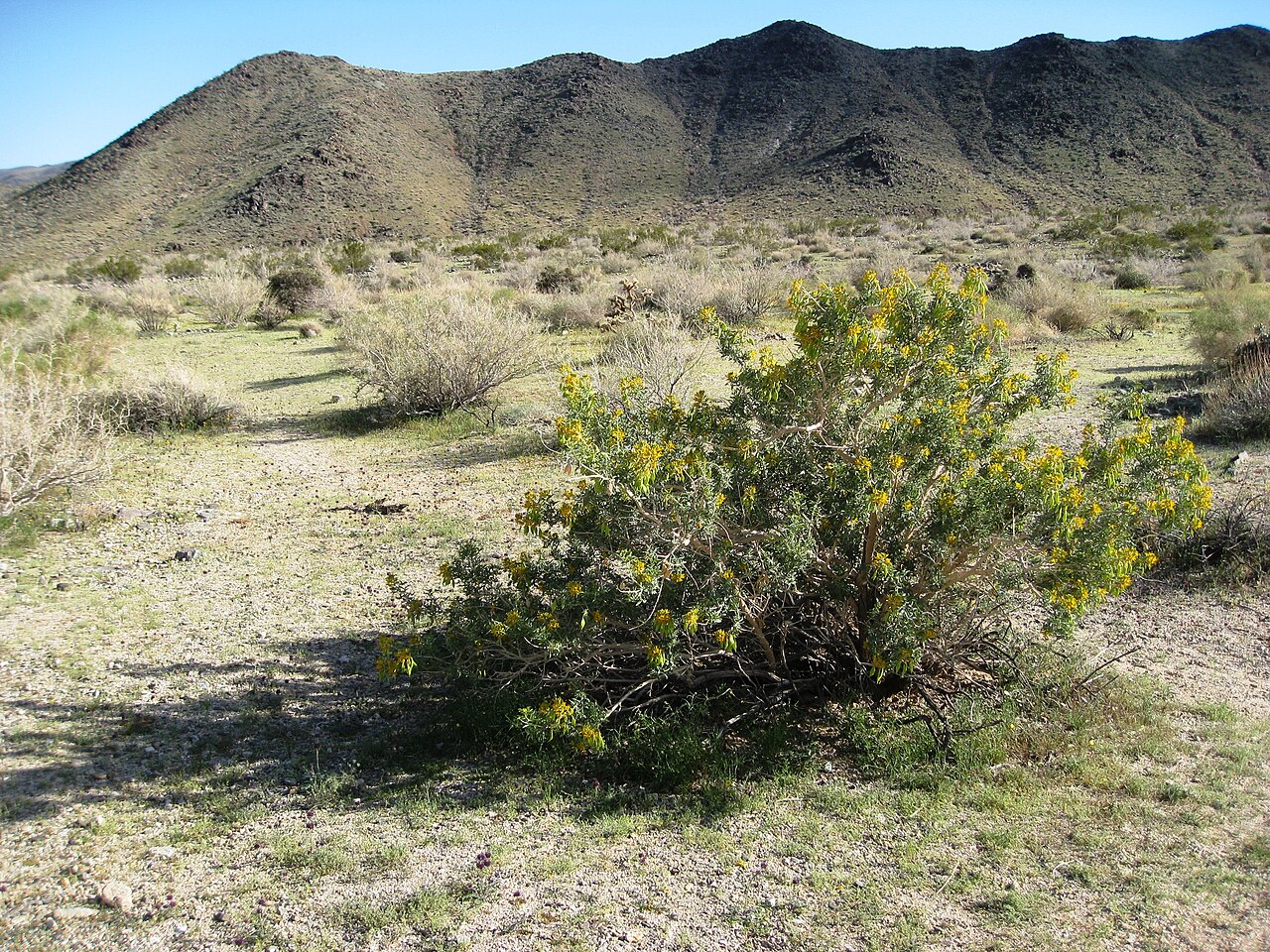
Peritoma arborea (also known by its older names Isomeris arborea and Cleome isomeris), commonly called Bladderpod, is one of the most reliable and long-blooming native shrubs of California’s deserts and coastal sage scrub. Named for its inflated, papery seed pods that look like tiny balloons dangling from the branches, this rounded gray-green shrub produces clusters of bright yellow flowers nearly year-round in mild years, making it a dependable nectar source when little else in the desert is in bloom.
Bladderpod is a member of the caper family (Cleomaceae) and typically grows 2 to 5 feet tall and wide, with soft, gray-green, three-parted leaves that have a distinctive, somewhat pungent odor when crushed — a trait that discourages browsing by deer and rabbits. The combination of drought tolerance, long bloom season, and wildlife value has made it an increasingly popular choice for low-water landscaping throughout its native range.
Despite its toughness, Bladderpod is not a plant for every garden. It is strictly adapted to dry, well-drained soils and intense sun, and it struggles or rots in heavier, wetter conditions typical of lawns or traditional perennial beds. For gardeners working with decomposed granite, rocky slopes, or reclaimed desert soils in Southern California and Arizona, though, it is one of the easiest and most rewarding native shrubs available.
Identification
Bladderpod grows as a rounded, multi-stemmed shrub with an open, somewhat sprawling habit, usually wider than tall. Its gray-green foliage and pale, papery fruit make it recognizable at a distance even when not in bloom.
Bark & Stems
Young stems are light gray-green and finely hairy, aging to a pale tan-gray bark. The overall branching habit is loose and somewhat untidy by cultivated-shrub standards, with branches often arching outward from a woody base — a trait that works well for naturalistic desert plantings but can be pruned into a tidier form if desired.
Leaves
Leaves are compound, divided into three narrow, gray-green leaflets each 1 to 2 inches long, giving the foliage a soft, almost felted appearance. Crushed leaves release a strong, somewhat unpleasant odor, often compared to the smell of garlic or onions mixed with something skunky — an effective deterrent against browsing mammals. The foliage is evergreen to semi-evergreen in mild climates, though it may drop some leaves during extreme drought or cold.
Flowers
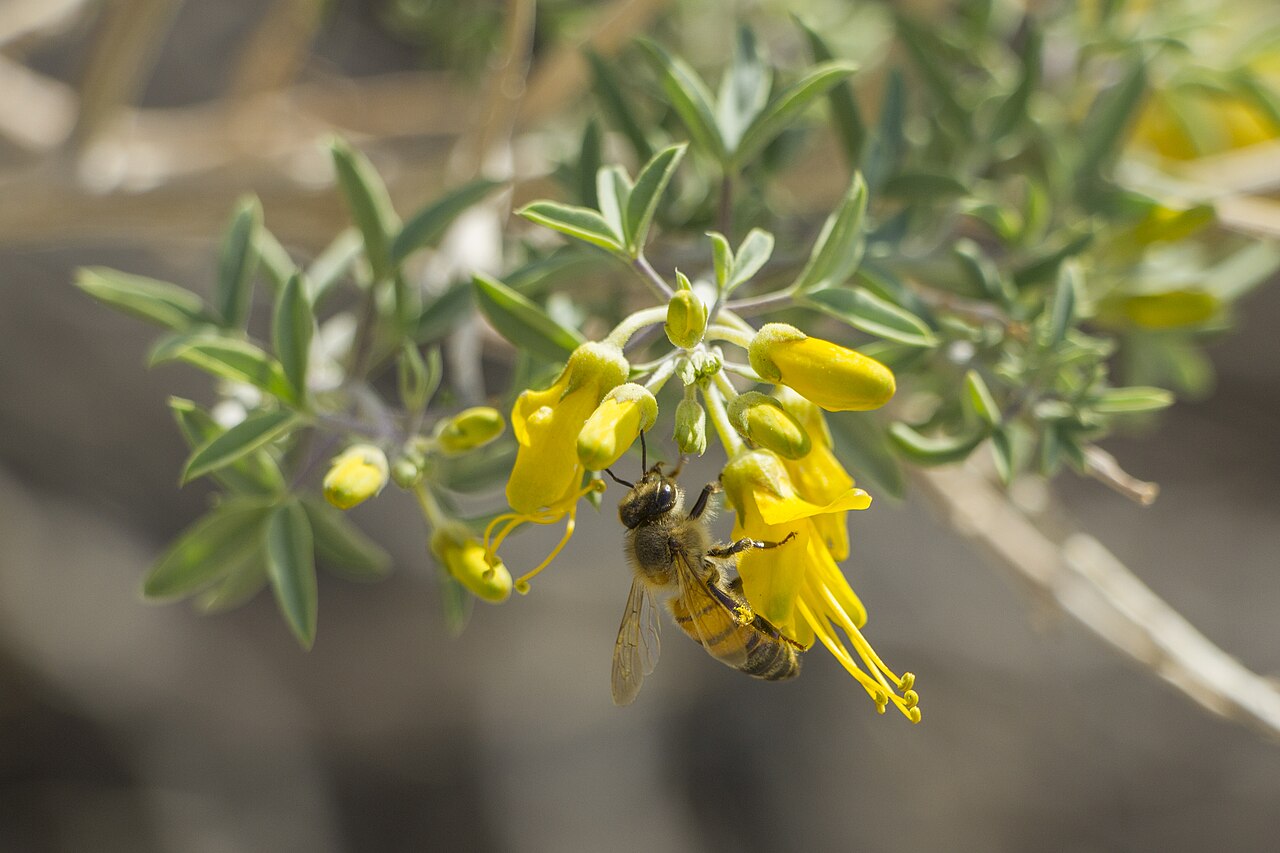
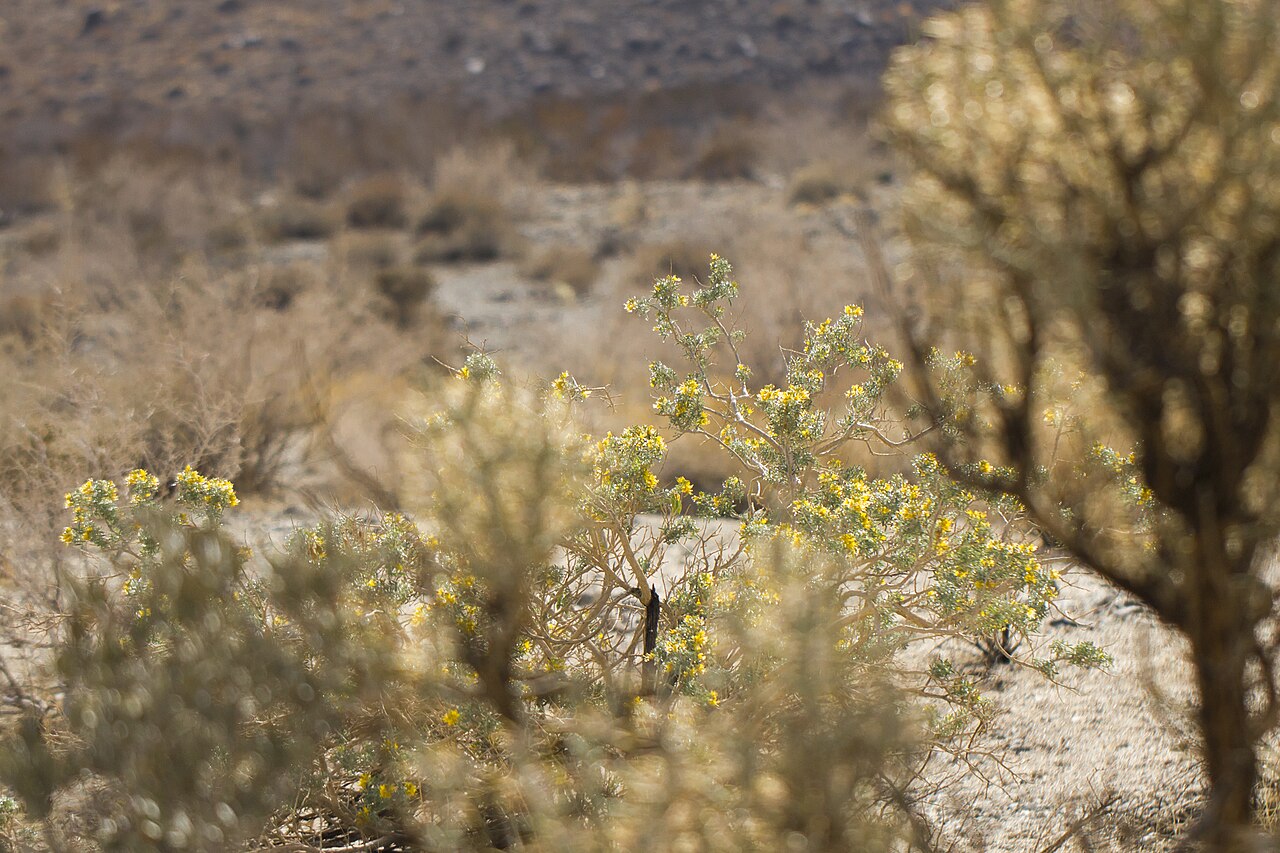
Flowers are bright yellow, about ¾ inch across, with four narrow petals and long, prominent, curving stamens that give each bloom a spidery look typical of the caper family. Flowers are borne in loose clusters at branch tips and can appear nearly year-round in mild coastal and low-desert climates, though the heaviest bloom comes in late winter and spring. The long stamens and nectar-rich flowers make Bladderpod a magnet for bees.
Fruit & Seeds
The namesake fruit is an inflated, papery, bladder-like seed pod, 1 to 2 inches long, that starts green and dries to a straw color, often persisting on the shrub well after the seeds inside have matured. Each pod contains several small, round, dark brown to black seeds. The dry pods rattle in the wind and are a distinctive identification feature even from a distance.
Quick Facts
| Scientific Name | Peritoma arborea (syn. Isomeris arborea, Cleome isomeris) |
| Family | Cleomaceae (Spiderflower) |
| Plant Type | Evergreen to Semi-evergreen Shrub |
| Mature Height | 2–5 ft |
| Mature Spread | 3–6 ft |
| Growth Rate | Moderate to fast |
| Sun Exposure | Full Sun |
| Water Needs | Low; drought tolerant once established |
| Soil Type | Sandy, gravelly, or rocky; must be well-drained |
| Soil pH | 7.0–8.5 (tolerates alkaline soils) |
| Bloom Time | Nearly year-round in mild climates; peak late winter–spring |
| Flower Color | Bright yellow |
| Fall Color | None notable; foliage stays gray-green |
| Fruit | Inflated papery pod, not edible |
| Deer Resistant | Yes (pungent foliage deters browsing) |
| USDA Hardiness Zones | 8–11 |
Native Range
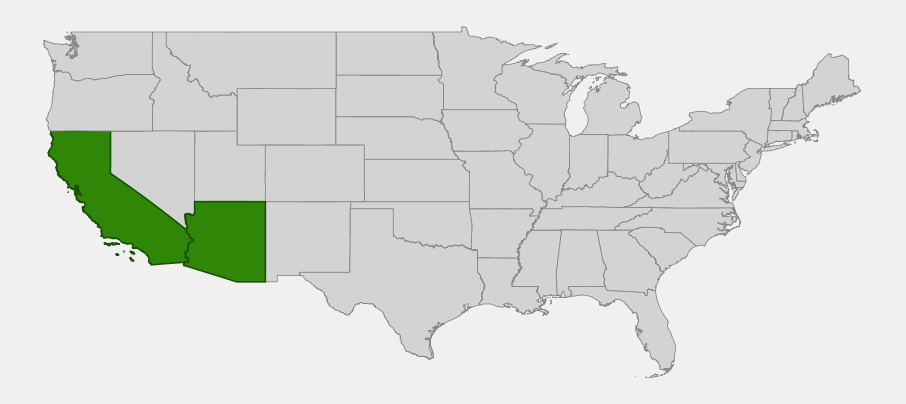
Bladderpod is native to the deserts, foothills, and coastal sage scrub of Southern California, with its range extending from the central and southern California coast inland through the Mojave and Colorado Deserts into far western Arizona. Within California it is common from the San Francisco Bay Area south through the Central Coast, Transverse and Peninsular Ranges, and the low desert regions bordering the Colorado River; in Arizona it occurs more sparingly in scattered desert washes and rocky slopes near the California border.
Across this range, Bladderpod favors dry, open, well-drained sites: rocky or sandy slopes, desert washes, coastal bluffs, and disturbed ground in chaparral and coastal sage scrub. It is notably tolerant of poor, alkaline, and even somewhat saline soils, and often persists on roadcuts and other disturbed sites where competition from larger shrubs is reduced.
Because it tolerates heat, drought, and poor soil better than almost any other native flowering shrub in its range, Bladderpod is frequently one of the first native shrubs to recolonize disturbed desert and coastal sage scrub sites, making it valuable both for habitat restoration and for gardeners working with the harshest, driest parts of a landscape.
📋 Regional plant lists featuring Bladderpod: California & Nevada · Arizona & New Mexico
Growing & Care Guide
Bladderpod is about as low-maintenance as native shrubs get, provided it has the two things it absolutely requires: full sun and sharp drainage. Give it those, and it will reward you with flowers in nearly every month of the year.
Light
Plant in full sun. Bladderpod tolerates intense heat and reflected sun from pavement or rock without stress, and flowering is noticeably reduced in shade or even part shade.
Soil & Water
Well-drained, sandy or gravelly soil is essential — Bladderpod is highly susceptible to root rot in heavy clay or soil that stays wet, and is one of the few native shrubs that genuinely prefers poor, rocky ground over rich garden soil. Established plants need little to no supplemental water in most of their native range and can survive on rainfall alone in coastal and desert gardens. In the first year, water occasionally to establish roots, then taper off; overwatering is the most common cause of failure.
Planting Tips
Plant from containers in fall through early spring to take advantage of winter rains for establishment. Choose the driest, sunniest, most exposed spot in the garden — slopes, rock gardens, and parking strips are ideal. Avoid planting near lawns, regularly irrigated beds, or anywhere water collects. Space plants 4 to 6 feet apart to accommodate their mature spread.
Pruning & Maintenance
Bladderpod can become leggy and open with age; a light shearing after the main bloom flush encourages denser, more compact growth and fresh flowering wood. Remove dead or frost-damaged branches in spring. The shrub is generally short-lived compared to many natives, often declining after 10 to 15 years, so occasional replacement or allowing self-sown seedlings to establish nearby helps maintain a planting over time.
Propagation
Bladderpod grows readily from seed, which germinates without special pretreatment in most cases, though a brief soak in water improves germination rates. Seedlings grow quickly and can flower in their first or second year. Cuttings are also possible but less commonly used, since seed propagation is simple and fast.
Landscape Uses
- Low-water and xeriscape gardens in hot, sunny, rocky conditions
- Coastal sage scrub and desert restoration plantings
- Pollinator gardens valued for its long, reliable bloom season
- Slope stabilization on dry, well-drained banks
- Deer-resistant borders in rural and wildland-adjacent gardens
- Rock gardens and parking strips where few other flowering shrubs thrive
Wildlife & Ecological Value
Few native desert shrubs rival Bladderpod’s value to pollinators, thanks to its unusually long, almost continuous bloom season in mild climates.
For Pollinators
The flowers are highly attractive to native bees and honeybees, which work the long, curved stamens for both nectar and pollen. Because Bladderpod can flower in nearly every season, it serves as a crucial nectar source during late fall and winter months when few other desert and coastal sage scrub plants are blooming, helping sustain pollinator populations through lean periods.
Birds & Mammals
The pungent, bitter foliage is avoided by deer, rabbits, and most browsing mammals, making Bladderpod one of the more reliably un-browsed native shrubs in areas with heavy herbivore pressure. Small birds use the dense branching structure for cover and nesting, and some seed-eating birds forage the dried pods once they split open.
Ecosystem Role
As an early colonizer of disturbed desert and coastal sage scrub sites, Bladderpod helps stabilize soil and provides structure and nectar resources while slower-growing, longer-lived shrubs become established nearby. Its tolerance of poor and disturbed soils makes it a valuable pioneer species in restoration projects following fire, grading, or other ground disturbance.
Cultural & Historical Uses
Indigenous peoples of Southern California, including Cahuilla and other groups within the plant’s range, historically used parts of Bladderpod in limited ways, most notably the roasted seeds, which some ethnobotanical accounts describe as having been prepared and eaten in small quantities after roasting reduced their bitterness. The plant’s strong-smelling foliage was generally not used as a food source.
Because of its characteristic odor and inflated seed pods, Bladderpod has long been a recognizable and easily identified plant for desert travelers and naturalists, and it remains frequently noted in historical botanical surveys and travel accounts of the California deserts as a conspicuous, long-blooming shrub.
Today, Bladderpod’s main significance is horticultural and ecological rather than historical — it has become an increasingly popular choice in native and water-wise landscaping precisely because of the reliability and length of its bloom season.
Frequently Asked Questions
Why does Bladderpod smell bad when I touch it?
The foliage contains volatile compounds that produce a strong, somewhat unpleasant odor when crushed or brushed against. This is a natural defense that discourages browsing by deer and rabbits, and while unpleasant up close, it doesn’t affect the plant’s value in the landscape or its appeal to pollinators.
Can Bladderpod grow in regular garden soil with normal watering?
It can survive, but it performs best and lives longest in lean, fast-draining soil with minimal supplemental water. Rich garden soil and regular irrigation — especially in summer — significantly increase the risk of root rot and shorten the plant’s life.
How long does Bladderpod live?
Compared to many native shrubs, Bladderpod is relatively short-lived, often thriving for 10 to 15 years before declining. Many gardeners let a few seedlings establish nearby so new plants are ready to take over as older ones fade.
Are the seed pods edible?
The papery pods themselves are not eaten; they are dry, fibrous structures that simply enclose the seeds. Historical accounts describe some use of roasted seeds by Indigenous people, but the pods and raw seeds are not a recommended food source today.
Is Bladderpod related to Desert Holly?
No. Desert Holly (Atriplex hymenelytra) is an unrelated, silvery-leaved desert shrub in the saltbush family that shares some of the same low-desert habitat with Bladderpod but has a completely different flower, leaf, and fruit structure.

Looking for a nursery that carries Bladderpod?
Browse our native plant nursery directory: California · Arizona