Sierra Tiger Lily (Lilium parvum)
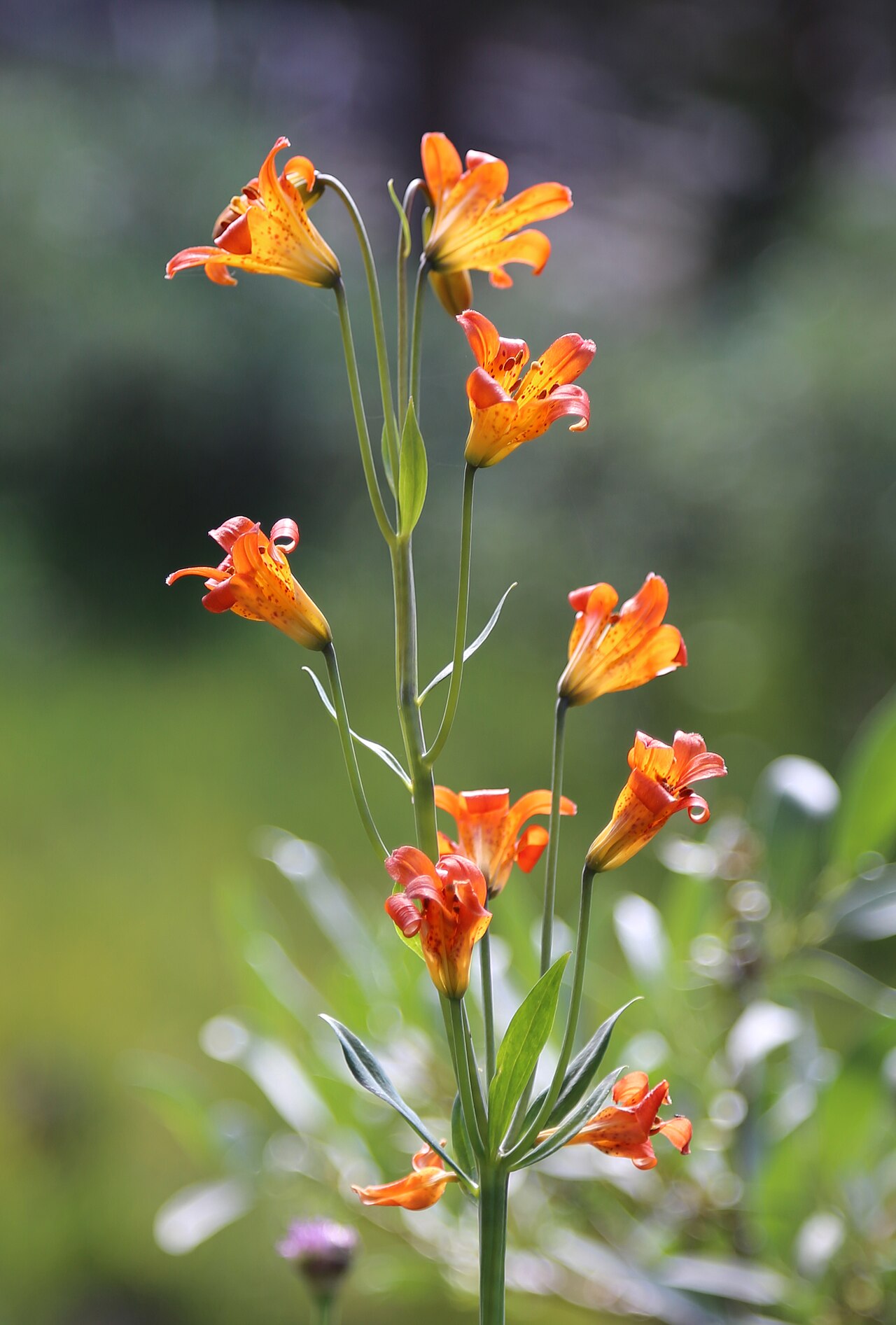
Lilium parvum, commonly called Sierra Tiger Lily or Alpine Lily, is a slender, wand-like perennial lily native to wet meadows, streambanks, and open forest seeps of the Sierra Nevada and southern Cascades. Despite “parvum” meaning “small” — a reference to its relatively modest flowers compared to other western lilies — the plant itself is anything but small, with flowering stems that can reach 6 feet in favorable, boggy sites, strung with a dozen or more nodding, orange to red, dark-speckled blooms.
Sierra tiger lily grows from roughly 3,000 to 10,000 feet in elevation, always rooted in consistently moist to saturated soil: montane meadow edges, stream margins, and the damp borders of lodgepole and red fir forest. It is one of the most recognizable wildflowers of the high Sierra’s wet meadows in mid and late summer, often blooming alongside corn lily, monkeyflower, and other moisture-loving montane perennials.
For gardeners with a reliably damp spot at a reasonably cool, higher-elevation site, Sierra tiger lily is a spectacular native bulb for a wild or woodland garden. It is not an easy plant for a typical dry garden bed, but where a bog garden, streamside, or consistently irrigated shade bed can be provided, few western native lilies offer a taller or more striking summer display.
Identification
Sierra tiger lily grows from a scaly bulb and produces one to several unbranched, upright flowering stems, typically 2 to 4 feet tall but reaching as much as 6 feet in the wettest, most favorable sites.
Stems & Leaves
The stems are smooth, slender, and leafy, carrying narrow, lance-shaped leaves 2 to 6 inches long arranged in whorls of four to ten around the stem at intervals, with additional leaves scattered singly near the top. The whorled leaf arrangement is a useful identification feature shared with other native western lilies.
Flowers
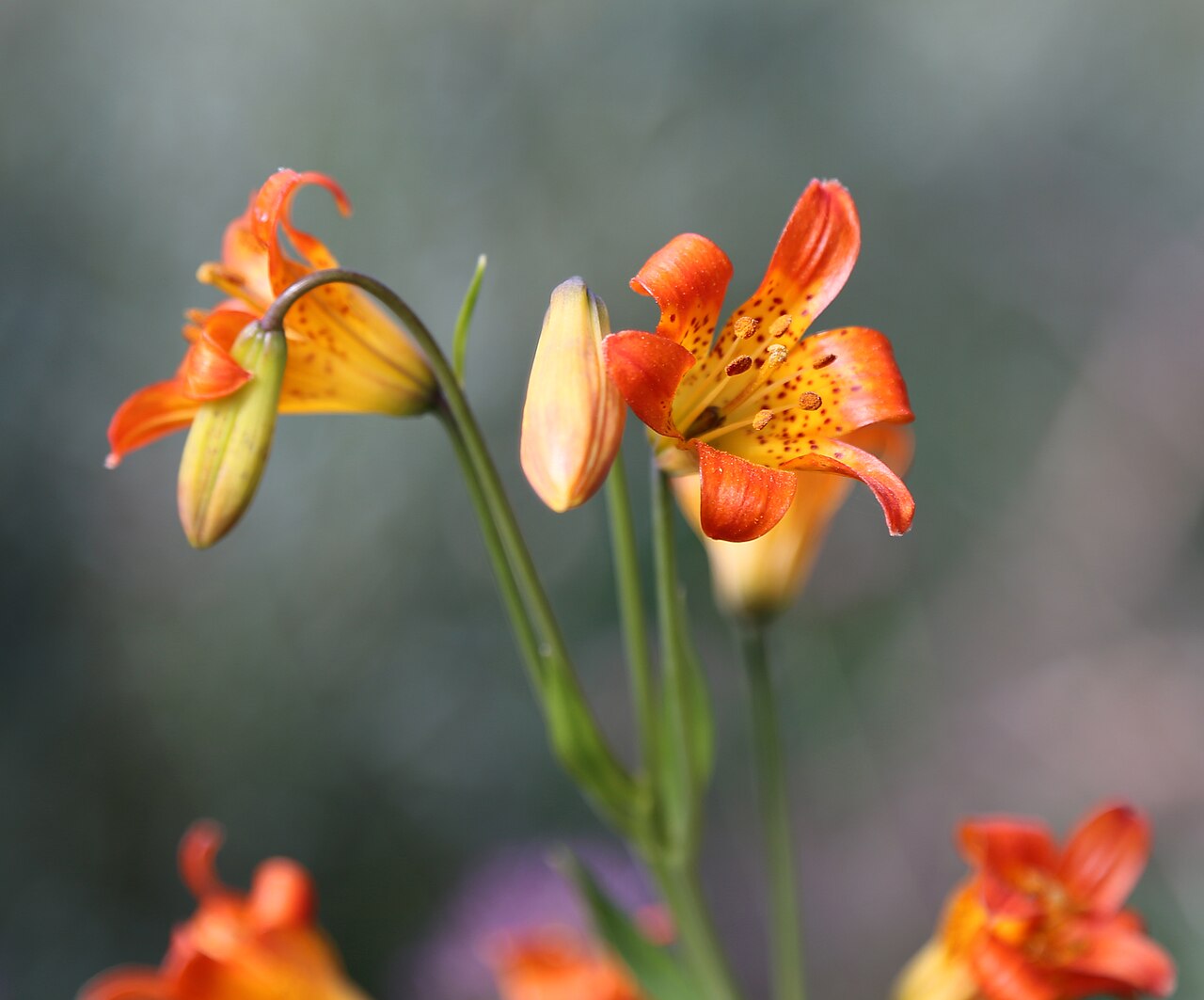
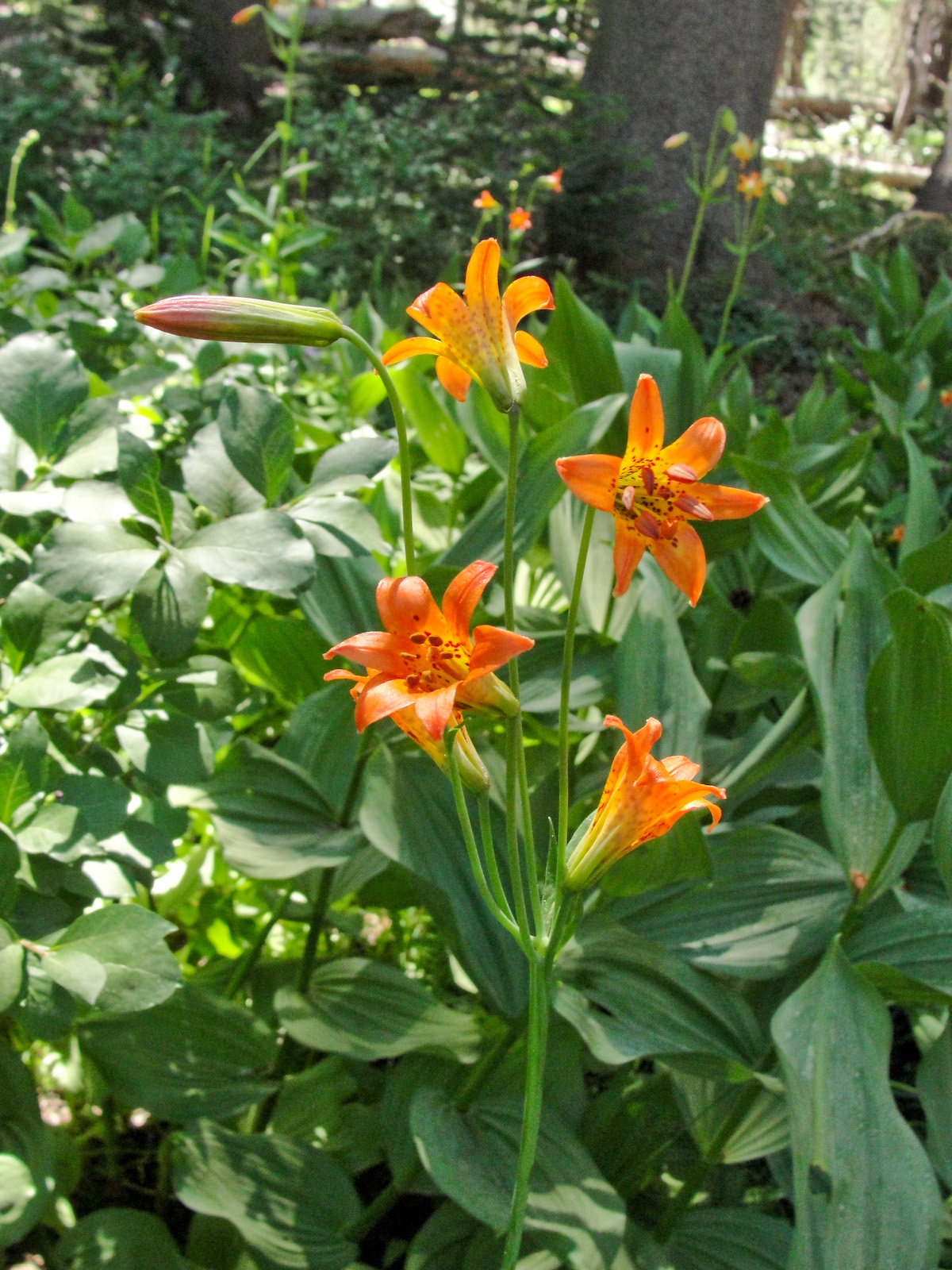
Flowers are borne in a loose cluster (raceme) of two to as many as 25 on a single stem, each nodding on a long pedicel. Individual blooms are funnel-shaped to somewhat recurved, 1½ to 2 inches long, in shades of orange to red-orange, often yellowish toward the base, and marked with conspicuous dark maroon spots inside. Unlike some lilies, the petal tips curve outward and slightly back rather than rolling all the way into a full “turk’s cap” curl. Bloom typically runs from June through August, timed to summer meadow moisture and snowmelt.
Fruit & Seeds
After flowering, each bloom develops into an upright, three-chambered capsule that dries and splits to release flat, papery seeds in late summer and fall. The bulb persists underground between seasons, often producing small offset bulblets that slowly expand a colony over years.
Quick Facts
| Scientific Name | Lilium parvum |
| Family | Liliaceae (Lily) |
| Plant Type | Bulbous herbaceous perennial |
| Mature Height | 2–6 ft |
| Mature Spread | 1–1.5 ft |
| Growth Rate | Slow (from bulb) |
| Sun Exposure | Full Sun to Part Shade |
| Water Needs | High; needs consistently moist to wet soil |
| Soil Type | Rich, moist to boggy; meadow or streamside soils |
| Soil pH | 5.5–6.5 (slightly acidic) |
| Bloom Time | June – August |
| Flower Color | Orange to red-orange with maroon spots |
| Fall Color | None; dies back to the bulb |
| Fruit | Upright three-chambered capsules |
| Deer Resistant | No (lily buds and foliage are browsed) |
| USDA Hardiness Zones | 5–8 |
Native Range
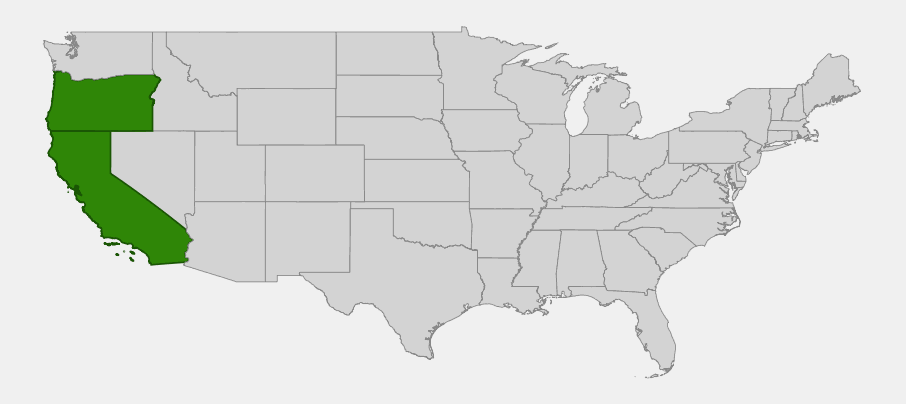
Sierra tiger lily is native to California, where it occurs through the Sierra Nevada from the southern Cascades at the state’s northern edge south through the central and southern Sierra, and into the Klamath-Siskiyou region of the far northern coast. BONAP county-level data confirm native populations concentrated through the Sierra Nevada’s montane and subalpine zones, with additional confirmed native counties in southwestern Oregon’s Klamath-Siskiyou mountains.
Within this range it is restricted to reliably wet ground: montane and subalpine wet meadows, streambanks, seeps, and the moist margins of lodgepole pine, red fir, and mixed conifer forest, typically between about 3,000 and 10,000 feet elevation. It is a conspicuous component of the “wet meadow” plant community that lines many Sierra Nevada creeks and seasonal seeps.
Sierra tiger lily is not documented as native outside California and southwestern Oregon; it does not occur naturally in Nevada or other neighboring states, though its showy flowers have made it a sought-after subject for wildflower photography well beyond its actual range.
📋 Regional plant lists featuring Sierra Tiger Lily: California & Nevada, Western Oregon & Western Washington
Growing & Care Guide
Sierra tiger lily is a rewarding but exacting garden bulb: it demands constant moisture, and gardeners who can provide a boggy or reliably irrigated site in a cool climate are rewarded with a tall, dramatic summer bloom.
Light
Give it full sun where soil stays reliably wet, such as a meadow seep or pond margin; in warmer gardens, light to part shade helps keep roots cool and prevents the soil from drying between waterings.
Soil & Water
Plant in rich, humusy soil that stays consistently moist to boggy — this species will not tolerate a dry summer and is best suited to a streamside, bog garden, or a bed with a naturally high water table. A cool root run, achieved with mulch or companion plantings that shade the soil surface, benefits the bulbs through hot weather.
Planting Tips
Plant bulbs in fall, 4 to 6 inches deep, in a permanently moist bed; Sierra tiger lily resents being dug and moved once established, so choose the planting site carefully. It can also be grown from seed, though flowering typically takes several years from seed to bloom-size bulb.
Pruning & Maintenance
Deadhead spent flowers to tidy the stalk; allow the foliage to yellow and die back naturally in fall, since the bulb draws down reserves from the leaves after bloom. Mark the dormant bulb’s location to avoid disturbing it while it is leafless.
Landscape Uses
Sierra tiger lily’s height and vivid color suit a handful of specific, consistently moist garden settings:
- Bog gardens and pond margins with year-round moisture
- Streamside plantings in a wild or woodland garden
- Montane and mountain-cabin gardens within its native elevation range
- Mixed wet-meadow plantings with other moisture-loving natives like monkeyflower
Wildlife & Ecological Value
Sierra tiger lily contributes nectar, seed, and structural diversity to the wet-meadow plant communities of the Sierra Nevada’s montane and subalpine zones.
For Pollinators
The orange, spotted, outward-facing flowers attract a range of pollinators, including bumblebees, other native bees, and butterflies, which can land on the recurved petals and reach the nectar at the flower’s base. The flower color and open shape differ from more tubular lilies adapted strictly for hummingbird pollination, making this species accessible to a broader range of visiting insects.
For Mammals
Deer and other browsing mammals readily eat the buds, flowers, and foliage of Sierra tiger lily, which is one reason the species can be a challenging garden plant in areas with heavy deer pressure; fencing or repellent may be necessary to protect a planting through the bloom season.
Ecosystem Role
As a tall, conspicuous component of Sierra Nevada wet meadows, Sierra tiger lily adds vertical structure and summer color to a habitat type that is increasingly recognized as ecologically important for water filtration, streambank stabilization, and biodiversity in the high Sierra.
Cultural & Historical Uses
Sierra tiger lily does not have a widely documented history of use among California’s Indigenous peoples comparable to some other Sierra Nevada bulbs, such as camas or soaproot, though lily bulbs in general were known and used as a minor food source by some Sierra Nevada tribes in years of abundance.
The species was first described scientifically in the 19th century as botanists cataloged the flora of the California mountains, and its common names — Sierra tiger lily and alpine lily — reflect both its mountain habitat and its resemblance to the spotted petals of other North American tiger lilies.
Today the species is valued almost entirely as a wildflower and garden ornamental. It remains a favorite subject for Sierra Nevada wildflower photographers and hikers, who look for its tall orange stalks rising above wet meadow grasses in mid to late summer, and it is occasionally offered by specialty native-bulb growers for gardeners able to meet its demanding moisture requirements.
Frequently Asked Questions
Why won’t my Sierra tiger lily bloom?
Inconsistent moisture is the most common cause. This species needs reliably moist to wet soil throughout the growing season; if the bed dries out, especially in summer, bulbs may fail to flower or decline over time. Bulbs also need a few years to reach blooming size from seed.
Is Sierra tiger lily the same as a true tiger lily?
No. “Tiger lily” is a common name applied loosely to several spotted-petaled lilies. The true Asian tiger lily (Lilium lancifolium) is a different, non-native species. Sierra tiger lily is a distinct California and Oregon native with its own growth habit and range.
Can deer be kept away from Sierra tiger lily?
Deer readily browse the buds and foliage, so plantings in deer-heavy areas often need temporary fencing or repellent during the spring growth and bud stage to protect that year’s bloom.
How deep should I plant the bulbs?
Plant bulbs about 4 to 6 inches deep in fall, in soil that will stay consistently moist. Avoid disturbing established bulbs once planted, since they resent being dug and moved.
Does Sierra tiger lily spread on its own?
Established colonies slowly expand through small bulb offsets and occasional seedling establishment in consistently wet ground, but spread is gradual rather than aggressive.

Looking for a nursery that carries Sierra Tiger Lily?
Browse our native plant nursery directory: California · Oregon