Scarlet Bugler (Penstemon centranthifolius)
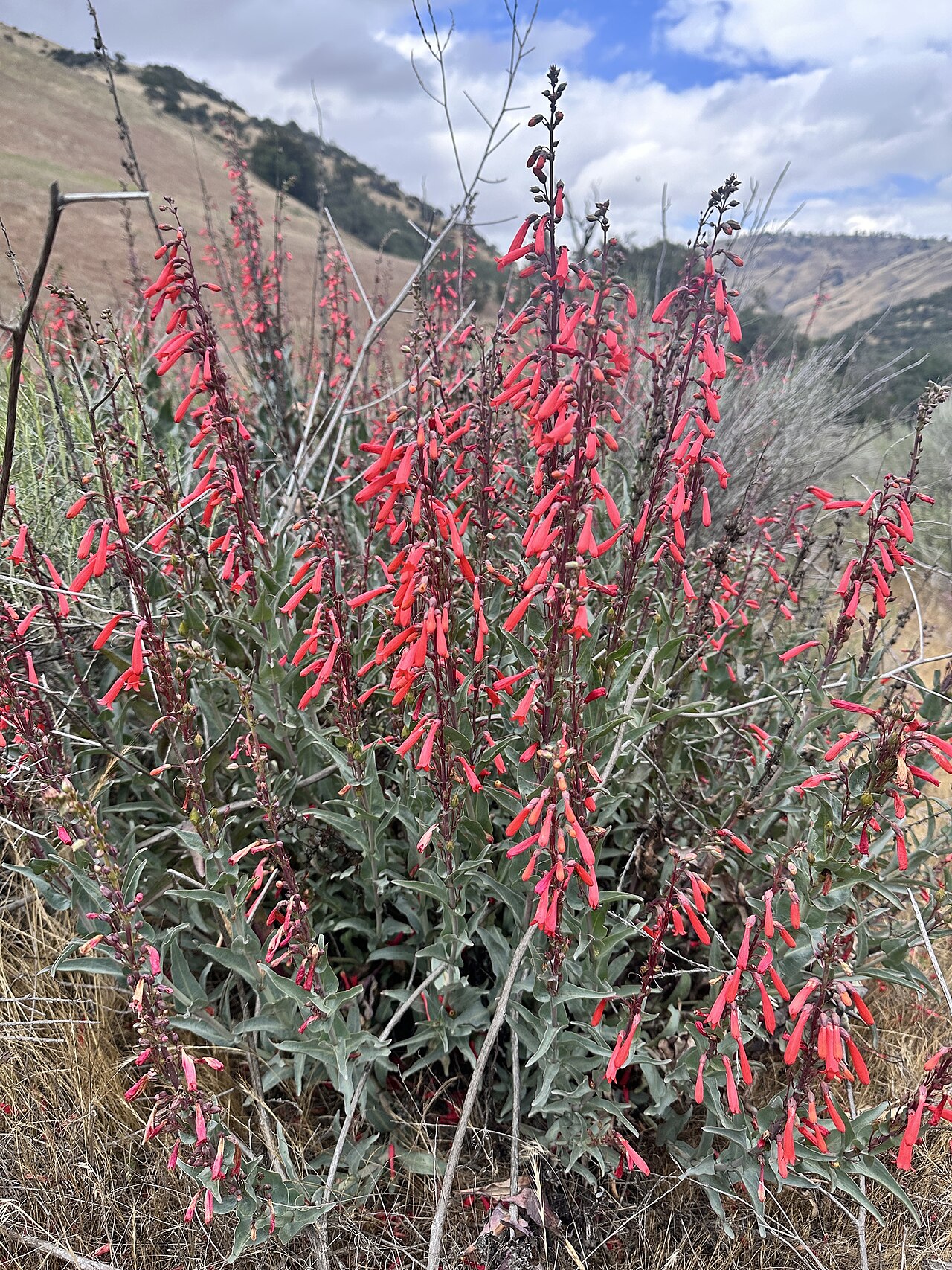
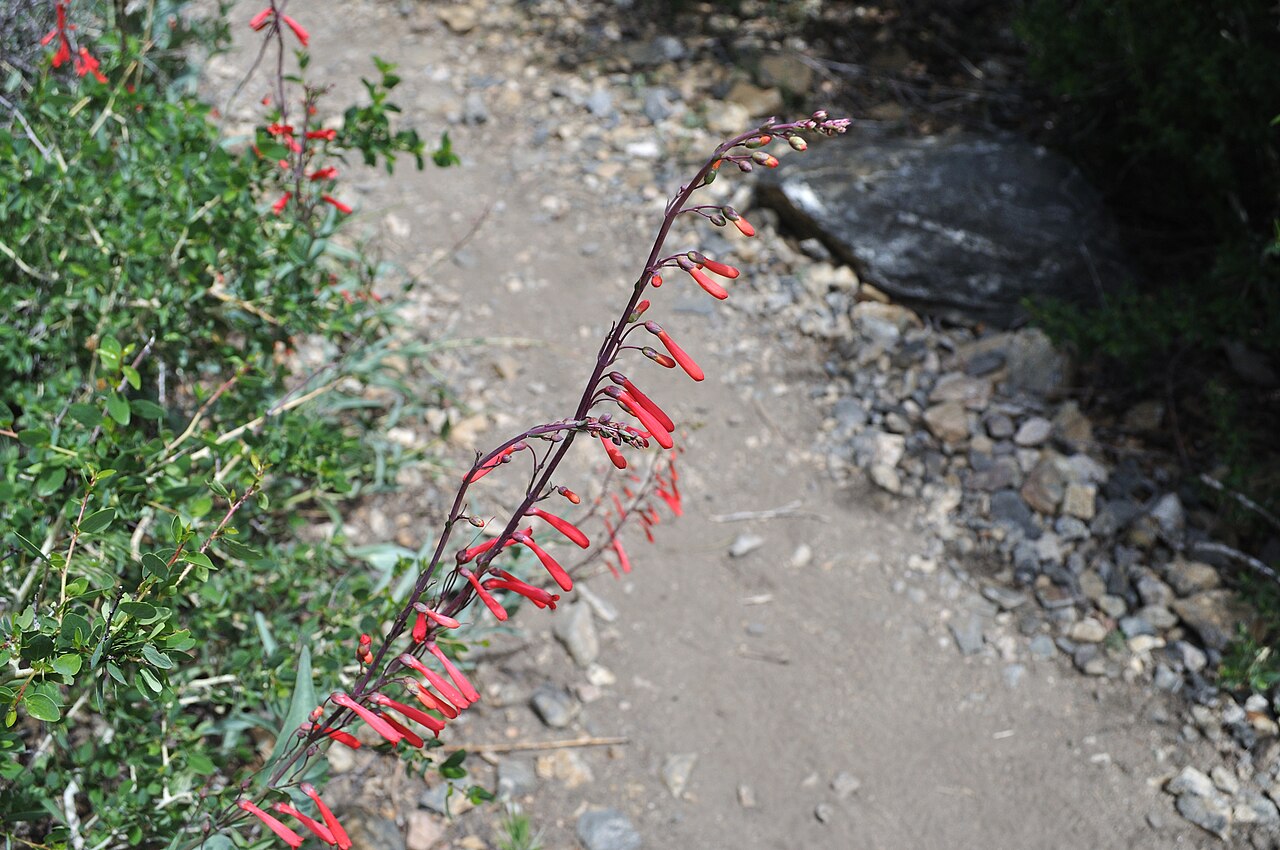
Penstemon centranthifolius, commonly called Scarlet Bugler, is a striking evergreen-leaved perennial in the plantain family (Plantaginaceae) native to California’s foothills, chaparral, and desert edges. Unmistakable when blooming, it sends up slender flowering stalks 1 to 4 feet tall lined with narrow, waxy blue-gray leaves and tipped with long racemes of brilliant red-orange, trumpet-shaped flowers. The flowers are built for hummingbirds, and in April and May scarlet bugler is one of the most reliable nectar stops for migrating Anna’s and Black-chinned Hummingbirds moving through the state’s dry hills.
This is a true California native, found from the inner South Coast Ranges and Sierra foothills south through the Transverse and Peninsular Ranges to Baja California, usually below 5,000 feet in open, rocky, well-drained sites. It favors disturbed ground — road cuts, burned chaparral, dry washes — where its deep taproot and drought-tolerant habit let it outlast most competing annuals through the long dry season. The plant often looks ragged by late summer, with leafless gray stems, and resprouts from the base or self-sows the following year.
For gardeners in California’s dry-summer climate, scarlet bugler is an excellent low-water choice for a sunny, well-drained bed. It asks for almost nothing once established — no summer irrigation, no fertilizer, no pampering — and rewards that neglect with weeks of hummingbird activity. It pairs naturally with other chaparral and foothill natives and is a good candidate for a slope, rock garden, or roadside planting where regular watering is not an option.
Identification
Scarlet bugler is an herbaceous to semi-woody perennial, usually 1 to 4 feet tall, growing as a loose clump of several to many upright, mostly unbranched flowering stems rising from a woody base. The whole plant has a distinctive pale, blue-green to gray-green cast from a waxy (glaucous) bloom on the leaves and stems, which helps distinguish it at a distance from other red-flowered penstemons.
Stems & Leaves
Flowering stems are slender, rigid, and often reddish or purplish where exposed to sun. The leaves are opposite, narrow and lance-shaped to almost linear, 1 to 4 inches long, smooth-edged, and clasp the stem at the base without a leaf stalk (petiole). Basal leaves form loose rosettes at ground level before the flowering stalks elongate in spring; by midsummer the lower leaves often wither and drop, leaving bare stems below the flower spikes.
Flowers
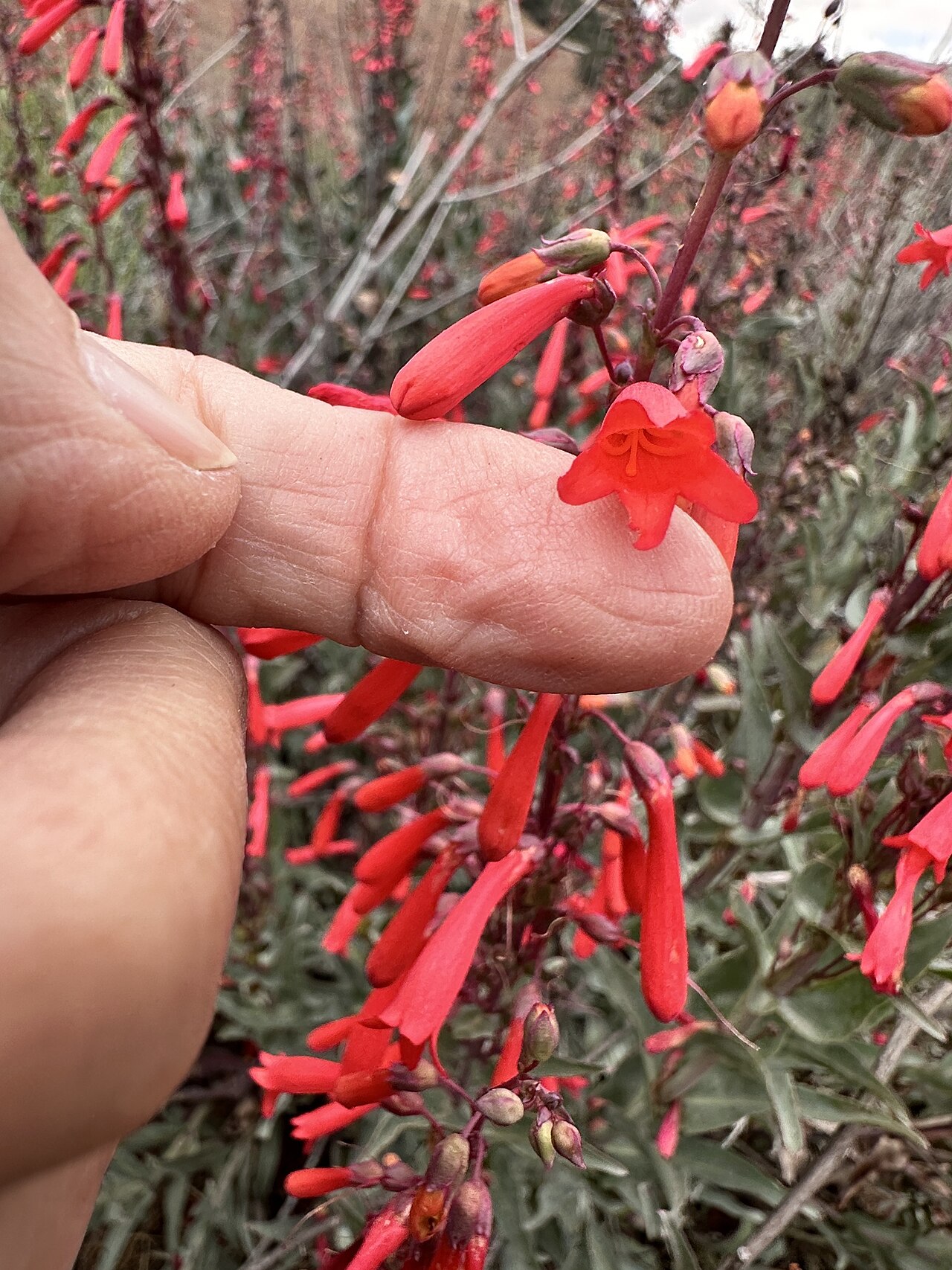
The tubular flowers are 1 to 1½ inches long, bright red to red-orange, and strongly two-lipped, though the lobes are short and the flower reads as a narrow, nearly closed tube — an adaptation that excludes most bees and favors long-billed hummingbird pollinators. Flowers are arranged in a one-sided (secund), narrow raceme at the top of each stem, with 10 to 30 or more blooms opening in succession from bottom to top over several weeks. Bloom runs from April into June, peaking in April and May across most of the range.
Fruit & Seeds
After flowering, each flower is replaced by a small, egg-shaped woody capsule that splits open at maturity to release numerous tiny seeds. The dry capsules and spent stalks persist into summer and are easy to collect for propagation once they turn brown.
Quick Facts
| Scientific Name | Penstemon centranthifolius |
| Family | Plantaginaceae (Plantain) |
| Plant Type | Herbaceous/semi-woody perennial |
| Mature Height | 1–4 ft |
| Mature Spread | 1–2 ft |
| Growth Rate | Moderate to fast |
| Sun Exposure | Full Sun |
| Water Needs | Low once established |
| Soil Type | Rocky, sandy or gravelly; sharply drained |
| Soil pH | 6.0–7.5 (neutral to slightly acidic) |
| Bloom Time | April – June |
| Flower Color | Red to red-orange |
| Fall Color | None (foliage dries and drops by late summer) |
| Fruit | Small woody capsules with tiny seeds |
| Deer Resistant | Yes, generally avoided by deer |
| USDA Hardiness Zones | 8–10 |
Native Range
Scarlet bugler is endemic to California and adjacent Baja California, Mexico. Within California it ranges through the inner South Coast Ranges, the Sierra Nevada foothills, the Transverse and Peninsular Ranges, and south through San Diego County, typically below 5,000 feet elevation. BONAP county-level data confirm native populations concentrated across central and southern California, from the Sierra foothills south through the Los Angeles and San Diego basins and into the desert-facing slopes of the Peninsular Ranges.
Across this range it grows in chaparral, coastal sage scrub, oak woodland, and dry grassland, almost always on open, sunny, well-drained sites — rocky slopes, road cuts, dry washes and recently burned ground. It is one of the characteristic early colonizers of burned chaparral, often appearing in abundance the first and second spring after a fire, then declining as shrubs regrow and shade the site.
Scarlet bugler is not native outside California and Baja California; it does not occur naturally in Nevada, Arizona, or other neighboring states, though it is occasionally grown as a garden plant well outside its native range. Gardeners elsewhere in the West should check regional penstemon lists for a locally native red-flowered species rather than planting this one outside California.
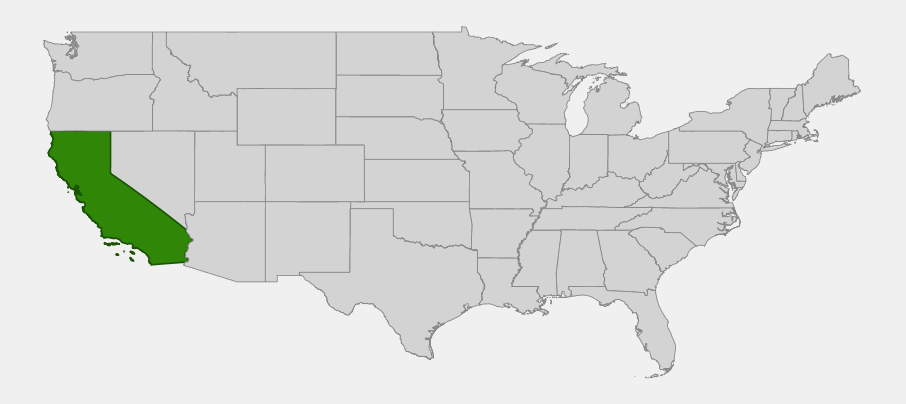
📋 Regional plant lists featuring Scarlet Bugler: California & Nevada
Growing & Care Guide
Scarlet bugler is easy to grow in a California garden that mimics its native chaparral conditions: full sun, lean soil, and minimal summer water. It is a short-lived perennial, often most vigorous in its first two or three years, so many gardeners let it self-sow and treat it as a renewable, informal planting rather than a permanent specimen.
Light
Give scarlet bugler full sun. It is a plant of open, exposed slopes and does not perform well or flower heavily in shade; even light afternoon shade will reduce bloom and encourage lanky, floppy growth.
Soil & Water
Sharp drainage is essential — rocky, sandy, or decomposed-granite soils suit it best, and heavy clay that stays wet will quickly rot the roots. Water occasionally to establish new plants in their first year, then taper off; mature plants need little to no supplemental water beyond winter and spring rain and are best left dry over summer. Overwatering is the most common way to lose this plant in cultivation.
Planting Tips
Plant from container stock in fall or early spring so roots can establish before the dry season. Space plants 12 to 24 inches apart to allow for their upright but spreading clumps. Scarlet bugler also grows readily from seed sown in fall; seedlings often flower in their second year.
Pruning & Maintenance
Cut spent flowering stalks back to the basal rosette after bloom to tidy the plant and encourage a fuller second flush in favorable years. Because individual plants are often short-lived, allow some seed to drop if you want the planting to persist and spread naturally.
Landscape Uses
Scarlet bugler’s narrow, upright form and vivid color make it useful in several settings:
- Hummingbird gardens — among the most dependable spring nectar sources for California natives
- Dry slopes and road cuts where irrigation is impractical
- Chaparral and fire-recovery restoration plantings
- Rock gardens paired with other low-water perennials
- Mixed native borders for vertical color against mounding shrubs
Wildlife & Ecological Value
Scarlet bugler is one of California’s premier hummingbird plants, and its ecological role centers almost entirely on that relationship.
For Pollinators
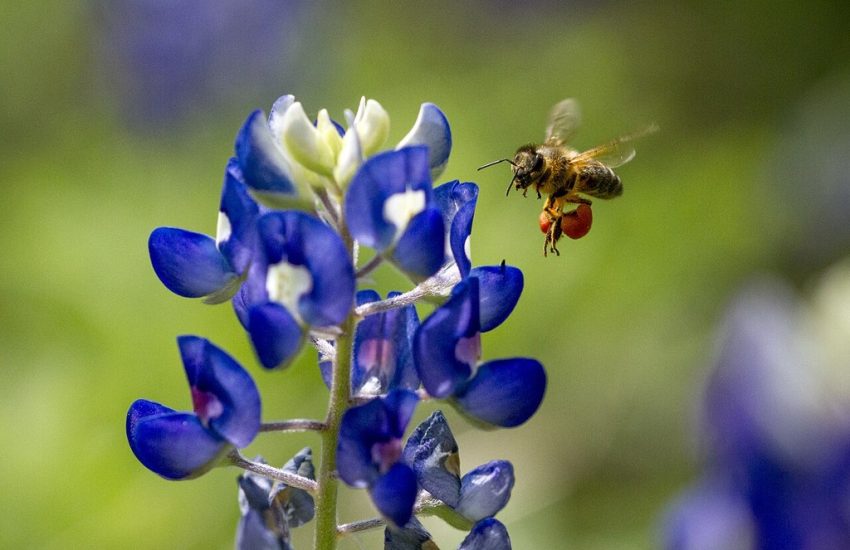
The long, narrow, nearly closed red tube is a textbook hummingbird-pollination flower: the shape excludes most bees, and the lack of a landing platform discourages insects that need to crawl in. Anna’s Hummingbirds, which are resident in much of California, and migrating Black-chinned and Rufous Hummingbirds rely on scarlet bugler’s spring bloom as an important nectar source while moving through foothill and chaparral habitat.
For Birds
Beyond hummingbirds, the small, hard seeds in the dry capsules are eaten by seed-foraging songbirds such as finches, and the dense basal foliage offers some cover for ground-foraging birds in open chaparral.
Ecosystem Role
As one of the early perennials to flower and seed in recently burned chaparral, scarlet bugler plays a role in post-fire plant succession, helping stabilize open ground and providing an early nectar resource before shrubs regrow and close the canopy.
Cultural & Historical Uses
Scarlet bugler does not have a widely documented history of use among California’s Indigenous peoples comparable to many other regional natives; its chief historical significance has been horticultural. English and American plant collectors introduced seed of California penstemons, including this species, to European gardens in the 19th century, where its vivid color made it a popular curiosity in botanical illustrations and seed catalogs of the period.
In more recent decades, scarlet bugler has become a staple of California native-plant and habitat-restoration nurseries, valued for its reliability after wildfire, its minimal water needs, and its strong appeal to hummingbirds — qualities that have made it one of the more widely offered native penstemons in the state’s nursery trade.
Today it is grown almost exclusively as an ornamental and restoration species rather than for any traditional practical use, and gardeners value it specifically for the wildlife interaction it brings to a low-water landscape.
Frequently Asked Questions
Is scarlet bugler native to my state if I live outside California?
No. Scarlet bugler is native only to California and northern Baja California, Mexico. Gardeners in Nevada, Arizona, or other western states should look for a penstemon species native to their own region rather than planting this one outside its natural range.
Why do my scarlet bugler plants look dead by midsummer?
This is normal. The basal leaves often dry and drop once the plant has finished flowering and the dry season sets in, leaving bare stems. The plant is dormant, not dead, and typically resprouts from the base with fall rain, or self-sows nearby.
Do hummingbirds really prefer this plant?
Yes. The narrow, tubular red flowers are shaped specifically for hummingbird bills and exclude most bees, making scarlet bugler one of the more dependable hummingbird-attracting natives for a California spring garden.
How long do scarlet bugler plants live?
Individual plants are often short-lived, flowering heavily for two or three years before declining. Letting some seed drop each year keeps a planting going indefinitely as new seedlings replace older plants.
Can scarlet bugler handle regular garden watering?
Not well. It is adapted to a long, completely dry summer and is prone to root rot with regular irrigation. It performs best in a dedicated low-water bed rather than mixed with thirstier garden plants.

Looking for a nursery that carries Scarlet Bugler?
Browse our native plant nursery directory: California