Pencil Cholla (Cylindropuntia ramosissima)
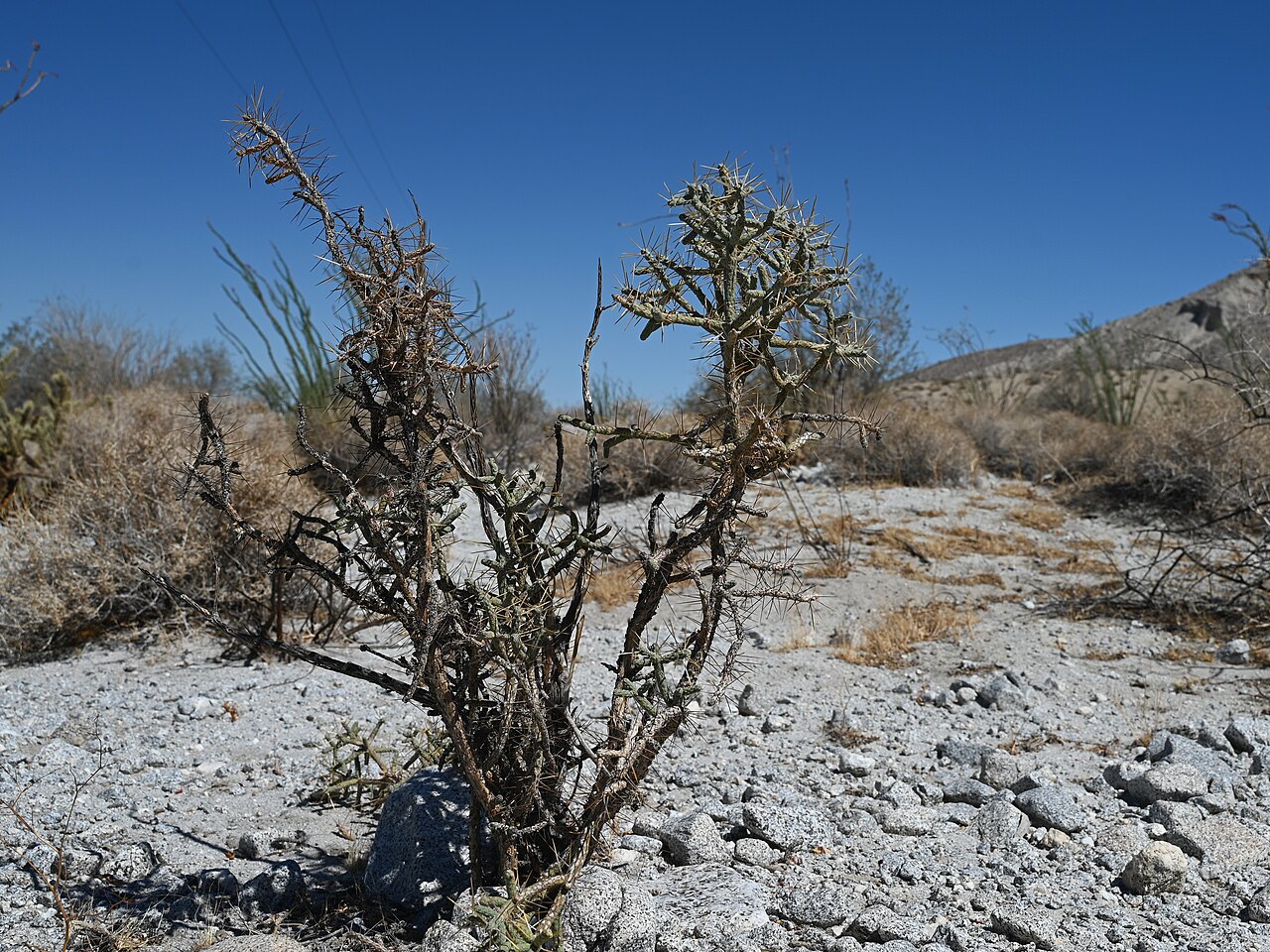
Cylindropuntia ramosissima, commonly called Pencil Cholla or branched pencil cholla, is one of the most delicate-looking yet thoroughly armed cactus species of the low Southwestern deserts. True to its name, the plant is built from unusually thin, pencil-width stem segments that branch repeatedly into an airy, open, almost see-through silhouette — a striking contrast to the chunkier, denser growth habit of most other cholla species.
Despite its fine, wiry appearance, Pencil Cholla is armed with slender, needle-sharp spines that detach easily and cling tenaciously to skin, clothing, and animal fur, a trait shared by its cholla relatives and one that gives the whole group its common nickname “jumping cholla,” even though the stems don’t truly jump — they simply release at the slightest touch. This vegetative reproduction strategy, where fallen stem segments root and form new plants, is a key part of how Pencil Cholla spreads across its desert habitat.
Pencil Cholla is a true low-desert specialist, found scattered through creosote bush flats and rocky washes across the Mojave and Colorado Deserts. For desert gardeners, it offers a uniquely sculptural, open form unlike bushier native cacti, along with small but attractive flowers and the low-maintenance toughness typical of desert cholla species — provided it is sited with care, well away from foot traffic.
Identification
Pencil Cholla grows as a many-branched shrub with an open, airy, almost lacy silhouette created by its unusually slender stem segments — a useful field mark that distinguishes it at a glance from bushier cholla species with thicker, more robust joints.
Stems
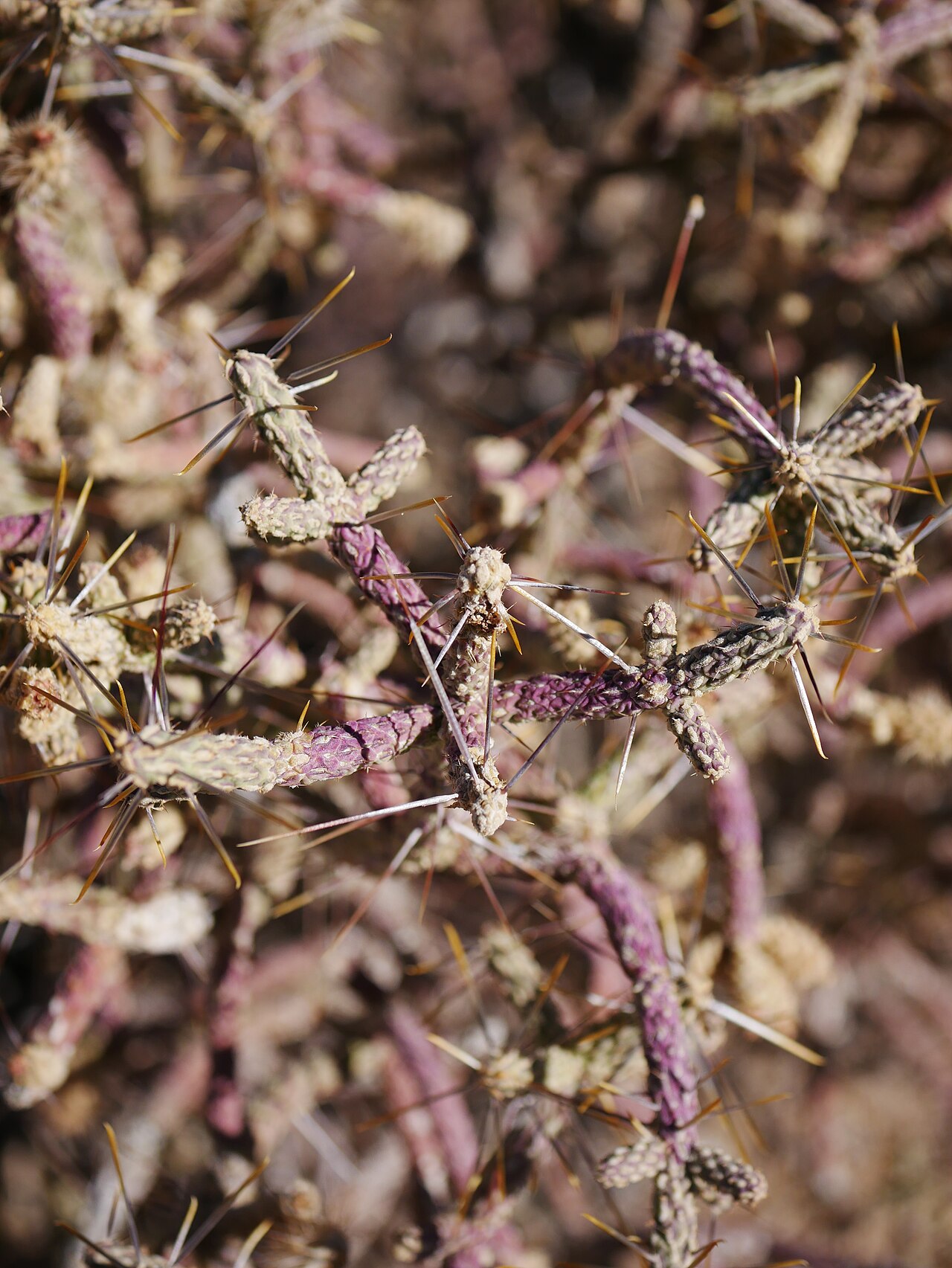
The stem segments (joints) are strikingly thin — typically only ¼ to ⅜ inch in diameter — and 2 to 6 inches long, giving the whole plant a wiry, pencil-like appearance. Stems are gray-green to purplish, especially under stress from cold or drought, and branch in a loosely zig-zagging pattern that creates the species’ characteristic open, sparse form. Mature plants form rounded to irregular shrubs 1½ to 4 feet tall.
Spines
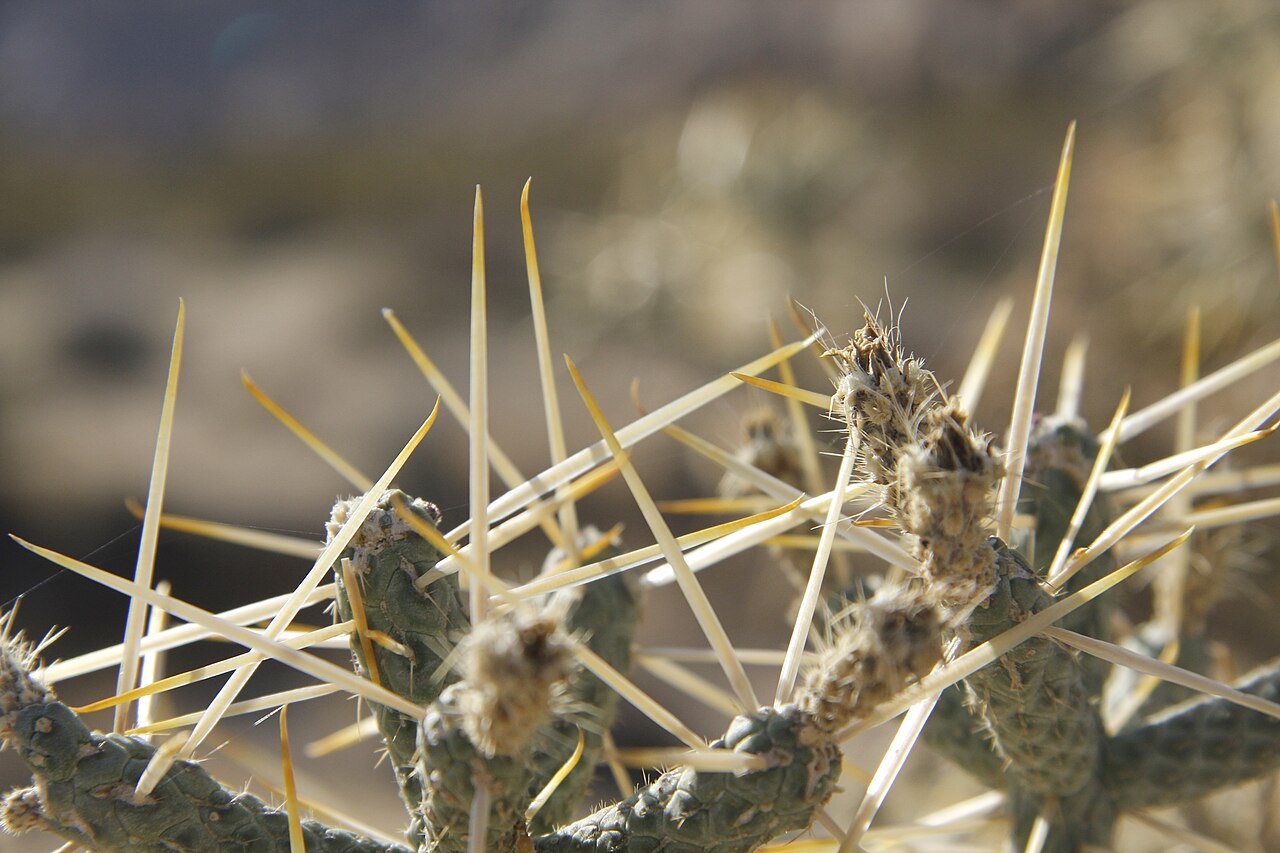
Each areole bears a small cluster of slender, sharp spines, typically one to several per areole, covered in a thin, papery sheath that gives them a straw-yellow to tan color. The spines detach very easily from the plant at the slightest contact, a trait known as being readily “deciduous,” which allows stem segments tipped with spines to catch on passing animals and be carried off to start new plants elsewhere — an effective, if painful, method of vegetative spread.
Flowers & Fruit
Flowers are small for a cholla, about ¾ to 1¼ inches across, with greenish-yellow to bronze petals and a central cluster of stamens, blooming from spring into early summer at the tips of stem segments. The fruit is a small, dry, spiny or nearly spineless tuberculate capsule that typically does not become fleshy, unlike the fruit of some related cholla species; fruit often persists on the plant and may itself sprout new stem segments in a form of fruit-based vegetative propagation characteristic of this plant.
Quick Facts
| Scientific Name | Cylindropuntia ramosissima (syn. Opuntia ramosissima) |
| Family | Cactaceae (Cactus) |
| Plant Type | Evergreen Cactus (shrub form) |
| Mature Height | 1.5–4 ft |
| Mature Spread | 2–4 ft |
| Growth Rate | Slow |
| Sun Exposure | Full Sun |
| Water Needs | Very low; extremely drought tolerant |
| Soil Type | Sandy, gravelly desert soils |
| Soil pH | 7.0–8.5 (alkaline tolerant) |
| Bloom Time | Spring to early summer |
| Flower Color | Greenish-yellow to bronze |
| Fall Color | None; stems may blush purplish in cold or drought |
| Fruit | Small dry spiny capsule, not a food crop |
| Deer Resistant | Yes (spines deter all browsing) |
| USDA Hardiness Zones | 8b–11 |
Native Range
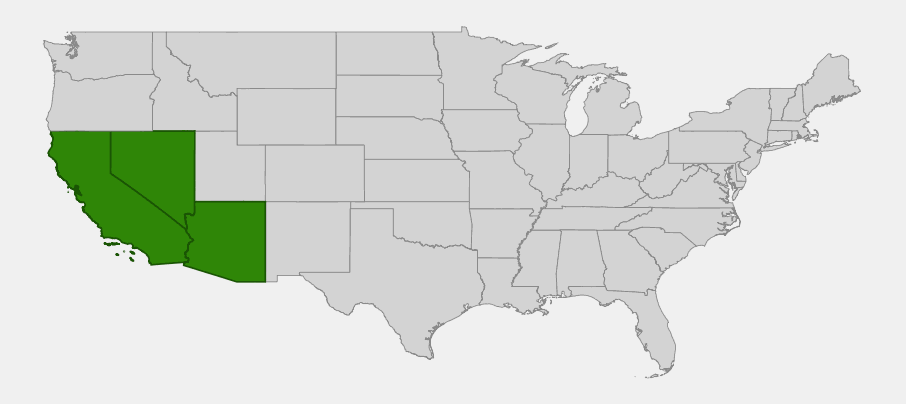
Pencil Cholla is native to the low-elevation deserts of the American Southwest, with its range centered on the Mojave and Colorado Deserts of southeastern California, extending into southern Nevada and across much of western and central Arizona. It typically grows at lower elevations than many other cholla species, favoring hot, dry desert flats and rocky foothills below about 3,000 feet.
Within this range, Pencil Cholla is most often found scattered through creosote bush scrub, desert washes, rocky bajadas, and gravelly flats, often growing as a widely spaced component of open desert scrub rather than in dense stands. It tolerates some of the hottest and driest conditions found in North American deserts, including the floor of Death Valley and similar low desert basins.
Because Pencil Cholla reproduces readily from detached stem segments that root where they fall, local populations can be patchy and clonal, often concentrated where animals have carried spine-tipped joints to new locations, creating loose colonies of genetically identical plants scattered across suitable desert habitat.
📋 Regional plant lists featuring Pencil Cholla: California & Nevada · Arizona & New Mexico
Growing & Care Guide
Pencil Cholla is easy to grow in the right setting — hot, sunny, bone-dry — but its detachable spines demand thoughtful placement well away from paths, pet areas, and anywhere people brush past casually.
Light
Plant in full sun. Pencil Cholla is adapted to intense, unfiltered desert sunlight and will not thrive in shade.
Soil & Water
Sharp drainage is essential; use sandy, gravelly, or rocky soil, and avoid any site where water collects after rain. Established plants need no supplemental irrigation in low-desert gardens and can rot quickly in heavier soils or with regular watering. During the first year, occasional deep watering helps establish roots, after which the plant should be left to rely on natural rainfall.
Planting Tips
Handle Pencil Cholla with thick leather gloves and long tongs when planting, since the fine spines detach at the slightest touch and are difficult to remove from skin. Plant container specimens in fall or spring, siting them well back from walkways, patios, and areas where children or pets play. Space plants at least 3 feet from paths and other plants to allow for their mature spread.
Pruning & Maintenance
Little maintenance is needed. If pruning is necessary, use long-handled tools and heavy gloves, and dispose of cut segments carefully, since even detached pieces can root and spread if left in contact with soil. Remove any unwanted volunteer plants promptly, as rooted stem segments establish readily nearby.
Propagation
Pencil Cholla propagates very easily from stem segments: a healthy joint set on the soil surface in a dry, sunny spot will often root within a few weeks to a couple of months without any special treatment. Seed propagation is also possible but slower and less commonly used given how readily the plant propagates vegetatively.
Landscape Uses
- Xeriscape and desert accent gardens valued for its open, sculptural silhouette
- Security or barrier plantings along property edges where its spines discourage foot traffic
- Desert habitat restoration in disturbed creosote scrub and wash margins
- Rock gardens paired with other low-desert natives like brittlebush and ocotillo
- Wildlife gardens providing dense, defended cover for small desert animals
Wildlife & Ecological Value
Pencil Cholla’s dense network of spines makes it an important, well-defended shelter resource in open desert habitats where cover is otherwise scarce.
For Pollinators
The small spring flowers attract native bees and other desert insects seeking nectar and pollen during the brief, intense bloom period, contributing modestly to the diversity of flowering resources available in creosote scrub communities.
Birds & Mammals
Small birds, particularly cactus wrens and other desert species, use the dense, spine-protected branches for nesting sites that are largely inaccessible to predators. Desert rodents and other small mammals may shelter near the base of established plants, taking advantage of the protective barrier the spines create against larger predators.
Ecosystem Role
As a widely scattered component of creosote bush scrub, Pencil Cholla adds structural diversity to otherwise low, open desert vegetation, and its vegetative spread via detached stem segments allows it to recolonize disturbed ground relatively quickly compared to slower-growing desert perennials, playing a modest role in post-disturbance recovery of desert scrub communities.
Cultural & Historical Uses
Indigenous peoples of the Mojave and Colorado Desert regions were familiar with various cholla species, including Pencil Cholla, primarily as a recognizable feature of the desert landscape and a source of caution during travel, given the readily detaching spines. Compared to larger, fleshier cholla species, Pencil Cholla’s small, dry fruit and thin stems made it a less significant food source than some of its cholla relatives.
Historical and contemporary ethnobotanical sources more commonly document the buds and fruit of larger cholla species as a traditional food after careful despining and cooking, but specific, well-documented food use of Pencil Cholla itself is limited in the available literature, and this species is not generally regarded as an edible plant today.
In modern times, Pencil Cholla is primarily noted for its distinctive, wiry growth form among desert naturalists and photographers, and increasingly valued in native and low-water landscaping for its unusual sculptural silhouette.
Frequently Asked Questions
Why do Pencil Cholla spines stick to skin and clothing so easily?
The spines and stem segments detach very easily from the plant at the slightest contact — a trait called being readily deciduous. This helps the plant spread by hitching a ride on passing animals, but it also means the spines catch on skin, clothing, and pet fur with minimal contact. Always handle the plant with thick gloves and tools, never bare hands.
Can Pencil Cholla fruit or stems be eaten?
No reliable, well-documented tradition of eating this particular species exists, unlike some larger, fleshier cholla species whose buds are traditionally prepared as food after careful despining. Pencil Cholla’s small, dry fruit is not considered a food source.
How do I remove a Pencil Cholla joint stuck in my skin or a pet’s fur?
Use a comb, two sticks, or pliers to lift the segment away rather than pulling with bare fingers, since the spines are extremely sharp and barbed. Afterward, use tweezers or tape to remove any remaining individual spines, and clean the area to prevent infection.
Is Pencil Cholla safe to plant near a pool or play area?
It’s best avoided in high-traffic areas such as pool decks, play areas, and narrow walkways, since the detachable spines pose a real hazard to bare feet, hands, and pets. Plant it instead in a dedicated desert bed well away from casual foot traffic.
How is Pencil Cholla different from other cholla species?
Its stem segments are unusually thin — often less than ⅜ inch in diameter — giving the whole plant a wiry, open, almost lacy appearance compared to the thicker, denser joints of species like teddy bear cholla or chainfruit cholla.

Looking for a nursery that carries Pencil Cholla?
Browse our native plant nursery directory: California · Nevada · Arizona