Texas Barrel Cactus / Turk’s Head (Ferocactus hamatacanthus)
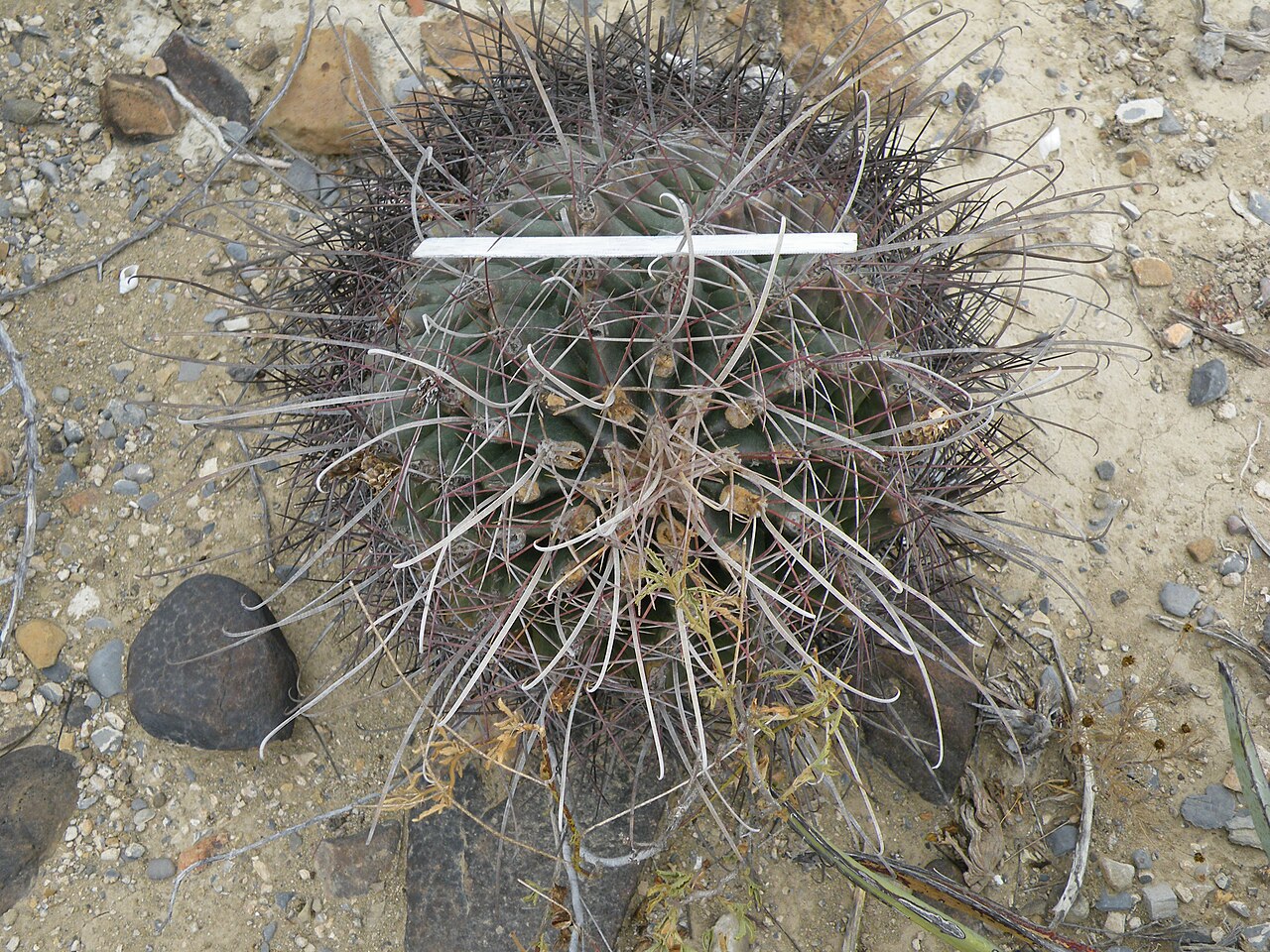
Ferocactus hamatacanthus, known as the Texas Barrel Cactus or Turk’s Head, is a striking globe- to barrel-shaped cactus of the Trans-Pecos and South Texas borderlands. It is instantly recognizable by its long, slender, strongly hooked central spines, which curve outward from the plant like a crown of fishhooks — the feature responsible for the genus name Ferocactus, “fierce cactus.”
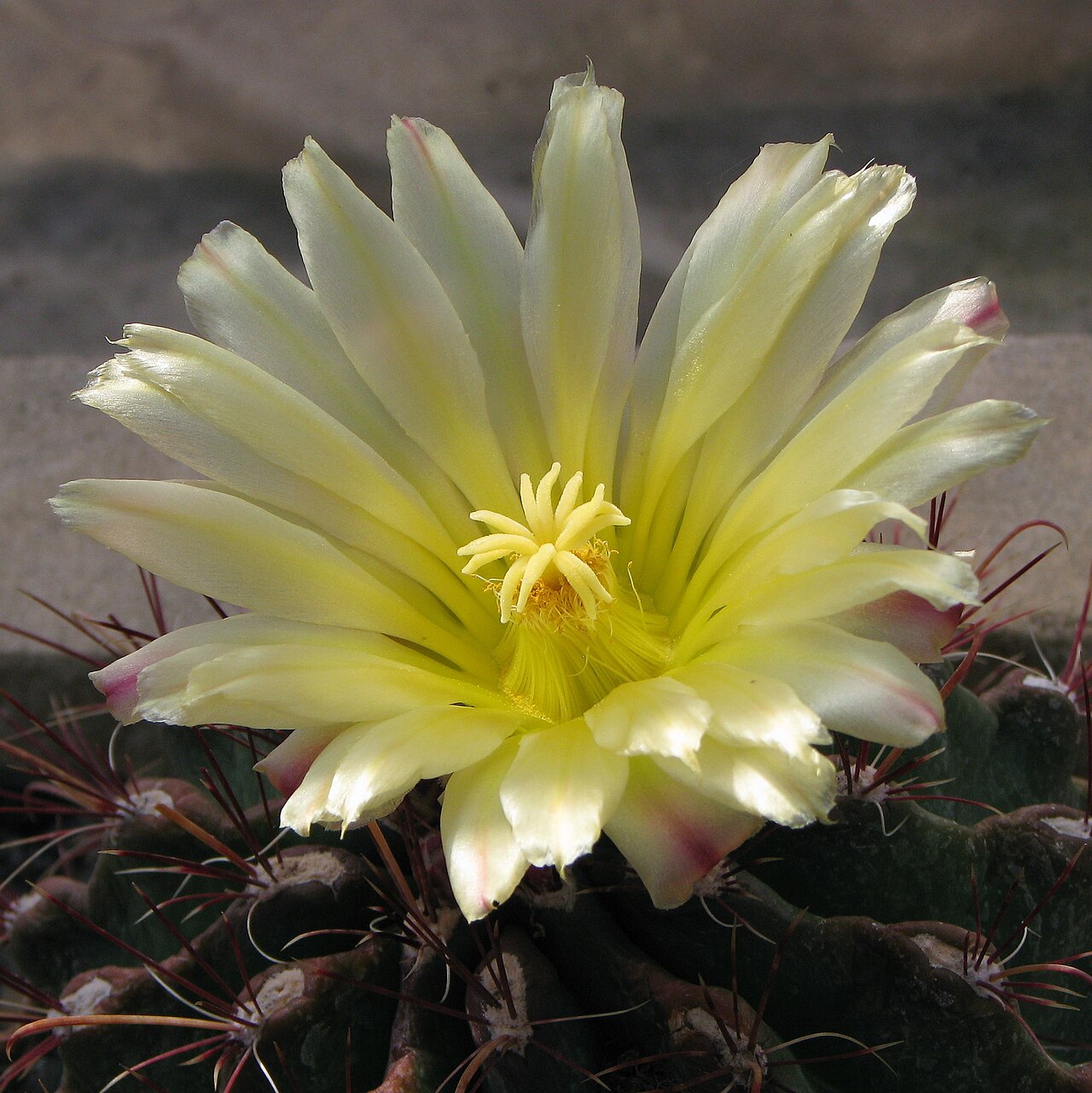
This species grows as a solitary, ribbed globe that elongates into a short cylinder with age, usually 6 inches to just over a foot tall, armed with a dense thatch of long radial spines and a few much longer, hooked central spines in shades of gray, pink, or deep maroon-red. In early summer it produces large, satiny yellow flowers, sometimes with a reddish throat, that open in succession over several weeks.
Texas Barrel Cactus is a true Chihuahuan Desert specialist, rooted in thin caliche and limestone gravel soils of far West Texas. It is slow-growing, long-lived, and extremely drought tolerant, making it an excellent accent plant for a xeriscape or rock garden within its native range — though its formidable spines mean it is best sited away from paths and play areas.
Identification
Texas Barrel Cactus starts as a flattened globe and gradually becomes more cylindrical with age, typically reaching 6 to 15 inches tall and 4 to 8 inches in diameter, occasionally taller in very old specimens. The stem has 13 to 20 prominent, straight to slightly spiraled ribs lined with closely spaced areoles.
Spines
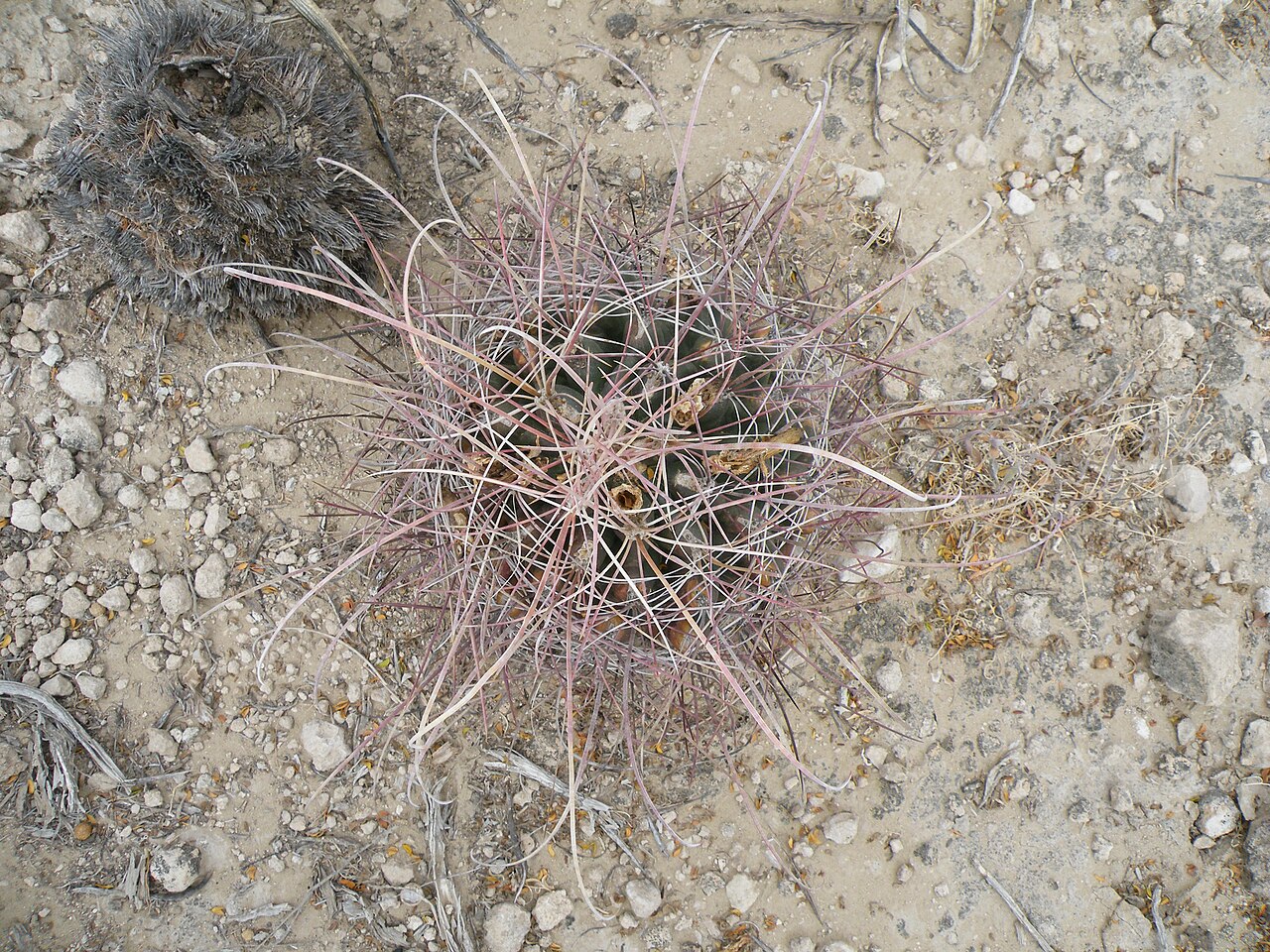
The spination is the plant’s defining trait. Each areole carries roughly 6 to 10 slender, straight-to-curved radial spines in pale gray to pinkish tones, along with 3 to 4 much longer central spines up to 4 inches long. The lowermost central spine is distinctly hooked at the tip — strongly recurved like a fishhook — and ranges in color from pale gray-pink to deep maroon-red, often fading with age. The dense, interlocking spine coat gives the whole plant a shaggy, almost woven appearance.
Flowers
Flowers appear at the crown from late spring into summer, each 2 to 3 inches across with numerous thin, satiny petals that are usually pale yellow, sometimes with a reddish-orange throat or reddish petal tips. They open in full sun over several days and are followed by fleshy fruit.
Fruit & Seeds
The fruit is an oblong, fleshy capsule about an inch long, yellow-green ripening to tan, that dries and splits to release small black seeds. Unlike many barrel cacti, the fruit of this species is edible and mildly tart, though it is eaten mostly by wildlife rather than people.
Quick Facts
| Scientific Name | Ferocactus hamatacanthus |
| Family | Cactaceae |
| Plant Type | Perennial Cactus |
| Mature Height | 6–15 in |
| Mature Spread | 4–8 in |
| Growth Rate | Slow |
| Sun Exposure | Full Sun |
| Water Needs | Very Low |
| Soil Type | Rocky, caliche or limestone gravel; very well-drained |
| Soil pH | 7.0–8.5 (neutral to alkaline) |
| Bloom Time | May – July |
| Flower Color | Pale yellow, sometimes with reddish throat |
| Fruit | Fleshy, oblong, yellow-green to tan; edible, mildly tart |
| Deer Resistant | Yes |
| USDA Hardiness Zones | 8–10 |
Native Range
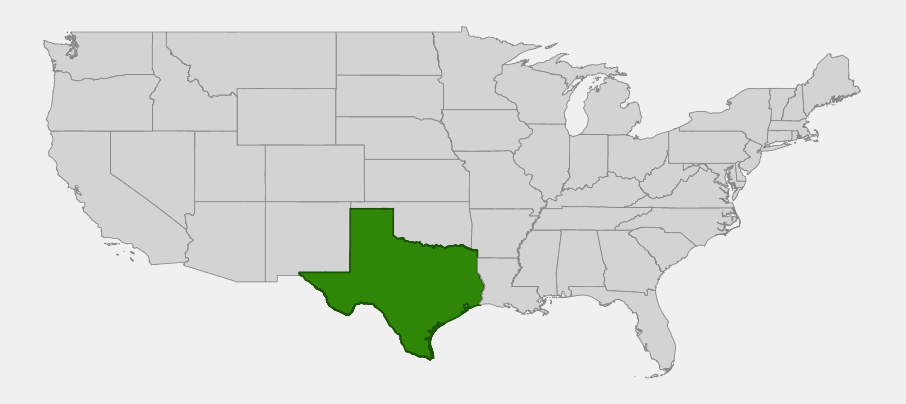
Texas Barrel Cactus is native to far West and South Texas, documented in gravelly and limestone-derived soils of the Trans-Pecos and the Rio Grande borderlands, and extending south into the adjoining Chihuahuan Desert of northern Mexico. GBIF specimen records for this species are overwhelmingly concentrated in Texas, confirming it as a true Texas native rather than a species that merely strays across the border.
Within its range it grows on open, sun-baked flats and low hillsides with thin, rocky or caliche soils, typically in sparse desert scrub where it receives full sun all day. Elevations range from near sea level in the lower Rio Grande country to roughly 4,500 feet in the Trans-Pecos.
Although occasional specimens have been recorded just across the state line in New Mexico, the species is not reliably established there in numbers sufficient to call it native to that state; Texas is its core and best-documented U.S. range.
📋 Regional plant lists featuring Texas Barrel Cactus: South and West Texas
Growing & Care Guide
Texas Barrel Cactus is a tough, rewarding plant for a sunny, well-drained spot in its native region. Like most desert cacti, its care is less about feeding and watering and more about getting the drainage and sun exposure right from the start.
Light
Plant in full, all-day sun. This species needs strong light to develop its characteristic dense spine coat and to flower well; in shade it becomes etiolated, sparsely spined, and reluctant to bloom.
Soil & Water
Sharp drainage is essential. A gritty mix of coarse sand, crushed limestone or decomposed granite, and a little native soil suits it well, whether in the ground or in a container. Water deeply but infrequently through the growing season, allowing the soil to dry out completely between waterings, and cut back watering almost entirely in winter. Standing water or heavy, slow-draining soil is the most common cause of stem rot.
Planting Tips
Set the cactus slightly high, with the base of the stem a little above grade, and top-dress with gravel rather than organic mulch to keep moisture away from the stem base. Site it well away from walkways, patios, and areas where people or pets brush past, since the long hooked spines catch on skin and clothing readily and are difficult to remove.
Pruning & Maintenance
No pruning is required. Handle only with thick leather gloves and long tongs if the plant must be moved, since the hooked central spines snag tenaciously. The species is largely pest-free when grown dry; watch for cottony mealybug colonies in spine axils and treat with isopropyl alcohol if seen.
Propagation
Propagation is from seed, sown in a warm season on a sterile, gritty mix and kept lightly moist until germination. Growth is slow, and seedlings may take several years to reach flowering size.
Landscape Uses
- Rock gardens and gravel beds replicating Chihuahuan Desert flats
- Xeriscape focal points for sunny, low-water beds
- Barrier or security plantings where its spines discourage foot traffic
- Container specimens for patios in frost-free winters
Wildlife & Ecological Value
Texas Barrel Cactus supports desert wildlife mainly through its flowers and fruit, and its fierce spine armor provides a measure of protective cover for smaller creatures.
For Pollinators
The large summer flowers attract native bees and other pollinating insects, offering a nectar source during the hot months when many other desert plants have finished blooming for the season.
For Birds & Mammals
The fleshy, slightly tart fruit is eaten by desert rodents, javelina, and various birds, which help disperse the seeds. The dense, hooked spine coat deters larger browsers such as deer, making the plant essentially immune to grazing damage.
Ecosystem Role
As a long-lived, slow-growing succulent rooted in thin caliche soils, Texas Barrel Cactus helps stabilize sparse desert ground cover and contributes structural diversity to Chihuahuan Desert scrub, where plant cover is naturally patchy and widely spaced.
Cultural & Historical Uses
Among Indigenous peoples of the Trans-Pecos and northern Mexico, the fleshy fruit of Texas Barrel Cactus was gathered as a minor wild food, eaten fresh for its mildly tart flavor, though it was never a staple on the scale of prickly pear fruit or agave. The tough, fibrous flesh of the stem itself was of little culinary use compared to other regional cacti.
In more recent horticultural history, the plant’s dramatic hooked spines and reliable summer flowers have made it a favorite among cactus and succulent collectors, and it is sometimes still known under its older synonym, Hamatocactus hamatacanthus, in older nursery and collector literature.
Today the species is valued chiefly as an ornamental and habitat plant in native and xeriscape gardens across its Texas range, where it requires no supplemental irrigation once established and asks only for sun and sharp drainage in return for decades of structure and summer bloom.
Frequently Asked Questions
Why is it called “Turk’s Head”?
The common name refers to the plant’s dense, bristling crown of long, curved spines, which early botanists thought resembled a turban or headwrap. “Ferocactus” (fierce cactus) and the hooked central spines that catch on anything that brushes past are the more defining features.
Is the fruit of Texas Barrel Cactus edible?
Yes, the fleshy fruit is edible and mildly tart, though it is eaten mostly by wildlife. As with any wild cactus fruit, positively confirm identification before tasting, and be mindful of the fine glochids that can be present on some cactus fruits.
How do I handle this cactus safely?
Always use thick leather gloves and long-handled tongs or a folded towel when moving or working near this plant. The hooked central spines are long, sharp, and difficult to remove once snagged in skin or clothing.
Will Texas Barrel Cactus survive outside its native range?
It can be grown successfully in other hot, dry climates (USDA zones 8–10) provided drainage is excellent and winters stay relatively dry, but it should not be planted where it could escape cultivation outside its native Chihuahuan Desert range.
How fast does it grow?
Growth is slow, typically well under an inch of height gained per year, with mature flowering-size plants often a decade or more old. Patience is part of growing this species.

Looking for a nursery that carries Texas Barrel Cactus?
Browse our native plant nursery directory: Texas