Tulip Prickly Pear (Opuntia phaeacantha)
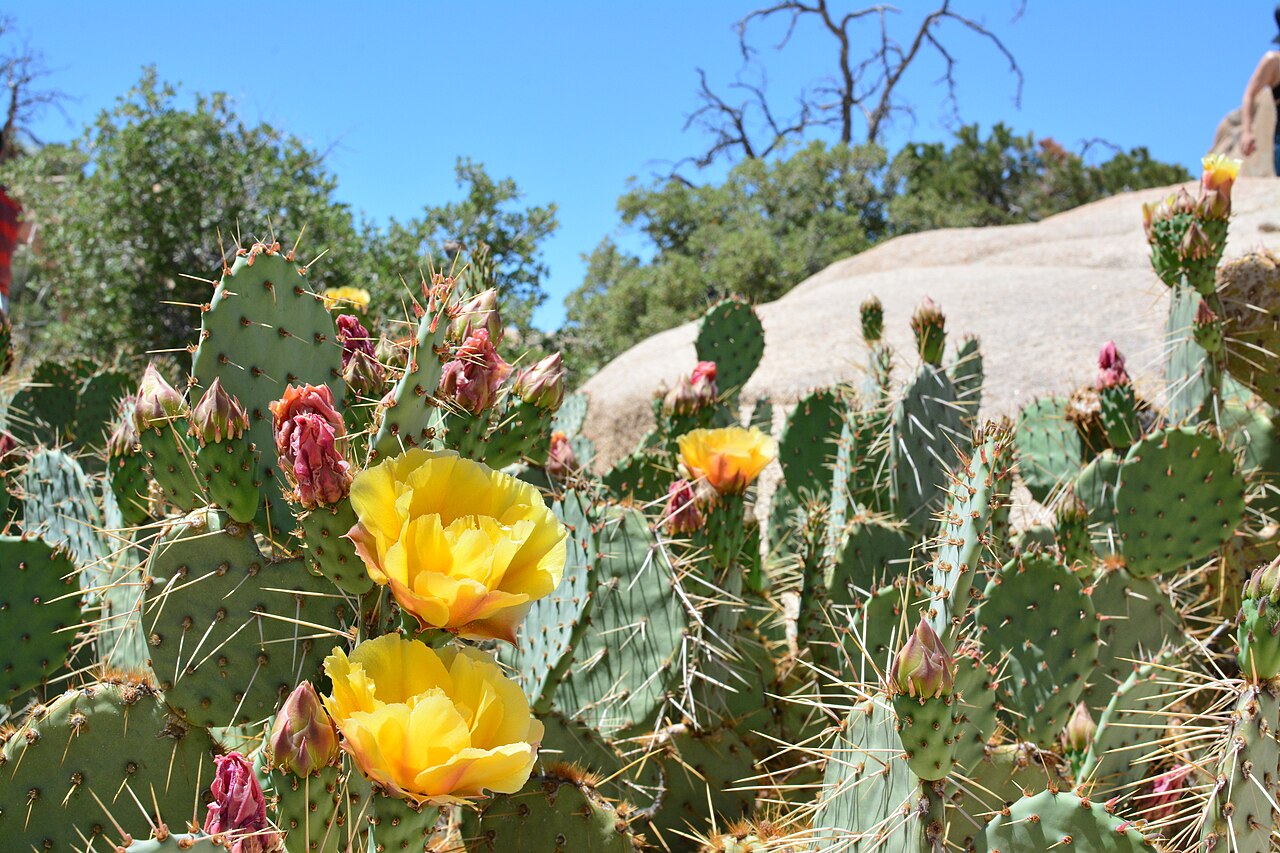
Opuntia phaeacantha, commonly called Tulip Prickly Pear or desert prickly pear, is one of the most widespread and variable native cacti of the American Southwest. It forms sprawling, low-growing clumps of flattened, blue-green to purplish pads armed with long spines, topped in late spring by large, silky flowers that range from clear yellow to apricot-orange, each bloom shaped like an open tulip.
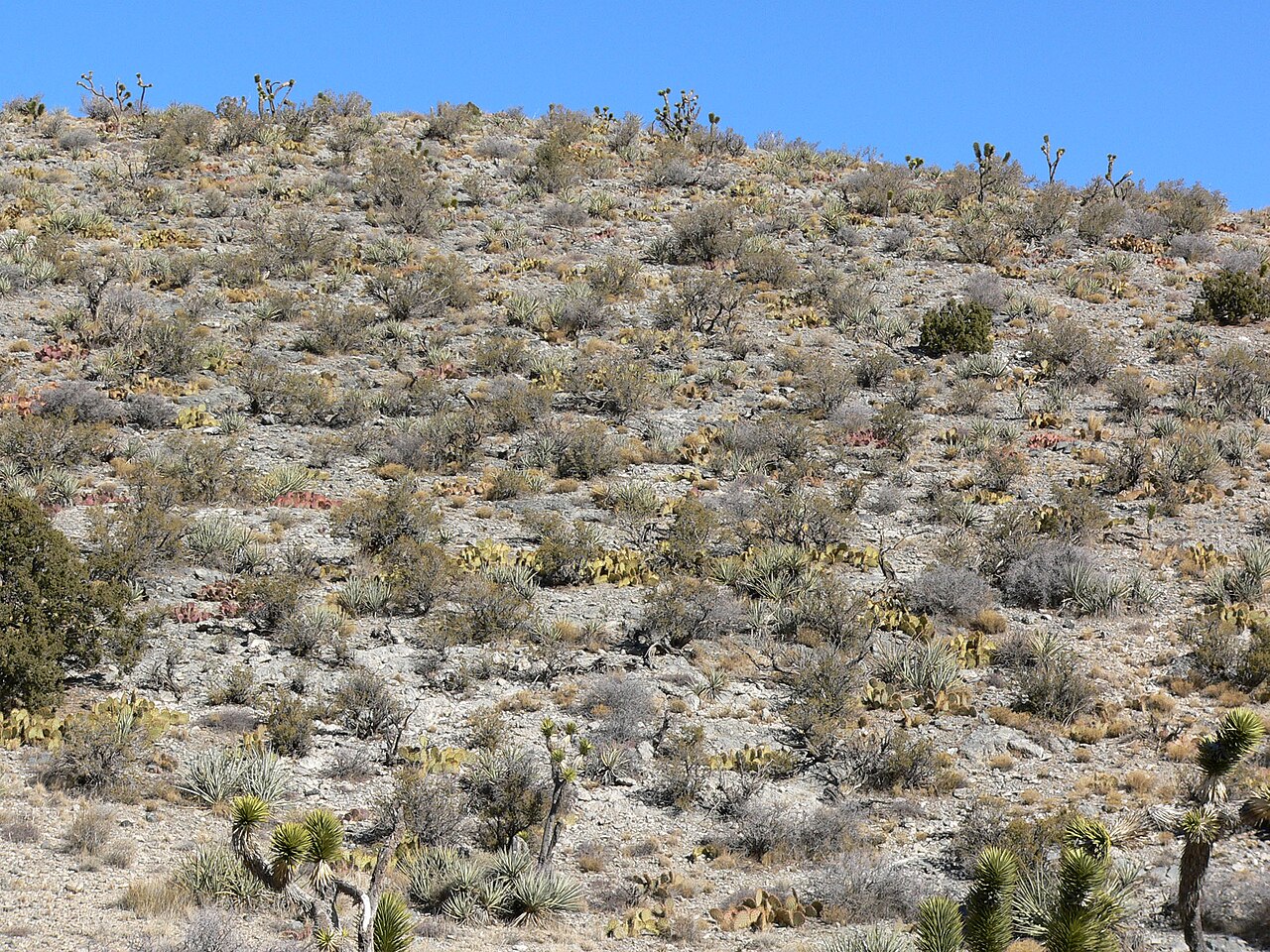
This species is a true generalist of the arid and semi-arid West, found from desert flats and rocky hillsides to pinyon-juniper woodlands and high plains grassland, often forming dense mounding colonies several feet across. Its pads frequently take on a deep maroon-purple blush under winter cold or summer drought stress, a distinctive trait that sets it apart from many related prickly pears.
Tulip Prickly Pear is extraordinarily drought tolerant and cold hardy for a cactus, surviving winters well below freezing across much of its range. For xeriscape gardens, wildlife plantings, or erosion control on dry slopes throughout the Southwest and southern Rockies, it is one of the most reliable and widely adaptable native cacti available.
Identification
Tulip Prickly Pear grows as a sprawling, mounding to semi-erect shrub, typically 1 to 3 feet tall but spreading several feet wide as pads root where they touch the ground. Mature clumps can form dense, impenetrable thickets.
Pads
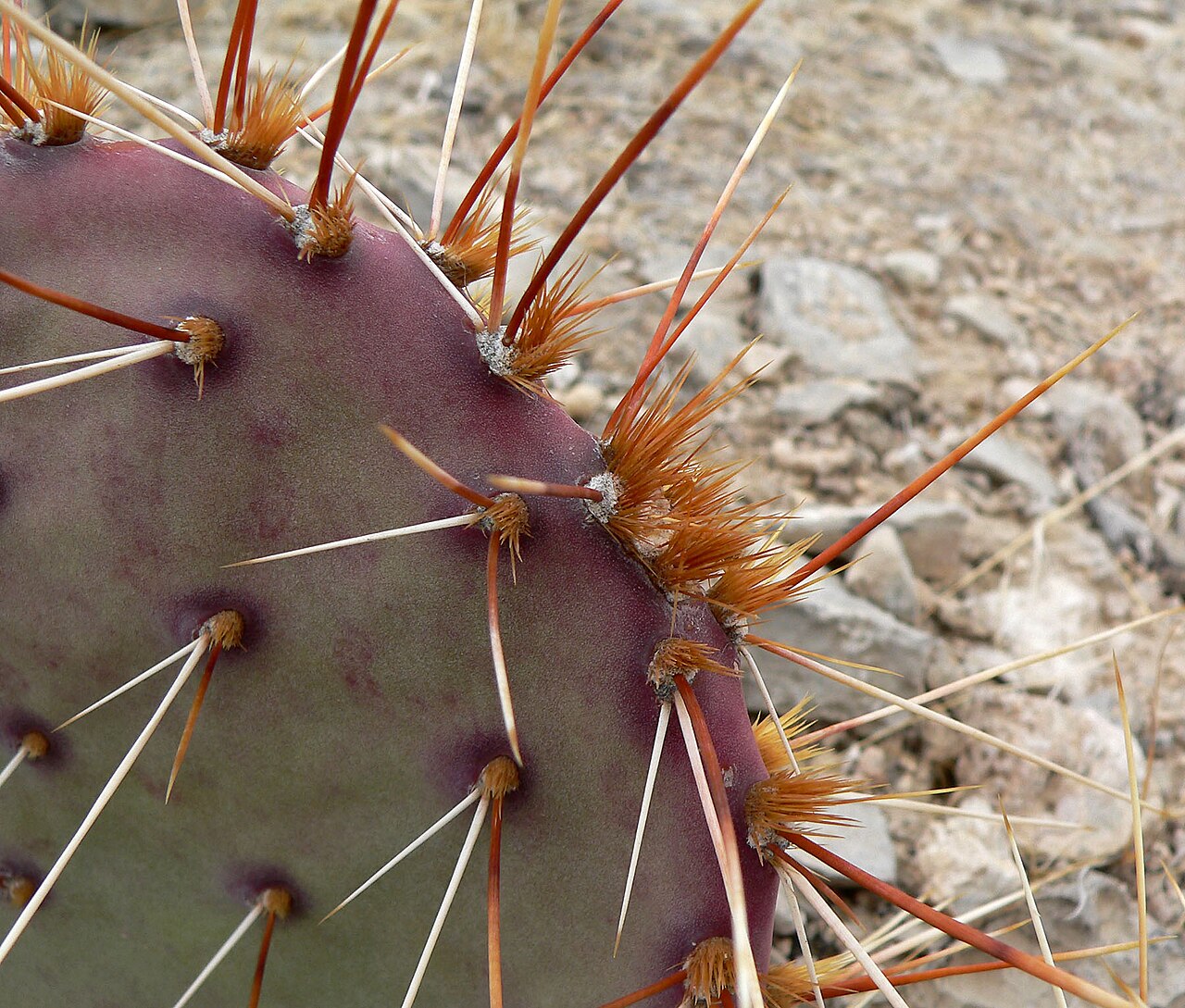
The flattened, oval to nearly circular pads (cladodes) are 4 to 8 inches long, blue-green to gray-green, often flushing deep maroon-purple in cold or drought. Each areole bears a cluster of short golden-brown glochids (fine, barbed bristles) along with 1 to 8 stout spines up to 3 inches long, usually straw-colored to reddish-brown and sometimes curving slightly downward.
Flowers
Flowers appear singly along the upper pad margins in late spring, each 2 to 3 inches across with numerous overlapping, satiny petals in shades of lemon yellow to deep apricot-orange, sometimes with a reddish base. The cup-shaped blooms open fully only in bright sun and close at night, lasting just a day or two individually, though a well-established plant flowers over several weeks.
Fruit & Seeds
The fruit (tuna) is a fleshy, spineless but glochid-covered pear-shaped berry about 1 to 2 inches long, ripening from green to deep reddish-purple in late summer and fall. The pulp is juicy and edible, containing numerous hard, flattened seeds.
Quick Facts
| Scientific Name | Opuntia phaeacantha |
| Family | Cactaceae |
| Plant Type | Perennial Cactus (Prickly Pear) |
| Mature Height | 1–3 ft |
| Mature Spread | 3–8 ft |
| Growth Rate | Moderate |
| Sun Exposure | Full Sun |
| Water Needs | Very Low |
| Soil Type | Rocky, sandy, or gravelly; very well-drained |
| Soil pH | 6.5–8.5 |
| Bloom Time | May – June |
| Flower Color | Yellow to apricot-orange |
| Fruit | Reddish-purple, fleshy, edible (tuna) |
| Deer Resistant | Yes |
| USDA Hardiness Zones | 5–10 |
Native Range
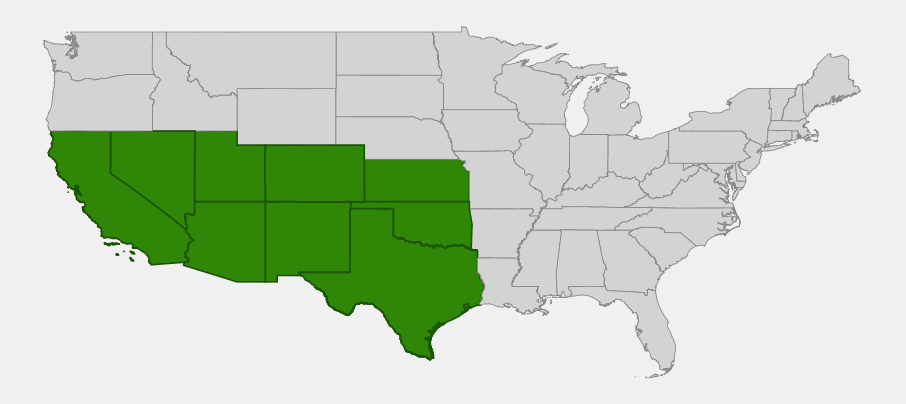
Tulip Prickly Pear is native across a broad swath of the American Southwest and southern Rockies, from the deserts of southern California and southern Nevada through Arizona, Utah, Colorado, New Mexico, and Texas, with outlying populations reaching into the Oklahoma panhandle and western Kansas. It is one of the most widely distributed prickly pears in North America, reflecting its tolerance for both low desert heat and high-elevation cold.
Across this range it occupies an unusually broad range of habitats: desert flats and bajadas, rocky hillsides, pinyon-juniper and oak woodlands, and shortgrass prairie, generally on well-drained soils from near sea level in parts of California up to around 7,000 feet in the southern Rockies.
Because of its wide native distribution and hardiness, Tulip Prickly Pear is also cultivated and has sometimes naturalized well beyond this core range; gardeners outside the Southwest and southern Plains should confirm their specific prickly pear’s origin, since several closely related species and hybrids are often sold under the same common names.
📋 Regional plant lists featuring Tulip Prickly Pear: South and West Texas · California & Nevada · Arizona & New Mexico
Growing & Care Guide
Tulip Prickly Pear is among the easiest and most forgiving native cacti to grow across a wide range of climates, from hot low deserts to cold high-plains winters, provided drainage is good.
Light
Grow in full sun for the best flowering and the most compact, colorful pad growth. In partial shade the pads stretch and flowering declines noticeably.
Soil & Water
This species tolerates a wide range of soils — sandy, rocky, or clay-loam — as long as drainage is adequate; it is far more forgiving of heavier soils than many desert cacti, but still resents standing water. Established plants need no supplemental irrigation in most of their native range beyond natural rainfall, and in cultivation should be watered deeply but infrequently, allowed to dry fully between waterings, with little to no water in winter.
Planting Tips
New plants establish easily from rooted pad cuttings set a few inches deep in well-drained soil during the warm season. Space clumps 3 to 6 feet apart to allow for spread, since established colonies expand steadily as pads root along the ground. Keep plantings away from walkways, as both spines and the fine, irritating glochids readily catch on skin and clothing.
Pruning & Maintenance
Remove individual pads with long-handled tongs to control size or shape, cutting at a joint; this also yields new pads for propagation. The plant is otherwise low-maintenance, though cochineal scale insects (visible as white, cottony patches) can appear and should be hosed off or treated promptly.
Propagation
Propagation from pad cuttings is fast and reliable: let a cut or removed pad callus over for several days to a week in a dry, shaded spot, then set the base an inch or two into well-drained soil, where it roots within weeks during the growing season. Seed propagation is slower and more variable.
Landscape Uses
- Xeriscape and rock gardens across a wide range of climates
- Erosion control on dry, rocky slopes
- Wildlife and pollinator gardens — flowers and fruit support many species
- Barrier plantings where spines deter foot traffic
- Edible landscaping for home harvest of pads (nopales) and fruit (tunas)
Wildlife & Ecological Value
Tulip Prickly Pear is a keystone food and habitat plant across much of its range, supporting wildlife through nearly every part of its structure.
For Pollinators
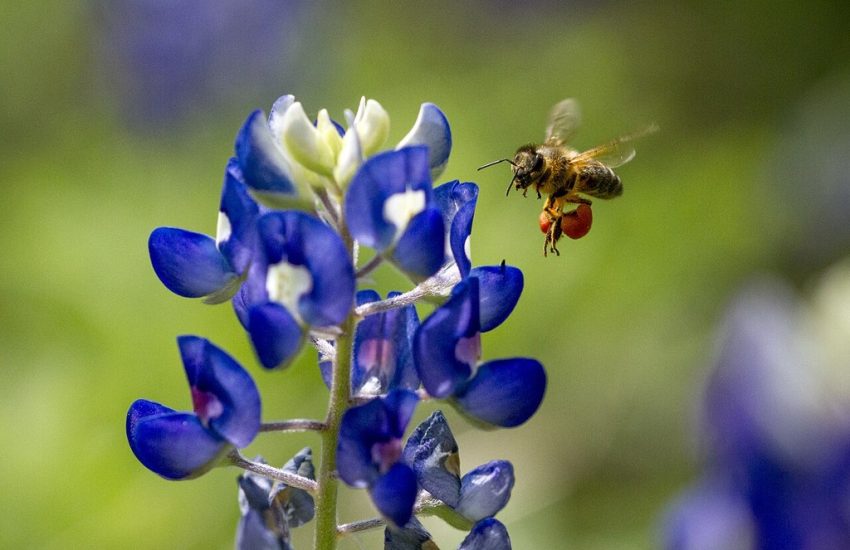
The large, pollen-rich flowers are a major draw for native bees, including specialist cactus bees, as well as honeybees and beetles. Bees often become dusted in pollen while foraging among the numerous stamens, and the flowers are an important early-summer nectar and pollen source in arid landscapes with limited bloom.
For Birds & Mammals
The fleshy purple fruit is eaten by a wide range of birds and mammals, including quail, thrashers, coyotes, foxes, javelina, and ground squirrels, which disperse the seeds widely. Pack rats and other rodents often incorporate prickly pear pads into den structures for the protection the spines provide, and desert tortoises and jackrabbits browse the pads themselves, especially in drought when other forage is scarce.
Ecosystem Role
As a widespread, structurally dense perennial, Tulip Prickly Pear provides critical shelter and nest cover for ground-dwelling birds and small mammals in open, sparsely vegetated terrain, while its root system helps stabilize soil on slopes prone to erosion.
Cultural & Historical Uses
Prickly pears in the Opuntia phaeacantha complex have been an important food source for Indigenous peoples across the Southwest for thousands of years. The young, spineless pads (nopales) were harvested, singed to remove spines and glochids, and cooked as a vegetable, while the ripe fruit (tunas) was eaten fresh, dried for storage, or boiled down into syrup.
Various Southwestern tribes, including Puebloan, Navajo, and Apache peoples, used parts of the plant medicinally as a poultice for wounds and the mucilaginous pad pulp as a soothing topical application, practices documented in regional ethnobotanical records as traditional use rather than established modern treatment.
Today, prickly pear pads and fruit remain popular in Southwestern cuisine, and this species in particular is valued by native-plant gardeners for its reliability, cold tolerance, and dramatic flowering display across a much wider climate range than most cacti can tolerate.
Frequently Asked Questions
Can I eat the pads and fruit of Tulip Prickly Pear?
Yes. Young, tender pads (nopales) and ripe fruit (tunas) are both edible after careful removal of spines and glochids. Use tongs and a knife to clean the pads thoroughly before handling or cooking.
Why do the pads turn purple?
Purple or maroon coloring develops in response to cold temperatures, drought stress, or strong sun exposure — it is a normal protective pigment response, not a sign of disease, and the pads typically green up again under milder conditions.
How cold-hardy is this cactus?
Very hardy for a cactus — established plants in its native range tolerate winter lows well below freezing, surviving USDA zones as cold as 5, making it one of the most cold-tolerant prickly pears available for Southwestern and southern Rocky Mountain gardens.
How do I remove glochids safely?
Use tweezers, duct tape, or white glue peeled off after drying to lift out the fine, barbed glochids; avoid rubbing the affected skin, which can drive them in deeper.
Does Tulip Prickly Pear spread aggressively?
Within its native range it spreads by rooting pads into substantial mounding colonies over time, but it is not considered invasive there. Gardeners who want to limit spread should remove stray pads promptly before they root.

Looking for a nursery that carries Tulip Prickly Pear?
Browse our native plant nursery directory: California · Arizona · Nevada, New Mexico & Oklahoma · Texas & Utah · Colorado · Kansas