Birchleaf Mountain Mahogany (Cercocarpus betuloides)
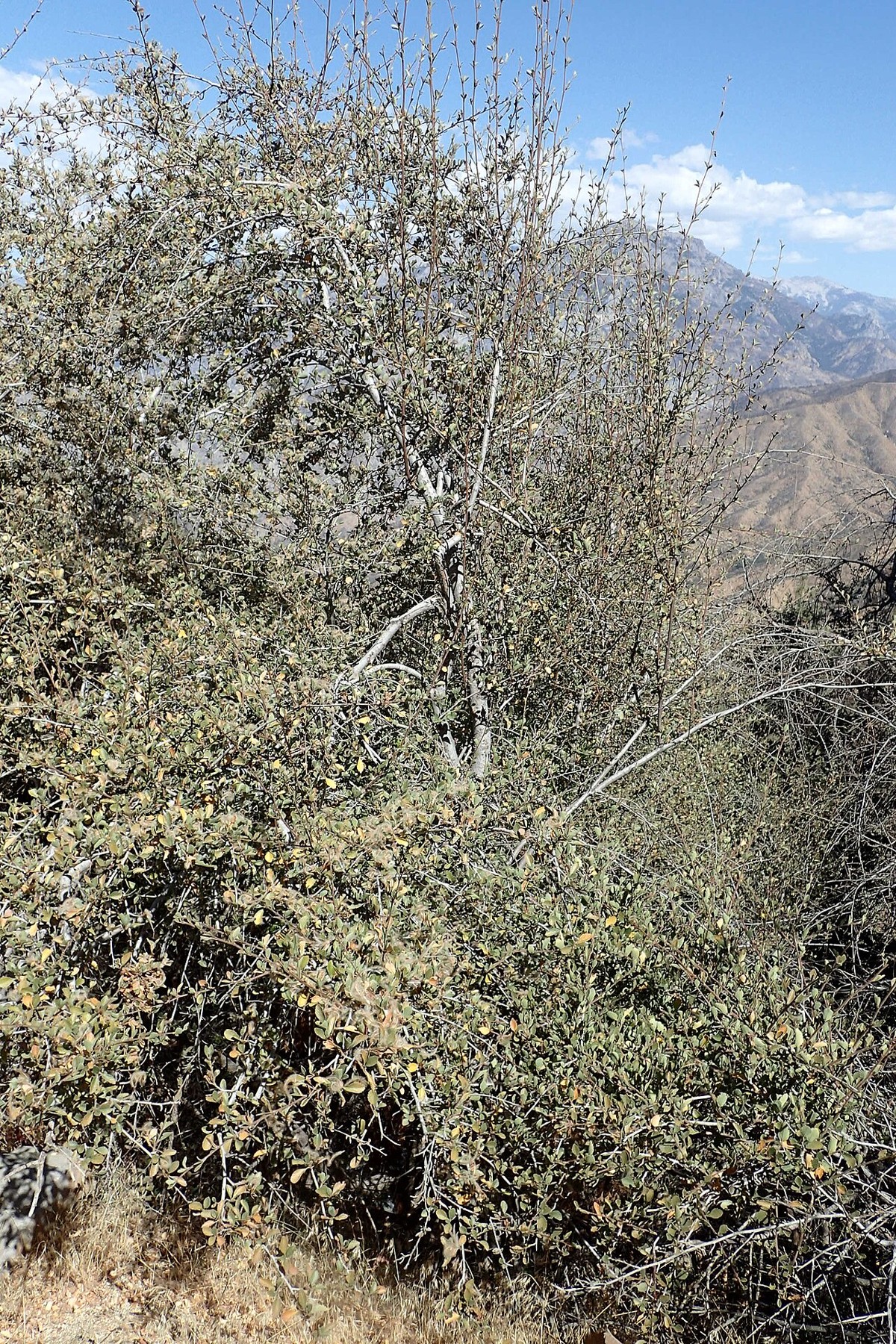
Cercocarpus betuloides, commonly known as Birchleaf mountain mahogany, is a tough, long-lived evergreen shrub or small tree in the rose family (Rosaceae) found across the dry foothills and mountains of California and Arizona. Its common name refers to its small, birch-like leaves, while “mahogany” nods to the exceptionally hard, dense, reddish wood found in many Cercocarpus species — though this plant is unrelated to true tropical mahoganies.
Growing as a dense, many-branched shrub 6 to 20 feet tall (occasionally developing into a small single-trunked tree in favorable sites), Birchleaf mountain mahogany is easy to overlook when not in fruit. But by late summer and fall, its seeds transform the plant: each one trails a long, silvery, corkscrew-twisted plume that catches the light and gives entire hillsides a soft, feathery shimmer — one of the more striking seasonal displays in California’s chaparral and foothill woodlands.
For gardeners in California and Arizona looking for an exceptionally drought-tolerant, long-lived evergreen screen or specimen shrub, Birchleaf mountain mahogany is hard to beat. It needs almost no water once established, tolerates poor rocky soils that defeat most garden plants, and provides year-round structure along with its memorable fall seed display.
Identification
Birchleaf mountain mahogany is a dense, evergreen, many-branched shrub or occasionally a small tree, typically 6 to 20 feet tall, with a rounded to irregular crown shaped by its growing conditions.
Bark & Stems
Young twigs are slender and grayish, often somewhat zigzagged, becoming gray to grayish-brown and furrowed with age. The wood is notably hard and dense — a family trait shared with other Cercocarpus species, whose wood is so heavy it often sinks in water.
Leaves
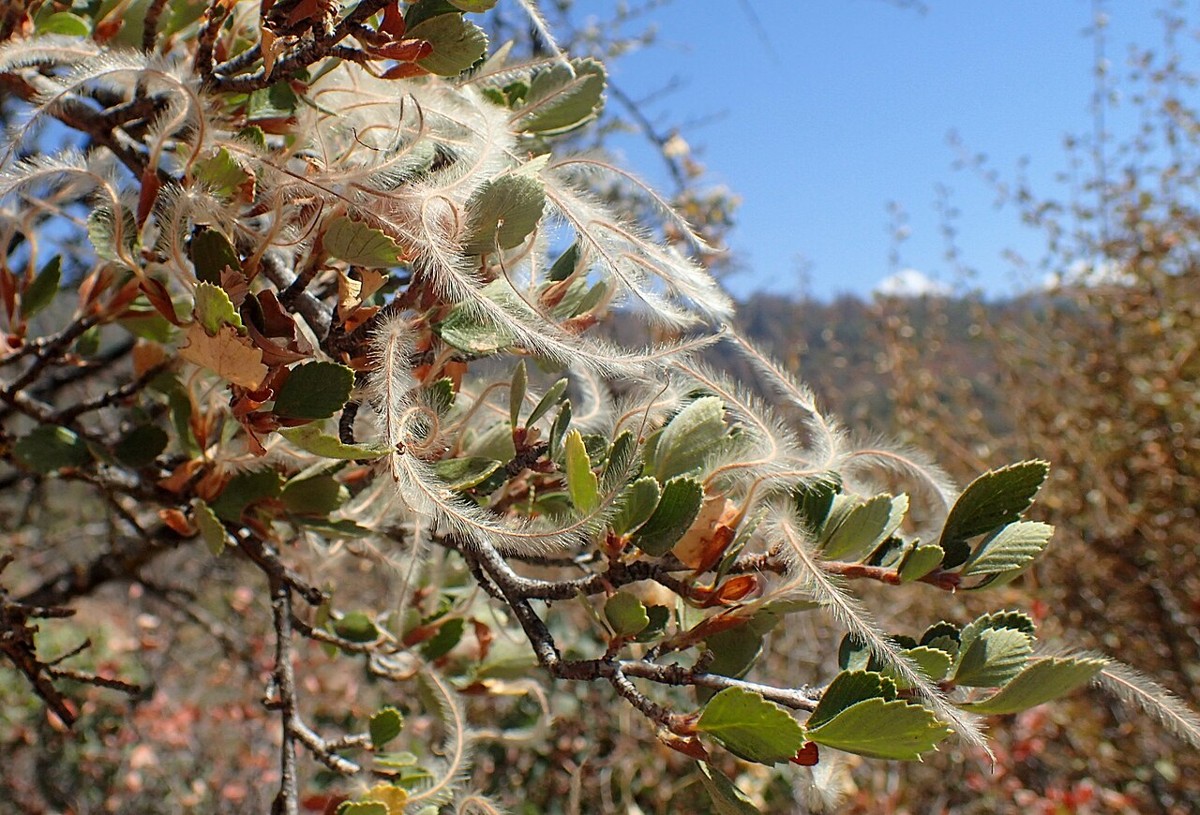
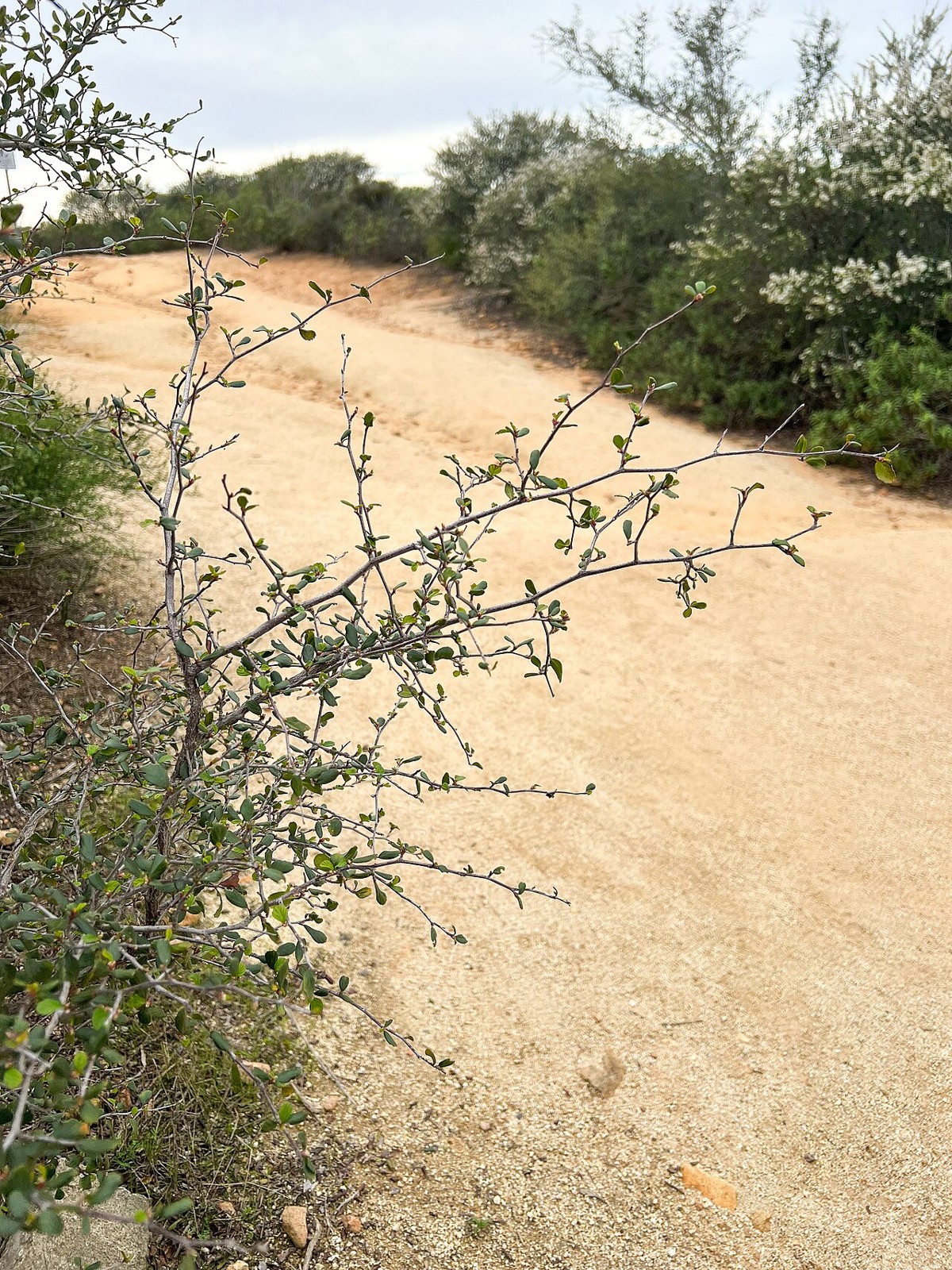
Leaves are small, 1/2 to 1 1/2 inches long, wedge-shaped to oval, with coarsely toothed margins concentrated toward the rounded tip — a shape genuinely reminiscent of birch leaves, hence the common name. The upper surface is dull dark green with impressed veins, while the underside is paler and finely hairy. Leaves are evergreen but often sparse in drought years, thinning to conserve water.
Flowers
Flowers are small, inconspicuous, and petal-less, consisting of a tubular greenish-white to cream calyx with a cluster of protruding stamens, borne singly or in small clusters in the leaf axils. They bloom from February through April and are easy to miss, relying on wind rather than showy color for pollination.
Fruit & Seeds
The fruit is a single-seeded achene tipped with a long, silvery, spirally twisted plume up to 2 to 3 inches long — by far the plant’s most distinctive and ornamental feature. These feathery tails aid wind dispersal and, once the seed lands, work like a drill, twisting with changes in humidity to help bury the seed tip-first into the soil. Fruits mature and become conspicuous from midsummer through fall.
Quick Facts
| Scientific Name | Cercocarpus betuloides |
| Family | Rosaceae (Rose) |
| Plant Type | Evergreen Shrub / Small Tree |
| Mature Height | 6–20 ft |
| Mature Spread | 6–15 ft |
| Growth Rate | Slow |
| Sun Exposure | Full Sun to Partial Shade |
| Water Needs | Low (very drought tolerant once established) |
| Soil Type | Lean, well-drained rocky, clay or granitic soils |
| Soil pH | 6.0–8.0 (neutral to slightly alkaline) |
| Bloom Time | February – April |
| Flower Color | Greenish-white to cream (inconspicuous) |
| Fall Color | Evergreen; silvery seed plumes in late summer-fall |
| Fruit | Achene with long, twisted silvery plume |
| Deer Resistant | No (heavily browsed by deer) |
| USDA Hardiness Zones | 7–10 |
Native Range
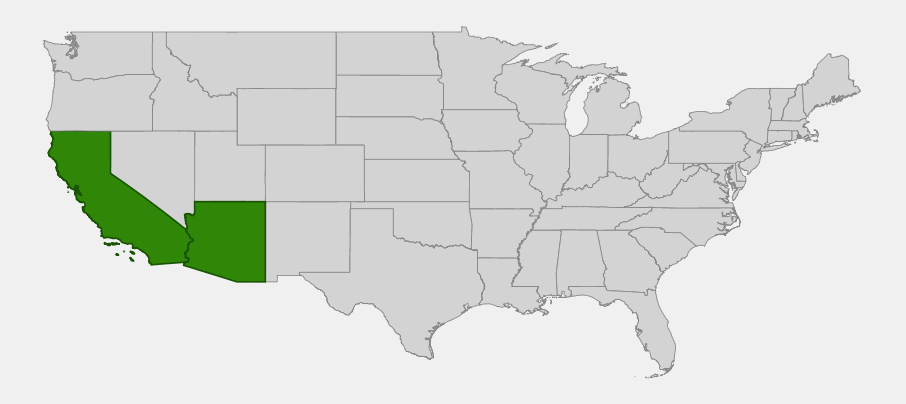
Birchleaf mountain mahogany is native to California, where it occurs widely across the Coast Ranges, Sierra Nevada foothills, and Transverse and Peninsular Ranges, and to Arizona, where it grows in the central and southeastern mountains. It is not confirmed as native to Oregon or New Mexico; occurrences reported in those states largely lack the county-level native records that would support inclusion.
Across its range, Birchleaf mountain mahogany favors dry, rocky slopes and ridgelines in chaparral, foothill woodland, and the lower edges of pine-oak woodland, typically between about 1,000 and 6,000 feet elevation. It is often found growing alongside scrub oaks and other hardy chaparral shrubs on thin, well-drained soils where few other woody plants compete successfully.
Unlike many chaparral shrubs, Birchleaf mountain mahogany can resprout from the root crown after fire in addition to regenerating from seed, giving established stands some resilience to periodic burns. It is also notably long-lived, with individual plants surviving for well over a century in undisturbed sites.
📋 Regional plant lists featuring Birchleaf mountain mahogany: California & Nevada, Arizona & New Mexico
Growing & Care Guide
Birchleaf mountain mahogany is an exceptionally durable, long-lived shrub for dry-climate gardens, but its slow growth rate means patience is part of the deal — this is a plant for gardeners thinking in decades, not seasons.
Light
Full sun produces the densest, most compact growth, though the species tolerates partial shade, especially in hotter inland climates where afternoon protection can reduce stress.
Soil & Water
Lean, well-drained soil is essential — rocky, clay, or granitic soils typical of dry foothill slopes suit it far better than rich, regularly irrigated garden beds. Water occasionally during the first two years to help establish a deep root system, then reduce watering significantly; mature plants are highly drought tolerant and generally need no supplemental summer water in a Mediterranean or arid climate.
Planting Tips
Plant young container stock in fall, ahead of winter rains, to take advantage of the cool, wet season for root establishment. Given its slow growth and long lifespan, choose a permanent site carefully — this is not a shrub to transplant once established. Allow 8 to 15 feet of spacing depending on whether a dense screen or more open specimen form is desired.
Pruning & Maintenance
Minimal pruning is needed. Remove dead or crossing branches as needed, and note that the shrub can be trained into a small single-trunked tree form by selectively removing lower branches over several years if a more tree-like silhouette is preferred. It is naturally pest- and disease-resistant and requires little ongoing maintenance once established.
Landscape Uses
Birchleaf mountain mahogany suits a range of low-water garden roles:
- Evergreen screening on dry slopes where irrigation is limited
- Long-term specimen shrub or small tree for patient gardeners
- Erosion control on rocky or disturbed foothill slopes
- Wildlife habitat plantings valued for browse and cover
- Waterwise hedgerows in chaparral and foothill-style landscaping
Fire Ecology
Unlike many obligate-seeding chaparral shrubs, Birchleaf mountain mahogany can resprout from its root crown after fire in addition to regenerating from seed, giving established populations a degree of resilience to periodic burning. Even so, repeated short-interval fires can gradually deplete older stands, since the species is relatively slow-growing and takes years to rebuild full size and seed production after a burn.
Wildlife & Ecological Value
Birchleaf mountain mahogany is a valuable browse and structural plant across the dry chaparral and foothill woodlands of California and Arizona.
For Pollinators
Though the small, petal-less flowers are inconspicuous and wind-pollinated rather than insect-pollinated, they still provide incidental pollen and nectar resources for some small native bees and flies active in late winter and early spring.
For Birds
The dense evergreen branching offers year-round cover and nesting sites for chaparral and woodland-edge birds, while the plumed seeds occasionally provide nesting material.
For Mammals
Birchleaf mountain mahogany is an important browse plant for mule deer, which feed heavily on its evergreen foliage, especially in winter when other forage is scarce. Small mammals also use dense stands for cover.
Ecosystem Role
As a long-lived, slow-growing evergreen, Birchleaf mountain mahogany provides stable, persistent structure in chaparral and foothill woodland communities across many fire cycles. Its deep root system helps stabilize steep, rocky slopes, and its ability to resprout after fire makes it an anchor species that helps these plant communities recover more quickly than they would from seed alone.
Cultural & Historical Uses
Indigenous peoples across California and Arizona valued Cercocarpus species, including Birchleaf mountain mahogany, for their exceptionally hard, dense wood, which was historically worked into digging sticks, tool handles, and other implements requiring durability and strength — uses reflected in the common name “mountain mahogany,” a reference to the wood’s density and reddish color rather than any botanical relation to true mahogany trees.
The reddish inner bark and wood of some Cercocarpus species were also used historically by various Indigenous communities to produce red or reddish-brown dyes for basketry and other materials, part of a broader tradition of using locally available chaparral and woodland plants for practical and decorative purposes.
Today, Birchleaf mountain mahogany is valued in native landscaping mainly for its toughness, longevity, and striking fall seed display, and it remains an important component of chaparral and foothill woodland restoration projects across its range.
Frequently Asked Questions
Why does it have those silvery, feathery seed tails?
Each seed is tipped with a long, spirally twisted plume that aids wind dispersal and then works like a drill — twisting with changes in humidity to help bury the seed tip-first into the soil after it lands, improving germination odds.
Is Birchleaf mountain mahogany related to true mahogany trees?
No. Despite the common name, it belongs to the rose family (Rosaceae), unrelated to tropical mahogany trees. The name refers to its hard, dense, reddish wood, similar in character (though not botanically) to true mahogany.
How fast does Birchleaf mountain mahogany grow?
Slowly. It is a long-lived species that can take many years to reach mature size, so gardeners should choose a permanent planting site and expect gradual, steady growth rather than quick results.
Does Birchleaf mountain mahogany resprout after fire?
Yes, unlike many chaparral shrubs, it can resprout from its root crown after fire in addition to regenerating from seed, giving established plants some resilience to periodic burning.
Is Birchleaf mountain mahogany deer resistant?
No — it is a preferred browse plant for mule deer, especially in winter, and young plants may need protection from heavy browsing pressure while establishing.

Looking for a nursery that carries Birchleaf mountain mahogany?
Browse our native plant nursery directory: California · Arizona