Coast Silktassel (Garrya elliptica)
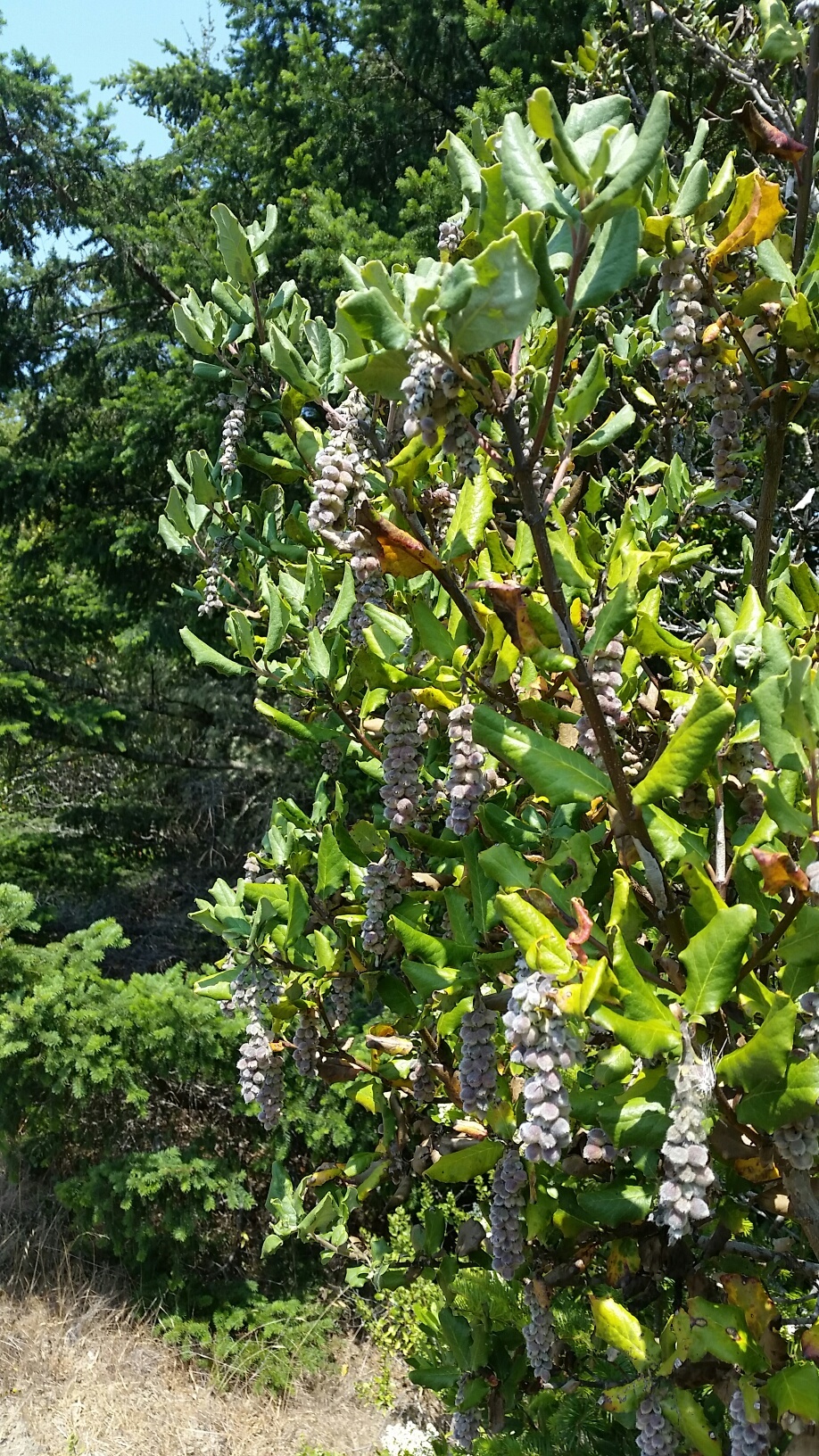
Garrya elliptica, commonly called coast silktassel or wavyleaf silktassel, is an evergreen shrub found along the fog belt of the Pacific coast, where it is best known for the long, silky, tassel-like catkins that dangle from its branches in winter. Unlike most showy native shrubs, silktassel doesn’t rely on petals for its display — its “flowers” are actually drooping strings of tiny, petal-less blooms wrapped in silvery hairs, giving the whole shrub a soft, draped look that is unmistakable once you’ve seen it.
In the wild, coast silktassel grows as a dense, rounded shrub or small tree from 8 to 20 feet tall, usually tucked into coastal scrub, closed-cone pine forest, or the edges of redwood and Douglas-fir woods within a few miles of salt air. It tolerates wind, salt spray, poor soil and long dry summers with no fuss, which is exactly why it has become a dependable choice for coastal and foothill gardens from British Columbia nursery catalogs to Southern California hedgerows, well outside the narrow native range described below.
Because Garrya elliptica is dioecious — individual plants are either male or female — only female shrubs produce the grape-like clusters of fuzzy, silver-gray fruit that follow the catkins. Male plants have the showier, longer catkins (sometimes called “bear’s clusters” in the nursery trade for the handsome cultivar ‘James Roof’), so gardeners planting for the catkin display should look for a male selection, while those wanting fruit for wildlife need at least one female.
Identification
Coast silktassel is a multi-stemmed evergreen shrub, usually 8 to 15 feet tall and nearly as wide, occasionally reaching small-tree size to 20 feet in sheltered canyons. The overall form is dense and rounded, with gray-brown bark and a tendency to layer where low branches touch moist duff.
Leaves
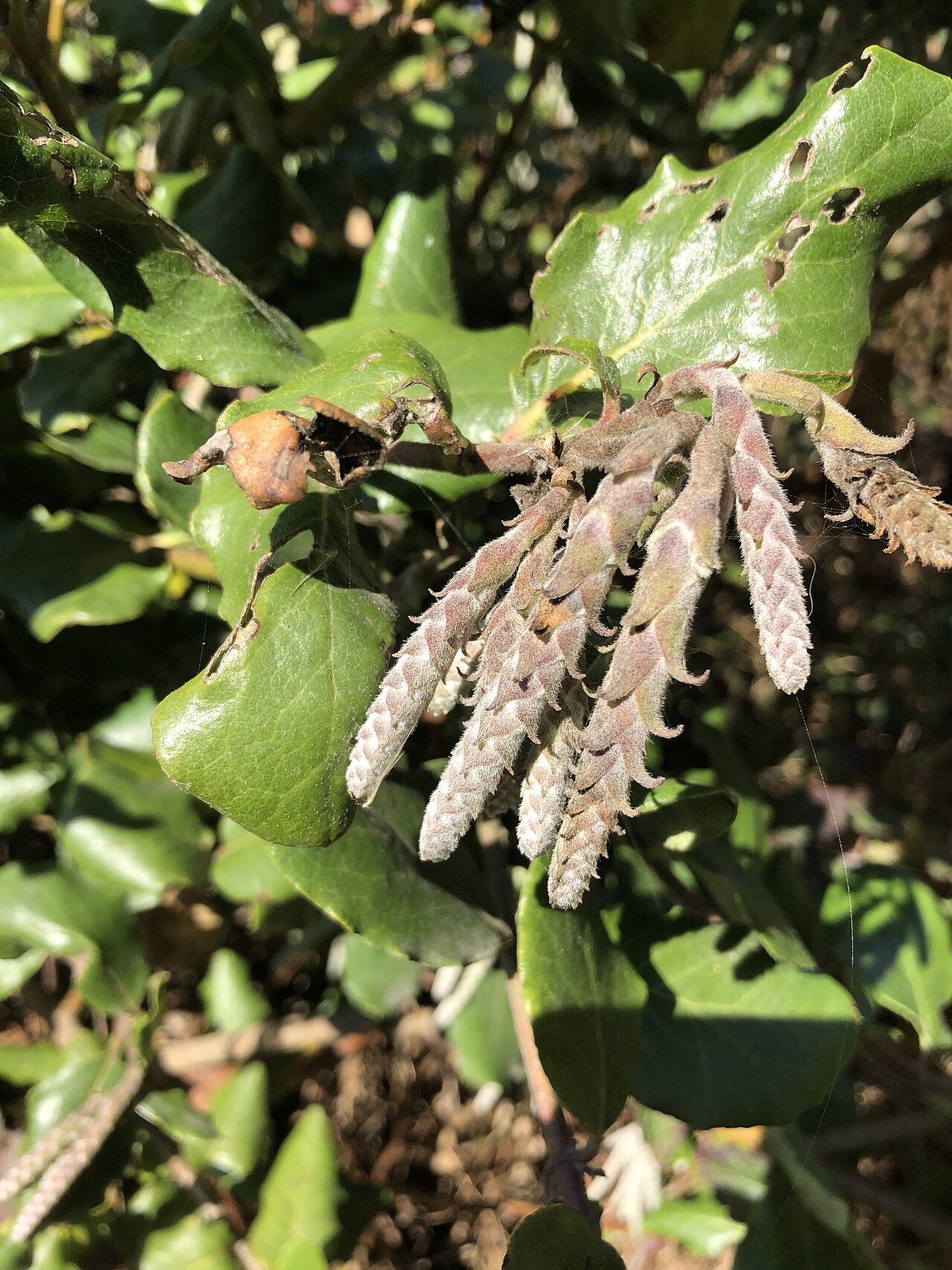
Leaves are opposite, leathery, and elliptic to oval, 1.5 to 4 inches long, with distinctly wavy, crinkled margins that give the species its botanical name (elliptica) and one of its common names. The upper surface is glossy dark green; the underside is covered in dense gray-white woolly hairs, a useful field mark when the wind flips a leaf over. Leaves persist year-round, so the shrub reads as a solid green mass even in midwinter.
Flowers
Silktassel flowers lack petals and are easy to overlook individually, but en masse they form the shrub’s signature feature: pendant catkins 3 to 8 inches long (occasionally over a foot on vigorous male plants), covered in silky silver-gray to purplish hairs. Catkins appear from December through February, well before most native shrubs bloom, making silktassel a rare source of late-winter interest. Male and female catkins occur on separate plants; male catkins are longer and showier, female catkins shorter and thicker.
Fruit & Seeds
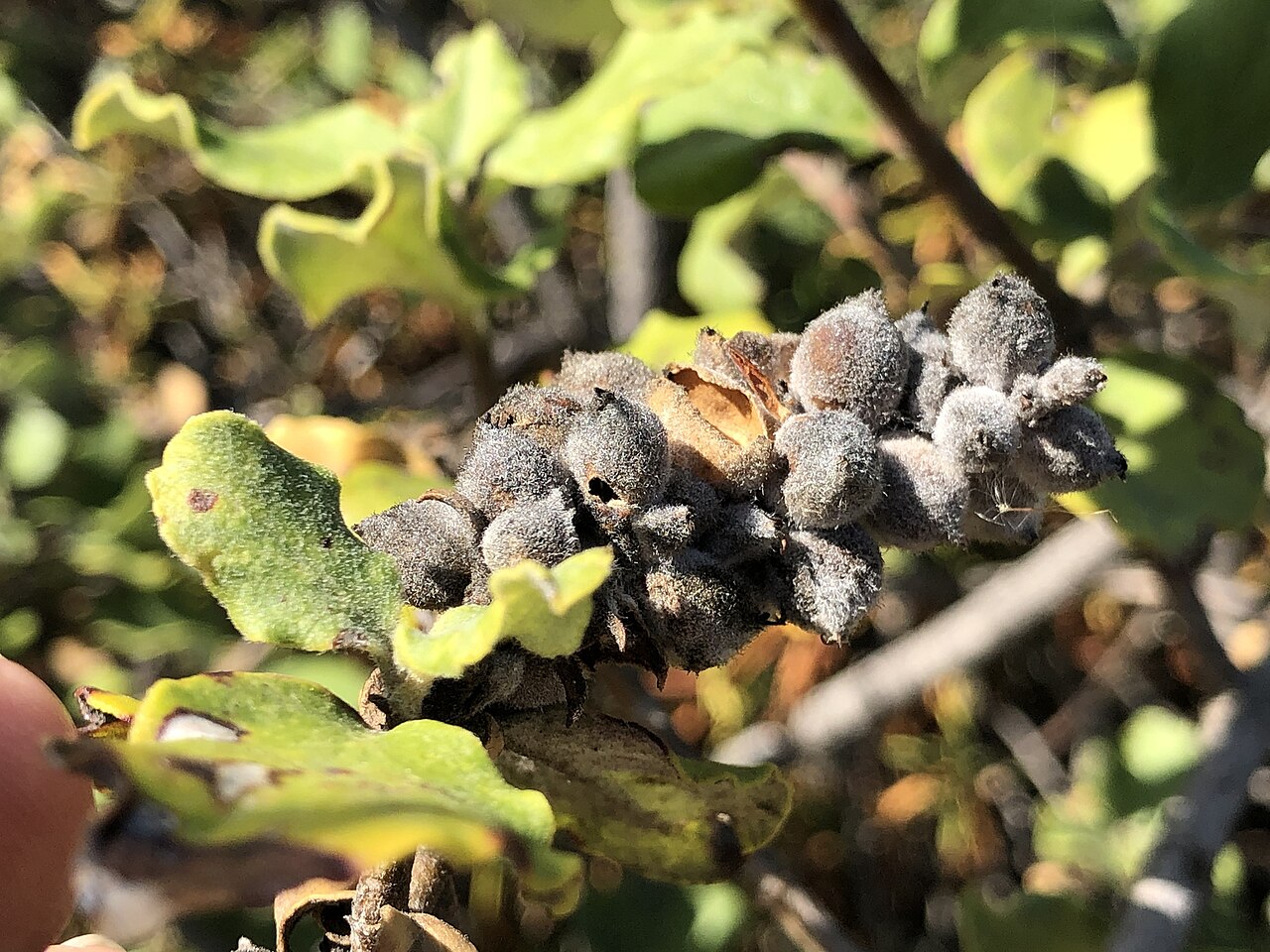
Only female plants set fruit: clusters of round, fuzzy, grayish-purple berries about ⅜ inch across, maturing from late summer into winter and often persisting on the shrub well into the following spring. Each berry contains one or two seeds. The fruit is bitter and generally unpalatable to people, though several bird species rely on it as cold-season forage.
Quick Facts
| Scientific Name | Garrya elliptica |
| Family | Garryaceae (Silktassel) |
| Plant Type | Evergreen Shrub |
| Mature Height | 8–15 ft (occasionally to 20 ft) |
| Mature Spread | 8–15 ft |
| Growth Rate | Moderate |
| Sun Exposure | Full Sun to Part Shade |
| Water Needs | Low to Moderate |
| Soil Type | Well-drained; sandy, loamy or rocky |
| Soil pH | 5.5–7.5 (slightly acidic to neutral) |
| Bloom Time | December – February |
| Flower Color | Silvery-gray to purplish (catkins) |
| Fall Color | None (evergreen) |
| Fruit | Fuzzy gray-purple berries on female plants only |
| Deer Resistant | Yes |
| USDA Hardiness Zones | 8–10 |
Native Range
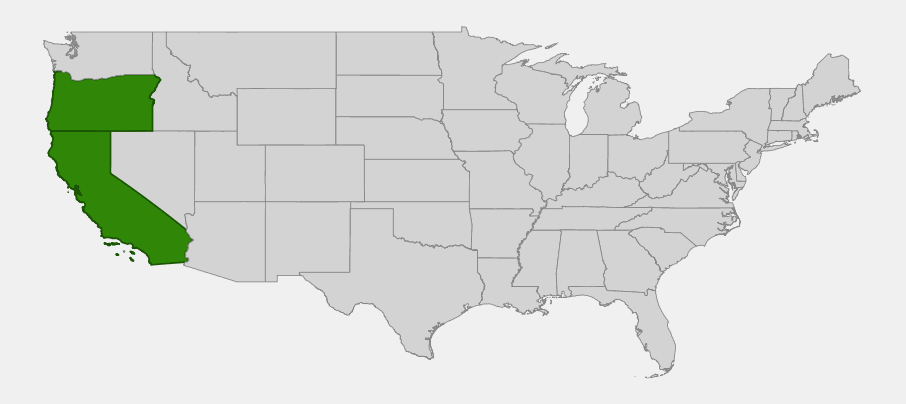
Coast silktassel’s native range hugs the Pacific coast in a narrow band from the southwestern Oregon coast (Coos and Curry counties and nearby Douglas County) south through the California Coast Ranges to around Santa Barbara County, rarely straying more than a few dozen miles inland. It is a true fog-belt specialist, occupying the zone where coastal moisture buffers the long, rainless California summer.
Within that range, it grows in coastal scrub, chaparral, and the open understory or edges of closed-cone pine, Douglas-fir and redwood forest, often on dry bluffs, rocky slopes and road cuts where it gets good drainage and plenty of light. It is frequently found rooting into thin, sandy or gravelly soils that would stress less drought-tolerant shrubs, and it reappears readily after fire by resprouting from the root crown.
Coast silktassel is widely planted as an ornamental well beyond this native range — it is a long-established garden plant in the Pacific Northwest, the UK and elsewhere, prized for winter catkin display. Gardeners outside the coastal fog belt (interior valleys, the Sierra foothills, or places with hard winter freezes below its hardiness range) are growing an introduced ornamental, not restoring native habitat, even though the species itself is native to California and Oregon.
📋 Regional plant lists featuring Coast silktassel: California & Nevada · Western Oregon & Western Washington
Growing & Care Guide
Coast silktassel is one of the easiest native shrubs to grow once it is sited correctly: give it sun, drainage, and room to spread, and it needs almost no further attention.
Light
Full sun produces the densest form and the heaviest catkin display, though plants tolerate part shade, especially inland where afternoon shade reduces heat stress. In deep shade the form becomes open and leggy.
Soil & Water
Good drainage matters more than soil texture — silktassel grows happily in sandy, gravelly or clay-loam soils as long as water doesn’t stand around the roots. Established plants are genuinely drought-tolerant and need no summer irrigation in coastal gardens; a deep soak once or twice a month is plenty in hotter inland sites during the first few summers. Overwatering, especially in heavy soil, is the most common way to lose a silktassel to root rot.
Planting Tips
Plant from containers in fall so roots establish before summer drought. Give plants 8 to 12 feet of space to reach natural size without crowding. Silktassel accepts salt spray and wind, making it a reliable choice for exposed coastal sites where many other shrubs fail. If you want fruit for birds, plant more than one individual, since seedlings and unsexed nursery stock may turn out male or female.
Pruning & Maintenance
Little pruning is needed; shape lightly after the winter catkin display fades to control size, since flower buds form on the previous year’s wood. Avoid hard pruning into old bare wood, which silktassel resprouts from slowly. The shrub is generally pest- and disease-free and handles urban pollution and poor soils without complaint.
Landscape Uses
Coast silktassel earns its keep in several garden roles:
- Winter interest — few native shrubs flower from December through February
- Coastal and wind-exposed sites where salt spray rules out less tolerant shrubs
- Informal screens and hedgerows thanks to its dense, rounded habit
- Dry-garden and firewise plantings once established
- Wildlife gardens — female plants feed birds through the lean winter months
- Erosion control on dry coastal bluffs and slopes
Wildlife & Ecological Value
Coast silktassel fills a seasonal gap that few other native shrubs cover, offering both forage and shelter in the coldest, leanest part of the year.
For Birds
The persistent, fuzzy berries on female plants are eaten by a range of resident and wintering birds, including towhees, thrushes and mockingbirds, at a time of year when fruit is otherwise scarce. The dense, year-round foliage also provides cover and nesting sites for small songbirds.
For Mammals
Various small mammals browse the berries and use the shrub’s dense branching for cover from predators and weather. Because the whole plant contains bitter alkaloid compounds, heavy browsing by deer and livestock is uncommon, which is part of why the species holds up so well in grazed landscapes.
For Pollinators
Silktassel is wind-pollinated rather than insect-pollinated — the catkins release pollen to the breeze rather than relying on bees or butterflies — but the unusually early bloom period still offers some incidental nectar and pollen to the few insects active during mild winter spells along the coast.
Ecosystem Role
As one of relatively few shrubs that flower and fruit through the winter along the California and Oregon coast, silktassel smooths out the seasonal food supply for resident wildlife. Its deep, fire-surviving root crown also helps stabilize the thin coastal soils it favors, and its dense structure provides year-round shelter in plant communities that can otherwise be fairly open in the dry season.
Cultural & Historical Uses
Garrya species, including coast silktassel, contain bitter alkaloids related to those found in some other Garryaceae, and the genus has a history of investigation for medicinal alkaloids, though none of this is a basis for home use — the plant is not an edible or home-medicine species, and ingestion should be avoided.
The genus is named for Nicholas Garry, a Hudson’s Bay Company official who assisted the botanist David Douglas on his collecting expeditions in the Pacific Northwest in the 1820s; Douglas himself collected and described this species. Beyond that botanical history, coast silktassel’s main cultural legacy is horticultural rather than practical: it was introduced into British and American gardens in the 19th century specifically for its unusual winter catkins, and selections such as ‘James Roof’ (bred from Bay Area plants) remain popular today for exceptionally long catkin displays.
Indigenous use of the species specifically is not well documented in the ethnobotanical literature, likely owing to the plant’s bitterness and limited range; its ecological role as winter forage and shelter for wildlife was almost certainly its most significant historical function.
Frequently Asked Questions
Do I need a male and female plant to get the berries?
Yes. Coast silktassel is dioecious, so only female plants produce berries, and they need a male plant somewhere nearby (even a neighbor’s yard can work, since pollen travels on the wind) to set fruit.
Why does my silktassel have long catkins but no berries?
It’s likely a male plant. Male catkins are typically showier and longer than female ones, which is why male selections are often sold specifically for their ornamental display, but they never produce fruit.
Is coast silktassel native where I garden if I live inland or outside California and Oregon?
Probably not. Its true native range is a narrow coastal fog belt from southwestern Oregon to about Santa Barbara County. It is widely and successfully grown well outside that range, including inland valleys and other West Coast states, but there it is functioning as an adaptable ornamental, not a native plant restoring local habitat.
How much water does an established coast silktassel need?
Very little in coastal gardens — established plants often need no supplemental summer water at all. In hotter inland or interior sites, an occasional deep soak during the driest months keeps plants looking their best.
Is coast silktassel deer resistant?
Yes, generally. The bitter alkaloids in the foliage make it unappealing to deer, which is a real asset in gardens where browsing pressure limits shrub choices.

Looking for a nursery that carries Coast Silktassel?
Browse our native plant nursery directory: California · Oregon