Sierra Plum (Prunus subcordata)
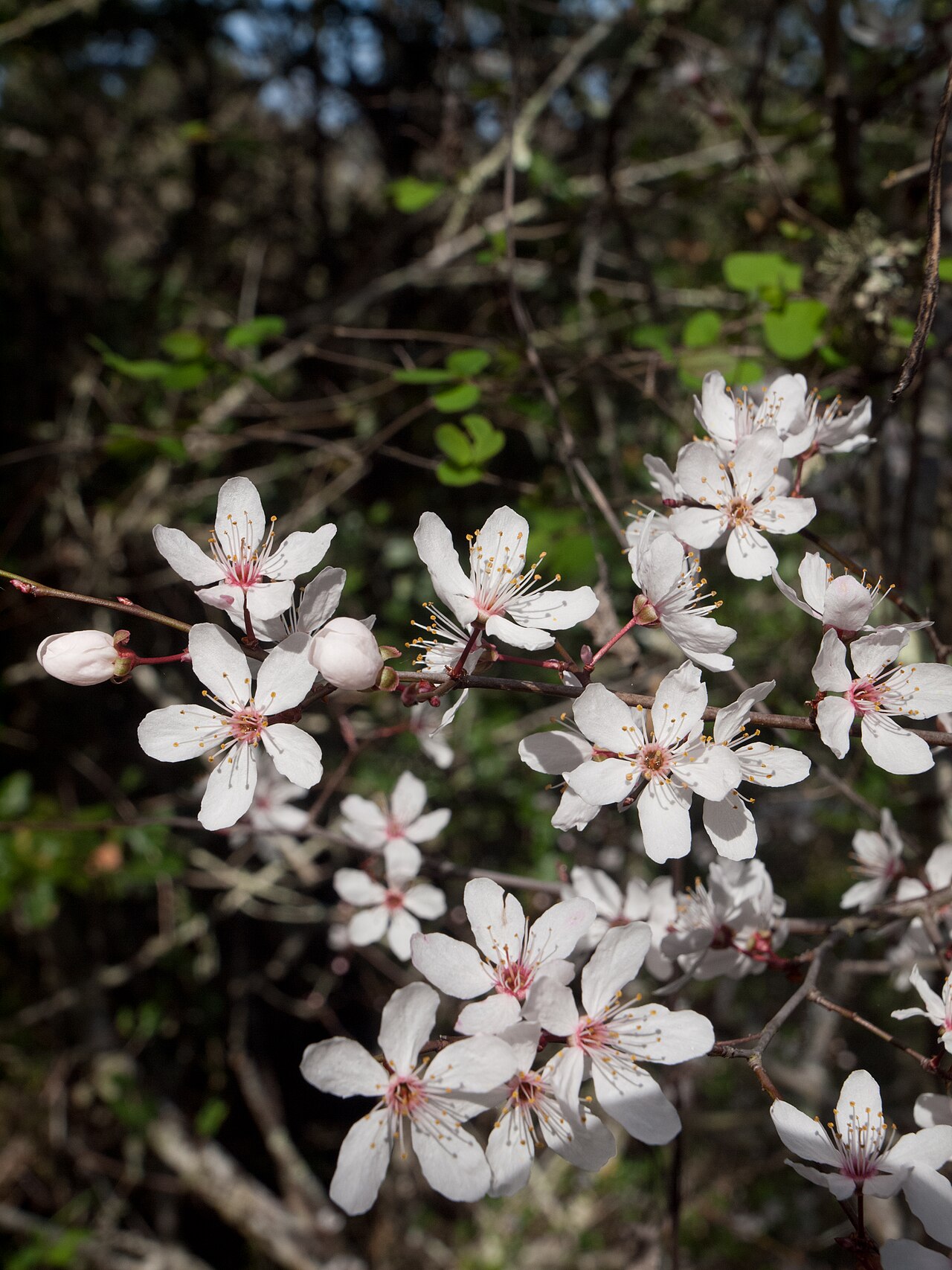
Prunus subcordata, commonly called Sierra plum (and also known as Klamath plum, Oregon plum, or Pacific plum), is a thicket-forming native shrub or small tree found on dry slopes and foothill woodlands of California and Oregon. A member of the Rosaceae (rose) family, it takes its species name from the subtly heart-shaped (subcordate) base of its leaves on some populations. In early spring, before most other chaparral and foothill shrubs have leafed out, Sierra plum erupts into a cloud of small white blossoms that perfume the air and draw in early-season pollinators.
Sierra plum typically grows 3 to 15 feet tall as a dense, suckering, often spiny thicket, though favorable sites — particularly along the coast and in the Coast Range of Oregon — can produce single-trunked small trees reaching 20 feet. Its glossy, finely toothed leaves, tart red-to-purple fruit, and tangled, thorny branching make it both a valuable wildlife thicket and a useful barrier or hedgerow plant for native landscaping. The small plums, intensely tart when fresh, have long been gathered and processed into jams and dried fruit leather by Indigenous peoples of California and the Klamath Basin.
Because it tolerates poor, rocky soils and summer drought once established, Sierra plum is an excellent low-water choice for foothill and chaparral gardens, hedgerows, and wildlife plantings throughout its native range. It is deer-resistant thanks to its thorny structure, fixes little nitrogen but builds dense cover quickly by root suckering, and supports an outsized share of pollinators, birds, and small mammals relative to its modest size.
Identification
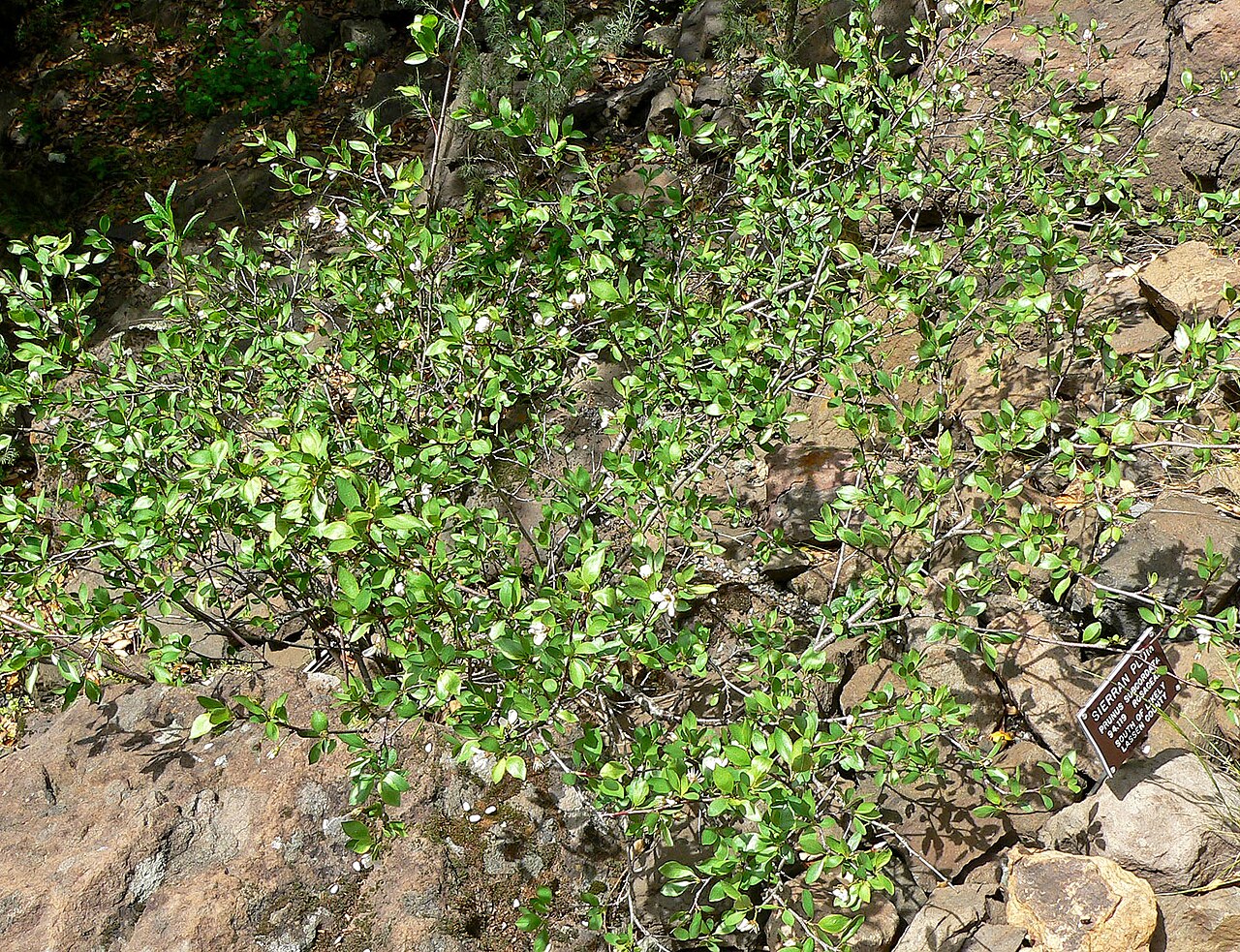
Sierra plum is a deciduous shrub or small tree with a dense, often thicket-forming habit, spreading by root suckers to form colonies 3 to 15 feet tall (occasionally to 20 feet as a small tree in coastal Oregon populations). The crown is rounded and twiggy, frequently armed with short, rigid, thorn-tipped spur branches that make mature thickets nearly impenetrable — valuable for nesting birds seeking protection from predators.
Bark & Stems
Young twigs are smooth and reddish-brown, aging to gray-brown bark with shallow fissures on older stems. Many lateral branchlets terminate in a stiff, sharp spur-thorn, a trait shared with other wild plums that discourages browsing and provides structure for birds to shelter within.
Leaves
Leaves are simple, alternate, and deciduous, ½ to 2 inches long, oval to nearly round with finely serrated (toothed) margins. The leaf base is often subtly heart-shaped (subcordate) — the feature that gives the species its scientific name — though this is more pronounced in some populations than others. Foliage is glossy dark green above, paler beneath, and emerges after or alongside the flowers in spring. Fall color is typically a modest yellow before leaf drop.
Flowers
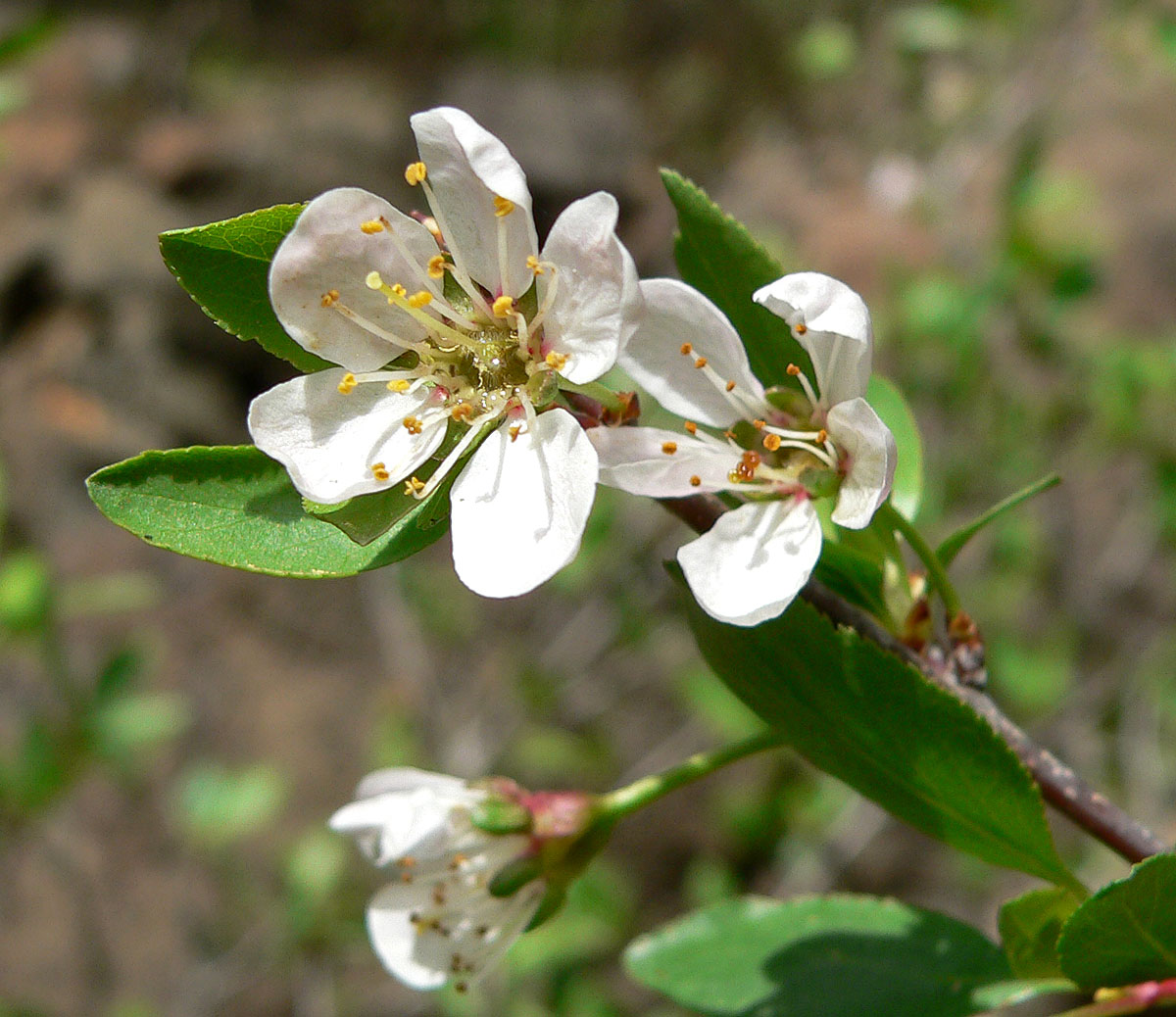
Flowers appear in small clusters of 2 to 5 directly on bare or barely-leafing wood in early to mid-spring (March to May, depending on elevation and latitude), ahead of most associated chaparral shrubs. Each flower is roughly ½ to ¾ inch across with five white (occasionally pink-blushed) petals surrounding a cluster of yellow-tipped stamens. The blossoms are mildly fragrant and are among the first nectar sources available to native bees emerging in late winter and early spring.
Fruit & Seeds
The fruit is a small drupe (plum), ½ to 1 inch in diameter, ripening from green to red, maroon, or dark purple from midsummer into early fall depending on elevation. The thin skin surrounds tart, yellow to red flesh and a single hard central stone. Fruit is edible and historically important as a food source, though — as with all Prunus species — the seed kernel, bark, and wilted foliage contain cyanogenic compounds and should never be eaten; only the ripe flesh is used.
Quick Facts
| Scientific Name | Prunus subcordata |
| Family | Rosaceae (Rose) |
| Plant Type | Deciduous Shrub / Small Tree |
| Mature Height | 3–15 ft (occasionally to 20 ft) |
| Mature Spread | 6–15 ft (spreads by root suckers) |
| Growth Rate | Moderate |
| Sun Exposure | Full Sun to Part Shade |
| Water Needs | Low to Moderate; drought tolerant once established |
| Soil Type | Rocky, gravelly, or loamy; tolerates poor soils |
| Soil pH | 6.0–8.0 (neutral to mildly alkaline) |
| Bloom Time | March – May |
| Flower Color | White, occasionally pink-blushed |
| Fall Color | Yellow |
| Fruit | Red to dark purple plums, ½–1 in, edible flesh (ripe only) |
| Deer Resistant | Yes (thorny structure deters browsing) |
| USDA Hardiness Zones | 6–9 |
Native Range
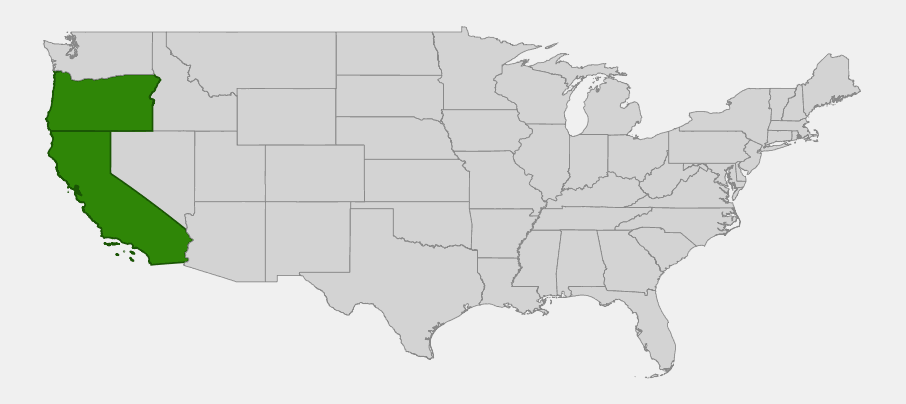
Sierra plum is native to Northern California and southern-to-central Oregon. In California, it occurs widely through the Sierra Nevada foothills, the Klamath Mountains, and the North Coast Ranges, typically between 1,000 and 6,000 feet elevation. In Oregon it is most common in the Klamath and Lake County region and the southern Coast Range, extending north along the coast; the coastal form, sometimes called Klamath plum, tends to grow larger and more tree-like than the drier-site Sierra populations.
Across this range, Sierra plum grows in foothill woodland, chaparral, and the margins of mixed-conifer forest, usually on dry, well-drained, often rocky or gravelly slopes, in canyons, and along the edges of meadows and seasonal drainages. It is frequently found growing with California black oak, ponderosa pine, manzanita, and various species of Ceanothus, forming dense thickets that stand out from the surrounding vegetation when in bloom.
Sierra plum is not native to Nevada; California PLANTS and BONAP county records both place it only in California and Oregon, so gardeners east of the Sierra crest or in the Great Basin should look to other native plums. Within its range it remains widespread and is not considered rare, though isolated thickets are sometimes lost to development or fire suppression-driven conifer encroachment.
📋 Regional plant lists featuring Sierra plum: California & Nevada · Western Oregon & Western Washington
Growing & Care Guide
Sierra plum is an undemanding, tough native that establishes readily in foothill and chaparral gardens, requiring little more than good drainage and a sunny spot to form a dense, wildlife-rich thicket within a few years.
Light
Plant in full sun to light part shade. Full sun produces the densest flowering and fruiting; in part shade, growth is more open and fruit set is reduced, though the shrub still performs well as part of a woodland-edge planting.
Soil & Water
Sierra plum is adapted to lean, rocky, or gravelly soils and does not need rich garden loam — in fact, overly fertile, constantly moist soil can encourage disease and floppy growth. Give it a thorough soak at planting and during the first one to two summers; once established, it needs only occasional deep watering during extended summer drought and can largely rely on winter rainfall in its native range. Good drainage is essential, as is true of most native plums.
Planting Tips
Install container-grown plants in fall or early spring to take advantage of winter rains for root establishment. Because it suckers and spreads, give Sierra plum room — 8 to 12 feet — or plan to manage the colony edge if space is limited. It makes an effective informal hedgerow when planted in a row 4 to 6 feet apart and allowed to merge into a continuous thicket.
Pruning & Maintenance
Little pruning is required. Remove dead or damaged wood in late winter, and thin out excess suckers at the colony edge if a more contained form is desired. Hard pruning is tolerated but not necessary; the shrub naturally renews itself from the base. Watch for the same pests that affect orchard plums — aphids and tent caterpillars occasionally appear but rarely cause lasting damage to an established planting.
Propagation
Sierra plum is most easily propagated by digging and transplanting rooted suckers from the edge of an existing colony, or by collecting ripe fruit, removing the pulp, and cold-stratifying the cleaned seed over winter for spring germination. Softwood cuttings taken in early summer can also root with rooting hormone and bottom heat, though success rates vary.
Landscape Uses
- Wildlife hedgerows and informal thorny screens along property edges
- Pollinator gardens — among the earliest spring bloomers for native bees
- Foothill and chaparral restoration plantings
- Erosion control on dry slopes, thanks to its suckering root system
- Low-water landscaping once established
- Bird habitat plantings — dense thorny cover for nesting and roosting
Wildlife & Ecological Value
Despite its modest size, Sierra plum punches well above its weight as a wildlife resource throughout the foothill and chaparral communities where it grows.
For Pollinators
Blooming before most other chaparral shrubs, Sierra plum is an important early-season nectar and pollen source for native bees emerging from winter dormancy, as well as honeybees and a variety of flies and small beetles. Its brief but showy bloom window makes it disproportionately valuable at a time when few other flowering plants are available.
For Birds
The dense, thorny thickets provide excellent cover for nesting songbirds such as California towhees, sparrows, and wrentits, which find protection from predators within the tangled branches. Ripe fruit is eaten by robins, thrashers, and other fruit-eating birds in mid- to late summer.
For Mammals
Black bears, coyotes, foxes, and other mammals readily eat the ripe fruit, helping disperse the seeds across the landscape. Deer and other browsers largely avoid the thorny foliage, which is part of why Sierra plum is considered a reliably deer-resistant landscape shrub.
Ecosystem Role
As an early-blooming, thicket-forming shrub, Sierra plum adds structural complexity to foothill woodland and chaparral, offering nesting cover scarce in more open vegetation types. Its suckering habit helps stabilize loose soils on slopes, and its fruit and foliage cycle contributes food resources that bridge the gap between winter scarcity and the broader bloom of late-spring and summer chaparral plants.
Cultural & Historical Uses
Sierra plum fruit has long been gathered by Indigenous peoples throughout its range, including groups in the Sierra Nevada foothills, the Klamath Basin, and the North Coast Ranges of California. The tart fruit was traditionally eaten fresh, dried into fruit leather, or cooked down, and the pits themselves were sometimes cracked and processed for the kernel after careful preparation to remove toxic compounds, a labor-intensive practice recorded among several California tribes.
Early settlers and foothill ranchers in California and southern Oregon also made use of wild plum thickets, gathering fruit for jams, jellies, and preserves well into the twentieth century, and the species was occasionally transplanted closer to homesteads for easier harvest. Because it hybridizes readily with other native and cultivated plums, Sierra plum also played a role in early regional plum breeding efforts in the Pacific Coast states.
Today, Sierra plum is valued less for its fruit harvest and more for its role in habitat restoration and low-water native landscaping, though foragers familiar with its range still seek out wild thickets each summer. The ripe fruit flesh is edible and used for preserves, but as with all wild Prunus species, the seed kernels, bark, and leaves should never be eaten raw, as they contain cyanogenic compounds.
Frequently Asked Questions
Is Sierra plum fruit safe to eat?
The ripe flesh is edible and has long been used for jams and dried fruit, though it is quite tart. As with all wild plums, never eat the seed kernels, bark, or wilted leaves, which contain cyanogenic compounds that are toxic in quantity.
Is Sierra plum native to Nevada?
No. Despite sometimes appearing on regional California-and-Nevada plant lists, county-level records confirm Sierra plum is native only to California and Oregon, not Nevada.
How big does Sierra plum get?
Most plants form thickets 3 to 15 feet tall. In favorable coastal Oregon sites, individual stems can develop into small single-trunked trees up to about 20 feet.
Does Sierra plum need regular watering once established?
No. It is adapted to dry, rocky foothill slopes and tolerates considerable summer drought once its roots are established, needing only occasional deep watering in extended dry spells.
Is Sierra plum deer resistant?
Generally yes — its thorny spur branches discourage browsing, making it a reliable choice in areas with heavy deer pressure, though young unestablished plants may still need protection.

Looking for a nursery that carries Sierra plum?
Browse our native plant nursery directory: California · Oregon