Arrowleaf Buckwheat (Eriogonum compositum)
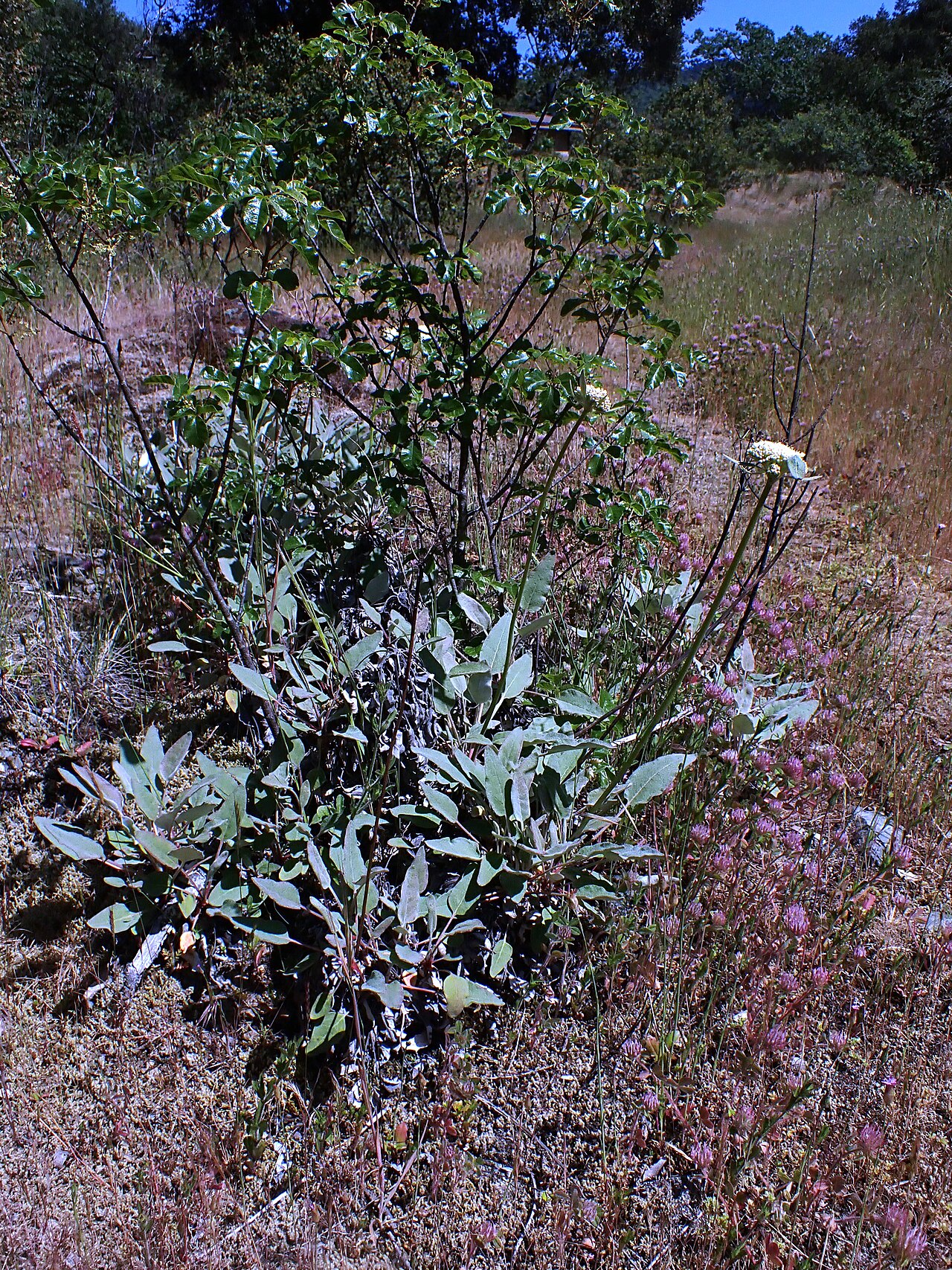
Eriogonum compositum, known as arrowleaf buckwheat, is a striking perennial wildflower native to open, rocky ground across the Pacific Northwest, from northern California through Oregon and Washington into Idaho. A member of the Polygonaceae (buckwheat family), it takes its common name from its distinctive basal leaves, which are broadly arrow- or heart-shaped with wavy, somewhat ruffled margins and a dense, woolly-white underside.
The plant forms a low rosette of these handsome leaves close to the ground, from which thick, leafless flowering stalks rise a foot or more, each topped with a large, rounded cluster of small cream-white to pale yellow flowers. In full bloom during late spring and early summer, a healthy colony of arrowleaf buckwheat can carpet a rocky slope or open meadow with pale, frothy flower heads held well above the foliage.
Arrowleaf buckwheat is both a garden standout and an ecological workhorse, feeding an unusually wide range of native butterflies, bees, and other pollinators through its bloom period. For gardeners within its native range, it offers reliable, drought-tolerant structure and season-long interest with minimal care.
Identification
Arrowleaf buckwheat is a herbaceous perennial growing from a stout, woody base, typically 8 to 20 inches (20–50 cm) tall in bloom, with basal leaves forming a low rosette and flowering stalks rising well above them.
Leaves
The basal leaves are the plant’s most recognizable feature: broadly arrow-shaped to heart-shaped (sagittate to cordate), 2 to 6 inches (5–15 cm) long, with somewhat wavy or crinkled margins. The upper surface is gray-green and often sparsely hairy, while the underside is covered in a dense, white, felt-like wool — a sharp contrast that is visible when the wind lifts the leaves or when they are viewed from beneath.
Flowers
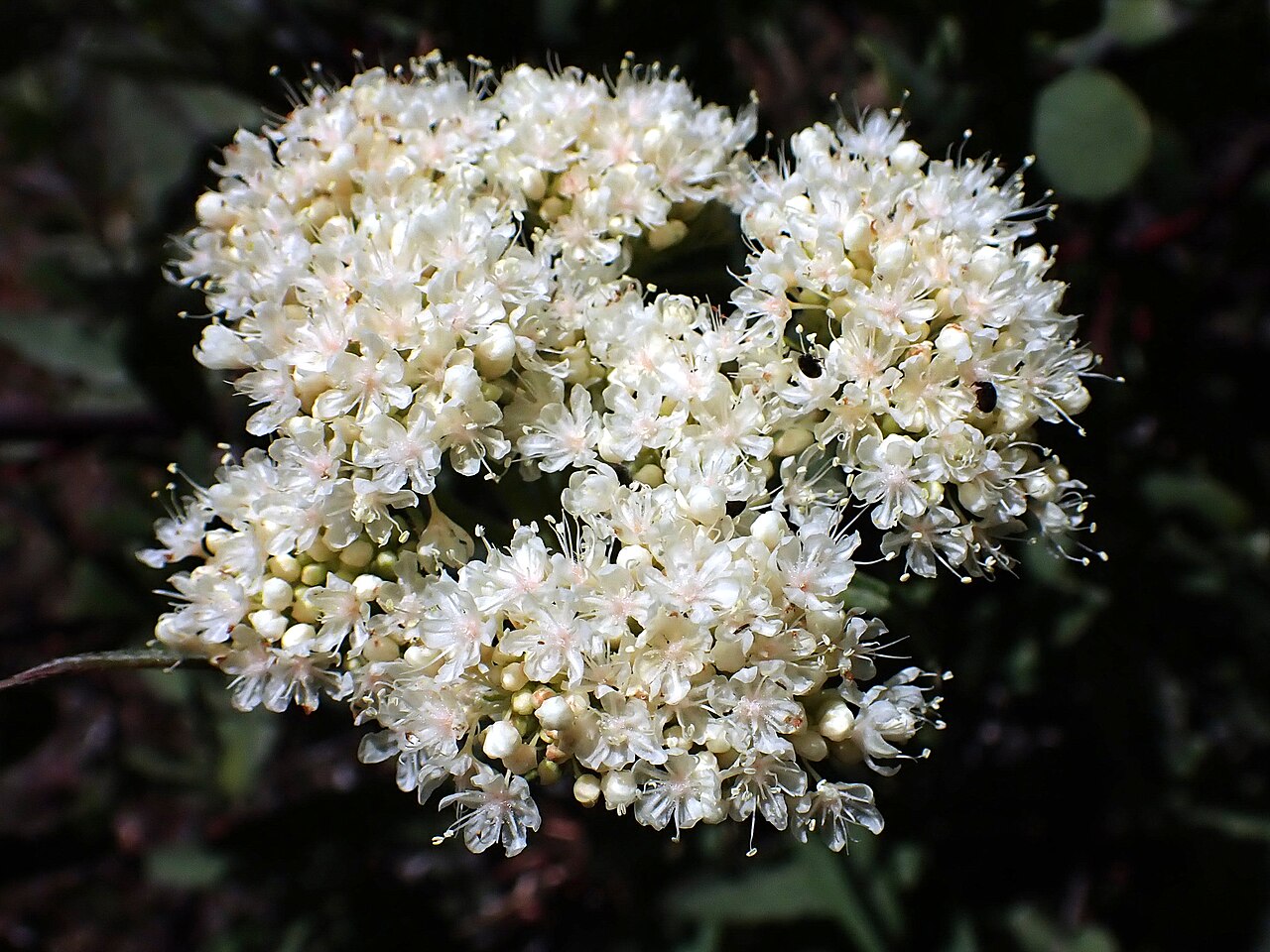
Thick, leafless flowering stalks rise directly from the basal rosette, branching near the top into one to several large, rounded flower clusters (compound umbels) that give the species its scientific name compositum. Each cluster, 1 to 3 inches across, is made up of many tiny individual flowers in shades from cream-white to pale yellow, blooming from late spring into midsummer depending on elevation.
Fruit & Seeds
Flowers mature into small, three-angled, dry achenes. The flowering stalks and spent flower heads often dry to a warm tan color and persist into late summer, adding textural interest after the main bloom has finished.
Quick Facts
| Scientific Name | Eriogonum compositum |
| Family | Polygonaceae (Buckwheat) |
| Plant Type | Herbaceous Perennial |
| Mature Height | 8–20 in (20–50 cm) |
| Mature Spread | 10–18 in (25–45 cm) |
| Growth Rate | Moderate |
| Sun Exposure | Full Sun |
| Water Needs | Low |
| Soil Type | Rocky, gravelly or well-drained volcanic soils |
| Soil pH | 6.0–7.5 (slightly acidic to neutral) |
| Bloom Time | May – July |
| Flower Color | Cream-white to pale yellow |
| Fall Color | Dried flower stalks turn warm tan, persisting into late summer |
| Fruit | Tiny three-angled dry achenes |
| Deer Resistant | Yes |
| USDA Hardiness Zones | 5–8 |
Native Range
Arrowleaf buckwheat is native to the interior and coastal mountains of the Pacific Northwest, from the far northern mountains of California through Oregon and Washington and east into Idaho. Within this range it favors open, rocky ground: basalt scablands, talus slopes, dry ridgelines, and well-drained volcanic or gravelly soils, often at mid to fairly high elevations in the Cascades, Columbia Basin, and Rocky Mountain foothills.
It is especially characteristic of the Columbia Plateau’s basalt scablands and the drier east-side forests and shrub-steppe of Washington, Oregon, and Idaho, where it often grows alongside other drought-adapted wildflowers and bunchgrasses on thin, rocky soils that exclude more competitive vegetation.
Arrowleaf buckwheat remains common and widespread through most of its range, frequently found along rocky trails and ridgelines in the Cascades and Rocky Mountain foothills, where its showy cream-white flower heads are a familiar sight in early summer.
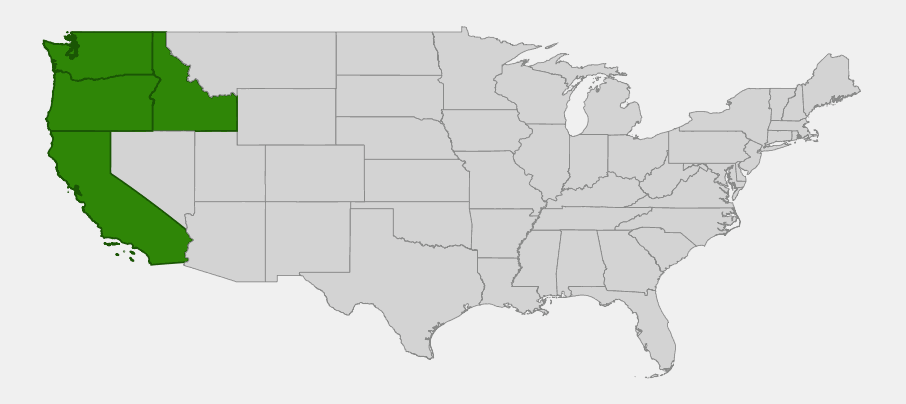
📋 Regional plant lists featuring arrowleaf buckwheat: California & Nevada · Western Oregon & Western Washington · Idaho, Eastern Oregon & Eastern Washington
Growing & Care Guide
Arrowleaf buckwheat is an easy, long-lived native for sunny, well-drained gardens, especially valuable in rocky, low-water landscapes that mimic its native scabland and foothill habitat.
Light
Full sun is essential for compact growth, strong flowering, and the most attractive foliage color and form. In shadier conditions, plants become sparse and bloom poorly.
Soil & Water
Plant in rocky, gravelly, or well-drained volcanic soil; arrowleaf buckwheat is intolerant of heavy clay or poorly drained ground, where it is prone to root rot. Once established, it needs little supplemental water and performs best with natural seasonal rainfall, though an occasional deep soak during extended summer drought can help maintain foliage quality.
Planting Tips
Set out young plants in fall or early spring to allow roots to establish before summer heat. A rocky slope, scree bed, or gravel garden mimicking its native basalt and talus habitat suits it well. Space plants 12 to 18 inches apart to give the rosettes room to fill out.
Pruning & Maintenance
Very little maintenance is required. Spent flowering stalks can be left standing through summer for seed-eating birds and visual interest, then cut back close to the basal rosette in late fall or winter. Avoid rich soil amendments or heavy mulch against the crown, both of which can encourage rot.
Propagation
Arrowleaf buckwheat is most commonly grown from seed sown in fall, which benefits from natural winter cold and moisture before spring germination. Division of mature, multi-crowned plants is possible but less commonly practiced.
Landscape Uses
Arrowleaf buckwheat’s bold foliage and showy flower heads suit several dry-garden roles:
- Rock gardens and scree beds replicating scabland and talus habitat
- Pollinator gardens, valued for its wide range of insect visitors
- Dry slope and foothill plantings paired with bunchgrasses and sagebrush
- Xeriscape and low-water borders for structural contrast
- Native plant restoration on rocky, disturbed, or eroding sites
Wildlife & Ecological Value
Arrowleaf buckwheat is one of the more valuable native wildflowers for pollinators in the dry interior Pacific Northwest, thanks to its abundant, long-lasting flower clusters.
For Pollinators
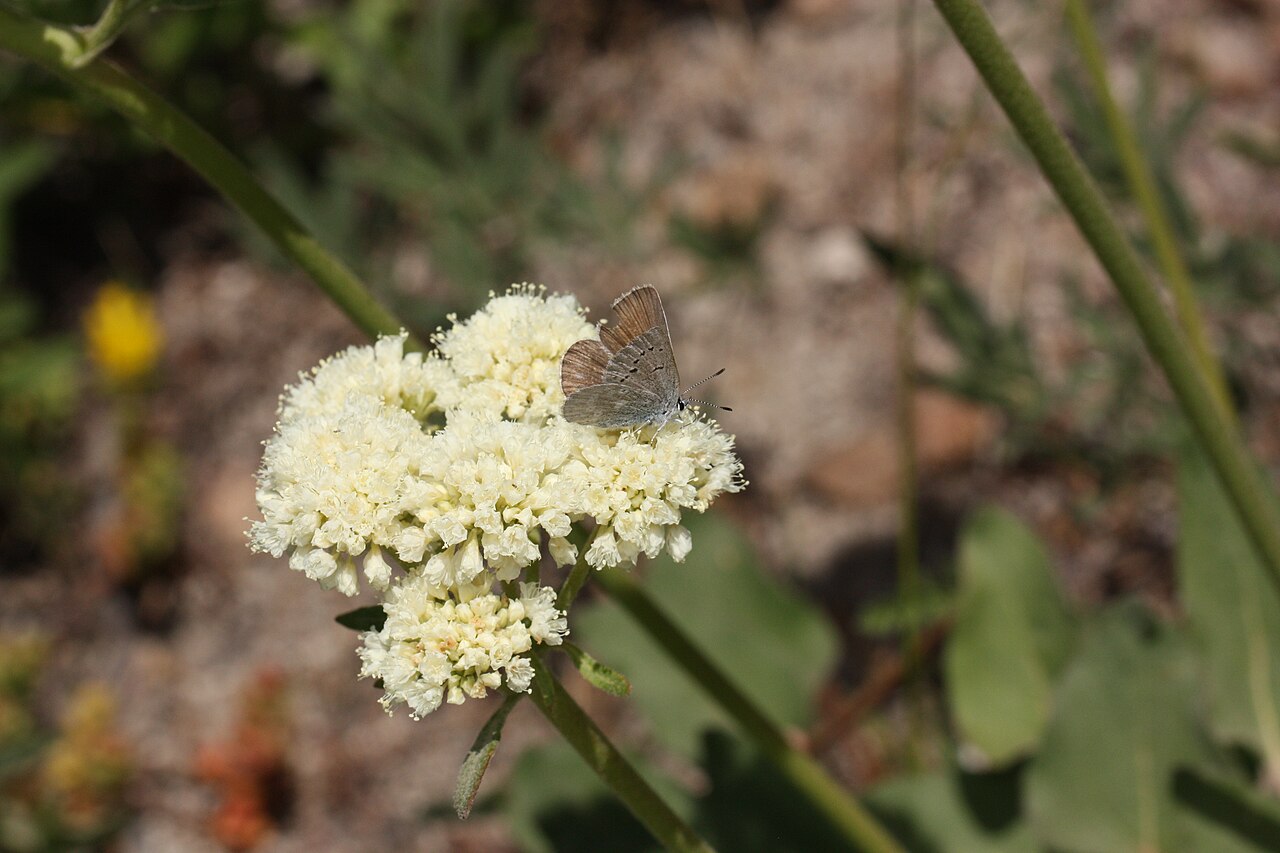
The large, cream-white flower heads attract an especially wide range of insects during their bloom period, including native bees, honeybees, wasps, flies, and numerous butterflies and their relatives. Blues and hairstreaks in the family Lycaenidae are frequent visitors, drawn to the abundant nectar offered in a single, easily accessible cluster.
Butterflies
Several native blue butterflies, including Boisduval’s blue, regularly nectar on arrowleaf buckwheat, and related native buckwheats more broadly serve as larval host plants for various blue and hairstreak species across the Pacific Northwest’s dry interior habitats.
Birds
The dried seed heads provide forage for sparrows and other small seed-eating birds through late summer and fall, particularly valuable on open, rocky sites with otherwise limited food sources.
Ecosystem Role
As a long-lived perennial adapted to thin, rocky soils, arrowleaf buckwheat helps stabilize scabland and talus slopes and contributes structure and diversity to dry shrub-steppe and open forest plant communities, supporting a disproportionately large number of pollinator species relative to its modest footprint.
Cultural & Historical Uses
Indigenous peoples of the interior Pacific Northwest, including Plateau tribes of the Columbia Basin region, used various native buckwheats, including arrowleaf buckwheat, in traditional medicine, most commonly preparing the dried leaves or roots as a wash or tea for minor ailments. Documented, species-specific historical uses are less extensive than for some more widely harvested regional plants.
Arrowleaf buckwheat’s modern significance is largely horticultural and ecological. As native plant gardening and pollinator-friendly landscaping have grown in popularity across the interior Pacific Northwest, it has become a valued choice for rock gardens and dry, low-water plantings that highlight the region’s distinctive basalt scabland flora.
Frequently Asked Questions
How is arrowleaf buckwheat different from Wyeth buckwheat?
Arrowleaf buckwheat has distinctive arrow- or heart-shaped leaves with woolly white undersides, while Wyeth buckwheat (Eriogonum heracleoides) has narrower, more linear leaves. Both are common native buckwheats of the dry interior Pacific Northwest and are often found growing together.
How much water does arrowleaf buckwheat need?
Very little once established. It is adapted to dry, rocky soils with seasonal moisture mainly from winter and spring precipitation, and consistent summer watering, especially in heavy soil, risks root rot rather than helping the plant.
Why are the undersides of the leaves white and woolly?
The dense white hairs on the leaf undersides help reduce water loss and reflect intense sun, an adaptation suited to the open, exposed, high-elevation rocky habitats where arrowleaf buckwheat typically grows.
Is arrowleaf buckwheat good for pollinators?
Yes, it is one of the more valuable native nectar sources in its range, attracting a wide variety of bees, wasps, flies, and butterflies, including several native blue butterflies, during its late spring to midsummer bloom period.
Can arrowleaf buckwheat grow at low elevations near the coast?
It is best suited to the rocky, well-drained interior and mid-elevation sites that match its native habitat. In coastal gardens with heavier, moister soils, drainage must be improved significantly, or a different native buckwheat better adapted to coastal conditions may be a better fit.

Looking for a nursery that carries arrowleaf buckwheat?
Browse our native plant nursery directory: California · Oregon · Washington · Idaho