Naked Buckwheat (Eriogonum nudum)
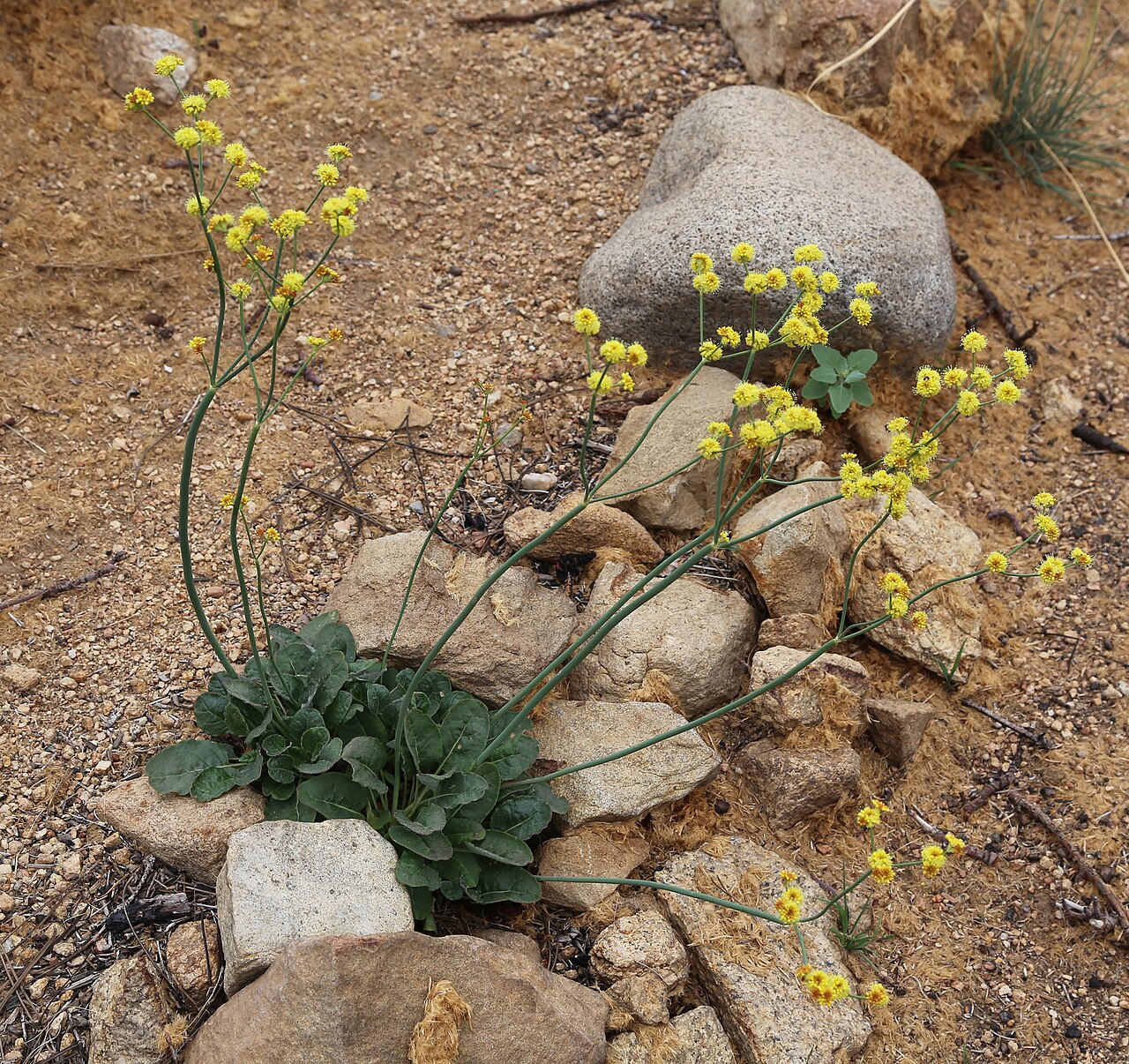
Eriogonum nudum, commonly called naked buckwheat, is a widespread and variable perennial wildflower native to dry, open ground across California, Oregon, Washington, and Nevada. A member of the Polygonaceae (buckwheat family), it takes its common name from its distinctive flowering stems, which rise bare and nearly leafless well above a low rosette of basal leaves — giving each flower cluster the look of floating unsupported in the air.
Naked buckwheat is one of the most variable native wildflowers in the West, with numerous recognized varieties adapted to habitats ranging from coastal sand dunes to high Sierra Nevada granite outcrops above 10,000 feet. Despite this variation, the basic form is consistent: a tidy mound of broad, often woolly-backed leaves at ground level, and slender, branching stems that lift small, round flower clusters of white, cream, yellow, or pink well above the foliage from early summer into fall.
Easy to grow and exceptionally drought-tolerant, naked buckwheat is a favorite of native plant and pollinator gardeners throughout its range, prized for its long bloom season, airy form, and ability to thrive in lean, rocky soil where little irrigation is available.
Identification
Naked buckwheat is a herbaceous to semi-woody perennial, typically 8 to 24 inches (20–60 cm) tall at bloom, though some high-elevation varieties stay under a foot. It grows from a basal rosette with flowering stems emerging directly from the rosette’s center, rather than branching off leafy stems along their length.
Leaves
The leaves are gathered almost entirely in a basal rosette, oval to oblong, 1 to 4 inches (2.5–10 cm) long, on distinct petioles. Leaf surfaces vary by variety from green and nearly hairless to densely woolly-white beneath, and sometimes on both surfaces — an adaptation that helps some populations cope with intense sun and drought at higher elevations and drier sites.
Flowers
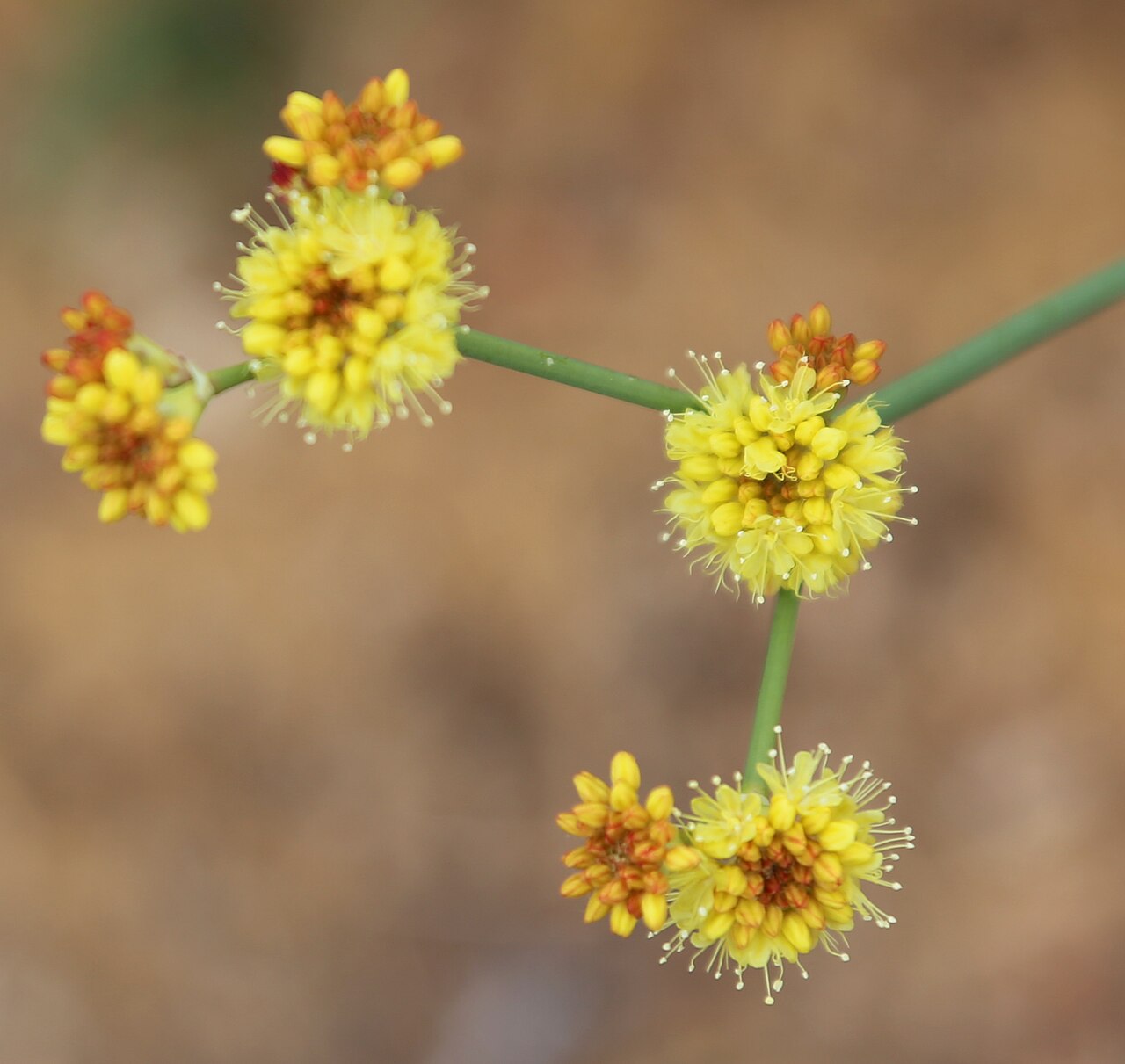
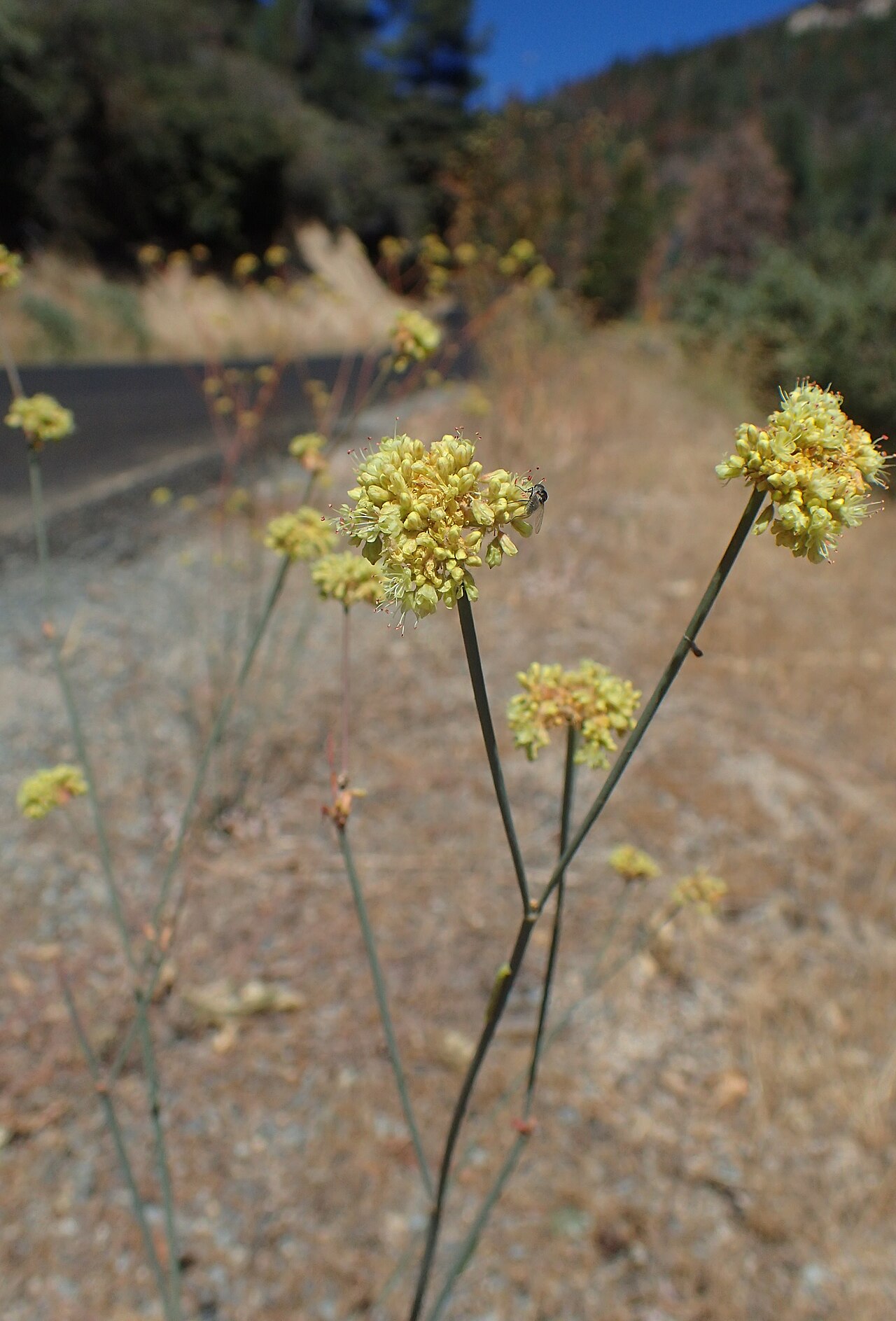
The signature feature is the flowering stem: wiry, nearly or entirely without leaves, rising well above the basal foliage and branching into a loose, open framework of forking stalks. Each branch tip bears a small, rounded flower cluster (involucre) that can be white, cream, pale yellow, or pink, often aging to deeper rose or rust as the flowers mature. The open, airy branching pattern — with flower heads seeming to hover unsupported above bare stems — is what gives the species both its scientific epithet (nudum, “naked”) and its common name.
Fruit & Seeds
Flowers mature into tiny, three-angled, dry achenes. The wiry flowering stems and dried flower clusters often persist through fall and into winter, turning rust-brown and remaining a feature of the dormant-season landscape.
Quick Facts
| Scientific Name | Eriogonum nudum |
| Family | Polygonaceae (Buckwheat) |
| Plant Type | Herbaceous to Semi-Woody Perennial |
| Mature Height | 8–24 in (20–60 cm) |
| Mature Spread | 8–18 in (20–45 cm) |
| Growth Rate | Moderate |
| Sun Exposure | Full Sun |
| Water Needs | Low |
| Soil Type | Rocky, sandy or gravelly; well-drained |
| Soil pH | 6.0–7.5 (slightly acidic to neutral) |
| Bloom Time | June – October |
| Flower Color | White, cream, pale yellow or pink, aging to rust |
| Fall Color | Dried flower heads turn rust-brown, persisting into winter |
| Fruit | Tiny three-angled dry achenes |
| Deer Resistant | Yes |
| USDA Hardiness Zones | 5–9 |
Native Range
Naked buckwheat is native to California, Oregon, Washington, and Nevada, where it occupies a very broad range of dry, open habitats: coastal bluffs and sandy flats, interior foothill grasslands, chaparral openings, pine and fir forest clearings, and rocky subalpine and alpine slopes in the Sierra Nevada and Cascades. Few native California-region wildflowers span such a wide elevation gradient, from near sea level to above 10,000 feet.
Because of this breadth, naked buckwheat has split into many regional varieties adapted to local conditions — coastal forms tend to be more compact with woollier leaves, while high-elevation Sierra forms are often shorter and more tightly tufted. Regardless of variety, the species favors open, sunny ground with excellent drainage and little competition from taller vegetation, including disturbed sites such as road cuts and old burn areas.
Naked buckwheat remains common and secure through most of its wide range, and it is frequently one of the first wildflowers to recolonize open, disturbed ground after fire or grading, making it ecologically valuable well beyond its garden appeal.
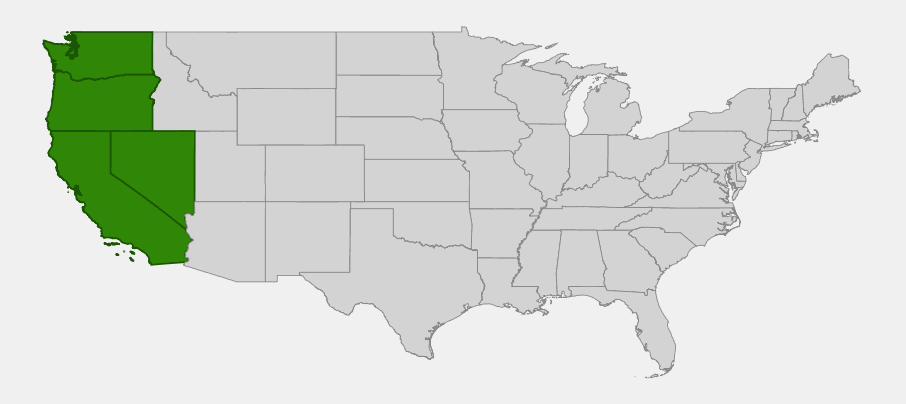
📋 Regional plant lists featuring naked buckwheat: California & Nevada · Western Oregon & Western Washington · Idaho, Eastern Oregon & Eastern Washington
Growing & Care Guide
Naked buckwheat is a low-maintenance, long-blooming native for sunny, dry gardens throughout its range, equally at home in a coastal rock garden or an interior foothill meadow planting.
Light
Full sun is essential for compact growth and a full bloom display. In shadier sites, plants stretch, flop, and bloom poorly, so give naked buckwheat the sunniest, most open spot available.
Soil & Water
Plant in rocky, sandy, or gravelly soil with sharp drainage. Naked buckwheat thrives in lean, mineral soils and struggles in rich, moisture-retentive garden beds. Once established, it needs little to no supplemental water and is best left on natural rainfall except during extended summer heat, when an occasional deep soak can extend the bloom season.
Planting Tips
Set out young plants in fall or early spring to allow roots to establish before summer dryness arrives. Give each plant 12 to 18 inches of open space, since naked buckwheat performs poorly when crowded by taller, more aggressive neighbors. A sunny slope, rock garden, or gravel bed mimicking its native open habitat works especially well.
Pruning & Maintenance
Minimal care is needed. Many gardeners leave the dried flowering stems standing through fall and winter for seed-eating birds and textural interest, cutting them back close to the basal rosette in late winter before new growth begins. Avoid overwatering or heavy mulching close to the crown, which can encourage rot.
Propagation
Naked buckwheat grows readily from seed sown in fall, which benefits from exposure to natural winter cold and moisture before germinating in spring. Division of the basal rosette is possible on multi-crowned plants but is less commonly practiced than growing fresh plants from seed.
Landscape Uses
Naked buckwheat’s airy form and long bloom season suit many dry-garden settings:
- Rock gardens and gravel beds paired with other low-water natives
- Pollinator and wildflower meadows for its long summer-to-fall bloom
- Foothill and dryland restoration plantings on disturbed or burned sites
- Slope and erosion-control plantings in full sun
- Xeriscape and low-water borders mixed with sulfur buckwheat or manzanita
- High-elevation rock gardens, using locally adapted mountain varieties
Wildlife & Ecological Value
Naked buckwheat’s long bloom season and wide elevation range make it one of the more ecologically versatile native wildflowers across California, Oregon, Washington, and Nevada.
For Pollinators
The flower clusters bloom from early summer well into fall, bridging a gap when many other wildflowers have finished for the year. Native bees, honeybees, wasps, flies, and a wide range of butterflies and moths visit the blossoms steadily through the season, making it a valuable late-season nectar source in dry habitats.
Butterflies
Like many native buckwheats, naked buckwheat serves as a larval host plant for several native blue and hairstreak butterflies in the family Lycaenidae, whose caterpillars feed on buckwheat foliage and flowers at various points across its wide range.
Birds
The persistent dried seed heads provide forage for sparrows and other small seed-eating birds through fall and winter, at a time when open, dry sites can otherwise offer little food.
Ecosystem Role
As an early colonizer of disturbed, open, or recently burned ground, naked buckwheat helps stabilize bare soil and provides an early nectar and seed resource while slower-growing shrubs and trees reestablish. Its presence across such a wide range of elevations and habitats makes it a connective thread for pollinators moving between lowland and mountain plant communities through the growing season.
Cultural & Historical Uses
Various Indigenous peoples across California, Oregon, and the Great Basin used native buckwheats, including forms of Eriogonum nudum, in traditional medicine, most often as a dried-leaf or flower tea for minor ailments. Specific, well-documented uses attributed to this species alone are less extensive than for some showier or more regionally concentrated relatives, reflecting its role as one of many interchangeable buckwheats used across a broad geographic area.
Naked buckwheat has a modest but growing horticultural history, gaining attention over the past few decades as native plant gardening has emphasized low-water, pollinator-friendly perennials. Its long bloom season and tolerance of poor, rocky soils have made it a useful addition to foothill and dryland restoration projects as well as home gardens.
Frequently Asked Questions
Why does naked buckwheat look so different from one place to another?
Eriogonum nudum is an unusually variable species, with numerous named varieties adapted to different elevations and habitats, from coastal sand to subalpine granite. Leaf hairiness, plant height, and flower color can all differ noticeably between populations, though the basic bare-stemmed, basal-rosette form stays consistent.
How is naked buckwheat different from sulfur buckwheat?
Naked buckwheat has nearly leafless flowering stems rising well above a basal leaf rosette, while sulfur buckwheat (Eriogonum umbellatum) typically forms a more mat-like, mounding plant with leafy stems and flowers closer to the foliage. Both are valuable native pollinator plants often grown together.
How much water does naked buckwheat need?
Very little once established. It is adapted to dry, rocky soils and long rainless summers across its range, and consistent summer watering is more likely to cause crown rot than to help the plant. An occasional deep soak during extreme heat is usually sufficient.
Will naked buckwheat bloom all summer?
Many populations bloom over a long stretch from early summer into fall, especially at lower elevations, though peak bloom timing and duration vary by variety and local climate. Deadheading is not necessary, as the dried flower heads remain attractive and useful to wildlife.
Is naked buckwheat deer resistant?
Yes. Deer generally leave naked buckwheat alone, making it a reliable choice for gardens where deer browsing is a persistent problem.

Looking for a nursery that carries naked buckwheat?
Browse our native plant nursery directory: California · Oregon · Washington