Calico Monkeyflower (Diplacus pictus)
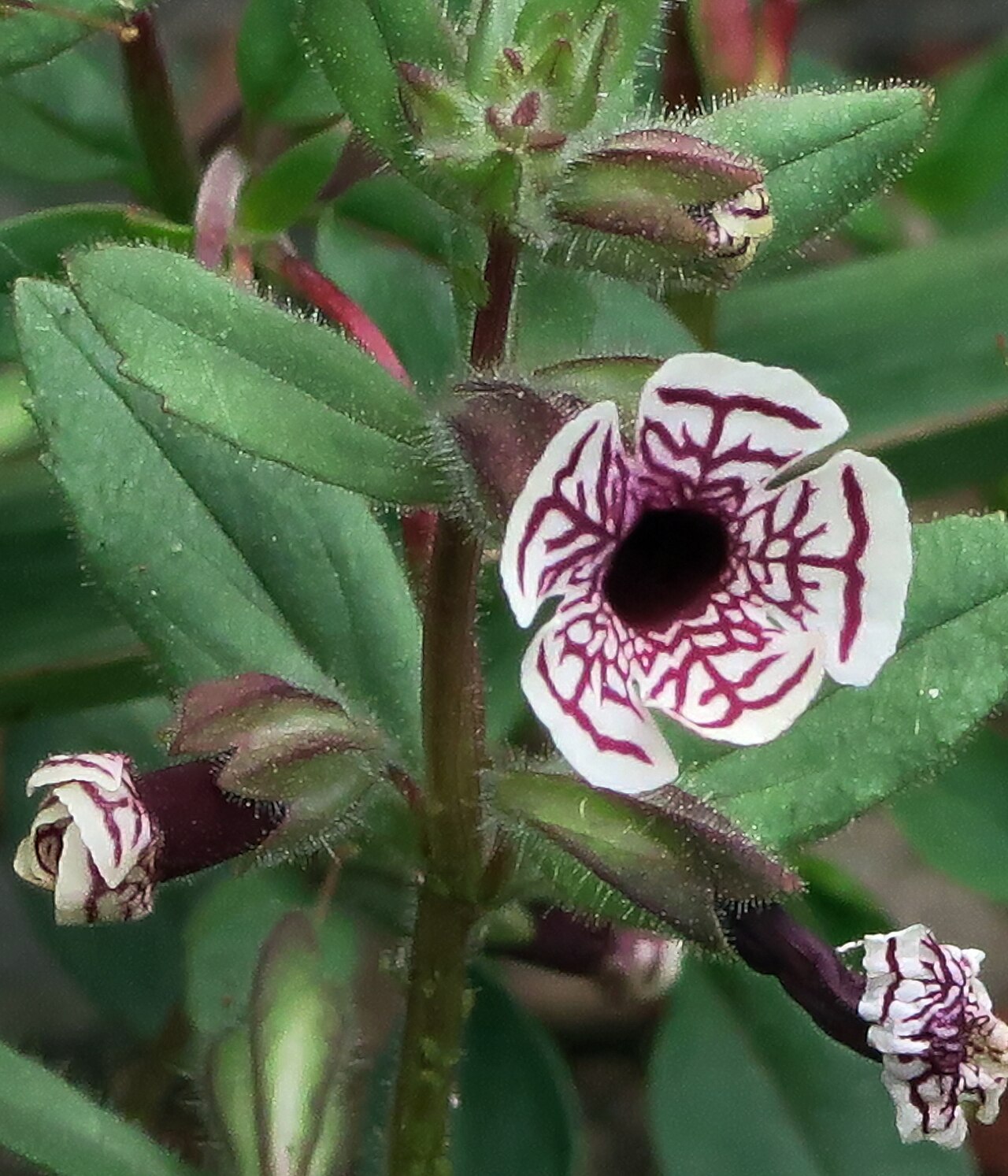
Diplacus pictus (long known as Mimulus pictus), the calico monkeyflower, is a small, rare California annual with one of the most strikingly patterned flowers of any native wildflower: a white, circular face intricately veined in deep maroon-purple around a near-black throat. It belongs to the Phrymaceae (lopseed family), the same family as the many other native Diplacus monkeyflowers found across the West, but its extremely narrow range and distinctive “calico” markings set it apart.
Calico monkeyflower is a true endemic, known only from a small area spanning the western Tehachapi Mountains and the southernmost Sierra Nevada foothills in Kern and Tulare counties, California. It grows low and bushy, reaching only a few inches to about 15 inches tall in favorable years, with hairy stems and leaves and flowers that, despite the plant’s small stature, are large and showy relative to the rest of the plant.
The species is recognized as rare: it carries a California Rare Plant Rank of 1B.2 (rare, threatened, or endangered in California) and a NatureServe “Imperiled” status. It grows almost exclusively on bare, rocky soils around granite outcrops in oak woodland, a specialized habitat that limits both its range and its availability in cultivation — good wild photographs of this species are scarce, and the images on this page were taken of wild-collected plants grown at a botanic garden rather than in situ.
Identification
Calico monkeyflower is a small annual herb, typically 1 to 15 inches tall, with a hairy stem that is square to rectangular in cross-section — a useful identification trait shared with many members of the family.
Stems
Stems are slender, hairy, and four-angled, often branching from the base to give the plant a low, somewhat bushy habit on the rocky, open ground it favors.
Leaves
Leaves are opposite, oval in shape, and up to about 1.75 inches long, with a hairy surface typical of the species’ exposed, sun-baked habitat.
Flowers
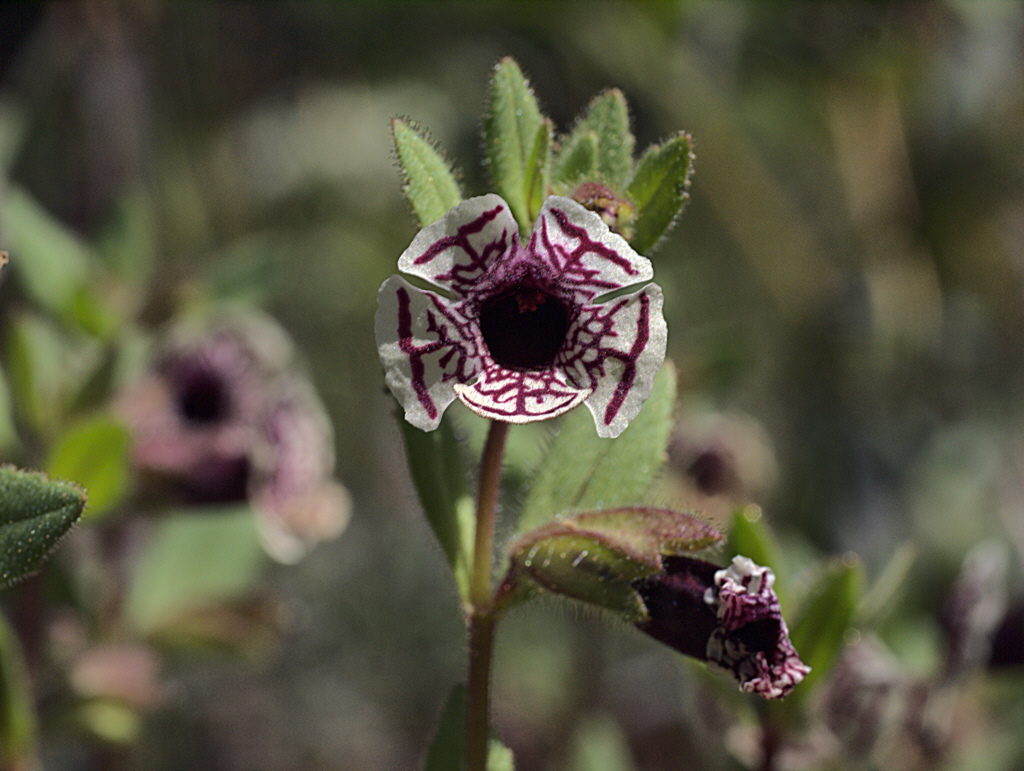
The flower is the plant’s standout feature: a five-lobed, roughly circular white face, 1 to 1.5 inches across, patterned with bold, intricate purple-brown (maroon) veining radiating outward from a dark maroon to near-black throat. The tubular flower base sits within a dark reddish, unevenly lobed calyx. Flowering runs from March through May.
Fruit & Seeds
Following bloom, the flower produces a small seed capsule typical of the monkeyflower genus. As an annual, the entire plant completes its life cycle and dies after seed-set, relying entirely on that year’s seed crop — and favorable winter-spring rainfall — to reappear the next season.
Quick Facts
| Scientific Name | Diplacus pictus (syn. Mimulus pictus) |
| Family | Phrymaceae (Lopseed) |
| Plant Type | Annual Wildflower |
| Mature Height | 1–15 in |
| Mature Spread | 4–8 in |
| Growth Rate | Fast (single growing season) |
| Sun Exposure | Full Sun to Light Shade |
| Water Needs | Low (winter/spring rainfall only) |
| Soil Type | Bare, rocky soils, often near granite outcrops |
| Soil pH | 6.0–7.0 (slightly acidic to neutral) |
| Bloom Time | March – May |
| Flower Color | White, veined in maroon-purple, dark throat |
| Fall Color | None (spring annual) |
| Fruit | Small seed capsule |
| Deer Resistant | Not well documented |
| USDA Hardiness Zones | 8–9 |
Native Range
Calico monkeyflower is a narrow California endemic, known only from the western Tehachapi Mountains and the adjacent southernmost Sierra Nevada foothills in Kern and Tulare counties. It does not occur naturally anywhere else, and it should not be assumed native or planted outside this very limited range.
Within this small area, it grows at elevations of roughly 450 to 4,100 feet in oak woodland, almost always on bare, rocky, thin soils near granite outcrops — a specialized microhabitat that likely contributes to its rarity by limiting the amount of suitable ground available to it.
The California Native Plant Society ranks calico monkeyflower 1B.2 (rare, threatened, or endangered in California and elsewhere), and NatureServe lists it as Imperiled. Gardeners outside its native Kern/Tulare County range should not plant it as a regional native, and anyone growing it should source seed or plants responsibly from reputable native plant nurseries rather than wild-collecting from its limited populations.
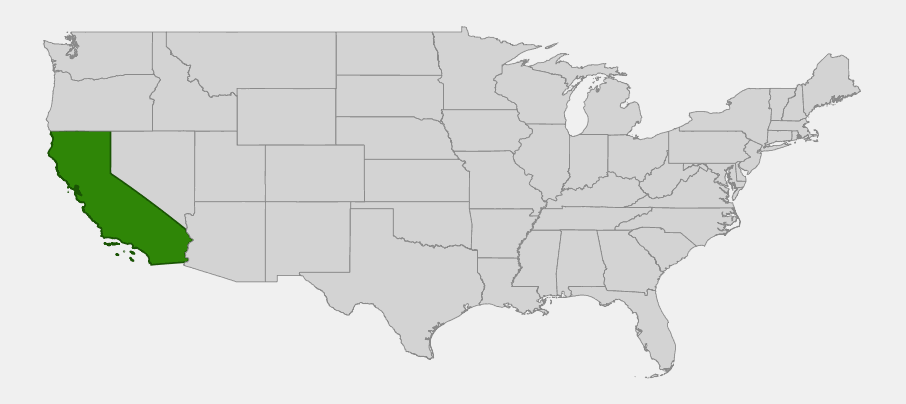
📋 Regional plant lists featuring calico monkeyflower: California and Nevada
Growing & Care Guide
Calico monkeyflower is rarely offered in the nursery trade because of its rarity and highly specific habitat needs, but gardeners within its native Kern/Tulare County range who can source responsibly propagated seed can try recreating its rocky, open habitat.
Light
Provide full sun to light shade, matching the open, rocky outcrop habitat where it grows wild in oak woodland.
Soil & Water
This species needs thin, rocky, fast-draining soil — not rich garden loam. A gritty, decomposed-granite mix mimicking its native outcrop habitat is essential. Water during the winter-spring growing season if rainfall is sparse, but the plant naturally dries out and dies back by early summer and needs no water after that point.
Planting Tips
Sow seed in fall onto a rocky, well-drained seedbed, ideally with some exposed gravel or decomposed granite, to mimic the bare outcrop conditions the species specializes in. Avoid rich, amended soil, which does not suit this plant and may allow more vigorous competitors to crowd it out.
Pruning & Maintenance
None needed; as an annual it completes its cycle naturally. Allow plants to set and drop seed before clearing the bed, so the planting can self-sow in future years.
Landscape Uses
- Rock gardens and crevice plantings within its native Kern/Tulare County range
- Specialty native plant collections focused on California rarities
- Granite outcrop restoration projects in its home range
- Educational and conservation plantings highlighting rare California endemics
Wildlife & Ecological Value
As a narrow endemic with a very restricted range, calico monkeyflower’s ecological role is tightly tied to the granite-outcrop plant communities of the southern Sierra Nevada foothills and Tehachapi Mountains.
For Pollinators
The large, showy, boldly patterned flowers are adapted to attract pollinating insects to the plant’s otherwise sparse, rocky habitat, where flowering plants are less abundant than in richer soils nearby.
For Birds
No major bird associations are specifically documented for this species; its small scale and narrow range mean its direct wildlife interactions are modest compared to more widespread wildflowers.
For Mammals
Specific herbivory or foraging records for calico monkeyflower are not well documented, consistent with its rarity and the limited field study typical of narrowly endemic plants.
Ecosystem Role
Calico monkeyflower is part of a specialized granite-outcrop flora that depends on undisturbed, open rocky ground. Its persistence is an indicator of intact oak woodland and outcrop habitat in its very limited native range, making habitat protection essential to its survival.
Cultural & Historical Uses
Calico monkeyflower does not have a documented history of use by Indigenous peoples or in historical records, consistent with its narrow range, small stature, and relatively recent botanical description and recognition as a distinct, rare species.
Its primary significance today is as a California Rare Plant Rank 1B.2 species — a conservation priority for botanists, land managers, and native plant enthusiasts working to protect the unique granite-outcrop flora of the southern Sierra Nevada and Tehachapi Mountains.
The plant has drawn interest from California native plant gardeners and botanic gardens specifically for its rarity and the exceptional beauty of its calico-patterned flower, which is often cited as one of the most intricately marked blooms among California’s native annuals.
Frequently Asked Questions
Is calico monkeyflower endangered?
It carries a California Rare Plant Rank of 1B.2 (rare, threatened, or endangered in California and elsewhere) and a NatureServe status of Imperiled. It is not federally listed but is considered a conservation priority within its very narrow range.
Where does calico monkeyflower grow?
It is known only from the western Tehachapi Mountains and adjacent southernmost Sierra Nevada foothills in Kern and Tulare Counties, California, almost always on bare rocky soils near granite outcrops.
Can I grow calico monkeyflower in my garden?
Only within its native range, and only from responsibly propagated seed or nursery stock — never wild-collected, given its rare status. It needs thin, rocky, fast-draining soil that mimics its granite-outcrop habitat.
Why are wild photos of calico monkeyflower hard to find?
Its extremely limited range and rocky, hard-to-access habitat mean it is rarely photographed in the wild. The images here show wild-collected plants grown at a botanic garden.
What does the “calico” name refer to?
It describes the flower’s bold, intricate purple-maroon veining against a white background, resembling a calico fabric pattern — one of the most distinctive flower markings among California’s native annual wildflowers.

Looking for a nursery that carries calico monkeyflower?
Browse our native plant nursery directory: California