Devil’s Shoestring (Nolina lindheimeriana)
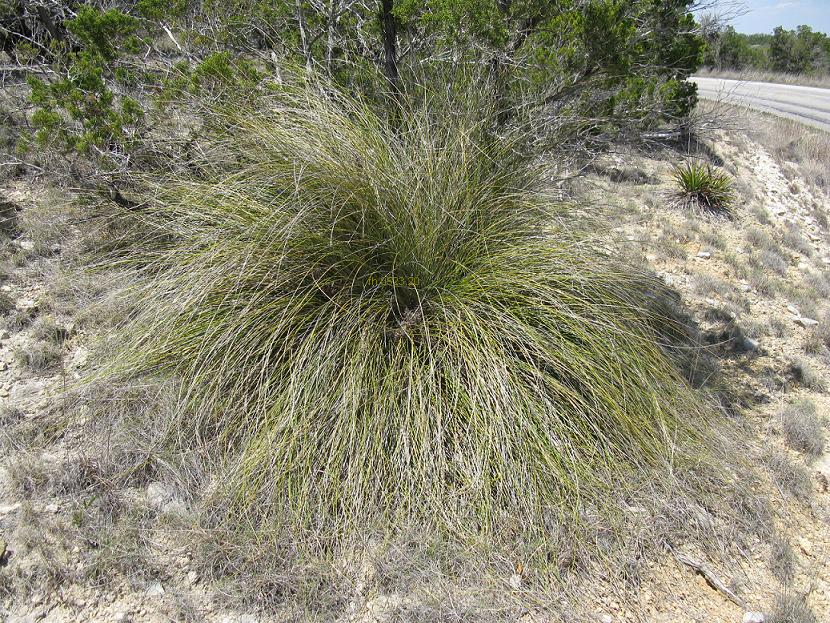
Nolina lindheimeriana, commonly called Devil’s Shoestring or Lindheimer’s beargrass, is a stemless, clump-forming succulent endemic to the limestone hills and ravines of the Edwards Plateau in west-central Texas. Named for 19th-century Texas botanist Ferdinand Lindheimer, it forms a dense, rounded mound of narrow, wiry, grasslike leaves that can be mistaken for an ornamental grass until you look closely at the tough, fibrous texture and the fine saw-teeth along each leaf edge — the detail behind the “shoestring” name.
Unlike its bulkier yucca and agave relatives, Devil’s Shoestring stays low and fine-textured, rarely more than knee-high in foliage, which makes it an unusually versatile native succulent: bold enough to read as an accent plant, soft enough to use as a textural foil for bolder cacti and shrubs. It is true to its Hill Country roots — endemic nowhere else in the world except the Edwards Plateau region.
For Texas Hill Country gardeners it is close to indestructible once established: evergreen, extremely drought-tolerant, winter-hardy, and content in the same thin, rocky limestone soils that frustrate most other perennials. Its only real demand is excellent drainage.
Identification
Devil’s Shoestring is stemless (acaulescent), producing one or several dense rosettes of leaves directly from a woody base, with no visible trunk.
Leaves
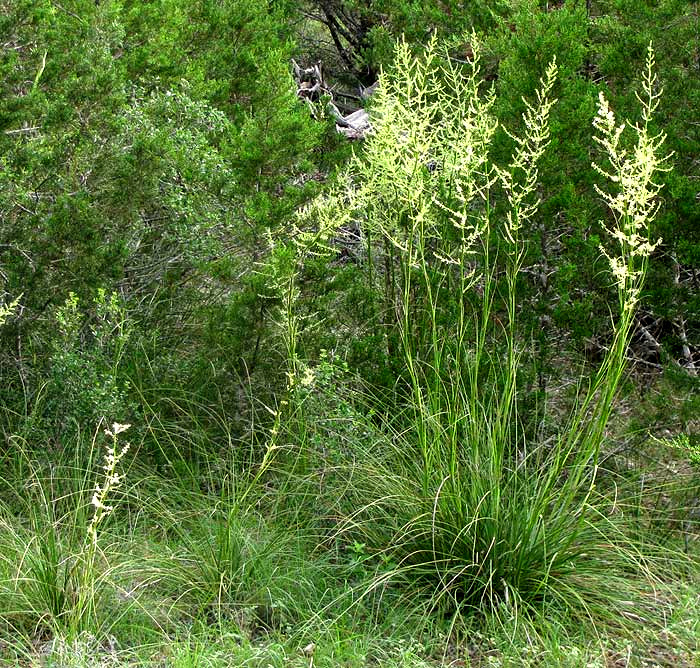
Leaves are narrow, flattened, wiry and grasslike, up to about 3 feet long but only roughly ½ inch wide, lax and arching so that a mature clump forms a rounded, fountain-like mound. The margins bear many small, closely spaced, skin-cutting teeth — sharp enough to warrant care when handling the plant, even though the leaves themselves are flexible rather than rigid like a yucca’s.
Flowers
In late spring to early summer, slender flowering scapes rise 2 to 3 feet above the foliage, carrying narrow, branched flower clusters (panicles) up to about 14 inches long. Individual flowers are small and yellow-green, with separate functionally male and female flowers often on different panicles of the same plant.
Fruit & Seeds
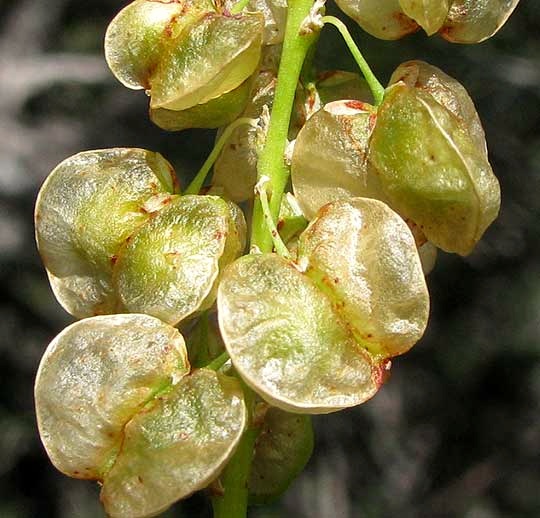
Flowers give way to small, three-lobed, papery, inflated capsules — a distinctive winged, parchment-colored fruit that persists on the dried flower stalks well after the growing season, making mature plants easy to identify even out of bloom.
Quick Facts
| Scientific Name | Nolina lindheimeriana |
| Family | Asparagaceae (Nolinoideae) |
| Plant Type | Evergreen, stemless succulent (cacti & succulents) |
| Mature Height | 1.5–2.5 ft foliage; flower scape to 3 ft |
| Mature Spread | 2–4 ft |
| Growth Rate | Slow |
| Sun Exposure | Full sun to light shade |
| Water Needs | Low |
| Soil Type | Rocky limestone; sharply drained |
| Soil pH | Neutral to alkaline |
| Bloom Time | Late spring – early summer |
| Flower Color | Yellow-green |
| Fall Color | Evergreen (no change) |
| Fruit | Papery, three-lobed winged capsule |
| Deer Resistant | Yes |
| USDA Hardiness Zones | 7–10 |
Native Range
Devil’s Shoestring is endemic to the Edwards Plateau of west-central Texas — it is not reliably documented as native anywhere else, making it one of the more range-restricted succulents available to native-plant gardeners. Its core range runs through the eastern and central Hill Country, including the limestone country around Austin, San Antonio and the Balcones Escarpment.
Within this range it favors limestone hills, rocky ravines and lightly wooded slopes, often rooted directly in thin soil pockets among exposed limestone, where its deep, tough root system can find moisture that more shallow-rooted plants cannot reach.
Because it is endemic to a relatively small area, Devil’s Shoestring should be treated strictly as a Hill Country native; plantings elsewhere in Texas, however well they may perform horticulturally, are garden introductions rather than locally native plants.
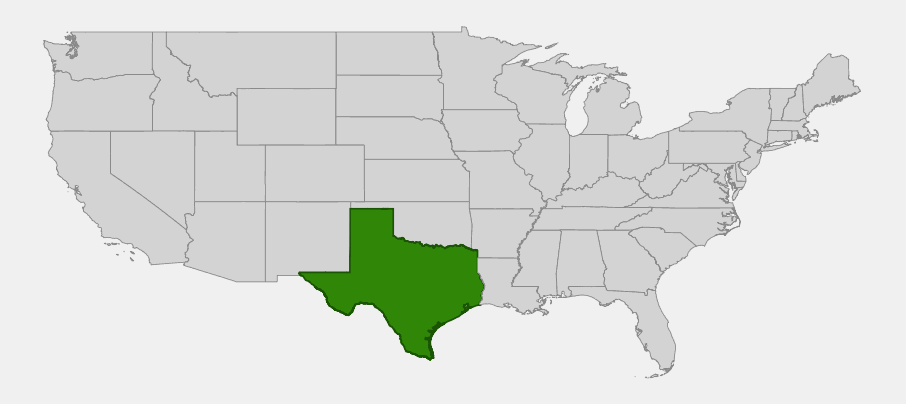
📋 Regional plant lists featuring Devil’s Shoestring: South and West Texas
Growing & Care Guide
Devil’s Shoestring is an easy, forgiving plant for Hill Country gardens as long as drainage is good — it is essentially maintenance-free once established in the right spot.
Light
It grows well in full sun and also tolerates the light, dappled shade found beneath oaks and junipers in its native limestone woodlands, making it unusually flexible for a succulent.
Soil & Water
Rocky, thin, alkaline limestone soils are ideal; it is extremely drought-tolerant once established and needs no supplemental irrigation across most of the Hill Country. Good drainage matters more than soil fertility — avoid heavy, poorly drained clay.
Planting Tips
Plant from container stock in fall or spring, siting it on a slope, berm or rocky bed where water will not pool around the crown. Space plants 2 to 3 feet apart to allow the arching foliage room to reach its full, rounded form.
Pruning & Maintenance
Remove old, dead leaves from the base of the clump occasionally to keep it tidy; this is optional, since plants look attractively shaggy left alone. Wear gloves — the leaf margins have fine, skin-cutting teeth.
Landscape Uses
- Rock gardens and limestone outcrop plantings
- Fine-textured accent alongside bolder agaves, yuccas and prickly pear
- Dry slope and berm plantings where erosion control is needed
- Xeriscape foundation beds in full sun to light shade
- Native Hill Country restoration plantings
Wildlife & Ecological Value
For Pollinators
The small, numerous yellow-green flowers attract native bees and other small pollinating insects during their late spring to early summer bloom, offering a nectar and pollen source distinct in form from the showier yucca and agave flowers nearby.
Birds
The dense, low mounds offer ground-level cover for small birds foraging in Hill Country woodlands and brush, and the dried flower stalks can serve as low perches.
Mammals
The tough, fibrous, tooth-edged leaves largely discourage browsing by deer, contributing to the species’ strong deer-resistance, while the dense clump provides shelter for small mammals at ground level.
Ecosystem Role
As a deep-rooted, long-lived succulent restricted to the Edwards Plateau, Devil’s Shoestring helps stabilize thin, rocky soils on slopes and in ravines, and its presence is a useful indicator of relatively undisturbed Hill Country limestone habitat.
Cultural & Historical Uses
The common name “Devil’s Shoestring” references the tough, fibrous, tangled leaves, historically used in the Hill Country and by Indigenous peoples of the region for twisted cordage and rough fiber work, a use shared with several other nolinas and related succulents of the region. These are historical, ethnobotanical uses rather than modern recommendations.
The species honors Ferdinand Lindheimer, the German-born botanist often called the “Father of Texas Botany,” who collected extensively across the Texas Hill Country in the 19th century and had numerous plants, including this one, named in his honor.
Today the plant’s main significance is horticultural and ecological: it is a signature textural element in Texas Hill Country native gardens and a useful soil-stabilizing plant on rocky slopes within its narrow native range.
Frequently Asked Questions
Is Devil’s Shoestring the same as beargrass?
“Beargrass” is a common name shared loosely among several Nolina species with similar wiry, grasslike leaves. Devil’s Shoestring (Nolina lindheimeriana) is one specific Edwards Plateau endemic among them, distinguished by its fine leaves and distinctive winged, three-lobed seed capsules.
Can I grow Devil’s Shoestring outside the Hill Country?
It can succeed horticulturally in similarly well-drained, alkaline soils elsewhere in Texas, but it is only truly native to the Edwards Plateau, so plantings outside that region should be understood as introductions rather than native habitat restoration.
Does Devil’s Shoestring need to be watered once established?
Generally no. In its native limestone habitat it relies entirely on rainfall once established and is one of the more drought-tolerant native succulents available to Hill Country gardeners.
Are the leaves sharp?
The leaf margins carry small, fine, saw-like teeth that can scratch skin, though the leaves themselves are flexible rather than rigid. Gloves are recommended when dividing or cleaning up old foliage.
How can I tell Devil’s Shoestring from an ornamental grass?
Look closely at the leaf edges for the fine teeth, and check for the distinctive papery, three-lobed seed capsules that persist on old flower stalks — true grasses never produce this kind of winged, succulent-type fruit.

Looking for a nursery that carries Devil’s Shoestring?
Browse our native plant nursery directory: Texas