Buckley’s Yucca (Yucca constricta)
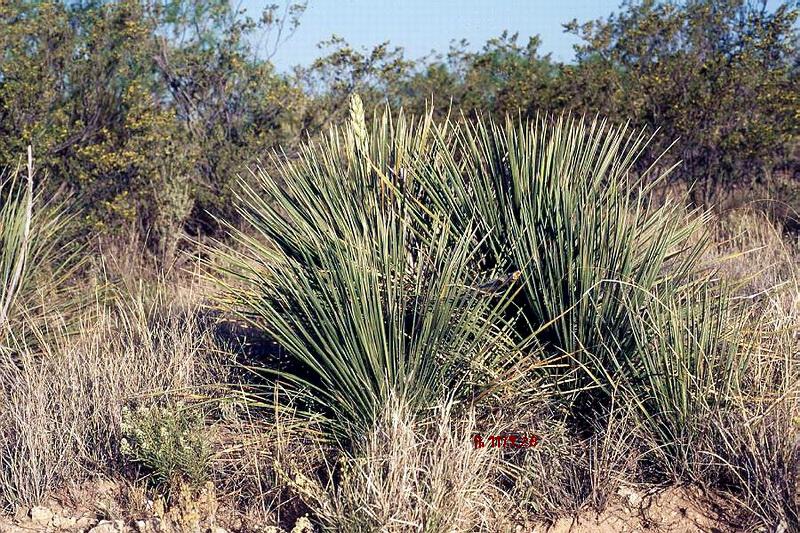
Yucca constricta, commonly known as Buckley’s Yucca, is a trunkless, clump-forming yucca native to the limestone hills, prairies and brushlands of central, southern and western Texas. Named for the 19th-century Texas botanist Samuel Botsford Buckley, it is one of the most widespread small yuccas in the state, equally at home on a caliche roadcut, a Hill Country ranch or a coastal prairie swale. Its narrow, bright green, curling leaves set it apart from the stiffer, broader-bladed yuccas it often grows beside.
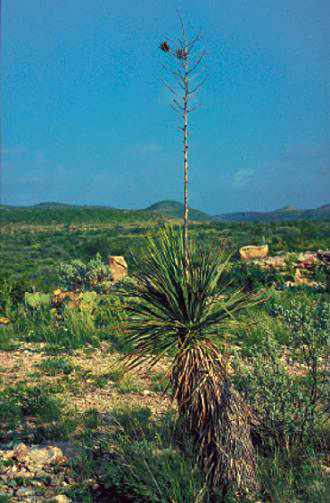
Unlike tree-form yuccas, Buckley’s yucca stays low and stemless for most of its life, spreading slowly by underground rhizomes into multi-headed clumps a few feet across. Each spring or early summer it sends up a tall, narrow flower spike well above the foliage, carrying dozens of nodding, greenish-white, bell-shaped flowers that open mostly at night for its yucca moth pollinators. The dry seed capsules that follow split open at the tip, a detail reflected in the species name constricta, referring to the pinched waist of the fruit.
For Texas gardeners, Buckley’s yucca is about as low-maintenance as native landscaping gets: drought-proof once established, indifferent to poor rocky soil, and a reliable accent plant that still feeds moths, bees and deer. It rarely needs water, fertilizer or pruning, and its fine, grassy-looking texture softens the bolder forms of prickly pear and agave in a xeric planting.
Identification
Buckley’s yucca is acaulescent, meaning it does not build a visible trunk; instead, the rosette of leaves sits directly on or just above the ground. Older clumps develop short, mostly buried caudices and spread outward as offsets form around the original rosette, eventually making loose colonies several feet wide.
Leaves
Leaves are narrow (about ⅓ to ½ inch wide) and long, often 18 to 30 inches, bright to yellowish-green, and noticeably thin and flexible compared with stiffer yuccas such as Yucca treculeana. The leaf margins carry fine, curling, pale fibers that peel away along the edges, and the leaf tips end in a sharp but relatively slender spine. The flexible leaves give established clumps a shaggy, fountain-like look.
Flowers
A central flower stalk rises 2 to 5 feet above the foliage from April through July, well clear of the leaves, carrying a loose raceme of pendent, bell-shaped flowers. Each flower is greenish-white to cream, about 1½ to 2 inches long, and opens mainly at dusk and through the night, when it is pollinated by the yucca moth (Tegeticula species) in an obligate partnership: the moth is the only pollinator, and its larvae feed on some of the developing seeds in exchange.
Fruit & Seeds
The fruit is a dry, upright capsule up to about 2½ inches long that splits open at the tip when ripe, releasing flat, shiny black seeds. Capsules mature through late summer and persist on the dried flower stalk into fall. Deer are known to browse off entire flower stalks before they can set seed, which can locally reduce reproduction.
Quick Facts
| Scientific Name | Yucca constricta |
| Family | Asparagaceae (Agavoideae) |
| Plant Type | Evergreen, trunkless succulent (cacti & succulents) |
| Mature Height | Foliage 2–3 ft; flower stalk to 5 ft |
| Mature Spread | 3–6 ft (clump, spreading by offsets) |
| Growth Rate | Slow |
| Sun Exposure | Full sun |
| Water Needs | Low |
| Soil Type | Rocky, caliche or sandy; very well-drained |
| Soil pH | Neutral to alkaline |
| Bloom Time | April – July |
| Flower Color | Greenish-white to cream |
| Fall Color | Evergreen (no change) |
| Fruit | Dry, tip-splitting capsule with black seeds |
| Deer Resistant | Foliage yes; deer do eat the flower stalks |
| USDA Hardiness Zones | 7–10 |
Native Range
Buckley’s yucca is a Texas specialty, native to the Edwards Plateau (Hill Country), the Rio Grande Plains of south Texas, and the Blackland Prairies and post oak savannas of central Texas, with its range extending as far east as the outskirts of Houston and as far north as the Dallas–Fort Worth area. It also grows in adjacent northeastern Mexico, in the state of Coahuila.
Within this range it is a plant of open, sunny ground rather than deep woods: limestone outcrops and glades, thin caliche soils, grazed pastures, rocky prairie remnants and roadside right-of-ways. It tolerates both the clay-loam soils of the Blackland Prairie and the thin, rocky soils of the Hill Country, which has made it one of the more weedy-in-a-good-way native yuccas across its range.
Because it spreads readily by underground offsets and tolerates heavy grazing better than most forbs, Buckley’s yucca often becomes locally abundant on overgrazed rangeland, where ranchers sometimes regard it as an indicator of range condition rather than purely an ornamental. In a home landscape that same toughness translates into a plant that needs almost nothing once it is in the ground.
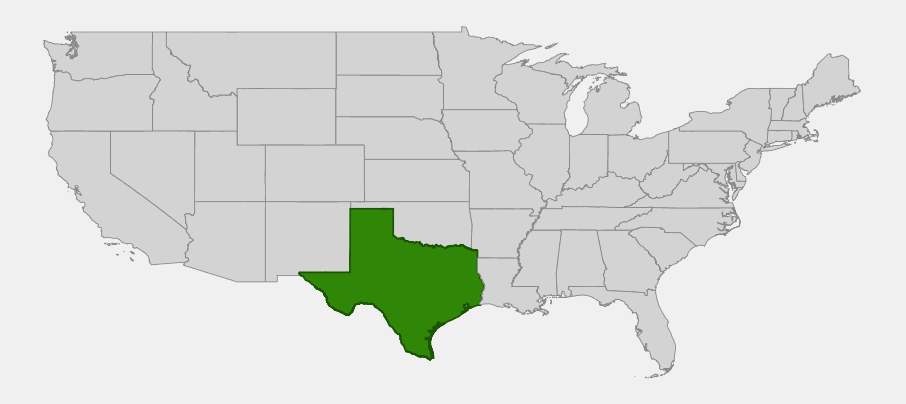
📋 Regional plant lists featuring Buckley’s Yucca: South and West Texas
Growing & Care Guide
Buckley’s yucca is as close to a plant-it-and-forget-it native as Texas gardeners get. Give it sun and drainage and it will shrug off summer heat, winter cold snaps, and months without rain.
Light
Full sun brings out the tightest, most compact rosettes and the heaviest bloom. It will tolerate light afternoon shade but tends to get looser and bloom less in shadier spots.
Soil & Water
Drainage matters more than fertility. Rocky, caliche, sandy or lean clay soils are all fine as long as water does not stand around the crown; soggy soil, especially in winter, is the main way this yucca is lost. Once established, it needs no supplemental irrigation in most of its range and is one of the most drought-tolerant plants available to Texas gardeners.
Planting Tips
Plant in spring or fall from container stock, setting the crown slightly above grade on a slope or in a raised bed if your soil is heavy. Space clumps 3 to 4 feet apart to leave room for the colony to spread by offsets. Avoid mulching right up against the crown, which can trap moisture against the base.
Pruning & Maintenance
Maintenance is limited to removing spent flower stalks after seed capsules dry and trimming out any damaged or frost-browned leaves in late winter. Wear heavy gloves — the leaf tips are sharp enough to puncture skin.
Landscape Uses
- Xeriscaping and rock gardens where irrigation is minimal
- Caliche and limestone slopes too lean for turf or most perennials
- Mixed succulent beds alongside agave and prickly pear
- Erosion control on rocky, sloped ground once established
- Wildlife and pollinator gardens that include a night-blooming element
- Low-water foundation plantings in full-sun exposures
Wildlife & Ecological Value
For Pollinators
Buckley’s yucca depends on an obligate relationship with yucca moths (Tegeticula spp.), which are its only effective pollinators. Female moths actively pack pollen onto the stigma while laying eggs in the ovary, and their larvae consume a portion of the developing seeds — a textbook example of a specialized plant-pollinator mutualism found nowhere else in nature.
Birds
The tall, exposed flower stalks and seed capsules offer perching spots for grassland and scrub birds, and the dense rosettes provide low, thorny cover that ground-nesting species use for concealment from predators.
Mammals
White-tailed deer readily browse the tender flower stalks, sometimes removing them before seed can mature; the spiny foliage itself is largely left alone. Small mammals use mature, multi-headed clumps as cover from aerial predators.
Ecosystem Role
As a long-lived, slow-spreading succulent, Buckley’s yucca helps stabilize thin, rocky soils on slopes and overgrazed rangeland where few other plants persist, and its clumps create microhabitat structure in otherwise open prairie and brushland.
Cultural & Historical Uses
Like many Texas yuccas, Buckley’s yucca has a long history of use by Indigenous peoples of the region, who processed the fibrous leaves into cordage, sandals and basketry material, and used the root’s natural saponins as a soap substitute for washing. These uses are a matter of historical and ethnobotanical record rather than a modern recommendation.
The plant is named for Samuel Botsford Buckley, a 19th-century botanist and Texas state geologist who collected extensively across the state and described or co-described a number of Texas plants during his surveys.
Today its role is mostly ornamental and ecological: ranchers tolerate it as a durable, drought-proof rangeland plant, and native-plant gardeners value it as a low-care accent that needs none of the irrigation that turf or exotic ornamentals demand in Texas’s hot summers.
Frequently Asked Questions
Does Buckley’s yucca form a trunk?
No. It stays acaulescent (trunkless) throughout its life, with the leaf rosette sitting at or near ground level, though old clumps do build a short, mostly buried woody base as they spread.
How is Buckley’s yucca different from Spanish dagger (Yucca treculeana)?
Buckley’s yucca has thinner, more flexible, curling leaves and never develops the tall woody trunk of Spanish dagger, which can reach 10 feet or more. Buckley’s yucca stays low and clump-forming.
Is Buckley’s yucca good for a small yard?
Yes — its clumps stay a manageable 2 to 3 feet tall and a few feet wide, making it a reasonable choice for smaller xeric beds, though the sharp leaf tips are worth keeping away from paths and play areas.
Do I need to water it once it’s established?
Generally no. Across most of its Texas range, established plants get by on rainfall alone and only need supplemental water during extreme, prolonged drought.
Why didn’t my yucca bloom this year?
Deer often browse off the developing flower stalk before it opens, and younger or recently divided clumps may simply be too immature to flower yet. Established, undisturbed clumps bloom most reliably.

Looking for a nursery that carries Buckley’s Yucca?
Browse our native plant nursery directory: Texas