Papershell Pinyon (Pinus remota)
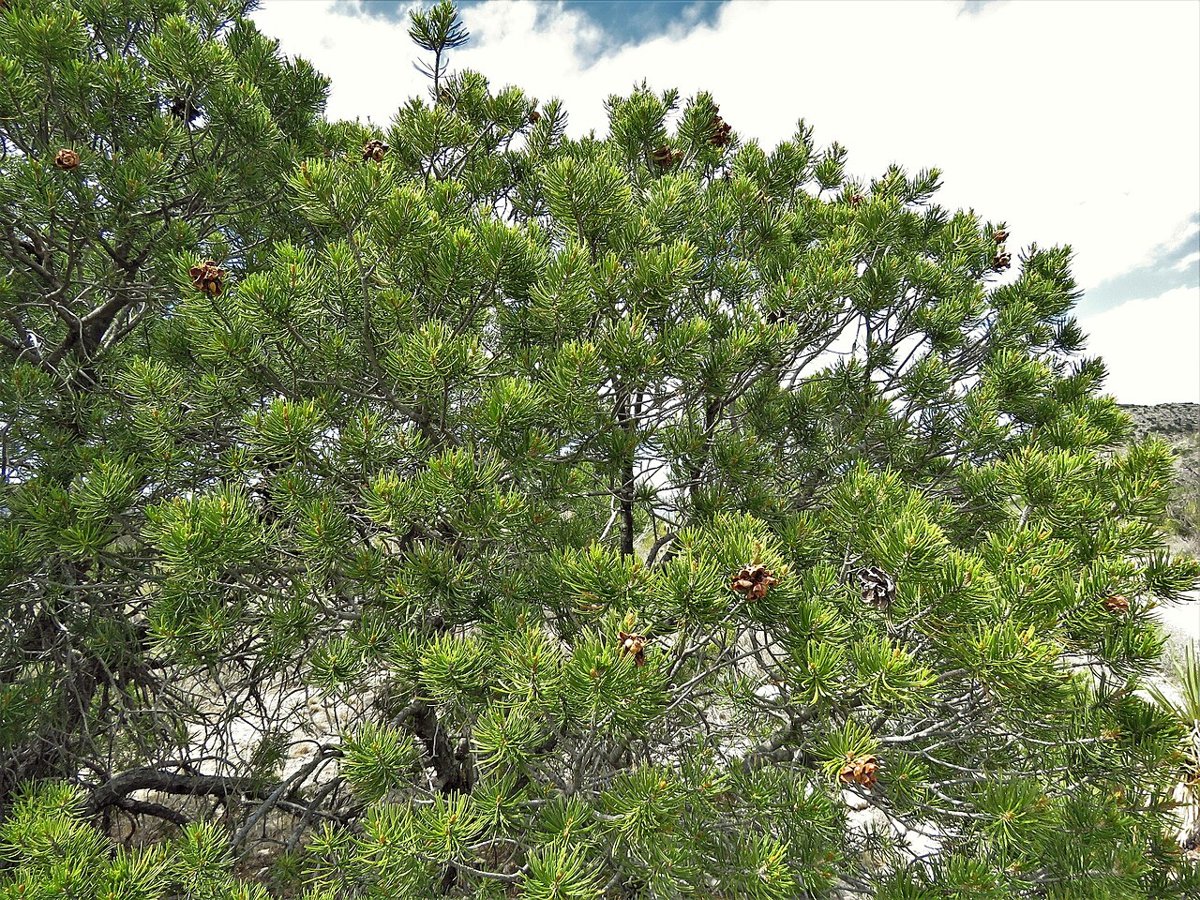
Pinus remota, the Papershell Pinyon, is a small, drought-hardy pine of the rocky hill country and desert mountains of west and south-central Texas. It belongs to the Pinaceae and the pinyon pine group, a cluster of small, two- or single-needled pines adapted to arid, rocky Southwestern terrain. Papershell Pinyon gets its common name from its unusually thin, soft seed-coat — the shell of its pine nut is so delicate it can be cracked between the fingers, unlike the harder-shelled seeds of most other pinyons.
This is a tree of limestone ridges, canyon rims, and rocky slopes on the Edwards Plateau and in the Trans-Pecos mountains, almost always found where thin, rocky soil and exposure limit competition from larger trees. Mature trees are small and often multi-stemmed, typically 15 to 30 feet tall with a broad, rounded to irregular crown, giving the impression of a shrubby, wind-sculpted pine rather than a tall forest tree. Its gray-green, two-needled foliage and small, rounded cones are distinctive among the pines of the region, and its presence usually signals a particularly rocky, well-drained, fire-adapted site.
Papershell Pinyon is a long-lived, slow-growing tree valued by Texas native-plant gardeners for its drought tolerance, small stature, and wildlife-friendly seed crop, though its narrow habitat requirements mean it performs best only where it can mimic the thin, rocky, well-drained soils of its native range.
Identification
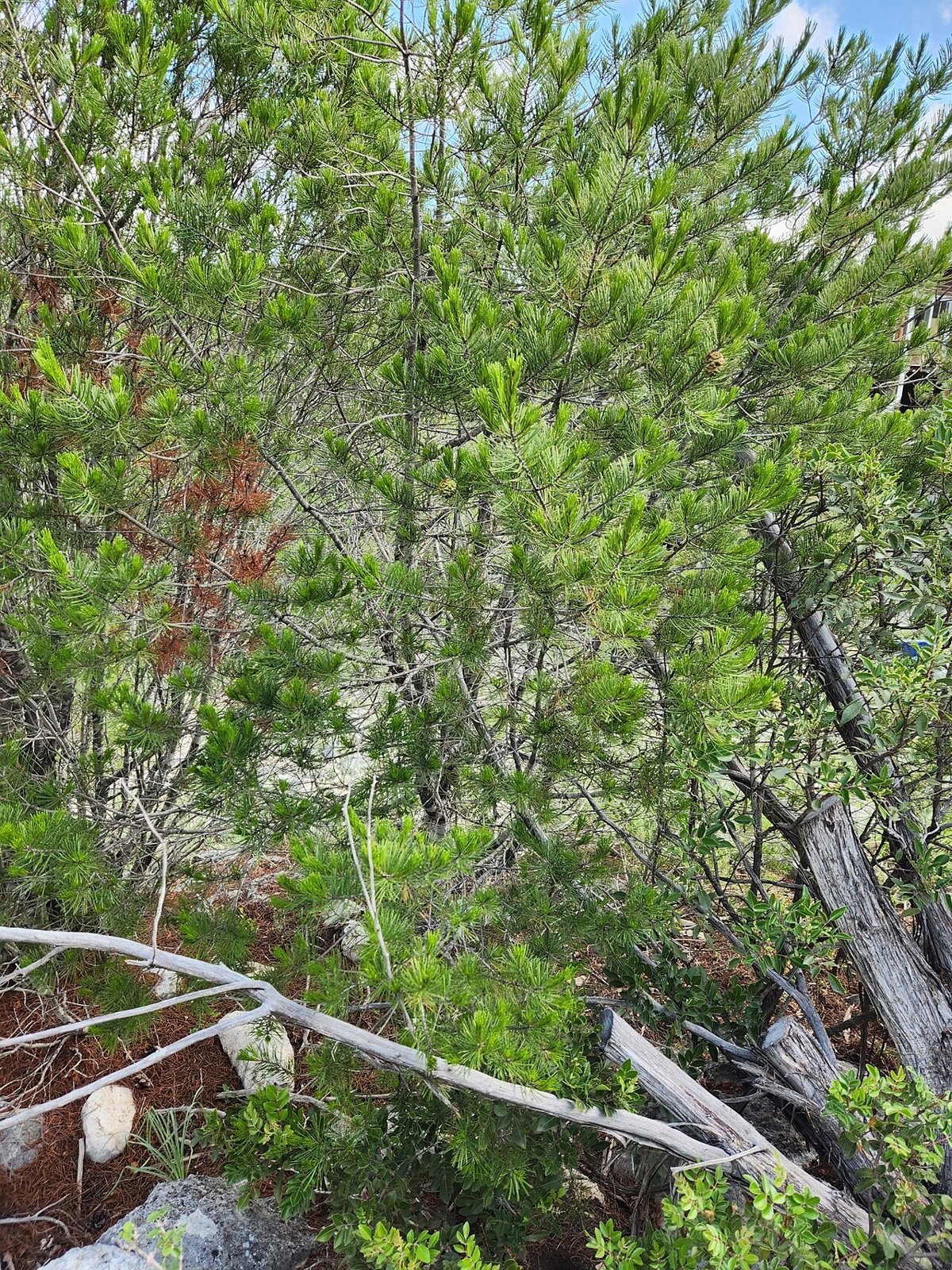
Papershell Pinyon is most easily recognized by its small stature, often multi-trunked form, short gray-green needles in bundles of two, and small, rounded cones that open to release large, thin-shelled seeds.
Bark & Form
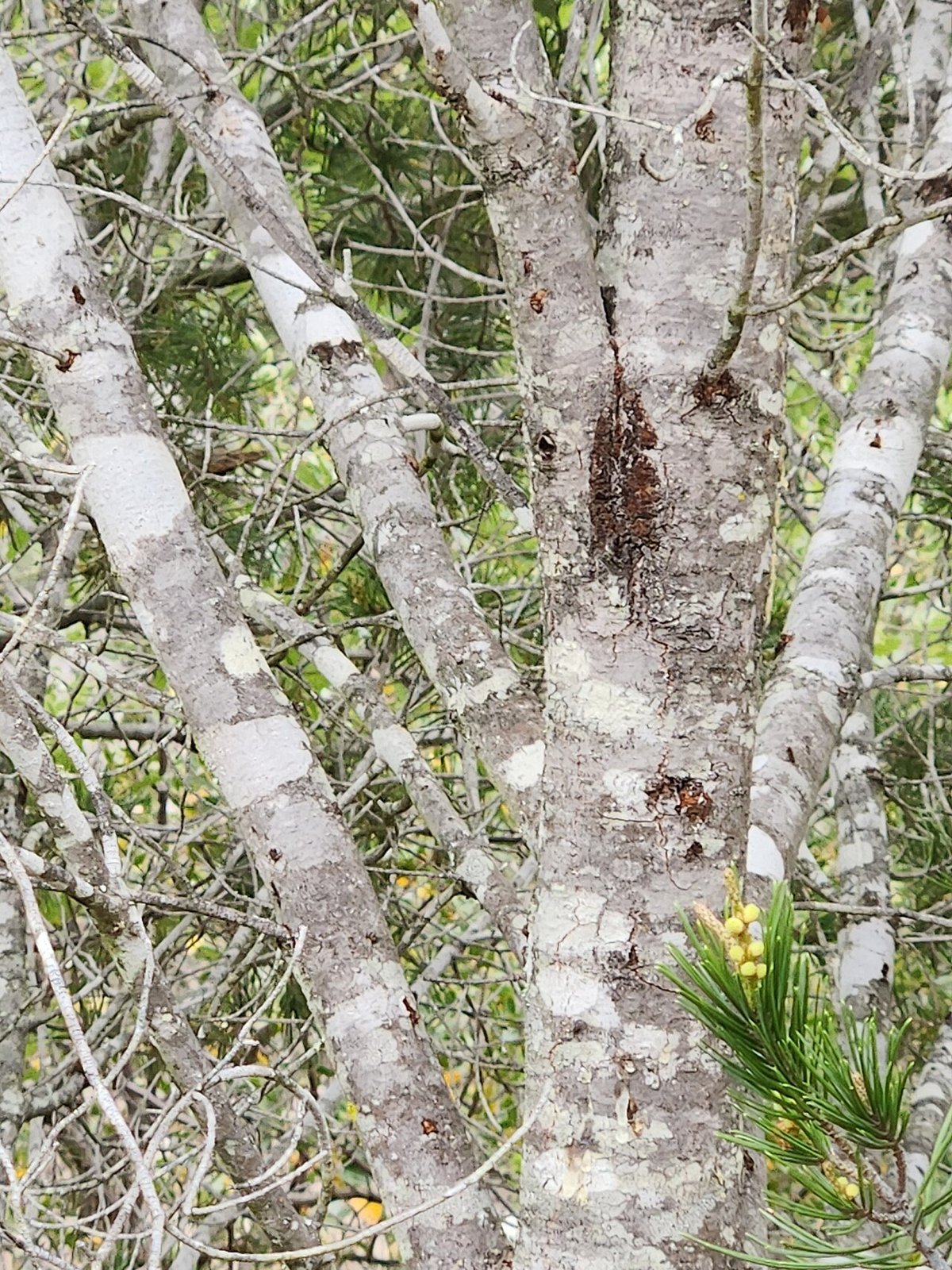
Mature trees reach 15–30 feet tall, sometimes taller on favorable sites, with a trunk or trunks 8–16 inches in diameter. The growth form is often irregular and multi-stemmed, especially on exposed rocky sites, with a broad, rounded crown. Bark is thin, pale gray, and scaly to smooth, becoming more furrowed and rougher with age, lacking the deep furrowing of larger pine species.
Needles
Needles are borne in bundles (fascicles) of two, 1 to 1¾ inches long, stiff, slightly curved, and gray-green to blue-green in color. They are shorter and stouter than the needles of most yellow pines, giving the foliage a dense, tufted appearance typical of pinyon pines.
Cones & Seeds
Cones are small, roughly spherical to broadly ovoid, 1½ to 2½ inches long, maturing over two growing seasons from green to yellow-brown. Each cone scale bears a wingless seed with an unusually thin, papery shell — the source of the common name — that can be cracked open with light pressure rather than requiring tools, unlike the thicker-shelled seeds of related pinyon species such as Mexican Pinyon.
Quick Facts
| Scientific Name | Pinus remota |
| Family | Pinaceae (Pine) |
| Plant Type | Evergreen Conifer Tree |
| Mature Height | 15–30 ft |
| Trunk Diameter | 8–16 in, often multi-stemmed |
| Growth Rate | Slow |
| Sun Exposure | Full Sun |
| Water Needs | Low |
| Soil Type | Thin, rocky limestone; very well-drained |
| Soil pH | 7.0–8.3 (neutral to alkaline) |
| Bloom Time | April – May (pollen cones) |
| Flower Color | Not applicable (conifer; yellow pollen cones) |
| Fall Color | None (evergreen) |
| Fruit | Small cones with thin-shelled edible seeds |
| Deer Resistant | Yes |
| USDA Hardiness Zones | 7–9 |
Native Range
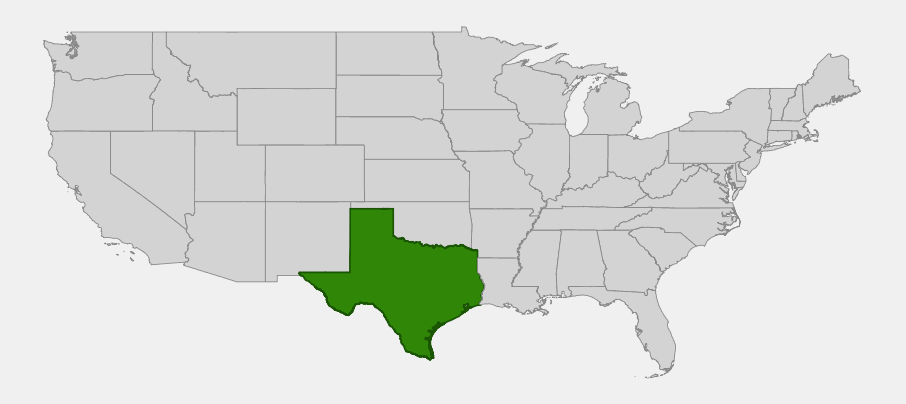
Papershell Pinyon is native to west-central and south-central Texas, with its core range on the limestone canyons and rocky slopes of the Edwards Plateau and scattered populations in the desert mountains of the Trans-Pecos, including Brewster, Pecos, and surrounding counties. It is a Texas specialty among U.S. pines, with closely related populations extending south into the mountains of Coahuila and Nuevo León, Mexico.
Across its range, Papershell Pinyon grows on thin, rocky, often shallow limestone soils on canyon rims, bluffs, and rugged hillsides, usually in open woodland or savanna-like stands rather than dense forest. It is frequently found growing alongside Ashe juniper, Texas live oak, and various junipers and oaks adapted to the same harsh, well-drained terrain, and it often marks particularly dry, exposed, fire-prone sites within the broader Edwards Plateau woodland mosaic.
The species is not currently listed as endangered, but its restricted, specialized habitat means populations are naturally patchy, and it should be considered a regional specialty rather than a tree suited to typical garden conditions outside its native rocky-soil range.
📋 Regional plant lists featuring Papershell Pinyon: South and West Texas
Growing & Care Guide
Papershell Pinyon is a tree for patient gardeners working with rocky, well-drained Texas soils rather than a fast-growing shade tree for ordinary garden beds.
Light
Give it full sun. In its native canyon-rim and rocky-slope habitat it grows in open, exposed conditions, and it will become thin and poorly formed in significant shade.
Soil & Water
Sharp drainage is essential. Thin, rocky, limestone-based soils closely mimicking its native habitat produce the healthiest trees; heavy clay or poorly drained soil invites root rot. Once established, Papershell Pinyon is highly drought tolerant and needs little to no supplemental irrigation within its native Texas range, though young trees benefit from occasional deep watering during their first two or three years.
Planting Tips
Plant small container-grown trees in fall or early spring on a rocky slope, berm, or well-drained site, avoiding low spots where water collects. Because the species is naturally slow-growing and often multi-stemmed, allow room for a broad, irregular crown rather than a single central leader. Staking is rarely necessary once roots establish in rocky ground.
Pruning & Maintenance
Minimal pruning is needed; remove only dead, damaged, or crossing branches. Avoid attempting to force a single-trunk form on a naturally multi-stemmed tree. Papershell Pinyon has few serious pest problems in its native range, though like other pines it can be vulnerable to bark beetles during prolonged drought stress, making supplemental watering during severe dry spells worthwhile for garden specimens.
Propagation
Propagate from seed collected from mature cones in fall; seeds generally germinate without special pretreatment but benefit from a period of cold stratification. Growth from seed is slow, consistent with the species’ overall slow growth rate, and container-grown nursery stock is the most practical option for most gardeners.
Landscape Uses
- Rock gardens and limestone slope plantings where little else will thrive
- Xeriscape specimen tree for Hill Country and West Texas gardens
- Wildlife gardens, for the edible seed crop
- Native woodland restoration on Edwards Plateau sites
- Low-water windbreaks on rocky, exposed ground
Wildlife & Ecological Value
As one of the few pines adapted to the rocky limestone terrain of central and west Texas, Papershell Pinyon provides food and structure that few other trees in its habitat can match.
For Birds
The seeds are an important food source for pinyon-associated birds, especially jays, which cache and disperse the seeds, helping the species regenerate across suitable rocky habitat. Various woodpeckers, titmice, and other seed-eating birds also feed on the cone crop, and the dense evergreen foliage offers year-round cover and nesting habitat.
For Mammals
Squirrels, rock squirrels, and other small mammals harvest and cache the thin-shelled seeds, an important food source in the lean winter months on rocky Edwards Plateau and Trans-Pecos terrain. The tree’s low, often multi-stemmed form also provides good ground-level cover for small mammals moving through rocky habitat.
Ecosystem Role
Papershell Pinyon is a foundational species of pinyon-juniper woodland communities on thin limestone and rocky desert-mountain soils, stabilizing slopes and providing structural diversity in habitats too harsh for most broadleaf trees. Its long lifespan and slow growth make mature stands valuable, slow-to-replace habitat, underscoring the importance of protecting existing trees rather than relying solely on new plantings.
Cultural & Historical Uses
Like other pinyon pines of the Southwest, Papershell Pinyon seeds have long been gathered and eaten by Indigenous peoples of Texas and northern Mexico, valued as a nutritious, calorie-dense food source that could be stored through the winter. The unusually thin, papery seed coat that gives the tree its common name made the nuts notably easier to shell by hand than those of thicker-shelled pinyon relatives, a practical advantage for anyone harvesting them in quantity.
Historically, pinyon wood across the broader pinyon-juniper region was used for fuel and small construction needs, and the resin had minor traditional uses as an adhesive or sealant. Papershell Pinyon itself, being more limited in distribution and smaller in stature than its better-known relatives such as the two-needle pinyon of the Rocky Mountain West, played a correspondingly smaller but still meaningful role in the foodways of the people who lived among the rocky canyons where it grows.
Today, Papershell Pinyon is primarily valued for its ecological role and its growing recognition among Texas native-plant gardeners as an attractive, drought-tolerant small conifer suited to rocky Hill Country and West Texas landscapes.
Frequently Asked Questions
Can you eat Papershell Pinyon seeds?
Yes — the seeds are edible pine nuts with an unusually thin, easily cracked shell, historically gathered by Indigenous peoples of the region. Home gardeners with a mature, fruiting tree can harvest and eat them, though cone and seed production is irregular from year to year.
How is Papershell Pinyon different from other pinyon pines?
Its defining feature is its exceptionally thin, papery seed shell, which can be cracked between the fingers rather than requiring a tool, unlike the thicker-shelled seeds of species such as Mexican Pinyon or Colorado Pinyon.
Will Papershell Pinyon grow in heavy clay soil?
Not well. It is adapted to thin, rocky, sharply drained limestone soils, and heavy or poorly drained clay significantly increases the risk of root rot; a rocky berm or raised bed is a better option on clay sites.
How fast does Papershell Pinyon grow?
Growth is slow, typical of pinyon pines in general, especially on the thin, rocky soils where it naturally occurs; gardeners should expect a long-term investment rather than quick shade or screening.
Is Papershell Pinyon only found in Texas?
Within the United States, yes — it is essentially a Texas endemic, with its range centered on the Edwards Plateau and Trans-Pecos, though related populations occur in adjacent mountains of northeastern Mexico.

Looking for a nursery that carries Papershell Pinyon?
Browse our native plant nursery directory: Texas