Shin Oak (Quercus havardii)
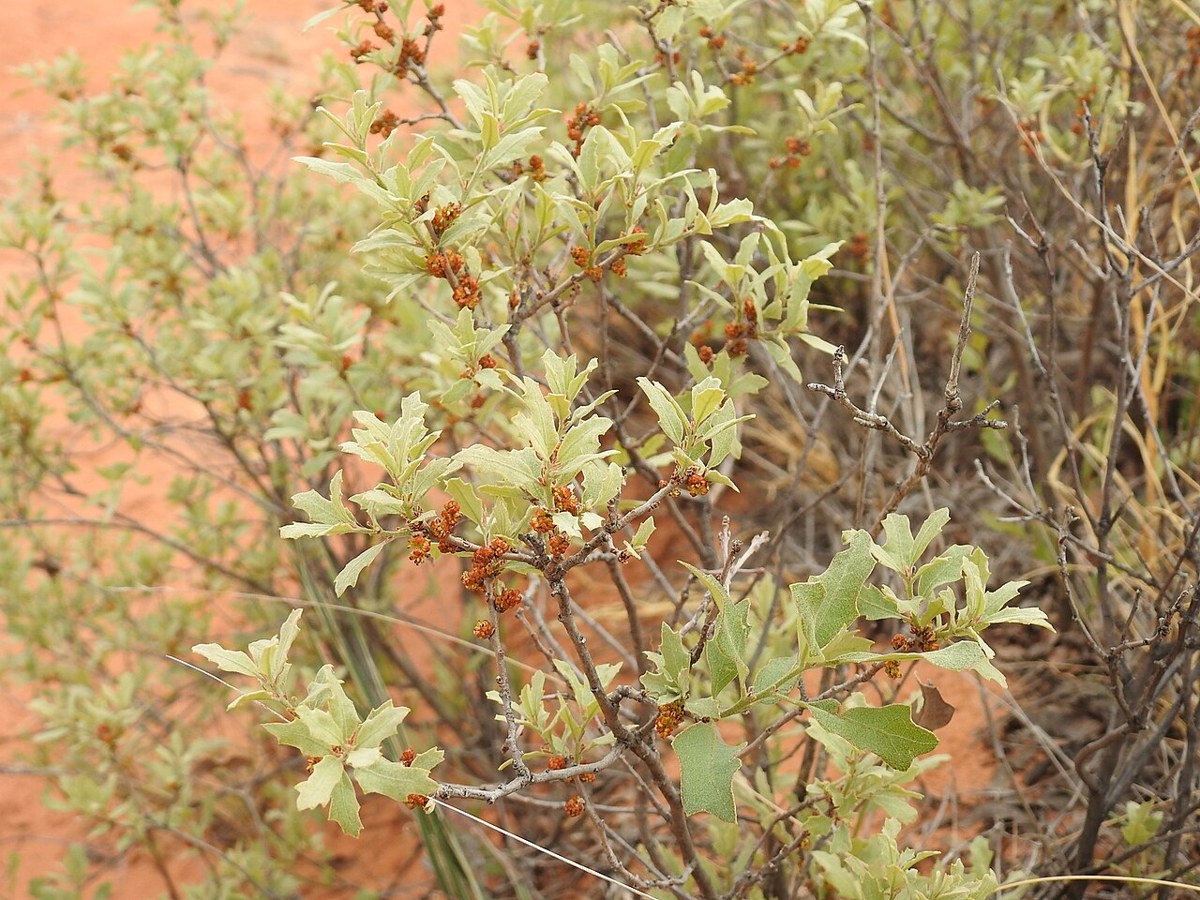
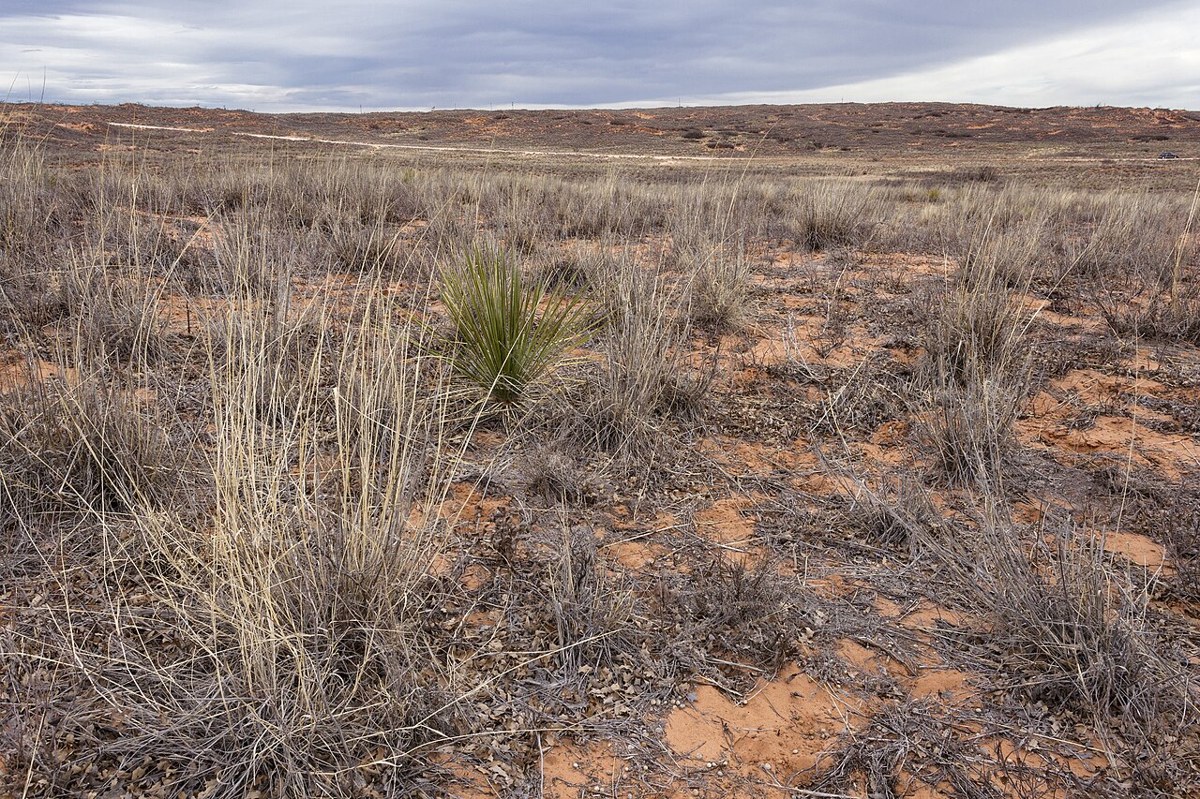
Quercus havardii, known as Shin Oak or Shinnery Oak, is a low, clonal, thicket-forming shrub oak of the sandy plains and dunes of the southern High Plains. It belongs to the Fagaceae, and despite being a true oak, it almost never grows as a tree — instead spreading by underground rhizomes into dense, knee-high to waist-high colonies that can cover acres of sandy ground, with a single clone sometimes persisting and expanding for centuries. The common name “shin oak” references its typical height, rarely taller than a person’s shin to knee, while “shinnery” describes the extensive, almost grassland-like thickets it forms across the sand-sheet country of the southern Great Plains.
This is a true sand specialist, found almost exclusively on deep, loose, sandy soils across the Texas and Oklahoma panhandles, eastern New Mexico, and adjacent west Texas, where it is often the dominant woody plant across huge stretches of stabilized dunes and sand-sheet rangeland. Its extensive, deep root system and rhizomatous spread make it extraordinarily resilient to fire, grazing, and drought — qualities that have made it both ecologically important and, at times, a target for rangeland brush-control efforts aimed at increasing grass forage.
For native-plant gardeners and restoration practitioners working on deep sandy soils in its native range, Shin Oak offers a tough, low-maintenance, wildlife-rich alternative to turf or bare ground, forming a naturalistic low thicket that needs essentially no irrigation once established.
Identification
Shin Oak is best recognized by its low, spreading, colonial growth habit on sandy soil, combined with classic oak-shaped, lobed leaves and small acorns borne on knee-high to waist-high stems.
Stems & Growth Form
Individual stems are typically 1 to 5 feet tall, rarely taller, arising in dense colonies from an extensive underground rhizome system that can extend many feet from any visible stem. Because the plant spreads clonally, a “shinnery” thicket is often a single genetic individual covering a large area, with stems that resprout vigorously after fire, mowing, or herbicide treatment. Bark on young stems is smooth and grayish, becoming slightly rougher with age.
Leaves
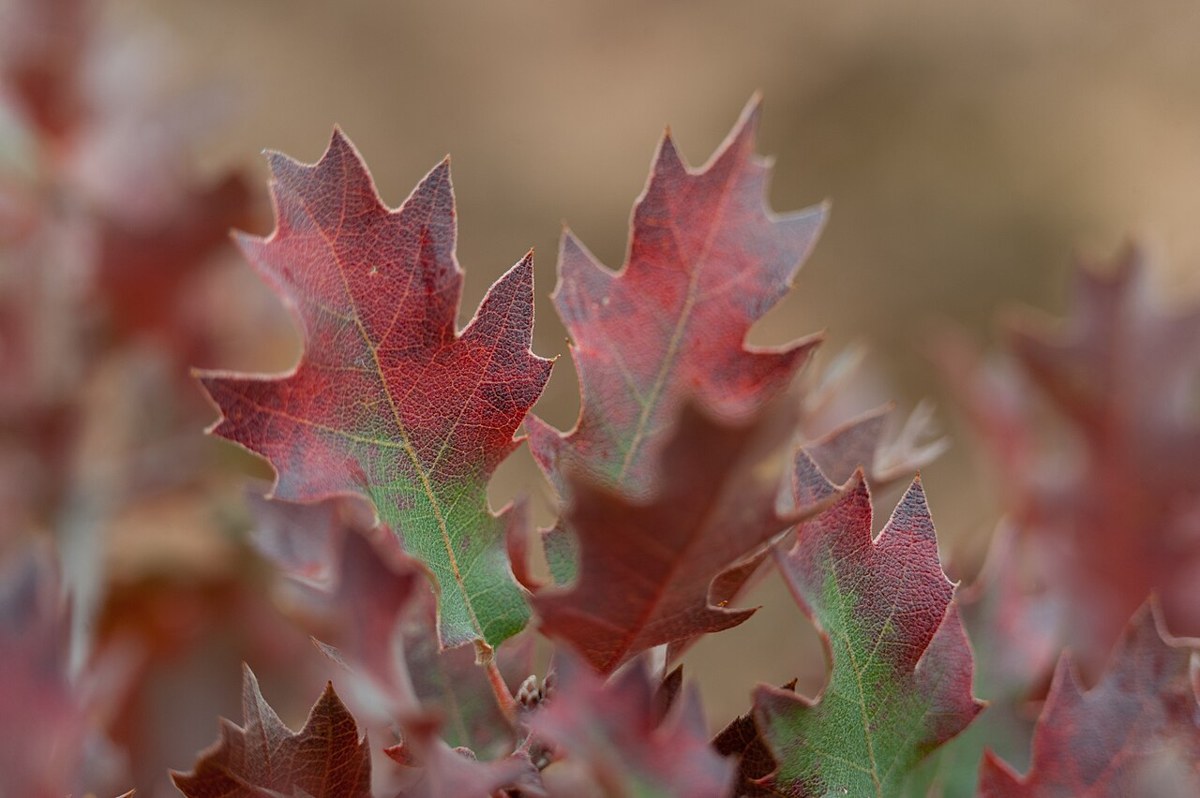
Leaves are simple, alternate, and deciduous, 2 to 4 inches long, with 4 to 7 shallow to moderately deep rounded lobes typical of the white oak group. The upper surface is dull green to blue-green, the underside paler and often finely hairy. In fall, foliage often turns attractive shades of red, orange, or bronze before dropping, and dried leaves may persist on the stems into winter.
Flowers
Like other oaks, Shin Oak is wind-pollinated and produces separate male and female flowers on the same plant in spring, as new leaves emerge. Male flowers hang in slender, drooping, yellowish-green to reddish catkins; female flowers are small and inconspicuous, borne near the leaf axils of new growth.
Fruit & Acorns
Acorns mature in a single season, about ½ to ¾ inch long, oblong to ovoid, with a shallow, scaly cap covering roughly a third of the nut. Because a single clonal colony can produce acorns across its entire spreading root system, a good mast year can yield an enormous acorn crop relative to the modest height of the plant.
Quick Facts
| Scientific Name | Quercus havardii |
| Family | Fagaceae (Beech/Oak) |
| Plant Type | Deciduous Clonal Shrub (Oak) |
| Mature Height | 1–5 ft |
| Mature Spread | Indefinite (spreads by rhizomes to form colonies) |
| Growth Rate | Slow to moderate (rhizome spread), long-lived |
| Sun Exposure | Full Sun |
| Water Needs | Low |
| Soil Type | Deep, loose sand or sandy loam; well-drained |
| Soil pH | 5.5–7.5 (acidic to neutral) |
| Bloom Time | April – May |
| Flower Color | Yellowish-green (inconspicuous) |
| Fall Color | Red, orange, or bronze |
| Fruit | Small acorns, ½–¾ in, with shallow scaly cap |
| Deer Resistant | No (browsed by deer and livestock) |
| USDA Hardiness Zones | 5–8 |
Native Range
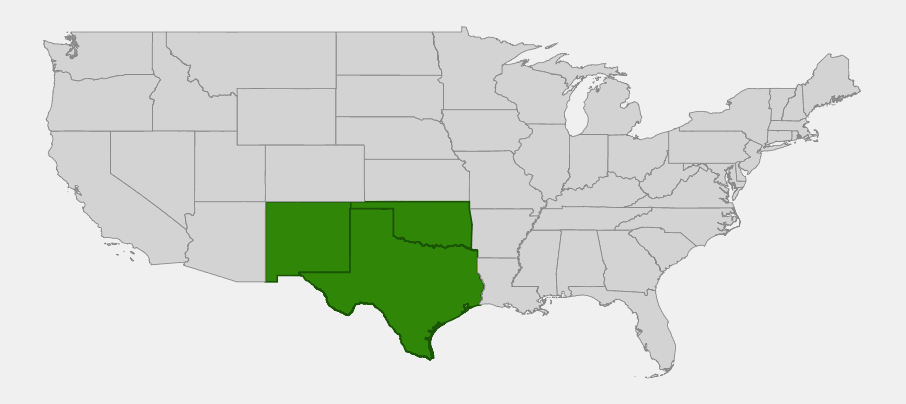
Shin Oak is native to the southern High Plains and adjacent sand-sheet country, centered on the Texas and Oklahoma panhandles, eastern New Mexico, and extending into west and north-central Texas. It is one of the dominant woody plants across huge expanses of deep sandy range in this region, often forming the characteristic “shinnery” vegetation type that gives large areas of this landscape their local name.
Throughout its range, Shin Oak is essentially restricted to deep, loose, well-drained sandy soils — stabilized dune fields, sand sheets, and sandy upland prairie — where its extensive rhizome system allows it to tap moisture and nutrients from a large area while stabilizing otherwise mobile sand. It commonly grows in a shrub-grassland mosaic alongside sand sagebrush, little bluestem, sand bluestem, and other sand-adapted native grasses, and it is a defining component of shinnery oak–sand sagebrush rangeland ecosystems important to species such as the lesser prairie-chicken.
The species is abundant and not at risk across most of its range, though shinnery oak rangeland itself has been significantly altered by historical brush-control programs aimed at reducing oak cover to increase grass forage for livestock — efforts that in some areas also reduced habitat quality for shinnery-dependent wildlife.
📋 Regional plant lists featuring Shin Oak: South and West Texas · Arizona & New Mexico
Growing & Care Guide
Shin Oak is best suited to naturalistic plantings and restoration on deep sandy soils, where its rhizomatous spread and drought tolerance let it function almost like a native groundcover shrub rather than a conventional ornamental.
Light
Give it full sun. It evolved on open, sunny sand-sheet rangeland and does not tolerate significant shade, which thins stem density and reduces acorn production.
Soil & Water
Deep, loose, sandy soil is essential; Shin Oak does not perform well in heavy clay or poorly drained ground. Once established, it is highly drought tolerant, relying on its deep, extensive root system to access moisture well below the surface, and it needs no supplemental irrigation within its native sandy-soil range beyond the first year or two after planting.
Planting Tips
Because Shin Oak spreads aggressively by rhizomes on suitable sandy ground, give it plenty of room or plan to manage its spread with mowing or edging in a garden setting. It is best used in large, informal plantings or restoration areas rather than small, contained beds. Container-grown plants or transplanted rhizome divisions established in fall or early spring will spread naturally over time on appropriate soil.
Pruning & Maintenance
Little pruning is needed; periodic mowing or light brush management can be used to control the height and density of a colony if a lower, tidier appearance is desired, since the plant resprouts readily from its root system after cutting. This same resilience makes it difficult to eliminate once established on a site, so plant it only where its spreading habit is wanted.
Propagation
Propagate by transplanting rooted rhizome divisions from an established colony, or from acorns collected in fall and planted promptly, since oak acorns do not store well when dried out. Direct seeding on prepared sandy soil is also used in rangeland restoration projects.
Landscape Uses
- Sand dune and sandy-soil stabilization on otherwise hard-to-vegetate ground
- Wildlife habitat restoration, especially for lesser prairie-chicken and other shinnery-dependent species
- Low-maintenance naturalistic groundcover on large sandy sites
- Rangeland and pasture plantings for erosion control and wildlife value
- Fall color accent in native prairie restoration
Wildlife & Ecological Value
Shin Oak is a foundational species of the shinnery rangeland ecosystem, supporting a distinctive community of wildlife adapted to sandy, oak-shrub plains.
For Birds
Shinnery oak-sand sagebrush rangeland is essential habitat for the lesser prairie-chicken, a species of conservation concern that depends on the structure and cover this plant community provides for nesting, brood-rearing, and lekking. Scaled quail, Northern Bobwhite, and numerous songbirds also use shinnery thickets for cover and forage, including the acorn crop.
For Mammals
White-tailed and mule deer browse Shin Oak foliage and acorns, and the dense low thickets provide cover for a range of small mammals adapted to sandy prairie habitat. Historically, Shin Oak rangeland also supported significant pronghorn populations that used the shrub-grassland mosaic for forage and cover.
Ecosystem Role
As one of the few woody plants able to stabilize and persist on deep, loose sand, Shin Oak plays an outsized structural role in southern High Plains ecosystems, preventing dune mobilization and creating the characteristic shrub-grassland mosaic that supports a specialized community of plants and animals found nowhere else. Its long-lived clonal colonies, some estimated to be centuries old, represent some of the oldest living plant individuals on the southern Great Plains.
Cultural & Historical Uses
Acorns from Shin Oak and related low oaks were historically gathered and processed as a food source by Indigenous peoples of the southern Plains, following the broader pattern of acorn use across oak-dominated regions of North America, which typically involved leaching to remove bitter tannins before the acorns were ground or cooked.
In the 20th century, Shin Oak became a focus of rangeland management rather than human use, as cattle ranchers and agencies across the Texas and Oklahoma panhandles and eastern New Mexico undertook extensive brush-control programs — using herbicides, mechanical treatment, and prescribed burning — to reduce shinnery oak cover and increase forage grass production for livestock. These programs significantly altered the extent and structure of shinnery rangeland across the region, and their legacy continues to shape debates over rangeland management, oil and gas development, and habitat conservation for species such as the lesser prairie-chicken today.
More recently, conservation and wildlife-management interest in shinnery oak habitat has grown substantially, as its importance to declining grassland bird species has become better understood, shifting the plant’s reputation from rangeland nuisance toward a recognized and valuable component of southern High Plains ecosystems.
Frequently Asked Questions
Why does Shin Oak stay so short?
Unlike most oaks, it spreads primarily by underground rhizomes rather than growing a single tall trunk, so what looks like a field of many small oak shrubs is often one genetic individual spreading horizontally rather than vertically.
Is Shin Oak toxic to livestock?
Young, actively growing oak foliage, including Shin Oak, can be toxic to cattle in large quantities due to tannins, and historical “oak poisoning” concerns contributed to brush-control efforts on shinnery rangeland; livestock owners in affected areas should manage grazing carefully during spring leaf-out.
Can I grow Shin Oak outside of sandy soil?
It is a strict sand specialist and performs poorly in clay or heavy soils; gardeners without naturally sandy ground should not expect good results without extensive soil amendment, and even then performance may be limited.
Will Shin Oak take over my yard?
On suitable deep sandy soil, yes — its rhizomatous spread can be vigorous and difficult to contain, so it is best suited to large, informal plantings or restoration areas rather than small garden beds, unless you are prepared to manage its spread with mowing or edging.
Why is Shin Oak important for lesser prairie-chickens?
Shinnery oak-sand sagebrush rangeland provides the specific vegetation structure — a mix of low woody cover and native grasses — that lesser prairie-chickens depend on for nesting, brood cover, and lekking, making intact shinnery habitat a conservation priority across the bird’s range.

Looking for a nursery that carries Shin Oak?
Browse our native plant nursery directory: Texas · New Mexico · Oklahoma