MacNab Cypress (Hesperocyparis macnabiana)
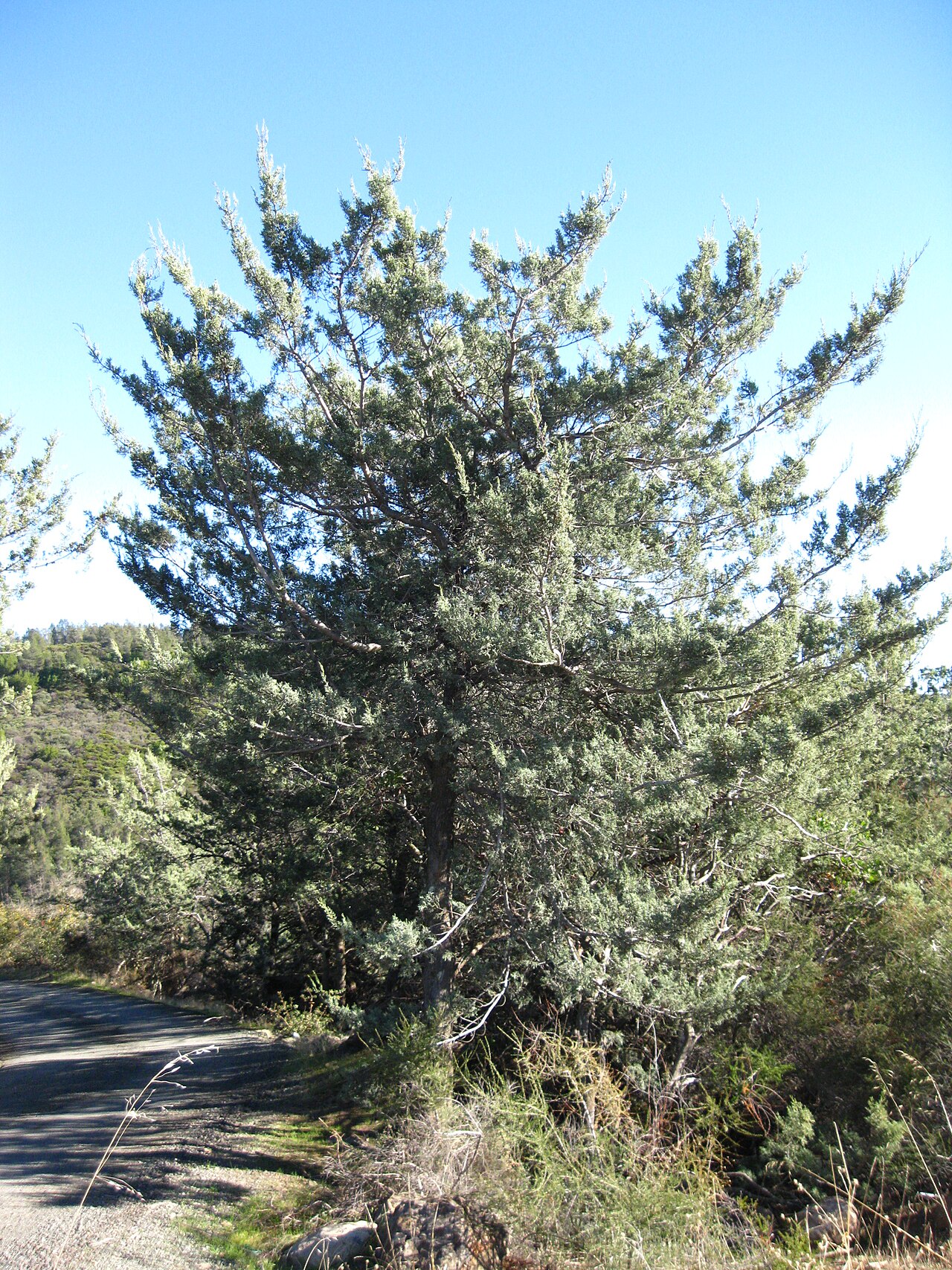
Hesperocyparis macnabiana (formerly Cupressus macnabiana), commonly known as MacNab cypress, is a small, shrubby evergreen conifer endemic to the inner North Coast Ranges, Sierra Nevada foothills, and southern Cascade Range of northern California. It has the widest distribution of any California cypress, occurring in more than 30 scattered groves, yet it is unmistakable once you know it: a low, broad-crowned tree with foliage held in distinctive flat, horizontal sprays — an arrangement found in no other North American cypress.
MacNab cypress is a true toughness specialist. Many groves grow on thin serpentine soils where almost nothing else can compete, and the species survives drought, poor nutrition, and periodic wildfire as a matter of course. In the native garden it offers an unusual silhouette, year-round structure, and virtually no water requirement once established — a strong choice for dry slopes and rock gardens in its home range.
The species carries the name of James McNab, a 19th-century Scottish curator of the Royal Botanic Garden Edinburgh, honored by Scottish botanist Andrew Murray when he described the species in 1855. Like California’s other native cypresses, it has moved through several genus names in recent decades — from Cupressus through Callitropsis to its current placement in Hesperocyparis, the genus for New World cypresses recognized by USDA PLANTS and most current floras.
Identification
MacNab cypress is a small, often multi-trunked evergreen tree or large shrub, typically 10 to 33 feet tall, lacking the single dominant trunk seen in most trees. Its crown is broad and distinctly sparse or open compared to denser conifers, and on exposed ridgetop sites it frequently takes on a windswept, irregular form. Where it grows alongside the taller, narrower Sargent cypress, MacNab cypress tends to occupy the more exposed, harshest sites, reflecting its shorter, tougher habit.
Bark
The bark is fibrous and furrowed, roughly 1 to 2 inches thick, and — unlike some California cypresses — does not peel or exfoliate, instead remaining attached in a rough, persistent surface on the trunk and larger branches.
Leaves
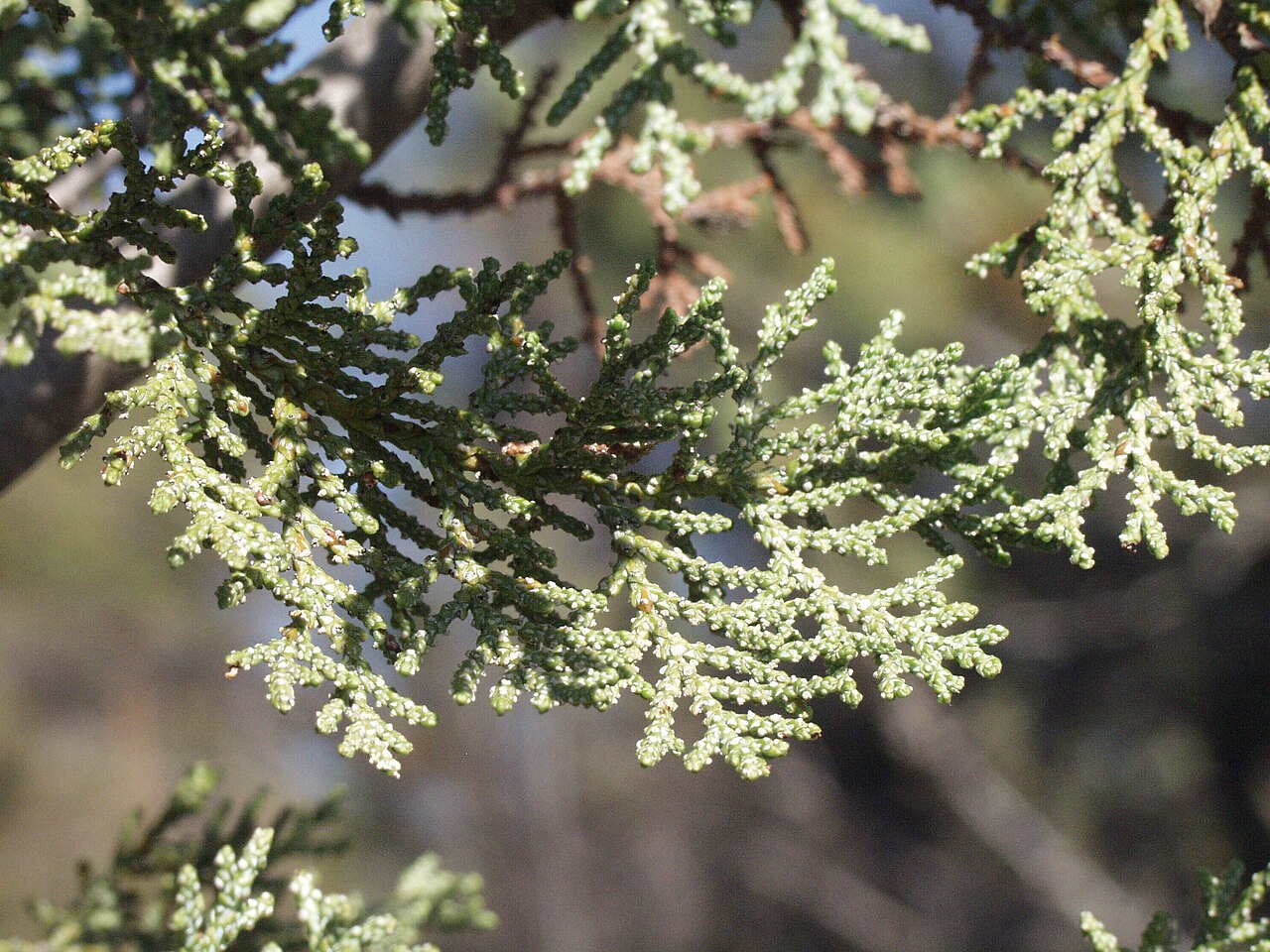
The foliage is MacNab cypress’s most distinctive identification feature: scale-like leaves are arranged in flat, fan-like horizontal sprays rather than the rounded, bushy sprays typical of other cypresses, giving branches a layered, almost fern-like appearance. Individual scale leaves are tiny, about 0.06 inch long, though they lengthen to around 0.4 inch on vigorous young shoots. The gray-green foliage has the resinous cypress scent when crushed.
Flowers & Cones
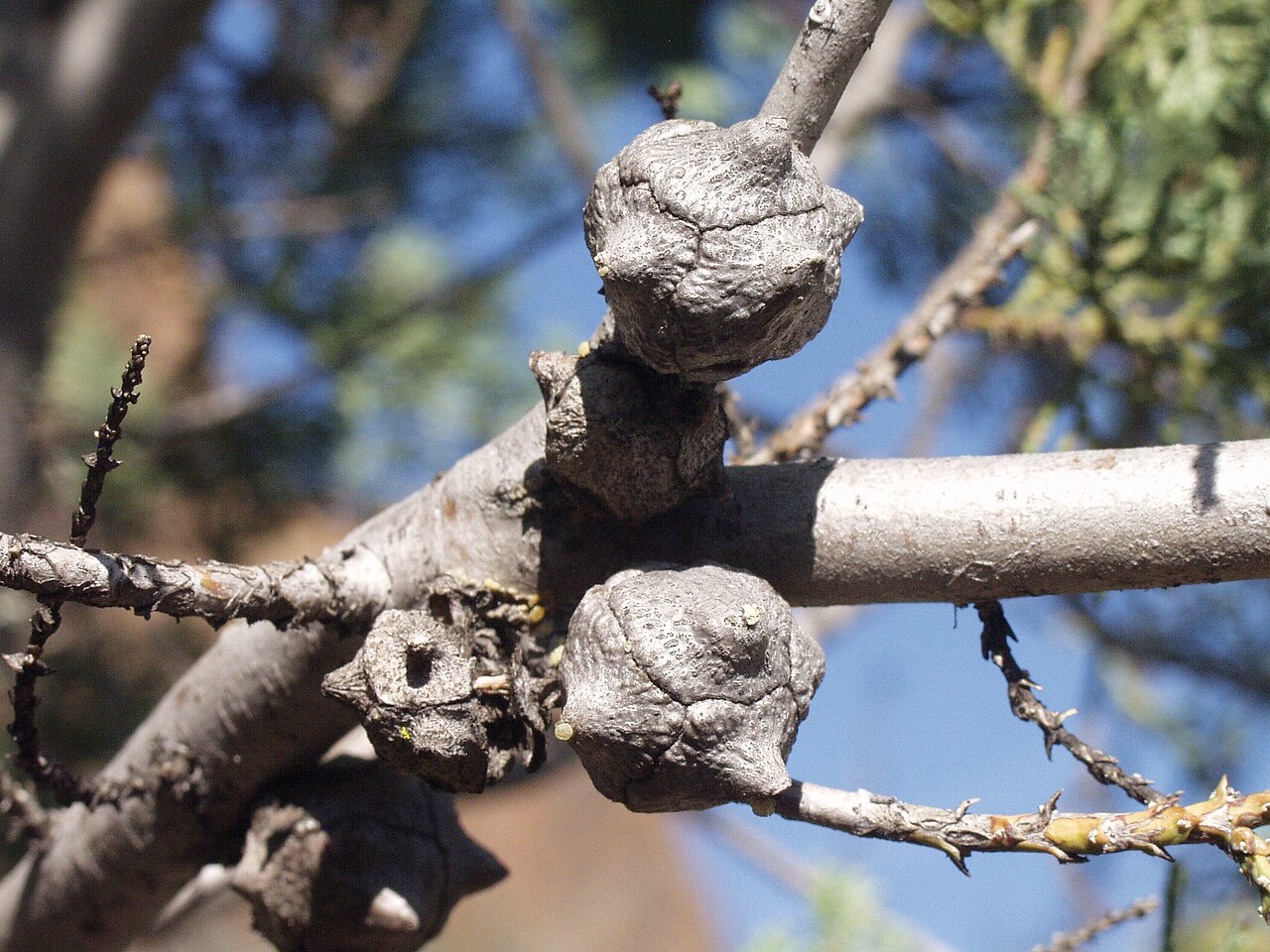
This species is monoecious, with small staminate (pollen) cones only 0.08 to 0.12 inch long. Unusually for a conifer, MacNab cypress sheds its pollen in autumn, beginning around late October, rather than in spring. Ovulate (seed) cones are solitary, up to an inch long, with a knobby surface and prominent pointed “horns” (umbos) on the upper bracts — a useful field mark distinguishing this species from Sargent cypress. The cones are closed (serotinous) and typically remain sealed on the tree for years, opening only when heated by fire or, less often, through age-related drying; each cone holds roughly 75 to 105 seeds. Natural germination rates are extremely low, under 5 percent, even after a cone opens, since seedlings require bare mineral soil and struggle wherever leaf litter or competing vegetation is present.
Quick Facts
| Scientific Name | Hesperocyparis macnabiana (syn. Cupressus macnabiana) |
| Family | Cupressaceae (Cypress) |
| Plant Type | Evergreen Conifer Tree/Large Shrub |
| Mature Height | 10–33 ft |
| Mature Spread | 10–25 ft, broad and open |
| Growth Rate | Slow |
| Sun Exposure | Full Sun |
| Water Needs | Low once established |
| Soil Type | Serpentine, clay loam, silty loam, granitic or volcanic; well-drained |
| Soil pH | 6.0–8.0 |
| Bloom Time | Late October (pollen shed) |
| Flower Color | Brown-gold (staminate cones) |
| Fall Color | Evergreen, no fall color change |
| Fruit | Knobby seed cones to 1 in, with horn-like umbos |
| Deer Resistant | Yes |
| USDA Hardiness Zones | 7–9 |
Native Range
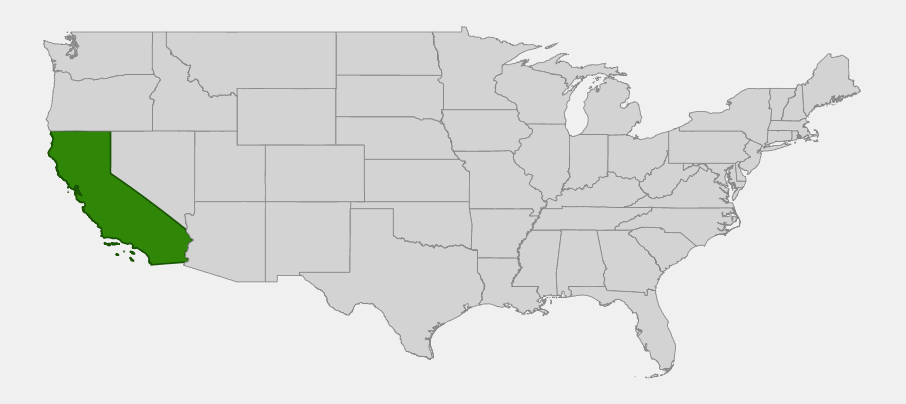
MacNab cypress is endemic to California, where it has the widest distribution of any native California cypress. More than 30 scattered groves are documented across the inner North Coast Ranges, the Sierra Nevada foothills, and the southern Cascade Range, in Sonoma, Napa, Yolo, Mendocino, Lake, Colusa, Tehama, Shasta, Butte, Nevada, Yuba, and Amador counties.
Typical habitat is dry slopes, exposed hillsides, and ridgetops, usually on north- to northeast-facing exposures between 1,000 and 2,800 feet elevation. In many locations the species is restricted to thin, nutrient-poor serpentine soils, but elsewhere it also grows on clay loam, silty loam, alluvial, granitic, and volcanic substrates. It is a component of the “northern interior cypress forest,” an open, fire-maintained, scrubby plant community closely related to knobcone pine forest, and it intergrades with serpentine chaparral, mixed chaparral, and — on moister sites — mixed evergreen or montane coniferous forest.
Because MacNab cypress depends on wildfire to open its cones and expose bare mineral soil for the rare successful germination event, long-term fire suppression in parts of its range has reduced regeneration in some groves, even where mature trees remain healthy and abundant.
📋 Regional plant lists featuring MacNab cypress: California & Nevada
Growing & Care Guide
MacNab cypress is built for neglect. Gardeners in its native range who need a tough, low-water, low-maintenance evergreen for a difficult site will find it an excellent, under-used choice, though it is not suited to rich, irrigated garden beds.
Light
Plant in full sun. Like other cypress seedlings, young plants require bright light and bare soil to establish; mature trees decline in shaded conditions.
Soil & Water
Excellent drainage is critical. This species tolerates a wide range of poor soils — serpentine, clay loam, silty loam, granitic, or volcanic — but performs poorly in rich, regularly watered garden soil, which encourages root rot. Established plants are highly drought tolerant and typically need no supplemental irrigation beyond natural rainfall in most of their range.
Planting Tips
Plant container stock in fall to take advantage of winter rains for establishment. Avoid soil amendments and rich compost, which work against this lean-soil specialist. Because germination rates are naturally very low even under ideal fire-adapted conditions, container-grown nursery stock is by far the more reliable way to establish new plants in the garden.
Pruning & Maintenance
Minimal pruning is needed. Remove dead wood as needed, but avoid heavy shaping, since this species’ naturally irregular, open form is part of its character. Avoid fertilizing, which this low-nutrient specialist does not need and may not tolerate well.
Landscape Uses
Good uses for this distinctive native conifer include:
- Dry slope and rock garden plantings where little else thrives
- Serpentine soil restoration and native habitat plantings
- Xeriscaping for low-water, low-maintenance landscapes
- Specimen plantings that showcase its unusual flat-sprayed foliage and open form
- Wildlife and fire-adapted habitat gardens in its native range
Wildlife & Ecological Value
As a structural component of California’s rare northern interior cypress forest, MacNab cypress provides year-round habitat in plant communities too harsh or nutrient-poor for most trees.
For Birds
The dense, low canopy offers nesting and roosting cover for chaparral birds, including wrens, towhees, and sparrows, in open habitats that otherwise offer little woody shelter. Its long-persisting closed cones provide a stable, slow-release seed resource once weathered or opened by fire.
For Mammals
Small mammals use the dense branching near ground level as cover in open, exposed cypress groves, particularly on serpentine barrens where ground vegetation is sparse. The persistent woody structure of groves offers stable long-term shelter in an otherwise harsh landscape.
For Pollinators
MacNab cypress is wind-pollinated, offering little nectar reward, but its unusual autumn pollen shed — beginning around late October — provides pollen when few other plants in these dry habitats are flowering, making it a minor but notable resource for pollen-foraging insects active in the cooler months.
Ecosystem Role
MacNab cypress anchors a distinct, fire-dependent plant community found almost nowhere else, often on serpentine soils that support a high proportion of California’s endemic flora. Its deep taproot and persistent woody structure help stabilize thin, erosion-prone soils, and its reliance on fire for successful reproduction links its long-term survival directly to the natural fire regimes of the chaparral and interior cypress forest it inhabits.
Cultural & Historical Uses
MacNab cypress has limited documented use by Indigenous Californians, likely reflecting both its patchy distribution on marginal, often serpentine terrain and its small, shrubby stature compared to larger timber trees of the region. It is primarily known today through botanical, ecological, and horticultural interest rather than historical utilitarian use.
The species was formally described in 1855 by Scottish botanist Andrew Murray, who named it in honor of James McNab, curator of the Royal Botanic Garden Edinburgh and a prominent figure in 19th-century British horticulture — part of a broader Victorian-era enthusiasm for collecting and naming California’s newly discovered conifers. Along with California’s other native cypresses, its scientific classification has shifted repeatedly in recent decades, moving from Cupressus through brief placement in Callitropsis before settling in Hesperocyparis, the genus most current authorities, including USDA PLANTS, now use for New World cypresses.
In modern native-plant horticulture, MacNab cypress is valued chiefly as a tough, distinctive specimen for challenging dry, poor-soil sites where few other evergreens will perform, and as a restoration species for the rare serpentine and interior cypress forest communities it depends on.
Frequently Asked Questions
How do I tell MacNab cypress apart from Sargent cypress?
MacNab cypress is shorter and shrubbier, usually under 33 feet, with a broad, sparse crown and no single dominant trunk, while Sargent cypress grows taller with a single erect trunk. MacNab cypress foliage is held in distinctive flat, fan-like sprays, and its cones have prominent horn-like umbos, both useful identification clues.
Why does MacNab cypress bloom in autumn instead of spring?
Its pollen shed, beginning around late October, is unusual among conifers and not fully understood, but it means the species’ reproductive timing is distinct from most other California cypresses and conifers, which typically shed pollen in late winter or spring.
Does this cypress need fire to grow from seed?
Essentially, yes, for reliable reproduction. Its cones are closed and usually require fire’s heat to open; even then, natural germination rates are extremely low, under 5 percent, because seedlings need bare mineral soil that fire, not ordinary seed dispersal, most reliably provides.
Can I grow MacNab cypress outside California?
It is only native to California, and its strong adaptation to serpentine and other lean, well-drained soils, combined with its need for dry summers, makes it best suited to California’s Mediterranean climate and similar dry-summer regions rather than humid or wet-summer gardens elsewhere.
Is MacNab cypress the same plant sold as “Cupressus macnabiana”?
Yes. Cupressus macnabiana is the older scientific name still commonly used in nurseries and older references. Current taxonomic authorities, including USDA PLANTS, place the species in the genus Hesperocyparis instead.

Looking for a nursery that carries MacNab cypress?
Browse our native plant nursery directory: California