Cooper’s Box Thorn (Lycium cooperi)
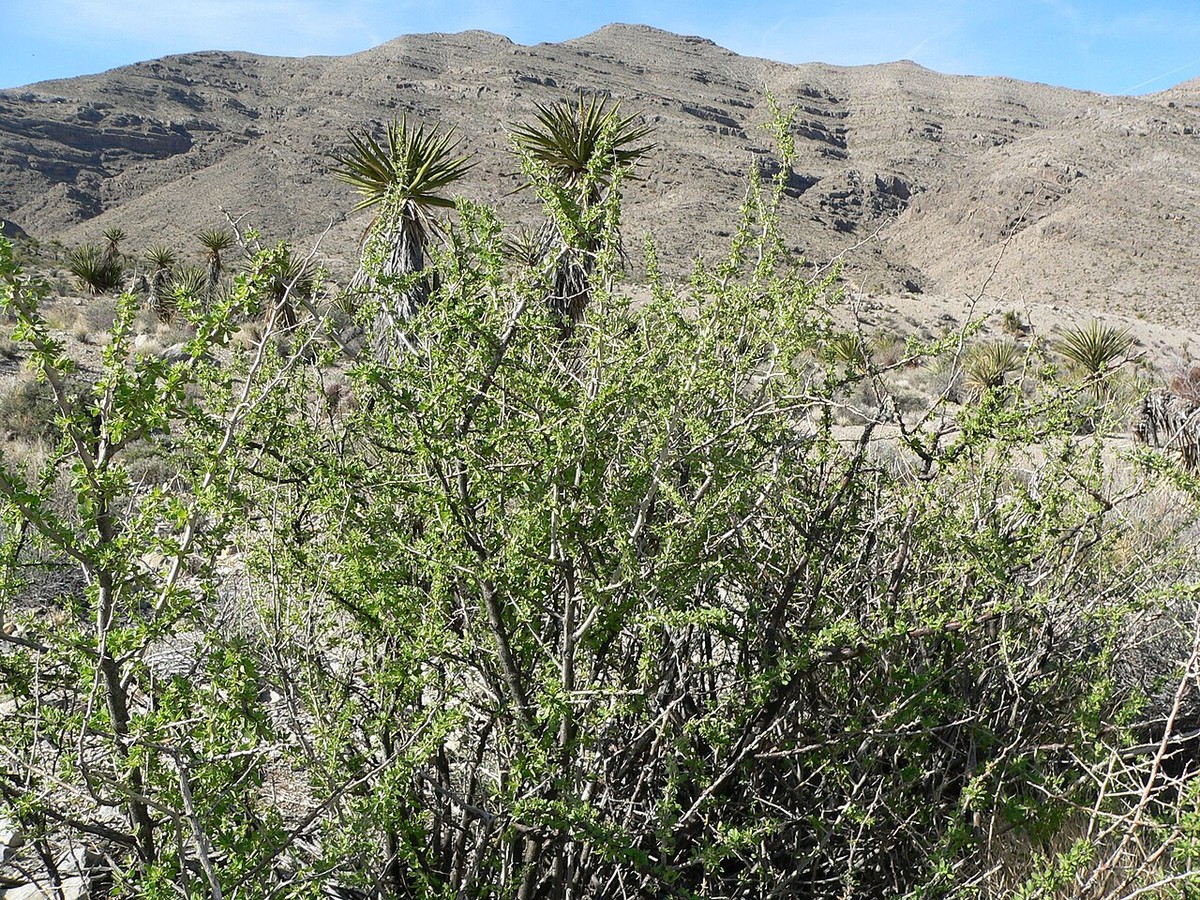
Lycium cooperi, commonly known as Cooper’s Box Thorn or Cooper’s Desert Thorn, is a dense, rigidly branched, spiny shrub of the Mojave and northwestern Sonoran deserts. A member of the Solanaceae (nightshade family) — the same family that includes tomatoes, peppers, and petunias — Cooper’s box thorn shares the family’s characteristic small tubular flowers, but in every other respect it is built for the harshest desert conditions: tough, thorny, and able to persist on rocky slopes and desert washes where few other shrubs survive.
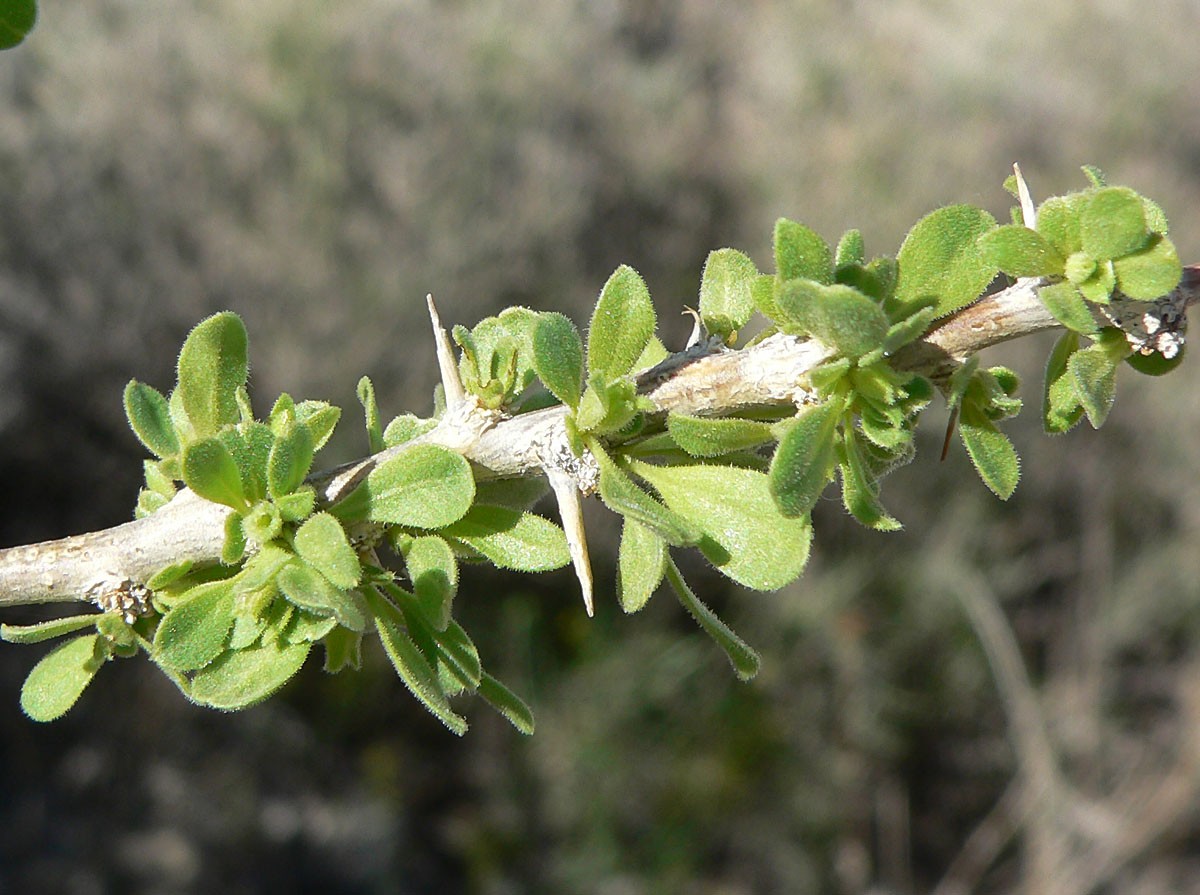
Cooper’s box thorn forms a tangled, intricately branched shrub typically 2 to 6 feet tall, with numerous rigid, gray, spine-tipped twigs and small, fleshy, gray-green leaves clustered in tufts along the stems. Small white to pale lavender tubular flowers appear in spring, followed by round red or orange berries that are an important food source for desert wildlife. The plant’s dense, thorny structure also makes it valuable as protective nesting cover in an otherwise exposed desert landscape.
For gardeners in the low deserts of California, Nevada, and Arizona, Cooper’s box thorn is an unfussy, extremely drought-tolerant native shrub well suited to wildlife gardens and naturalistic desert landscaping. It is not an ornamental in the showy sense, but its toughness, wildlife value, and function as a living barrier make it a useful component of a true desert native planting.
Identification
Cooper’s box thorn grows as a dense, rounded to irregular shrub, usually 2 to 6 feet tall, with numerous rigid, intricately interlacing branches. The gray-barked stems end in sharp spines, and the overall structure is tangled and thorny, giving the shrub an effective defensive and protective form.
Leaves
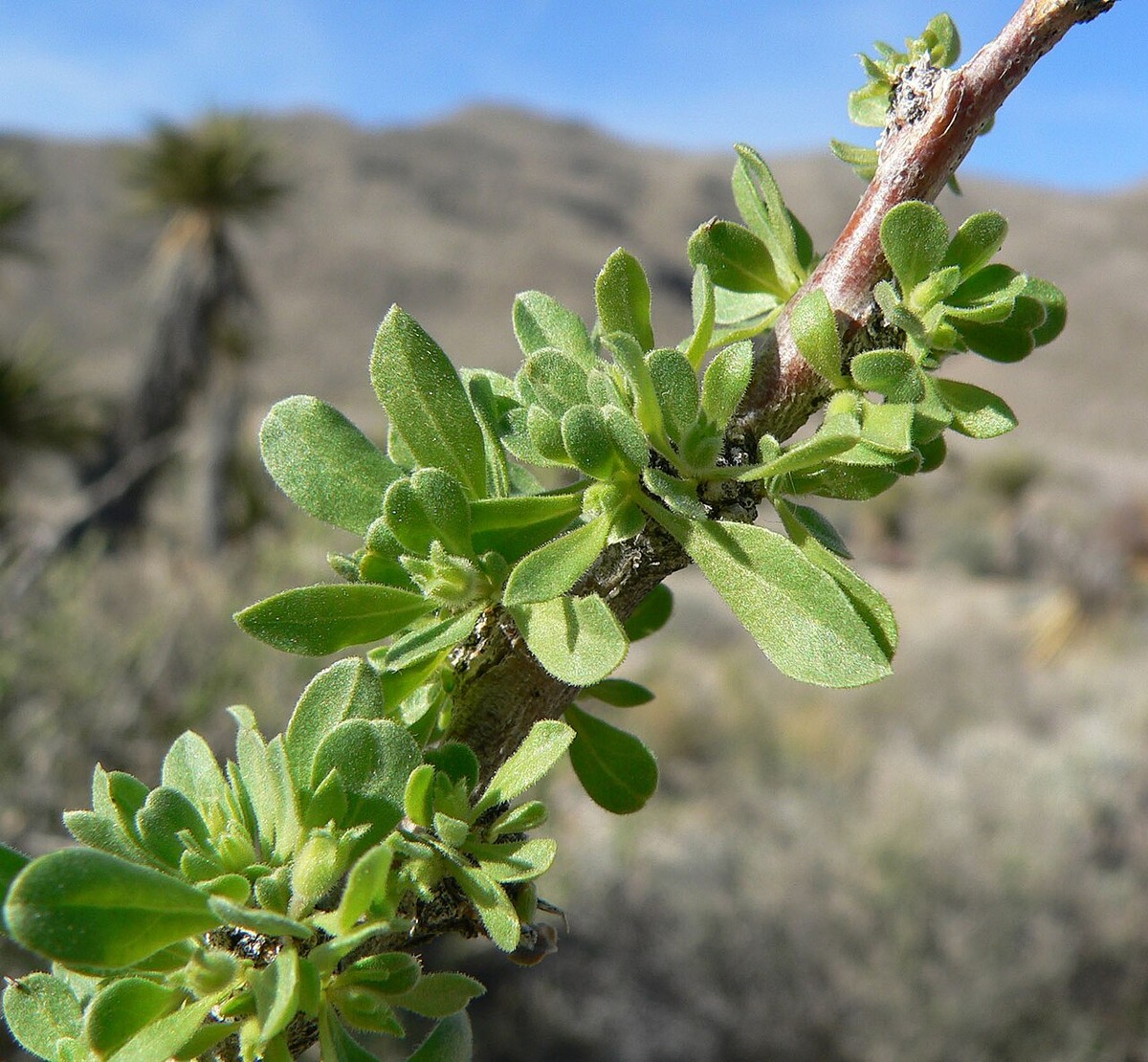
The leaves are small, fleshy, and spoon-shaped to narrowly oblong, typically under 1 inch long, clustered in tufts along the stems at the nodes. They are gray-green and often finely hairy, an adaptation that helps reduce water loss in the intense desert sun. The foliage is deciduous to drought-deciduous, often dropping during the driest, hottest parts of the year.
Flowers & Fruit
Small, tubular, bell-shaped flowers appear in spring, typically white to pale lavender with darker veining, and are borne singly or in small clusters at the leaf axils — a flower form typical of the nightshade family. After pollination, the plant produces small, round, fleshy berries about ¼ to ⅜ inch across that ripen from green to bright red or orange. The berries are an important food source for birds and small mammals, which also help disperse the seeds.
Quick Facts
| Scientific Name | Lycium cooperi |
| Family | Solanaceae (Nightshade) |
| Plant Type | Drought-deciduous spiny shrub |
| Mature Height | 2–6 ft |
| Mature Spread | 3–6 ft, dense tangled form |
| Growth Rate | Slow to moderate |
| Sun Exposure | Full Sun |
| Water Needs | Very low; highly drought tolerant |
| Soil Type | Dry, rocky, sandy or gravelly desert soils |
| Soil pH | Neutral to alkaline |
| Bloom Time | March – May |
| Flower Color | White to pale lavender |
| Fall Color | None; foliage often drops in summer drought |
| Fruit | Round red to orange berries, spring–summer |
| Deer Resistant | Yes (spiny structure discourages browsing) |
| USDA Hardiness Zones | 7–10 |
Native Range
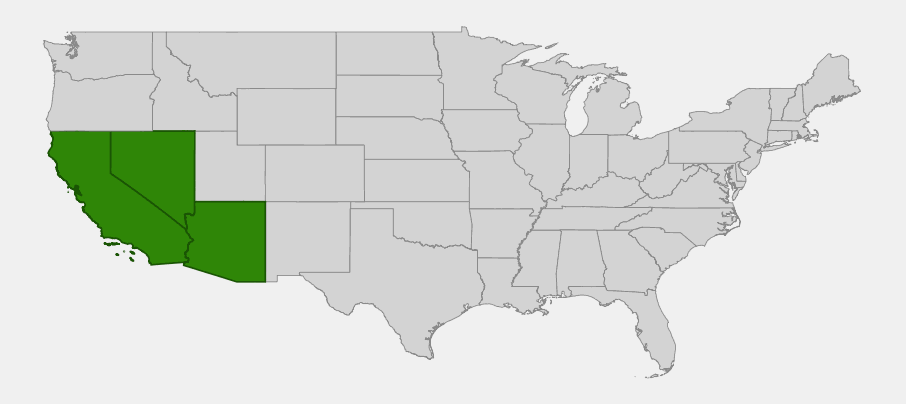
Cooper’s box thorn is native to the Mojave Desert and the northwestern edge of the Sonoran Desert, occurring in southeastern California, southern Nevada, and northwestern and central Arizona. It is most common on the rocky slopes, washes, and desert flats that typify the Mojave Desert landscape.
Across this range, Cooper’s box thorn typically grows on dry, rocky or sandy soils in desert scrub and creosote bush communities, generally below about 5,000 feet in elevation. It is often found alongside Joshua trees, yuccas, and other characteristic Mojave Desert shrubs, tolerating the extreme heat, aridity, and poor soils typical of its habitat.
Because it is well adapted to disturbed desert ground as well as intact native scrub, Cooper’s box thorn persists across a range of site conditions within its native range, from undisturbed desert washes to roadside and graded areas.
📋 Regional plant lists featuring Cooper’s Box Thorn: California & Nevada · Arizona & New Mexico
Growing & Care Guide
Cooper’s box thorn is a rugged, low-maintenance shrub well matched to true low-desert gardening conditions. It asks for almost nothing beyond sun and sharp drainage.
Light
Plant Cooper’s box thorn in full sun. It is adapted to intense, unfiltered desert sunlight, and shade will produce a thin, weak plant far from its natural dense, thorny form.
Soil & Water
Give it dry, rocky, sandy, or gravelly soil with excellent drainage, matching the washes and slopes where it grows naturally. Once established, Cooper’s box thorn needs no supplemental irrigation and can suffer root rot in rich or regularly watered garden soil. Water young plants sparingly during their first season to help establish roots, then withhold irrigation except during the most extreme drought.
Planting Tips
Set out container-grown plants in fall or early spring. Choose a dry, sunny, well-drained site, and allow room for the shrub’s dense, spreading, thorny growth — 3 to 6 feet of clearance from paths and seating areas is wise given the spines. Cooper’s box thorn is well suited to naturalistic desert plantings rather than formal garden beds.
Pruning & Maintenance
Minimal pruning is needed. Remove dead wood as desired, using thick gloves given the spines, but otherwise allow the plant to retain its naturally dense, tangled form, which is part of its wildlife value. It has few pest or disease problems in appropriate desert soils and needs no fertilizer.
Landscape Uses
- Wildlife habitat gardens, for berries, cover, and nesting protection
- Low-desert xeriscaping on the driest, sunniest part of the property
- Barrier or security plantings, taking advantage of the dense, spiny structure
- Naturalistic desert scrub restoration and revegetation
- Erosion control on dry slopes and desert washes
Wildlife & Ecological Value
Despite its modest size, Cooper’s box thorn is a disproportionately important plant for Mojave Desert wildlife, offering food and shelter in a sparse landscape.
For Pollinators
The small tubular spring flowers attract native bees and other insects adapted to desert bloom timing, providing a nectar source during the relatively narrow spring flowering window typical of Mojave Desert shrubs.
For Birds
The dense, thorny branching offers excellent protective nesting and roosting cover for small desert birds, shielding nests and young from predators that cannot navigate the tangled spines. The red to orange berries are also eaten by a variety of desert birds as a seasonal food source.
For Mammals
Small mammals use the dense branch structure for cover and protection from predators, and the berries provide food for rodents and other desert wildlife capable of navigating around the thorns. The spiny form generally discourages browsing by larger herbivores such as deer.
Ecosystem Role
As one of the structurally densest shrubs in its desert scrub community, Cooper’s box thorn provides disproportionate habitat value relative to its size, offering some of the only effective predator-resistant cover available to small desert animals in open Mojave Desert scrub. Its root system also helps stabilize soil on the rocky slopes and washes where it typically grows.
Cultural & Historical Uses
Documented traditional uses of Cooper’s box thorn specifically are limited in available ethnobotanical records, though other Lycium species native to the Southwest, sometimes called wolfberries, have a longer documented history of use by Indigenous peoples of the region, including consumption of the berries where palatable and use of the wood for small implements.
Cooper’s box thorn is named in honor of James Graham Cooper, a 19th-century American naturalist and physician who collected extensively in California and the broader Southwest during the era of early botanical exploration of the region.
Today the species has little documented commercial or cultural use beyond its ecological role and its occasional use in native desert landscaping and habitat restoration projects within its native range.
Frequently Asked Questions
Are Cooper’s box thorn berries edible?
Specific, reliable information on edibility of this species’ berries is not well documented, and unlike some cultivated relatives in the genus (such as goji berry), Cooper’s box thorn is not grown or recognized as a food crop. It is best left for the birds and desert wildlife that rely on it.
Is Cooper’s box thorn related to goji berry?
Yes, loosely. Goji berry comes from Asian Lycium species in the same genus, but Cooper’s box thorn is a distinct North American desert species not cultivated for fruit production.
Why does Cooper’s box thorn lose its leaves?
It is drought-deciduous, often dropping its leaves during the hottest, driest parts of the desert summer as a water-conservation strategy, then refoliating with cooler temperatures or rainfall. This is normal, healthy behavior rather than a sign of plant stress or disease.
Is Cooper’s box thorn good for a wildlife garden?
Very good, within its low-desert climate range. Its berries, flowers, and especially its dense, thorny structure make it valuable for birds and small mammals seeking food and predator-resistant shelter.
How much water does Cooper’s box thorn need?
Very little. Once established in well-drained soil, it needs no supplemental irrigation and is adapted to the extreme aridity of the Mojave Desert; overwatering is more likely to harm the plant than underwatering.

Looking for a nursery that carries Cooper’s Box Thorn?
Browse our native plant nursery directory: California · Nevada · Arizona