Crevice Alumroot (Heuchera micrantha)
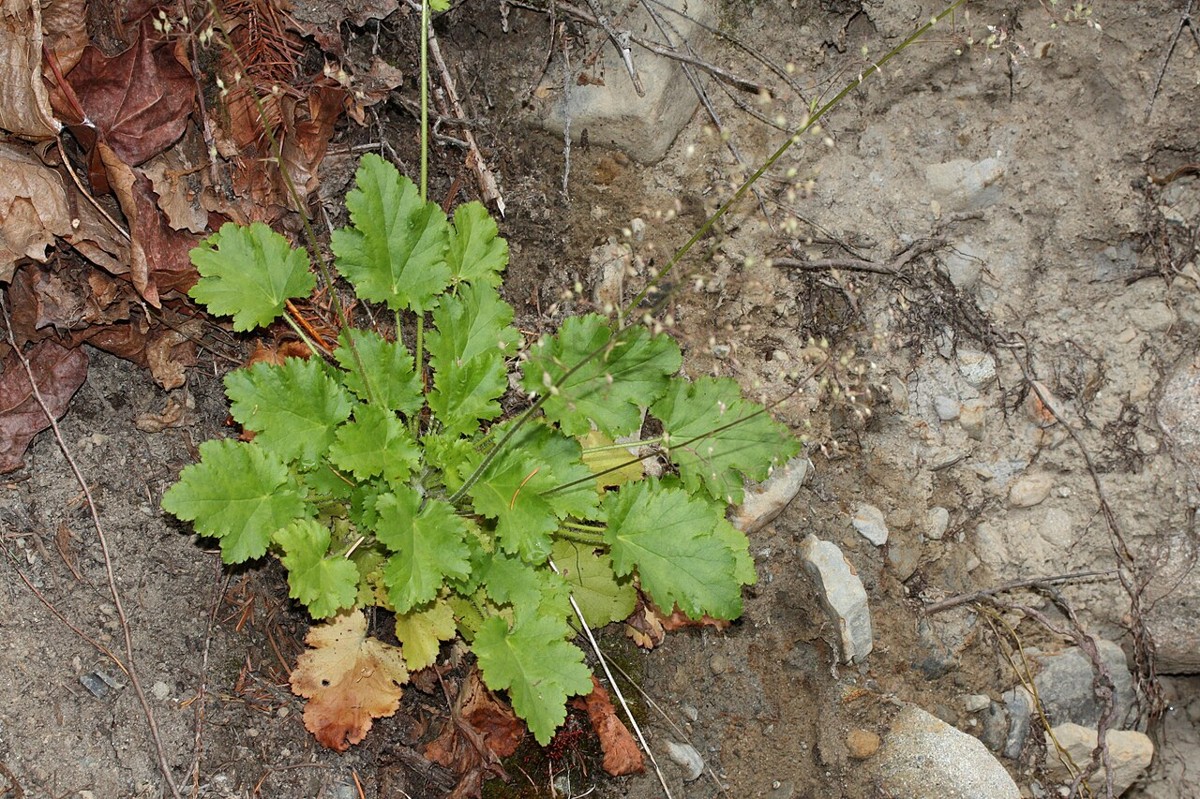
Heuchera micrantha, commonly known as crevice alumroot or small-flowered alumroot, is a tough, shade-loving perennial of the saxifrage family (Saxifragaceae) native to rocky slopes, cliffs, and streambanks of the Pacific states. True to its common name, it specializes in rooting directly into narrow cracks and ledges in rock, where few other plants can gain a foothold.
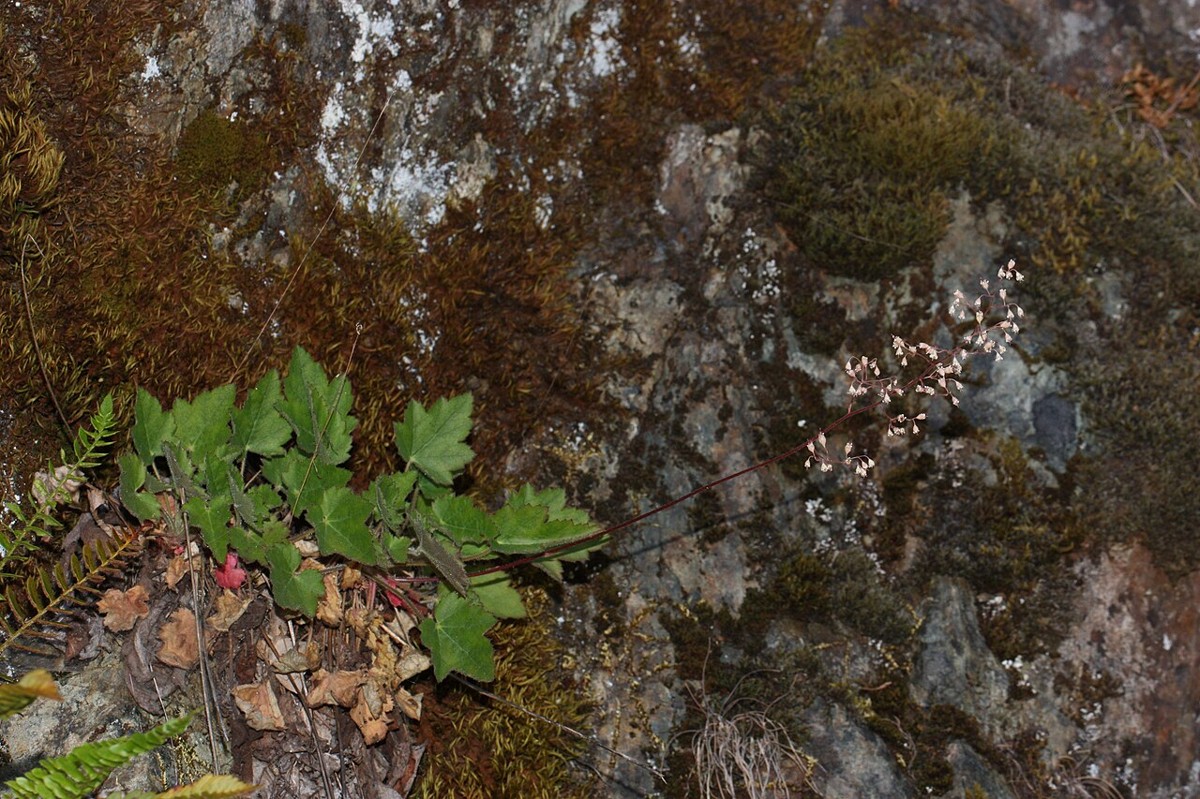
The plant forms a neat basal rosette of rounded, maple-like leaves, fuzzy to the touch and often tinged reddish underneath, from which slender, wiry flowering stems rise well above the foliage in late spring. These stems carry open, airy clusters of tiny, star-shaped white to cream flowers that give the plant a delicate, lacy look quite different from its coarse, grippy leaves.
Crevice alumroot is the wild parent of many popular garden Heuchera cultivars bred for colorful foliage, but the species itself remains an excellent, low-maintenance choice for native rock gardens, shaded slopes, and woodland edges in the Pacific states, where it provides season-long texture and a reliable early-summer bloom for pollinators.
Identification
Crevice alumroot is a clump-forming evergreen to semi-evergreen perennial. The basal leaf rosette typically stays under a foot tall, while the branching flower stalks can reach 1 to 3 feet, giving the plant a two-tiered look — a low mound of foliage with flowers floating well above it.
Leaves
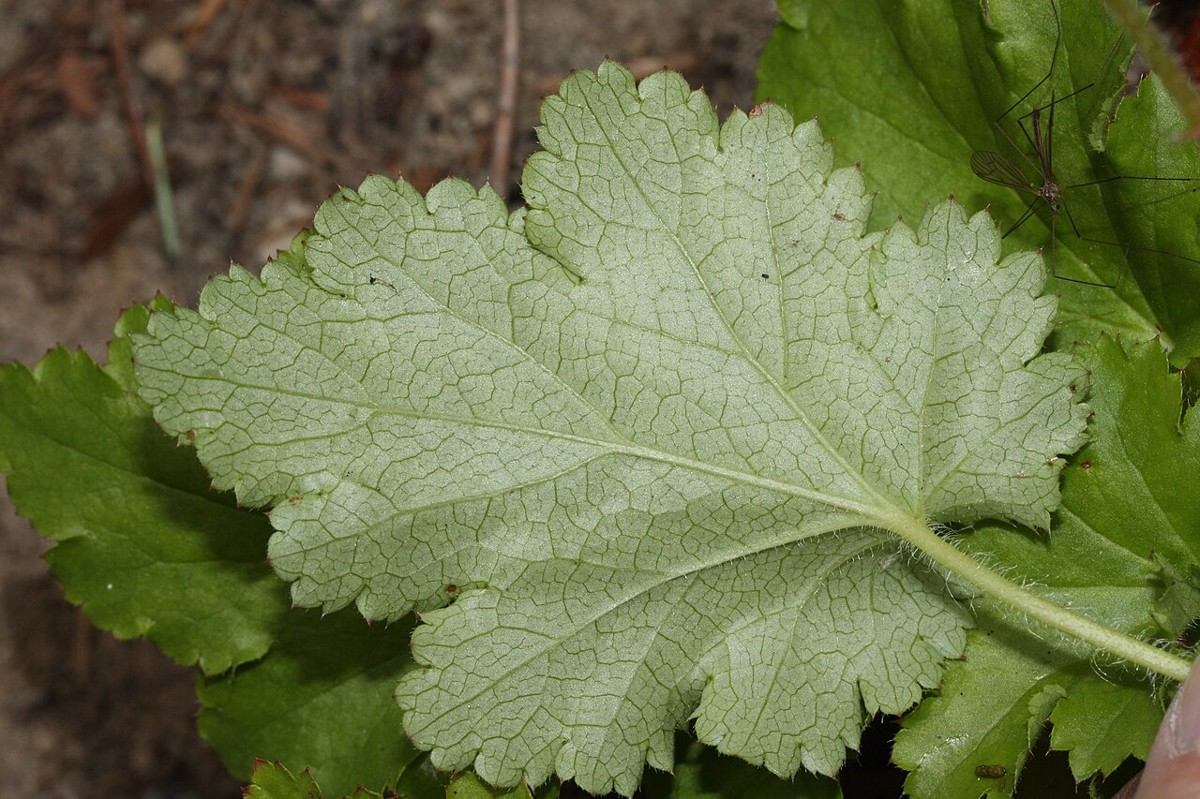
Leaves are rounded to heart-shaped in outline, 1 to 3 inches across, with 5 to 7 shallow lobes and toothed margins, borne on long, hairy petioles. The upper surface is matte green and softly hairy; the undersides and petioles are often flushed with red or bronze, especially in sunnier or more exposed sites.
Flowers
Flowering stems are slender, reddish, and sparsely leaved, branching into loose, open panicles well above the foliage. Individual flowers are tiny — about ⅛ inch — with five narrow, often unequal, white to pale pink petals and protruding stamens that give each flower a small, star-like or bell-like appearance. Bloom runs from April into July depending on elevation and latitude.
Fruit & Seeds
After flowering, each flower matures into a small two-beaked capsule packed with tiny seeds, which are shaken out by wind and rain as the dry stalks persist into summer.
Quick Facts
| Scientific Name | Heuchera micrantha |
| Family | Saxifragaceae (Saxifrage) |
| Plant Type | Herbaceous Perennial |
| Mature Height | 1–3 ft (in flower) |
| Mature Spread | 8–16 in (foliage rosette) |
| Growth Rate | Slow to moderate |
| Sun Exposure | Part Shade to Shade |
| Water Needs | Low to Moderate |
| Soil Type | Rocky, gravelly or sandy; well-drained |
| Soil pH | 6.0–7.5 (slightly acidic to neutral) |
| Bloom Time | April – July |
| Flower Color | White to pale pink |
| Fall Color | Evergreen to semi-evergreen; leaves may bronze in cold |
| Fruit | Small two-beaked seed capsule |
| Deer Resistant | Yes |
| USDA Hardiness Zones | 5–9 |
Native Range
Crevice alumroot is native to the Pacific slope of North America, with county-level records confirming it across western Washington, western Oregon, and nearly all of California, with a disjunct presence recorded in northern Idaho as well. It is most abundant in the Coast Ranges, Klamath-Siskiyou Mountains, and the western foothills of the Cascades and Sierra Nevada.
True to its common name, this species specializes in rocky, vertical, or steeply sloped habitat: cliff faces, canyon walls, rock outcrops, and talus slopes, often in the moist shade of coniferous or mixed forest, but also on sunnier exposed rock where seepage keeps roots cool. It is frequently found rooted directly in narrow cracks where soil has barely accumulated, as well as along shaded streambanks.
Because it tolerates both the wetter forests west of the Cascades and drier rocky canyons further inland, crevice alumroot has a somewhat broader ecological tolerance than many of its Heuchera relatives, though it is always tied to rocky substrate rather than open, deep soil.
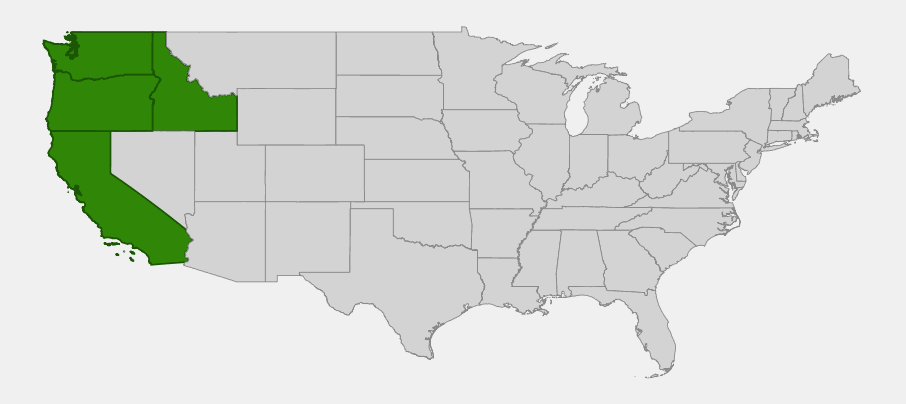
📋 Regional plant lists featuring crevice alumroot: California & Nevada · Western Oregon & Western Washington · Idaho, Eastern Oregon & Eastern Washington
Growing & Care Guide
Crevice alumroot is a forgiving, low-maintenance native for shaded or rocky garden spots where many perennials fail to thrive.
Light
Part shade to full shade is ideal, mimicking its natural home on forested slopes and shaded rock. It tolerates more sun in cooler, coastal climates or where soil moisture is reliable, but foliage tends to scorch in hot, exposed sites.
Soil & Water
Give it rocky, gravelly, or sandy soil with excellent drainage — heavy, wet clay around the crown is the most common cause of failure. Established plants are reasonably drought tolerant, especially in shade, though occasional deep watering during dry summers keeps foliage lush. A rock garden, raised bed, or crevice planting mimics its natural footing best.
Planting Tips
Plant in fall or spring, tucking the crown slightly above soil level and surrounding it with coarse gravel or small stones to improve drainage right at the base — much like its wild habitat. It is especially well suited to retaining walls, rock gardens, and shaded slopes where it can root into crevices.
Pruning & Maintenance
Remove spent flower stalks after bloom to tidy the plant, and trim away any tattered winter foliage in early spring. Established clumps need little else, though dividing congested clumps every few years keeps them vigorous.
Propagation
Propagate by dividing rosettes in early spring or fall, or by sowing the fine seed on the soil surface in fall and allowing winter cold to break dormancy.
Landscape Uses
- Rock gardens and crevice gardens
- Shaded slopes and retaining walls
- Woodland garden edges beneath conifers
- Streamside and rain garden plantings in partial shade
- Container and trough gardens for small-space native planting
Wildlife & Ecological Value
For Pollinators
The small, nectar-rich flowers attract native bees, small flies, and other beneficial insects during the late spring bloom window, when the open panicles make an easy landing pad for tiny pollinators.
For Birds
Hummingbirds will occasionally visit the flowers for nectar, and small songbirds may glean insects drawn to the blooms.
For Mammals
The fuzzy, slightly bitter foliage is not a preferred browse for deer, which makes crevice alumroot a reliable choice in gardens with heavy deer pressure.
Ecosystem Role
By rooting into bare rock crevices, crevice alumroot helps stabilize thin soils on slopes and cliff faces and is often among the first flowering plants to colonize disturbed rock surfaces, paving the way for other species as organic matter accumulates.
Cultural & Historical Uses
Like other native alumroots, crevice alumroot has a history of use by Indigenous peoples of the Pacific Coast, who prepared the astringent roots as a traditional remedy for digestive complaints and applied them to wounds. These uses are recorded here as history, not as guidance for use.
In horticulture, Heuchera micrantha is best known as one of the key wild parents behind many of the colorful-leaved Heuchera cultivars sold in nurseries today, including the widely planted ‘Palace Purple.’ The species itself, with its plainer green foliage, is less common in cultivation than its showy hybrids but is prized by native-plant gardeners for its authenticity and reliable performance in rocky, shaded sites.
Early botanical collectors documented the species from rocky Pacific slope habitats in the 19th century, and it remains a useful indicator of intact rock-outcrop plant communities in the forests of California, Oregon, and Washington.
Frequently Asked Questions
Is crevice alumroot the same plant as garden Heuchera?
It is one of the wild species behind many popular Heuchera garden cultivars, but the straight species has plain green foliage rather than the purple or caramel tones bred into ornamental varieties.
Does crevice alumroot need rocky soil to grow well?
It performs best with sharp drainage, which rocky or gravelly soil provides naturally, but it can succeed in any well-drained garden soil as long as the crown isn’t sitting in constant moisture.
How much sun does it need?
Part shade to full shade is best. In hot inland gardens, too much direct sun can scorch the leaves, while coastal gardens can often handle a bit more light.
Is crevice alumroot deer resistant?
Yes, its fuzzy, somewhat bitter foliage is rarely browsed by deer, making it a dependable choice in gardens where deer pressure is high.
When does crevice alumroot bloom?
Typically from April through July, with the airy white to pink flower sprays appearing well above the foliage mound.

Looking for a nursery that carries crevice alumroot?
Browse our native plant nursery directory: California · Oregon · Washington · Idaho