California Evening Primrose (Oenothera californica)
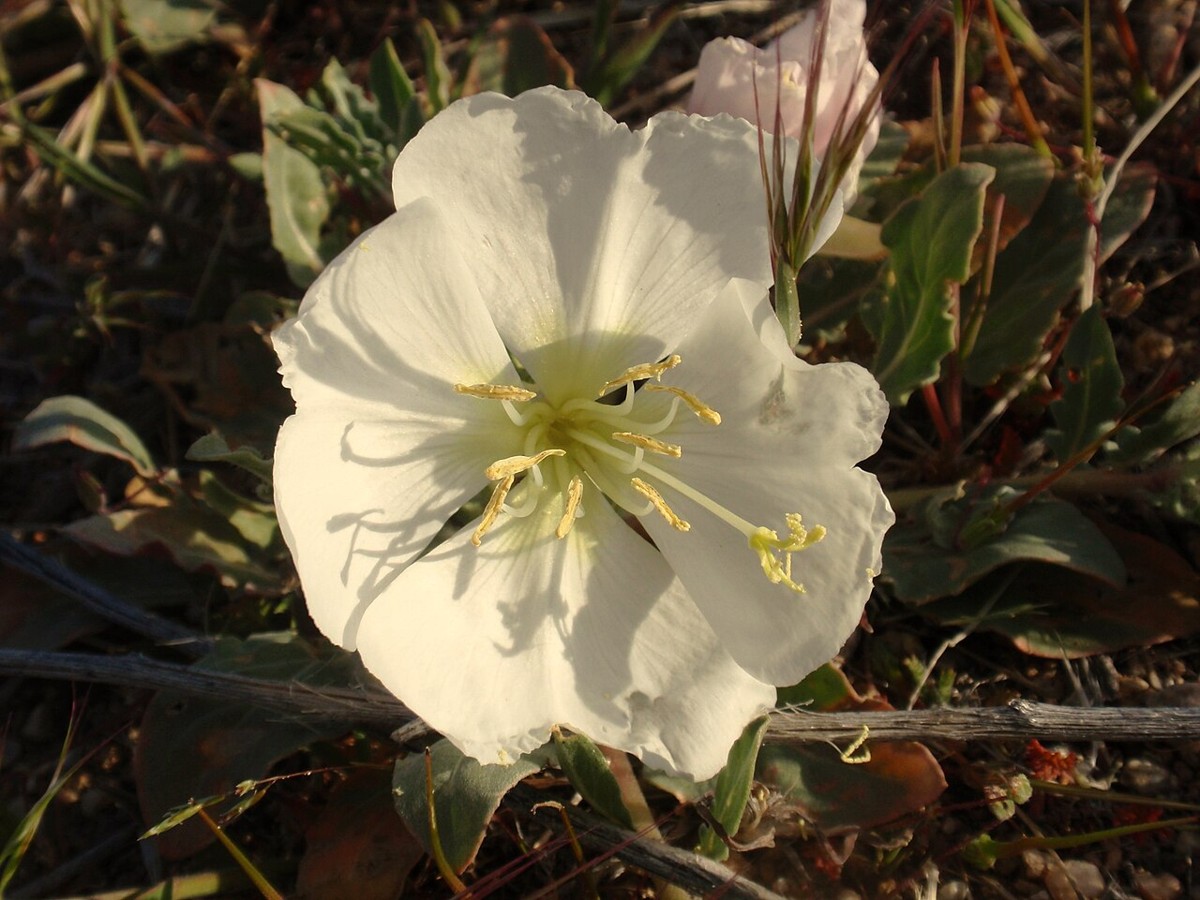
Oenothera californica, commonly known as California evening primrose or California suncup, is a low, spreading desert perennial known for its large, pure white, four-petaled flowers that open in the evening and age to a soft rose-pink before wilting the following day. A member of the Onagraceae (evening primrose family), it is one of the showiest wildflowers of the Mojave and Sonoran desert washes and sandy flats, often forming loose mats studded with oversized blooms that seem disproportionate to the plant’s modest, ground-hugging stature.
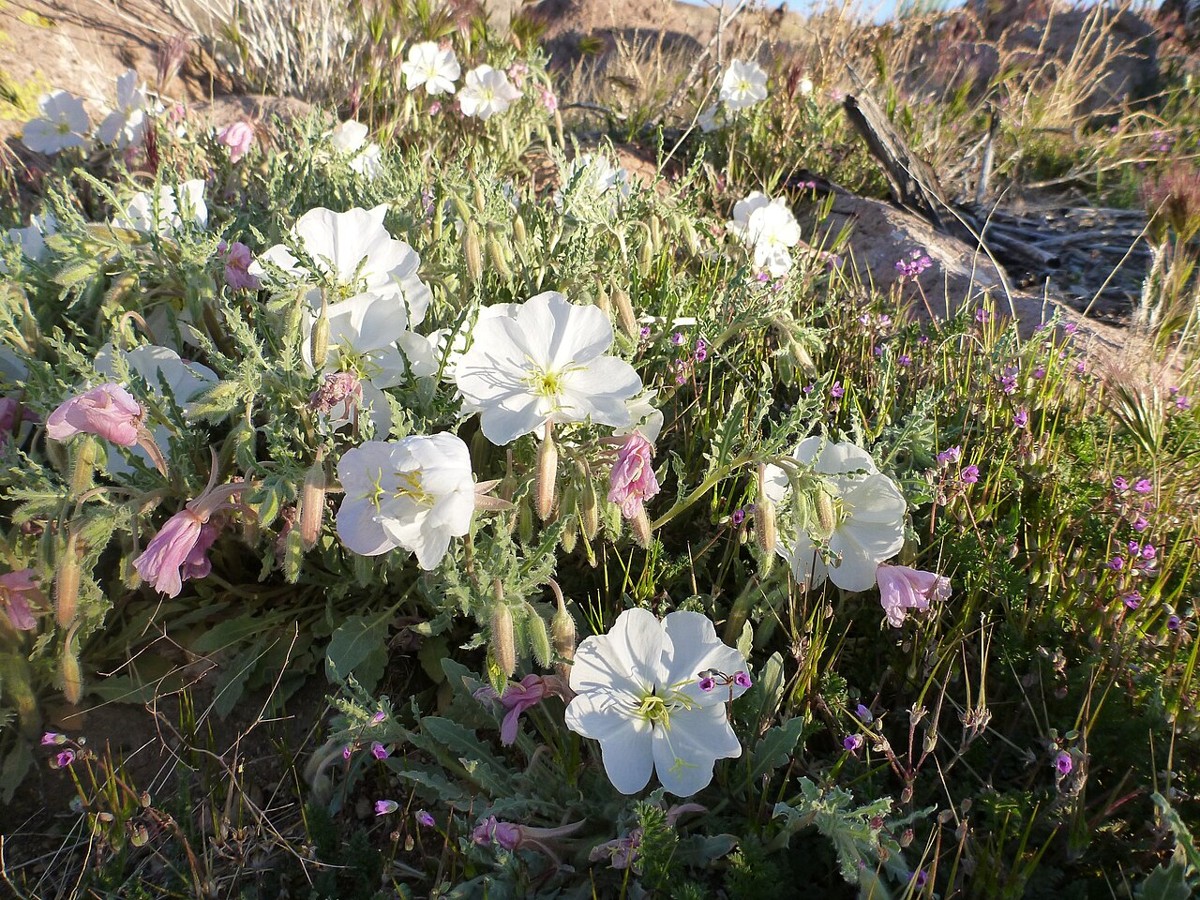
California evening primrose grows from a woody taproot and spreads along the ground in a rosette-like mat of narrow, silvery-green leaves, with its large, fragrant flowers opening at dusk to attract night-flying moths, then closing and fading through the following morning. The contrast between crisp white new flowers and the pink, spent blooms nearby is one of the species’ most distinctive and photogenic features.
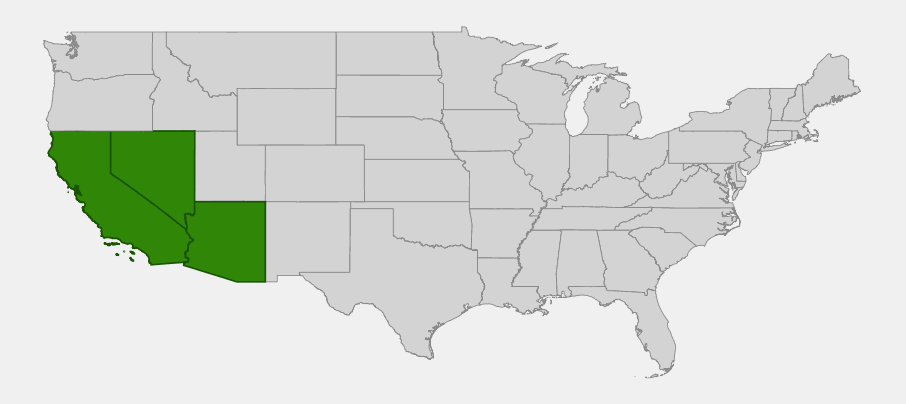
Native to the deserts of California, Nevada, and Arizona, California evening primrose thrives in sandy washes, desert flats, and disturbed ground with excellent drainage. It is an outstanding choice for a low-water desert garden, where its long bloom season and striking evening flowers reward gardeners who enjoy watching a garden come alive at dusk.
Identification
California evening primrose is a low, spreading perennial, typically forming a mat or loose rosette only a few inches tall but spreading 1 to 2 feet or more across from a deep, woody taproot. Stems are mostly prostrate to ascending, radiating outward from the crown.
Leaves
The leaves are narrow, lance-shaped to oblong, 1 to 4 inches long, often with shallow wavy or toothed margins, and covered in fine hairs that give the foliage a grayish-green, silvery cast — a classic adaptation to the intense sun and aridity of its desert habitat. Leaves are arranged in a loose basal rosette along the spreading stems.
Flowers
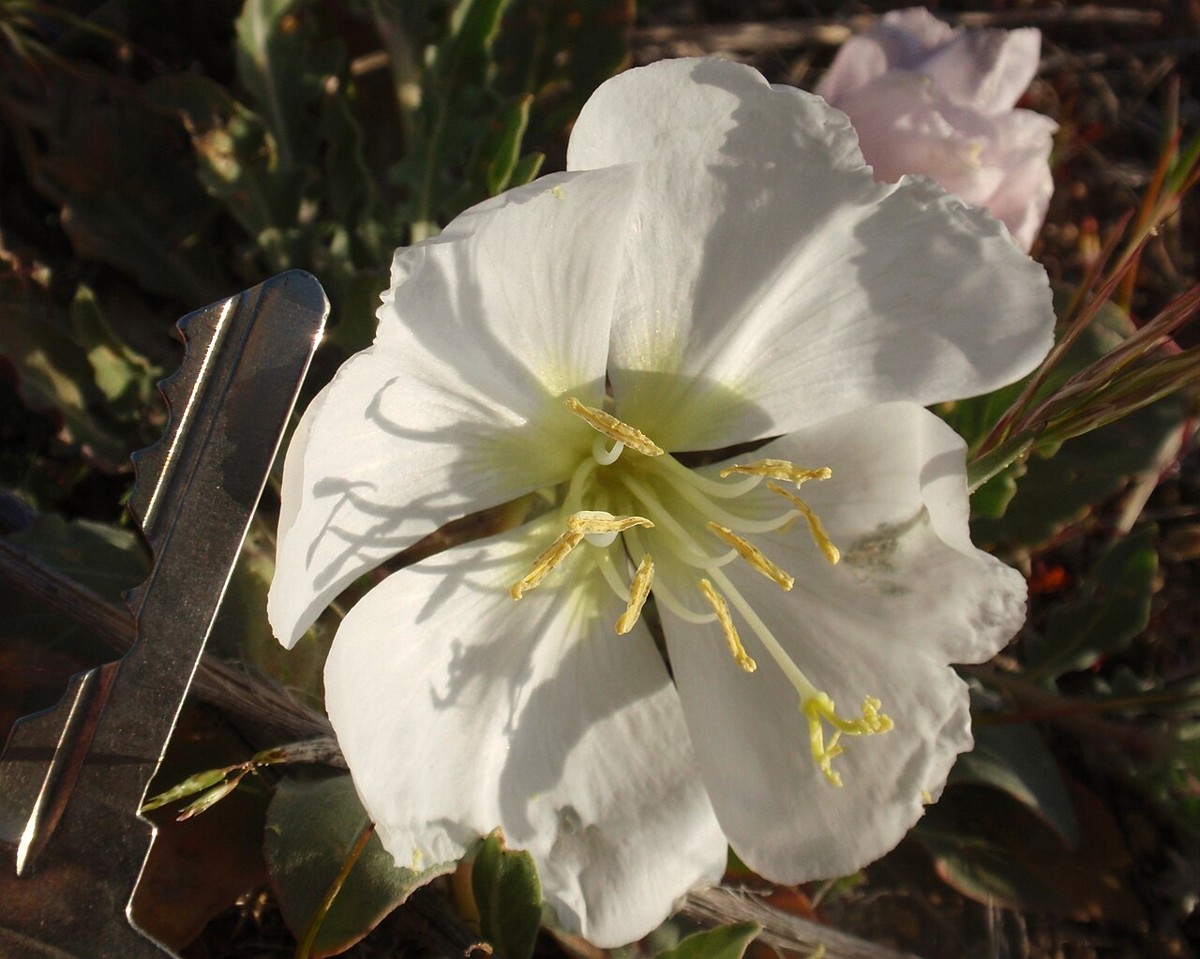
The flowers are the plant’s defining feature: large, up to 2 to 3 inches across, with four broad, overlapping white petals and a cluster of yellow stamens at the center. They open in late afternoon or evening, remain open through the night and following morning, and gradually fade to pink as they wilt — so a single plant often displays fresh white blooms alongside aging pink ones at the same time. Flowers are lightly fragrant, an adaptation for attracting night-flying hawkmoth pollinators. Bloom season runs from March through June, sometimes extending later at higher elevations or after summer rains.
Fruit & Seeds
After flowering, each bloom develops into a slender, woody, four-angled seed capsule 1 to 2 inches long that splits open at maturity to release numerous small seeds. The dry capsules often persist on the plant well after the flowers are gone.
Quick Facts
| Scientific Name | Oenothera californica |
| Family | Onagraceae (Evening Primrose) |
| Plant Type | Herbaceous Perennial Wildflower |
| Mature Height | 3–8 in (8–20 cm) |
| Mature Spread | 12–24 in (30–60 cm) |
| Growth Rate | Slow to moderate |
| Sun Exposure | Full Sun |
| Water Needs | Low |
| Soil Type | Sandy or gravelly, fast-draining |
| Soil pH | 6.5–8.0 (neutral to alkaline) |
| Bloom Time | March – June |
| Flower Color | White, aging to pink |
| Fall Color | None notable |
| Fruit | Slender woody seed capsules |
| Deer Resistant | Yes |
| USDA Hardiness Zones | 8–10 |
Native Range
California evening primrose is native to the desert regions of southeastern California, southern Nevada, and Arizona, with its range extending south into northern Baja California and Sonora, Mexico. Within the United States, it is a characteristic plant of the Mojave and Sonoran deserts.
It typically grows in sandy or gravelly desert washes, flats, and roadsides, often in disturbed or periodically scoured ground where competing vegetation is sparse. The species tolerates the extreme heat, intense sun, and minimal, unpredictable rainfall typical of its low-desert habitat, usually growing from near sea level up to around 5,000 feet in elevation.
California evening primrose is drought-deciduous in the harshest conditions, dying back to its woody root crown during extended dry spells and resprouting and flowering again after rain, a strategy well suited to the boom-and-bust rainfall pattern of the desert Southwest.
📋 Regional plant lists featuring California Evening Primrose: California & Nevada · Arizona & New Mexico
Growing & Care Guide
California evening primrose is an easy, rewarding low-water perennial for desert gardens, offering months of striking evening blooms in exchange for a sunny, well-drained spot and minimal water.
Light
Give this species full sun. It is adapted to open, unshaded desert ground and flowers best, with the most compact, floriferous growth, in a hot, bright location.
Soil & Water
Plant in sandy or gravelly, fast-draining soil, mimicking the washes and flats where it grows wild. Established plants are genuinely drought-tolerant and can survive on natural rainfall alone in most low-desert gardens, though occasional deep watering during the driest months will extend the bloom season and keep foliage looking fresh. Avoid heavy clay soils and overwatering, both of which can rot the taproot.
Planting Tips
Set out container plants in fall or early spring, when temperatures are mild, to allow the taproot time to establish before summer heat arrives. Choose a site with sharp drainage, such as a raised bed, slope, or gravel garden, and avoid low spots where water collects. Space plants 18 to 24 inches apart to allow for their spreading habit.
Pruning & Maintenance
Little pruning is required. Spent flower stalks and dry seed capsules can be trimmed back to tidy the plant’s appearance, but this is optional, since many gardeners enjoy the visual mix of fresh white and aging pink blooms. During extended drought, the plant may die back to its root crown; this is a normal survival response, not a sign of failure, and it will resprout with rain.
Propagation
Propagate from seed sown in fall or winter to take advantage of natural rainfall and temperature cues; germination can be improved by light scarification or a brief cold stratification period. The deep taproot makes division impractical, so seed is the standard method for home propagation.
Landscape Uses
California evening primrose fits well into several desert garden settings:
- Desert and xeriscape gardens where its low water needs are a strong asset
- Evening gardens planted near patios or walkways to enjoy the dusk-opening flowers
- Dry washes and gravel beds that mimic its natural habitat
- Pollinator gardens focused on moths and other night-flying insects
- Slope and bank plantings in sandy, well-drained soil
Wildlife & Ecological Value
California evening primrose plays an important role in desert pollinator ecology, especially for species active after dark, when few other flowers are available.
For Pollinators
The large white flowers, which open in the evening and release a light fragrance, are specially adapted to attract night-flying hawkmoths (Sphingidae), their primary pollinators, along with other moths active at dusk and into the night. The flowers also attract native bees in the morning hours before they fully wilt, giving the species a somewhat extended pollination window compared to purely nocturnal bloomers.
For Birds
California evening primrose is not a major direct food source for birds, though the seeds in its dry capsules are eaten in small amounts by some desert seed-eating birds, and the insects it attracts provide foraging opportunities for insectivorous species in the early morning.
For Mammals
Desert rodents, including kangaroo rats and other small mammals, forage on the seeds, contributing to seed dispersal across the sandy flats and washes where the species grows. The foliage is not a preferred browse for larger mammals, which supports the plant’s use in gardens where deer or rabbits are a concern.
Ecosystem Role
As a mat-forming perennial with a deep taproot, California evening primrose helps stabilize loose, sandy desert soils in washes and disturbed areas, while its extended bloom season provides a reliable nectar source through much of the desert spring and into summer, supporting the broader web of pollinators and seed-eating wildlife that depends on desert wildflowers.
Cultural & Historical Uses
California evening primrose does not carry an extensive documented history of use by Indigenous peoples of the desert Southwest comparable to larger or more resource-rich desert plants, though various evening primroses in the region have historically been used in minor ways, such as the young leaves or roots of some Oenothera species being eaten as greens in times of scarcity; specific, well-documented traditional uses for this particular species are limited in the available literature.
The genus name Oenothera derives from Greek roots sometimes translated as “wine scent” or associated with an old belief that the root had a wine-like fragrance, though the exact etymology is debated among botanists. The common name “evening primrose” refers to the flower’s habit of opening at dusk, a trait shared across the genus and one that has long fascinated naturalists and gardeners observing the bloom cycle from day to day.
In recent decades, California evening primrose has become increasingly popular among desert native-plant gardeners and xeriscape designers for its drought tolerance, long bloom season, and the simple pleasure of watching its large white flowers unfurl at the end of a hot desert day.
Frequently Asked Questions
Why do the flowers change from white to pink?
This is a normal part of the flower’s natural aging process. Fresh flowers open white in the evening, and as they wilt over the following day, pigments in the petals shift the color toward pink or rose. A single plant often shows both fresh white and older pink flowers at the same time.
Do the flowers only open at night?
Flowers typically open in late afternoon or evening and remain open through the night and into the following morning, closing as temperatures rise. This evening-opening habit is an adaptation to attract night-flying moth pollinators, though bees and other daytime pollinators may visit in the cooler morning hours before the flowers fully close.
Is California evening primrose the same as the related species sold for herbal supplements?
No. The evening primrose oil sold commercially is typically derived from common evening primrose (Oenothera biennis), an unrelated eastern North American species. California evening primrose has no documented history of similar medicinal extraction or supplement use, and no such use should be assumed.
Can this plant survive extended drought?
Yes. California evening primrose is adapted to the boom-and-bust rainfall of the desert Southwest and can die back to its woody root crown during severe drought, resprouting and flowering again once rain returns. This dieback is a survival strategy, not a sign that the plant has died.
Will California evening primrose spread aggressively in my garden?
It spreads moderately by seed and by its mat-forming stems, but it is not considered an aggressive garden thug. Deadheading spent flowers before seed capsules mature can help control self-seeding if a tidier, more contained planting is preferred.

Looking for a nursery that carries California Evening Primrose?
Browse our native plant nursery directory: California · Nevada · Arizona