Bush Croton (Croton fruticulosus)
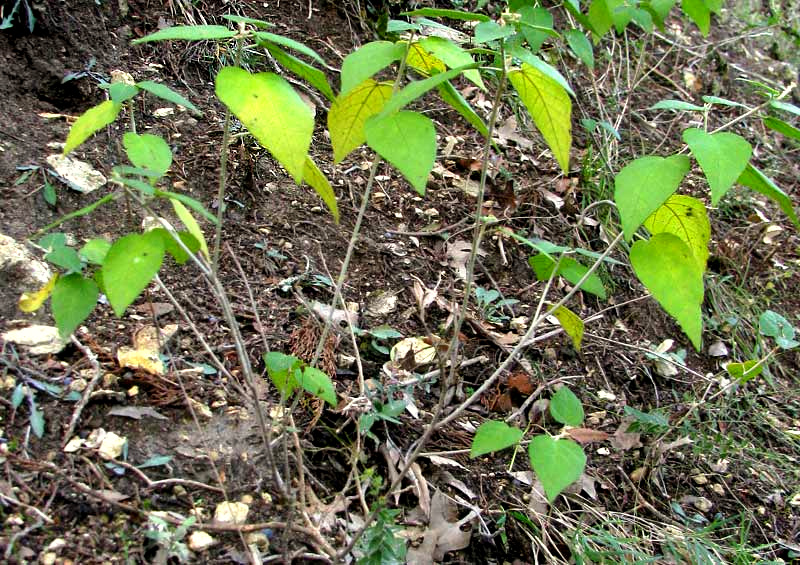
Croton fruticulosus, commonly called Bush Croton (also known as Encinilla or Hierba Loca), is a small, low-growing shrub of the spurge family (Euphorbiaceae) found tucked into the limestone hills, bluffs, and rocky canyons of the Trans-Pecos and West Texas borderlands. Unlike the weedy, open-ground crotons common on disturbed soil, Bush Croton is a retiring, slow-spreading species that favors the shelter of rock ledges and canyon walls.
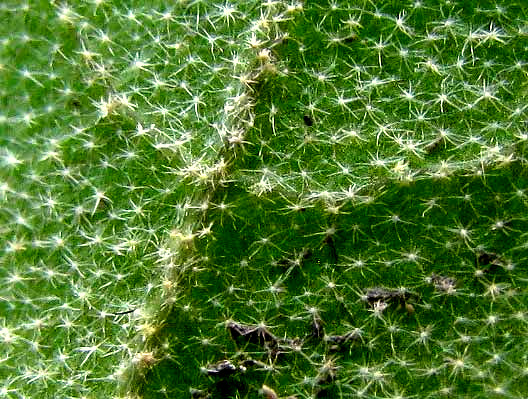
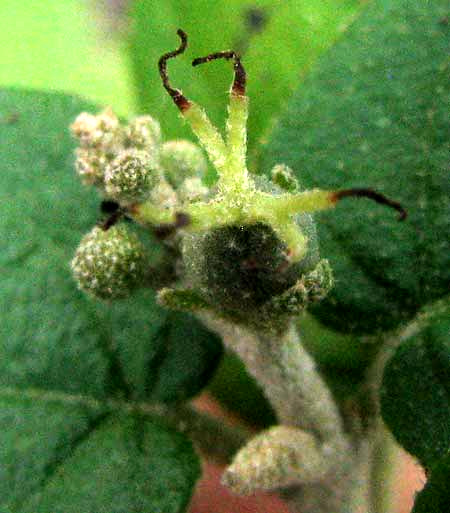
The plant rarely exceeds 3 feet in height, forming a rounded, gray-green mound of slender stems and velvety, ovate leaves that are densely covered in tiny star-shaped (stellate) hairs — a texture that gives the whole shrub a soft, grayish cast and releases a distinctive aromatic scent when the foliage is crushed or brushed against. Tiny white flowers appear on short terminal spikes in spring, followed by small three-lobed seed capsules.
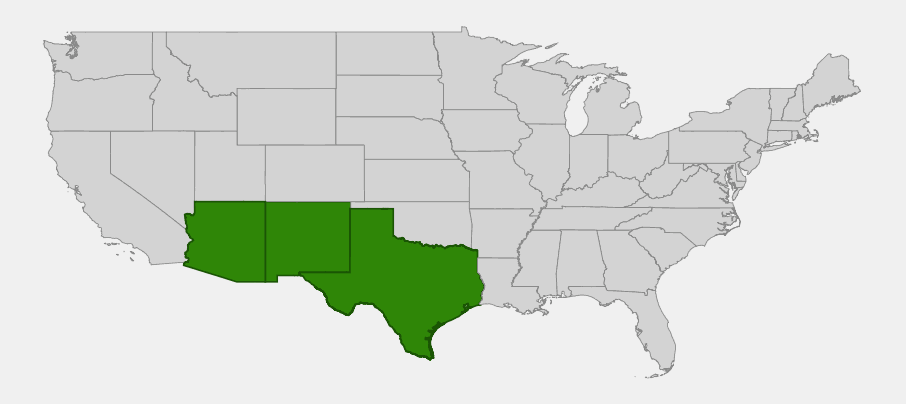
Bush Croton is a plant for rock gardens, xeric borders, and native limestone landscaping rather than mass plantings — it is naturally sparse and slow-growing, matching the thin, stony soils where it is found in the wild. Its high deer resistance and low water needs make it a practical, low-maintenance choice for native gardens across its range in Arizona, New Mexico, and Texas.
Identification
Bush Croton is a small, rounded shrub reaching about 3 feet tall, with slender, smooth, brown-to-gray stems. The younger, leaf-bearing branchlets are yellowish or grayish green and densely covered with stellate hairs visible under magnification, giving new growth a felted, velvety appearance.
Leaves
Leaves are ovate to narrowly ovate, up to 3 inches long, pointed at the tip and rounded or slightly lobed at the base, with margins that are smooth to finely and sparsely toothed. Younger leaves are velvety to the touch on both surfaces; the upper side is often olive green while the underside is grayish green, densely covered with the same star-shaped hairs found on the stems. Crushed foliage releases a distinctive aromatic odor.
Flowers & Fruit
Flowers are tiny, about ⅛ inch wide, borne on short terminal extensions of the branchlets in spring. The fruit is a slightly three-lobed, spherical capsule about ¼ inch in diameter, covered in the same fine stellate hairs as the foliage.
Quick Facts
| Scientific Name | Croton fruticulosus |
| Family | Euphorbiaceae (Spurge) |
| Plant Type | Evergreen to Semi-Evergreen Shrub |
| Mature Height | Up to 3 ft |
| Mature Spread | 2–3 ft |
| Growth Rate | Slow |
| Sun Exposure | Full Sun to Part Shade |
| Water Needs | Low |
| Soil Type | Thin, rocky, limestone-derived; well-drained |
| Soil pH | 7.0–8.5 (alkaline) |
| Bloom Time | April – May |
| Flower Color | White |
| Fruit | Small three-lobed capsule |
| Deer Resistant | Yes (highly deer resistant) |
| USDA Hardiness Zones | 7–10 |
Native Range
Bush Croton is known from southeastern Arizona, southern New Mexico, and the Trans-Pecos and central-western parts of Texas, continuing south into adjacent arid northern Mexico. Within Texas it is most often found in the limestone country of the Edwards Plateau and the mountains and canyons of the Big Bend region.
It grows on limestone ledges, hills, bluffs, canyon walls, and rocky ravines at elevations of roughly 1,000 to 4,500 feet, typically rooted in thin, rocky soil pockets rather than open flats. This preference for sheltered, rocky microsites sets it apart from the more common weedy crotons of disturbed ground.
Because Bush Croton depends on intact limestone outcrop and canyon habitat, it is not a plant of roadsides or cultivated fields; its distribution tracks the rugged terrain of the region’s hill country and desert mountains rather than general lowland habitat.
📋 Regional plant lists featuring Bush Croton: South and West Texas · Arizona & New Mexico
Growing & Care Guide
Bush Croton is a specialist of rocky, well-drained sites and performs best when its naturally lean growing conditions are respected rather than fought. It is a slow, understated plant suited to rock gardens and limestone landscaping rather than quick-filling borders.
Light
Give Bush Croton full sun to light part shade, mimicking the open rock faces and canyon walls where it grows naturally. In the hottest, most exposed sites across its Trans-Pecos range, a bit of afternoon shade from nearby rock or taller shrubs is appreciated but not required.
Soil & Water
This species demands sharp drainage above all else. Thin, rocky, alkaline soils — the kind found on limestone ledges and canyon slopes — suit it far better than rich garden loam. Water needs are low; established plants rely on natural rainfall, with only occasional deep watering needed during extended drought.
Planting Tips
Plant in fall or early spring into a rock garden, scree bed, or raised planting with excellent drainage. Tuck plants among limestone rock or gravel mulch to recreate the sheltered microsites it favors in the wild. Avoid heavy, poorly drained soils, which can quickly rot the roots.
Pruning & Maintenance
Bush Croton needs very little maintenance. If pruning to shape, avoid removing more than a third of any stem’s length in a single session, since the plant recovers slowly from heavy cutting. Its naturally rounded, compact form rarely needs correction.
Landscape Uses
Bush Croton’s small size and rock-garden habit suit a narrow but valuable set of landscape roles:
- Rock gardens and scree plantings on limestone or gravel
- Xeric borders requiring minimal irrigation once established
- Deer-resistant plantings in areas with heavy browse pressure
- Native hill-country landscaping that echoes local limestone habitat
- Container or raised-bed culture where drainage can be tightly controlled
Wildlife & Ecological Value
Bush Croton’s role in its native habitat is modest but genuine, providing food and cover within the specialized rock-ledge plant communities of the Trans-Pecos and adjacent borderlands.
For Pollinators
The small spring flowers attract native bees and other small pollinating insects drawn to the open terminal flower clusters, supplementing the limited nectar resources available on bare limestone slopes.
For Insects & Butterflies
Like other native crotons in Texas, Bush Croton can serve as a larval host plant for certain moth and butterfly species that specialize on the genus, adding to its value in a native butterfly or pollinator garden.
For Mammals
Bush Croton is notably deer resistant, meaning it is rarely browsed, which makes it a reliable survivor in areas with heavy deer pressure and allows it to persist as a stable part of the limestone shrub layer.
Ecosystem Role
By rooting into thin soil pockets on rock ledges and canyon walls, Bush Croton helps stabilize these fragile microhabitats and adds structural and species diversity to the sparse plant communities that develop on exposed limestone in the Chihuahuan Desert borderlands.
Cultural & Historical Uses
Bush Croton is known locally by the Spanish names Encinilla and Hierba Loca, reflecting a long familiarity among people living in its Trans-Pecos and northern Mexican range. Its aromatic, hairy foliage made it recognizable to local residents even if it was not a plant of major commercial or ceremonial importance.
Some sources note that the foliage has occasionally been used to prepare tea or as a seasoning, but the genus Croton is notoriously difficult to tell apart at the species level, and several related crotons are known skin irritants or are considered toxic. For that reason this history is recorded here as background only, not as a guide for modern foraging or home use.
Today Bush Croton has little economic use beyond its growing recognition among native-plant gardeners in Texas, New Mexico, and Arizona, where its compact size, drought tolerance, and deer resistance have made it a specialty choice for limestone rock gardens.
Frequently Asked Questions
Is Bush Croton the same as the weedy croton seen along Texas roadsides?
No. The common weedy croton of disturbed fields and roadsides is usually a different species, such as Croton texensis or Croton monanthogynus. Bush Croton is a distinct, non-weedy species restricted to limestone hills, bluffs, and canyons.
Is Bush Croton toxic?
Some related Croton species are known skin irritants or toxic if ingested, and species in the genus can be hard to distinguish. Treat the foliage and sap with caution and avoid consuming any part of the plant.
Why does Bush Croton feel velvety?
The soft texture comes from dense, microscopic star-shaped (stellate) hairs covering the stems and leaves, a feature that also gives the foliage its grayish-green color and helps the plant reflect intense desert sunlight.
Will deer eat Bush Croton?
Rarely. It is rated highly deer resistant, likely due to its aromatic, hairy foliage, making it a dependable choice in gardens with significant deer browsing pressure.
What kind of soil does Bush Croton need?
It needs thin, rocky, well-drained, alkaline soil similar to the limestone ledges and canyon walls where it grows wild. Heavy, wet, or rich garden soil is unsuitable and can lead to root rot.

Looking for a nursery that carries Bush Croton?
Browse our native plant nursery directory: Arizona · New Mexico · Texas