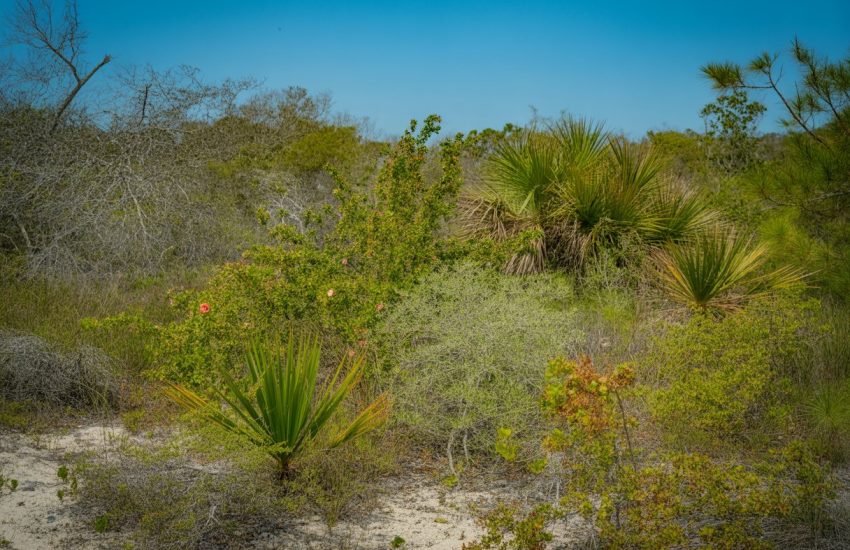
Goatbush (Castela erecta)
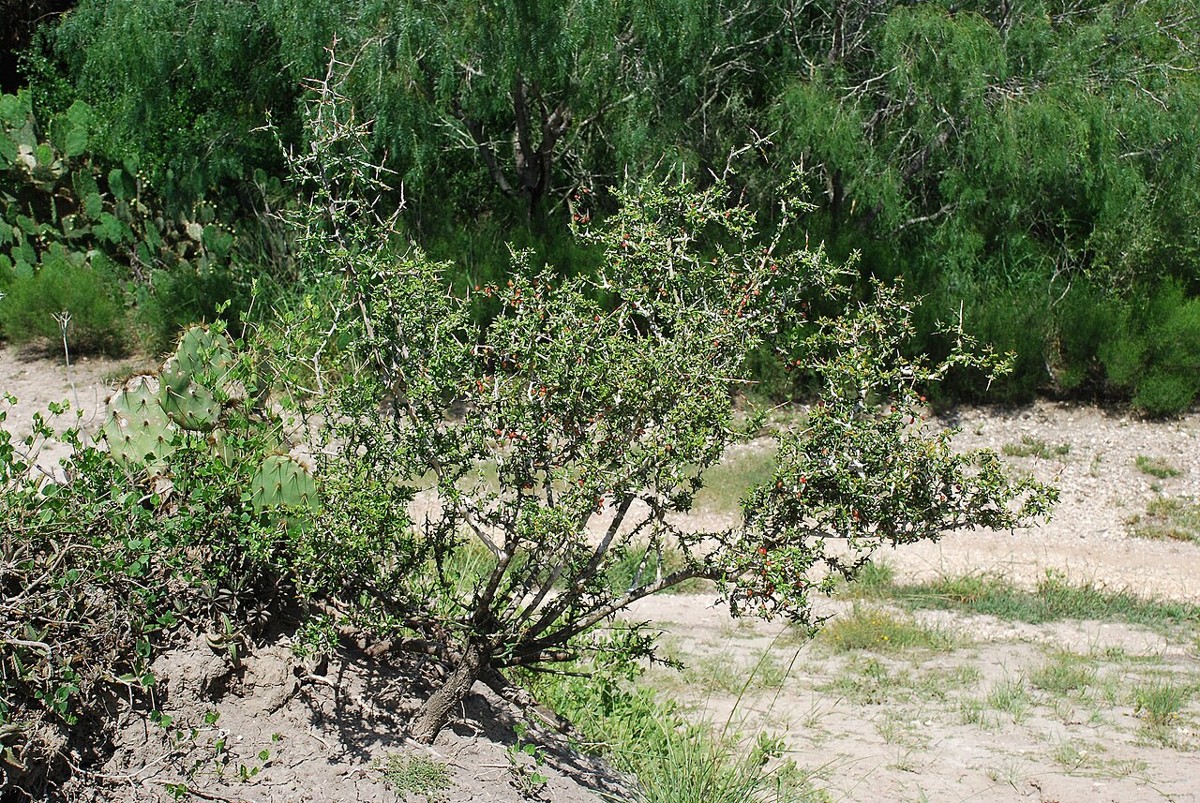
Castela erecta, commonly called Goatbush (also known as Allthorn, Amargosa, Chaparro Amargoso, or Bisbirinda), is a dense, intricately spiny shrub of the quassia family (Simaroubaceae) native to south and south-central Texas. It is a classic thicket-former of the South Texas Plains and Rio Grande Plains, where its tangle of whitish, thorn-tipped branches forms nearly impenetrable clumps on open rangeland and limestone hillsides.
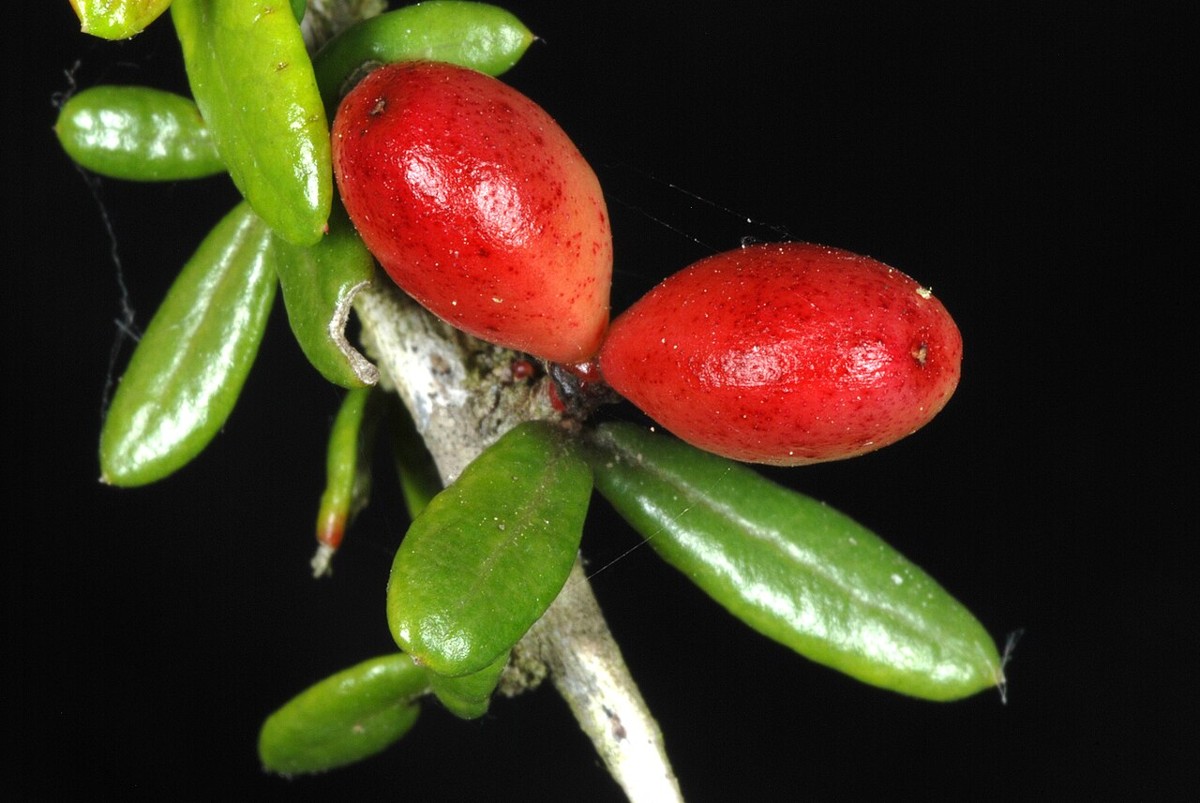
Though spiny and unassuming for much of the year, Goatbush produces small red-to-orange flowers in spring followed by bright red, fleshy fruit about the size of a small olive — a conspicuous splash of color against the gray-green, needle-thorned branches. The bitter bark gave rise to the Spanish name “Amargosa” (bitter one) and “Chaparro Amargoso,” and it has long been recognized by South Texas residents even where it is not prized for garden use.
In the native landscape, Goatbush earns its place as dense, thorny wildlife cover rather than as an ornamental centerpiece. It is an excellent choice for a thornscrub restoration planting, a living barrier hedge, or a wildlife thicket where its impenetrable form and small fruit crop provide food and shelter that few cultivated shrubs can match.
Identification
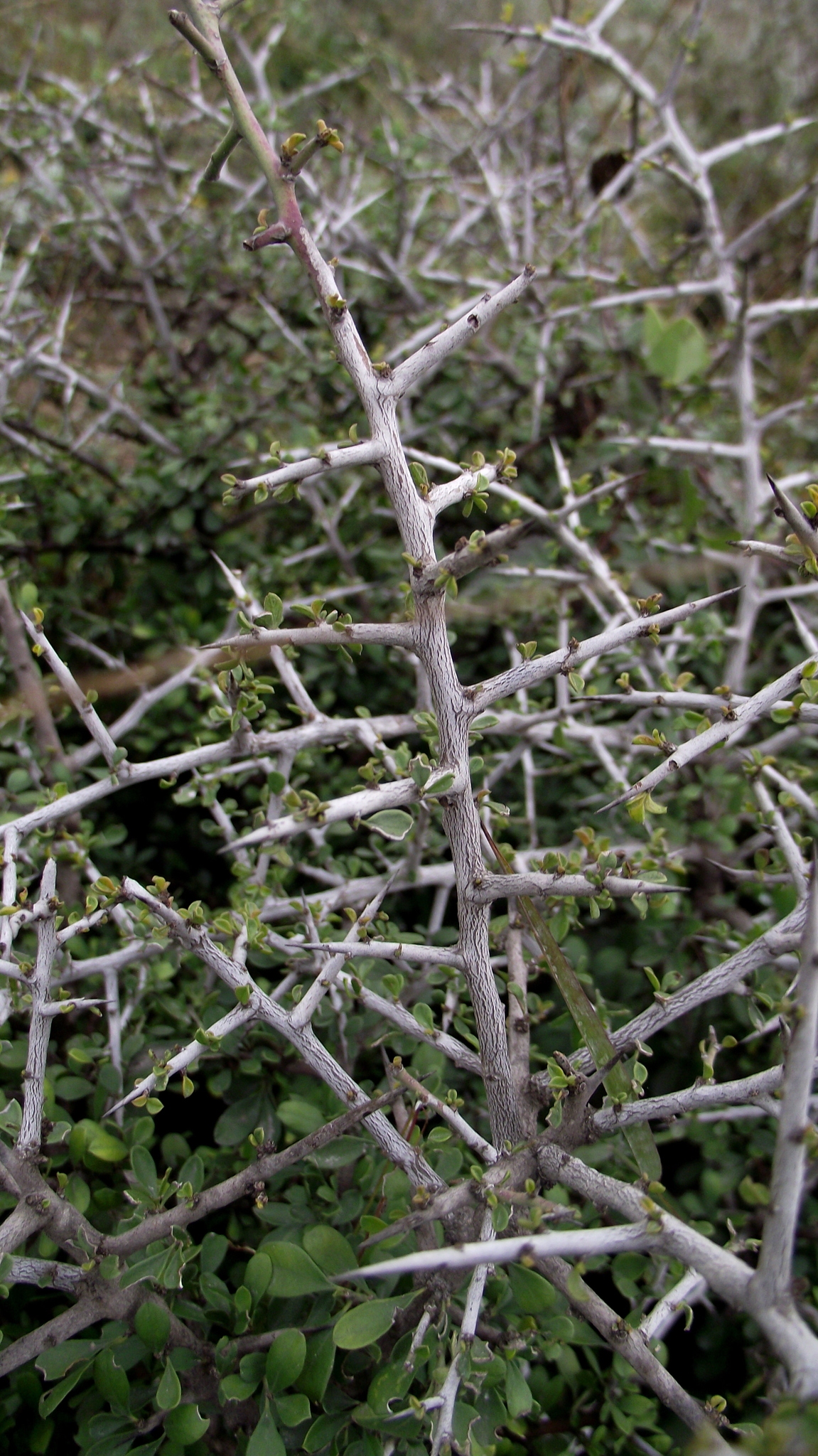
Goatbush is a thicket-forming, rounded to sprawling shrub, typically reaching 3 to 6 feet tall, with light-colored, whitish-gray branchlets that terminate in stout spines bearing additional lateral spines — giving the plant its “Allthorn” name and a formidably thorny structure.
Stems & Thorns
Young branches are pale, almost white, and the branching pattern is dense and intricate, with stout terminal spines and smaller lateral thorns along the length of each branch. The bark is notably bitter to the taste, a trait tied to the plant’s traditional name.
Leaves
Leaves are small, firm-textured, up to about 1 inch long and ¼ inch wide, with a pointed or rounded tip and smooth, slightly down-turned margins. The upper surface is shiny dark green; the lower surface is covered in fine hairs visible only under magnification. Foliage is evergreen, persisting through most winters in its South Texas range.
Flowers & Fruit
Small flowers in shades of red to orange appear singly or in small clusters in spring, tucked among the thorny branches. They are followed by fleshy, roughly spherical, slightly flattened fruit up to ⅜ inch long that ripens to a glossy bright red — one of the most visually striking features of the plant against its gray-green foliage.
Quick Facts
| Scientific Name | Castela erecta (Texas plants: ssp. texana) |
| Family | Simaroubaceae (Quassia) |
| Plant Type | Evergreen Spiny Shrub |
| Mature Height | 3–6 ft |
| Mature Spread | 3–6 ft |
| Growth Rate | Slow to Moderate |
| Sun Exposure | Full Sun to Part Shade |
| Water Needs | Low |
| Soil Type | Caliche, clay loam, rocky or sandy; well-drained |
| Soil pH | 7.0–8.5 (alkaline) |
| Bloom Time | March – May |
| Flower Color | Red to orange |
| Fruit | Fleshy red drupe, up to ⅜ in |
| Deer Resistant | Yes (dense thorns discourage browsing) |
| USDA Hardiness Zones | 8–10 |
Native Range
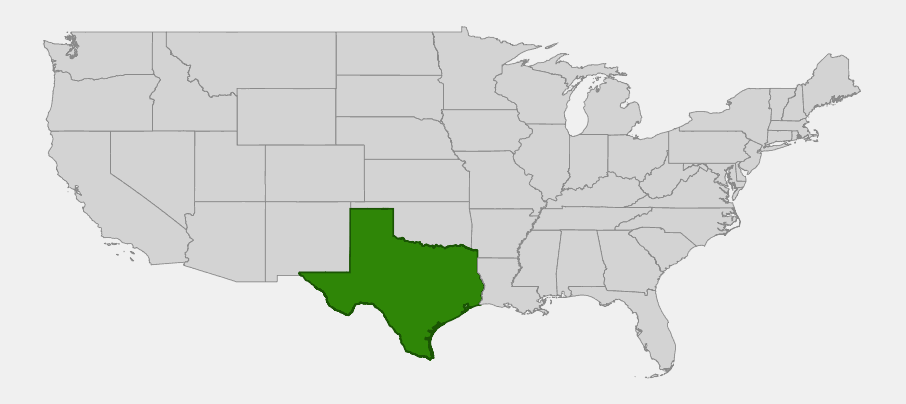
Goatbush is native to central and southern Texas, ranging from the Edwards Plateau and south-central hill country south through the Rio Grande Plains and South Texas Plains into adjacent northeastern Mexico. It is especially characteristic of the dense thornscrub (“monte”) brush communities of South Texas.
It grows on exposed hillsides, bluffs, and in prairies and mesquite-dominated brushland (“mesquital”), typically on caliche, clay loam, or rocky alkaline soils with excellent drainage. Goatbush is often found growing alongside other South Texas brush species, forming part of the dense, thorny understory and shrub layer typical of the region.
Because it tolerates heat, drought, and poor rocky soils, Goatbush remains a stable, long-persisting component of undisturbed South Texas rangeland, often surviving in areas where more sensitive natives have been grazed out or cleared.
📋 Regional plant lists featuring Goatbush: South and West Texas
Growing & Care Guide
Goatbush is tough, low-maintenance, and well suited to the hot, dry conditions of South and Central Texas once established. Its dense thorns make it better suited to the edges of a property or a dedicated wildlife thicket than to areas with regular foot traffic.
Light
Plant Goatbush in full sun for the best growth and fruiting, though it also tolerates light shade at the edge of brush or woodland. Full sun exposure, matching its native rangeland habitat, produces the densest, most compact form.
Soil & Water
Goatbush thrives in caliche, clay loam, or rocky alkaline soils with sharp drainage, mirroring the hillsides and brushland where it grows wild. It is highly drought tolerant once established and needs little supplemental irrigation beyond occasional deep watering during extended dry spells in its first year or two.
Planting Tips
Set out container-grown plants in fall or early spring, choosing a site away from walkways given the plant’s dense thorns. Space plants 4 to 6 feet apart for a thornscrub hedge or thicket planting. No soil amendment is typically needed in the caliche and clay soils common across its range.
Pruning & Maintenance
Goatbush requires little pruning; remove dead wood as needed, wearing heavy gloves given the stout spines. The plant naturally forms a dense, rounded thicket and rarely needs shaping beyond occasional maintenance cuts.
Landscape Uses
Goatbush’s spiny, dense habit suits several specific landscape roles:
- Wildlife thicket providing dense cover and fruit for birds and small mammals
- Living security hedge or barrier planting along property lines
- Thornscrub restoration on South Texas rangeland and brushland sites
- Xeric native landscaping requiring minimal irrigation
- Erosion control on dry caliche or rocky slopes
Wildlife & Ecological Value
Goatbush’s dense, thorny structure and bright fruit make it a valuable, if underappreciated, wildlife plant across South Texas brushland.
For Birds
The small red fruits are eaten by a variety of South Texas brush-country birds, while the dense, thorny branch structure offers excellent predator-proof nesting cover for small songbirds that favor thorny thicket habitat.
For Mammals
Small mammals forage on the fallen fruit, and the impenetrable tangle of spiny branches provides secure shelter and escape cover from predators across the open rangeland and brushland where Goatbush grows.
For Pollinators
The small spring flowers, though modest, draw native bees and other insect pollinators active in the South Texas brushland during the main spring bloom period.
Ecosystem Role
As a stable, long-lived component of South Texas thornscrub, Goatbush contributes to the structural density that defines this plant community, offering cover and forage resources that complement the more dominant mesquite and acacia species of the region’s brush country.
Cultural & Historical Uses
Goatbush has long been known to South Texas and northeastern Mexican communities by its Spanish names Amargosa and Chaparro Amargoso — both references to the intensely bitter taste of the bark. Historically, the bitter bark was used in folk remedies prepared as a tea, reflecting a broader regional tradition of using bitter native plants in home remedies for digestive complaints.
This use is recorded here as historical background only; the bark’s bitter compounds have not been established as safe or effective by modern medical standards, and readers should not treat this history as guidance for current use. As with many traditional plant remedies, folk use does not equal modern safety data.
Beyond its traditional bitter-bark reputation, Goatbush has had limited economic use, persisting mainly as a wild component of South Texas rangeland brush valued today more for its wildlife cover than for any commercial application.
Frequently Asked Questions
Why is Goatbush also called “Allthorn”?
Its branches terminate in stout spines that bear additional lateral spines, creating a densely thorny structure throughout the plant — a feature distinctive enough to earn it the common name Allthorn in parts of its range.
Is Goatbush fruit edible?
The bright red fruit is eaten by wildlife, but it is not a recommended food for people. The bark is notably bitter and has only a history of folk medicinal use, not established modern food or medicinal safety.
How much space does Goatbush need?
Plan for a mature spread of 3 to 6 feet. Because of its dense thorns, it is best placed away from walkways, patios, or areas with regular foot traffic.
Does Goatbush tolerate drought well?
Yes, very well. It is adapted to the hot, dry conditions of South Texas rangeland and needs little supplemental water once established, making it a reliable xeriscape shrub.
Is Goatbush good for a wildlife garden?
Yes. Its dense thorny branches provide secure nesting and escape cover for birds and small mammals, and its red fruit offers a food source, making it a strong choice for a South Texas wildlife planting.

Looking for a nursery that carries Goatbush?
Browse our native plant nursery directory: Texas