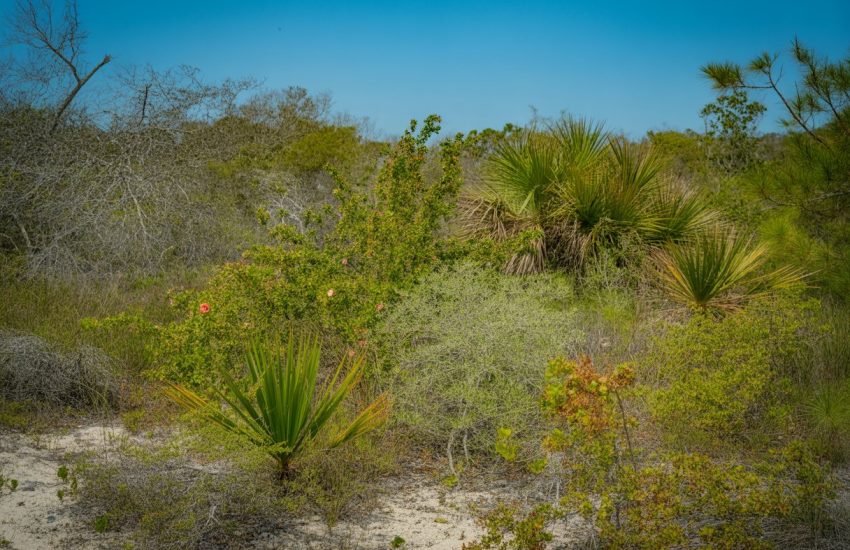
Hairy Tubetongue (Justicia pilosella)
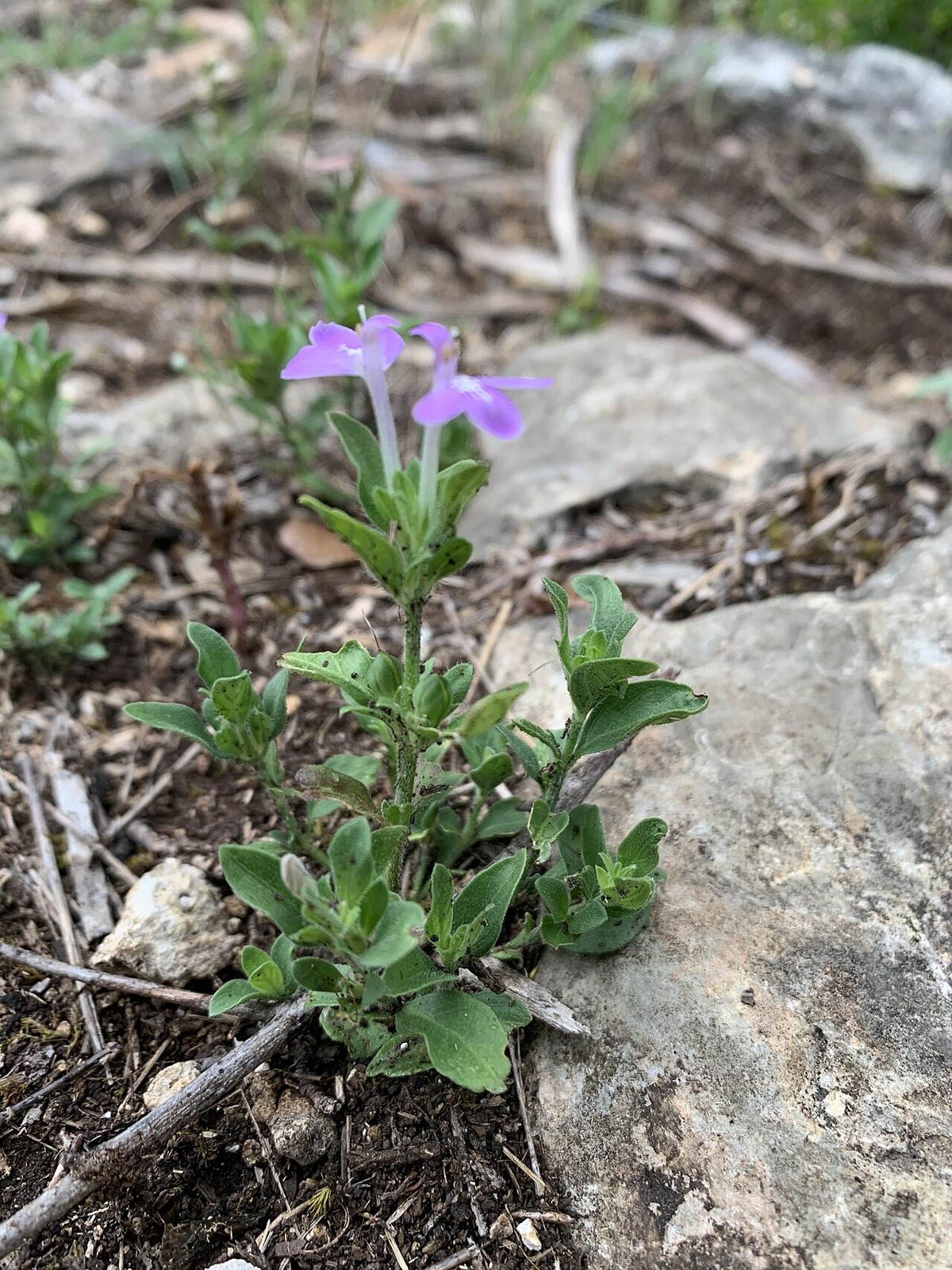
Justicia pilosella, commonly called Hairy Tubetongue (also known as Gregg’s Tubetongue or False Honeysuckle), is a small, low-growing perennial wildflower of the acanthus family (Acanthaceae) found in a limited range across southern and western Texas and a small adjoining part of southern New Mexico. Despite its restricted native range, it has become a modest favorite among Texas native-plant gardeners for its long bloom season and delicate, butterfly-attracting flowers.
Hairy Tubetongue forms a low, spreading mat only a few inches tall, easy to overlook until its solitary, inch-long, two-lipped purple flowers open from the leaf axils. Each flower has a notably long, slender, hairy corolla tube — the feature that gives the plant both its common and scientific names (pilosella referring to its fine hairs). The genus was formerly classified as Siphonoglossa, a name still sometimes seen in older references.
In the garden, Hairy Tubetongue is valued as a tough, adaptable groundcover for dry shade or rocky, well-drained sites, blooming through most of the warm season and drawing butterflies with its tubular flowers. It is a quiet, long-blooming addition rather than a showy centerpiece, well suited to the front of a native wildflower bed or a rock garden.
Identification
Hairy Tubetongue is a low, mat-forming perennial typically only 3 to 12 inches tall, with slender, branching stems that often sprawl or trail along the ground, rooting readily at the nodes in favorable conditions.
Leaves
Leaves are small, opposite, oval to elliptical, and softly hairy, giving the foliage a slightly grayish, textured appearance. They are arranged in pairs along the thin stems, with clusters of small, leaflike bracts often visible near the flower base.
Flowers & Fruit
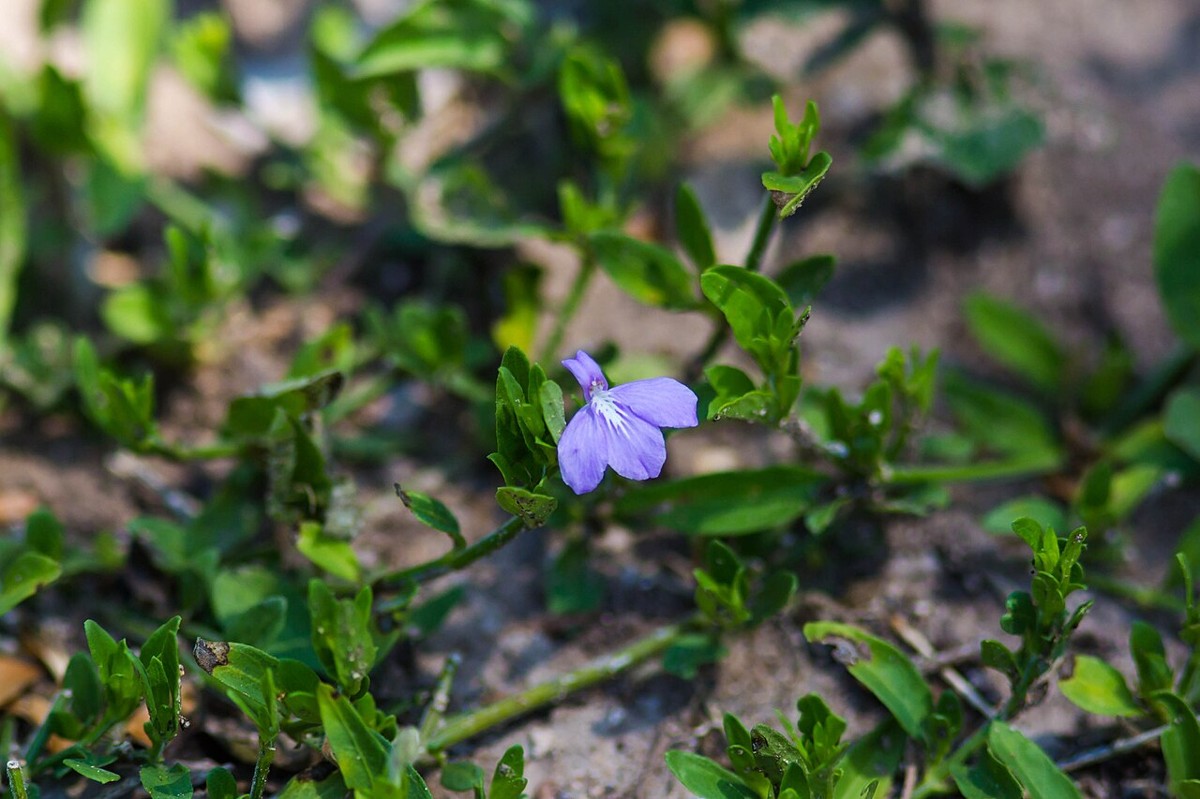
The flowers are solitary, borne in the leaf axils, two-lipped, and about an inch long, in shades of lavender to purple. The corolla has a distinctively long, slender, hairy tube leading to the flared, lipped face of the flower, with only two stamens — a feature shared with other Acanthaceae. Flowering occurs over an unusually long season, from spring into October, blooming in flushes whenever moisture allows. The fruit is a small dry capsule typical of the family.
Quick Facts
| Scientific Name | Justicia pilosella (syn. Siphonoglossa pilosella) |
| Family | Acanthaceae (Acanthus) |
| Plant Type | Low Herbaceous Perennial |
| Mature Height | 3–12 in |
| Mature Spread | 1–2 ft |
| Growth Rate | Moderate |
| Sun Exposure | Part Shade to Full Sun |
| Water Needs | Low to Moderate |
| Soil Type | Rocky, gravelly, well-drained; also tolerates seasonally moist sites |
| Soil pH | 6.5–8.0 (neutral to slightly alkaline) |
| Bloom Time | April – October |
| Flower Color | Lavender to purple |
| Fruit | Small dry capsule |
| Deer Resistant | Moderate |
| USDA Hardiness Zones | 8–10 |
Native Range
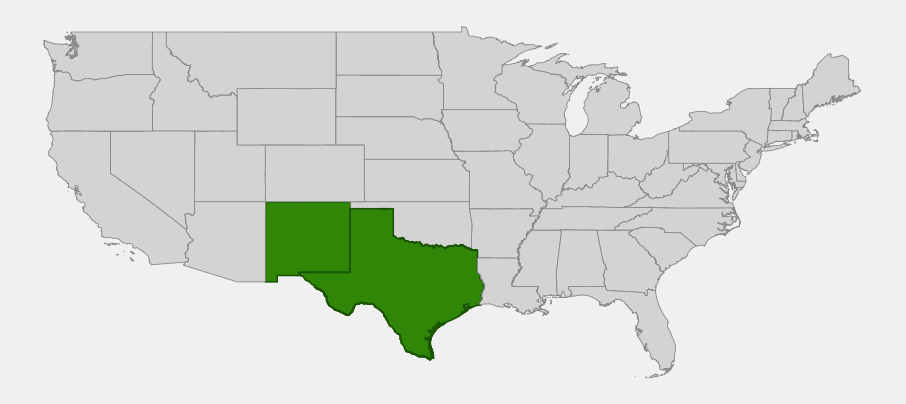
Hairy Tubetongue has a notably limited native range, found mainly in southern and western Texas with a small extension into southern New Mexico, continuing into arid northeastern Mexico. Within Texas it is most associated with the Edwards Plateau and the chaparral country of the southwestern Hill Country.
It grows in rocky and gravelly soils within chaparral and brushland, often on low limestone cliffs, ledges, or rocky slopes, and sometimes in the dappled shade beneath trees along streams and canyon bottoms. Despite this preference for dry, rocky habitat, it is adaptable enough that some gardeners also grow it successfully in seasonally moist garden settings.
Because its wild distribution is naturally narrow, Hairy Tubetongue is best considered a regional specialty wildflower, most at home in rock gardens and native plantings across the southwestern two-thirds of Texas and immediately adjacent New Mexico.
📋 Regional plant lists featuring Hairy Tubetongue: South and West Texas · Arizona & New Mexico
Growing & Care Guide
Hairy Tubetongue is an adaptable, low-maintenance groundcover once established, performing well in both dry rocky sites and gardens with more regular moisture, making it more flexible than many of its chaparral neighbors.
Light
This species grows well in part shade to full sun. In the hottest parts of its Texas range, light to moderate shade — such as beneath open tree canopy — tends to produce the lushest growth and longest bloom season, mimicking its natural streamside and woodland-edge habitat.
Soil & Water
Hairy Tubetongue favors rocky, gravelly, well-drained soil in the wild, but it also tolerates garden settings with more consistent moisture, including seasonally moist beds. Established plants are drought tolerant, though regular light watering during the growing season encourages the fullest, longest bloom display.
Planting Tips
Plant in spring after the last frost, spacing plants 12 to 18 inches apart to allow the low, spreading habit to fill in as a groundcover patch. It performs especially well tucked into rock garden crevices or along the edges of shaded limestone beds.
Pruning & Maintenance
Little maintenance is required. Trim back winter-damaged growth in early spring to encourage fresh new stems, and divide congested clumps every few years if a tidier form is desired.
Landscape Uses
Hairy Tubetongue’s low, spreading habit and long bloom season suit several garden roles:
- Butterfly gardens, where its tubular flowers draw nectaring butterflies
- Dry shade groundcover beneath trees or large shrubs
- Rock garden plantings in limestone crevices
- Front-of-border accents in a native Texas wildflower bed
- Seasonally moist garden beds, where it tolerates more regular watering than many chaparral natives
Wildlife & Ecological Value
Hairy Tubetongue’s long bloom season and tubular flower shape make it a useful, if modest, wildlife plant across its limited native range.
For Pollinators & Butterflies
The long, slender, two-lipped flowers are well suited to nectaring butterflies, and the species has a reputation among Texas native-plant gardeners for reliably attracting them through its extended spring-to-fall bloom period.
Ecosystem Role
As a low, shade-tolerant perennial of limestone chaparral and canyon-edge habitat, Hairy Tubetongue fills a modest but distinct niche in the understory layer of Edwards Plateau plant communities, adding floral resources during a long stretch of the growing season when fewer other wildflowers are in bloom.
Cultural & Historical Uses
Hairy Tubetongue has not been documented as having significant historical medicinal, culinary, or craft use among the peoples of its native Texas, New Mexico, and northeastern Mexican range. Its narrow natural distribution likely limited widespread traditional use compared to more broadly distributed regional plants.
The species was formerly classified in the genus Siphonoglossa, and older botanical references and some nursery catalogs may still list it under the synonym Siphonoglossa pilosella. Its alternate common names — Gregg’s Tubetongue and False Honeysuckle — reflect both its long tubular flower shape and its history of taxonomic reclassification.
Today Hairy Tubetongue is grown primarily by native-plant enthusiasts and specialty nurseries in Texas, valued for its long bloom season, adaptability to both dry and seasonally moist gardens, and its reliable appeal to nectaring butterflies.
Frequently Asked Questions
Why is it called “Hairy Tubetongue”?
The name refers to the long, slender, finely hairy corolla tube of the flower, visible when viewed from above — a distinctive feature that also inspired the species name pilosella, from the Latin for “finely hairy.”
Does Hairy Tubetongue need full sun?
No. It tolerates part shade to full sun and often performs best with some shade, particularly beneath trees, which mimics its natural streamside and chaparral-edge habitat in Texas.
How long does Hairy Tubetongue bloom?
It has an unusually long bloom season for a small perennial, flowering from spring through October in flushes whenever moisture allows, making it a reliable source of color over many months.
Will Hairy Tubetongue spread in my garden?
Yes, it forms a low, spreading mat and can root along trailing stems in favorable conditions, making it useful as a small-scale groundcover rather than a plant that needs frequent dividing to control.
Is Hairy Tubetongue the same as Siphonoglossa pilosella?
Yes. The species was formerly classified in the genus Siphonoglossa and is still occasionally listed under that older name, but Justicia pilosella is the currently accepted scientific name.

Looking for a nursery that carries Hairy Tubetongue?
Browse our native plant nursery directory: Texas · New Mexico