Polkadot Plant (Dyschoriste linearis)
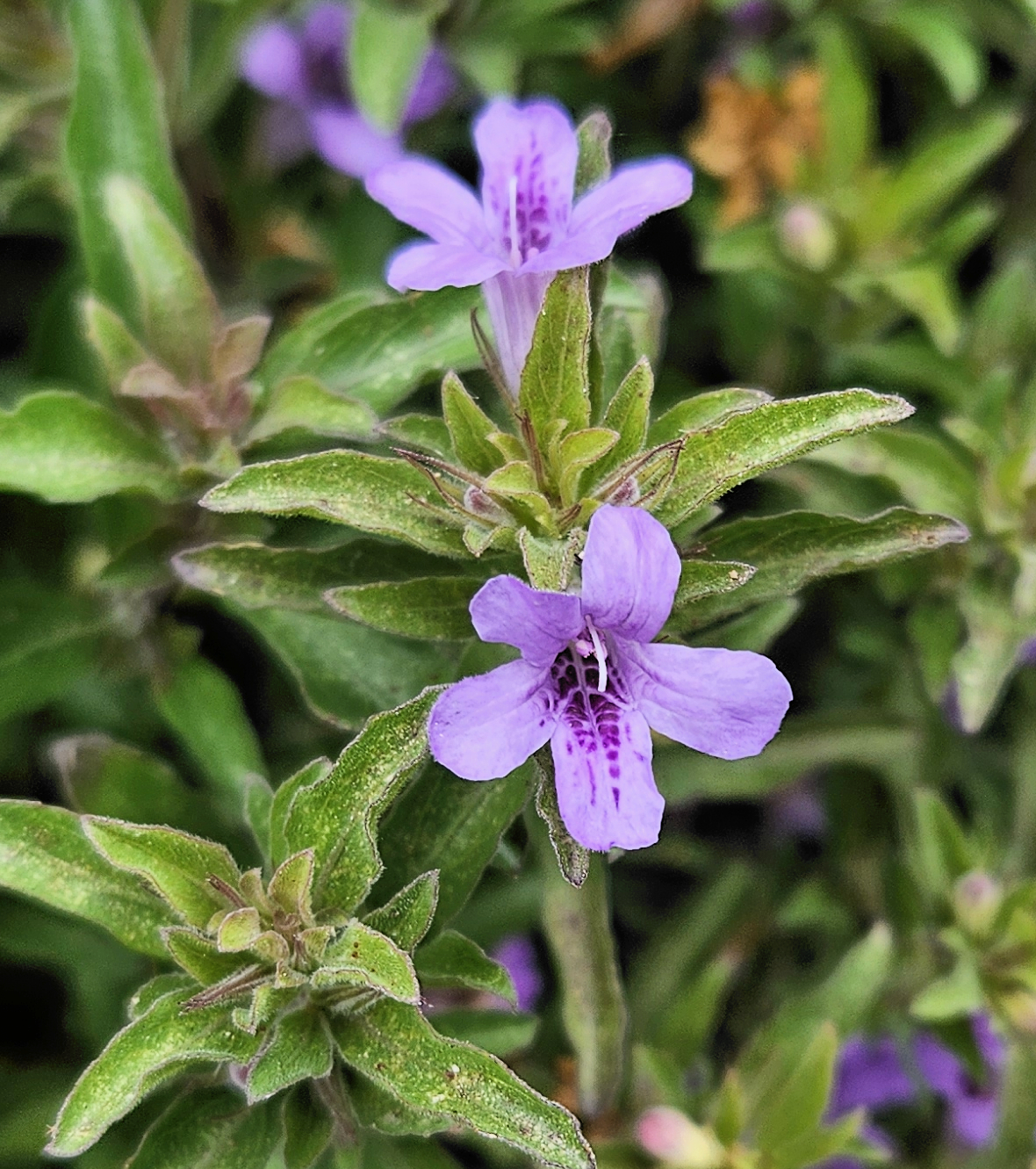
Dyschoriste linearis, commonly called Polkadot Plant (also known as Snake Herb or Narrowleaf Dyschoriste), is a low, bushy perennial wildflower of the acanthus family (Acanthaceae) native to much of central, western, and southern Texas. It takes its playful common name from the way its lavender, two-lipped flowers appear scattered here and there across the foliage, tucked individually into the leaf axils rather than gathered into showy clusters — giving the plant a speckled, “polka-dotted” look when in bloom.
This is a modest, ground-hugging wildflower rather than a showpiece: several stiff, hairy stems rise 6 to 12 inches from a woody base, lined with narrow opposite leaves. From these leaf axils emerge pale lavender to purple, bell-shaped flowers with darker purple stripes marking the throat, each about half an inch to an inch long. Blooms appear in flushes through late spring and again in late summer whenever rainfall allows.
Polkadot Plant earns a place in a Texas native garden less for drama than for toughness and ecological value — it tolerates heat, drought, and poor rocky soils, spreads modestly to form a low ground-covering patch, and serves as a larval host plant for the Common Buckeye butterfly, making it a quietly useful addition to a native butterfly garden.
Identification
Polkadot Plant is a low, clump-forming perennial with several erect, wiry stems rising 6 to 12 inches from a semi-woody base. The four-sided stems and branches are covered in stiff, coarse hairs, giving the whole plant a slightly bristly texture.
Leaves
Leaves are narrow, opposite, and attached directly to the stem (sessile or nearly so), ranging from about ¾ to 2¾ inches long. They are linear to narrowly lance-shaped and have a somewhat rough, hairy surface typical of the genus.
Flowers & Fruit
The two-lipped, bell-shaped flowers are ½ to 1 inch long and up to 1 inch across, colored pale lavender to purple with darker purple stripes marking the throat. They emerge singly from the leaf axils on very short stalks, tucked in close to the stem rather than held above the foliage, scattered irregularly along the plant’s length — the source of the “polka dot” common name. Flowering occurs mainly in late spring, often repeating in late summer when rain is sufficient. The fruit is a small dry capsule typical of the Acanthaceae family.
Quick Facts
| Scientific Name | Dyschoriste linearis |
| Family | Acanthaceae (Acanthus) |
| Plant Type | Herbaceous to Semi-Woody Perennial |
| Mature Height | 6–12 in |
| Mature Spread | 1–2 ft |
| Growth Rate | Moderate |
| Sun Exposure | Full Sun to Part Shade |
| Water Needs | Low |
| Soil Type | Sand, loam, clay, or limestone; well-drained |
| Soil pH | 6.5–8.5 (neutral to alkaline) |
| Bloom Time | Late spring, repeating late summer |
| Flower Color | Lavender to purple with purple throat stripes |
| Fruit | Small dry capsule |
| Deer Resistant | Moderate |
| USDA Hardiness Zones | 7–10 |
Native Range
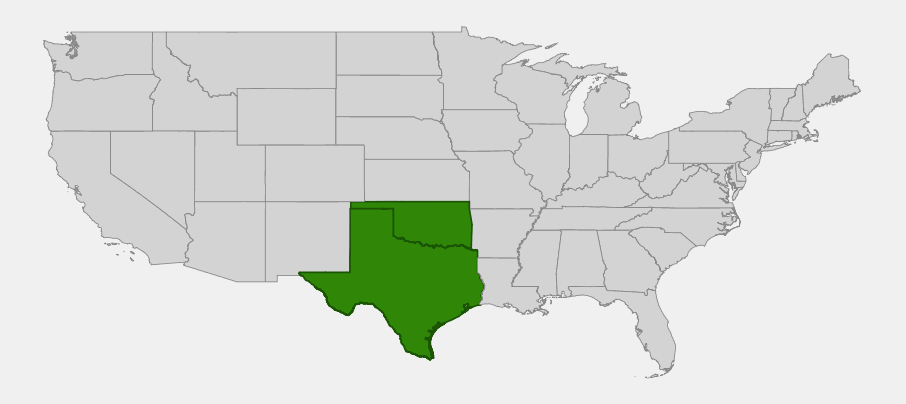
Polkadot Plant is native to the western two-thirds of Texas, from the Texas Blackland Prairies and Cross Timbers west across the Edwards Plateau and southern Texas Plains into the Chihuahuan Desert border country, with populations extending north into adjacent Oklahoma.
It grows on rocky-grassy slopes, silty flats, and above caprock, in well-drained sand, loam, clay, or limestone-derived soils. It is a common component of native prairie and rangeland vegetation across much of its range rather than a plant of wet bottomlands or deep shade.
Because it tolerates the thin, rocky soils and periodic drought typical of the Edwards Plateau and southern Great Plains, Polkadot Plant remains a persistent, reliable part of the native grassland and rangeland flora across a broad swath of Texas.
📋 Regional plant lists featuring Polkadot Plant: South and West Texas
Growing & Care Guide
Polkadot Plant is an easygoing, low-care native wildflower well suited to Texas rock gardens, prairie restorations, and drought-tolerant borders. It thrives with minimal intervention once established in well-drained soil.
Light
Grow Polkadot Plant in full sun to light part shade. Full sun produces the most compact growth and heaviest bloom, while light shade is tolerated, particularly in the hottest parts of its range.
Soil & Water
This species adapts to a wide range of well-drained soils, including sand, loam, clay, and limestone-derived caliche, provided drainage is good. It is drought tolerant once established, needing supplemental water mainly during extended dry spells or to encourage a second late-summer bloom flush.
Planting Tips
Set out plants in fall or spring, spacing them 12 to 18 inches apart if grouping for a groundcover effect. Polkadot Plant performs well in rocky or lean soils and does not require amendment; overly rich, consistently moist soil can produce leggier, less floriferous growth.
Pruning & Maintenance
Little maintenance is needed. Cutting plants back lightly after the first spring bloom flush can encourage denser regrowth and a stronger late-summer rebloom. Remove dead growth after winter to tidy the clump before new growth emerges.
Landscape Uses
Polkadot Plant’s low, spreading habit suits several native garden roles:
- Butterfly gardens, as a larval host for the Common Buckeye
- Low groundcover patches in sunny, well-drained beds
- Prairie and rangeland restoration plantings
- Rock garden and xeric border plantings
- Front-of-border accents in a native wildflower bed
Wildlife & Ecological Value
Despite its modest stature, Polkadot Plant plays a genuine ecological role across the Texas prairies and rangelands where it grows.
For Pollinators & Butterflies
Polkadot Plant is a larval host plant for the Common Buckeye butterfly, whose caterpillars feed on the foliage — gardeners should expect some leaf nibbling as a sign the plant is doing its ecological job. The tubular flowers also attract native bees and other small pollinating insects during the spring and late-summer bloom periods.
For Insects
Researchers have documented the Bicolor Flea Beetle (Phydanis bicolor) feeding on this species, one example of the specialized insect relationships that develop around widespread native wildflowers like Polkadot Plant.
Ecosystem Role
As a low, drought-tolerant perennial common across Texas prairie and rangeland ecoregions, Polkadot Plant contributes to the structural diversity of the herbaceous layer, filling rocky, thin-soil niches where taller, more water-demanding wildflowers struggle to establish.
Cultural & Historical Uses
Polkadot Plant has not been documented as having significant historical medicinal, culinary, or craft uses among the peoples of its native Texas and Oklahoma range. It is primarily known today through its role in native prairie ecosystems and, more recently, through interest from native-plant gardeners drawn to its drought tolerance and butterfly-host value.
Its common name “Polkadots” appears to be a relatively modern, descriptive nickname referencing the scattered placement of its flowers along the stem rather than a name with deep historical roots, distinguishing it from the unrelated houseplant sometimes called “polka dot plant” (Hypoestes phyllostachya), a different species from Madagascar grown for colorful foliage.
Today, Polkadot Plant’s main value lies in habitat restoration and native landscaping, where its toughness and butterfly-supporting role make it a practical, if understated, choice for Texas wildflower gardens.
Frequently Asked Questions
Is this the same as the houseplant called “polka dot plant”?
No. The common houseplant polka dot plant is Hypoestes phyllostachya, an unrelated species from Madagascar grown for its spotted foliage. Dyschoriste linearis is a distinct Texas native wildflower known for its scattered purple flowers, not spotted leaves.
Will Polkadot Plant attract butterflies?
Yes. It serves as a larval host plant for the Common Buckeye butterfly, and its flowers draw native bees and other pollinators, making it a useful addition to a Texas butterfly garden.
How much water does Polkadot Plant need?
Very little once established. It is adapted to the periodic drought of Texas prairies and rangelands and generally thrives on natural rainfall, with occasional supplemental water helpful for encouraging a late-summer rebloom.
Why does my Polkadot Plant have chewed leaves?
This is usually a good sign — Common Buckeye caterpillars feed on the foliage. Minor leaf damage from these larvae is part of the plant’s ecological function and does not typically harm an established plant.
What soil does Polkadot Plant prefer?
It tolerates sand, loam, clay, and limestone-derived soils as long as drainage is good. It is well adapted to the thin, rocky soils typical of the Edwards Plateau and southern Great Plains.

Looking for a nursery that carries Polkadot Plant?
Browse our native plant nursery directory: Texas