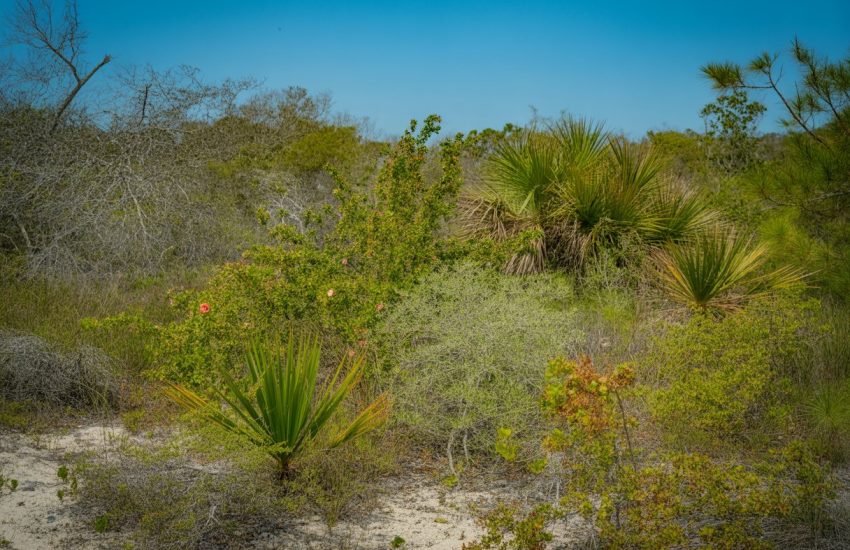
Wolfberry (Lycium berlandieri)
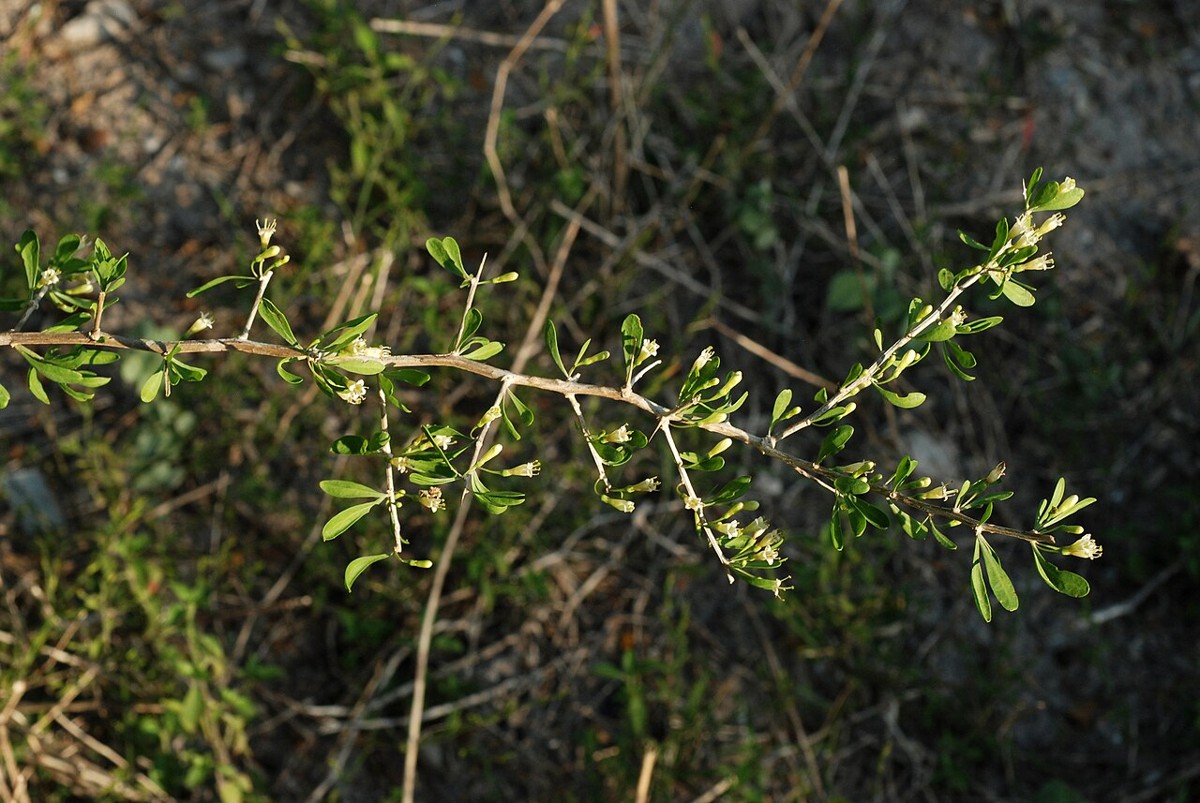
Lycium berlandieri, commonly called Wolfberry or Berlandier’s Wolfberry, is a rangy, sprawling shrub of the nightshade family (Solanaceae) that is one of the most widespread brush species of the Chihuahuan and Sonoran desert borderlands. It grows across the dry flats, washes, and rocky hillsides of south and west Texas, New Mexico, and Arizona, where its tangle of slender gray-tan branches and small round red berries make it a familiar, if often overlooked, part of the native brush community.
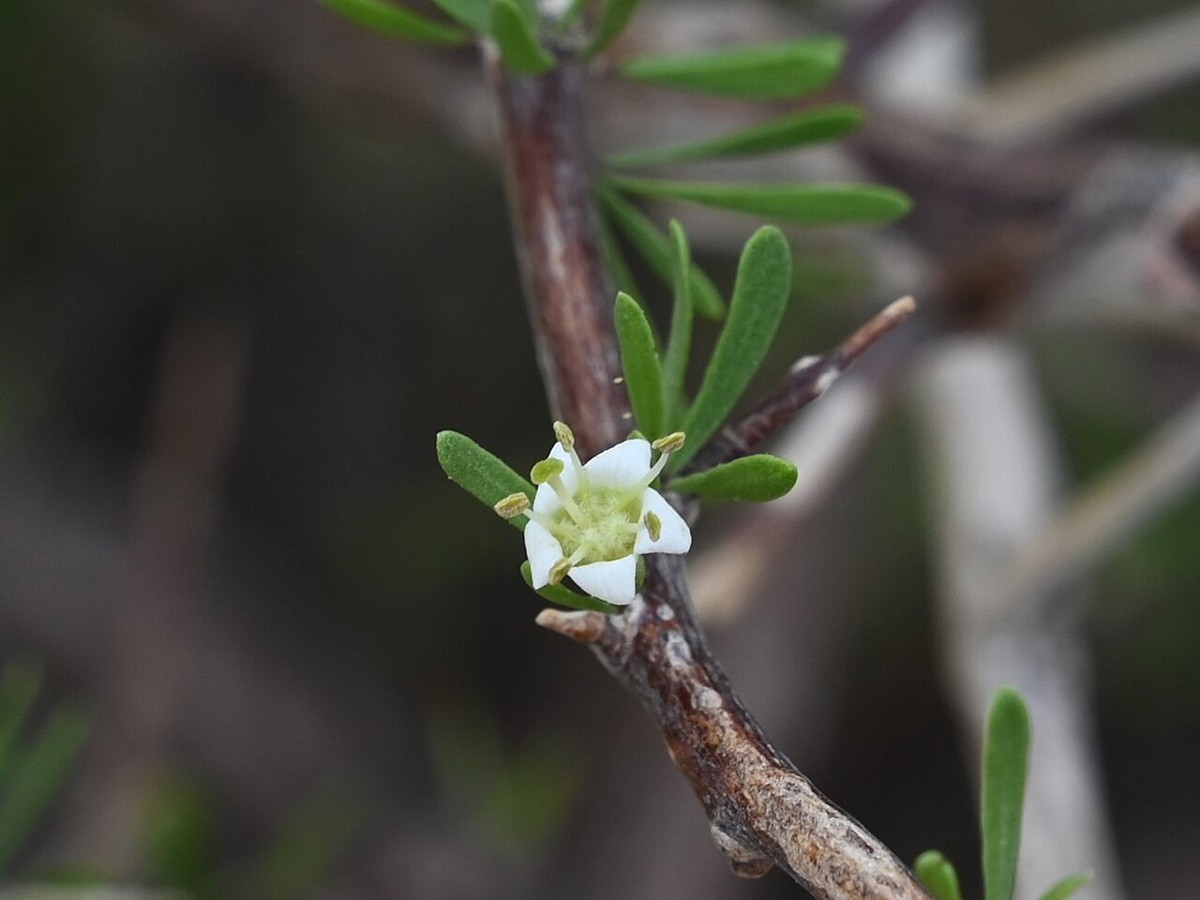
Wolfberry rarely draws attention for showiness. Its tiny tubular flowers — white, lavender, or pale blue — open in small clusters along the stems almost any time from late winter through fall, followed by small round red berries that ripen in flushes after rain. The plant is sparingly armed with a few short, stiff thorns near the branch tips, and its narrow, somewhat fleshy leaves give the whole shrub a fine, wiry texture that blends easily into mixed desert scrub.
For a native plant garden in its home range, Wolfberry earns its place through toughness and wildlife value rather than ornament. It asks for almost nothing once established, tolerates heat, drought, and poor soils that would kill most ornamentals, and its berries feed a long list of desert birds and small mammals. It is best used as part of a naturalistic hedgerow, wildlife thicket, or xeric border rather than as a specimen plant.
Identification
Wolfberry is an upright to sprawling shrub reaching 3 to 8 feet tall, with a rangy, open growth habit and sparingly branched stems that often arch or lean rather than standing stiffly upright. The branches are slender, tan to gray, and somewhat crooked, with a scattering of short, stiff thorns concentrated near the branch ends — far fewer and less conspicuous than on many of its desert-thorn relatives.
Stems & Thorns
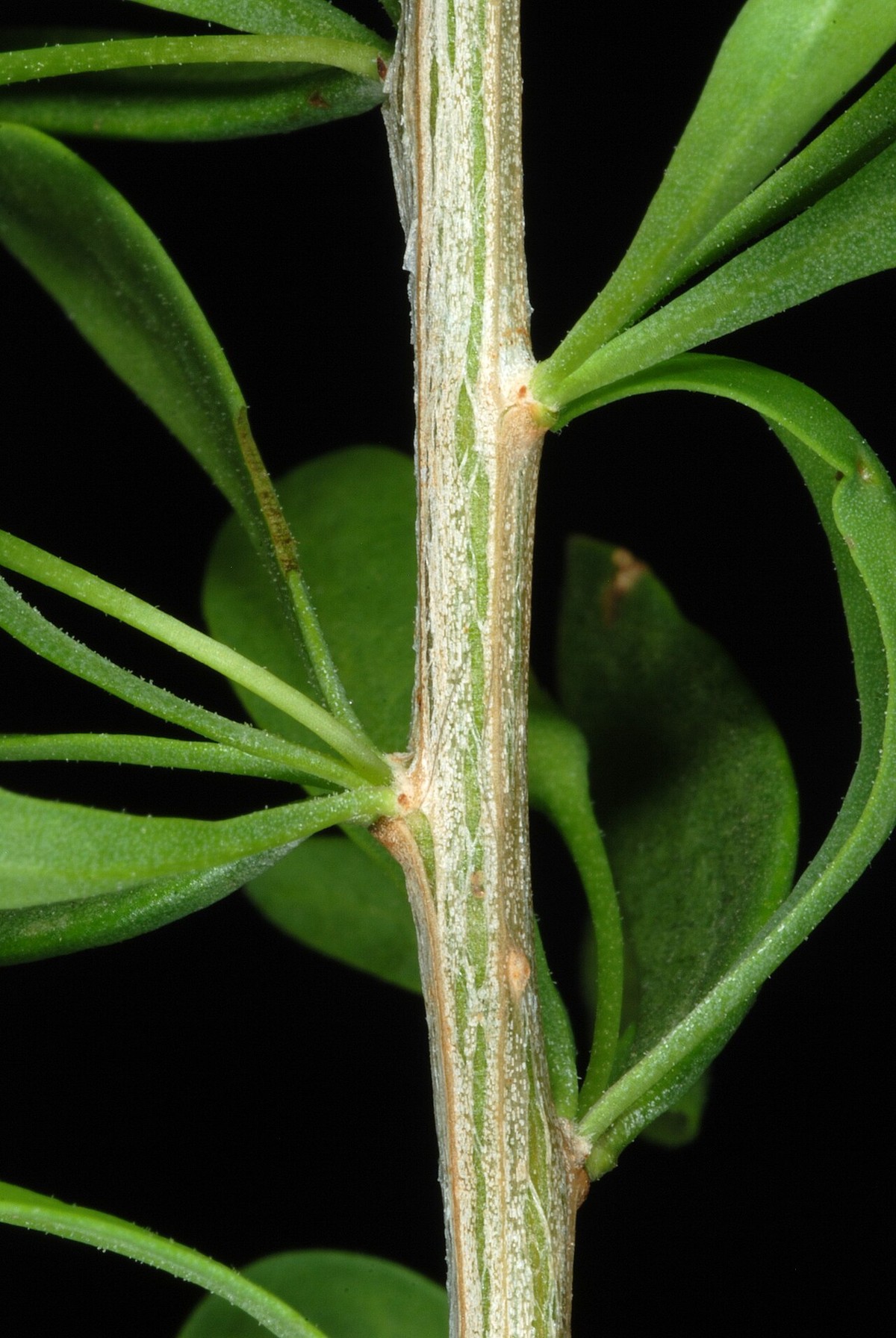
Young stems are slender and often finely hairy, aging to smooth, pale tan-gray bark. Thorns, where present, are short and occur mostly toward the tips of branchlets; some individual plants are nearly thornless. The overall branching pattern is loose and somewhat zigzagging rather than densely twiggy.
Leaves
Leaves are small, narrow, spatulate to linear, and mostly hairless, growing to about 1¼ inches long. They are fleshy and gray-green, clustered in small groups along the stems, and typically drop during extended dry periods, leaving the bare branch framework exposed — a common drought-deciduous trait among desert shrubs.
Flowers & Fruit
The small, tubular to bell-shaped flowers have four or five flaring lobes and protruding stamens, and range in color from white to pale lavender or blue. They open singly or in small clusters at the leaf axils and can appear almost any month of the year when moisture allows, with the heaviest bloom from February into early summer. The fruit is a small, round, red berry about the size of a pea, ripening in flushes that follow rain throughout the growing season.
Quick Facts
| Scientific Name | Lycium berlandieri |
| Family | Solanaceae (Nightshade) |
| Plant Type | Deciduous Shrub |
| Mature Height | 3–8 ft |
| Mature Spread | 3–6 ft |
| Growth Rate | Moderate |
| Sun Exposure | Full Sun to Part Shade |
| Water Needs | Low |
| Soil Type | Gravelly, sandy, sandy loam, clay loam; well-drained |
| Soil pH | 6.5–8.5 (neutral to alkaline) |
| Bloom Time | February – October |
| Flower Color | White, lavender, pale blue |
| Fruit | Small round red berries |
| Deer Resistant | No (browsed by white-tailed deer) |
| USDA Hardiness Zones | 7–10 |
Native Range
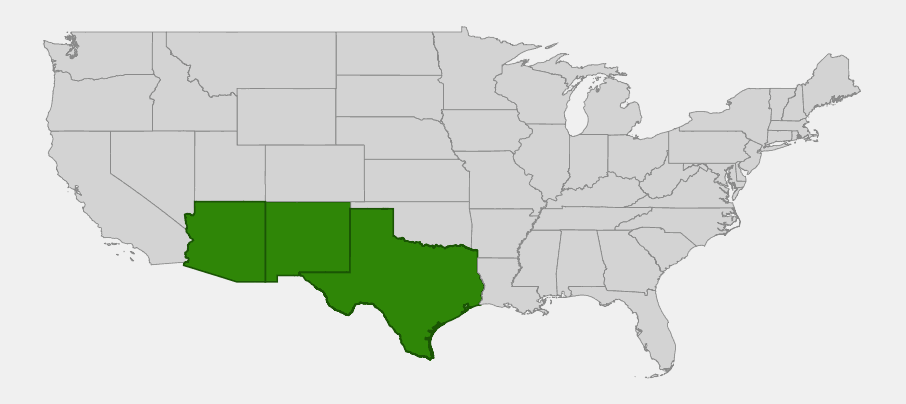
Wolfberry ranges across the Chihuahuan and Sonoran desert borderlands of the American Southwest, from southeastern Arizona through southern New Mexico and across south, central, and west Texas, continuing south into north-central Mexico. Within Texas it is especially common on the South Texas Plains and across the Trans-Pecos and Edwards Plateau, where it is a familiar component of brush country.
It grows on open flats, along washes and arroyos, on dry gravelly to sandy hills and bajadas, and on rocky slopes, typically in full sun at low to moderate elevations. Wolfberry tolerates the caliche, clay loam, and gravelly soils typical of desert grassland and thornscrub, and is often found alongside other drought-adapted shrubs that make up the region’s mixed brush communities.
Its range has expanded in places where historical grazing and fire suppression allowed brush to encroach on former grasslands, a pattern documented across much of the South Texas Plains. Even so, Wolfberry is a true native component of the region’s desert and semi-desert plant communities, not a recent arrival, and it remains most abundant on undisturbed rangeland and rocky hillsides.
📋 Regional plant lists featuring Wolfberry: South and West Texas · Arizona & New Mexico
Growing & Care Guide
Wolfberry is built for tough, dry conditions and asks little from the gardener once it is in the ground. Its value lies in reliability and wildlife support rather than a manicured look — it is best suited to naturalistic plantings where its loose, rangy habit can be appreciated.
Light
Plant Wolfberry in full sun for the densest, most floriferous growth. It also tolerates light part shade, particularly in the hottest parts of its range, but flowering and berry production are best in open, sunny sites.
Soil & Water
Wolfberry thrives in gravelly, sandy, or clay loam soils with sharp drainage and a neutral to alkaline pH, the conditions typical of its native desert flats and hillsides. It needs little supplemental water once established and is well suited to xeriscape plantings; occasional deep watering during the first year helps it root in, after which natural rainfall is usually sufficient except in the driest years.
Planting Tips
Set out container-grown plants in fall or early spring so roots can establish before summer heat arrives. Space plants 4 to 6 feet apart if grouping them into a hedgerow or thicket. Wolfberry tolerates the caliche and rocky soils common across its range and does not require soil amendment.
Pruning & Maintenance
Little pruning is needed. Remove dead or damaged wood after hard freezes, and thin congested growth occasionally to maintain an open, airy form if a tidier look is desired. The plant can be cut back hard if it becomes leggy; it resprouts readily from the base.
Landscape Uses
Wolfberry fits naturally into several native landscape roles:
- Wildlife hedgerow or thicket planting for bird and small-mammal habitat
- Xeric and water-wise borders in low-maintenance native gardens
- Brush country restoration plantings on rangeland and disturbed sites
- Informal screening along property edges in arid regions
- Pollinator gardens, where its long bloom season supports native bees
Wildlife & Ecological Value
Despite its modest appearance, Wolfberry is a dependable source of food and shelter across the desert brushlands where it grows, flowering and fruiting through much of the year.
For Birds
The small red berries are eaten by a wide range of desert and brush-country birds, including chachalacas in South Texas and numerous songbirds and quail that forage through brush thickets. The tangled branches also provide nesting cover and protection from predators and heat.
For Mammals
Raccoons and other small mammals feed on the berries, helping disperse seeds across the landscape. White-tailed deer browse the foliage, and the shrub is occasionally grazed by livestock on open rangeland, making it a minor but useful forage component in brush country.
For Pollinators
The small tubular flowers, produced over a long season from late winter into fall, attract native bees and other insect pollinators at a time when few other desert plants are blooming, making Wolfberry a valuable nectar source during gaps in the regional bloom calendar.
Ecosystem Role
As one of the more widespread shrubs of the Chihuahuan Desert and South Texas brush country, Wolfberry contributes to the structural complexity of desert scrub communities, offering cover between larger shrubs like mesquite and acacia and helping stabilize soil on dry slopes and washes.
Cultural & Historical Uses
Wolfberry belongs to a genus with a long history of use across arid North America; several Lycium species, including this one, produced berries that Indigenous peoples of the Southwest and northern Mexico historically gathered and ate fresh or dried as a seasonal food source, particularly in years when other wild foods were scarce.
As with many members of the nightshade family, caution is warranted: the foliage and unripe fruit of Lycium species are generally considered unsuitable for consumption, and modern foragers should not rely on historical accounts as guidance for eating wild Wolfberry berries without expert identification and preparation knowledge.
Beyond its historical food use, Wolfberry has had little commercial application. It persists today primarily as a component of native rangeland brush, valued more by ranchers managing grazing land and by wildlife than by the nursery trade, though interest in low-water native shrubs has begun to bring it into native plant gardens.
Frequently Asked Questions
Is Wolfberry the same plant as goji berry?
No. Goji berry is typically Lycium barbarum or Lycium chinense, Asian species cultivated for their fruit. Lycium berlandieri is a separate, North American native species not grown commercially for its berries.
Can I eat Wolfberry berries?
Some Indigenous groups historically ate the ripe berries, but they are not a recommended modern food source. As with other nightshade-family plants, the foliage and unripe fruit should be considered unsuitable for eating, and the species is best left for wildlife.
Does Wolfberry have thorns?
Yes, but only sparingly — short, stiff thorns occur mainly near the tips of branches, and some individual plants have very few. It is far less thorny than many of its desert-shrub neighbors.
How much water does Wolfberry need?
Very little once established. It is adapted to low desert rainfall and thrives with occasional deep watering during extended dry spells, but it does not tolerate consistently wet or poorly drained soil.
Will Wolfberry attract wildlife to my garden?
Yes. Its long bloom season draws native bee pollinators, and its berries are eaten by birds such as chachalacas and by small mammals, making it a useful addition to a wildlife-friendly native garden in its home range.

Looking for a nursery that carries Wolfberry?
Browse our native plant nursery directory: Arizona · New Mexico · Texas