Fairy Swords Lip Fern (Cheilanthes lindheimeri)
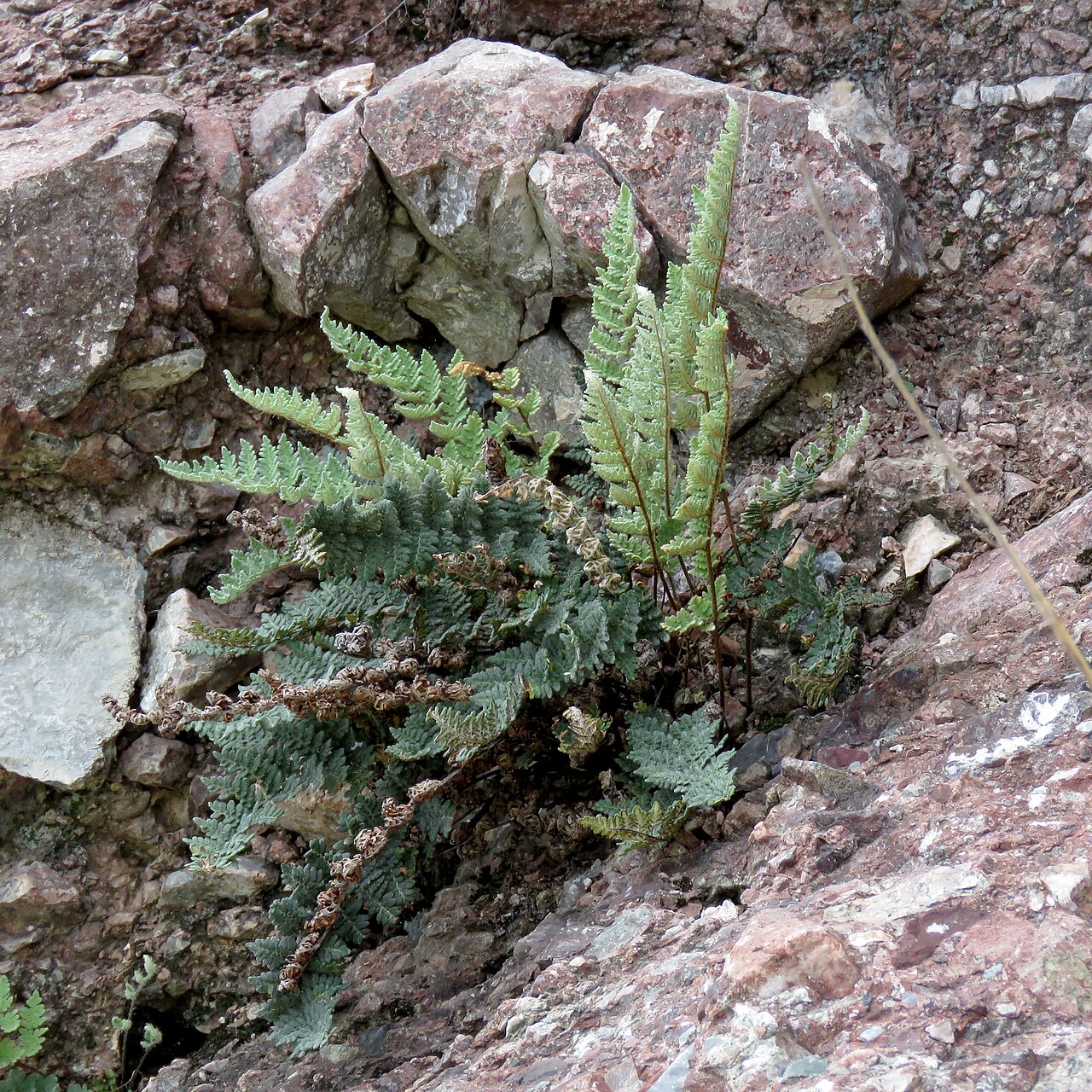
Cheilanthes lindheimeri, commonly known as fairy swords or Lindheimer’s lip fern (sometimes reclassified as Myriopteris lindheimeri), is a small rock-loving fern of the warm deserts and dry mountains of the southwestern United States. It belongs to the Pteridaceae (brake fern family) and is named for German-born botanist Ferdinand Lindheimer, often called the “father of Texas botany,” who collected extensively in the Texas Hill Country in the 1800s.
The common name “fairy swords” comes from the fern’s growth habit: narrow, upright fronds rise in neat rows along a long, creeping rhizome, their pale, cilia-fringed scales giving them a silvery, almost frosted sheen that catches the light like a row of small blades. This long-creeping rhizome — unusual among the region’s lip ferns — sets fairy swords apart from similar species such as Eaton’s lip fern and woolly lip fern, which tend to form tighter clumps.
Like other cheilanthoid ferns of arid rock outcrops, fairy swords is a true desert specialist, found wedged into granite and other rocky crevices across Arizona, New Mexico, and central and western Texas. It is not a plant for the typical shade garden, but for a rock garden or crevice planting in a hot, dry climate, it offers year-round texture and authentic regional character.
Identification
Fairy swords is a small, evergreen, perennial fern distinguished by its long-creeping rhizome and the upright, sword-like posture of its fronds.
Rhizome & Fronds
Unlike many lip ferns that form dense tufts, fairy swords has a narrow, long-creeping rhizome from which fronds arise singly or in loose, spaced rows rather than tight clusters. This creeping habit is one of the most reliable field marks separating it from the similarly shaped Eaton’s lip fern and woolly lip fern. Mature fronds stand upright to spreading, typically 6 to 12 inches (15–30 cm) tall, though plants at lower, hotter elevations may stay shorter, around 6 inches.
Scales & Texture
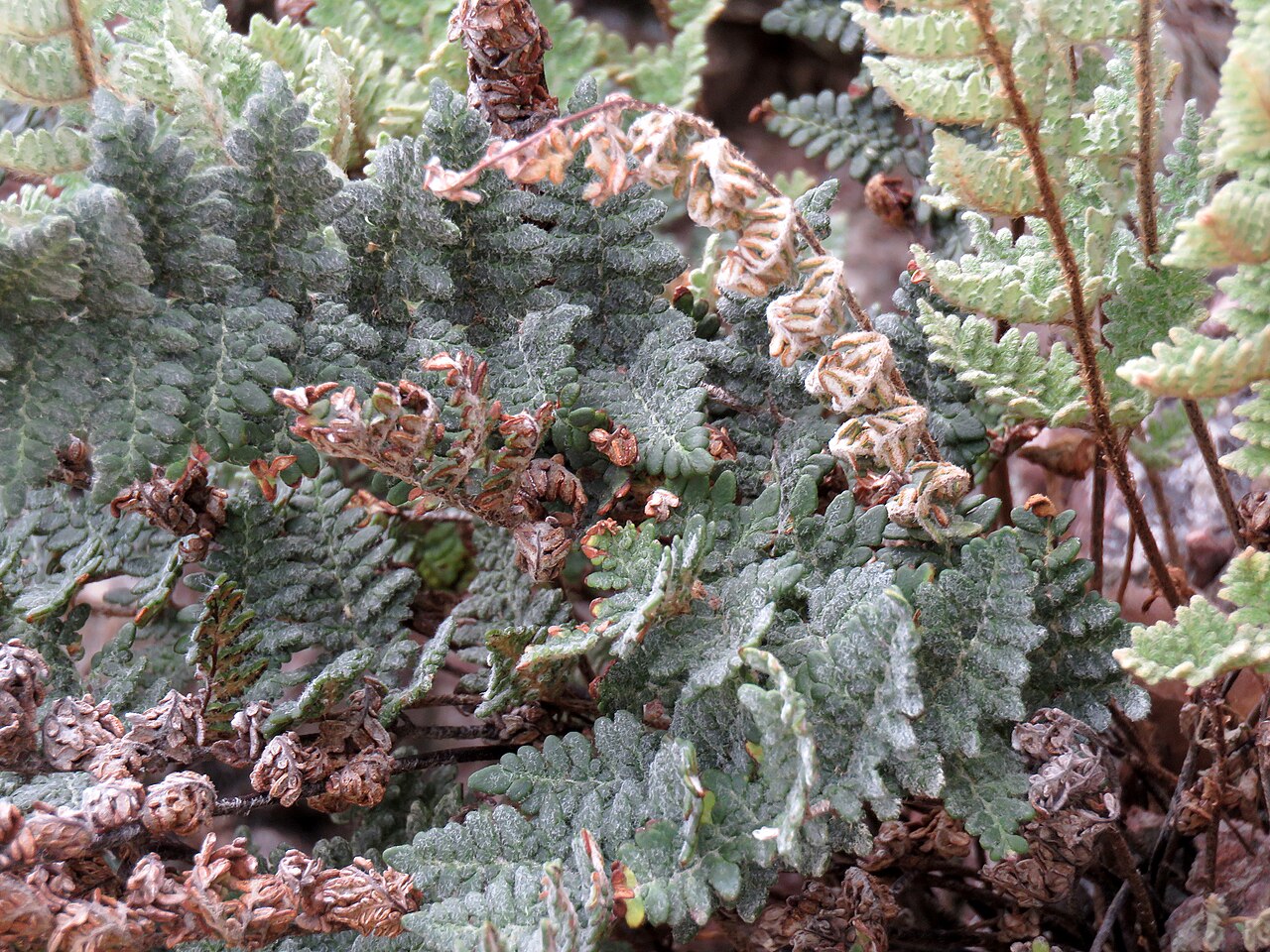
Fronds are divided two to three times into small, bead-like segments, with the upper surface silvery-green to gray-green and somewhat scaly, and the underside covered in thicker, cinnamon-brown scales. The scales along the leaf axis (costae) are fringed with fine cilia, or hair-like projections, giving the whole frond a pale, almost frosted appearance — the detail behind the “fairy swords” name.
Spores
As with other ferns, reproduction is by spores rather than flowers or seed. Spore clusters (sori) form in narrow continuous or interrupted lines along the curled-under margins of the frond segments, protected by the rolled leaf edge typical of lip ferns. Fairy swords sporulates from roughly spring through fall, and in some populations reproduces apogamously — producing viable spores without the usual sexual fertilization step, a trait documented in this species.
Quick Facts
| Scientific Name | Cheilanthes lindheimeri (syn. Myriopteris lindheimeri) |
| Family | Pteridaceae (Brake Fern) |
| Plant Type | Evergreen Perennial Fern |
| Mature Height | 6–12 in (15–30 cm) |
| Mature Spread | Indefinite (spreads via creeping rhizome) |
| Growth Rate | Slow |
| Sun Exposure | Full Sun to Part Shade |
| Water Needs | Low (Arid once established) |
| Soil Type | Rocky, gravelly, shallow soil in crevices |
| Soil pH | 6.5–8.0 (neutral to alkaline) |
| Bloom Time | Not applicable (ferns do not flower) |
| Flower Color | None (spore-bearing fern) |
| Fall Color | Evergreen; fronds curl in drought |
| Fruit | None (reproduces by spores) |
| Deer Resistant | Yes |
| USDA Hardiness Zones | 8–10 |
Native Range
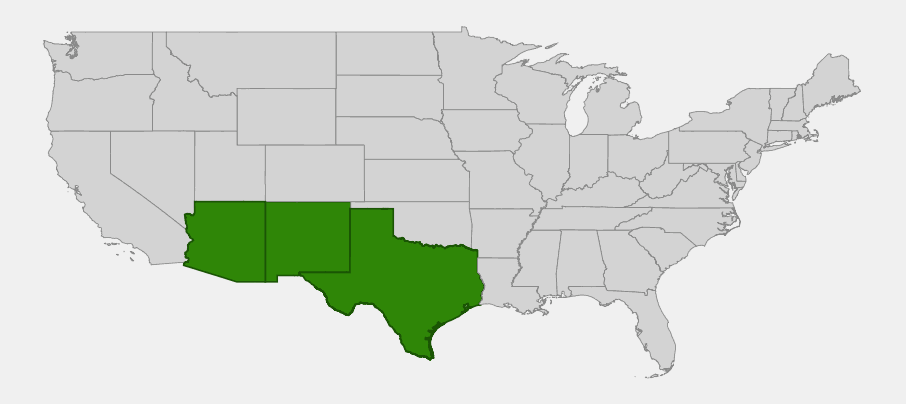
Fairy swords is native to the southwestern United States, with confirmed populations in Arizona, New Mexico, and central and western Texas. It is especially common in the sky-island mountain ranges of southeastern Arizona and southwestern New Mexico, and across the limestone hills and canyons of the Texas Hill Country and Trans-Pecos region, extending south into northern Mexico.
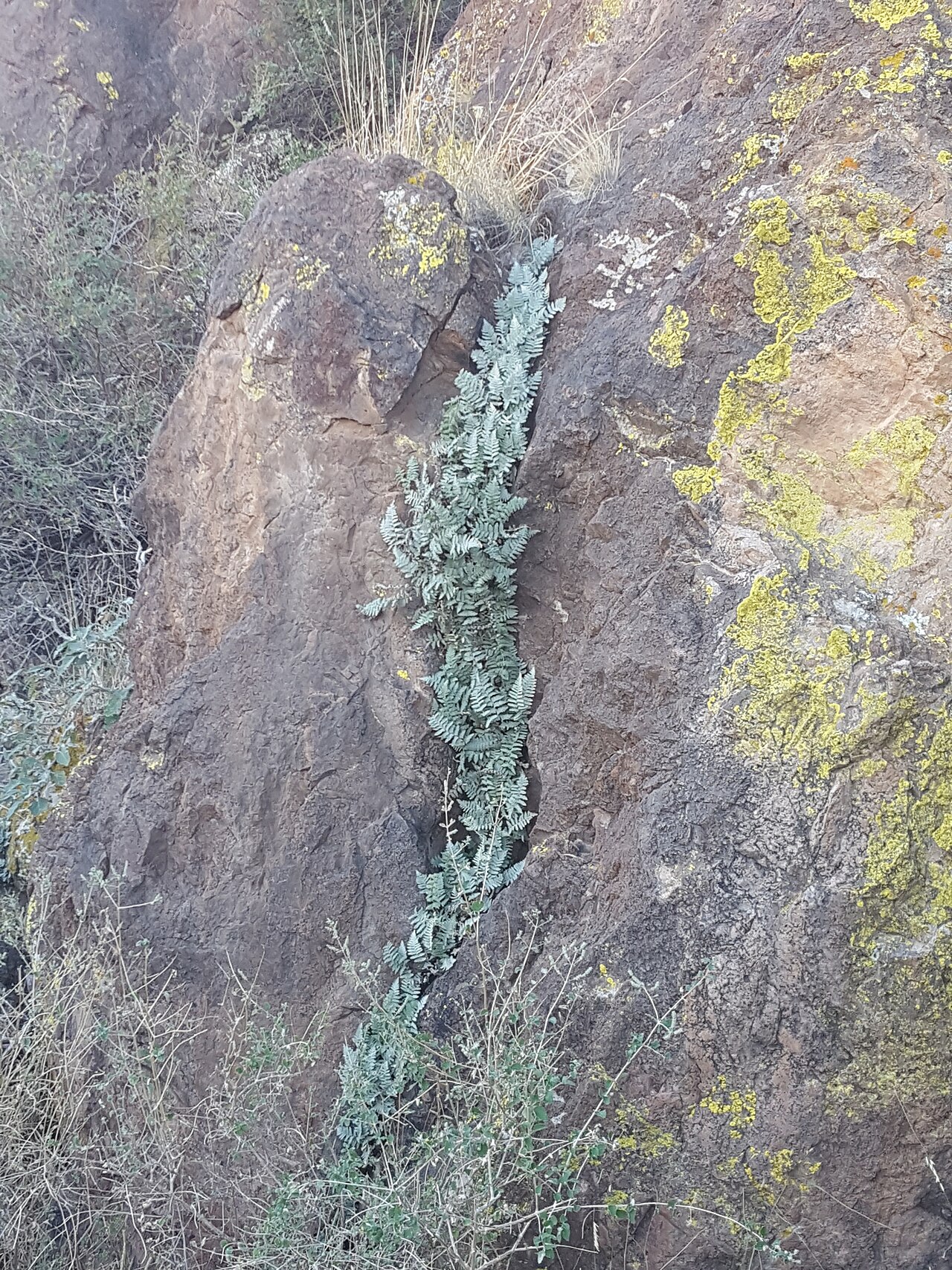
Across this range it grows from roughly 2,000 to 8,000 feet (600–2,400 m) elevation, favoring dry, rocky slopes, canyon walls, and outcrops — often granite in Arizona and New Mexico, and limestone in central Texas. Plants typically grow in long rows along rock crevices and fissures, tracking the path of their creeping rhizomes, often alongside other dryland ferns and low desert shrubs.
Some references also list fairy swords in southwestern Oklahoma, but county-level distribution records do not support a confirmed, established native population there beyond a single isolated county record; this page lists only Arizona, New Mexico, and Texas, where native populations are well documented.
📋 Regional plant lists featuring fairy swords: South & West Texas · Arizona & New Mexico
Growing & Care Guide
Fairy swords is a specialist rock fern, not a candidate for conventional moist shade-garden conditions. It rewards gardeners who replicate its native crevice habitat rather than treating it like an ordinary fern.
Light
Give it full sun to part shade. In the wild it tolerates strong desert sun on exposed rock, though light afternoon shade from a nearby boulder or shrub can ease stress in the hottest low-desert gardens.
Soil & Water
Plant in rocky, gravelly, fast-draining soil — a crevice garden, dry-stacked rock wall, or gravel bed suits it well. Because of its creeping rhizome, it will slowly colonize adjacent crevices over time rather than staying in a single tight clump. Water sparingly; established plants need little to no supplemental irrigation and will curl their fronds in extended drought, releafing after rain. Soggy or clay-heavy soil will rot the rhizome.
Planting Tips
Tuck divisions or small nursery starts into narrow rock crevices or gravel pockets, ideally in fall so roots can establish before the heat of summer. Because its rhizome creeps rather than forming a dense clump, give it room along a crevice or wall to spread naturally over several seasons rather than expecting quick, bushy fullness.
Pruning & Maintenance
None needed. Leave curled, drought-dormant fronds in place — they typically green back up after rain. Remove only fronds that are clearly dead and brittle after long seasons without regreening.
Landscape Uses
Fairy swords fits a specific but valuable role in dry-climate gardens:
- Crevice gardens and dry-stacked rock walls
- Rock gardens paired with agaves, sotol, and other desert perennials
- Xeriscapes needing low, textural ground interest without irrigation
- Limestone or granite outcrop plantings in Hill Country or desert-adjacent gardens
- Native fern collections alongside other regional cheilanthoid species
Wildlife & Ecological Value
As with other rock-dwelling ferns, fairy swords plays a supporting rather than central role in desert wildlife habitat, but it is far from inconsequential.
For Wildlife
The dense fronds and crevice growth habit provide small shelter pockets for insects, spiders, and other invertebrates on otherwise bare rock faces, and in turn for the lizards and small birds that forage among them. It does not produce seeds, fruit, or nectar, so it is not a direct food source for birds or mammals.
Ecosystem Role
Fairy swords is one of relatively few plants able to establish directly in narrow rock crevices with almost no soil, helping trap wind-blown dust and organic material that slowly contributes to soil formation in these harsh microsites. Its creeping rhizome allows it to colonize crevice networks gradually, stabilizing small amounts of debris and moisture along rock faces that would otherwise remain bare. Like many desert ferns, it is a useful indicator of relatively undisturbed rocky habitat, since its crevice niche is easily destroyed by grading, quarrying, or heavy foot traffic.
Cultural & Historical Uses
Fairy swords has little recorded history of practical use, which is typical for small, slow-growing rock ferns that offer no significant food, fiber, or medicinal value compared to larger regional plants. Its chief historical significance lies in its connection to Ferdinand Lindheimer, the nineteenth-century German-born botanist often called the “father of Texas botany,” who extensively collected and documented plants of the Texas Hill Country, including the specimens that led to this species bearing his name.
As with its close relative Coville’s lip fern, fairy swords has been affected by modern taxonomic revisions: long known simply as Cheilanthes lindheimeri, it has more recently been placed by some botanists in the genus Myriopteris as Myriopteris lindheimeri, following genetic studies that split the cheilanthoid ferns into more precisely defined groups. Both names remain in active use across regional floras and databases.
Frequently Asked Questions
Is fairy swords the same as Lindheimer’s lip fern?
Yes. “Fairy swords” and “Lindheimer’s lip fern” (or “Lindheimer’s lipfern”) are both common names for Cheilanthes lindheimeri, also sometimes listed as Myriopteris lindheimeri.
Why does fairy swords grow in a single-file row instead of a clump?
Its rhizome creeps rather than forming a tight, compact crown like many other ferns. New fronds emerge singly along the spreading rhizome, often tracing the length of a rock crevice in a distinctive row.
Can fairy swords survive long droughts?
Yes. Like related desert lip ferns, it curls its fronds tightly during dry periods to reduce water loss and appears dormant or dead, then uncurls and greens up again within days of meaningful rainfall.
Does fairy swords need rich garden soil?
No — it performs best in lean, rocky, fast-draining soil that mimics its native crevice habitat. Rich, consistently moist soil tends to cause rot rather than healthy growth.
Is fairy swords easy to find in nurseries?
It is uncommon outside specialty native plant nurseries due to its slow growth and specific rocky habitat requirements. Gardeners within its native range have the best chance of sourcing it regionally.

Looking for a nursery that carries fairy swords lip fern?
Browse our native plant nursery directory: Arizona · New Mexico · Texas