Coville’s Lip Fern (Cheilanthes covillei)
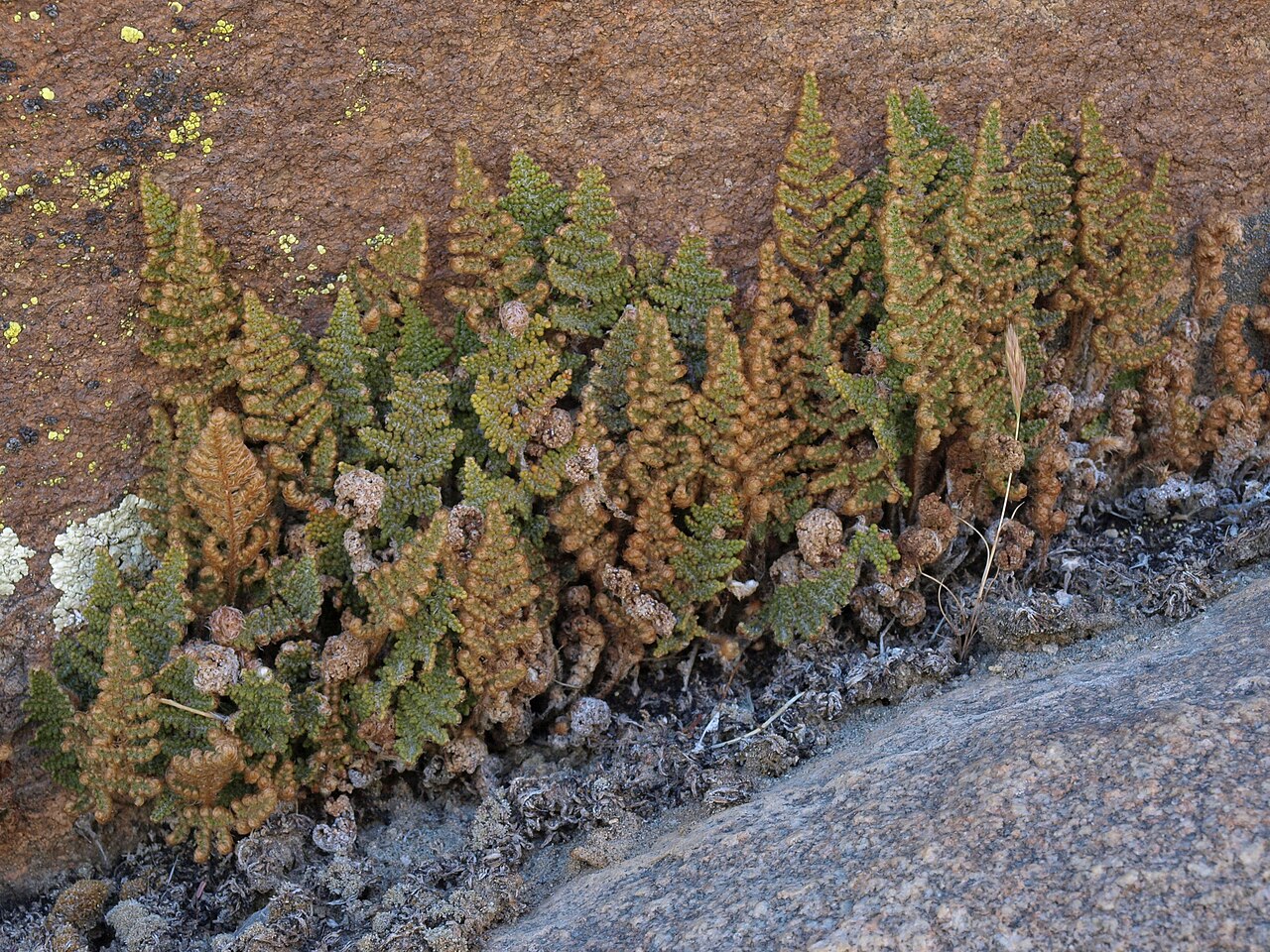
Cheilanthes covillei, commonly known as Coville’s lip fern (also called Coville’s lipfern; now often reclassified in the genus Myriopteris as Myriopteris covillei), is a small, tough, drought-adapted fern of rocky outcrops in the southwestern deserts. It belongs to the Pteridaceae (brake fern family) and is named for American botanist Frederick Vernon Coville, who co-collected the type specimen in 1891.
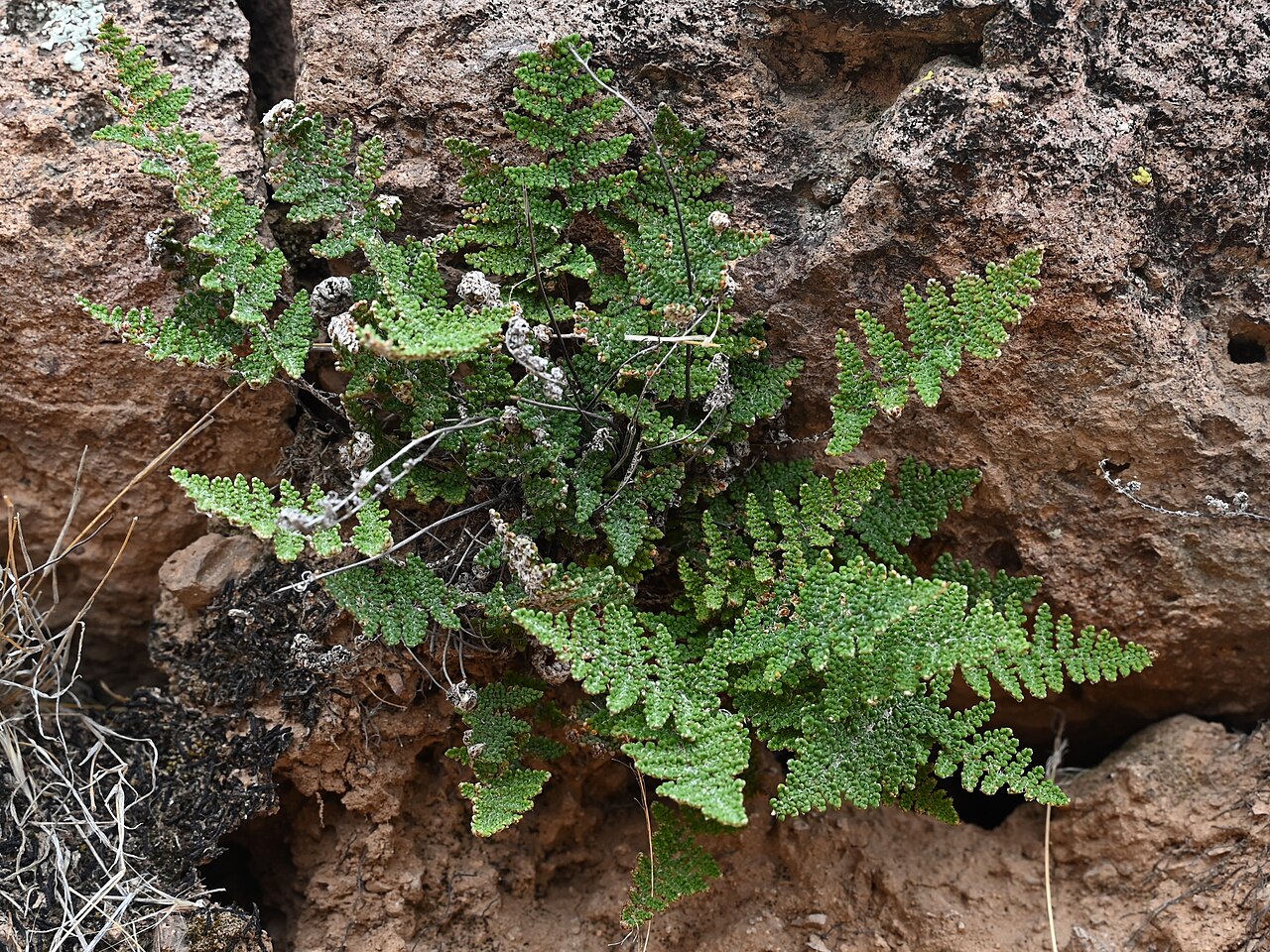
Unlike the lush ferns of moist eastern forests, Coville’s lip fern is built for survival in sun-baked, exposed rock. Its finely divided fronds are covered in dense whitish scales that conceal the green leaf tissue beneath, giving the plant a frosted, silvery look, especially on the underside of the leaf. In drought, the fronds curl tightly and appear dead or dormant, only to green up again within days of rain — a classic desiccation-tolerance strategy shared by many “resurrection ferns.”
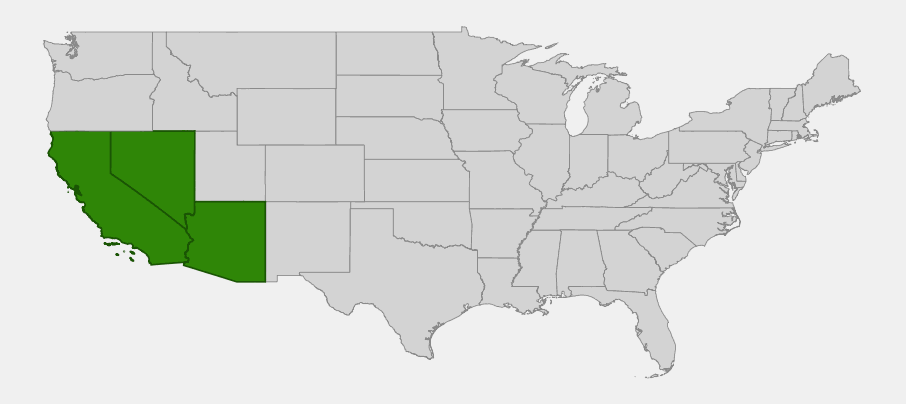
Found tucked into granite crevices, rocky slopes, and boulder piles across California, Nevada, and Arizona, Coville’s lip fern is a specialist of microhabitats that larger plants cannot use. It rarely appears in cultivation but is an excellent, true-to-place choice for a rock garden or crevice planting in dry-climate native gardens, where its toughness and small scale make it easy to tuck among stones.
Identification
Coville’s lip fern is a small, evergreen, perennial fern that grows in dense tufts from a compact, scaly rhizome anchored in rock crevices.
Rhizome & Fronds
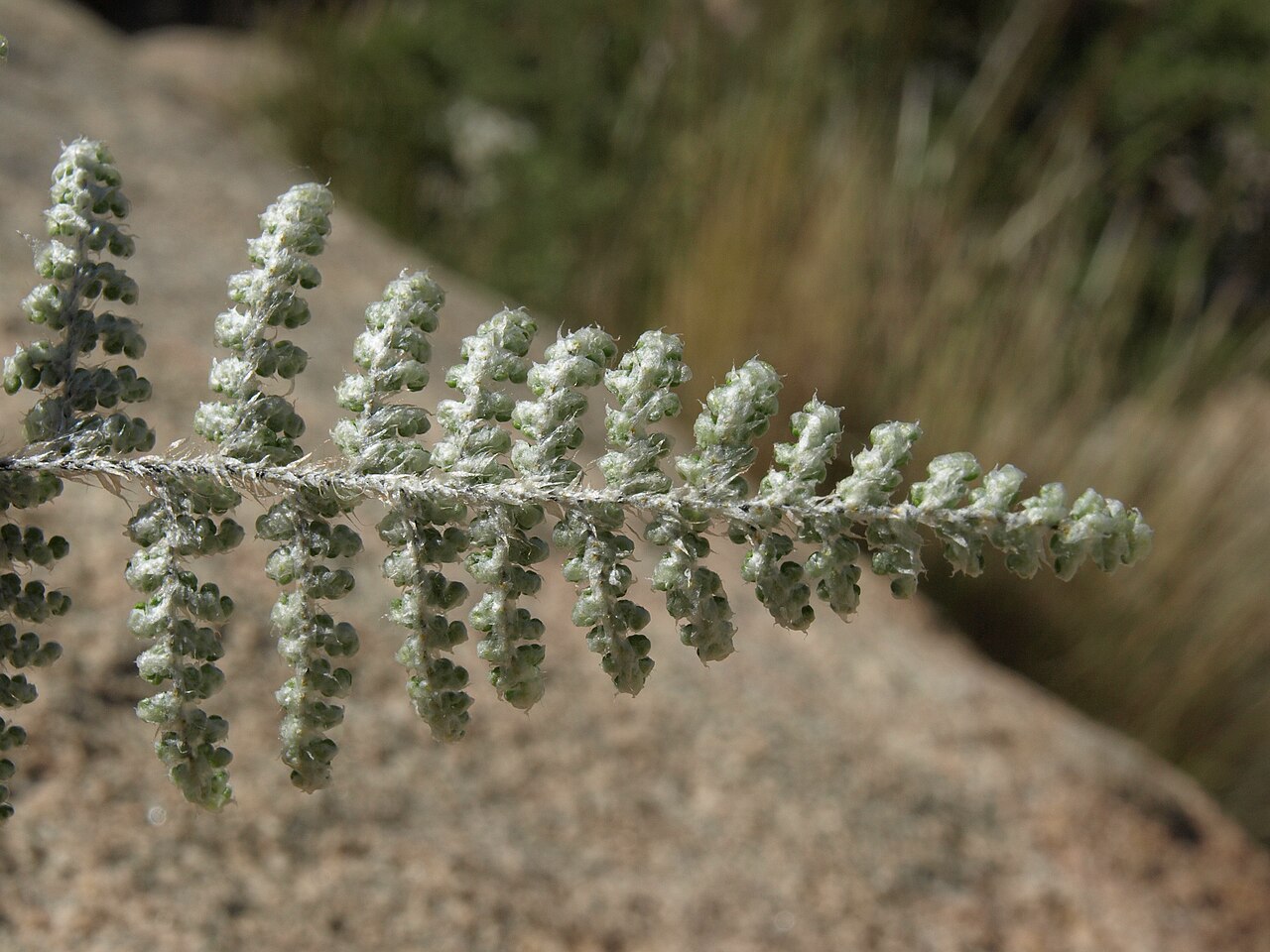
The rhizome is short and typically 2 to 4 millimeters thick, densely covered in narrow, dark brown to black scales that lie flat against its surface. Fronds emerge in tight clusters and do not unfurl as true fiddleheads; mature fronds are 2 to 12 inches (5–30 cm) long. Each frond is divided two to three times into small, bead-like, rounded segments, giving the whole leaf a knobby, almost coral-like texture rather than the flat, feathery look of most garden ferns.
Scales & Undersides
The single most reliable identifying feature is the dense covering of whitish, cobwebby to papery scales on the underside of the frond axes and segments, which conceal the green chlorophyll-bearing tissue beneath. The upper surface is typically green and less obscured by scales, creating a two-toned look — green above, silvery-white below — that separates this species from several similar lip ferns in the same rocky habitats.
Spores
Like all ferns, Coville’s lip fern reproduces by spores rather than flowers or seeds. Spore-producing sori form in narrow lines along the curled-under margins of the frond segments, protected by the rolled leaf edge (the “lip” that gives lip ferns their name) rather than by distinct cup-like structures.
Quick Facts
| Scientific Name | Cheilanthes covillei (syn. Myriopteris covillei) |
| Family | Pteridaceae (Brake Fern) |
| Plant Type | Evergreen Perennial Fern |
| Mature Height | 2–12 in (5–30 cm) |
| Mature Spread | 4–10 in (10–25 cm) |
| Growth Rate | Slow |
| Sun Exposure | Full Sun to Part Shade |
| Water Needs | Low (Arid once established) |
| Soil Type | Rocky, gravelly, shallow soil in crevices |
| Soil pH | 6.5–8.0 (neutral to alkaline) |
| Bloom Time | Not applicable (ferns do not flower) |
| Flower Color | None (spore-bearing fern) |
| Fall Color | Evergreen; fronds curl and gray in drought |
| Fruit | None (reproduces by spores) |
| Deer Resistant | Yes |
| USDA Hardiness Zones | 7–10 |
Native Range
Coville’s lip fern is native to the southwestern United States, with confirmed populations across California, Nevada, and Arizona. It is closely tied to rocky, arid terrain throughout the Mojave and Sonoran Deserts and the dry foothills of the Southwest, growing from near sea level up to roughly 7,000 feet (2,100 m) in elevation.
Across its range, it favors exposed granite, volcanic, or other rock outcrops, boulder piles, and rocky slopes where little soil accumulates and few other plants can establish. It is frequently found tucked into north-facing crevices or beneath overhanging rock that offers brief relief from the most intense afternoon sun, alongside other rock-dwelling ferns and succulents.
Some sources mention scattered populations further afield, including an outlying occurrence reported in southern Oregon, but reliable county-level distribution records confirm the species as native only in California, Nevada, and Arizona; this page lists only those confirmed states.
📋 Regional plant lists featuring Coville’s lip fern: California & Nevada · Arizona & New Mexico
Growing & Care Guide
Coville’s lip fern is a specialist plant that rewards gardeners willing to replicate its rocky, fast-draining home turf rather than fighting its natural preferences. It is not a fern for rich garden soil or regular irrigation.
Light
Give it full sun to part shade. In the wild it often grows on exposed rock in full sun, but light afternoon shade — such as from a boulder or nearby shrub — can reduce stress during the hottest summer months in low-desert gardens.
Soil & Water
Plant in rocky, gravelly, fast-draining soil, ideally wedged into a crevice between stones or in a rock garden with minimal organic matter. This fern is adapted to go dormant and curl its fronds tightly during drought, then rehydrate and green up quickly after rain — a trait called desiccation tolerance. It needs little to no supplemental water once established; occasional light watering during an extended dry spell is enough, and soggy or poorly drained soil will kill it.
Planting Tips
Tuck small divisions or nursery starts into rock crevices or gravelly slopes, mimicking the tight, well-drained pockets where it grows naturally. Fall planting allows roots to establish before summer heat. Because it is rarely propagated commercially, gardeners in its native range may have the best luck sourcing plants from specialty native plant nurseries rather than general garden centers.
Pruning & Maintenance
None needed. Do not trim curled, “dead-looking” fronds during drought dormancy — they typically green up again after rain. Remove only fronds that are clearly dead and brittle after prolonged seasons of disuse.
Landscape Uses
Coville’s lip fern fits a narrow but valuable niche in dry-climate gardens:
- Rock gardens and crevice plantings between stones
- Dry-climate fern collections paired with other cheilanthoid ferns
- Xeriscapes needing texture without supplemental water
- Retaining wall and boulder plantings in arid-region landscapes
- Habitat restoration on rocky, disturbed desert slopes
Wildlife & Ecological Value
Coville’s lip fern plays a modest but distinctive ecological role as one of the few plants able to colonize bare rock surfaces in the desert.
For Wildlife
Its dense, low tufts offer small shelter pockets for insects and other invertebrates on otherwise exposed rock faces. It is not a significant food source for birds or mammals, since ferns lack the seeds, fruit, or nectar that typically draw wildlife, but its presence adds structural complexity and moisture retention to rocky microhabitats used by lizards and other rock-dwelling fauna.
Ecosystem Role
As a pioneer species on bare rock, Coville’s lip fern helps trap windblown dust and organic debris in crevices over time, contributing in a small way to the very slow process of soil formation on desert outcrops. Its drought-dormancy strategy — curling and appearing to die back, then reviving after rain — is a useful indicator of a healthy, undisturbed rocky plant community, since it depends on microhabitats that are easily destroyed by grading, trail-building, or off-road activity.
Cultural & Historical Uses
Coville’s lip fern has little documented history of use by people, likely because its small size, rocky habitat, and tough, scaly fronds make it impractical for food, fiber, or medicine compared to larger desert plants. Its primary historical significance is botanical and scientific: the species was first collected and described in 1891, with the type specimen co-collected by botanist Frederick Vernon Coville, for whom it is named.
Taxonomically, the species has moved between genera over the past century. It was long classified as Cheilanthes covillei, and that name remains in widespread use, including in USDA PLANTS records and most regional floras. Since 2013, botanists have increasingly placed it in the separate genus Myriopteris as Myriopteris covillei, based on genetic studies splitting the cheilanthoid ferns into finer groups — a reminder that even well-established native plants sometimes get new names as science refines its understanding of their relationships.
Frequently Asked Questions
Is Coville’s lip fern the same as Myriopteris covillei?
Yes. Cheilanthes covillei and Myriopteris covillei refer to the same species. The genus Myriopteris was split from Cheilanthes in 2013 based on genetic research, but many sources, including USDA PLANTS, still use the older name.
Why do the fronds look dead and curled up?
This is normal drought dormancy, not death. Like several other lip ferns, Coville’s lip fern curls its fronds tightly during dry periods to reduce water loss, then uncurls and turns green again within days of rainfall.
Can I grow Coville’s lip fern in regular garden soil?
It is unlikely to thrive in rich, moisture-retentive garden soil. This fern is adapted to shallow, rocky crevices with excellent drainage, and consistently damp or fertile soil tends to cause rot rather than lush growth.
Does Coville’s lip fern need shade like other ferns?
No. Unlike moisture-loving woodland ferns, Coville’s lip fern tolerates and often prefers full sun on exposed rock, as long as it has excellent drainage and is not watered like a typical shade fern.
Is Coville’s lip fern easy to find at nurseries?
It is uncommon in the nursery trade due to its specialized rocky habitat and slow growth. Gardeners in its native range may need to seek out specialty native plant nurseries that propagate regional rock-garden species.

Looking for a nursery that carries Coville’s lip fern?
Browse our native plant nursery directory: California · Arizona · Nevada