Carolina Snailseed (Cocculus carolinus)
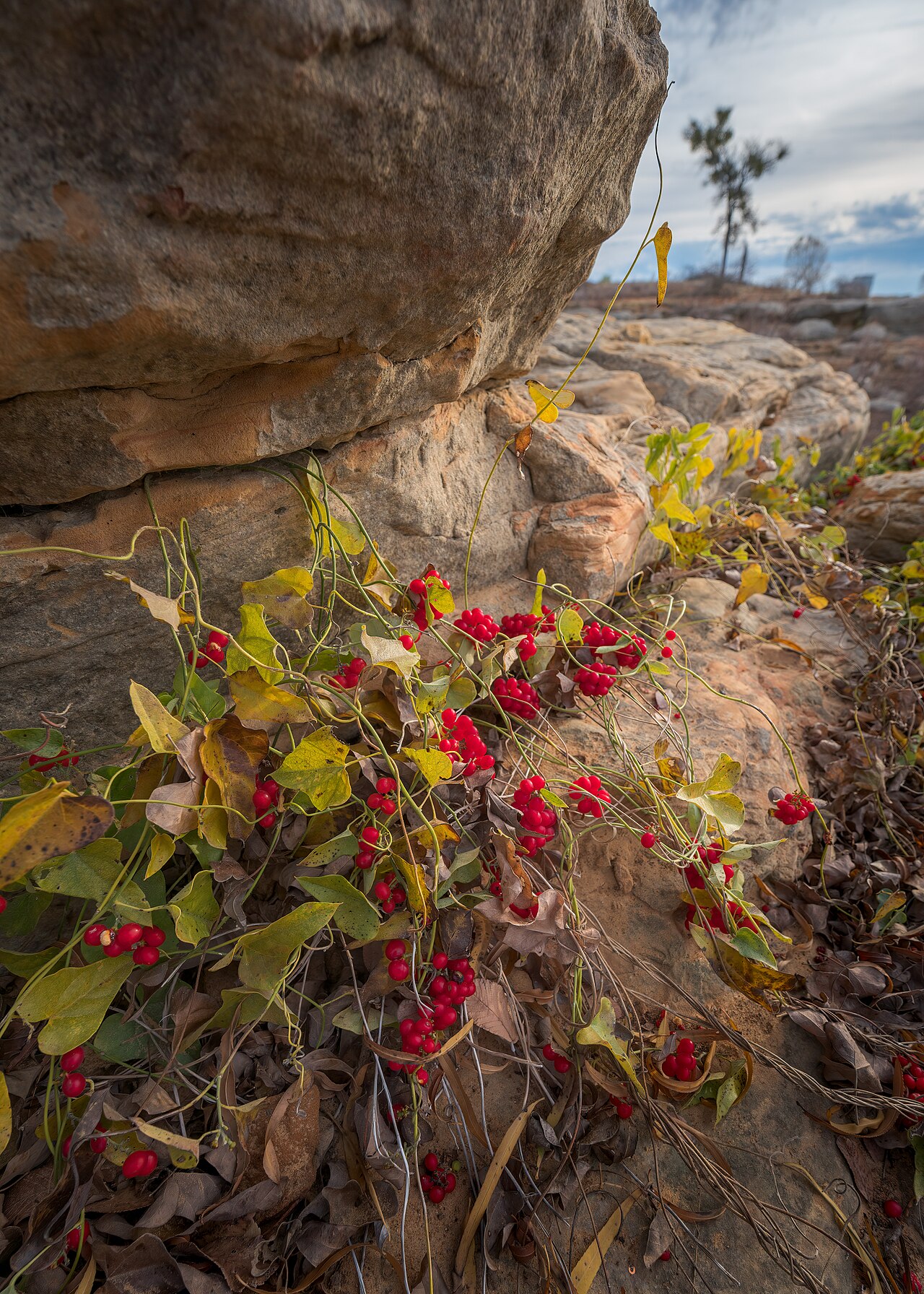
Cocculus carolinus, commonly called Carolina snailseed (also Carolina coralbead or Carolina moonseed; recently reclassified by some botanists as Nephroia carolina), is a slender, twining vine of the moonseed family (Menispermaceae) native to the South and lower Midwest. It is best known for the showy strings of bright red, berry-like fruits it produces in late summer and fall, which brighten fence lines, thickets, and woodland edges well after most other native vines have finished fruiting.
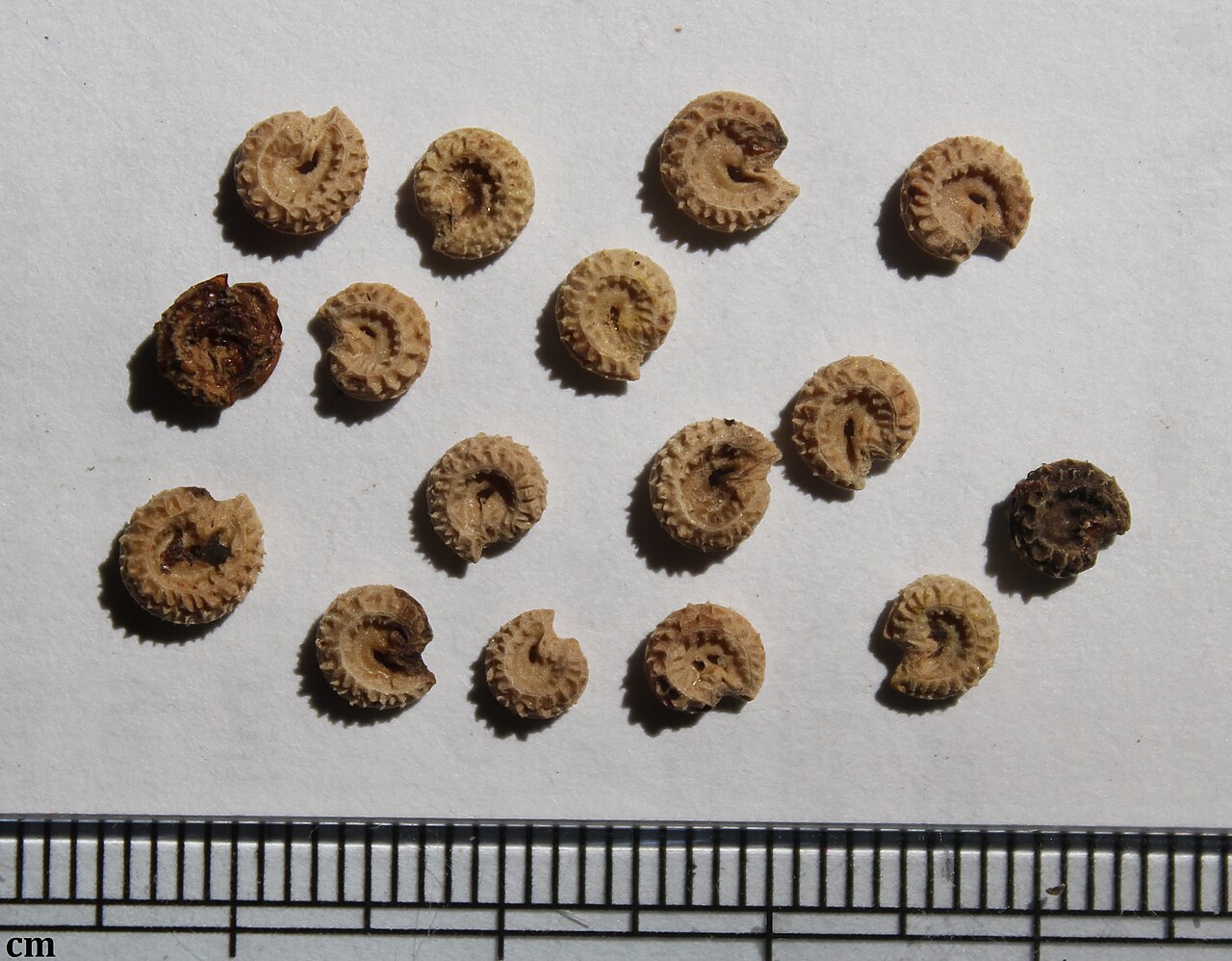
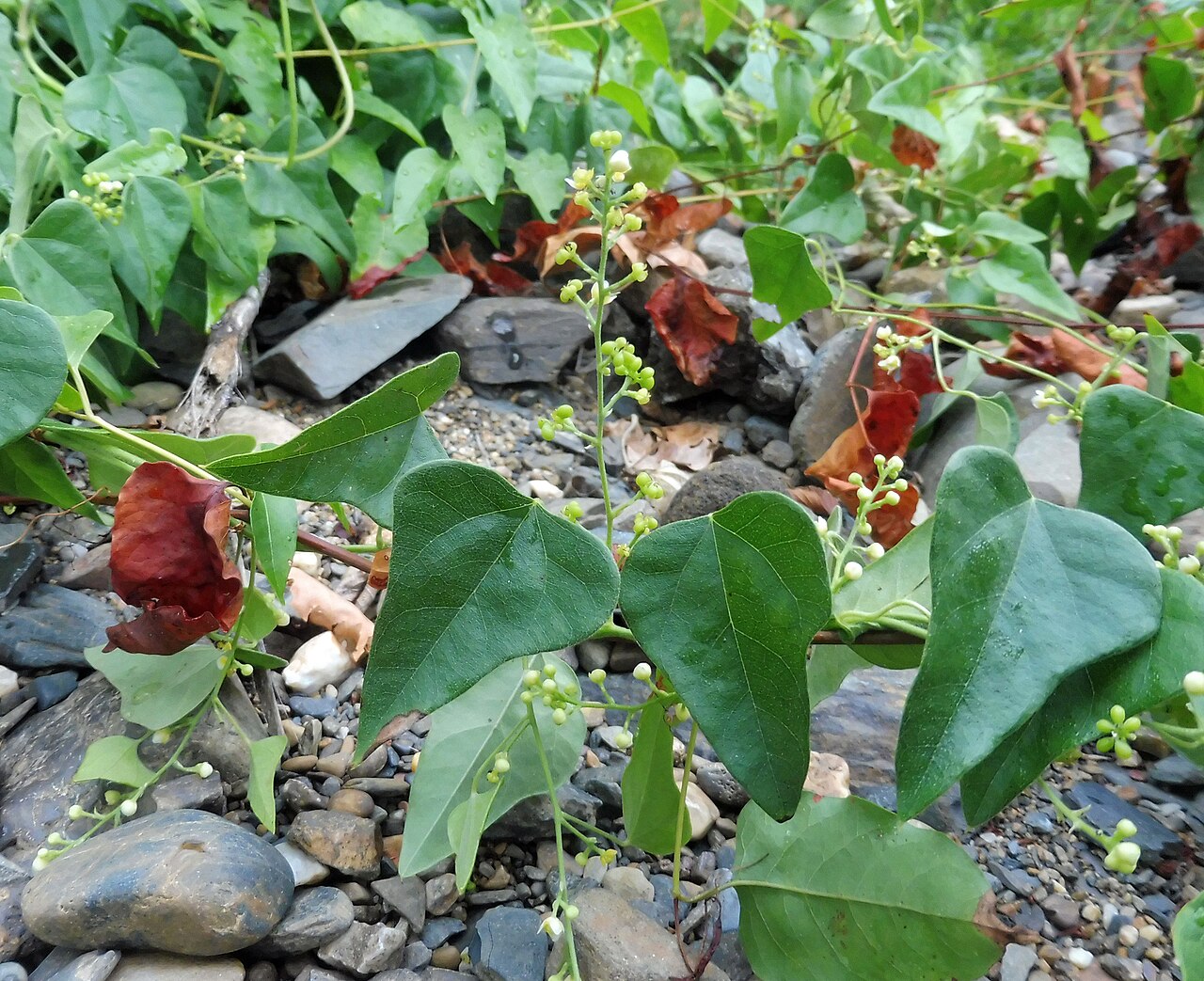
The vine itself is modest and easy to overlook for much of the year — thin, wiry stems climb by twining rather than tendrils or aerial roots, bearing simple, somewhat variable leaves that range from heart-shaped to shallowly lobed. But come autumn, clusters of pea-sized scarlet drupes make it one of the most conspicuous native vines in its range, giving rise to both of its common names: “snailseed” for the tightly coiled, half-moon-shaped seed inside each berry, and “coralbead” for the berries’ glossy red color and size.
Carolina snailseed is dioecious, meaning individual plants are either male or female, and only female vines produce the ornamental fruit — a detail worth knowing if fruiting display is the goal of planting it. It is a useful, low-maintenance native for naturalizing along fences, trellises, and woodland-edge plantings, where its berries provide valuable late-season food for birds.
Identification
Carolina snailseed is a deciduous, herbaceous-to-woody twining vine that dies back to the ground in colder parts of its range and persists as a semi-woody perennial further south.
Stems
Stems are thin, wiry, and green to reddish-brown, climbing by twining around supports such as fences, shrubs, and small trees rather than using tendrils. A single plant can send up multiple stems from a woody rootstock, reaching 10 to 15 feet (3–4.5 m) in a season under good conditions.
Leaves
Leaves are simple, alternate, and notably variable in shape even on the same plant — ranging from broadly heart-shaped (cordate) to shallowly three- to five-lobed, 1.5 to 4 inches (4–10 cm) long, with smooth to slightly wavy margins. The upper surface is medium to dark green and the underside often paler, sometimes finely hairy.
Flowers & Fruit
Small, inconspicuous greenish-white to yellow-green flowers appear in loose, drooping clusters (panicles) from the leaf axils in late spring to midsummer. The plant is dioecious, with separate male and female vines; only female plants, once pollinated, go on to produce fruit. The fruit is a round, fleshy drupe about ¼ to ⅓ inch (6–8 mm) across, ripening from green to bright red in late summer through fall and often persisting into winter. Each berry contains a single, flattened, tightly coiled seed shaped like a small snail shell or crescent moon — the source of both “snailseed” and “moonseed” common names.
Quick Facts
| Scientific Name | Cocculus carolinus (syn. Nephroia carolina) |
| Family | Menispermaceae (Moonseed) |
| Plant Type | Deciduous Twining Vine |
| Mature Height | 10–15 ft (3–4.5 m), climbing |
| Mature Spread | 3–6 ft (0.9–1.8 m) at base |
| Growth Rate | Moderate to Fast |
| Sun Exposure | Full Sun to Part Shade |
| Water Needs | Moderate |
| Soil Type | Adaptable; sandy, loamy or rocky, well-drained |
| Soil pH | 6.0–7.5 (slightly acidic to neutral) |
| Bloom Time | Late spring – midsummer |
| Flower Color | Greenish-white to yellow-green (inconspicuous) |
| Fall Color | Yellow foliage; bright red berries (female plants) |
| Fruit | Round red drupes, ¼–⅓ in, female plants only |
| Deer Resistant | Yes |
| USDA Hardiness Zones | 6–9 |
Native Range
Carolina snailseed is native to the southeastern and south-central United States, with confirmed populations across Texas, Oklahoma, Arkansas, Louisiana, Mississippi, Alabama, Tennessee, Georgia, South Carolina, and North Carolina. It extends south into northeastern Mexico and ranges from the coastal plain inland to the southern Ozarks and the lower Piedmont, generally staying below about 2,000 feet (600 m) elevation.
Across this range, Carolina snailseed favors disturbed open ground, fencerows, thickets, woodland edges, and riparian bottomlands with sandy or rocky, well-drained soil. It is frequently found scrambling over rock outcrops, fences, and low shrubs along stream corridors and in open, sun-dappled sites rather than dense forest interior, where it has more light to flower and fruit well.
Some older references extend its range further north and west into Missouri, Kansas, Kentucky, Illinois, Indiana, and Virginia, but county-level distribution records in those states show scattered, state-flagged occurrences without confirmed native county populations, so this page lists only the states with well-documented native populations.
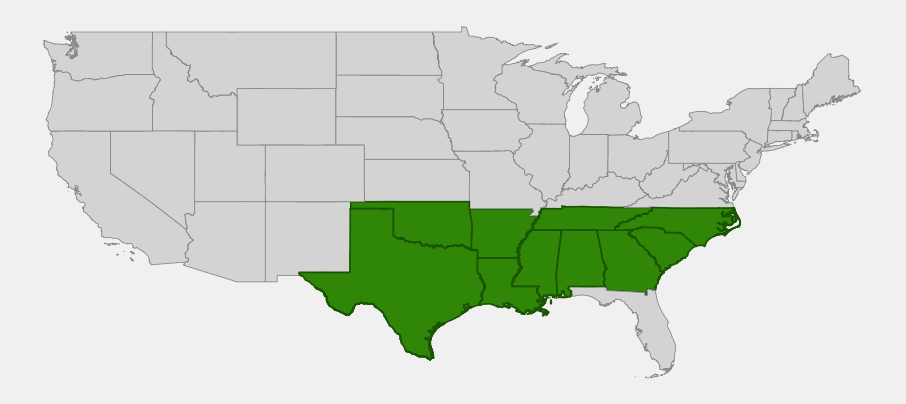
📋 Regional plant lists featuring Carolina snailseed: South & West Texas · Arkansas, Louisiana, Eastern Oklahoma & Eastern Texas · Georgia, Alabama & Mississippi · Kentucky & Tennessee · North & South Carolina
Growing & Care Guide
Carolina snailseed is an easygoing, low-maintenance native vine once given something to climb. Its main cultivation quirk is being dioecious, so only female plants produce the fruit most gardeners want.
Light
Give it full sun to part shade. Full sun produces the heaviest flowering and fruiting on female plants; in partial shade, the vine still grows well but flowers and fruits more sparingly.
Soil & Water
Carolina snailseed tolerates a wide range of soils, from sandy to rocky to loamy, as long as drainage is reasonably good. It prefers moderate, consistent moisture during the growing season but tolerates short dry spells once established, especially in sites with some afternoon shade. It is not fussy about soil pH within the common garden range.
Planting Tips
Plant near a fence, trellis, arbor, or open shrub that can support its twining stems — it does not cling with tendrils or aerial roots, so it needs something to wrap around. Because the species is dioecious, gardeners wanting the ornamental red berries should try to identify or source a known female plant, or plant several individuals to improve the odds of including both sexes for fruit set.
Pruning & Maintenance
Cut back hard in late winter if a tidier, more restrained form is desired; the vine resprouts readily from its base each spring. In colder parts of its range, top growth may die back to the ground in winter and regrow vigorously the following season. Minimal fertilization is needed in reasonably fertile soil.
Landscape Uses
Carolina snailseed suits a range of informal, wildlife-friendly plantings:
- Fence and trellis cover for quick seasonal screening
- Woodland-edge and naturalized plantings along property lines
- Wildlife gardens grown for its late-season berry display
- Rock outcrop and slope plantings where it can scramble over stone
- Riparian buffer restoration in its native range
Wildlife & Ecological Value
Carolina snailseed’s chief ecological contribution is its late-season fruit crop, which arrives at a time when many other native food sources have already been exhausted.
For Birds
The bright red berries persist into fall and early winter and are readily eaten by a range of songbirds, including mockingbirds, cardinals, robins, and various thrushes, which also disperse the seeds. Because the fruit ripens later than many native shrubs and vines, it provides an important late-season and early-winter food source when other options have thinned out.
For Mammals
Small mammals opportunistically feed on the fruit where it grows within reach, contributing to seed dispersal along fencerows and woodland edges.
For Pollinators
Though small and not showy, the summer flowers attract a variety of small native bees and other insects seeking nectar and pollen, adding a modest but useful floral resource during the gap between major spring and late-summer bloom periods.
Ecosystem Role
As a fast-growing pioneer vine, Carolina snailseed readily colonizes disturbed edges, fencerows, and open ground, offering quick cover and structure while slower-growing woody plants establish. Its persistence on rocky outcrops and sandy bottomlands also helps stabilize soil on sites subject to erosion.
Cultural & Historical Uses
Carolina snailseed belongs to the Menispermaceae, a plant family that includes several species historically used in traditional medicine and, notably, as a source of curare-like alkaloids in some tropical relatives. However, Cocculus carolinus itself has limited documented use by Indigenous peoples or early settlers in North America compared to its relatives, and its berries, like those of many members of this family, are not considered edible and should not be eaten.
Historically, the plant’s chief significance has been horticultural and ecological rather than medicinal or culinary: its ornamental red fall fruit made it a recognized, if modest, feature of southern hedgerows and woodland margins long before it drew attention from native-plant gardeners. The genus name Cocculus derives from the Greek for “little berry,” a nod to the small, round fruit shared across the genus; several related Old World species in this family have a documented history of medicinal and toxic alkaloid use, which likely contributes to common caution around this genus as a whole.
Frequently Asked Questions
Can you eat Carolina snailseed berries?
No. The berries are not considered edible and should not be eaten by people or pets. While birds consume them safely, several related species in the Menispermaceae family contain alkaloids that are toxic to humans, and Carolina snailseed’s fruit should be treated as inedible.
Why didn’t my Carolina snailseed produce any berries?
The plant is dioecious, meaning individual vines are either male or female, and only female plants produce fruit. If your vine has never fruited, it may be a male plant, or there may be no male plant nearby to pollinate a female one.
Is Carolina snailseed invasive?
No. Within its native range across the South and south-central United States, it is not considered invasive. Like many vigorous native vines, it can spread readily by seed and resprout from cut stems, so gardeners who want a more restrained look should prune it back each year.
Does Carolina snailseed need a trellis or support?
Yes, essentially. It climbs by twining its stems around whatever it can reach — a fence, trellis, shrub, or small tree — and has no tendrils or clinging roots, so without support it will sprawl along the ground instead of climbing.
How is Carolina snailseed different from Carolina moonseed found elsewhere?
“Carolina moonseed” and “Carolina snailseed” are both common names for the same plant, Cocculus carolinus. The name should not be confused with Canada moonseed (Menispermum canadense), a related but distinct species with a more northern range and different leaf shape.

Looking for a nursery that carries Carolina snailseed?
Browse our native plant nursery directory: Texas, Tennessee & South Carolina · Oklahoma & North Carolina · Arkansas & Alabama · Louisiana & Mississippi · Georgia