Wavy-leaved Paintbrush (Castilleja applegatei)
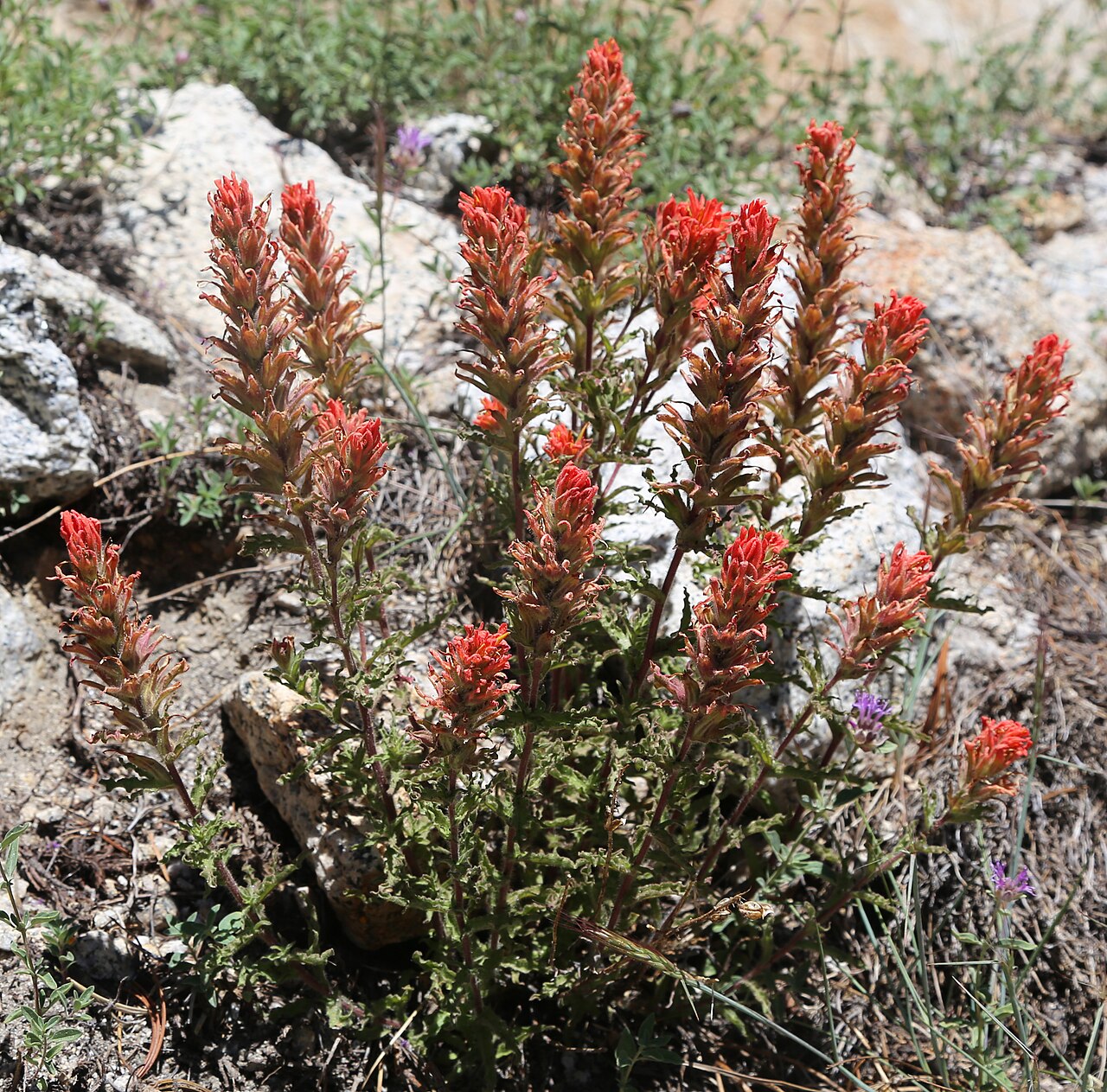
Castilleja applegatei, known as wavy-leaved paintbrush or Applegate’s Indian paintbrush, is a hardy perennial wildflower native to the mountains and high desert of the interior West. A member of the Orobanchaceae (broomrape family), it is a hemiparasite — its roots tap into the roots of neighboring plants for extra water and nutrients while still photosynthesizing on its own. This partial dependence is why paintbrush species are notoriously difficult to transplant or grow in isolation.
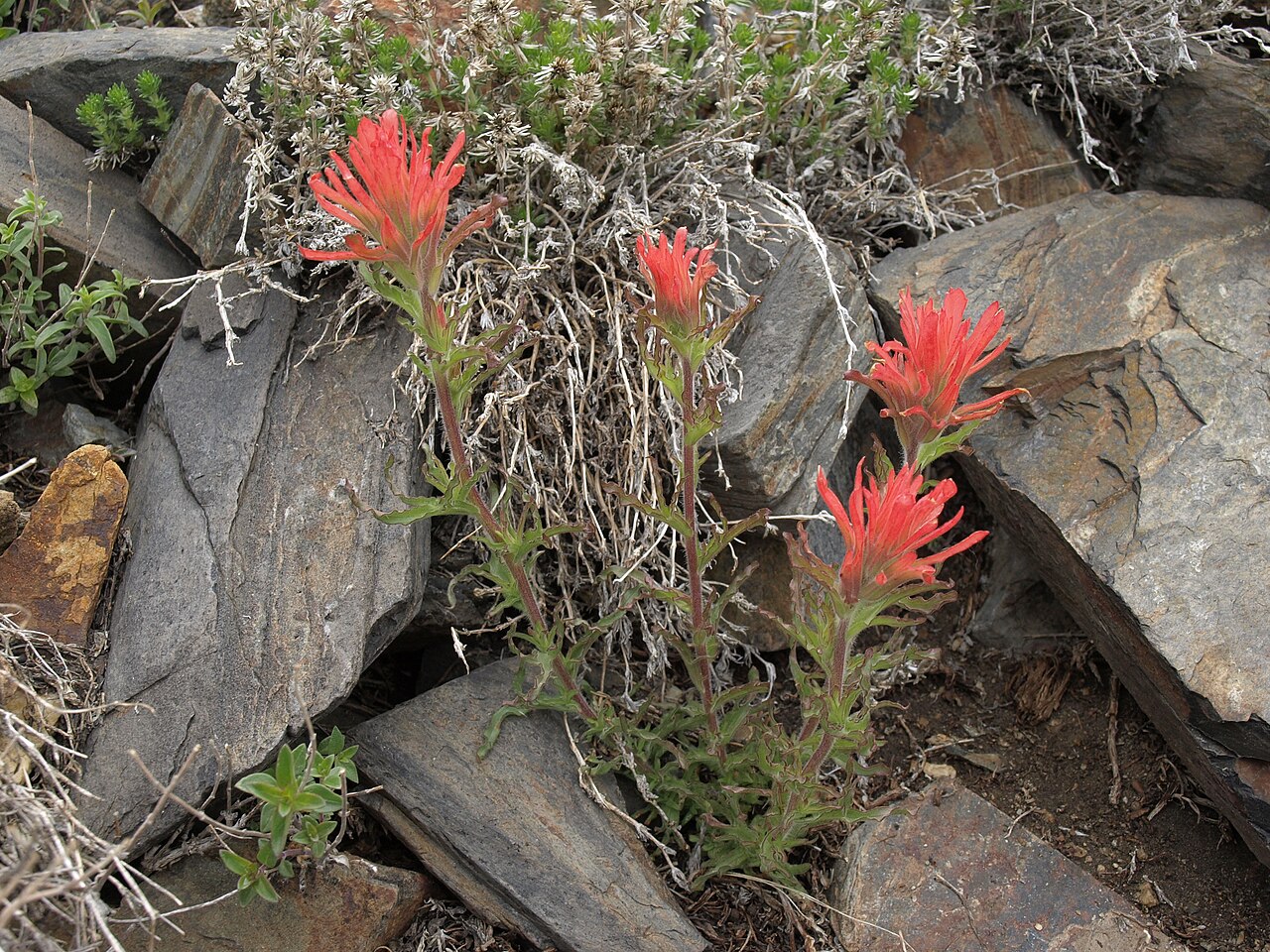
True to its name, wavy-leaved paintbrush has distinctly crinkled, wavy-margined leaves that set it apart from other paintbrush species at a glance. In midsummer it sends up brick-red to orange-red flower spikes, where the true flowers are small and tubular, nearly hidden by the showy, color-saturated bracts that give the whole genus its common name. It typically grows as a low, bushy clump 6 to 16 inches tall, often wedged into rocky slopes, talus, and dry montane forest openings.
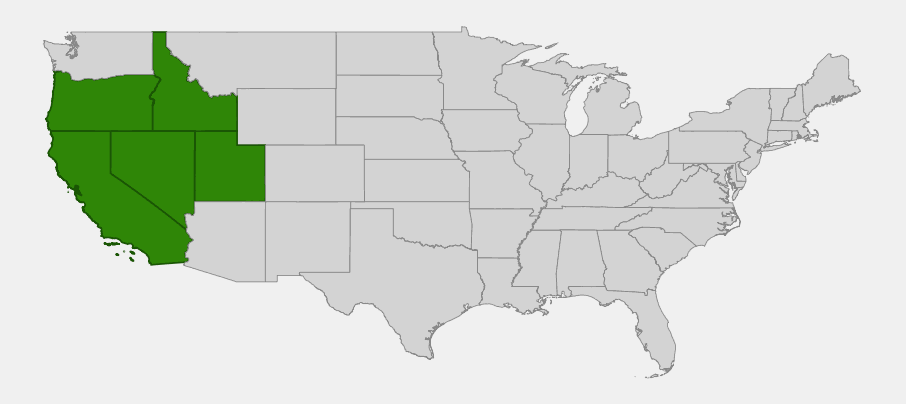
Wavy-leaved paintbrush ranges widely across California, Oregon, Nevada, Idaho, and Utah, from foothill chaparral and pine forest up into subalpine and alpine terrain above 11,000 feet. This elevational range means individual populations can look quite different, from compact alpine cushions to taller, looser plants lower down, but the wavy leaf margins and brick-red bracts remain reliable field marks throughout.
Identification
Wavy-leaved paintbrush forms a woody-based perennial clump 6 to 16 inches tall, often with several flowering stems rising from a single rootstock. Plants are typically covered in fine, somewhat sticky hairs, giving the foliage a slightly grayish, textured look.
Stems & Leaves
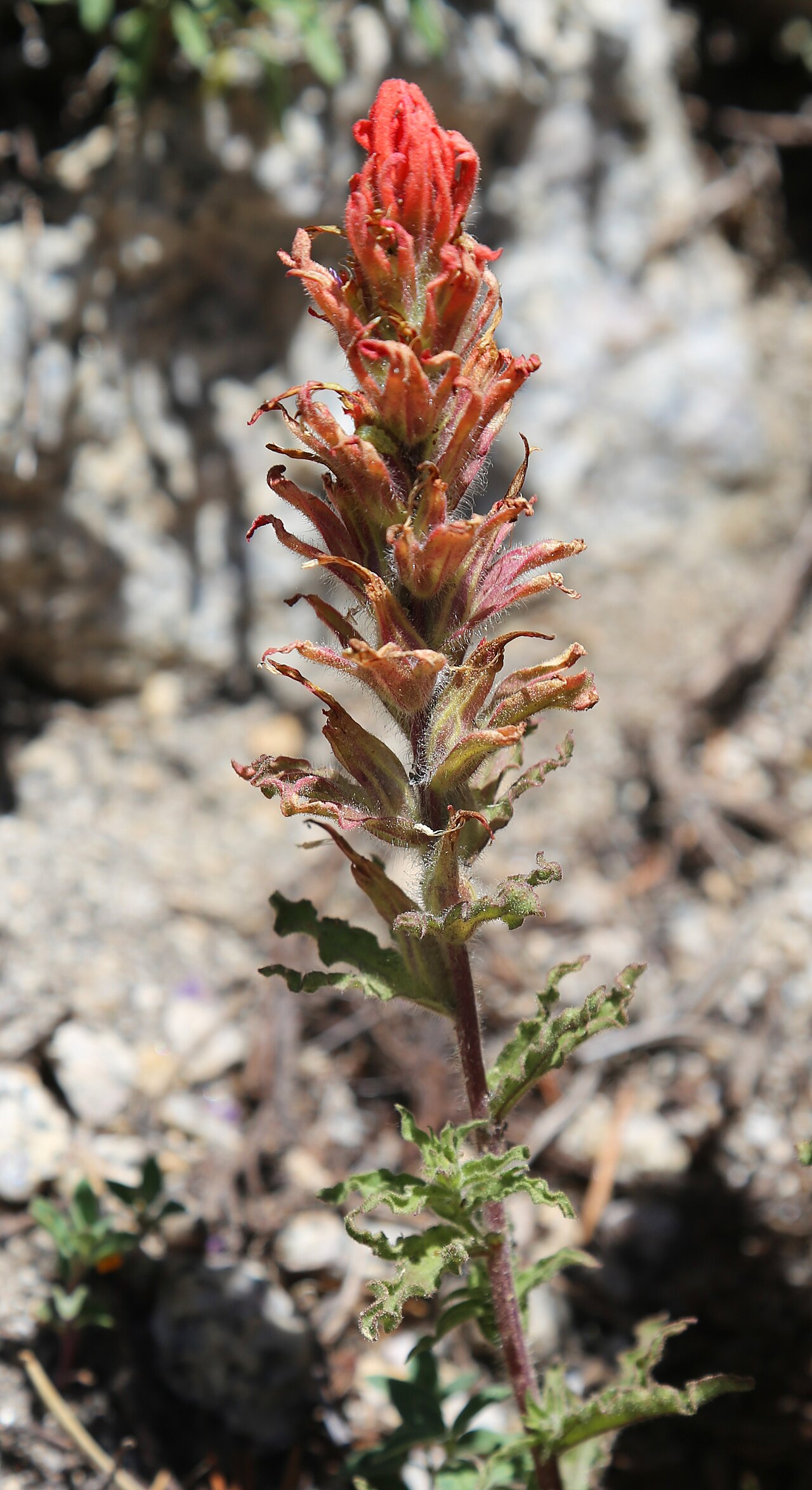
Stems are slender, often reddish, and lightly to densely hairy. The leaves are narrow and lance-shaped, 1 to 2 inches long, with distinctly wavy or crinkled margins — the single most reliable field mark for this species among the many western paintbrushes. Leaves are typically entire or shallowly lobed near the stem base, becoming more wavy-edged toward the flowering tip.
Flowers
The true flowers are small, greenish-yellow, and tubular, mostly concealed within showy bracts that range from brick-red and orange-red to, less commonly, yellow. The bracts are broader and more deeply cleft near the top of the spike, creating the dense, brush-like flower head that gives paintbrushes their name. Bloom runs from late spring at lower elevations into August at higher, snow-released sites.
Fruit & Seeds
Following bloom, plants produce small two-chambered capsules holding numerous tiny, net-textured seeds. Like other paintbrushes, wavy-leaved paintbrush relies on these fine seeds dispersing near host plants, since seedlings establish best within reach of a compatible host’s roots.
Quick Facts
| Scientific Name | Castilleja applegatei |
| Family | Orobanchaceae (Broomrape) |
| Plant Type | Perennial Wildflower (Root Hemiparasite) |
| Mature Height | 6–16 in |
| Mature Spread | 8–16 in |
| Growth Rate | Slow |
| Sun Exposure | Full Sun to Part Shade |
| Water Needs | Low |
| Soil Type | Rocky, well-drained; granitic or volcanic soils |
| Soil pH | 6.0–7.5 |
| Bloom Time | May – August (elevation dependent) |
| Flower Color | Brick-red to orange-red (rarely yellow) |
| Fall Color | None notable; foliage dies back |
| Fruit | Small two-chambered seed capsules |
| Deer Resistant | Yes |
| USDA Hardiness Zones | 5–8 |
Native Range
Wavy-leaved paintbrush is native to the interior mountain West, with its core range running through California, Oregon, Nevada, Idaho, and Utah. It is especially common in the Sierra Nevada, Cascade Range, and the mountain ranges of the Great Basin, where it grows from foothill woodlands up through subalpine and alpine zones.
Across this range it favors dry, rocky sites: granite outcrops, talus slopes, open pine and fir forest, sagebrush steppe, and alpine fellfields, often at elevations exceeding 10,000 feet in the high Sierra and Great Basin ranges. It is not native to the lower-elevation deserts of the Southwest or to the Pacific coastal strip, and county-level records do not support claims of native populations in Washington, Wyoming, or Colorado.
As a hemiparasite, wavy-leaved paintbrush is tied to the presence of compatible host plants such as sagebrush, manzanita, and various perennial grasses and shrubs, which partly explains its patchy, site-specific distribution even within its broader native range.
📋 Regional plant lists featuring wavy-leaved paintbrush: California & Nevada · Western Oregon & Western Washington · Idaho, Eastern Oregon & Eastern Washington · Utah & Western Colorado
Growing & Care Guide
Wavy-leaved paintbrush is a rewarding but specialized plant for rock gardens and dry native plantings. Because it is a root hemiparasite, success depends as much on choosing the right companion plants as on soil and water.
Light
Plants need full sun to part shade to flower well, reflecting their native habitat on open, rocky slopes and forest edges rather than dense shade.
Soil & Water
Wavy-leaved paintbrush wants sharply drained, rocky or gravelly soil and minimal supplemental water once established; overly rich or consistently moist soil tends to shorten its life. Because it partially depends on a host plant’s roots, it almost always performs better planted near, rather than far from, compatible companions such as sagebrush, buckwheat, or native bunchgrasses.
Planting Tips
Start from container-grown nursery stock planted alongside an established host, since direct seeding without a nearby host is unreliable. Plant in fall so roots can establish over a cool, moist winter. Avoid amending the planting hole with rich compost; mimic the lean, rocky soils the species favors in the wild.
Pruning & Maintenance
Little pruning is needed; simply remove spent flower stalks after bloom if a tidier look is desired. Paintbrushes are often short-lived in cultivation even under good conditions, and gardeners should expect to replace plants periodically rather than treating this as a permanent anchor species.
Landscape Uses
Its compact size and brilliant color suit several dry-garden roles:
- Rock gardens and scree plantings paired with a compatible host shrub
- Dry slope and hillside plantings in sagebrush-steppe-style gardens
- Pollinator gardens as a hummingbird-attracting accent
- High-elevation and mountain-cabin landscaping within its native range
Wildlife & Ecological Value
Wavy-leaved paintbrush is a valuable nectar source in the high, dry habitats where few other plants bloom as vividly through the summer.
For Pollinators & Birds
The tubular flowers are well suited to hummingbirds, which visit regularly for nectar, and the bright bracts also draw bumblebees and other native bees able to reach the small true flowers. In many mountain meadows and rocky slopes, paintbrush is among the most reliable hummingbird forage through mid-summer.
For Insects
The foliage serves as a larval host for checkerspot butterflies in parts of its range, linking this species into the food web for several at-risk western butterfly populations that depend on paintbrush and related hemiparasitic wildflowers.
Ecosystem Role
As a root hemiparasite, wavy-leaved paintbrush interacts directly with the roots of its neighbors, a relationship thought to influence nutrient cycling and plant community composition in the sagebrush steppe and montane forest openings where it grows. Its presence is often associated with healthy, structurally diverse native plant communities rather than disturbed ground.
Cultural & Historical Uses
Paintbrush species, including wavy-leaved paintbrush, held various roles among Indigenous peoples across its range, including use of the flowers and bracts as a dye source and, in some traditions, as a minor seasoning or flavoring added to other foods in small amounts — though the plant is not generally regarded as a food source given that paintbrushes can accumulate selenium from the soils of certain host plants.
Because it draws some of its nutrients and water from host plants, including selenium-accumulating species in some habitats, wavy-leaved paintbrush and its relatives are not recommended for culinary or medicinal use; any historical use as a minor flavoring should be understood as a traditional practice, not a safety endorsement.
In more recent decades, wavy-leaved paintbrush has become a favorite subject for wildflower photographers and hikers in the Sierra Nevada and Great Basin ranges, where its brilliant red spikes stand out vividly against granite and sagebrush.
Frequently Asked Questions
Why is wavy-leaved paintbrush hard to grow in gardens?
Because it is a root hemiparasite, it depends partly on tapping into a neighboring host plant’s roots for water and nutrients. Plants grown in isolation, without a compatible host nearby, often struggle or fail to thrive.
What host plants work best with wavy-leaved paintbrush?
In the wild it is frequently associated with sagebrush, manzanita, and native bunchgrasses. Planting it near one of these species in a garden setting gives it the best chance of establishing successfully.
Is wavy-leaved paintbrush edible?
It is not recommended for eating. Paintbrush species can accumulate selenium from the soils and host plants they draw nutrients from, and some historical uses were limited to very small amounts as seasoning rather than as food.
Can I grow wavy-leaved paintbrush outside the Sierra Nevada and Great Basin?
It is native to California, Oregon, Nevada, Idaho, and Utah, generally at higher elevations with cold winters and dry, rocky soils. It is not suited to humid climates or heavy, consistently moist soils, and is not native to Washington, Wyoming, or Colorado.
How can I tell wavy-leaved paintbrush apart from other paintbrush species?
The crinkled, wavy-margined leaves are the most reliable field mark. Many other western paintbrushes have flatter, straighter leaf edges, making this species identifiable even before it flowers.

Looking for a nursery that carries wavy-leaved paintbrush?
Browse our native plant nursery directory: California · Oregon · Nevada · Idaho · Utah