Small Palafox (Palafoxia callosa)
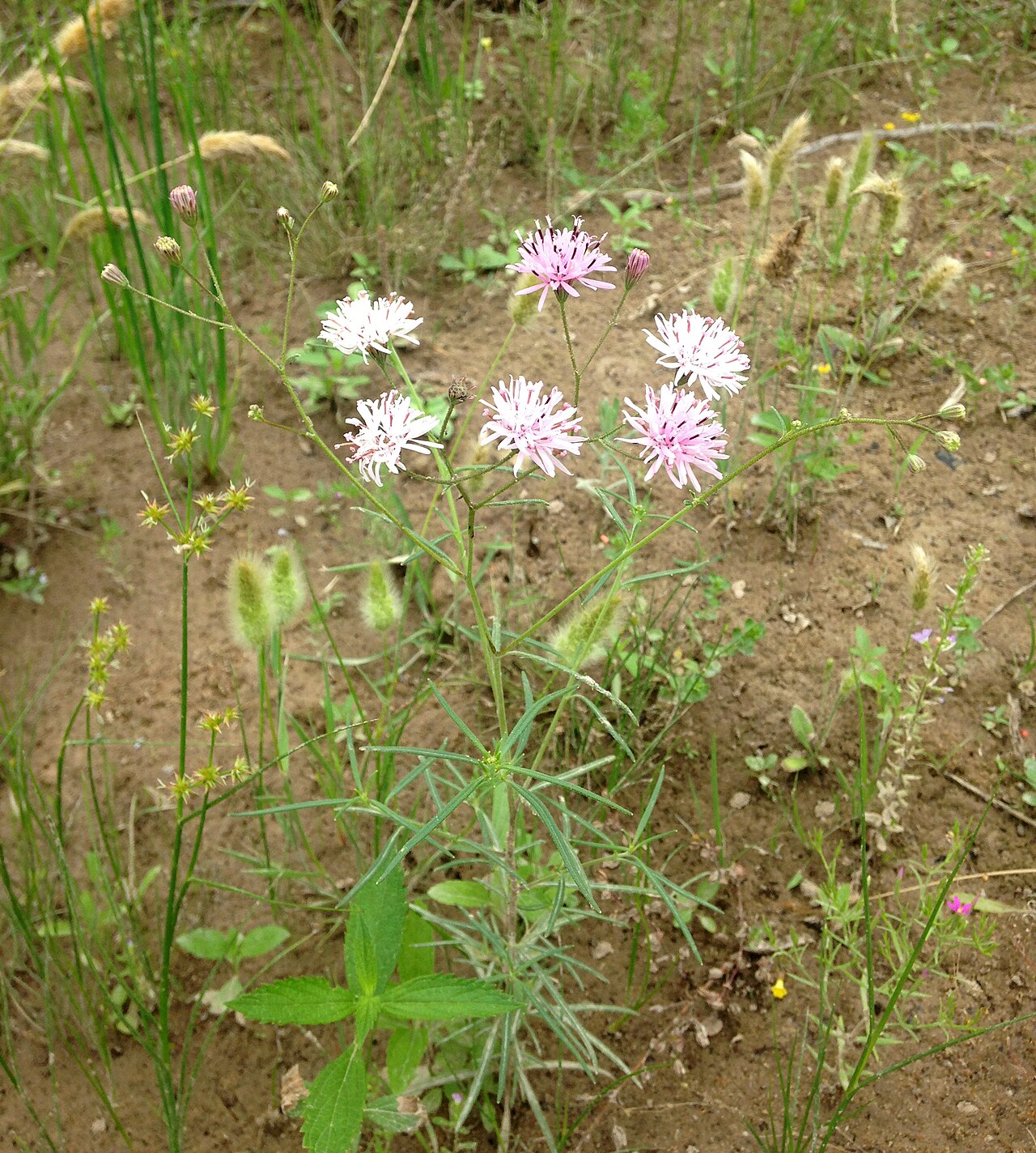
Palafoxia callosa, commonly known as Small Palafox, is a slender, late-season native wildflower in the aster family (Asteraceae) that lights up dry, rocky openings across the south-central United States with airy sprays of pink-and-white flower heads just as summer turns to fall. Named for the Spanish general José de Palafox y Melci, the genus is small, and this species is among its most garden-worthy members, prized by butterfly gardeners for its long late-summer bloom and its tolerance of poor, rocky soil where little else flowers.
Small palafox is a taprooted annual forb, growing as an airy, much-branched plant up to about 2 feet tall, with narrow, needle-like leaves and wiry stems topped by clusters of fringed, disk-only flower heads. The pink petal-like disk florets fade toward white as each flower ages, so a single plant in full bloom often shows both fresh pink and faded white heads at once — a detail that gives the plant its delicate, two-toned look in late-season wildflower gardens.
In the wild, small palafox favors calcareous glades, bluff tops, gravel streambanks, and other dry, open, disturbed sites where competition from taller vegetation is low. Because it reseeds freely and tolerates heat, drought, and lean soil, it has become increasingly popular in native plant gardens and pollinator plantings across its range, filling a late-summer-to-fall color gap when many other wildflowers have already finished blooming.
Identification
Small palafox is an annual wildflower with a slender taproot, typically reaching 1 to 2 feet (30–60 cm) tall, with an open, airy, much-branched form. The stems are ascending to erect, finely ridged and grooved, and covered in short stiff hairs that are replaced near the branch tips by small, dark, tack-shaped glands — a detail useful for confirming identification up close.
Stems
Stems branch repeatedly from low on the plant, giving small palafox its characteristic loose, see-through form rather than a dense clump. The fine longitudinal ridging and the mix of short hairs and dark glandular dots on the upper stems and flower stalks are good field marks, especially where it might be confused with other small composites.
Leaves
Leaves are alternate, narrow and linear, 1 to 3 inches (2–7 cm) long, relatively thick, and taper to a sharp point at the tip. They are sessile or nearly so, with roughened, sparsely hairy surfaces. In dry years plants may drop most of their leaves by bloom time, especially on upland glades; on moister gravel bars, plants tend to stay leafier through flowering.
Flowers & Seeds
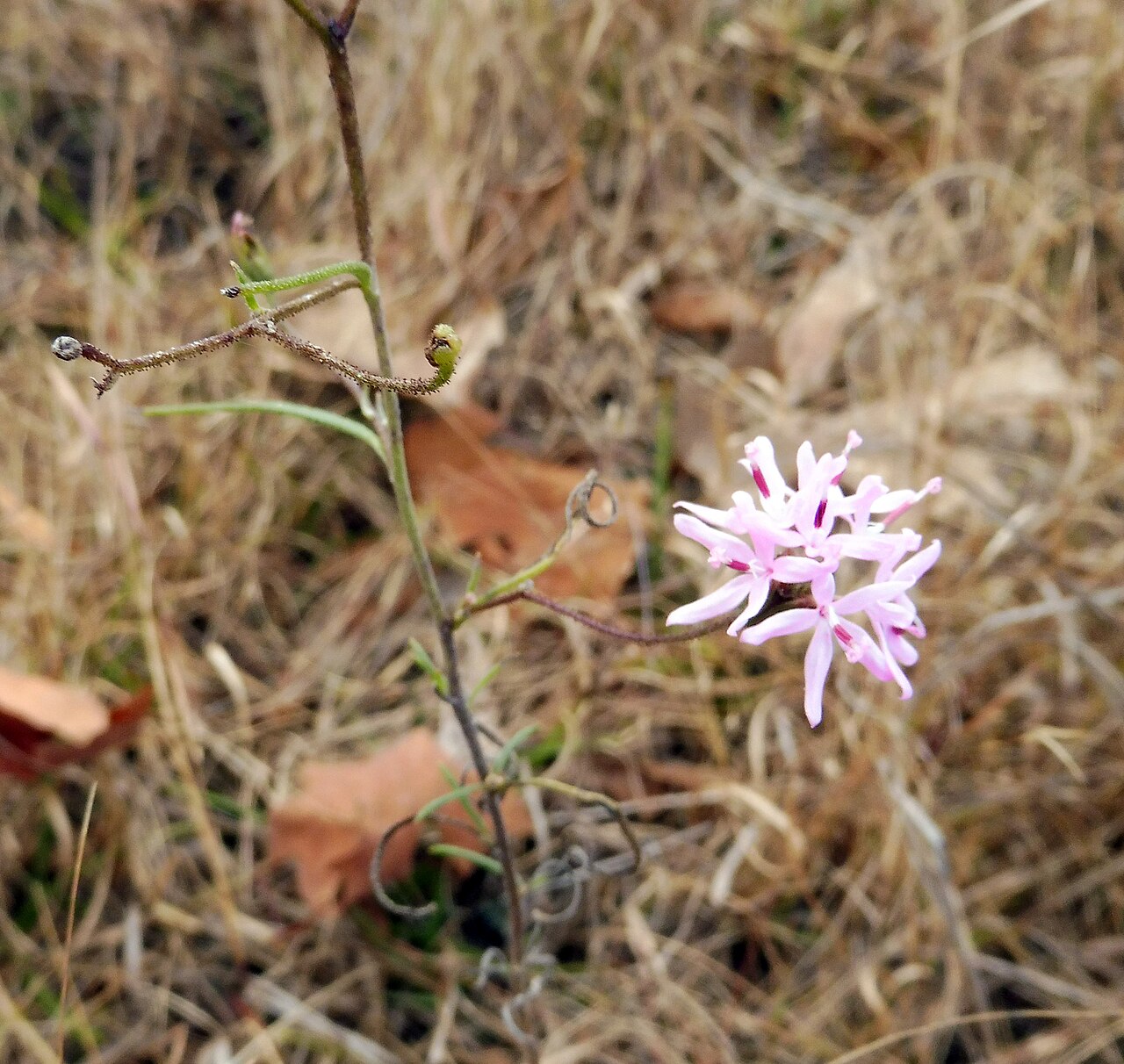
Flower heads are small, discoid (no ray petals), borne singly on long slender stalks at the tips of the branching panicle. Each head holds 5 to 30 tubular disk florets, purplish-pink fading to nearly white, with long, slender, spreading lobes that give the heads a fringed, pompon-like look. Flowers open dark pink and fade toward white over a day or two, so blooming plants often show a mix of fresh and faded heads. Flowering runs from August into October. The fruit is a small, four-angled, blackish achene tipped with a papery, straw-colored pappus of scales.
Quick Facts
| Scientific Name | Palafoxia callosa |
| Family | Asteraceae (Aster/Sunflower) |
| Plant Type | Annual Wildflower / Forb |
| Mature Height | 1–2 ft (30–60 cm) |
| Mature Spread | 1–1.5 ft, airy and branching |
| Growth Rate | Fast (annual) |
| Sun Exposure | Full Sun |
| Water Needs | Low |
| Soil Type | Rocky, gravelly or sandy; calcareous preferred |
| Soil pH | 7.0–8.0 (neutral to alkaline) |
| Bloom Time | August – October |
| Flower Color | Pink, fading to white |
| Fall Color | None (annual, dies after frost) |
| Fruit | Small blackish achene with papery pappus |
| Deer Resistant | Yes (generally unpalatable) |
| USDA Hardiness Zones | 6–9 (grown as a reseeding annual) |
Native Range
Small palafox is native to the south-central United States in two broadly disjunct areas: a northern population centered on the Ozark glades and bluffs of southern Missouri and northern Arkansas, and a larger, more continuous population across much of Texas, extending east into Louisiana and eastern Oklahoma. It is absent from much of the country between these areas, reflecting its strong preference for calcareous glades, bluffs, and gravel bars rather than a broad, continuous range.
Within this range, small palafox grows on open, sunny sites with thin, rocky, often calcareous soils: dolomite and limestone glades, tops of bluffs, gravel and sand bars along streams, old quarries, and dry, disturbed roadsides. It tends to avoid shaded or densely vegetated ground, instead colonizing the bare, rocky openings where perennial competition is naturally low.
Because it is an annual that reseeds itself readily, small palafox populations can shift somewhat from year to year within suitable habitat, appearing more abundant in wetter years and more sparse during drought, but it reliably returns to the glades, bluffs, and gravel bars that suit it best.
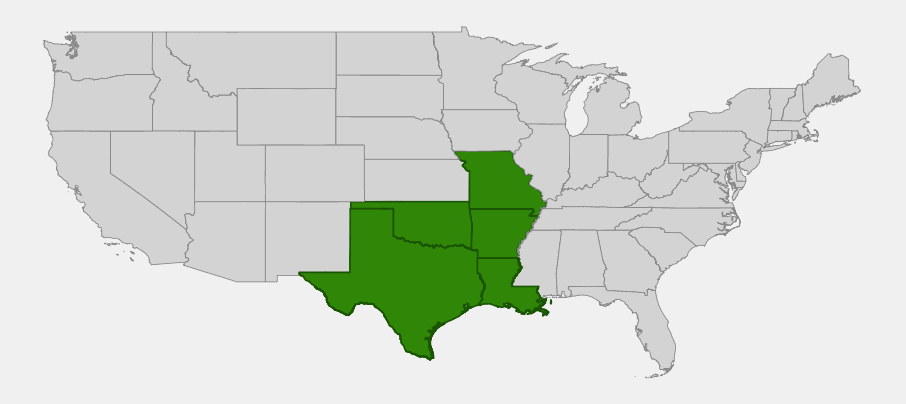
📋 Regional plant lists featuring Small Palafox: South & West Texas · Arkansas, Louisiana, Eastern Oklahoma & Eastern Texas · Illinois, Iowa & Missouri
Growing & Care Guide
Small palafox is an easy, low-fuss annual wildflower for gardeners who have a hot, dry, rocky spot where little else wants to grow. It is best grown from seed, where it will often self-sow for years once established.
Light
Give small palafox full sun. It is naturally a plant of open glades and bare rocky ground, and it flowers and self-sows best where it gets unobstructed sun for most of the day; in shade it grows leggy and blooms sparsely.
Soil & Water
This species thrives in lean, rocky, gravelly, or sandy soil, and does especially well on calcareous (limestone or dolomite) substrates, though it is not strict about pH. It needs little supplemental water once seedlings are established, tolerating heat and drought easily; in fact, overly rich or consistently moist soil tends to produce floppy, less floriferous plants than the lean, rocky ground it favors in the wild.
Planting Tips
Sow seed directly in fall or early spring onto bare, disturbed, well-drained soil, pressing seed in lightly rather than burying it deeply. Small palafox germinates and grows quickly for an annual, and a planting of a dozen or more plants gives the airy, see-through look that makes the species attractive in a border or rock garden. Once established in a suitable spot, it typically reseeds itself each year without replanting.
Pruning & Maintenance
No pruning is needed. Deadheading is optional — many gardeners leave spent flower heads in place to let seed mature and drop for next year’s plants, and to provide seed for birds. Remove dead stems at the end of the season or leave them as winter structure and clear them in early spring before new seedlings emerge.
Landscape Uses
Small palafox suits several informal, low-water garden styles:
- Rock gardens and glade gardens that mimic its native calcareous habitat
- Butterfly and pollinator gardens, where its late bloom extends the nectar season
- Gravel and xeriscape plantings in hot, dry, sunny beds
- Prairie and meadow mixes as a late-season filler among perennial grasses
- Dry streambank or roadside plantings on rocky, well-drained ground
Wildlife & Ecological Value
Small palafox is a reliable late-season nectar source in a landscape where many spring and summer wildflowers have already finished blooming.
For Pollinators
The fringed, nectar-rich flower heads are a favorite of butterflies, which readily visit them from August through October, making small palafox a popular addition to butterfly gardens. Native bees and other beneficial insects also visit the blooms during this late-season nectar gap.
For Birds
Seed-eating songbirds forage on the small achenes as they ripen in fall, and the open, wiry seed heads left standing through winter provide additional foraging opportunities if not deadheaded.
For Mammals
The wiry stems and glandular foliage are not a preferred browse for deer or rabbits, which is part of why the species tends to persist in grazed glades and pastures where more palatable plants are eaten down.
Ecosystem Role
As an annual pioneer of bare, disturbed, rocky ground, small palafox helps stabilize thin glade and gravel-bar soils and fills ecological gaps left by disturbance, drought, or grazing, while its late bloom period supports pollinators during a season when nectar sources are otherwise scarce on calcareous glades.
Cultural & Historical Uses
Small palafox has little recorded history of use by Indigenous peoples or early settlers, likely owing to its modest size, short bloom window, and lack of notable food, fiber, or medicinal properties compared to showier or more abundant glade plants. The genus Palafoxia itself commemorates José de Palafox y Melci, a Spanish general of the early 19th century, reflecting the era in which many Texas and Mexican borderland plants were formally described by European and American botanists.
In more recent decades, small palafox has moved from a little-known glade wildflower to an increasingly popular garden plant, prized by native-plant and butterfly gardeners for its drought tolerance, undemanding care, and valuable late-season bloom. Botanists and conservationists also study the species as a useful indicator of healthy, intact calcareous glade habitat, since it depends on the specific open, rocky conditions those sites provide.
Today its main value is horticultural and ecological rather than historical: a tough, reseeding annual that brings color and pollinator activity to rock gardens and prairie plantings from late summer into fall.
Frequently Asked Questions
Is small palafox an annual or a perennial?
Small palafox is a true annual. It germinates, flowers, sets seed, and dies within a single growing season, but it reseeds readily in suitable rocky, sunny ground and will return year after year once established in a garden bed.
Why do the flowers look like they are two colors at once?
Each flower head opens a deep pink and gradually fades to nearly white over a day or two. Because a branching plant produces flowers continuously through its bloom period, fresh pink heads and older, faded white heads are often visible on the same plant at the same time.
Does small palafox need rich garden soil?
No — it actually performs best in lean, rocky, or gravelly soil with good drainage, much like the glades and bluff tops where it grows wild. Rich, fertile, or consistently moist soil tends to produce weaker, floppier plants with fewer flowers.
When does small palafox bloom?
It blooms from August into October, making it a valuable late-season nectar source for butterflies and other pollinators after many spring and summer wildflowers have finished.
Will small palafox spread aggressively in my garden?
It reseeds readily in bare, suitable ground but is not aggressive or weedy in the way invasive species can be; on typical garden soil with some competing vegetation, it tends to persist as scattered plants rather than forming dense stands.

Looking for a nursery that carries Small Palafox?
Browse our native plant nursery directory: Texas · Louisiana & Missouri · Oklahoma · Arkansas