
Orangeola Japanese Maple (Acer palmatum ‘Orangeola’)
Last updated: November 3, 2026
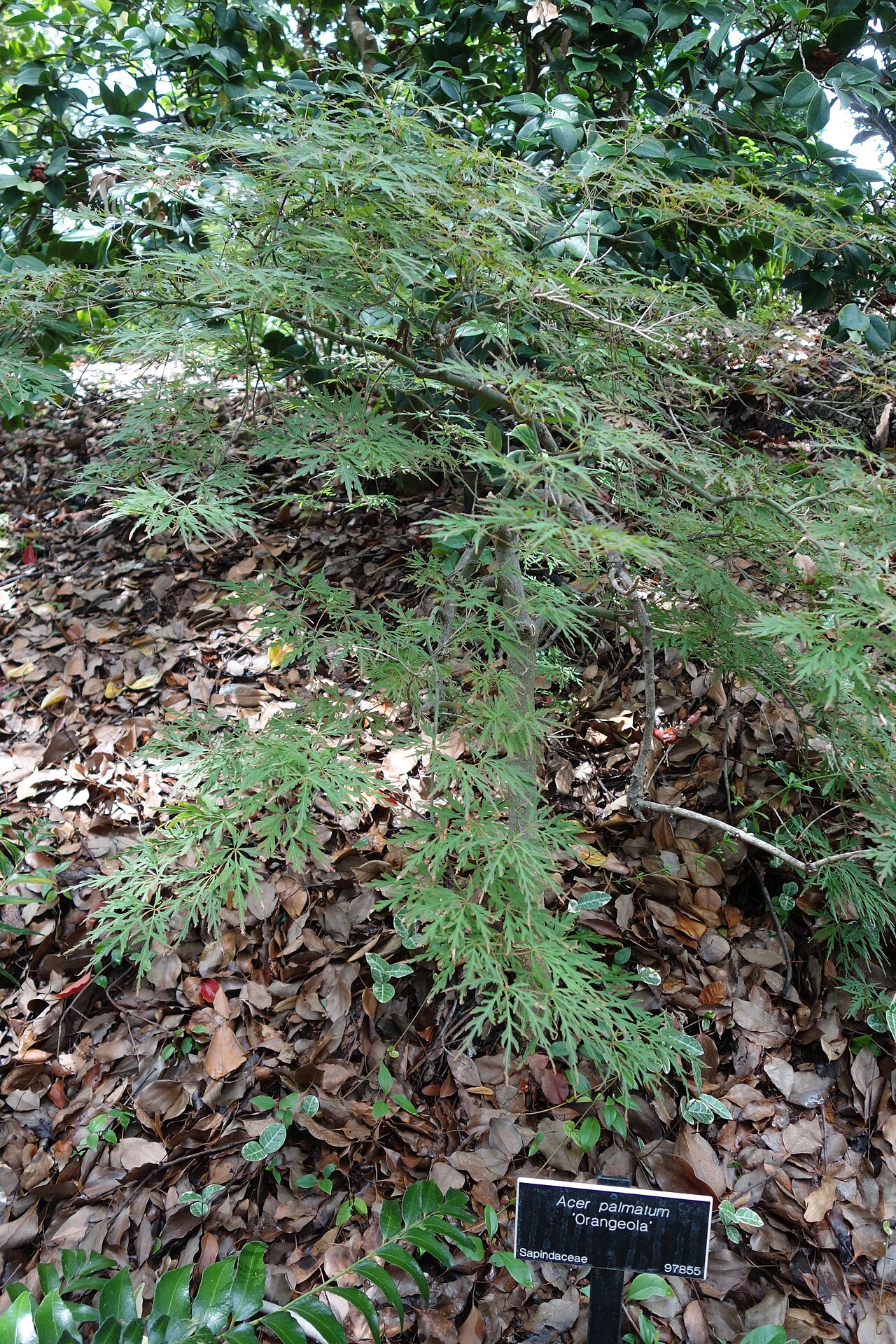
Acer palmatum ‘Orangeola’ (sometimes sold as Acer palmatum dissectum ‘Orangeola’), the Orangeola Japanese Maple, is a dissected-leaf cultivar grown for its distinctive growth habit and long season of color. Unlike many laceleaf maples that form a low, broad mound from the start, ‘Orangeola’ tends to grow more upright and spreading while young, with long branches that weep and cascade as the plant matures, giving it a taller, more dramatic silhouette than typical dissectum cultivars.
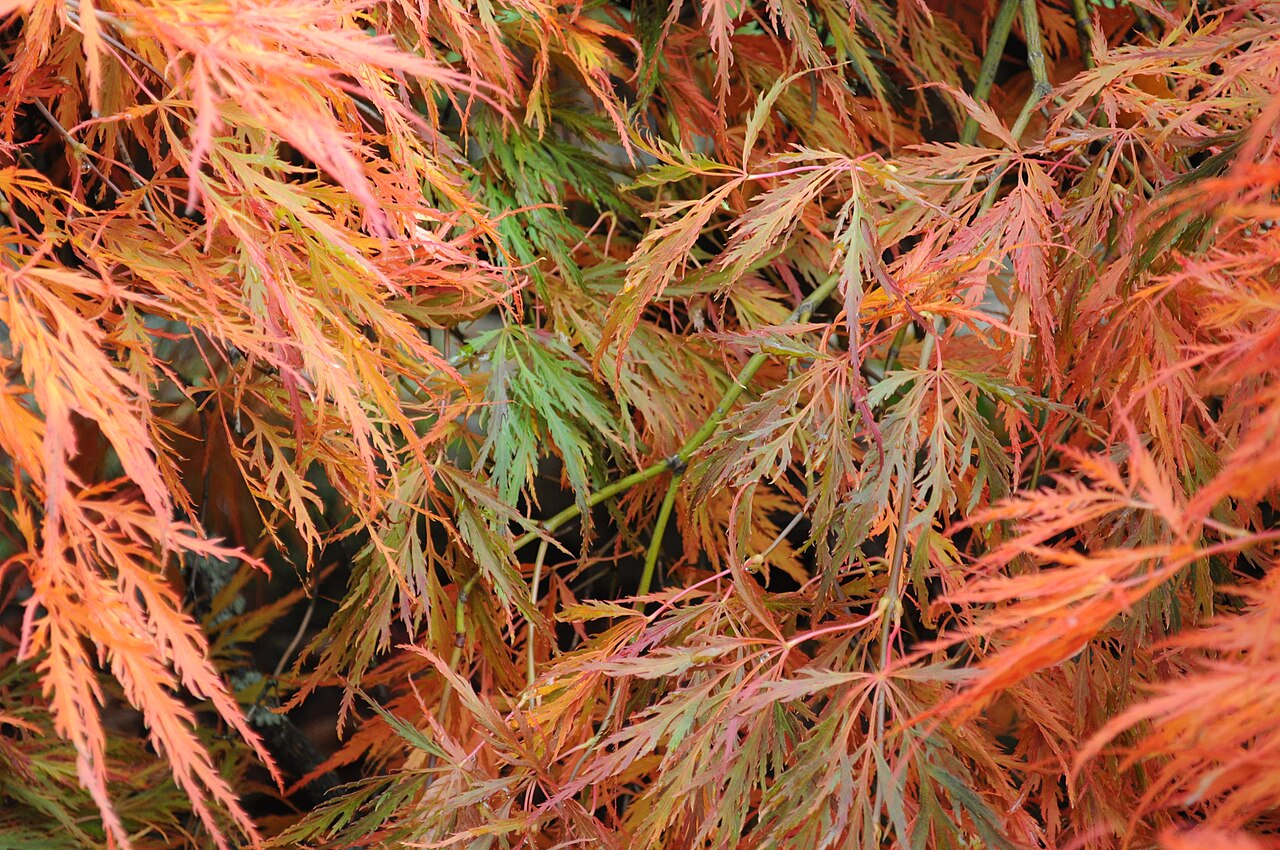
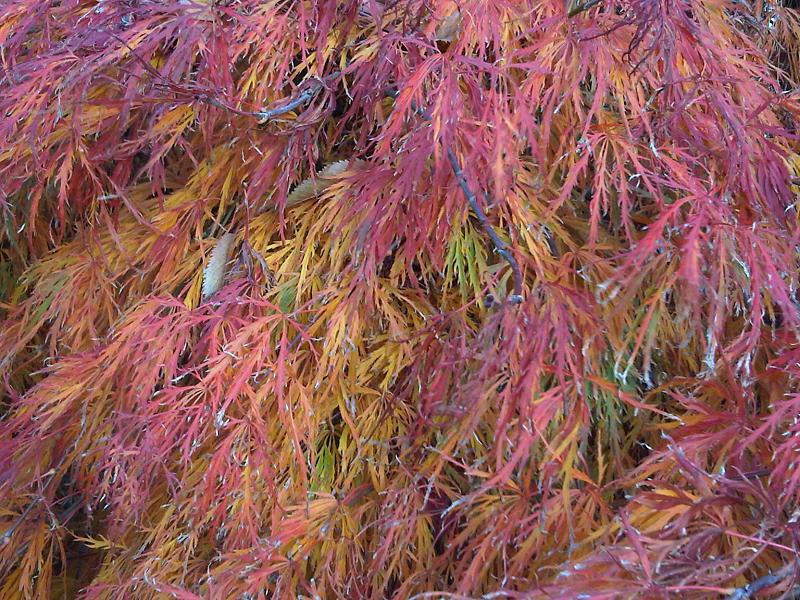
Gardeners grow ‘Orangeola’ for its unusually long color display: new spring growth emerges burgundy-red to orange, settles into a bronze-green with orange overtones through summer, then intensifies into brilliant orange-red in autumn — among the last Japanese maples to color and drop its leaves each fall, which extends the display when most other trees have gone bare. Its semi-upright weeping form also makes it useful where a taller, more vertical accent is wanted than a typical mounding dissectum provides.
Japanese maple (Acer palmatum) is not native to North America; it is native to Japan, Korea, and eastern China. It is not on federal noxious weed lists, but in parts of the eastern United States, particularly the Mid-Atlantic, the species can self-seed into forest understories. Dissected, weeping cultivars such as ‘Orangeola’ generally set less seed than upright, seedling-grown maples, but gardeners near natural areas should still avoid planting at woodland edges and remove any volunteer seedlings.
Identification
‘Orangeola’ grows with a semi-upright, spreading-weeping habit — taller and more open at first than a typical mounding dissectum, with long branches that gradually arch and cascade as the plant ages, eventually forming a broad, layered specimen.
Bark & Stems
Young stems are reddish to green, maturing to smooth gray-brown bark. Because it is usually grafted, the graft union is typically visible low on the trunk, with the characteristic long, arching branches developing above it.
Leaves
Leaves are palmate and finely dissected into narrow, toothed lobes cut nearly to the base. New growth in spring is burgundy-red to orange; by summer the foliage settles into bronze-green with orange highlights, before turning a vivid orange-red in fall — a color sequence more complex than most single-season dissectum cultivars.
Flowers & Fruit
Small reddish-purple flowers open in spring, mostly hidden by emerging foliage and not showy. They are followed by small winged samaras that are not grown for ornamental effect.
Quick Facts
| Scientific Name | Acer palmatum ‘Orangeola’ |
| Cultivar | ‘Orangeola’ |
| Family | Sapindaceae (maple) |
| Plant Type | Deciduous semi-upright weeping shrub/small tree |
| Native to North America | No — introduced from Japan, Korea and eastern China |
| Mature Height | 6–10 ft |
| Mature Spread | 6–10 ft, widening with age as branches cascade |
| Growth Rate | Moderate |
| Sun Exposure | Full Sun to Part Sun; best orange color develops in more sun |
| Water Needs | Average, consistent moisture; not drought tolerant when young |
| Soil Type | Rich, well-drained loam |
| Soil pH | Slightly acidic to neutral (about 5.5–7.0) |
| Bloom Time | April – May (inconspicuous) |
| Leaf / Fall Color | Burgundy-orange spring; bronze-green with orange overtones summer; vivid orange-red fall, late to color |
| Fruit | Small winged samaras; not ornamentally significant |
| Deer Resistant | Mostly (occasional browsing reported) |
| USDA Hardiness Zones | 5–9 |
| Invasive Status | Not federally listed; species seedlings occasionally escape in parts of the eastern US — plant away from woodland edges |
Origin & Where It Grows
The species Acer palmatum is native to the forested hills and mountains of Japan, the Korean peninsula, and eastern China, where it has been cultivated and selected into hundreds of garden forms for centuries. ‘Orangeola’ is a more recent selection among dissectum-type cultivars, grown and popularized by nurseries in the Pacific Northwest nursery trade; published accounts of its exact origin vary, so no single precise date or breeder is given here.
‘Orangeola’ has become a sought-after cultivar for its extended color season and semi-upright weeping habit, and it is widely stocked by specialty Japanese maple nurseries across the United States.
It performs best in the temperate regions of the Pacific Northwest, mid-Atlantic, Appalachians, and upper South, and also does well in milder West Coast climates; in hotter interior and southern climates it benefits from afternoon shade and reliable moisture.
Growing & Care Guide
Light
‘Orangeola’ develops its best orange and burgundy tones with several hours of sun; it tolerates full sun in most climates but appreciates afternoon shade where summers are especially hot, which helps prevent leaf scorch on the finely cut foliage.
Soil & Water
Grow it in rich, well-drained soil with even moisture. Like other Japanese maples, it dislikes both soggy roots and drought stress, both of which show up quickly as browning or curling leaf margins. Mulching helps buffer soil moisture and temperature.
Planting Tips
Because ‘Orangeola’ grows taller and more upright while young than a typical mounding dissectum, give it room to develop its eventual spreading-weeping form, and stake it loosely if trained with a central leader. Choose a site sheltered from strong, drying wind.
Pruning & Maintenance
Prune in late winter while dormant, removing dead or crossing wood and selectively thinning to encourage the long, arching branch structure that defines the cultivar’s mature look. Light shaping in the early years can help guide the upright-to-weeping transition.
Propagation
‘Orangeola’ is propagated by grafting onto Acer palmatum seedling rootstock or by cuttings from a known plant; it does not come true from seed, so seedlings will differ in color, habit, and vigor from the named cultivar.
Landscape Uses
- Taller accent where a semi-upright weeping form is wanted instead of a low mound
- Extended-season color specimen near a patio or entry, since it colors late into fall
- Container growing while young, where its more vertical early habit works well
- Mixed border focal point paired with evergreens for backdrop contrast
- Near a path or seating area where its long arching branches can be appreciated up close
Wildlife & Ecological Value
As an introduced Asian species, ‘Orangeola’ supports far fewer native insects than North American maples, which have co-evolved with local moths, butterflies, and other herbivores over a much longer period. Its small spring flowers provide modest nectar and pollen for generalist bees, and its dense branching offers limited cover for small birds, but it should be treated as an ornamental specimen rather than a wildlife-value planting.
Native Alternatives
For a native tree or shrub with comparable multi-season color or fine texture, consider:
- Vine maple (Acer circinatum) — a native shrub/small tree with an arching habit and vivid orange-red fall color.
- Red maple (Acer rubrum) — a widespread native with strong, reliable fall color on a larger shade-tree scale.
- Rocky Mountain maple (Acer glabrum) — a compact western native maple with good fall color.
- Bigtooth maple (Acer grandidentatum) — a drought-tolerant interior-West native known for strong orange-red fall display.
- Fringetree (Chionanthus virginicus) — a native small tree offering fine texture and fragrant spring bloom as an alternative accent.
History & Uses
‘Orangeola’ is part of the modern wave of dissectum Japanese maple cultivars developed from the long Japanese tradition of selecting and refining weeping, finely cut forms of Acer palmatum. Its distinctive semi-upright, multi-season color display set it apart from older mounding dissectum cultivars and helped it gain popularity among Pacific Northwest specialty nurseries and collectors in recent decades.
Today ‘Orangeola’ is grown purely as an ornamental landscape and container plant, with no food, medicinal, or timber use; its value lies in its long color season and distinctive branching habit.
Frequently Asked Questions
Is Orangeola Japanese Maple native to the United States?
No. It is a cultivar of Acer palmatum, native to Japan, Korea, and eastern China. It is an introduced ornamental and is not considered federally invasive.
How is Orangeola different from other weeping Japanese maples?
Unlike many dissectum cultivars that form a low, broad mound, ‘Orangeola’ grows more upright and spreading while young, with branches that arch and cascade more as the plant matures, giving it a taller, more vertical early form.
Why does Orangeola have such long-lasting color?
Its foliage moves through burgundy-orange new growth, bronze-green summer color, and vivid orange-red in fall, and it is often among the last Japanese maples to color and drop its leaves, extending the display into late autumn.
Can Orangeola grow in full sun?
Yes, it tolerates full sun in most climates and generally develops its best orange and burgundy tones with more sun exposure, though afternoon shade helps in very hot regions.
Is Orangeola Japanese Maple invasive?
No, it is not listed as invasive. The species can self-seed into disturbed woodland edges in parts of the eastern US, but dissected, weeping cultivars like this one produce comparatively little seed; removing stray species seedlings near wild areas is still good practice.

