
Maurino Olive Tree (Olea europaea ‘Maurino’)
Last updated: November 3, 2026
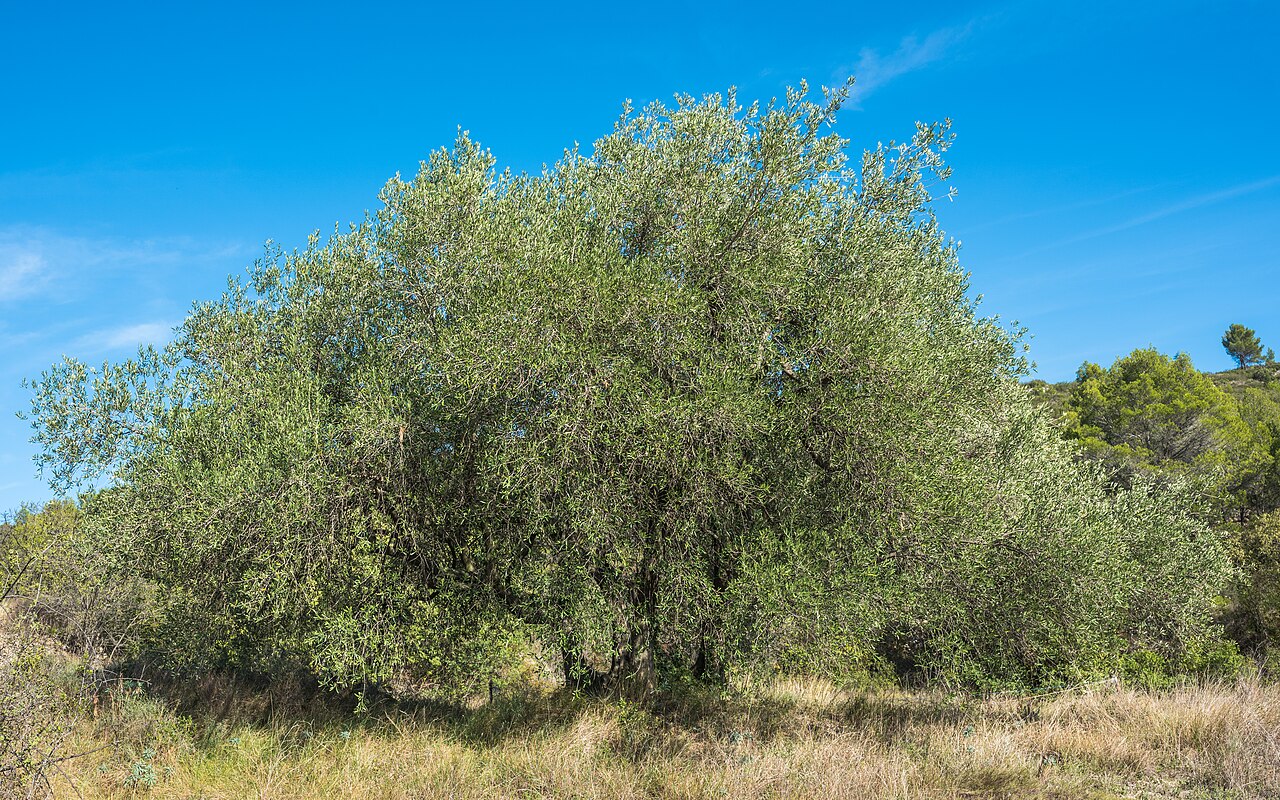
Olea europaea ‘Maurino’, also known as Razzola or Maurino Lucchese, is a classic Tuscan oil cultivar and one of the most widely used pollinizer trees in Italian and international olive orchards. It is compact and moderately vigorous, with a graceful, slightly pendulous habit, and it is grown both for its own aromatic, high-quality oil and as a reliable companion tree for other cultivars, including Frantoio, Leccino and Pendolino.
Gardeners choose Maurino for its manageable size, early and abundant fruiting, cold tolerance that pushes the limits of where olives can be grown, and its role as an excellent all-purpose pollinizer. Its fruit turns a deep purplish-black at full ripeness and matures earlier in the season than many other cultivars, which makes it a particularly good choice for growers in cooler, more northerly olive-growing regions.
Olive (Olea europaea) is not native to North America; it is native to the Mediterranean basin. It carries no federal noxious-weed listing, but the California Invasive Plant Council lists olive as a limited-impact invasive in parts of California, where birds spread fruit from fruiting cultivars into oak woodland and other wildland habitat. Maurino is a fruiting cultivar, so California gardeners near natural open space should harvest the crop, avoid planting next to wildlands, and remove any volunteer seedlings.
Identification
Maurino is a medium-sized, compact olive with medium vigor, distinguishing it from the larger, more sprawling habit of some other oil cultivars.
Bark & Stems
The tree carries a gracefully pendulous habit overall, though its fruiting branches are notably delicate with upward-rising tips, a subtler, less dramatically weeping form than a true cascading cultivar such as Pendolino. Bark on mature wood follows the typical gray, fissured olive pattern.
Leaves
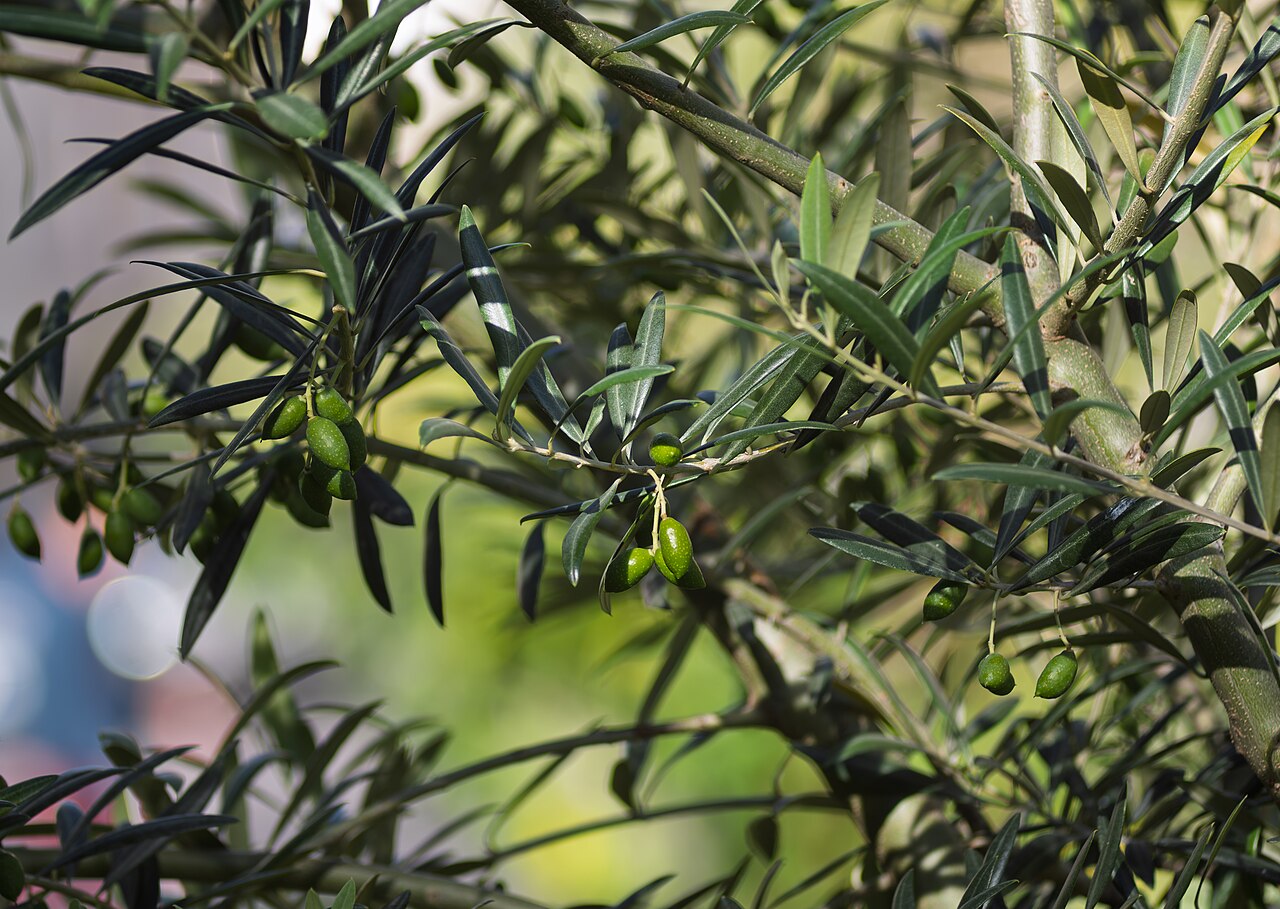
Leaves are lanceolate and medium-sized, gray-green above and silvery beneath like most olive foliage, carried along the characteristic delicate, upward-tipped fruiting shoots that help identify this cultivar in the field.
Flowers & Fruit
Maurino is self-sterile and depends on a compatible pollinizer, commonly Frantoio, Leccino or Pendolino, to set a crop; its own medium-low rate of ovary abortion (roughly 8 percent) is comparatively favorable for fruit set once pollination occurs. The fruit itself is small but borne in abundance, maturing earlier in the season than many cultivars and turning a deep purplish-black at full ripeness. Oil yield runs on the lower side for the species, roughly 13 to 16 percent, but the oil is prized for its delicate, aromatic character with a medium oleic acid content.
Quick Facts
| Scientific Name | Olea europaea ‘Maurino’ |
| Cultivar | Maurino (syn. Razzola, Maurino Lucchese) |
| Family | Oleaceae (Olive) |
| Plant Type | Evergreen fruiting/pollinizer tree |
| Native to North America | No — introduced from Tuscany, Italy (Mediterranean basin) |
| Mature Height | 12–18 ft; compact for an olive cultivar |
| Mature Spread | 10–15 ft, gracefully pendulous |
| Growth Rate | Medium; early and abundant fruiting |
| Sun Exposure | Full sun |
| Water Needs | Low to moderate once established; drought tolerant |
| Soil Type | Well-drained loam, sand or rocky soil |
| Soil pH | Neutral to alkaline, about 6.5–8.5 |
| Bloom Time | Late spring |
| Leaf / Fall Color | Evergreen; gray-green above, silvery beneath year-round |
| Fruit | Small, abundant, early-ripening; oil yield about 13–16% |
| Deer Resistant | Yes |
| USDA Hardiness Zones | 8–10; noted among the more cold-tolerant Tuscan cultivars |
| Invasive Status | Not federally listed; Cal-IPC limited-impact invasive risk in parts of California for fruiting cultivars |
Origin & Where It Grows
The species Olea europaea is native to the Mediterranean basin and the Near East, cultivated there for millennia, with wild and naturalized stands from Iberia and North Africa through the Levant and Iran.
Maurino originated in Tuscany, Italy, and is also known locally as Razzola or Maurino Lucchese, a name that again references the Lucca area of Tuscany as a historic center of Italian olive growing. It has long been grown there as a dependable oil cultivar and a highly compatible pollinizer for the region’s other major varieties, including Frantoio and Leccino.
In the United States, Maurino is grown across California’s Mediterranean-climate olive districts and has also become popular with growers in cooler, more marginal olive regions — including parts of the Pacific Northwest — specifically because of its relatively good cold tolerance and early ripening, which lets it mature a crop before the first hard frosts in shorter growing seasons.
Maurino Origin & Range
| Species Native Range | Mediterranean basin: southern Europe, North Africa, the Levant |
| Cultivar Origin | Tuscany, Italy (Lucca area) |
| Best U.S. Regions | California olive districts; cooler/marginal sites in the Pacific Northwest and warm inland Southeast |
| USDA Zones | 8–10 |
| Invasive Status | Not native; limited-impact invasive risk in parts of California (Cal-IPC) for fruiting cultivars |
Growing & Care Guide
Maurino’s compact size and early ripening make it one of the more approachable olive cultivars for a smaller home garden or a cooler-climate orchard.
Light
Plant in full sun — at least six to eight hours a day — for the best flowering, fruit set and oil quality from this cultivar’s small but abundant fruit.
Soil & Water
Give Maurino well-drained soil; like all olives it resents wet, heavy ground and is prone to root rot there. Water deeply but infrequently during the first two to three years, then taper off — established trees handle drought well, though a little supplemental water in summer helps fruit size and oil content.
Planting Tips
Maurino is self-sterile, so plant it with a compatible pollinizer, such as Frantoio, Leccino or Pendolino, within bee range for reliable fruit set; without one it may flower heavily but set little to no crop. Its compact habit makes it a good fit for smaller garden spaces or closer orchard spacing than larger cultivars allow. Plant in spring once frost danger has passed.
Pruning & Maintenance
Light pruning in late winter keeps the delicate, upward-tipped fruiting branches productive and the compact canopy open to light; avoid heavy cuts during the growing season since fruit forms on the previous year’s wood. Maurino’s moderate size generally means less aggressive annual pruning is needed than with larger, more vigorous cultivars.
Propagation
Like every named olive cultivar, Maurino must be propagated from cuttings or by grafting to come true to type; seedlings grown from its fruit revert to unpredictable, usually inferior wild-type characteristics. Semi-hardwood cuttings taken in summer root reliably under mist with rooting hormone.
Landscape Uses
- Compact home orchards where space is limited but a dependable oil crop is still the goal
- Pollinizer tree interplanted among self-sterile cultivars such as Frantoio and Leccino
- Cooler-climate olive growing, thanks to relatively good cold tolerance and early ripening
- Mediterranean and drought-tolerant gardens alongside lavender, rosemary and other low-water plantings
Harvest & Pollination
Maurino is self-sterile and requires a compatible pollinizer — commonly Frantoio, Leccino or Pendolino — planted nearby to set fruit; once pollinated it has a comparatively favorable, medium-low rate of ovary abortion, meaning a good share of flowers go on to form fruit. Harvest comes earlier than for many cultivars, as fruit veraison (color change) and oil accumulation both begin relatively early in the season; fruit turns deep purplish-black at full ripeness. Any fruit kept for table use must be cured first — brined, lye-treated, water-cured or dry-salted — since raw olives are intensely bitter and not eaten straight off the tree.
Wildlife & Ecological Value
Olive flowers are wind-pollinated, not insect-pollinated, so Maurino offers little nectar or pollen value to bees and other pollinators compared with native flowering trees, and it supports very few native North American insects since it evolved outside the continent. Birds will eat unharvested fruit, which is the pathway by which fruiting olive cultivars have naturalized in parts of coastal and interior California — another reason to pick the crop promptly. Beyond its harvest, Maurino functions mainly as a compact ornamental and production tree in the garden rather than as wildlife habitat.
Native Alternatives
- Desert Olive (Forestiera neomexicana) — a small, silvery-leaved native shrub-tree of the Southwest with a similarly compact size and far lower water needs
- Texas Olive (Cordia boissieri) — a small evergreen native tree from South Texas with gray-green leaves and showy white flowers
- American Sweet Olive / Devilwood (Osmanthus americanus) — a native evergreen tree in the same olive family (Oleaceae) with fragrant flowers and glossy foliage
- Arizona Rosewood (Vauquelinia californica) — a compact, drought-tolerant native evergreen tree/large shrub for dry Southwestern gardens
History & Uses
Maurino has long been grown in Tuscany, where it earned its reputation both as a reliable, aromatic oil cultivar in its own right and as one of the region’s most useful pollinizers for larger, self-sterile cultivars like Frantoio and Leccino. Its local synonym, Maurino Lucchese, again ties the cultivar to the Lucca area of Tuscany, one of Italy’s oldest and most storied olive-oil landscapes.
As interest in home and small-scale olive growing has spread into cooler climates in North America, Maurino’s early ripening and comparative cold tolerance have made it a popular choice for growers pushing the edges of where olives can reliably be grown, giving gardeners outside the classic Mediterranean belt a realistic shot at a home-pressed oil harvest.
Frequently Asked Questions
Is Maurino olive tree native to the United States?
No. Olive (Olea europaea) is native to the Mediterranean basin, not North America. Maurino is an introduced, cultivated variety; in parts of California it is treated as a limited-impact invasive risk because birds can spread unharvested fruit into wildland habitat, so pick the crop and avoid planting it next to natural open space there.
Does Maurino need another olive tree to produce fruit?
Yes. Maurino is self-sterile, so it needs a compatible pollinizer cultivar — commonly Frantoio, Leccino or Pendolino — growing within bee range to set a meaningful crop.
Is Maurino a good olive for a small garden?
Yes, relatively — it is more compact and medium-vigor compared with larger, more spreading cultivars, which makes it a practical choice where space is limited, provided there is room for a pollinizer tree nearby.
How cold-hardy is Maurino compared with other olive cultivars?
It is often cited among the more cold-tolerant Tuscan oil cultivars and ripens its fruit relatively early in the season, which is why it is popular with growers at the cooler edges of where olives are grown, such as parts of the Pacific Northwest, though it still needs an overall Mediterranean or warm-temperate climate.
Can you eat Maurino olives straight off the tree?
No. Like all olive cultivars, Maurino fruit is intensely bitter when raw because of natural oleuropein and must be cured — typically brined, lye-treated, water-cured or dry-salted — before it is palatable.

