Hortulan Plum (Prunus hortulana)
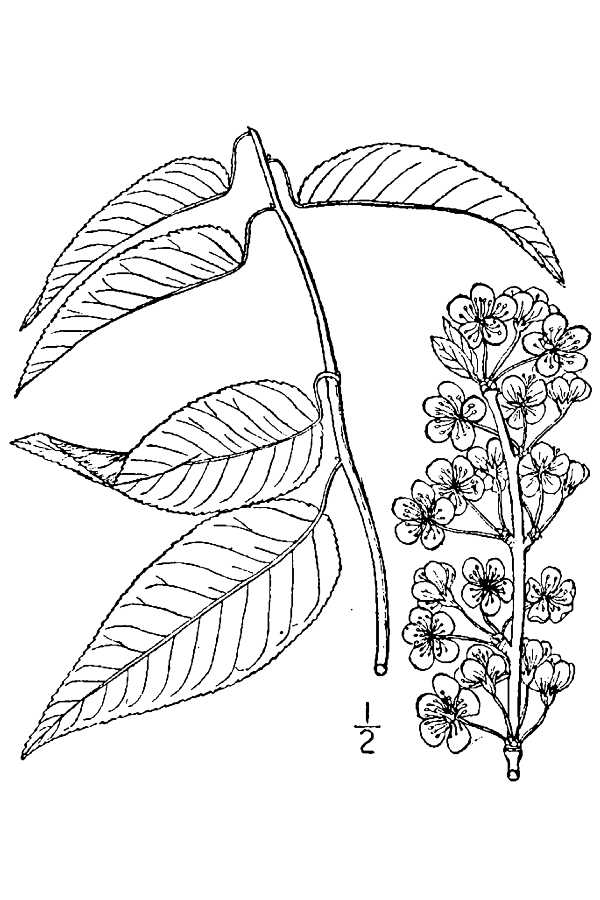
Prunus hortulana, the Hortulan Plum, is a small native tree of the central United States prized for its reliable crops of sweet, late-summer fruit and its usefulness as a tough, adaptable thicket tree for wildlife plantings. It is sometimes called wild goose plum, a name also applied to the closely related Prunus munsoniana, so gardeners shopping for either species should confirm the scientific name before buying.
Hortulan Plum grows as a small deciduous tree, generally 20 to 30 feet tall, with a slender trunk and a tendency to form thickets from root suckers. Botanist Liberty Hyde Bailey described the species in 1892 from cultivated plantings in the Midwest, and the epithet hortulana, meaning “of the garden,” reflects how often it was already being grown and selected by farmers and fruit breeders at the time. Several named cultivars were developed from wild hortulan plums in the late 19th and early 20th centuries for their sweet, late-ripening fruit.
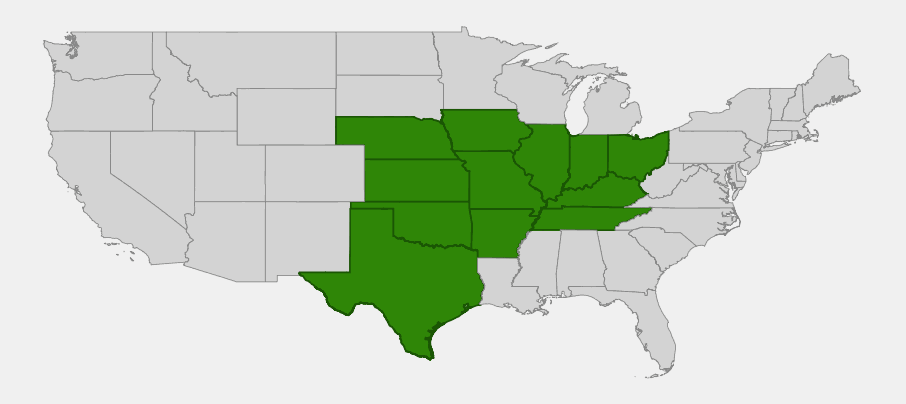
The species is found primarily in the central and lower Midwest, with naturalized or introduced populations east of the Appalachians in states such as Maryland and Virginia that likely represent escapes from early cultivation rather than part of its original native range; this page focuses on the core native distribution.
Identification
Hortulan Plum reaches 20 to 30 feet with a trunk up to about 6 inches in diameter, often sending up root suckers that form a loose thicket around the parent tree over time. Branches can bear short, stiff thorns on vigorous growth, a trait shared with several native plum species.
Bark & Stems
Bark on young trees is smooth and reddish brown, becoming darker and somewhat scaly with age. Twigs are slender and reddish, occasionally armed with short thorns.
Leaves
Leaves are green and hairless on the upper surface but hairy along the veins beneath, finely toothed, and often drawn to a long, tapering point — useful for telling this species apart from American Plum, which has a shorter, less drawn-out leaf tip.
Flowers
White flowers open in clusters of two to four, typically appearing with or just after the leaves begin to unfurl in spring, slightly later than many other native plums that bloom before leaf-out.
Fruit & Seeds
Fruits are red or yellow drupes marked with small white dots, ripening in late summer. The flavor is sweet and pleasant for a wild plum, making it a favorite for fresh eating as well as preserves. Fruit set can be heavy in good years, though late spring frosts occasionally reduce the crop.
Quick Facts
| Scientific Name | Prunus hortulana L.H. Bailey |
| Family | Rosaceae (Rose) |
| Plant Type | Deciduous Small Tree |
| Mature Height | 20–30 ft |
| Mature Spread | 15–20 ft, wider with suckers |
| Growth Rate | Moderate to fast |
| Sun Exposure | Full Sun to Part Shade |
| Water Needs | Average; drought tolerant once established |
| Soil Type | Upland loam to clay loam; tolerates a range of soils |
| Soil pH | 6.0–7.5 |
| Bloom Time | April – May, with leaf-out |
| Flower Color | White |
| Fall Color | Yellow |
| Fruit | Red or yellow drupes with white dots, sweet, edible fresh |
| Deer Resistant | No |
| USDA Hardiness Zones | 5–8 |
Native Range
Hortulan Plum is native to the central United States, with its core range spanning Arkansas, Iowa, Illinois, Indiana, Kansas, Kentucky, Missouri, Nebraska, Ohio, Oklahoma, Tennessee, and Texas. Within this region it grows in upland forests, along streambanks, at woodland edges, and in old fields and thickets, often alongside American Plum, Chokecherry, and American Hazelnut.
Scattered populations occur east of the Appalachian Mountains in states such as Maryland and Virginia, but botanists generally consider these to be naturalized escapes from early cultivation rather than part of the species’ original native range, since Hortulan Plum was widely planted and traded as a fruit tree in the 19th century.
The species thrives in the humid continental and humid subtropical climates of its Midwestern and southern range, tolerating both summer heat and winter cold across USDA Zones 5 through 8. It is not considered rare or at-risk, and healthy wild populations persist throughout its core range.
📋 Regional plant lists featuring Hortulan Plum: Arkansas, Louisiana, Eastern Oklahoma & Eastern Texas · Illinois, Iowa & Missouri · Ohio & Indiana · Nebraska, Kansas & Eastern Colorado · Kentucky & Tennessee
Growing & Care Guide
Hortulan Plum is an easy, productive small tree for gardeners in its native region who want fresh fruit along with wildlife value. If you already grow ornamental flowering cherries, our flowering cherry trees guide offers a useful comparison of bloom timing and care, since Hortulan Plum flowers on a similar spring schedule but with the bonus of genuinely good-eating fruit.
Light
Plant in full sun for the best fruit production; part shade is tolerated but reduces flowering and fruit set.
Soil & Water
Hortulan Plum adapts to a range of upland soils from loam to clay loam and tolerates both average moisture and brief drought once established. Avoid consistently waterlogged sites, which can encourage root disease.
Planting Tips
Set out container or bare-root trees in spring. Plant two or more genetically distinct trees for reliable fruit set, since most wild plums, including this species, are not consistently self-fertile. For general spacing guidance that applies to wild and cultivated plums alike, see our notes on how wide plum trees grow.
Pruning & Maintenance
Prune out dead, damaged, or crossing branches in late winter. Watch for black knot fungus, a common disease of wild and cultivated plums that forms hard black swellings on branches; remove infected wood promptly, cutting well below the swelling, and dispose of the cuttings rather than composting them. Thin root suckers if a single-trunk form is preferred.
Propagation
Propagate from root suckers, which transplant readily while dormant, or from seed after several months of cold stratification. Grafting onto plum rootstock is also used by growers who want to preserve a specific fruiting selection.
Landscape Uses
- Edible landscaping — reliably sweet fruit for fresh eating and preserves
- Wildlife thickets at the edge of yards and open spaces
- Windbreaks and hedgerows in rural and semi-rural settings
- Restoration plantings on disturbed upland sites
- Orchard breeding stock for regionally adapted plum selections
Wildlife & Ecological Value
Hortulan Plum supports pollinators in spring and a wide range of fruit-eating wildlife in late summer, making it a productive addition to any wildlife-friendly landscape within its native range.
For Pollinators
Spring flowers attract native bees and honeybees, providing an important nectar and pollen source during the early part of the growing season when fewer trees are in bloom.
For Birds
Songbirds and game birds alike feed on the ripe red or yellow fruit, which also persists on the tree into early fall in good years, extending the food source well past the main ripening period.
For Mammals
Raccoons, foxes, and deer all make use of the fruit, while deer and rabbits browse young growth, particularly in winter. Root-suckering thickets provide cover for small mammals.
Ecosystem Role
As a thicket-forming tree of forest edges and old fields, Hortulan Plum adds structure to transitional habitats between open ground and closed-canopy woodland, supporting a wider range of wildlife than either habitat alone.
Cultural & Historical Uses
Hortulan Plum has a notable place in American horticultural history. Because its fruit is reliably sweet for a wild plum, 19th-century fruit breeders in the Midwest selected and named several cultivars from wild hortulan plum trees, including varieties grown commercially for a time before modern orchard plums became dominant. Liberty Hyde Bailey’s 1892 description of the species reflected this active interest in bringing wild Midwestern plums into cultivation.
The fruit continues to be gathered from wild and dooryard trees for fresh eating, jams, jellies, and preserves throughout its native range. Unlike some other native plums, Hortulan Plum fruit is sweet enough to enjoy raw once fully ripe, which made it especially popular with rural households before commercial orchard fruit became widely available.
The species also played a role in regional plum breeding programs alongside other native species such as Chickasaw Plum and American Plum, contributing cold hardiness and disease tolerance to hybrid selections developed for Midwestern growing conditions.
Frequently Asked Questions
Is Hortulan Plum the same as wild goose plum?
The common name “wild goose plum” is used for both Prunus hortulana and the closely related Prunus munsoniana, so always check the scientific name when buying nursery stock to be sure you are getting the species you want.
Can you eat Hortulan Plum fruit raw?
Yes. Unlike some tart native plums that are best cooked, Hortulan Plum fruit is sweet and pleasant enough to eat fresh off the tree once fully ripe, though it also makes excellent preserves.
Does Hortulan Plum need a pollinator tree?
Most wild plums, including this species, are not reliably self-fertile, so planting two or more genetically distinct trees improves fruit set significantly.
How tall does Hortulan Plum get?
Most trees reach 20 to 30 feet, with a slender trunk up to about 6 inches in diameter, and a tendency to send up root suckers that broaden the base over time.
Is Hortulan Plum native east of the Appalachians?
No — populations found in states like Maryland and Virginia are generally considered naturalized escapes from early cultivation rather than part of the species’ original native range, which is centered in the Midwest and lower Midwest.

Looking for a nursery that carries Hortulan Plum?
Browse our native plant nursery directory: Arkansas · Illinois, Indiana, Iowa & Kansas · Kentucky & Missouri · Nebraska, Ohio & Oklahoma · Tennessee & Texas