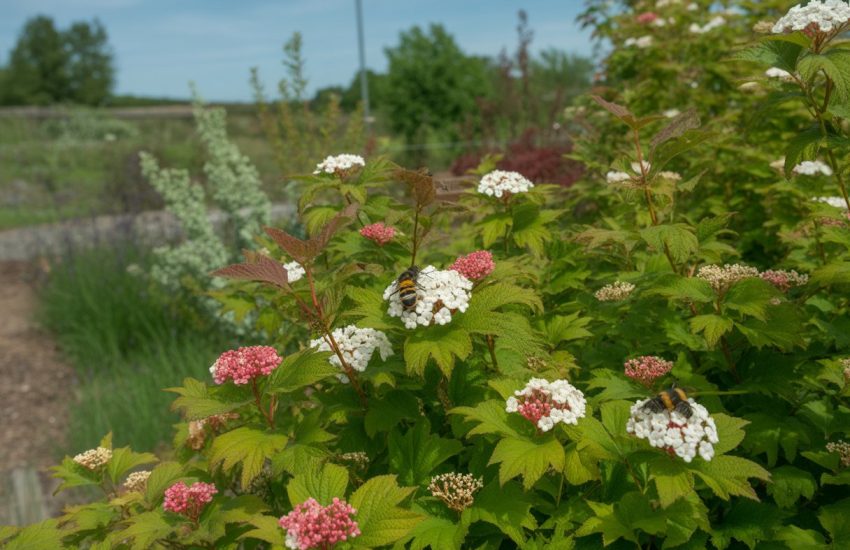
Flatwoods Plum (Prunus umbellata)
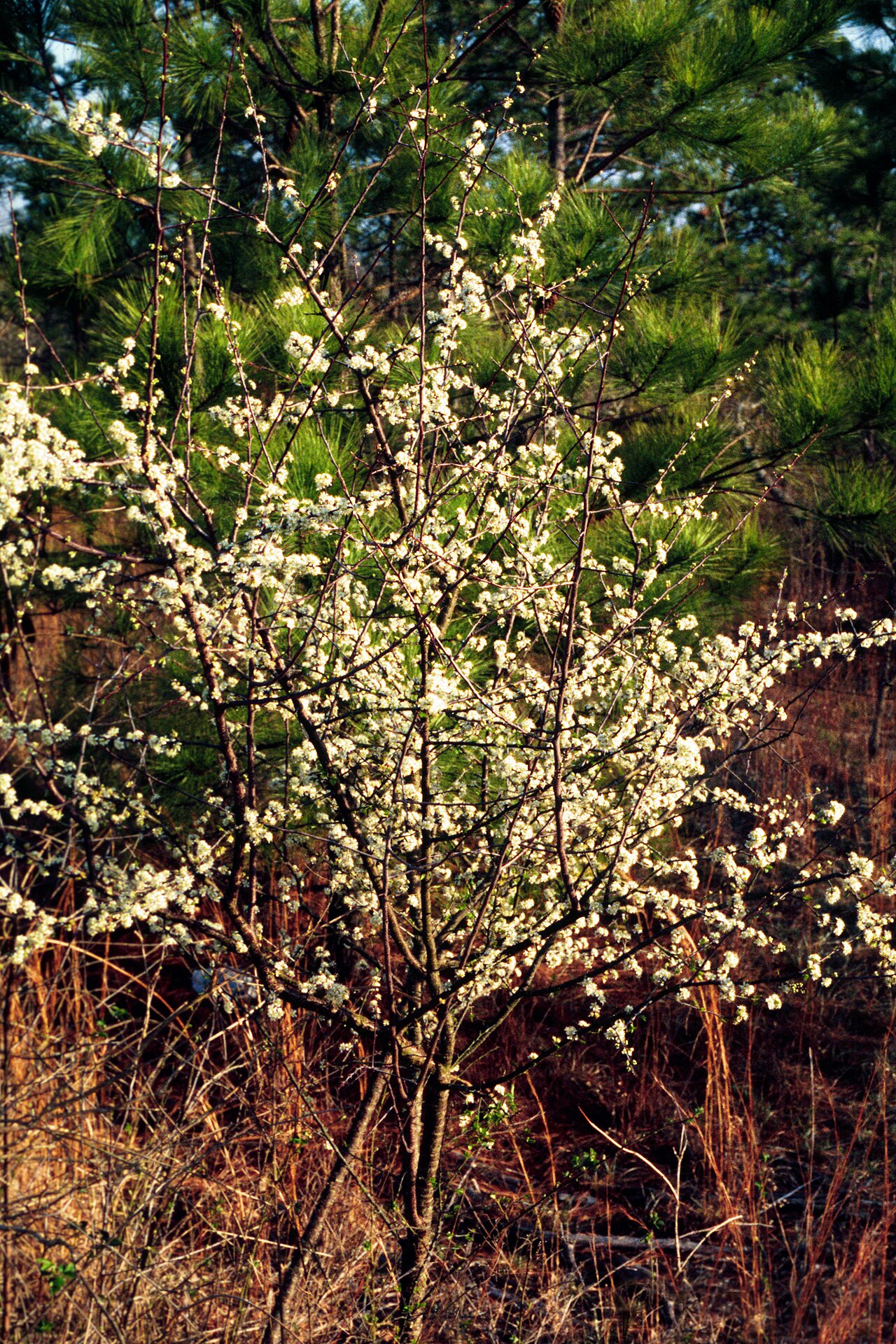
Prunus umbellata, known as Flatwoods Plum, Hog Plum, or Black Sloe, is a native shrub or small tree of the Deep South and Atlantic and Gulf coastal plains. It is one of the earliest-blooming native plums, often flowering in late winter before most other trees have broken dormancy, and its late-ripening fruit extends the harvest season well past most other wild plums. For Southern gardeners wanting an early nectar source and a thicket that feeds wildlife year after year, Flatwoods Plum is a dependable, low-maintenance choice.
Flatwoods Plum grows as a shrub or small tree up to about 20 feet tall with a spread around 15 feet, often forming thickets through root suckering. Its white, creamy, or slightly grayish flowers open very early in the season, and its round, purple fruit does not ripen until late summer into fall, making this one of the latest-fruiting native plums as well as one of the earliest to bloom. Large fruit crops occur only every three to four years, a pattern wildlife gardeners should expect rather than treat as a problem.
This species is easily confused with Chickasaw Plum (Prunus angustifolia), with which it readily hybridizes where their ranges overlap; telling the two apart in the field can be genuinely difficult, and intermediate plants are common in parts of the Southeast.
Identification
Flatwoods Plum typically reaches 12 to 20 feet tall with a similar or slightly smaller spread, growing as a multi-stemmed shrub or small single-trunked tree depending on site and management. Plants can live up to about 40 years, longer than many fast-growing shrubs.
Bark & Stems
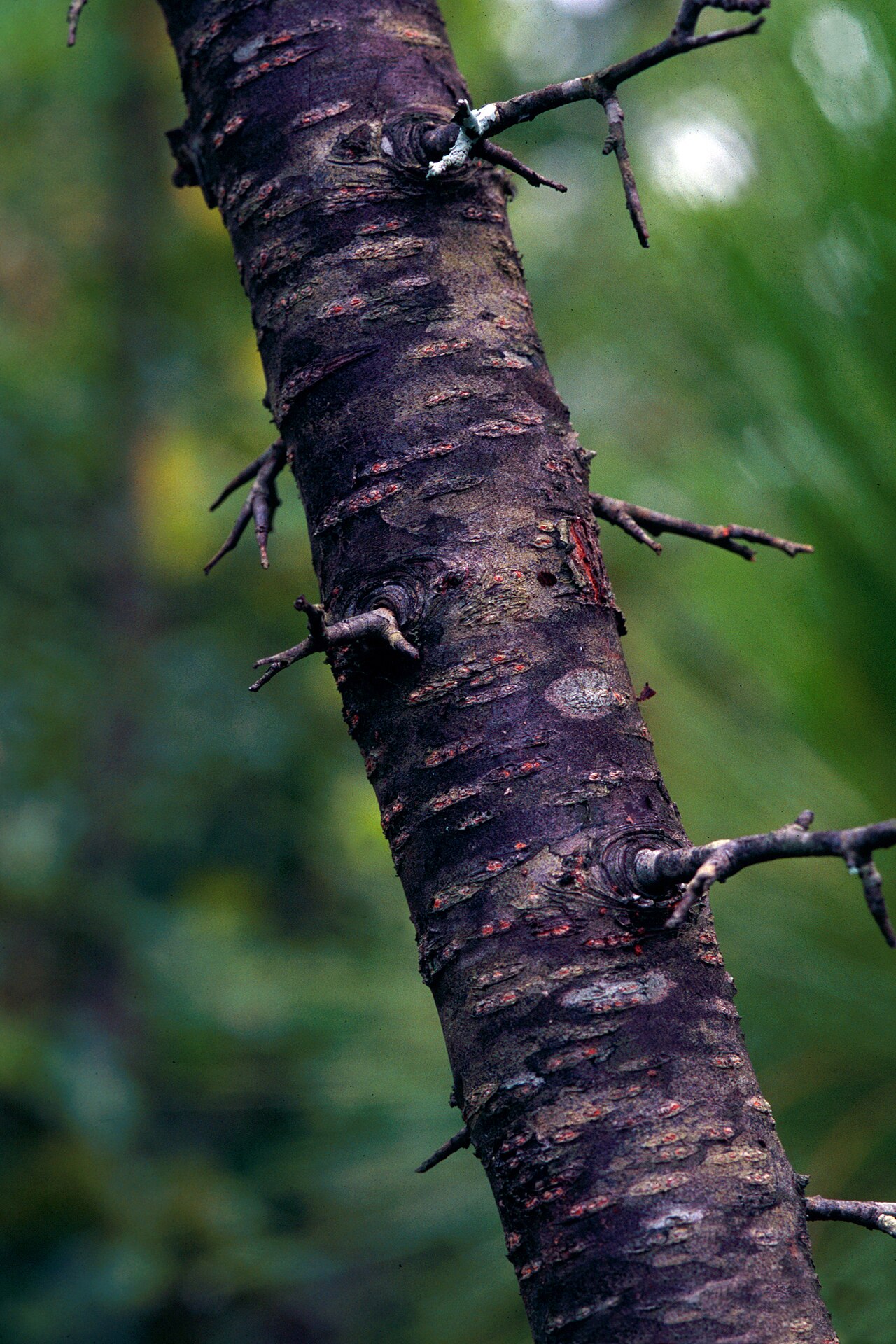
Bark on older stems is dark, often purplish-brown to nearly black, and finely textured with small lenticels; young growth is reddish brown and may bear short spur-shoots typical of Prunus. Older stems sometimes develop a scaly, almost braided texture with age.
Leaves
Leaves are alternate, serrate, and green through the growing season, turning yellow in autumn. They are generally narrower and more finely toothed than those of American Plum, though overlap with Chickasaw Plum leaves can make identification by leaf alone unreliable.
Flowers & Fruit
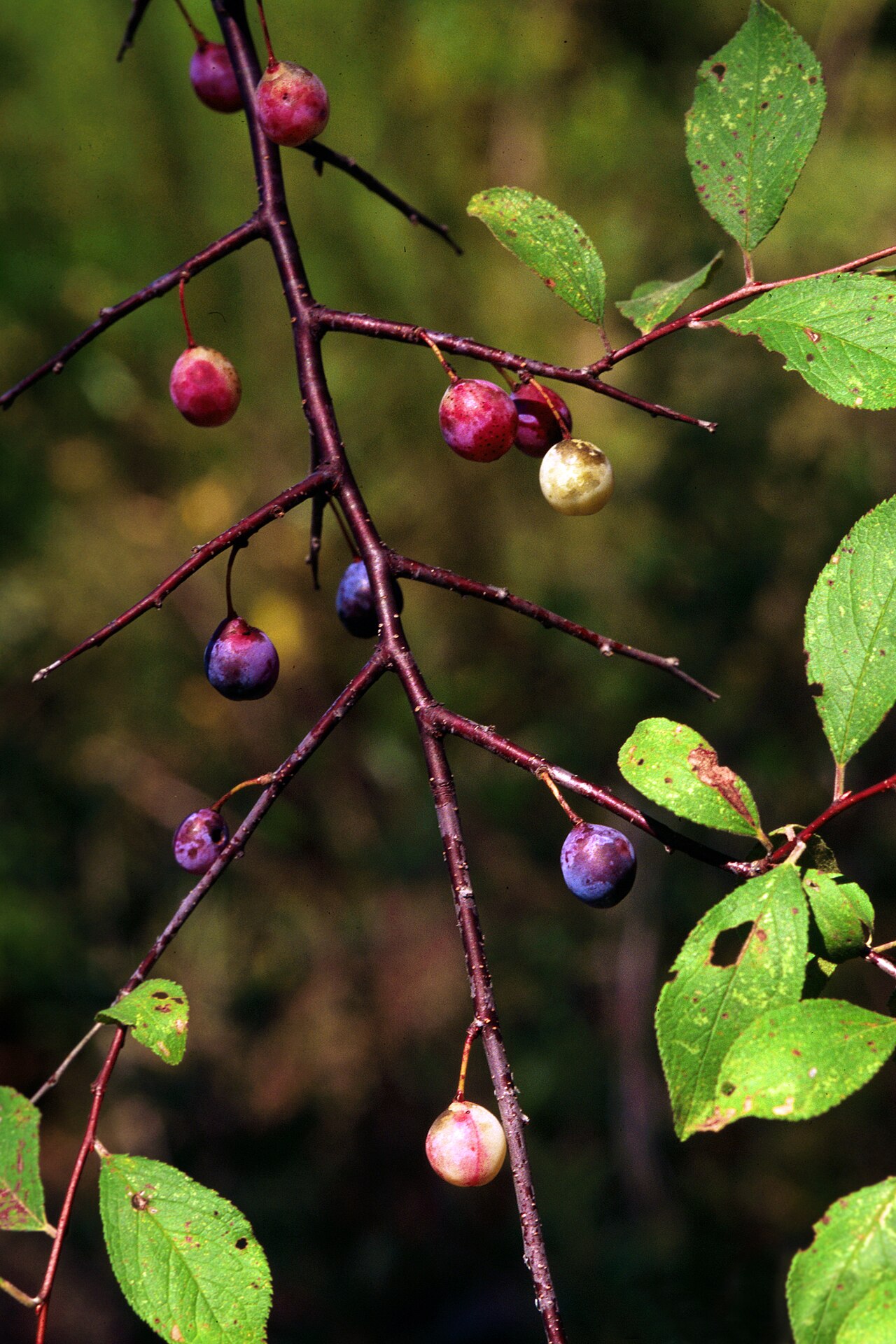
Flowers are white, creamy, or grayish, opening very early in the season — often in February in the Deep South, well before most other woody plants bloom. The fruit is a round, purple drupe 1/2 to 1 inch in diameter, covered with a whitish bloom typical of wild plums. Fruit matures August through October, much later than most native plums, and heavy crops appear only every three to four years.
Quick Facts
| Scientific Name | Prunus umbellata Elliott |
| Family | Rosaceae (Rose) |
| Plant Type | Deciduous Shrub / Small Tree |
| Mature Height | 12–20 ft |
| Mature Spread | 12–15 ft |
| Growth Rate | Moderate |
| Sun Exposure | Full Sun to Part Shade |
| Water Needs | Low to Average; drought tolerant once established |
| Soil Type | Sandy to loamy, well-drained; flatwoods and sandhill soils |
| Soil pH | 5.5–7.0 |
| Bloom Time | February – March, before leaves |
| Flower Color | White, cream, or grayish |
| Fall Color | Yellow |
| Fruit | Round purple drupes with whitish bloom, edible cooked into jam |
| Deer Resistant | No |
| USDA Hardiness Zones | 7–9 |
Native Range
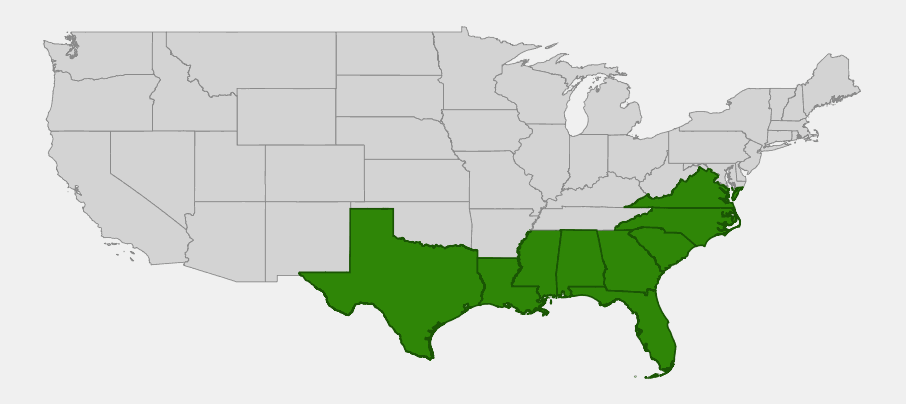
Flatwoods Plum is native to the southeastern United States, from Virginia south through the Carolinas, Georgia, and Florida, and west along the Gulf Coastal Plain through Alabama, Mississippi, Louisiana, and into Texas. Within this range it grows across coastal plain flatwoods, sandhills, and the margins of pine woodlands and hammocks.
The species is well adapted to the sandy, well-drained, often nutrient-poor soils typical of pine flatwoods and sandhill habitats, and it tolerates periodic fire, resprouting from the base or root crown after top-kill, much like other shrubs of fire-maintained Southeastern ecosystems.
Where its range overlaps with Chickasaw Plum, the two species hybridize freely, and identifying individual plants to species can be difficult without careful attention to bloom time, fruit timing, and leaf detail. Both species are valuable for wildlife regardless of exactly which one, or which hybrid, is present on a given site.
📋 Regional plant lists featuring Flatwoods Plum: Georgia, Alabama & Mississippi · Arkansas, Louisiana, Eastern Oklahoma & Eastern Texas · North Carolina & South Carolina · Maryland, Virginia & West Virginia
Growing & Care Guide
Flatwoods Plum is a tough, low-input shrub well suited to sandy Southern soils, offering some of the earliest bloom of any native woody plant in its range. Gardeners interested in ornamental flowering trees may enjoy comparing its very early bloom habit with the later-flowering trees covered in our flowering cherry trees guide.
Light
Plant in full sun to part shade; flowering and fruiting are heaviest in full sun, which also mimics the open pine woodland conditions this species favors in the wild.
Soil & Water
Flatwoods Plum is adapted to sandy, well-drained, often nutrient-poor soils and tolerates drought well once established. It does not need rich garden soil and can struggle in heavy, poorly drained clay that stays wet.
Planting Tips
Set out container stock in fall or early spring. Because flowering happens so early, select a planting site sheltered from the harshest late-winter winds to protect the bloom, which is vulnerable to late freezes. Plant more than one genetically distinct specimen for better fruit set; general spacing notes for wild and cultivated plums are covered in our article on how wide plum trees grow.
Pruning & Maintenance
Minimal pruning is needed. Remove dead or damaged wood in late winter after bloom, and watch for black knot fungus, a disease common to wild and cultivated Prunus species that produces hard black swellings on branches; cut out infected wood well below the swelling. Root suckers can be left to form a natural thicket or thinned for a tidier form.
Propagation
Propagate from root suckers dug while dormant, or from seed after a period of cold stratification. Because this species hybridizes readily with Chickasaw Plum, seedlings grown from wild-collected seed near both species may show intermediate characteristics.
Landscape Uses
- Early-season pollinator gardens — among the first native plants to bloom each year
- Wildlife thickets on sandy, well-drained sites
- Pine flatwoods and sandhill restoration
- Naturalized hedgerows in coastal plain landscapes
- Edible landscaping — fruit for jams and preserves
Wildlife & Ecological Value
Flatwoods Plum provides food and cover across an unusually long season for a single species, from the earliest nectar of late winter through fruit that can still be ripening in October.
For Pollinators
Because it blooms so early, often in February in the Deep South, Flatwoods Plum is a critical nectar source for the first bees and other pollinators active in late winter, when almost nothing else is flowering.
For Birds
Songbirds feed on the late-ripening fruit well into fall, and the dense thicket growth provides nesting and roosting cover, particularly valuable in open pine woodland settings with otherwise sparse shrub layers.
For Mammals
Foxes, raccoons, and other mammals eat the fruit and disperse the seeds, while deer browse the foliage and twigs. Thickets formed by root suckering provide shelter for small mammals in open sandhill and flatwoods habitats.
Ecosystem Role
As a fire-adapted shrub of pine flatwoods and sandhills, Flatwoods Plum resprouts readily after low-intensity fire, helping it persist in habitats that depend on periodic burning. Its very early bloom fills an ecological gap in the pollinator calendar that few other native woody plants occupy.
Cultural & Historical Uses
Flatwoods Plum has long been gathered by rural Southern households for jams, jellies, and preserves, following the same traditions applied to its close relative Chickasaw Plum. The common name “hog plum” reflects its traditional use as mast for free-ranging hogs in the rural South, where fallen fruit was a seasonal food source for livestock as well as wildlife.
Because the species blooms so early and so reliably, it has also served as an informal seasonal marker in parts of its range, with its white flowers signaling the true start of spring in pine flatwoods country well before most other trees show any sign of life.
Today Flatwoods Plum remains primarily a wildlife and conservation planting rather than a commercial fruit crop, valued by native plant gardeners for its toughness, drought tolerance, and the unusually long season of ecological activity it supports from late winter bloom through fall fruiting.
Frequently Asked Questions
How is Flatwoods Plum different from Chickasaw Plum?
The two species are very similar and hybridize readily where their ranges overlap. Flatwoods Plum tends to bloom earlier and fruit later than Chickasaw Plum, but field identification between the two, or their hybrids, can be genuinely difficult.
When does Flatwoods Plum bloom?
Often in February in the Deep South, making it one of the earliest-blooming native trees or shrubs in its range, well ahead of most other spring-flowering plants.
Can you eat Flatwoods Plum fruit?
Yes, though it is tart and best cooked into jam, jelly, or preserves rather than eaten raw. Large fruit crops occur only every three to four years.
Is Flatwoods Plum fire tolerant?
Yes, it is well adapted to the fire-maintained pine flatwoods and sandhill habitats where it naturally grows, resprouting from the base after low-intensity fire.
Does Flatwoods Plum tolerate drought?
Yes, once established it tolerates the dry, sandy soils typical of its native coastal plain habitat and needs little supplemental water.

Looking for a nursery that carries Flatwoods Plum?
Browse our native plant nursery directory: Alabama · Georgia · Louisiana & Mississippi · North Carolina · South Carolina, Texas & Virginia