
Red Dragon Japanese Maple (Acer palmatum var. dissectum ‘Red Dragon’)
Last updated: November 3, 2026
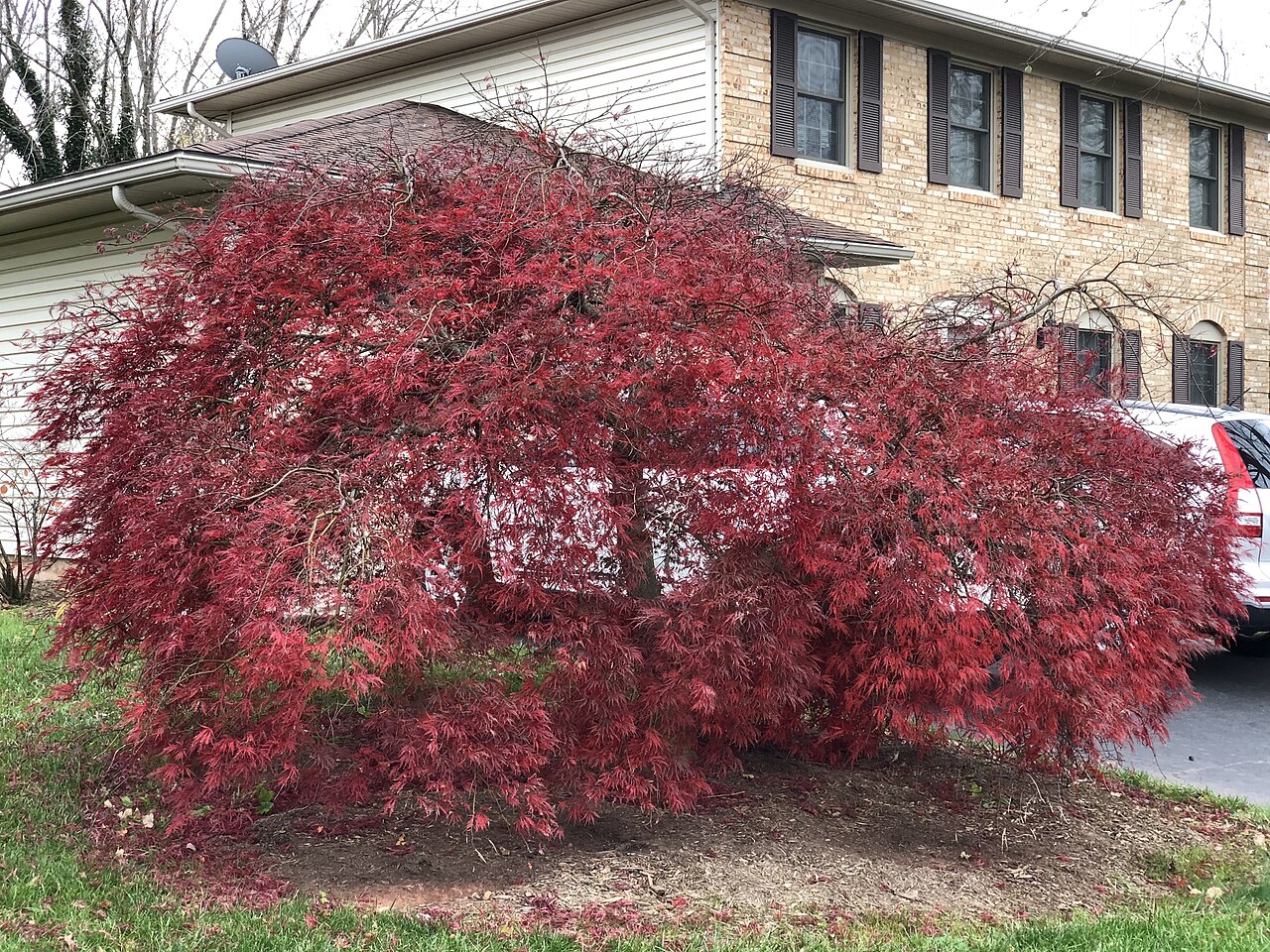
Acer palmatum var. dissectum ‘Red Dragon’, the Red Dragon Japanese Maple, is a dwarf, weeping laceleaf cultivar grown for its finely dissected, fern-like leaves that open bright cherry-red in spring, deepen to burgundy-red through summer, and finish in vivid crimson-scarlet come fall. Its low, cascading, umbrella-like form makes it read more like a sculptural shrub than a tree, and its color holds through the growing season better than many other dissectum cultivars.
Gardeners often choose Red Dragon specifically because, compared with most dissectum Japanese maples, it tolerates more sun without scorching, which makes it a more flexible choice for borders and foundation beds that aren’t in full shade. Its compact mature size, typically 6 to 8 feet tall and wide, also fits smaller gardens and container culture far more easily than full-size upright red cultivars.
Japanese maple (Acer palmatum) is not native to North America — it is native to Japan, Korea and eastern China — and Red Dragon is an introduced, cultivated selection of that species. It is not on any federal noxious weed list. Dissectum cultivars like Red Dragon are grafted onto seedling rootstock and set comparatively little viable seed of their own compared with full-size, seed-fertile cultivars, so the main invasiveness concern with this particular plant is minor; even so, it is good practice to avoid planting any Japanese maple cultivar directly against natural woodland edges in the eastern U.S. and to remove volunteer maple seedlings you find nearby, since they are rarely true to the parent.
Identification
Red Dragon grows as a dense, mounding, weeping shrub rather than an upright tree, with branches that arch and cascade outward and downward from a short central trunk, forming a rounded or umbrella-like silhouette typically 6 to 8 feet tall and equally wide.
Bark & Stems
Young stems are reddish, aging to smooth gray-brown bark on older wood. Because the plant is grafted, a telltale identification and maintenance point is the graft union near the base: any shoots that sprout below it will usually be plain green seedling rootstock, not true Red Dragon, and should be pruned off before they overtake the grafted top.
Leaves
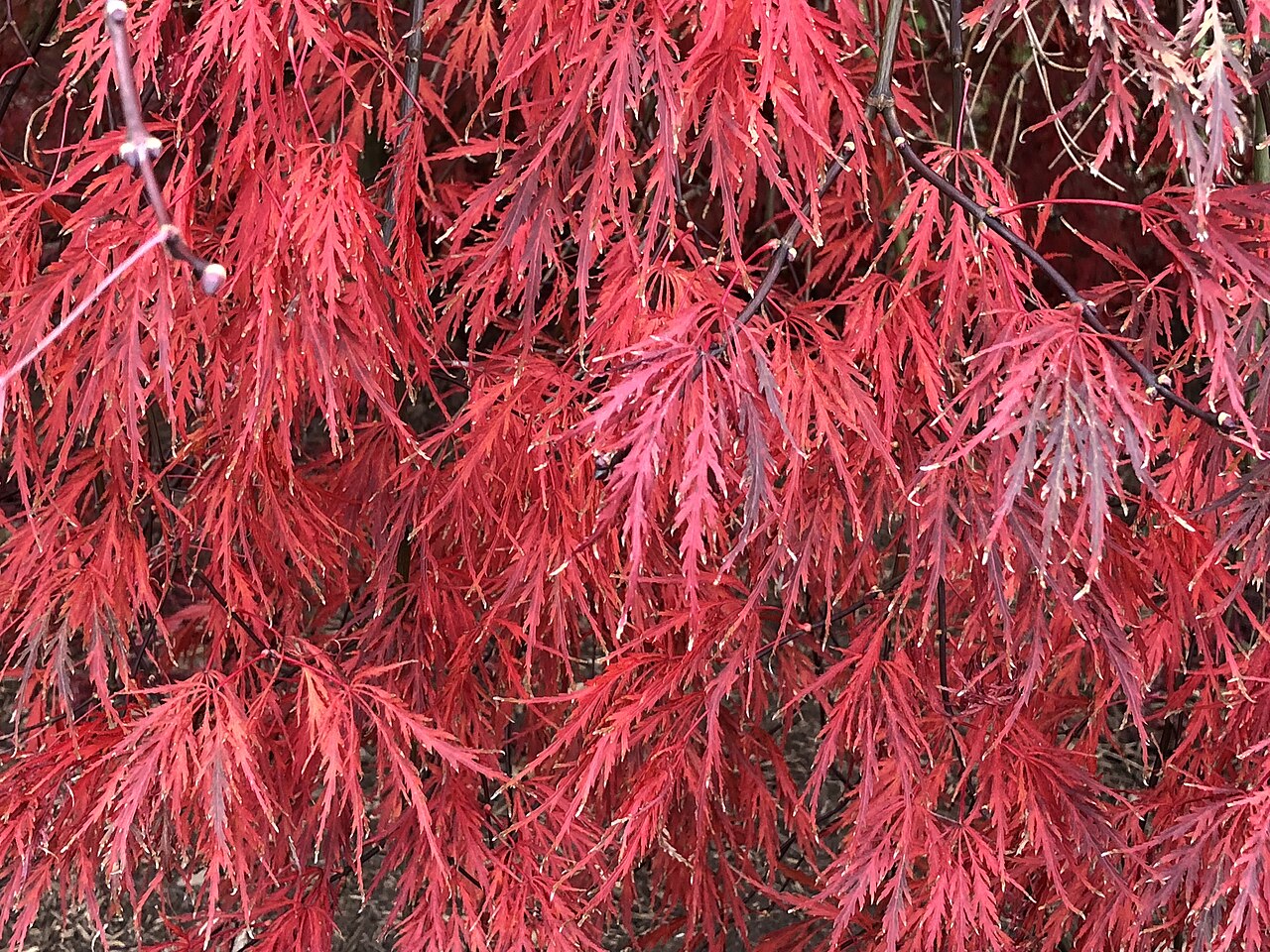
Leaves are deeply and finely dissected into narrow, lace-like lobes, giving the whole canopy a soft, feathery texture. New growth is bright cherry-red in spring, deepening to a darker burgundy-red through summer, and turning crimson to scarlet in fall — Red Dragon is noted for holding good red color through the season better than some other dissectum red-leaf cultivars.
Flowers
Small, inconspicuous reddish-purple flowers appear in spring in loose clusters, mostly hidden among the finely cut foliage; they are wind- and insect-pollinated.
Fruit & Seeds
Flowers are followed by small, paired, winged samaras that ripen from reddish to brown by fall. Dissectum cultivars set comparatively light seed crops, and seedlings rarely resemble the parent.
Quick Facts
| Scientific Name | Acer palmatum var. dissectum ‘Red Dragon’ |
| Cultivar | ‘Red Dragon’ |
| Family | Sapindaceae (Maple) |
| Plant Type | Deciduous dwarf, weeping shrub (dissectum/laceleaf type) |
| Native to North America | No — introduced; species native to Japan, Korea and eastern China |
| Mature Height | 6–8 ft (some sources cite up to 10 ft) |
| Mature Spread | 6–8 ft (some sources cite up to 10 ft) |
| Growth Rate | Slow to moderate |
| Sun Exposure | Full sun to part shade; tolerates more sun than most dissectum cultivars |
| Water Needs | Average, consistent moisture; some drought tolerance once established |
| Soil Type | Rich, well-drained loam |
| Soil pH | Slightly acidic (about 5.5–6.5); tolerates close to neutral |
| Bloom Time | Spring (April–May), inconspicuous |
| Leaf / Fall Color | Cherry-red spring, burgundy-red summer, crimson-scarlet fall |
| Fruit | Small winged samaras, light seed set typical of dissectum types |
| Deer Resistant | Mostly — occasional light browsing reported |
| USDA Hardiness Zones | 5–8 (some retailers list to zone 9 in favorable sites) |
| Invasive Status | Not federally listed; sets comparatively light seed as a dissectum type, but still best kept away from wild areas |
Origin & Where It Grows
Acer palmatum, the species Red Dragon belongs to, is native to woodlands and mountain slopes of Japan, South Korea and parts of eastern China, where it grows as an understory and edge tree. The dissectum (laceleaf) group, which includes Red Dragon, has been selected and refined in Japanese and Western nurseries for its finely cut foliage and low, cascading habit.
‘Red Dragon’ is a modern red-leaf dissectum selection valued in the nursery trade for combining strong season-long red color with better sun tolerance than many older laceleaf red cultivars, such as ‘Crimson Queen‘; as with many recent patented or trademarked selections, a single authoritative account of exactly when and where it was first bred is not consistently available across horticultural sources.
In the U.S., Red Dragon performs well across USDA zones 5 through 8, and some retailers extend that range to zone 9 in favorable, well-watered sites — the Pacific Northwest, Mid-Atlantic, Ohio Valley and much of the South with afternoon shade. Afternoon shade is still worthwhile in the hottest parts of its range, even though it tolerates more sun than most other laceleaf cultivars.
Growing & Care Guide
Light
Red Dragon grows well in full sun to part shade and is specifically noted for handling more sun than most other dissectum cultivars without scorching. In the hottest climates, afternoon shade still helps the finely cut foliage look its best through summer.
Soil & Water
Plant in rich, well-drained soil; it does not tolerate standing water, so amend heavy clay or plant on a slight mound. Keep soil evenly moist through the first two growing seasons; established plants tolerate short dry spells but perform best with regular water during drought, especially given their fine, thin leaf texture.
Planting Tips
Plant in spring or fall at the same depth as the nursery container, and mulch 2 to 3 inches deep, keeping mulch away from the trunk. Because of its low, spreading habit, give Red Dragon room to cascade outward without being crowded by walkways or other plants, and avoid burying the graft union when planting.
Pruning & Maintenance
Prune in late fall through winter dormancy to limit sap bleeding, removing dead or crossing branches and lightly shaping the cascading form as needed. Watch below the graft union for green, vigorous shoots arising from the rootstock; remove these promptly, since they can outcompete the red-leaved top growth if left unchecked.
Propagation
Red Dragon is propagated by grafting onto seedling rootstock, which is the only way to reliably reproduce its weeping form and red color. Seed-grown plants are variable and will not come true, so buy grafted, named plants for true Red Dragon characteristics.
Landscape Uses
- Specimen in a mixed border, where its cascading red mound provides a strong focal point at eye level or below
- Rock gardens and raised beds, where its compact, weeping form fits naturally among stone
- Container planting on patios and decks, given its naturally dwarf size
- Near water features, where the weeping form echoes the movement of water
- Companion planting with upright evergreens or ornamental grasses for contrast in form and color
Wildlife & Ecological Value
Red Dragon offers modest wildlife value compared with native maples such as red maple or sugar maple, which host large numbers of native moth and butterfly caterpillars. Its small spring flowers attract some pollinating insects, and its light seed crop is occasionally eaten by birds and squirrels, but few native insect species are adapted to use Acer palmatum as a host plant. Its dense, low branching does offer some cover for small birds. Treat it primarily as an ornamental accent and pair it with native trees and shrubs elsewhere on the property to support local food webs.
Native Alternatives
For gardeners who want a low, mounding native shrub or small tree with fine texture or red color, consider:
- Downy serviceberry (Amelanchier arborea) — a native small tree or large shrub with spring flowers, summer fruit, and good red-orange fall color
- Red buckeye (Aesculus pavia) — a native shrub or small tree with striking red spring flowers and a naturally rounded form
- Rocky Mountain maple (Acer glabrum) — a small, often multi-stemmed native maple suited to western gardens
- Vine maple (Acer circinatum) — a Pacific Northwest native with graceful, arching branches and good fall color
- Striped maple (Acer pensylvanicum) — an eastern native understory tree with light, airy foliage and distinctive striped bark
History & Uses
Acer palmatum has been cultivated in Japan for well over a thousand years, and the dissectum group has long been prized for its delicate, fern-like leaves. Red-leaf dissectum selections like Red Dragon build on an old tradition of weeping laceleaf maples while addressing a common complaint about the group: that most older red dissectums scorch badly in strong sun.
Red Dragon rose to popularity in the American nursery trade as growers looked for a compact, reliably red weeping maple that performed well in more sun-exposed gardens than traditional laceleaf cultivars could tolerate. Its manageable size has also made it a frequent recommendation for small-space and container gardening.
Beyond ornamental landscaping, Red Dragon has no significant food, medicinal or commercial timber uses; its value is almost entirely as a garden and container specimen.
Frequently Asked Questions
Is Red Dragon Japanese maple native to the United States?
No. Acer palmatum is native to Japan, Korea and eastern China. Red Dragon is a cultivated selection of that introduced species, not a North American native plant.
How big does a Red Dragon Japanese maple get?
Most sources put its mature size at about 6 to 8 feet tall and wide, with a few listing it slightly larger, up to around 10 feet; its low, weeping form means most of that size spreads outward rather than upward.
Can Red Dragon Japanese maple handle full sun?
Better than most dissectum cultivars — it is specifically noted for tolerating more direct sun without scorching, though afternoon shade is still helpful in the hottest climates.
Why is my Red Dragon maple growing plain green leaves?
Green shoots usually mean the rootstock below the graft union is sprouting and outcompeting the grafted red top. Prune these green shoots off as soon as you notice them to keep the plant true to its red-leaved form.
Is Red Dragon Japanese maple invasive?
It is not on federal or most state noxious-weed lists, and as a dissectum cultivar it sets comparatively little viable seed. Even so, it is best not to plant any Japanese maple cultivar directly against natural woodland edges in the eastern U.S., and to remove any volunteer maple seedlings you find nearby.

