Arbosana Olive Tree (Olea europaea ‘Arbosana’)
Last updated: November 3, 2026
Olea europaea ‘Arbosana’, the Arbosana Olive Tree, is a Spanish olive oil cultivar that started as a minor local variety near Tarragona in Catalonia and went on to become one of the three cultivars (alongside Arbequina and Koroneiki) that built the modern super-high-density olive oil industry. Gardeners and small growers plant it less for size or looks than for one trait: Arbosana is naturally one of the least vigorous olive cultivars grown anywhere, with a compact, dense, low-spreading canopy that stays manageable without constant pruning.
That low vigor, combined with very early and heavy cropping, is what makes Arbosana valuable in commercial hedgerow groves planted a few feet apart and harvested by machine — and it is also exactly what makes a single Arbosana tree a good choice for a smaller home garden or patio, where a huge, spreading olive tree would be unwelcome. The oil itself is well regarded for its balanced, mild-to-medium flavor, even though the fruit’s oil content is only moderate compared with some other cultivars.
Olive (Olea europaea) is native to the Mediterranean basin and the Near East, not North America, so Arbosana is an introduced, cultivated tree wherever it is grown here. It carries no federal noxious-weed listing, but in parts of coastal and central California, birds spread the fruit of fruiting olive cultivars like Arbosana into oak woodland and other wildlands, where California’s invasive plant council (Cal-IPC) rates olive a limited-impact invasive. Gardeners in those areas should plan to harvest the crop each year and avoid planting right at a wildland edge.
Identification
Bark & Stems
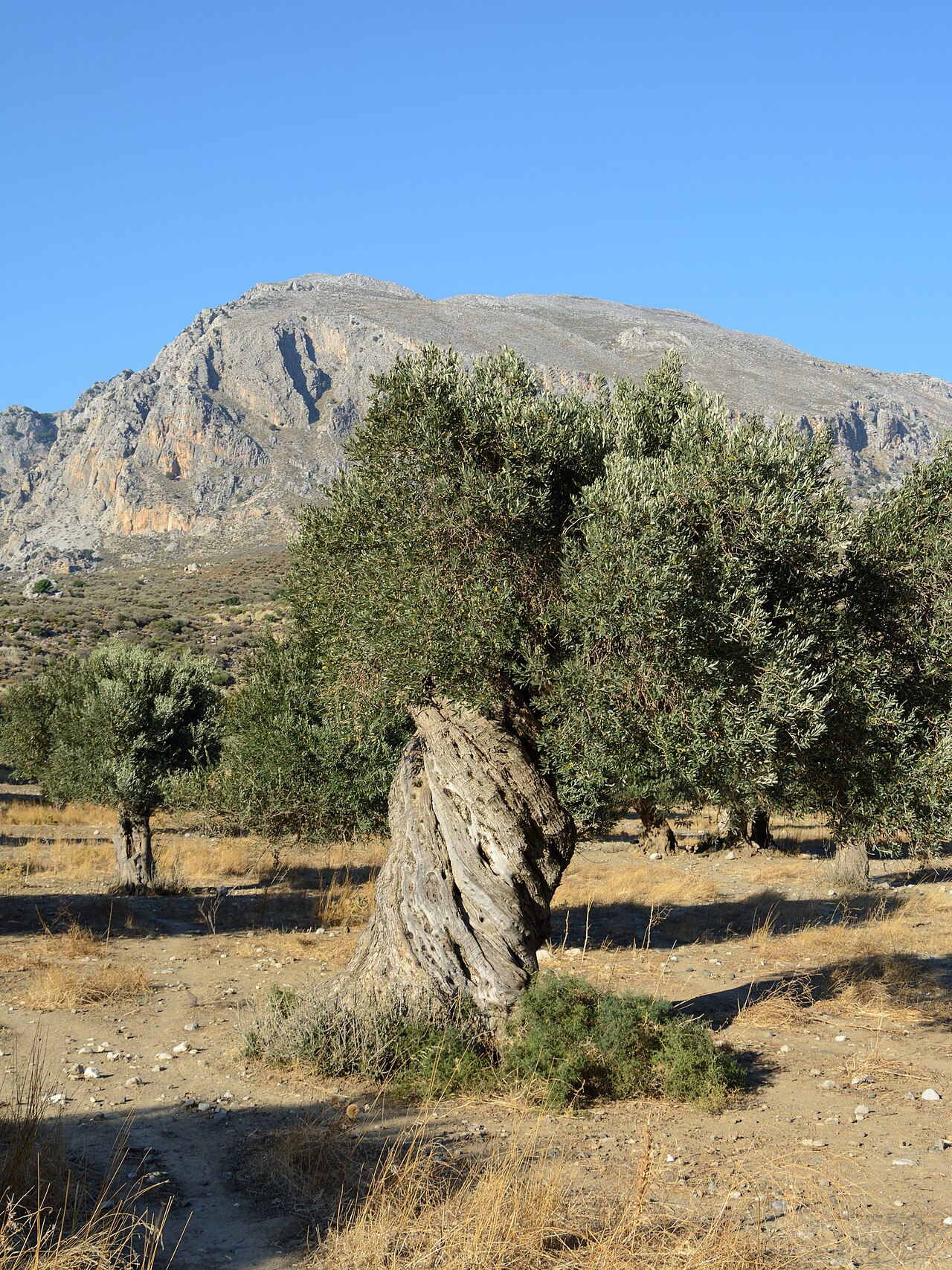
Arbosana forms a compact, naturally dense, spreading shrub-like tree rather than a tall single-trunk specimen. Left unpruned it still stays noticeably smaller and bushier than most olive cultivars, which is its defining structural trait.
Leaves
Leaves are medium length and medium width, with a distinctive recurved (slightly rolled-under) longitudinal axis that sets them apart from the flatter leaves of cultivars like Coratina or Frantoio — a useful field mark when comparing cultivars side by side in a collection planting.
Flowers
Small, cream-colored, wind-pollinated flowers appear in loose clusters in late spring. Arbosana’s entry into bearing is unusually early for an olive — young trees often flower and set fruit within their first couple of years, well ahead of most other cultivars, which is part of why it suits intensive, fast-turnaround groves.
Fruit & Seeds
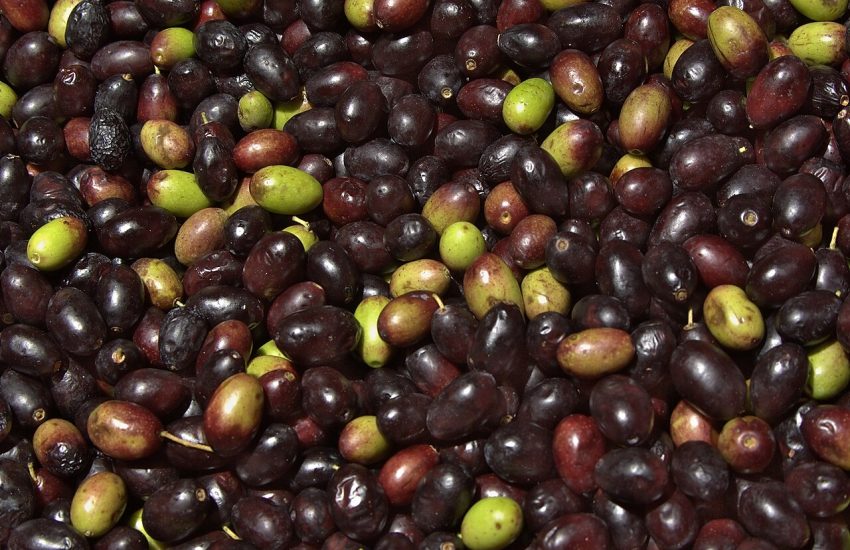
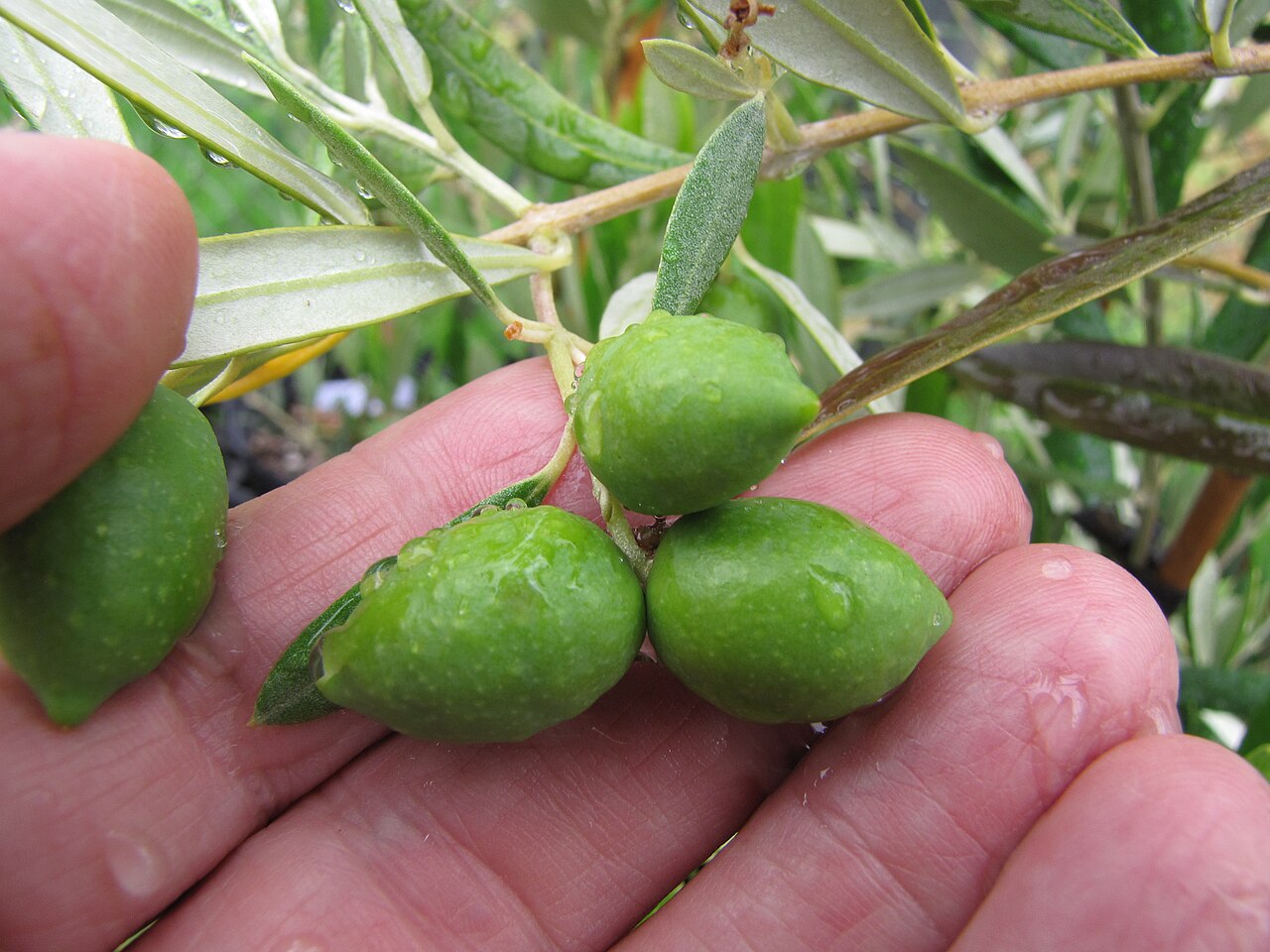
Arbosana fruit is small — among the lightest-weight fruit of any major oil cultivar — slightly elongated, with a rounded tip and a truncate (flat-ish) base. At full maturity the skin turns a medium violet rather than the jet black of many other cultivars. The pit, too, is small and light. Fruit ripens late in the season and clings to the tree with a notably high retention force, which can make traditional trunk-shaker harvesting difficult but is well suited to the continuous-hedge straddle harvesters used in super-high-density groves. Oil content is medium, but the oil is prized for good organoleptic (flavor and aroma) quality rather than sheer yield.
Quick Facts
| Scientific Name | Olea europaea ‘Arbosana’ |
| Cultivar | Arbosana (also marketed as Arbosana I-43) |
| Family | Oleaceae |
| Plant Type | Evergreen, low-vigor, compact oil-olive tree |
| Native to North America | No — introduced; species native to the Mediterranean basin and Near East, cultivar developed near Tarragona, Catalonia, Spain |
| Mature Height | 8–14 ft unpruned (commonly kept 6–10 ft in hedgerows and gardens) |
| Mature Spread | 6–10 ft, dense and compact |
| Growth Rate | Slow; one of the lowest-vigor olive cultivars grown |
| Sun Exposure | Full sun |
| Water Needs | Low once established; drought tolerant |
| Soil Type | Well-drained; tolerates poor, rocky soils |
| Soil pH | Neutral to alkaline (about 6.5–8.5) |
| Bloom Time | Late spring; very early entry into bearing |
| Leaf / Fall Color | Evergreen; green above, silvery below; leaves distinctly recurved |
| Fruit | Small, slightly elongated; medium violet at full ripeness; medium oil content, high retention force |
| Deer Resistant | Yes, generally |
| USDA Hardiness Zones | 8b–10; described in source literature as cold-resistant for the species |
| Invasive Status | Not native; species rated a limited-impact invasive by Cal-IPC in parts of coastal/central California via bird-spread fruit of fruiting cultivars |
Origin & Where It Grows
Arbosana originated in the Penedés area of Catalonia, in northeastern Spain, as a local, minor variety grown around Tarragona long before it had any commercial reputation beyond the region. Spanish researchers at IRTA and elsewhere identified it, along with Arbequina and Koroneiki, as unusually well suited to the super-high-density (SHD) growing system developed in Spain starting in the 1990s, in which trees are planted a meter or two apart in long rows and managed as a continuous hedge, harvested by machines that straddle the row. Arbosana’s naturally low vigor and compact canopy were exactly what that system needed, and the cultivar spread quickly from Spain to new SHD plantings around the world.
By the late 2000s, growers had planted substantial Arbosana acreage in California’s super-high-density groves; a 2009 UC Davis Olive Center survey found Arbosana made up roughly 16% of California’s SHD plantings at the time, alongside Arbequina and Koroneiki as the state’s most common SHD cultivars. Arbosana has also been planted in Argentina, Chile, France, Italy, Portugal, South Africa and Tunisia.
The species itself, Olea europaea, is native to the Mediterranean basin, the Levant and parts of northern Africa. In the United States, Arbosana performs best in California’s oil-olive regions and in other warm, dry-summer climates such as parts of Arizona and Texas, where it gets the heat and winter chill it needs without the hard freezes that damage young olive wood.
Arbosana Origin & Range
| Species Native Range | Mediterranean basin, Near East, parts of northern/eastern Africa |
| Cultivar Origin | Penedés region, Catalonia, Spain |
| Best U.S. Regions | California (Central Valley, Central Coast) especially in super-high-density groves; also southern Arizona and south Texas |
| USDA Zones | 8b–10 |
| Invasive Status | Not native to North America; limited-impact invasive risk via bird-spread fruit in parts of coastal/central California |
Growing & Care Guide
Arbosana’s compact habit makes it one of the easier olive cultivars for a smaller yard, patio container, or tight hedgerow, as long as it gets sun and sharp drainage.
Light
Full sun is essential. Arbosana’s already dense, naturally shaded-out canopy will thin further and fruit poorly with less than six to eight hours of direct sun a day.
Soil & Water
Plant in well-drained soil; Arbosana tolerates poor or rocky ground but will not tolerate wet feet. Water regularly through the first two to three years to establish a deep root system, then reduce watering — mature Arbosana trees are drought tolerant, and source literature describes the cultivar as cold-resistant for an olive, though young wood is still vulnerable to hard freezes.
Planting Tips
Arbosana’s compact size makes it a good candidate for closer spacing than most olive cultivars — as little as 4–6 ft apart in a managed hedge, or as a single specimen with normal garden spacing. It can also be grown long-term in a large container in colder zones and moved under cover for winter.
Pruning & Maintenance
Because Arbosana is naturally low-vigor and dense, it needs less corrective pruning than many cultivars; an occasional thinning cut to let light into the canopy interior is usually enough. Avoid heavy pruning right before bloom, since fruit forms on the previous year’s wood.
Propagation
Arbosana roots readily from cuttings, which is the standard commercial propagation method and the only way to reproduce the cultivar true to type; seedlings from its fruit will not match the parent tree’s size, vigor or fruit characteristics.
Landscape Uses
- Small-garden or patio olive tree where a full-size olive would outgrow the space
- Container growing, thanks to its naturally compact, slow-growing habit
- Informal hedges or screens in warm, dry climates
- Home oil pressing for growers who want a manageable tree that still bears early and reliably
Harvest & Pollination
Arbosana is largely self-fruitful, though as with most olive cultivars, cross-pollination from a different nearby cultivar can improve fruit set. It flowers and bears fruit unusually early for an olive, often within its first few years, and crops heavily and consistently once established. The fruit’s high retention force means it resists dropping on its own and can be difficult to remove with a simple trunk shaker; home growers typically hand-strip the small fruit into nets laid beneath the canopy once it reaches the desired ripeness, anywhere from green to medium violet depending on the flavor profile wanted. As with all olives, the raw fruit is bitter and must be cured — brined or otherwise processed — before it is edible; Arbosana is grown primarily for oil rather than as a table olive.
Wildlife & Ecological Value
Like other olive cultivars, Arbosana’s flowers are wind-pollinated and offer little nectar, so they draw far fewer pollinators than a comparable native flowering tree, though some generalist bees visit opportunistically for pollen. Birds including robins and starlings eat the ripe fruit where it is left on the tree, which both helps disperse seed in areas where olive has naturalized and is the mechanism behind the limited-impact invasive rating that fruiting olive cultivars carry in parts of coastal and central California — another reason to harvest Arbosana’s crop rather than let it fall and rot. As a non-native tree grown primarily for its fruit, Arbosana should not be counted on to provide the broader food-web and habitat value of a native tree of similar size.
Native Alternatives
- Desert Olive (Forestiera neomexicana) — a compact, drought-tolerant native shrub/small tree, a good scale match for Arbosana’s own small habit
- Texas Olive (Cordia boissieri) — a small, showy-flowered native tree suited to the same hot, dry-summer climates Arbosana likes
- American Sweet Olive / Devilwood (Osmanthus americanus) — a native evergreen Oleaceae relative for Southeastern gardens
- Arizona Rosewood (Vauquelinia californica) — a compact, evergreen native shrub/small tree for hot, arid Southwestern landscapes
- Honey Mesquite (Prosopis glandulosa) — a native small tree well adapted to the same dry, hot regions where Arbosana is grown
History & Uses
Arbosana’s rise from an obscure Catalan farmyard variety to a global commercial cultivar is really the story of how olive oil farming industrialized in the late 20th and early 21st centuries. Spanish agronomists searching for cultivars that could survive being planted shoulder-to-shoulder in continuous hedges, rather than spaced out as individual trees, identified Arbosana’s low vigor and dense habit as ideal traits, and super-high-density groves using Arbosana spread from Spain across the Mediterranean, into California, and to newer olive-growing regions in South America and Africa.
The oil itself has a genuine following among tasters, prized for a balanced, medium-intensity flavor rather than the aggressive pepperiness of cultivars like Coratina. Monovarietal Arbosana oils are increasingly available from California producers and are often blended with Arbequina and Koroneiki — its usual SHD grove-mates — to round out flavor profiles.
Frequently Asked Questions
Is Arbosana olive a native North American tree?
No. Olea europaea is native to the Mediterranean basin and Near East; Arbosana is a Spanish cultivar introduced to North America for cultivation. It is not federally listed as invasive, but fruiting olive cultivars are rated a limited-impact invasive by Cal-IPC in parts of coastal and central California, so harvest the fruit there and avoid planting next to wildland.
Why is Arbosana used in super-high-density olive groves?
Because it is one of the least vigorous olive cultivars available, with a naturally compact, dense canopy. That makes it well suited to being planted just a few feet apart in continuous hedgerows and harvested mechanically — a system that would overwhelm a more vigorous, spreading cultivar.
Is Arbosana a good choice for a small yard?
Yes, more so than most olive cultivars. Its compact, slow-growing habit means it stays manageable at 8–14 ft without constant heavy pruning, and it can even be grown long-term in a large container.
Does Arbosana need a pollinizer to set fruit?
Arbosana is largely self-fruitful, but cross-pollination from another nearby olive cultivar generally improves fruit set, as it does for most olives.
Can Arbosana olives be eaten straight off the tree?
No. Raw olive fruit, including Arbosana’s, is bitter from natural compounds and must be cured — typically brined — before it is edible. Arbosana is grown mainly for its oil rather than as a table olive.