Halberd-leaf Rosemallow (Hibiscus laevis)
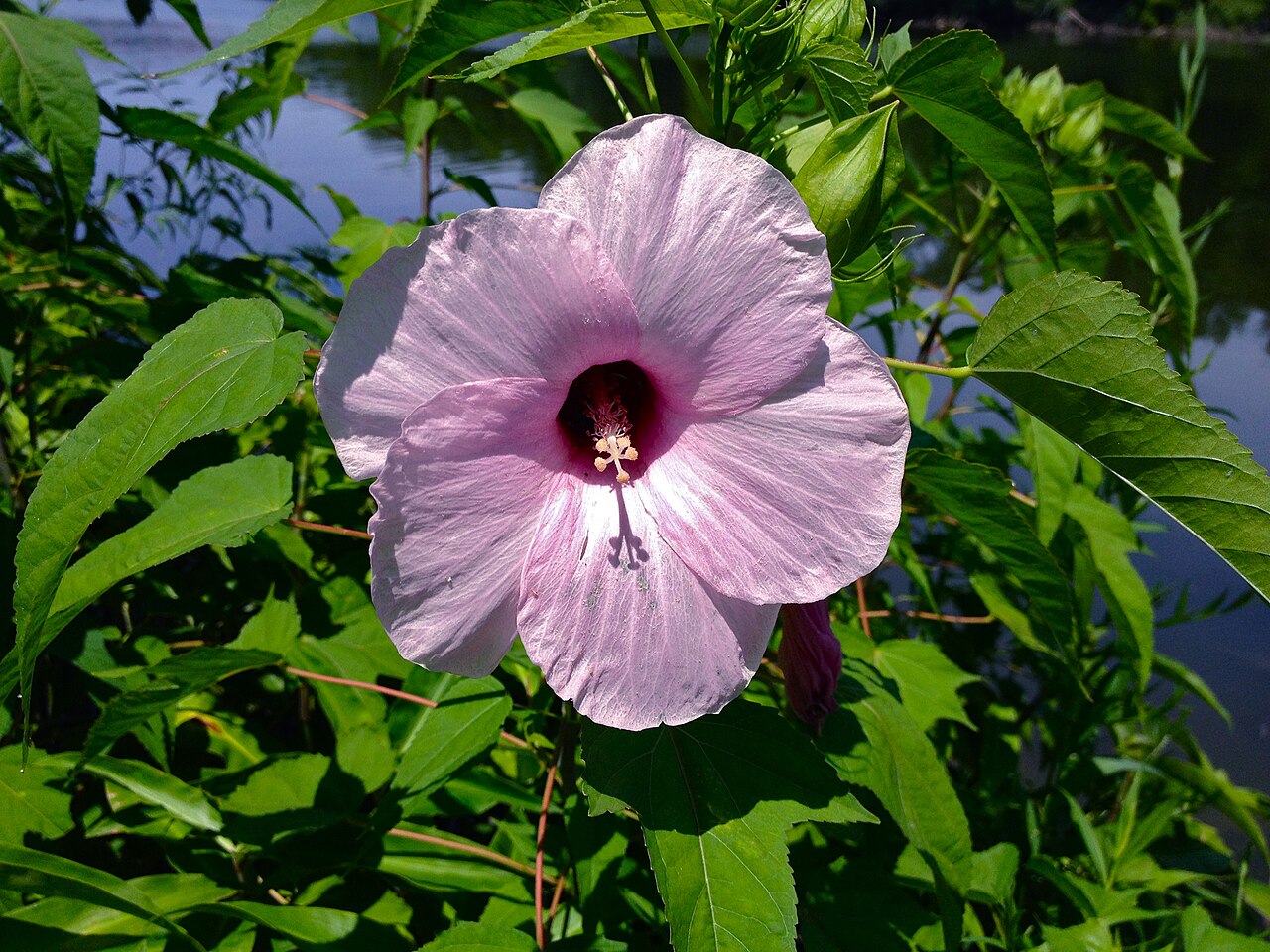
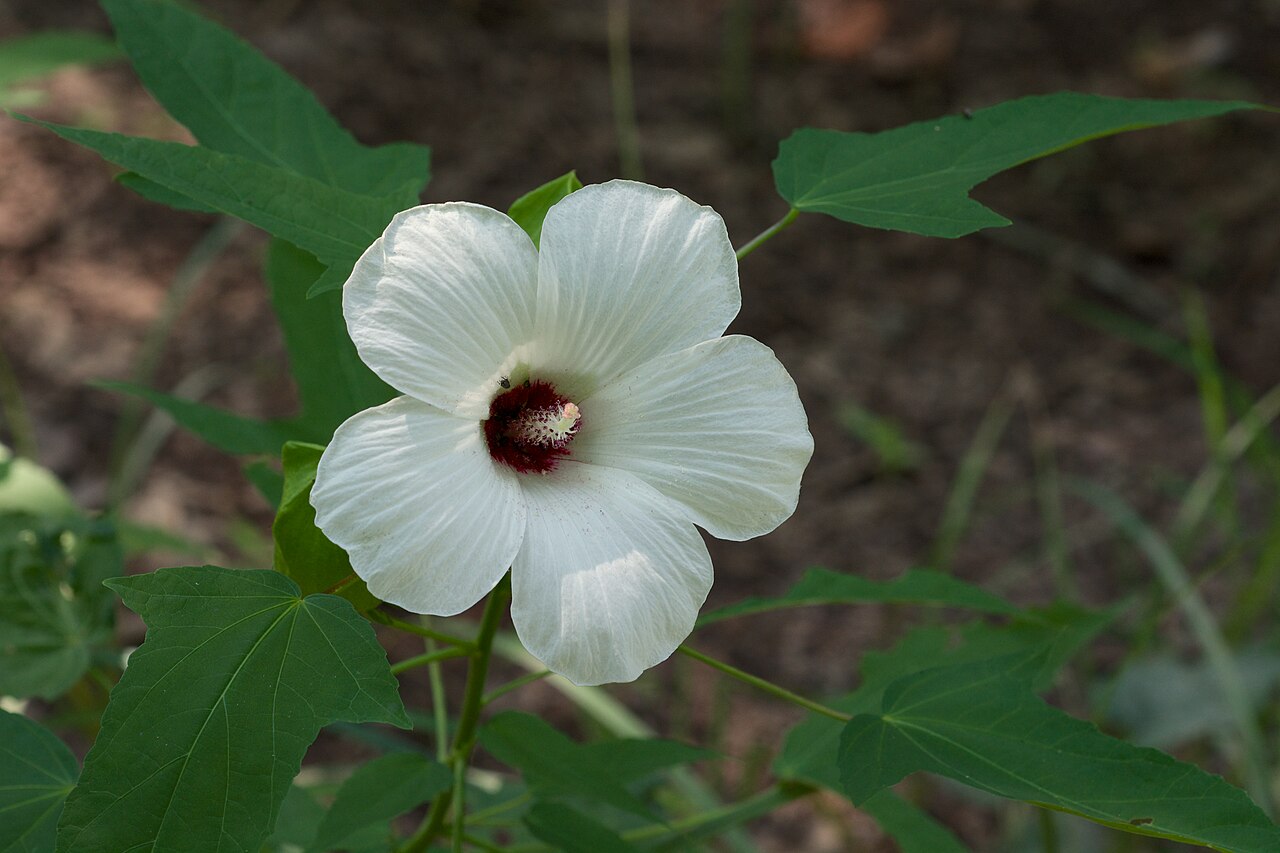
Hibiscus laevis (syn. Hibiscus militaris), the Halberd-leaf Rosemallow, is a tall, showy wetland perennial native to the central and eastern United States. Each summer it produces a long succession of enormous flowers — often 4 to 6 inches across — in shades from nearly white to soft pink, each centered with a deep maroon throat that makes the bloom impossible to miss along riverbanks, marsh edges, and wet ditches throughout its range.
The plant takes its common name from its distinctive leaves, shaped like a halberd — the pole weapon with a pointed blade and flared side lobes — which set it apart from the more rounded, heart-shaped leaves of its close relatives, Eastern Rosemallow (Hibiscus moscheutos) and Swamp Hibiscus (Hibiscus coccineus). All three species share the same hibiscus-family flamboyance and the same preference for consistently moist to wet soil.
Halberd-leaf Rosemallow is an excellent choice for a rain garden, pond margin, or any low spot in the landscape that stays reliably damp, rewarding gardeners with months of dinner-plate-sized blooms, strong pollinator traffic, and a bold vertical presence that holds its own even among other tall perennials.
Identification
Halberd-leaf Rosemallow is a herbaceous perennial that dies back to the ground each winter and resprouts vigorously from its woody crown and root system each spring, often reaching full height within a single growing season.
Stems
Stems are unbranched or sparingly branched, round in cross-section, smooth (hairless), and typically reach 3 to 6 feet tall, occasionally taller in ideal conditions. The smooth stems distinguish this species from Eastern Rosemallow, whose stems and leaf undersides are often downy.
Leaves
Leaves are alternate, 3 to 7 inches long, and distinctly halberd- or arrowhead-shaped — narrowly triangular with two flared, pointed basal lobes spreading outward like the blade of a halberd. Leaf margins are coarsely toothed, and the upper surface is smooth and dark green.
Flowers
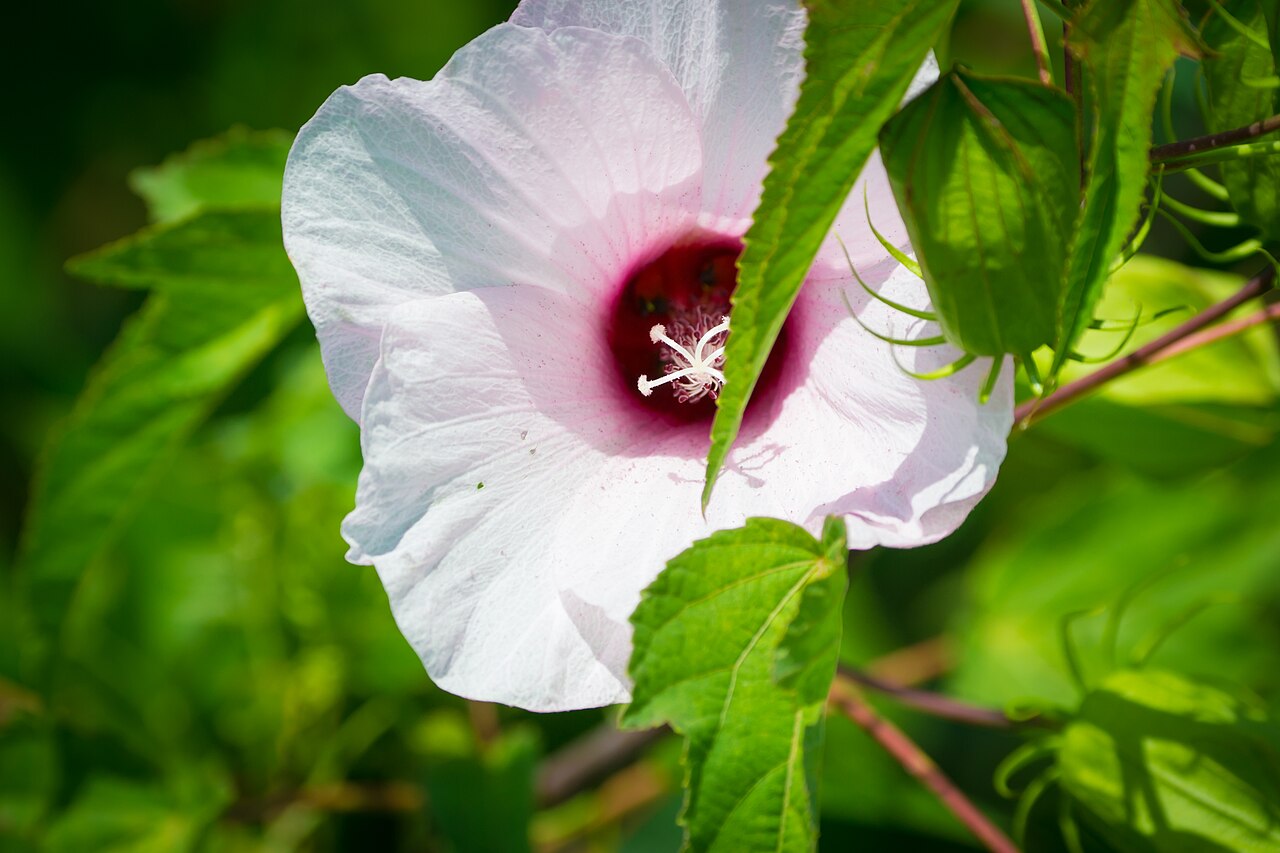
Flowers are large, 4 to 6 inches across, with five broad, overlapping petals ranging from creamy white to pale pink, each marked with a deep crimson-maroon base that forms a dramatic central throat around the long, protruding staminal column typical of the mallow family. Each flower opens for a single day, usually in morning sun, and the plant produces a steady succession of new blooms from mid to late summer into early fall.
Fruit & Seeds
After flowering, the plant produces an egg-shaped, pointed seed capsule roughly an inch long that dries and splits into five sections at maturity, releasing numerous small, hairy seeds.
Quick Facts
| Scientific Name | Hibiscus laevis All. (syn. Hibiscus militaris) |
| Family | Malvaceae (Mallow) |
| Plant Type | Herbaceous Perennial |
| Mature Height | 3–6 ft |
| Mature Spread | 2–3 ft |
| Growth Rate | Fast |
| Sun Exposure | Full Sun to Light Shade |
| Water Needs | High — consistently moist to wet soil |
| Soil Type | Rich, moist to wet loam or silt; tolerates periodic flooding |
| Soil pH | 5.5–7.5 |
| Bloom Time | July – September |
| Flower Color | Creamy white to pale pink with a maroon throat |
| Fruit | Egg-shaped, pointed seed capsule |
| Deer Resistant | No — foliage and buds are palatable to deer and rabbits |
| USDA Hardiness Zones | 4–9 |
Native Range
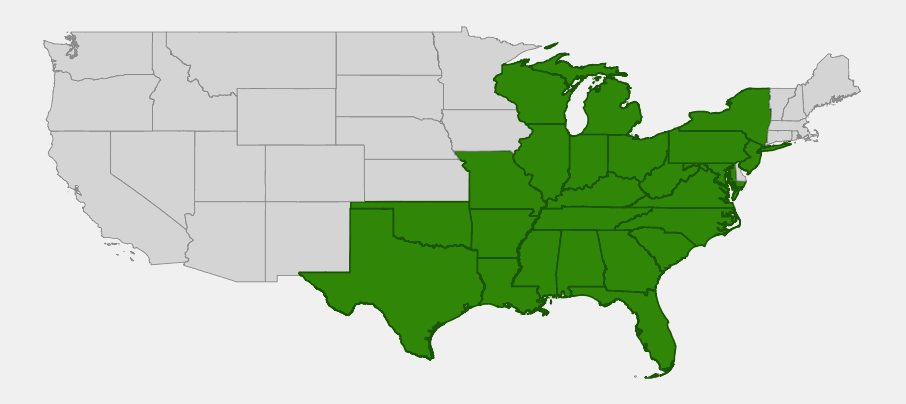
Halberd-leaf Rosemallow is native to the central and eastern United States, from the lower Great Lakes and mid-Atlantic south through the Ohio and Mississippi River valleys to the Gulf Coast, and west to the eastern Great Plains. It is most common along the major river systems of the Midwest and Mid-South, where it forms conspicuous colonies in wet bottomland habitat.
In the wild, it grows in consistently moist to wet soil along riverbanks, in marshes, wet meadows, roadside ditches, and the margins of ponds and sloughs, often in full sun with periodically flooded or saturated soil. It tolerates seasonal flooding well but, unlike the true aquatic plants covered elsewhere on this site, it needs soil that drains between flood events rather than permanent standing water over its crown.
The species is absent from New England and most of the Atlantic Northeast; gardeners in those regions should look instead to the related Eastern Rosemallow, which has a broader native range along the Atlantic coastal plain.
📋 Regional plant lists featuring Halberd-leaf Rosemallow: Iowa, Illinois & Missouri · Arkansas, Louisiana & Eastern Texas/Oklahoma · Kentucky & Tennessee · Maryland, Virginia & West Virginia · North & South Carolina · New York, Pennsylvania & New Jersey · Michigan, Wisconsin & Eastern Minnesota
Growing & Care Guide
Halberd-leaf Rosemallow is an easy, fast-growing perennial for any consistently damp spot in the garden, combining bold flowers with the kind of reliable performance that makes it a standout in a wet border or rain garden.
Light
Full sun produces the most flowers and the sturdiest stems; the plant will tolerate light shade, especially in hotter southern climates, but may grow leggier and bloom somewhat less in reduced light.
Soil & Water
This species wants consistently moist to wet soil and performs best where it can access reliable moisture through the growing season — a pond margin, rain garden low point, streamside bed, or any naturally damp depression. It tolerates brief periods of standing water during floods but needs soil that drains between events rather than permanent inundation; it is not a true aquatic and should not be planted directly in a pond. In drier garden settings, regular supplemental watering during summer is necessary to prevent stress and reduced bloom.
Planting Tips
Plant container-grown stock in spring after the danger of frost has passed, spacing plants 2 to 3 feet apart to allow for their upright, somewhat shrubby mature form. Established plants develop a woody crown and deep root system that make them resilient once settled, though like other mallows they can be slow to resprout in spring — mark the planting location to avoid accidentally disturbing it before new growth appears.
Pruning & Maintenance
Cut stems back to the ground after frost blackens the foliage in fall, or leave standing stems through winter for habitat value and cut back in early spring before new growth emerges. Deadheading spent flowers is not necessary for continued bloom, since the plant naturally produces a long succession of new flowers through the season, though removing seed capsules can reduce self-seeding in a formal bed.
Landscape Uses
- Rain gardens — thrives in the wet low point where many perennials struggle
- Pond and stream margins just above the waterline
- Wet meadow and prairie restoration plantings
- Bold vertical accent in a mixed native perennial border
- Pollinator gardens — large flowers draw heavy bee traffic
Wildlife & Ecological Value
Halberd-leaf Rosemallow is a strong pollinator plant and an important host for several specialist insects tied to the mallow family.
For Pollinators
The large flowers attract bumblebees, honeybees, and a range of other native bees, which forage heavily on the abundant pollen produced by the showy staminal column. The rosemallow bee (Ptilothrix bombiformis), a ground-nesting specialist bee, is particularly associated with Hibiscus flowers and relies on them for pollen to provision its nest cells.
For Birds
Hummingbirds visit the flowers for nectar, and various seed-eating birds feed on the ripe capsules in fall. The tall, sturdy stems also provide perching and foraging structure for insect-eating songbirds working the wetland edge.
For Other Insects
As a host plant in the mallow family, Halberd-leaf Rosemallow supports the caterpillars of several moth species, including some hibiscus-feeding specialists, contributing to the insect food web that in turn supports breeding birds.
Ecosystem Role
Growing along riverbanks and wetland margins, this species’ deep root system helps stabilize soil against erosion during flood events, while its dense summer growth provides cover for amphibians and small wildlife moving through wet meadow and riparian habitat.
Cultural & Historical Uses
Halberd-leaf Rosemallow does not carry the extensive historical food-use record of some other native wetland plants, but it has long been recognized and appreciated by naturalists and botanists for its striking flowers, which were documented in early American botanical surveys of Midwestern and Southern river systems. The species was formerly classified under the name Hibiscus militaris, a name still occasionally encountered in older field guides and herbarium records, chosen for the halberd-shaped leaves that resemble a soldier’s polearm.
In more recent decades, Halberd-leaf Rosemallow has gained a solid following among native plant gardeners for its reliable performance in wet garden conditions where many ornamental perennials fail, and it is increasingly featured in rain garden and pollinator garden plant lists across its native range.
Frequently Asked Questions
How is this different from Eastern Rosemallow?
Halberd-leaf Rosemallow has distinctly arrow- or halberd-shaped leaves with flared basal lobes and smooth, hairless stems, while Eastern Rosemallow (Hibiscus moscheutos) has broader, heart-shaped leaves that are often downy beneath. Their flowers look similar at a glance, but the leaf shape makes the two easy to tell apart.
Can I plant it directly in my pond?
No — this species needs moist to wet soil rather than standing water over its crown. Plant it just above the waterline at a pond or stream margin rather than submerging it like a true aquatic such as Pickerelweed.
Why hasn’t my Halberd-leaf Rosemallow come up in spring?
This species is often slow to break dormancy, sometimes not showing new growth until late spring even after other perennials have leafed out; avoid disturbing the crown and be patient before assuming the plant has died.
Will it spread aggressively in my garden?
It self-seeds moderately in favorable wet conditions but is not considered an aggressive spreader; removing spent seed capsules before they mature will limit volunteer seedlings if you prefer a tidier bed.
Is Halberd-leaf Rosemallow deer resistant?
No — deer and rabbits will browse the foliage and flower buds, so some protection may be needed in areas with heavy browsing pressure, especially while plants are young.
Pair it with other wetland-edge natives discussed in our guide to starting a rain garden, or see the related Swamp Hibiscus for a red-flowered alternative in similar wet conditions.