Desert Rose (Rosa stellata)
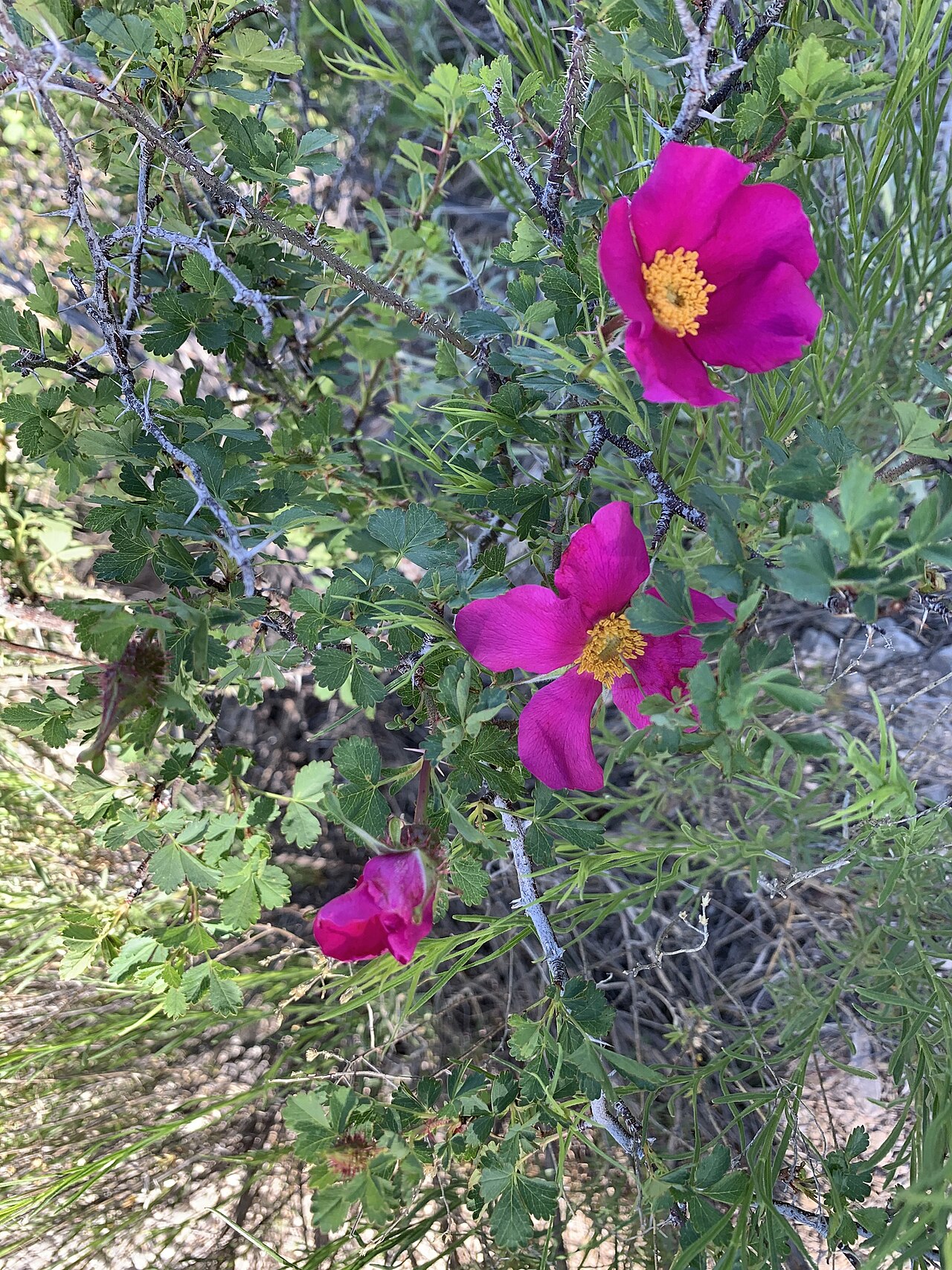
Rosa stellata, known as the Desert Rose, Gooseberry Rose, or Star Rose, is a small, distinctive shrub of dry, rocky canyons and slopes across Arizona, New Mexico, and the Trans-Pecos region of west Texas. Unlike the thicket-forming roses of wetter regions, Desert Rose is a compact, low-growing plant well adapted to the sparse rainfall and intense sun of its mountain and canyon habitat, with velvety gray-green leaves and striking deep rose-purple to magenta flowers.
This species is placed in its own small subgenus, Hesperhodos, which it shares with only one other rose, underscoring how distinct it is from the familiar thicket roses of wetter climates. Its trifoliate (three-part) leaves, unusual among wild roses, and its yellowish-white prickles give it a texture and silhouette unlike any other native rose, making it a natural fit for xeric and rock garden plantings within its range.
Because Desert Rose stays compact and tolerates heat, drought, and rocky, alkaline soils, it fills a niche in native gardening that wetter-climate roses cannot: a true rose for the arid Southwest, valued both for its unusual beauty and for the pollinators it supports in dry canyon and foothill habitats where flowering shrubs are relatively scarce.
Identification
Desert Rose is a low, spreading, deciduous shrub, usually forming a compact mound rather than the tall arching canes typical of many wild roses.
Bark & Stems
Stems are slender and armed with numerous yellowish-white, needle-like prickles, giving older wood a pale, bristly appearance quite different from the stouter, darker thorns of many other rose species. Growth is low and spreading, typically staying under 2 feet tall.
Leaves
The leaves are trifoliate — composed of just three leaflets — a trait shared by very few wild roses, most of which have five or more leaflets per leaf. Leaflets are small, velvety-textured, and deciduous, with a soft gray-green color that helps the plant blend into its rocky desert surroundings and reduces water loss in its hot, dry habitat.
Flowers
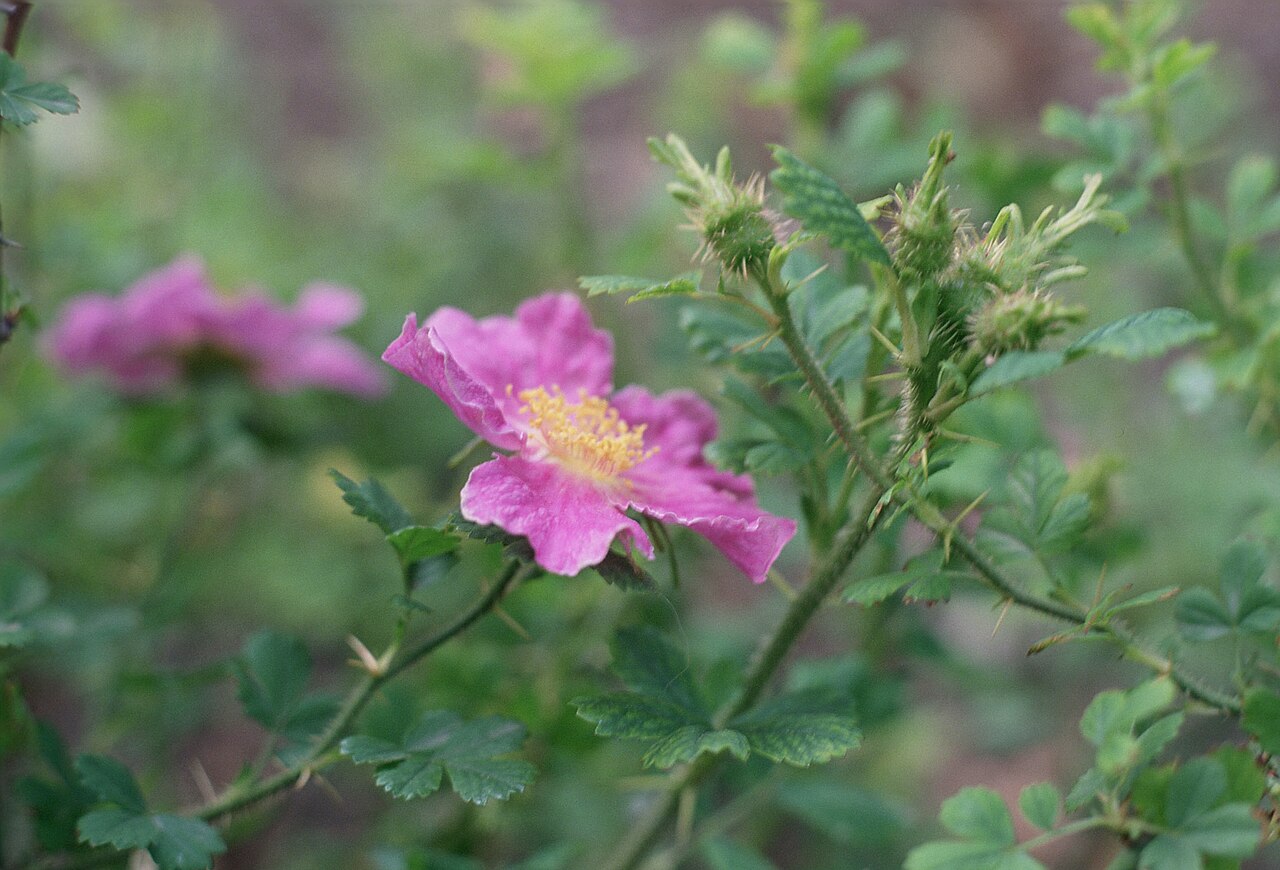
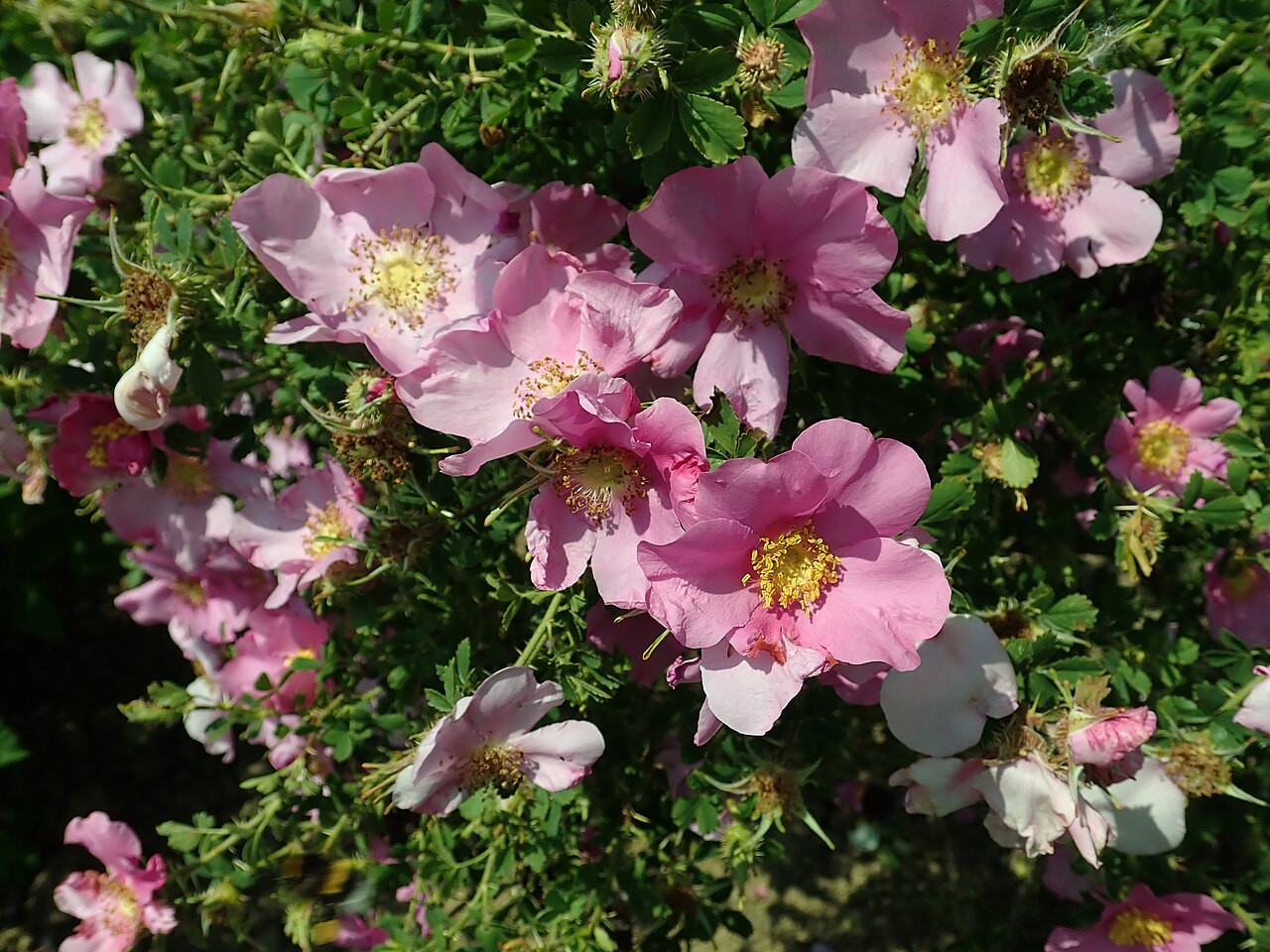
Flowers are solitary or borne in small groups, with five petals in a deep rose-purple to magenta color, considerably bolder than the soft pinks typical of most wild roses. Blooms are roughly 1.5 to 2 inches across and appear in late spring through summer, standing out vividly against the plant’s muted gray-green foliage and pale, thorny stems.
Fruit & Seeds
Following bloom, small rounded rose hips develop, maturing in late summer and fall. As with other wild roses, the hips contain multiple seeds embedded in a fleshy, slightly hairy inner lining, and they provide a late-season food source in an otherwise lean desert-canyon environment.
Quick Facts
| Scientific Name | Rosa stellata |
| Family | Rosaceae (Rose) |
| Plant Type | Deciduous, Low-growing Shrub |
| Mature Height | 16–24 in (40–60 cm) |
| Mature Spread | 2–3 ft, forming a low mound |
| Growth Rate | Slow |
| Sun Exposure | Full Sun to Part Shade |
| Water Needs | Low; drought-tolerant once established |
| Soil Type | Dry, rocky, well-drained; tolerates alkaline soils |
| Soil pH | 6.5–8.0 |
| Bloom Time | May – August |
| Flower Color | Deep rose-purple to magenta |
| Fall Color | Foliage drops with little color change |
| Fruit | Small rounded rose hips |
| Deer Resistant | Moderate; sometimes used as browse |
| USDA Hardiness Zones | 6–9 |
Native Range
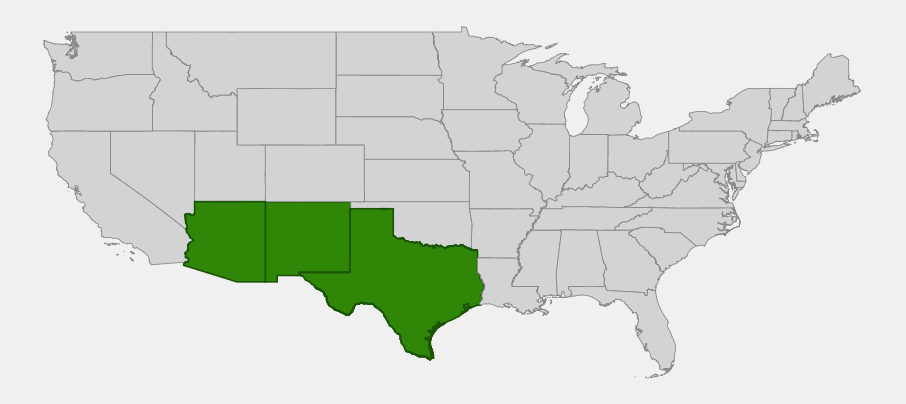
Desert Rose is native to the mountainous drylands of the American Southwest, occurring in Arizona and New Mexico and extending into the Trans-Pecos region of far west Texas. Within this range it is found in mountain canyons and on dry, rocky slopes, typically at elevations up to about 6,500 feet (2,000 m), well above the lowest, hottest desert floor but still within a distinctly arid climate.
The species favors rocky outcrops, canyon walls, and dry slopes where competition from larger shrubs and trees is limited, often growing alongside the pinyon-juniper and oak woodland communities characteristic of Southwestern mountain foothills. A particularly distinctive population, treated by some botanists as the variety mirifica and sometimes called the Sacramento Mountain Rose, occurs in the Sacramento Mountains of south-central New Mexico and is notable for its especially large flowers.
Because Desert Rose is adapted to specific rocky, well-drained mountain habitat rather than general desert flatland, gardeners outside its native elevation band and soil type should not expect it to behave like a typical low-desert xeriscape shrub; it does best replicating the dry, rocky, part-sun conditions of a Southwestern foothill canyon.
📋 Regional plant lists featuring Desert Rose: Arizona & New Mexico · South & West Texas
Growing & Care Guide
Desert Rose rewards gardeners in the Southwest who can offer it the dry, rocky, sun-washed conditions of its native canyon habitat — a plant to treat more like a drought-tolerant native shrub than a conventional garden rose.
Light
Give it full sun for the best flowering, though in the hottest, lowest-elevation parts of its range, light afternoon shade can help the plant through the most intense summer heat. In the cooler mountain canyons where it naturally grows, full sun exposure is typical and well tolerated.
Soil & Water
This rose demands excellent drainage and is well adapted to rocky, gravelly, or alkaline soils that would stress most garden roses. Water regularly through the first growing season to help the plant establish, then reduce watering substantially; established Desert Rose tolerates extended dry periods and should not be kept in consistently moist soil, which invites root problems.
Planting Tips
Plant in fall or early spring, choosing a site with sharp drainage — a rocky slope, raised bed, or gravel-amended planting hole all work well. Space plants about 2 to 3 feet apart to allow for the low, spreading mature form. Because of its small size, Desert Rose is well suited to rock gardens and other settings where a tall, arching shrub would be out of scale.
Pruning & Maintenance
Pruning needs are minimal. Remove dead or damaged stems in late winter, and avoid heavy shearing, which disrupts the plant’s naturally low, mounding form. Established plants need very little ongoing care beyond occasional deep watering during extended drought.
Landscape Uses
Desert Rose is a specialist plant well suited to several Southwestern garden settings:
- Rock gardens — compact size and drought tolerance fit naturally among stone
- Xeriscape plantings — a genuine rose for low-water Southwestern gardens
- Pollinator gardens — supports native bees in dry canyon and foothill settings
- Groundcover — low, spreading habit works as an informal groundcover on slopes
- Native plant collections — a distinctive, uncommon representative of the rose family in arid gardens
Wildlife & Ecological Value
In the relatively lean, dry habitats where it grows, Desert Rose provides a disproportionately valuable resource for pollinators and small wildlife.
For Pollinators
The showy magenta flowers attract native bees and bumble bees, which forage both for nectar and for the abundant pollen. Native bees are also known to use parts of the plant for nesting materials, adding a second layer of habitat value beyond simple foraging. In dry canyon habitats where flowering shrubs can be scarce, a blooming Desert Rose can be an important seasonal resource.
For Birds
Small birds forage among the low, bristly stems for insects, and the late-season rose hips provide a modest food source in an environment where fruit-bearing plants are limited. The dense, thorny growth form also offers some protective cover for small, ground-foraging birds.
For Mammals
Some horticultural sources note that Desert Rose is browsed by deer and other wildlife in parts of its range, making it a minor but real component of the forage available in dry canyon and foothill habitat, particularly where more palatable plants are scarce during drought.
Ecosystem Role
As a low, drought-adapted shrub rooted in rocky soils, Desert Rose contributes to the structural diversity of its canyon and slope habitats, offering a flowering resource and minor ground cover within plant communities otherwise dominated by junipers, pinyons, and oaks.
Cultural & Historical Uses
Documented historical use of Desert Rose by Indigenous peoples of the Southwest is limited compared to more widespread rose species, reflecting its naturally restricted range and the relatively small size of the plant and its hips. Where used, wild rose hips across the region were generally valued as a seasonal food source and source of vitamin C; this is presented here as general ethnobotanical context rather than a specific record for this species, and should not be read as medical guidance.
Desert Rose’s more significant modern legacy is botanical: its placement in the small subgenus Hesperhodos, shared with just one other rose species, has made it a point of interest for rose taxonomists studying the evolutionary diversity of the genus. Its unusual trifoliate leaves and compact, drought-adapted form stand in contrast to nearly every other wild rose in North America.
In recent decades, Desert Rose and its showy-flowered variety from the Sacramento Mountains have drawn interest from rock-garden and drought-tolerant-plant enthusiasts, both within its native Southwest and in botanical collections further afield, as an example of just how adaptable the rose family can be outside the moist, temperate climates most garden roses expect.
Frequently Asked Questions
Is Desert Rose related to the succulent houseplant sometimes called “desert rose”?
No. The common name is shared with Adenium obesum, an unrelated African and Arabian succulent sold as a houseplant. Rosa stellata is a true wild rose in the Rosaceae family, native to the mountains of the American Southwest, and the two plants have nothing botanically in common beyond the coincidental name.
Can Desert Rose handle a typical low-desert garden?
It is adapted to rocky mountain canyons rather than low desert flats, so it does best in gardens that replicate sharp drainage, some elevation-appropriate temperature range, and at least part-day sun rather than the most extreme low-elevation desert heat.
How is Desert Rose different from other wild roses?
Its three-leaflet (trifoliate) leaves are highly unusual among roses, most of which have five or more leaflets, and its compact, low-mounding form and pale, needle-like prickles set it apart from the taller, thicket-forming roses of wetter climates.
What is the Sacramento Mountain Rose?
This is the common name sometimes used for Rosa stellata var. mirifica, a population from the Sacramento Mountains of New Mexico notable for its especially large flowers. It is treated by most sources as a variety of the same species covered on this page, not a separate species.
Is Desert Rose easy to find at nurseries?
It is considerably less common in the nursery trade than typical hybrid roses or even most native shrub roses, since its narrow native range and specific rocky-soil requirements make it a specialty plant best sought from nurseries focused on Southwestern native and xeric species.

Looking for a nursery that carries Desert Rose?
Browse our native plant nursery directory: Arizona · New Mexico · Texas